In an era of rapid technological evolution and tightening regulatory scrutiny, mastering the complete lifecycle of your IT assets is no longer optional—it's a critical business imperative. Effective IT Asset Management (ITAM) is the strategic framework that enables organizations to maximize value, control costs, mitigate risks, and make informed decisions about their technology investments. A robust ITAM program provides a single source of truth for every piece of hardware and software in your environment, transforming what was once a simple inventory task into a powerful strategic advantage.
This guide moves beyond generic advice to provide a comprehensive roundup of the top it asset management best practices for modern enterprises. We will explore ten foundational pillars, offering actionable strategies to enhance operational efficiency, ensure compliance, and build a sustainable, secure, and cost-effective technology ecosystem. You will learn how to implement everything from comprehensive asset discovery and software license management to secure end-of-life disposal and data governance.
These strategies are designed to be practical and immediately applicable, whether you are managing a complex data center or ensuring compliance in a heavily regulated industry. By mastering these principles, your organization can achieve greater control and visibility over its entire technology portfolio. To further optimize your approach, consider exploring additional IT Asset Management best practices that align with future trends. Let’s dive into the essential practices that will fortify your IT operations and drive business value.
1. Implement Comprehensive Asset Discovery and Inventory Management
You cannot manage what you do not know you have. This foundational principle is why comprehensive asset discovery and inventory management is the critical first step in any effective ITAM program. This practice involves using automated tools to continuously scan your network and catalog every single piece of IT hardware, software, and virtual asset. The goal is to create and maintain a single, accurate source of truth for your entire IT estate.
This central repository, often a Configuration Management Database (CMDB), must contain detailed metadata for each asset. This includes its physical location, assigned owner, department, purchase date, warranty information, and current lifecycle stage. Without this baseline, tracking costs, managing security risks, and ensuring compliance become nearly impossible.
Why This Practice is Foundational
An accurate inventory forms the bedrock for all other it asset management best practices. It enables proactive maintenance, simplifies license management, and provides the necessary data for strategic financial planning. It also ensures that when assets reach their end-of-life, nothing is overlooked, preventing potential data breaches from forgotten devices. A well-maintained inventory is essential for a smooth and secure asset retirement process, as outlined in guides for secure ITAD. For more details on this final lifecycle stage, see this comprehensive guide to secure and sustainable data center decommissioning.
Actionable Implementation Steps:
- Automate Discovery: Deploy network discovery tools to automatically find and catalog assets. Schedule scans during off-peak hours to minimize operational impact.
- Establish Naming Conventions: Create and enforce a clear, consistent asset naming convention from day one. This prevents confusion and streamlines database searches.
- Start with Critical Assets: Begin your inventory process by focusing on mission-critical infrastructure like servers, network switches, and key software platforms before expanding to end-user devices.
- Integrate Physical Tagging: Implement barcode or RFID tagging for all physical hardware. This simplifies physical audits and reconciles the physical world with your digital CMDB records, ensuring complete lifecycle visibility.
2. Establish Clear Asset Lifecycle Management Policies
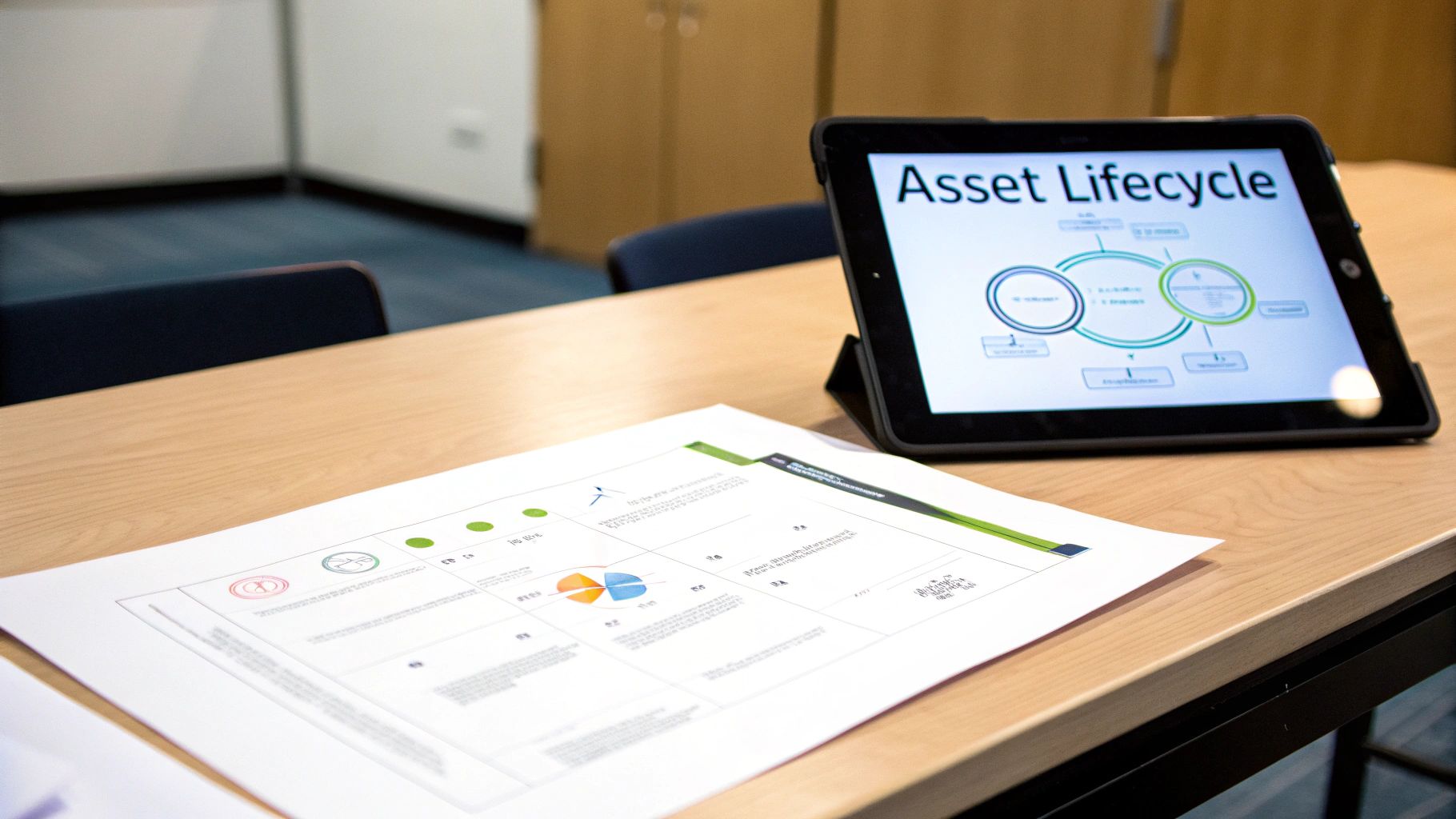
Once you know what assets you have, the next step is to govern their journey through your organization. Establishing clear, documented asset lifecycle management policies creates a standardized framework for every stage of an asset's life, from initial procurement to final disposal. This practice ensures that every action taken, whether deploying a new server or retiring an old laptop, follows a consistent, secure, and cost-effective procedure.
This policy-driven approach defines roles, responsibilities, and standardized processes for acquisition, deployment, maintenance, upgrades, and retirement. It acts as the operational rulebook for your ITAM program, eliminating guesswork and reducing the risk of ad-hoc decisions that could lead to security vulnerabilities, compliance failures, or wasted resources. A well-defined policy ensures every stakeholder understands their part in maximizing asset value and minimizing risk.
Why This Practice is Foundational
Formal policies are the backbone of a mature ITAM strategy. They translate high-level goals into repeatable, auditable actions, which is a cornerstone of it asset management best practices. This structured approach is critical for forecasting budgets, managing vendor contracts, and ensuring that security protocols are applied consistently across all devices. Furthermore, it provides a clear and defensible process for regulatory audits, proving due diligence in how assets are managed and data is protected. By defining the entire journey, these policies ensure a seamless transition between each lifecycle stage. Learn more about how a structured approach can benefit your organization by exploring this guide to IT Asset Management (ITAM).
Actionable Implementation Steps:
- Define Each Lifecycle Stage: Clearly document the specific steps, criteria, and approvals required for procurement, deployment, in-service management, and retirement.
- Assign Clear Ownership: For each stage and asset type, assign a specific role or individual as the "asset owner" or "steward" who is accountable for compliance with the policy.
- Create Visual Flowcharts: Supplement written policies with easy-to-understand visual diagrams of the asset lifecycle. This helps communicate the process effectively during employee training and onboarding.
- Integrate Security and Compliance: Embed security checks and compliance requirements directly into your policies, such as mandatory data sanitization standards before asset disposal or reassignment.
3. Implement Software Asset Management (SAM) and License Compliance
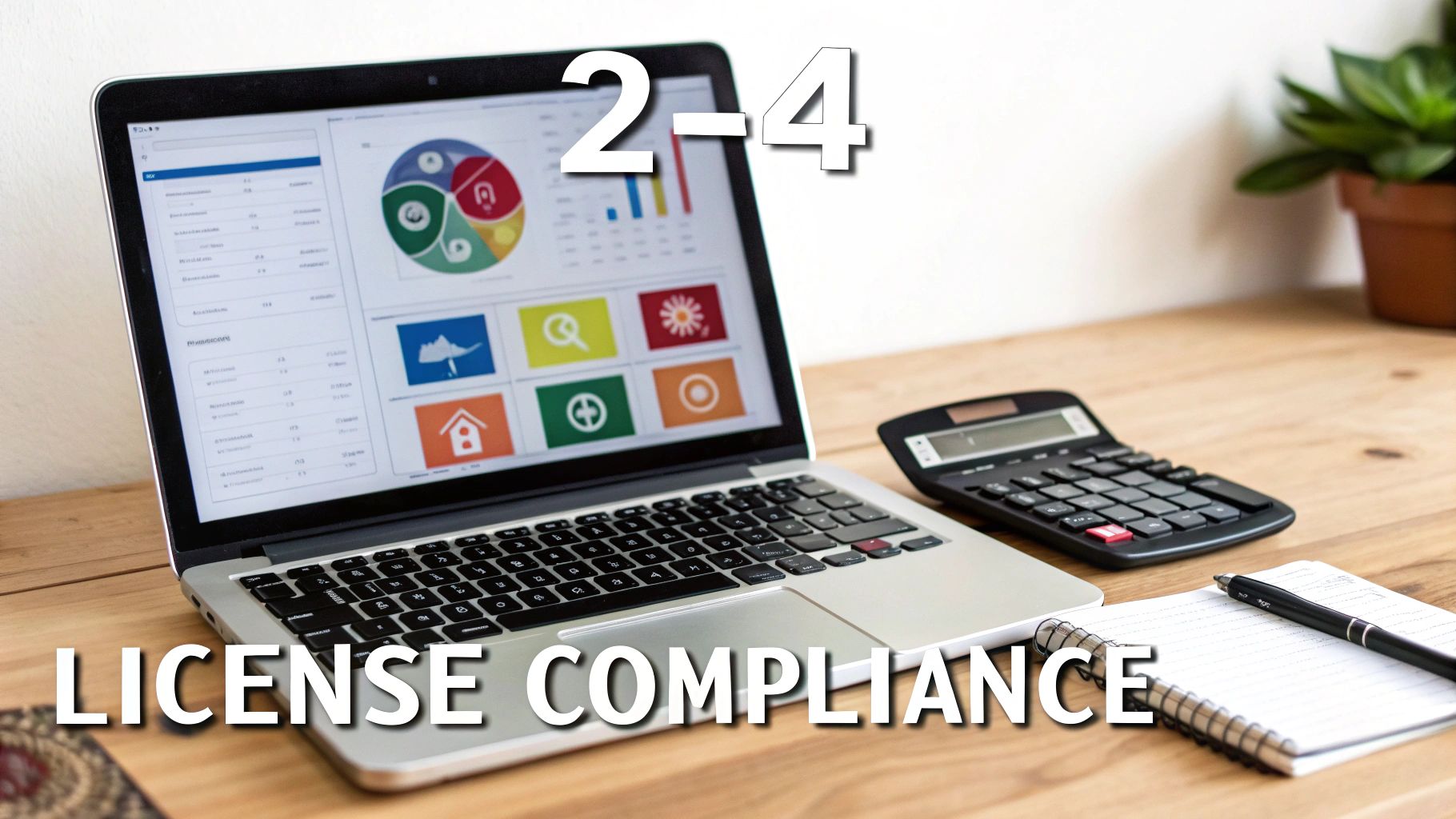
Unmanaged software assets are a significant source of financial waste and legal risk. Implementing a robust Software Asset Management (SAM) program is a critical practice for tracking software licenses, usage rights, and compliance obligations. The primary goal is to gain complete control over your software portfolio, ensuring you only pay for what you need and remain fully compliant with vendor agreements.
This process involves systematically discovering all installed software, reconciling it against purchase records and license entitlements, and continuously monitoring usage. A dedicated SAM strategy moves a business from a reactive state, often triggered by a vendor audit, to a proactive one where software spend is optimized and legal exposure is minimized. Without it, companies are vulnerable to substantial non-compliance penalties and overspending on unused licenses.
Why This Practice is Foundational
Effective SAM is a cornerstone of it asset management best practices because it directly impacts both the bottom line and operational integrity. It prevents shadow IT by identifying unauthorized software installations that can introduce security vulnerabilities. Furthermore, by providing clear data on software usage, SAM empowers IT leaders to negotiate more favorable volume licensing agreements and confidently reallocate or retire licenses that are no longer needed, reducing recurring costs. This discipline ensures the organization avoids the severe financial and reputational damage that can result from a failed software audit.
Actionable Implementation Steps:
- Establish a Central License Repository: Create a single, authoritative database or spreadsheet to track all software licenses, purchase orders, and entitlement documents. This serves as your foundation for reconciliation.
- Conduct Regular Internal Audits: Proactively perform periodic license reconciliation audits to compare software installations against your entitlements. This helps identify compliance gaps before a vendor does.
- Deploy Usage Monitoring Tools: Implement software usage analytics tools to gather data on how often applications are used. This insight is crucial for reclaiming underutilized licenses.
- Standardize Software Titles: Normalize software titles discovered by inventory tools to prevent duplicate counting and ensure accurate license allocation.
4. Integrate IT Asset Management with Financial Systems
IT assets are not just operational tools; they are significant financial investments with a quantifiable impact on the company's balance sheet. Integrating your IT Asset Management (ITAM) system with your company’s financial systems, like an Enterprise Resource Planning (ERP) platform, transforms asset data from a purely technical record into a strategic financial tool. This practice creates a direct link between the physical or digital asset tracked by IT and its corresponding financial record, enabling accurate depreciation, cost allocation, and budgeting.
This integration ensures that the value of your IT estate is accurately reflected in financial statements. By syncing asset procurement, lifecycle status, and disposal data with financial platforms, you create a unified view that satisfies both IT operational needs and the stringent requirements of the finance department.
Why This Practice is Foundational
This alignment provides a holistic view of the total cost of ownership (TCO) for every asset, influencing smarter procurement and retirement decisions. It ensures financial reporting is precise and auditable, a non-negotiable for many businesses. Furthermore, understanding the residual financial value of assets is critical for effective IT asset disposition (ITAD). Knowing an asset's book value helps determine the optimal time to retire and potentially resell it. To maximize the financial return on retired assets, explore options to sell used IT equipment and business electronics.
Actionable Implementation Steps:
- Establish Capitalization Thresholds: Work with your finance department to define a clear monetary threshold for capitalizing IT assets. Assets below this value can be treated as expenses.
- Define Depreciation Schedules: Standardize depreciation methods and schedules (e.g., 3-year straight-line for laptops, 5-year for servers) for different asset classes to ensure consistent financial reporting.
- Automate Data Sync: Configure automated data feeds between your ITAM/CMDB and financial systems to sync new purchases, status changes, and disposals, eliminating manual data entry and reducing errors.
- Implement Reconciliation Processes: Schedule a monthly reconciliation process where IT and finance teams jointly review and validate that the asset data in both systems is perfectly aligned, addressing any discrepancies immediately.
5. Establish Asset Performance Monitoring and Maintenance Programs
Reactive maintenance, where you fix assets only after they break, leads to unplanned downtime, costly emergency repairs, and significant operational disruption. A core tenet of modern it asset management best practices is shifting from a reactive to a proactive stance. This involves establishing robust performance monitoring and preventive maintenance programs to maximize asset availability and extend their operational lifespan.
This practice uses specialized tools and analytics to continuously track the health and performance of critical IT infrastructure. By setting performance baselines and monitoring key indicators like CPU usage, memory consumption, and network latency, you can identify potential issues before they escalate into failures. This data-driven approach allows you to schedule maintenance precisely when it is needed, not just based on a generic calendar.
Why This Practice is Foundational
Proactive monitoring and maintenance directly impact your organization's bottom line by minimizing costly downtime and improving resource utilization. It transforms IT from a cost center focused on firefighting to a strategic enabler of business operations. Furthermore, this practice provides clear data on when an asset is consistently underperforming or becoming too expensive to maintain. This information is crucial for making informed decisions about retirement and replacement, ensuring a smooth transition to the disposal phase. For assets that no longer meet performance standards, it is vital to engage certified partners for responsible disposal. You can find more information about the proper handling of such equipment through specialized obsolete technology recycling services.
Actionable Implementation Steps:
- Define Performance Baselines: For each critical asset category (servers, switches, storage arrays), establish a baseline for normal performance. This provides a benchmark against which you can measure deviations.
- Deploy Monitoring Tools: Implement solutions to collect and analyze real-time performance data. Configure automated alerts to notify technicians when predefined thresholds are breached.
- Create Data-Driven Maintenance Schedules: Use analytics and manufacturer recommendations to build a preventive maintenance schedule. Focus on activities like firmware updates, hardware cleaning, and component checks.
- Document All Maintenance: Maintain a detailed log of every maintenance activity within your CMDB. This creates a comprehensive service history for each asset, which is invaluable for audits and lifecycle planning.
6. Implement Security and Compliance Controls for Assets
An IT asset without proper security controls is a liability. This essential practice involves establishing and enforcing robust security policies for asset data, access, and configuration to protect against unauthorized use, theft, and costly compliance violations. It moves beyond simple inventory by integrating security directly into the asset lifecycle, from deployment to disposal. The goal is to create a secure, auditable environment where every asset adheres to organizational and regulatory standards.
This process includes defining access controls, encrypting sensitive data, and continuously monitoring for vulnerabilities and configuration drift. By embedding security into your ITAM framework, you shift from a reactive to a proactive defense posture, ensuring that devices and the data they contain are protected throughout their operational life and beyond.
Why This Practice is Foundational
Integrating security and compliance is a cornerstone of modern it asset management best practices. It mitigates the risk of data breaches, which often originate from misconfigured or poorly managed assets. Proper security controls also ensure that when an asset is retired, its data is handled correctly, preventing sensitive information from falling into the wrong hands. This is critical for end-of-life assets, where secure data destruction is paramount.
Actionable Implementation Steps:
- Deploy Endpoint Security Tools: Use endpoint management platforms to enforce security policies, manage configurations, and deploy security updates remotely.
- Enforce Strong Authentication: Implement Multi-Factor Authentication (MFA) for access to the ITAM system and critical assets. This adds a crucial layer of security against unauthorized access.
- Encrypt Data at Rest and in Transit: Ensure that all data stored on asset hard drives is encrypted and that data transmitted across the network is protected using industry-standard protocols.
- Conduct Regular Vulnerability Scans: Use vulnerability scanning tools to perform routine security assessments on all networked assets, prioritizing critical systems for remediation.
7. Define and Track Key Performance Indicators (KPIs) and Metrics
What gets measured gets managed. This principle is at the heart of turning IT asset management from a reactive operational task into a strategic business function. Establishing and tracking key performance indicators (KPIs) and metrics allows you to quantify the effectiveness of your ITAM program, demonstrate its value to leadership, and identify areas for continuous improvement. The goal is to move beyond simply counting assets and start measuring their performance, cost, and contribution to business objectives.
By defining what success looks like in measurable terms, you create a framework for data-driven decision-making. These metrics provide clear, objective insights into everything from asset utilization and software license compliance to the total cost of ownership (TCO) and the return on investment (ROI) of your IT estate. Without these benchmarks, your ITAM program operates in a vacuum, unable to prove its worth or strategically allocate resources.
Why This Practice is Foundational
Tracking the right metrics is fundamental to optimizing your entire IT lifecycle and is one of the most critical it asset management best practices. It provides the empirical evidence needed to justify budgets, negotiate better vendor contracts, and align IT spending with strategic goals. It also highlights inefficiencies, such as underutilized software or aging hardware that poses a security risk, allowing for proactive intervention. When assets near their end-of-life, these metrics help determine the most cost-effective and secure time for retirement, ensuring a smooth transition to a certified ITAD partner.
Actionable Implementation Steps:
- Start with a Core Set: Begin by selecting 5-7 high-impact metrics that align with your primary business goals. Common starting points include Asset Utilization Rate, Mean Time to Repair (MTTR), Software License Compliance Rate, and Cost Per Asset.
- Establish a Baseline: Before implementing new initiatives, measure your current performance. This baseline is essential for accurately tracking progress and demonstrating the ROI of your improvement efforts over time.
- Create Executive Dashboards: Use business intelligence tools to create visual dashboards. This makes complex data digestible for stakeholders and provides at-a-glance visibility into the health of your ITAM program.
- Link KPIs to Business Outcomes: Ensure every metric is tied directly to a tangible business result, such as reducing operational costs, mitigating security risks, or improving employee productivity. This frames ITAM as a value-driver, not a cost center.
8. Develop Comprehensive Asset Data Governance Framework
Even the most sophisticated ITAM tools are useless if the data they contain is inaccurate, inconsistent, or incomplete. This is where a comprehensive data governance framework becomes essential. This practice involves creating and enforcing policies, standards, and procedures for managing the quality, integrity, security, and usability of all asset-related data. The objective is to ensure that the information within your CMDB or asset repository is reliable, trustworthy, and fit for strategic decision-making.
A strong governance framework defines who can create, modify, and access asset data, establishing clear ownership and accountability. It moves beyond simple data entry to create a structured ecosystem where asset information is treated as a critical organizational resource. This control ensures your ITAM program is built on a foundation of high-quality, actionable data.
Why This Practice is Foundational
Reliable data is the lifeblood of all other it asset management best practices. It ensures that compliance reports are accurate, security audits are complete, and financial forecasting is based on reality, not guesswork. Without data governance, your inventory can quickly suffer from "data decay," where information becomes outdated and unreliable, leading to poor decisions, security vulnerabilities, and wasted resources. It also guarantees that data associated with an asset, such as its maintenance history and assigned user, is accurate when it is retired and handed over for secure ITAD.
Actionable Implementation Steps:
- Define Roles and Responsibilities: Formally assign data owners and data stewards for different asset categories. Owners are accountable for the data, while stewards are responsible for its day-to-day management and quality.
- Establish Data Quality Metrics: Set clear targets for data accuracy, completeness, and timeliness. Use monitoring tools to flag anomalies.
- Implement Data Validation Rules: Enforce data standards, such as consistent naming conventions and required fields, at the point of data entry to prevent errors from entering the system.
- Create a Data Governance Council: Assemble a cross-functional team of stakeholders from IT, finance, security, and procurement to oversee the governance program, resolve disputes, and drive continuous improvement.
9. Enable Mobility and Remote Asset Management Capabilities
The modern workforce is no longer confined to a central office. This shift demands that ITAM strategies evolve to effectively manage assets distributed across remote offices, employee homes, and mobile environments. Enabling mobility and remote asset management means implementing systems and processes that can track, secure, and support IT assets regardless of their physical location. This approach relies on cloud-based ITAM platforms and specialized Mobile Device Management (MDM) tools.
The goal is to extend visibility and control beyond the traditional network perimeter. A robust remote ITAM capability ensures that every device, from a corporate-issued laptop in a home office to a tablet used by field technicians, is accounted for, properly configured, and secure. This practice is crucial for maintaining operational continuity, enforcing security policies, and providing seamless support to a distributed workforce, forming a key pillar of modern it asset management best practices.
Why This Practice is Foundational
Without dedicated remote management, distributed assets become significant security vulnerabilities and logistical challenges. A lost or stolen laptop can lead to a major data breach, while an unmanaged personal device accessing corporate data introduces compliance risks. Centralized, cloud-based management allows IT teams to remotely provision devices, deploy software updates, enforce security configurations, and even wipe a device if it is compromised. It ensures that every endpoint adheres to corporate standards, no matter where it connects.
Actionable Implementation Steps:
- Deploy a Unified Endpoint Management (UEM) Solution: Implement a UEM platform to manage desktops, laptops, and mobile devices from a single console.
- Establish Clear Remote Work Policies: Develop and communicate clear policies for the use of company-owned assets at home, including security requirements, acceptable use, and procedures for support and eventual return.
- Automate Remote Provisioning: Use technologies to automate the setup and configuration of new devices, allowing them to be shipped directly to remote employees for a zero-touch deployment experience.
- Implement Geolocation and Fencing: For high-value mobile assets, leverage GPS tracking and geo-fencing capabilities within your MDM tool to receive alerts if a device leaves a designated geographical area, mitigating theft and loss.
10. Foster Stakeholder Alignment and Communication Strategy
An ITAM program cannot succeed in a silo. It is an enterprise-wide function that requires buy-in, collaboration, and consistent communication across multiple departments, including IT, finance, procurement, legal, and individual business units. Fostering stakeholder alignment ensures that ITAM goals are directly tied to broader business objectives, transforming it from a back-office IT task into a strategic business enabler.
This practice involves creating structured communication channels and collaborative frameworks to keep all relevant parties informed and engaged. When finance understands the cost-saving implications of software license optimization and business unit leaders see the operational benefits of a streamlined hardware lifecycle, the ITAM program gains the momentum and resources it needs to thrive. This alignment is critical for everything from budget approvals to enforcing new asset policies.
Why This Practice is Foundational
Effective stakeholder communication bridges the gap between technical IT functions and strategic business outcomes. This is one of the most crucial it asset management best practices for ensuring long-term program viability and success. It prevents misunderstandings, secures necessary funding, and promotes a culture where asset management is a shared responsibility. Without this alignment, even the most technically sound ITAM initiatives can fail due to a lack of support or perceived irrelevance to business goals.
Actionable Implementation Steps:
- Establish an ITAM Steering Committee: Create a formal committee with representatives from IT, finance, security, legal, and key business units. Use this forum to review performance, approve major initiatives, and resolve cross-departmental issues.
- Develop Executive Dashboards: Create and share clear, concise dashboards that translate ITAM metrics into business-centric KPIs. Focus on metrics that matter to leadership, such as cost savings, risk reduction, and compliance adherence.
- Schedule Regular Stakeholder Meetings: Hold monthly or quarterly meetings to report on progress, discuss challenges, and gather feedback. This consistent cadence keeps ITAM top-of-mind and demonstrates its ongoing value.
- Create a Communication Plan: For any major ITAM project, such as implementing a new tool or policy, develop a formal communication plan. This should outline key messages, target audiences, communication channels, and a timeline for dissemination.
IT Asset Management: 10 Best Practices Comparison
| Initiative | Implementation complexity 🔄 | Resource requirements ⚡ | Expected outcomes 📊 | Ideal use cases 💡 | Key advantages ⭐ |
|---|---|---|---|---|---|
| Implement Comprehensive Asset Discovery and Inventory Management | High 🔄🔄 — significant initial setup and integrations | High ⚡⚡ — discovery tools, integrations, dedicated staff | 📊 Real-time inventory; reduced shadow IT; improved compliance | 💡 Foundational for orgs lacking visibility across heterogeneous environments | ⭐ Eliminates unknown assets; supports capacity planning & audits |
| Establish Clear Asset Lifecycle Management Policies | Medium–High 🔄🔄 — policy design and change management | Medium ⚡ — training, governance, approval workflows | 📊 Extended asset life; fewer emergency repairs; cost control | 💡 Standardize procurement/deployment across teams | ⭐ Standardizes workflows; clarifies ownership and approvals |
| Implement Software Asset Management (SAM) and License Compliance | High 🔄🔄 — complex licensing models and reconciliation | High ⚡⚡ — monitoring tools, license experts, audits | 📊 10–40% software cost reduction; audit readiness; optimized licenses | 💡 Essential for heavy license use and frequent vendor audits | ⭐ Reduces spend; mitigates legal/financial compliance risk |
| Integrate ITAM with Financial Systems | High 🔄🔄🔄 — technical mapping and data synchronization | High ⚡⚡ — ERP/financial expertise, integration effort | 📊 Accurate TCO, depreciation, chargeback and audit trails | 💡 Needed where finance alignment and SOX/GAAP reporting required | ⭐ Aligns IT and finance; automates depreciation & reconciliation |
| Establish Asset Performance Monitoring and Maintenance Programs | Medium 🔄 — monitoring setup and analytics tuning | Medium–High ⚡⚡ — monitoring tools, analytics skills, sensors | 📊 Reduced downtime; higher uptime; predictive failure alerts | 💡 Critical infrastructure and uptime-sensitive operations | ⭐ Enables predictive maintenance and data-driven scheduling |
| Implement Security and Compliance Controls for Assets | Medium–High 🔄🔄 — access controls and policy enforcement | High ⚡⚡ — security tools, audits, ongoing training | 📊 Improved security posture; fewer breaches; regulatory compliance | 💡 Regulated industries or high-value/data-sensitive assets | ⭐ Prevents unauthorized access; reduces audit findings |
| Define and Track Key Performance Indicators (KPIs) and Metrics | Medium 🔄 — metric selection and dashboarding | Medium ⚡ — analytics, dashboards, reporting cadence | 📊 Demonstrates ROI; highlights optimization and trends | 💡 Mature ITAM programs aiming for continuous improvement | ⭐ Enables data-driven decisions and justifies investment |
| Develop Comprehensive Asset Data Governance Framework | High 🔄🔄 — policy, MDM, and stewardship establishment | High ⚡⚡ — MDM tools, governance roles, ongoing audits | 📊 Improved data quality; reduced duplicates; trusted analytics | 💡 Organizations with multiple systems and inconsistent data | ⭐ Ensures reliable asset data and regulatory compliance |
| Enable Mobility and Remote Asset Management Capabilities | Medium 🔄 — cloud/mobile setup and secure access | Medium ⚡ — cloud ITAM, mobile apps, secure connectivity | 📊 Better remote visibility; faster provisioning; scalable support | 💡 Remote/hybrid workforce and widely distributed assets | ⭐ Supports remote provisioning, tracking, and scalability |
| Foster Stakeholder Alignment and Communication Strategy | Medium 🔄 — change mgmt and ongoing engagement | Medium ⚡ — meetings, dashboards, communications effort | 📊 Higher adoption; alignment with business goals; budget support | 💡 When cross-functional buy-in (IT, finance, business) is needed | ⭐ Drives adoption, reduces resistance, secures resources |
Partnering for Secure End-of-Life Asset Management
Navigating the complexities of modern IT infrastructure requires a strategic, holistic approach. As we've explored, implementing comprehensive it asset management best practices is not merely an administrative task; it is a foundational business discipline that drives efficiency, security, and financial optimization. From the initial stages of asset discovery and establishing clear lifecycle policies to integrating with financial systems and enabling remote management, each practice builds upon the last. The goal is to create a cohesive, transparent, and controlled environment where every asset's value is maximized and its associated risks are meticulously managed.
This journey transforms your IT department from a reactive cost center into a proactive strategic partner. By defining key performance indicators, establishing robust data governance, and fostering stakeholder alignment, you create a system that delivers tangible returns. This framework ensures software license compliance, strengthens security postures, and provides the data-driven insights needed for informed decision-making. The result is a resilient, agile, and cost-effective IT ecosystem that directly supports core business objectives. However, the integrity of this entire system hinges on its final, critical phase: asset disposition.
The Critical Last Mile: Secure and Compliant ITAD
All the meticulous tracking, configuration management, and security protocols implemented throughout an asset's life can be instantly undone by a single misstep during its disposal. The end-of-life stage is fraught with significant risks, including data breaches from improperly sanitized drives, legal penalties for non-compliance with environmental regulations, and reputational damage from irresponsible e-waste handling. This is precisely why partnering with a certified IT Asset Disposition (ITAD) specialist isn't an operational afterthought; it's an essential component of a mature ITAM strategy.
A certified partner acts as the final link in your chain-of-custody, providing the specialized expertise and infrastructure required to navigate this high-stakes process. They offer more than just removal; they provide a verifiable, documented, and secure pathway for every retired asset. This includes:
- Certified Data Destruction: Employing methods that meet or exceed industry standards to ensure all sensitive data is irretrievably destroyed, protecting your organization from breaches.
- Regulatory Compliance: Managing the complex web of local, state, and federal regulations governing e-waste and data privacy, shielding you from potential fines and legal action.
- Documented Chain-of-Custody: Providing detailed reporting, from pickup to final disposition, that offers an auditable trail for compliance and internal governance. This documentation is crucial for proving due diligence.
- Environmental Responsibility: A critical component of secure end-of-life asset management involves responsible electronic equipment recycling to minimize environmental impact and comply with regulations. Certified partners ensure that hazardous materials are handled safely and that recoverable commodities are reintroduced into the supply chain, aligning with corporate social responsibility goals.
Ultimately, mastering the full spectrum of it asset management best practices means recognizing that the lifecycle doesn't end when an asset is unplugged. It concludes only when that asset has been securely and responsibly processed. Entrusting this final stage to a dedicated expert solidifies the security and integrity of your entire program, ensuring that your commitment to excellence is maintained from procurement all the way through to final disposition.
Contact Beyond Surplus for certified electronics recycling and secure IT asset disposal. Visit Beyond Surplus to learn how our expert services can protect your data, ensure regulatory compliance, and complete your IT asset management strategy with confidence.