For businesses all over Georgia, from the bustling tech corridors of Atlanta to the busy logistics hubs in Savannah, IT asset recovery is more than just getting rid of old gear. It’s a smart, strategic way to manage technology at the end of its life, focusing on recouping financial value, guaranteeing complete data security, and staying compliant with environmental laws. Beyond Surplus provides expert IT asset recovery Georgia services designed exclusively for commercial and enterprise clients, ensuring your organization's sensitive data and brand reputation are protected.
What Georgia Businesses Need To Know About IT Asset Recovery
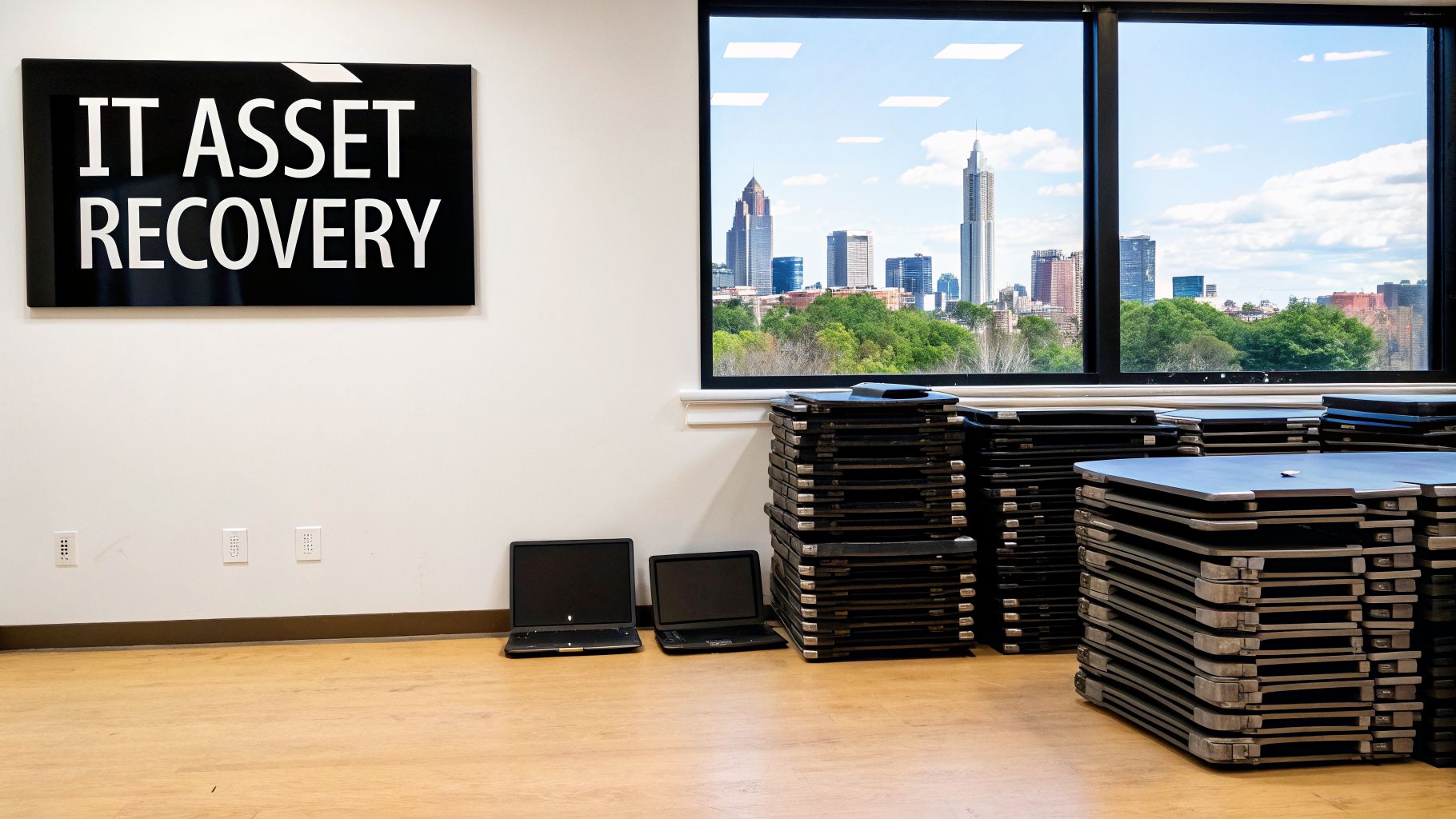
Dealing with outdated IT equipment is a real operational headache for any modern company. A well-planned IT asset recovery Georgia strategy isn't a cost but a vital business function that shields your company from data breaches, steep fines, and missed financial opportunities. It turns retiring hardware from a liability into a potential revenue stream. This service is strictly for commercial enterprises; we do not handle residential or consumer electronics.
This process takes a structured approach to the entire lifecycle of your used assets, from the first inventory audit to the final, certified disposal. For companies here in Georgia, this means finding a partner who gets the local logistics and understands national compliance standards inside and out.
The Core Components Of An ITAR Plan
A solid IT asset recovery (ITAR) plan is built on a few key pillars. Each stage demands careful planning to lock down security and get the best possible return on your old equipment.
Below is a breakdown of the essential stages and considerations that any Georgia organization should have in its ITAR plan.
Core Components Of A Georgia IT Asset Recovery Plan
| Stage | Objective | Key Georgia Consideration |
|---|---|---|
| Inventory & Audit | Create a complete list of all assets for disposal, with serial numbers and condition details. | Secure chain of custody is crucial, especially when moving assets between metro Atlanta and other regions. |
| Data Destruction | Permanently erase all sensitive data from storage media using certified methods like NIST 800-88. | Verify your vendor provides on-site and off-site options to meet security needs for different Georgia industries (healthcare, finance, etc.). |
| Logistics & Transport | Coordinate the safe, documented transport of equipment from your facility to a secure processing center. | A vendor with a local presence can offer faster, more flexible pickups across the state, from Augusta to Columbus. |
| Valuation & Resale | Assess the market value of functional equipment to facilitate resale and generate revenue. | Georgia's strong secondary market for tech can increase returns, but requires a partner with the right sales channels. |
| Recycling & Reporting | Responsibly recycle assets with no resale value and obtain Certificates of Destruction and Recycling. | Ensure your partner is certified (e.g., R2v3) and provides documentation to satisfy both federal and state environmental laws. |
Each of these steps works together to form a comprehensive strategy that protects your business from every angle.
A critical mistake many businesses make is treating IT asset disposition as an afterthought. A proactive ITAR program, however, is a fundamental part of risk management and corporate social responsibility. It protects your brand's reputation and your bottom line.
To get a better sense of how these services can work for your company, you can learn more about our comprehensive asset recovery services in Georgia. The goal is to create a seamless, transparent process that fits your operational and security needs.
By understanding these core components, Georgia businesses can make smarter choices when picking an ITAD partner, ensuring every piece of retired equipment is handled securely and responsibly.
Preparing Your Inventory For Secure Disposition
Before a single piece of equipment leaves your Georgia facility, you need to get organized. A solid IT asset recovery Georgia program starts with a detailed and accurate inventory audit. This isn't just paperwork—it establishes a secure chain of custody right from the get-go.
Think of it this way: you can't protect what you don't track. This initial audit is your first line of defense against data breaches and compliance headaches down the road. A clear, repeatable process is what separates a smooth hardware refresh from total chaos.
Creating The Asset Master List
Your master list needs to be more than just a quick count. For every single asset, you’ll want to capture key details that are crucial for both security and figuring out what your gear is worth. This creates the transparency your ITAD partner needs to do their job right.
A good inventory list should include these details for each item:
- Asset Type: (e.g., Laptop, Server, Switch)
- Make and Model: (e.g., Dell Latitude 7420, Cisco Catalyst 9300)
- Serial Number: This is the unique ID for tracking and final reporting.
- Asset Tag Number: Your company’s internal tracking number, if you use one.
- Physical Condition: Make a quick note of any major damage, missing parts, or if the unit doesn’t power on.
This detailed log becomes the official record. Your disposition vendor will audit their count against this list when the equipment arrives at their facility, confirming every item is accounted for.
Consolidating and Staging Your Assets
Once everything is inventoried, it’s time to gather all the decommissioned equipment into one central, secure spot. This could be a locked storage room or a caged-off section of your warehouse—anywhere with controlled access.
Centralizing your assets keeps them out of the way of daily business operations and dramatically reduces the risk of equipment walking off before pickup.
The goal is to create a controlled environment. By consolidating equipment, you streamline the pickup process for your vendor and dramatically shrink the window of opportunity for internal theft or accidental loss.
When you're dealing with loose hard drives or other small media, physical security is paramount. Using tamper-evident bags for these items is a simple but effective way to maintain the chain of custody and prevent anyone from accessing them. Securing these sensitive items before they get packed with larger equipment adds a critical layer of protection to your asset recovery program.
Navigating Data Destruction And Compliance In Georgia
When it's time to retire your company's IT assets, simply hitting "delete" or formatting a hard drive just doesn't cut it. For any Georgia organization handling an IT asset recovery Georgia project, data security has to be the top priority. Without certified data destruction, you’re leaving sensitive information dangerously exposed.
The only way to be sure that data is gone for good is through a verifiable destruction process. This usually boils down to two main choices: certified data wiping or physical shredding. Your decision will hinge on your security policies, the type of equipment you have, and whether you hope to get some value back from it. This isn't just a technical detail—it's a critical compliance step for everyone from a healthcare provider in Augusta bound by HIPAA to a financial firm in Atlanta needing to meet GLBA standards.
Choosing Between Wiping And Shredding
Certified data wiping uses professional software to completely overwrite a hard drive with random data, making the original information impossible to recover. The process typically follows rigorous NIST 800-88 standards. The big advantage here is that the drive remains physically intact, so the computer, laptop, or server can be refurbished and resold. If you have newer equipment that still has market value, this is almost always the way to go.
On the other hand, sometimes a drive is just too old, damaged, or contains such sensitive data that it needs to be completely obliterated. That's where physical shredding comes in. We feed hard drives, backup tapes, SSDs, and other media into an industrial shredder that chews them into tiny, useless fragments. It provides absolute peace of mind that the data is physically destroyed forever. This is the best choice for non-working drives or when your corporate policy demands nothing less.
But before you can decide on destruction, you have to know what you have. A solid inventory process is the bedrock of a secure plan.
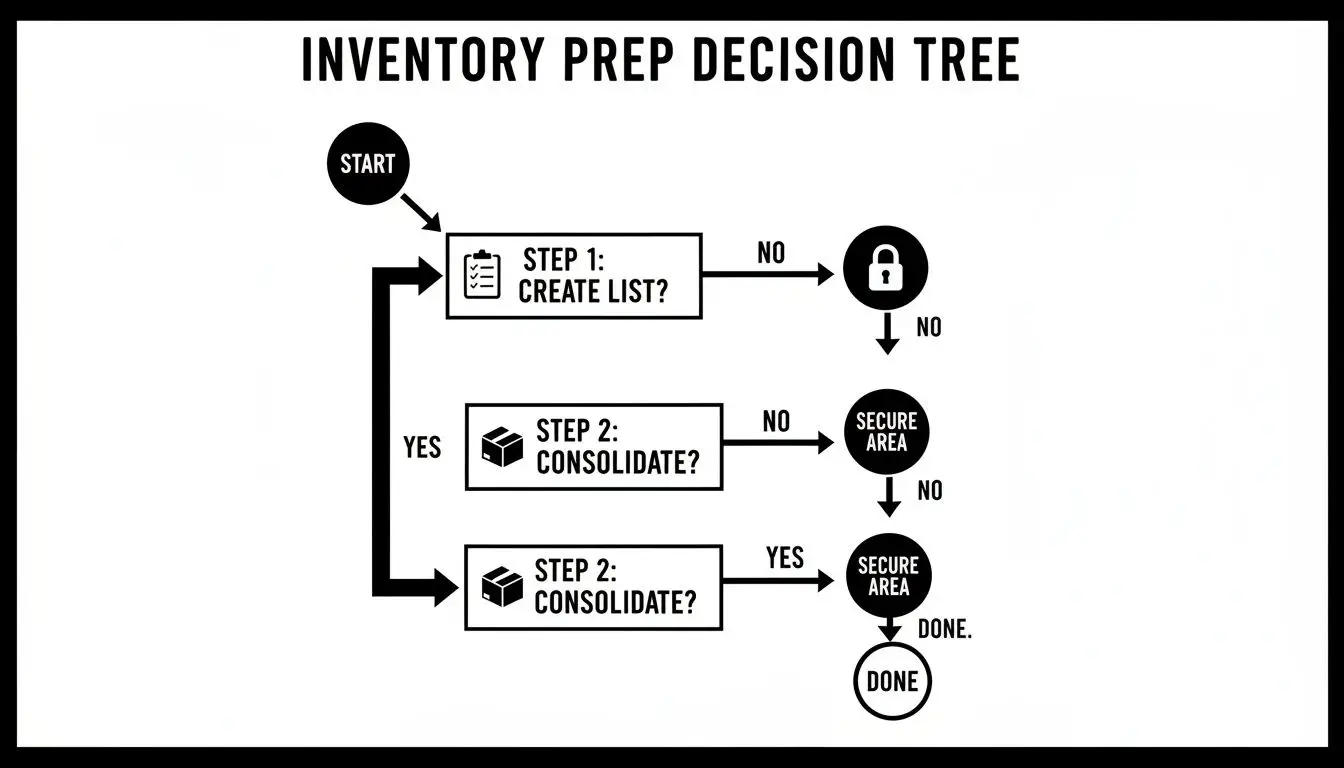
As this shows, getting your assets listed, gathered, and secured is the first step toward a successful and compliant data destruction project.
Data Wiping Vs Physical Shredding: Which Is Right For Your Georgia Business?
Choosing between data wiping and physical shredding is a common crossroads for businesses. One method preserves asset value while ensuring data security, while the other offers ultimate, irreversible destruction. This table breaks down the key factors to help you decide what makes the most sense for your Georgia organization's specific needs.
| Factor | Certified Data Wiping | Physical Hard Drive Shredding |
|---|---|---|
| Security Level | High; follows NIST 800-88 standards, making data unrecoverable. | Absolute; the drive is physically destroyed and rendered unusable. |
| Asset Value | Preserves the drive, allowing the equipment to be resold or reused. | Destroys the drive, eliminating any resale value for the storage media. |
| Best For | Newer laptops, desktops, and servers with resale value. | End-of-life, damaged, or non-functional drives; high-security needs. |
| Compliance | Fully compliant with HIPAA, FACTA, GLBA, and FTC rules. | Fully compliant with all major data privacy regulations. |
| Verification | A Certificate of Data Destruction with serialized reporting is provided. | A Certificate of Destruction is provided, often with video proof. |
Ultimately, both methods offer a compliant path forward. The right choice for your business depends entirely on balancing the potential for value recovery against your internal security requirements.
Ensuring Compliance And Transferring Liability
Federal laws like the FTC Disposal Rule are clear: your business must take proper steps to protect consumer information during disposal. Getting this wrong can lead to serious fines and a damaged reputation. The good news is that working with a certified ITAD partner is the most effective way to transfer that liability.
Once the process is complete, a professional vendor issues a formal Certificate of Data Destruction. Think of this as your legal proof of a job done right. It lists the serial numbers of every drive and the method used, serving as your official record for any audit.
This documentation is what closes the loop on your equipment's lifecycle, proving you’ve met your data security and regulatory duties.
For Georgia businesses ready to build a fully compliant and secure strategy, exploring professional services is the logical next step. You can find more details on our certified data destruction services in Georgia to see exactly how we can protect your organization. A trusted partner guarantees every step is secure, documented, and aligned with your industry's specific regulations, giving you total peace of mind.
Coordinating Logistics For Statewide Asset Pickup
Moving decommissioned IT assets from your Georgia office to a secure processing facility is more than just a simple delivery. Let's be honest—it's a critical moment where security risks are at their highest. A sloppy approach to logistics can derail your entire IT asset recovery Georgia program, leading to lost equipment and a broken chain of custody.
This isn't a job for a standard shipping company. It demands careful planning, from how assets are packaged to protect them in transit to scheduling a pickup that doesn’t bring your daily operations to a halt. Getting the logistics right is the key to a smooth and secure disposition process.
Packaging And Palletizing For Secure Transit
The first step is preparing your equipment properly for the move. Loose items are a huge liability. Your assets should always be professionally shrink-wrapped and palletized to prevent damage and keep everything together as a single, trackable unit.
Think of a pallet as a sealed container. Once your gear is securely stacked and wrapped, it becomes much more difficult for individual items to get damaged or mysteriously disappear. For smaller, high-risk items like loose hard drives or SSDs, they need to be secured in locked containers before being placed on the pallet.
The goal of professional packaging is to create a secure, consolidated shipment that can be easily loaded, transported, and inventoried upon arrival. It minimizes handling and creates a clear point of transfer from your facility to the vendor's truck.
The Advantage Of A Dedicated Fleet
When you're vetting an ITAD partner, make sure to ask about their transportation. A vendor that runs its own fleet of trucks offers a world of difference compared to one that just calls a third-party freight company. A dedicated fleet, staffed by the vendor’s own trained and background-checked employees, gives you direct control over your assets.
This in-house approach establishes a documented chain of custody from the second the truck is loaded at your Atlanta headquarters or your Macon branch. The benefits are pretty clear:
- Enhanced Security: The vendor is directly responsible for your assets from the moment they leave your door. No hand-offs, no excuses.
- Flexible Scheduling: It’s far easier to schedule pickups that work around your business hours, not a random freight carrier's schedule.
- Statewide Coverage: A vendor with its own fleet is equipped to service businesses all across Georgia, whether you're in a major city or a more remote location.
Coordinating a secure pickup is a fundamental part of any successful IT asset recovery plan. To help organizations across the state, we provide detailed guidance on our process. You can learn more about how to schedule an IT equipment pickup in Georgia and ensure your assets are handled correctly from start to finish. A little planning upfront ensures a smooth, documented, and secure transition for your end-of-life hardware.
Maximizing Value And Ensuring Final Disposition
The journey for your old IT hardware doesn’t stop once it leaves your building. For Georgia organizations, this final stage of IT asset recovery Georgia is where you can unlock real financial value and officially meet your environmental duties. It’s the step that decides whether your equipment generates a return or simply becomes responsibly recycled material.
A professional ITAD program closes the loop on your asset’s lifecycle. This is a two-part mission: finding opportunities to get you a return on your investment (ROI) through remarketing, while also providing the documented proof you need for compliant, responsible disposal of everything else. It’s a process that helps both your budget and your company’s reputation.
The IT Asset Buyback Process
It surprises many businesses to learn that their "obsolete" equipment often still has plenty of life—and value—left in it. The IT asset buyback process is how you can tap into that hidden value. Once your assets arrive at our facility, our technicians get to work with a detailed audit and grading process.
We look at each piece of equipment based on a few key factors:
- Age and Model: Newer hardware, usually within three to five years old, consistently holds the most resale value.
- Functional Condition: Assets that are fully working and have all their parts will always fetch the best prices.
- Cosmetic Condition: Scratches, dents, and other signs of wear and tear will impact the final resale price.
- Current Market Demand: We keep a close eye on secondary market trends to give you a fair, up-to-date valuation for your specific models.
After the evaluation is done, we send over a comprehensive report and a formal offer for any assets that qualify. This is how a sunk cost can become an unexpected source of revenue. You can learn more about how we handle surplus electronics resale in Georgia and turn old tech into new capital for businesses like yours.
Certified Recycling For Zero-Value Assets
Not every piece of equipment will have a second life on the resale market. Older, broken, or highly specialized hardware needs to be disposed of in a way that’s safe for the environment. This is where certified electronics recycling is absolutely critical. It’s not about just dumping e-waste; it’s a careful de-manufacturing process.
During certified recycling, assets are systematically broken down into their core materials. This ensures hazardous substances like lead and mercury are managed safely, while valuable commodities like steel, aluminum, copper, and precious metals are recovered and sent back into the manufacturing supply chain. It's the circular economy in action.
The Importance Of A Certificate Of Recycling
When the de-manufacturing and recycling work is complete, you’ll receive a Certificate of Recycling. This document is just as important as the Certificate of Data Destruction we talked about earlier. It is your official record proving that your company handled its electronic waste in full compliance with all environmental regulations, including EPA guidelines.
This certificate formally shifts the liability for the old equipment from your organization to the certified recycler. For any Georgia business focused on maintaining a strong public image and demonstrating a real commitment to sustainability, this paperwork is non-negotiable. It provides the auditable, third-party proof your ESG (Environmental, Social, and Governance) and corporate social responsibility programs need to show you made the right choices from beginning to end.
Common Questions About Georgia IT Asset Recovery
Even when you have a solid plan, the details of IT asset recovery in Georgia can still raise a lot of questions for business leaders and IT managers. Getting a complete picture of the process helps you make smart decisions that protect your company, get the most value back, and keep you compliant.
We get questions from organizations all over the state, so we’ve put together some straightforward answers to the ones we hear most often.
What Types Of Equipment Do You Accept?
Our main focus is on enterprise-level IT hardware. We handle IT equipment disposal for business assets including computer recycling, data center decommissioning, laptop disposal, medical equipment disposal, and laboratory equipment disposal.
This usually covers:
- Data Center Hardware: Think servers, storage arrays (like SANs and NAS), and networking gear such as switches and routers.
- End-User Devices: We handle business-class laptops, desktops, and workstations from all the major manufacturers.
- Specialized Assets: We also manage the disposal of unique equipment from industries like healthcare and research, which can include medical devices and lab instruments.
The important thing is that the assets come from a business or enterprise setting, not a residential one.
Is There A Minimum Quantity For Pickup In Georgia?
Yes, we typically have a minimum quantity for our free pickup services. This helps us keep the logistics efficient and affordable for everyone. What that minimum is depends on your location in Georgia and the type of equipment you need us to handle.
For instance, a load of 20 newer servers from a data center in Alpharetta would easily qualify. For smaller batches or gear with less resale value, you can always use our convenient drop-off option at our Smyrna, GA facility.
The best way to know for sure is to contact Beyond Surplus directly with your inventory list. We’ll figure out the best approach for you.
How Do I Get A Quote For My Used IT Assets?
Getting a quote for your used equipment is a pretty simple process, and it all starts with your inventory list. The more detail you can give us, the more accurate our initial buyback offer will be.
A detailed inventory list is the key to a successful buyback. Be sure to include the make, model, specs (like CPU, RAM, and storage), and a quick note on the condition of each asset. With that list, our team will dive into current market values and send you a formal quote.
How Long Does The Entire IT Asset Recovery Process Take?
The timeline can change a bit depending on the size and complexity of the project. Once you give our quote the green light, we can usually schedule a pickup anywhere in Georgia within a few business days.
After the equipment gets to our secure facility, the full process of auditing, destroying data, and finalizing the valuation usually takes about 5 to 10 business days. From there, we’ll issue a complete settlement report showing what happened with every single asset, along with your Certificates of Destruction and Recycling. If you have equipment that was remarketed, your payment will be sent out at this time as well.
Contact Beyond Surplus for certified electronics recycling and secure IT asset disposal. For Georgia businesses looking for a trusted partner for secure and responsible electronics disposal, Beyond Surplus offers certified solutions designed for your needs. Contact us today to schedule a pickup or learn more about our services at https://www.beyondsurplus.com.