

A server room refresh rarely fails because of one dramatic mistake. It fails because small gaps stack up. A mislabeled drive. A contractor who signs in but never logs the serials. A pallet wrapped for shipping but not protected well enough to preserve resale value. A truck leaves the site, and your team realizes no one can produce a clean chain of custody for every asset that just exited the building.
That’s the point where “pickup service” and white glove service stop meaning the same thing.
For an IT director, a data center operator, or a compliance lead, asset retirement is a risk event. You’re moving devices that may still hold regulated data, proprietary configurations, licensed software, or recoverable value. If the process is sloppy, the exposure lands on your organization. If the process is controlled, documented, and executed by trained technicians, the burden shifts in a way your legal, security, and procurement teams can defend.
A lot of companies still treat end-of-life IT as a hauling problem. It’s not. It’s a decommissioning, security, logistics, and reporting problem rolled into one. That’s why a serious review of your IT asset disposition process matters before the first asset is unplugged.
Introduction
When a company decommissions a server room, closes a branch, or refreshes hundreds of laptops, the pressure shows up immediately. Internal IT staff already have enough to do. Facilities wants the space cleared. Security wants proof that data won’t leak. Finance wants accurate counts for write-off and recovery. Legal wants documentation that will hold up if anyone asks questions later.
Standard freight doesn’t solve that. Basic recycling pickup doesn’t solve it either.
White glove service in ITAD is the operational layer that turns a risky asset exit into a controlled project. It brings trained labor on site, applies handling protocols designed for sensitive electronics, and builds documentation into every handoff. It also removes a common failure point: expecting your own staff to improvise de-installation, packaging, staging, labeling, and audit support while trying to keep normal operations running.
That matters most when the equipment is dense, distributed, or regulated. Server racks, storage arrays, network gear, clinical devices, desktops across multiple offices. The more moving parts involved, the less room there is for an informal process.
White glove service isn’t about making pickup feel premium. It’s about making asset disposition verifiable.
If your current process depends on internal spreadsheets, handwritten counts, and whoever happens to be available on pickup day, the weak spots are already there.
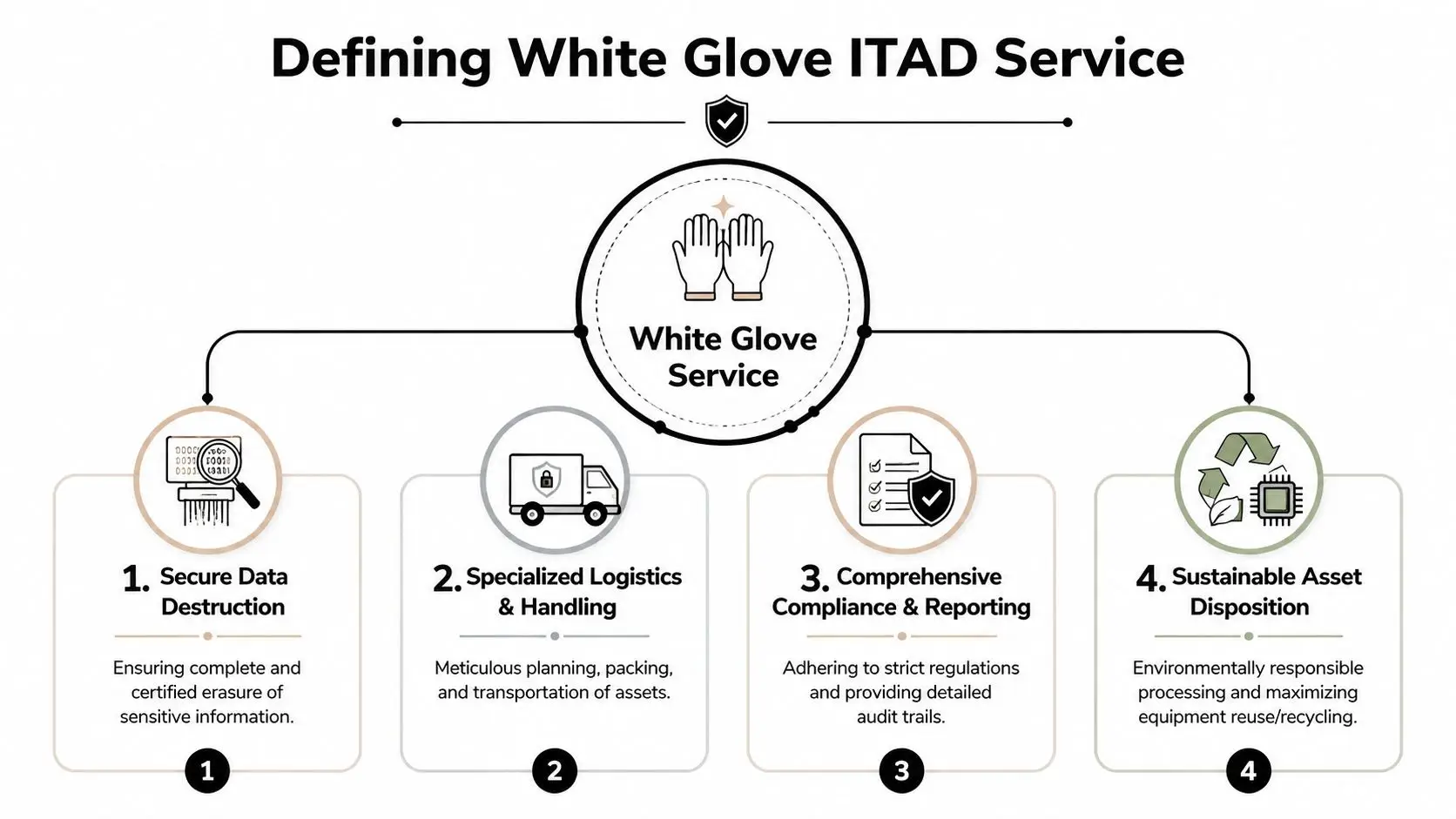
Defining White Glove Service in ITAD and E-Waste
White glove service gets used loosely in a lot of industries. In IT asset disposition, the term needs a tighter definition. It doesn’t mean “careful delivery.” It means managed on-site execution plus secure logistics plus auditable documentation.
What separates it from standard pickup
A standard e-waste pickup usually assumes the client has already done the hard part. Assets are disconnected, consolidated, boxed, and ready at the dock. That model works for low-risk, low-complexity loads.
White glove service covers the work before the truck is loaded:
- On-site labor that can de-install servers, storage, endpoints, and peripherals
- Controlled handling for fragile or high-value electronics
- Asset identification tied to inventory and downstream reporting
- Packaging discipline that protects both data-bearing devices and residual value
- Chain-of-custody procedures from room level to final processing
This demand isn’t niche. The U.S. White Glove Delivery Service Market was valued at USD 15.43 billion in 2024, with projections to reach USD 21.45 billion by 2030. That same source notes that over 25% of furniture and appliance deliveries now require setup services, which helps explain why businesses increasingly expect more than curbside handling for complex, high-value equipment.
What good white glove service looks like in ITAD
A proper ITAD engagement treats removal as part of the compliance process, not a separate transport task. The team arrives with a site plan, knows what’s being removed, understands escalation paths, and documents each transfer of possession.
Core definition: In ITAD, white glove service is a project-managed method for removing, securing, transporting, and documenting retired technology so the client can reduce risk, preserve value, and prove what happened to every asset.
That’s why the comparison to consumer delivery only goes so far. If you want a simple example of what “white glove” means in another context, white-glove furniture assembly shows the service mindset well: room-of-choice placement, assembly, and debris removal. In ITAD, the same hands-on model applies, but the stakes are data security, audit readiness, and liability transfer.
Why the definition matters
If a vendor can’t define its white glove process in operational terms, you’re probably hearing marketing, not controls. Ask what happens on site, who handles de-installation, how assets are tagged, when custody changes, and what documents you receive at closeout.
A provider offering nationwide white glove asset recovery services should be able to answer those questions in plain language and map each answer to a real step in the workflow.
The End-to-End White Glove Process Deconstructed
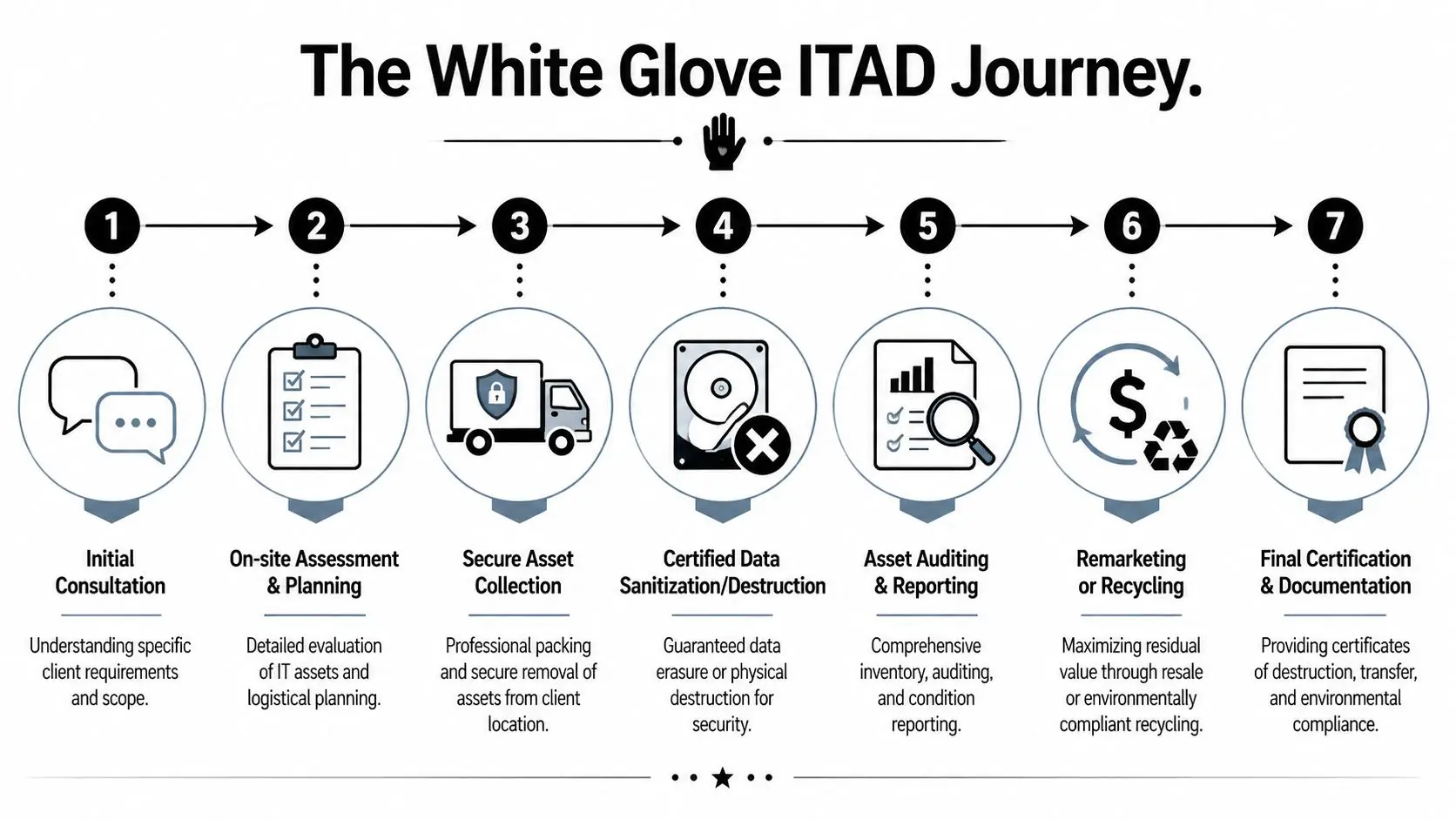
The cleanest ITAD projects follow a sequence. The order matters because each step protects the next one. If planning is weak, asset counts drift. If de-installation is rushed, equipment gets damaged. If packaging is poor, value recovery drops and exceptions start piling up.
Site scoping and project planning
The first task is understanding the environment, not moving hardware. A competent team reviews access routes, loading constraints, security rules, rack layouts, power-down dependencies, and the mix of data-bearing and non-data-bearing assets.
Bad assumptions are identified early. Are there live systems mixed into retirement rows? Does the building require after-hours freight access? Are there elevators, dock restrictions, or escort requirements? White glove service works because it treats logistics as part of the technical plan.
De-installation and asset control
Once the scope is confirmed, technicians remove equipment in a way that protects both safety and inventory integrity. That can mean labeling rack positions, disconnecting peripherals in sequence, separating reusable gear from scrap, and staging items by disposition path.
Some projects need light touch handling. Others need precise dismantling in dense environments. Data center work especially benefits from technicians who understand how to remove rail-mounted equipment, blade enclosures, switches, and storage without turning the room into a pile of anonymous hardware.
The operational discipline here is practical, not cosmetic:
- Tagging at point of removal keeps the audit trail attached to the device
- Segregated staging prevents drives, accessories, and chassis from getting mixed
- Controlled room workflows reduce interruption to nearby production systems
- Two-person handling lowers drop risk on heavier or awkward equipment
One useful benchmark from Aerodoc’s description of white glove delivery levels is that white glove protocols can include two-person teams for interior equipment placement and reverse packaging, where debris is systematically removed. In ITAD, that same discipline keeps client spaces organized and reduces the safety and product-integrity issues that show up in less controlled removals.
Data destruction and packaging
Data-bearing assets need a disposition decision before they disappear into generic freight flow. Some organizations require on-site destruction. Others authorize off-site sanitization or shredding under documented custody. What matters is that the method is defined in advance and tied to the inventory.
After that, the hardware needs to be packed for its actual downstream path. Equipment intended for resale should be protected to avoid avoidable cosmetic or mechanical damage. Scrap loads still need stable, safe packing so serial-bearing assets don’t get separated from the record set.
If a vendor talks a lot about transportation but very little about pre-transport control, that’s a warning sign.
Transport, reconciliation, and final reporting
Secure loading is the handoff most clients see, but it shouldn’t be the only documented moment. Every movement after pickup should reconcile back to the original list, including exceptions. Missing accessories are manageable. Missing drives are not.
A solid closeout package usually includes:
- Processed asset inventory matched to pickup records
- Data destruction documentation for applicable devices
- Recycling or disposition records for non-remarketable items
- Value recovery support where equipment qualifies for remarketing
- Exception notes for unreadable tags, damaged units, or count variances
The difference between an average provider and a strong one often shows up at the end. Anyone can remove equipment. Fewer teams can close the loop with records your auditors, security team, and finance department can all use without reworking the file.
Strengthening Compliance and Security with Chain of Custody
For regulated organizations, the ultimate deliverable isn’t pickup. It’s proof.
A chain of custody is the documented record showing where an asset was, who handled it, and what happened to it from removal through final disposition. In practice, that record is what lets an IT director answer hard questions with confidence. It’s also what prevents a routine refresh from turning into a legal or compliance problem months later.
What chain of custody looks like in the field
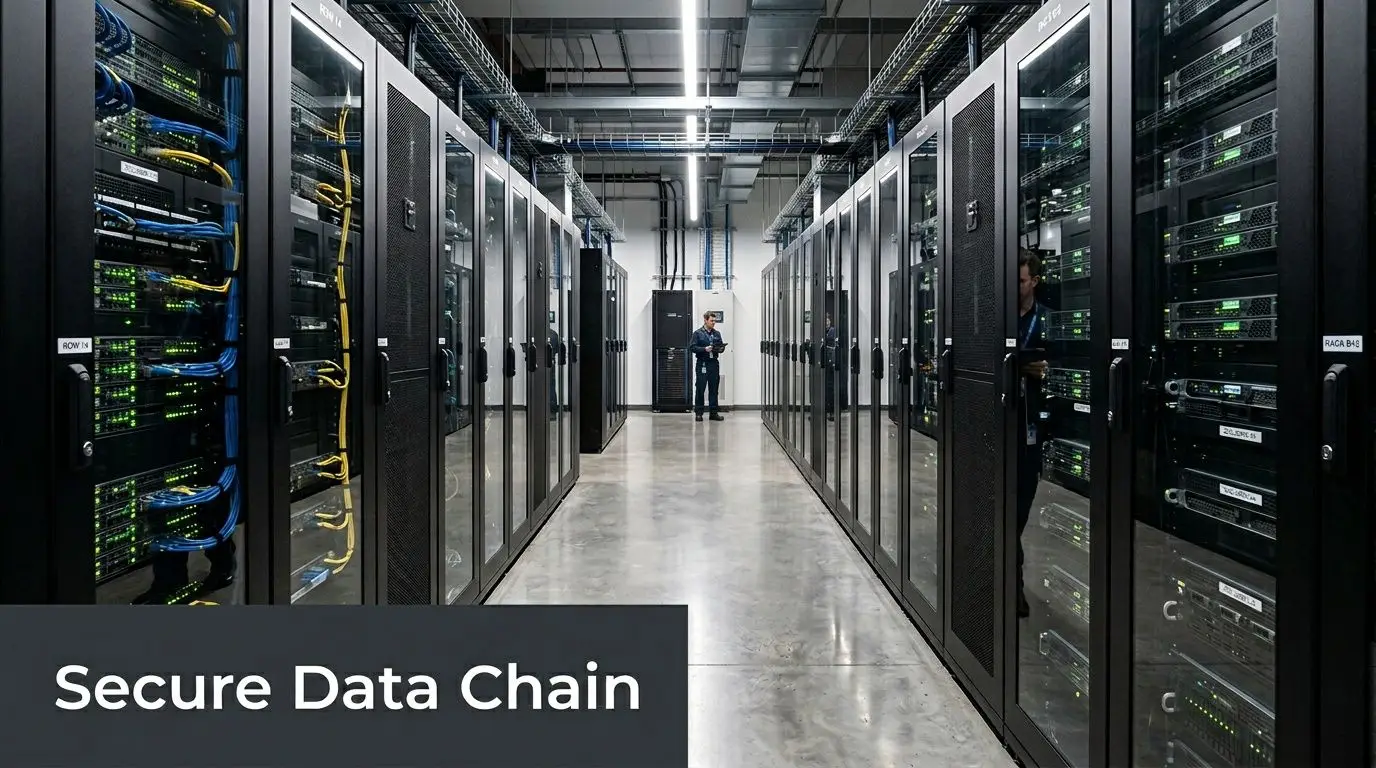
This isn’t just a signed pickup ticket. In a real white glove service model, custody starts when equipment is identified on site and continues through packaging, loading, transport, intake, processing, and destruction or recycling. Each step should connect to the same asset record or lot record.
The strongest programs also control transit visibility. According to Crane Worldwide Logistics’ overview of white glove provider requirements, advanced white glove logistics can integrate real-time GPS monitoring, security surveillance, and emergency response plans to protect sensitive equipment in transit. That same source notes that for data centers, providers may use on-site inspections and functional testing to verify equipment integrity and support full chain-of-custody compliance.
Those details matter because many breakdowns happen between the client site and the processor, not at either endpoint.
Why regulated sectors should care
Healthcare organizations need defensible handling for devices that may contain protected data. Financial institutions need a record that supports internal controls and customer data protection. Government and contractors need documented accountability. Any business subject to the FTC Disposal Rule needs confidence that retired media and systems were handled in a way that supports disposal obligations.
A chain of custody does three things at once:
| Risk area | What white glove controls do | Why it matters |
|---|---|---|
| Data exposure | Tracks assets from removal through destruction or sanitization | Reduces uncertainty around lost or mishandled devices |
| Audit response | Produces consistent records and certificates | Gives legal, compliance, and procurement teams usable evidence |
| Liability transfer | Documents when control passed to the provider and how assets were processed | Strengthens your position if an incident or inquiry occurs |
What doesn’t work
What fails most often is partial documentation. A vendor may provide a generic weight ticket, a high-level invoice, or a destruction certificate that doesn’t tie clearly back to the actual devices removed. That leaves too much room for manual reconstruction.
A certificate has value only if it connects to a traceable asset history.
That’s why many IT leaders ask for examples of the final reporting package before awarding work. If the provider can’t show how serialized assets, lot-based pickups, and destruction records line up, your team will end up doing the reconciliation internally.
For organizations that need formal evidence of downstream handling, the right deliverable often includes a certificate of destruction tied to the documented asset trail, not a standalone PDF with no operational context.
Key Enterprise Benefits of Premium ITAD Services
Risk reduction gets the conversation started. Business value is what justifies making white glove service standard for larger or more sensitive projects.
The market is moving in that direction. The U.S. White Glove Services Market is projected to reach USD 20.25 billion by 2030, with a projected CAGR of 12.7% from 2023 to 2030. That growth reflects enterprise demand for higher-touch handling tied to compliance, documentation, and value recovery.
Better value recovery
Condition affects resale. So does completeness. A server removed carefully, packed correctly, and processed against accurate inventory has a better chance of retaining recoverable value than one pulled in haste, stacked loosely, and delivered with uncertain asset records.
White glove service helps protect that value because it reduces the damage that usually happens during de-installation and transit. Bent rack ears, cracked bezels, missing caddies, mixed accessories, and unlabeled drives all drag returns down. Those losses are avoidable.
Stronger sustainability reporting
Sustainability claims need evidence. White glove ITAD supports that by producing cleaner downstream documentation on reuse, recycling, and destruction paths. That makes it easier for procurement, operations, and ESG stakeholders to show that retired technology wasn’t dumped into an opaque waste stream.
For enterprise clients, that matters beyond branding. It supports vendor governance, internal policy enforcement, and reporting discipline.
Less internal distraction
Internal IT staff shouldn’t spend days wrapping pallets, carrying towers, and trying to reconstruct serial numbers after the truck leaves. Their job is to protect production systems, support users, and manage the next deployment wave.
White glove service outsources the heavy operational work without outsourcing control. That’s the key distinction. Your team keeps oversight, while trained specialists handle removal, packaging, transport coordination, and closeout reporting.
A practical perspective reveals:
- Without white glove service, your staff does physical labor and paperwork they weren’t hired for
- With white glove service, your staff governs the project while the provider executes the fieldwork
- The result, when the provider is competent, is a cleaner handoff with fewer internal interruptions
That’s why premium ITAD shouldn’t be viewed as a luxury line item. It’s a method for preserving value, tightening compliance posture, and keeping internal resources focused on higher-priority work.
White Glove Service Use Cases in Regulated Industries
The need for white glove service becomes obvious when you look at real operating environments. The controls aren’t abstract. They solve specific problems that show up in regulated sectors every day.
Healthcare environments
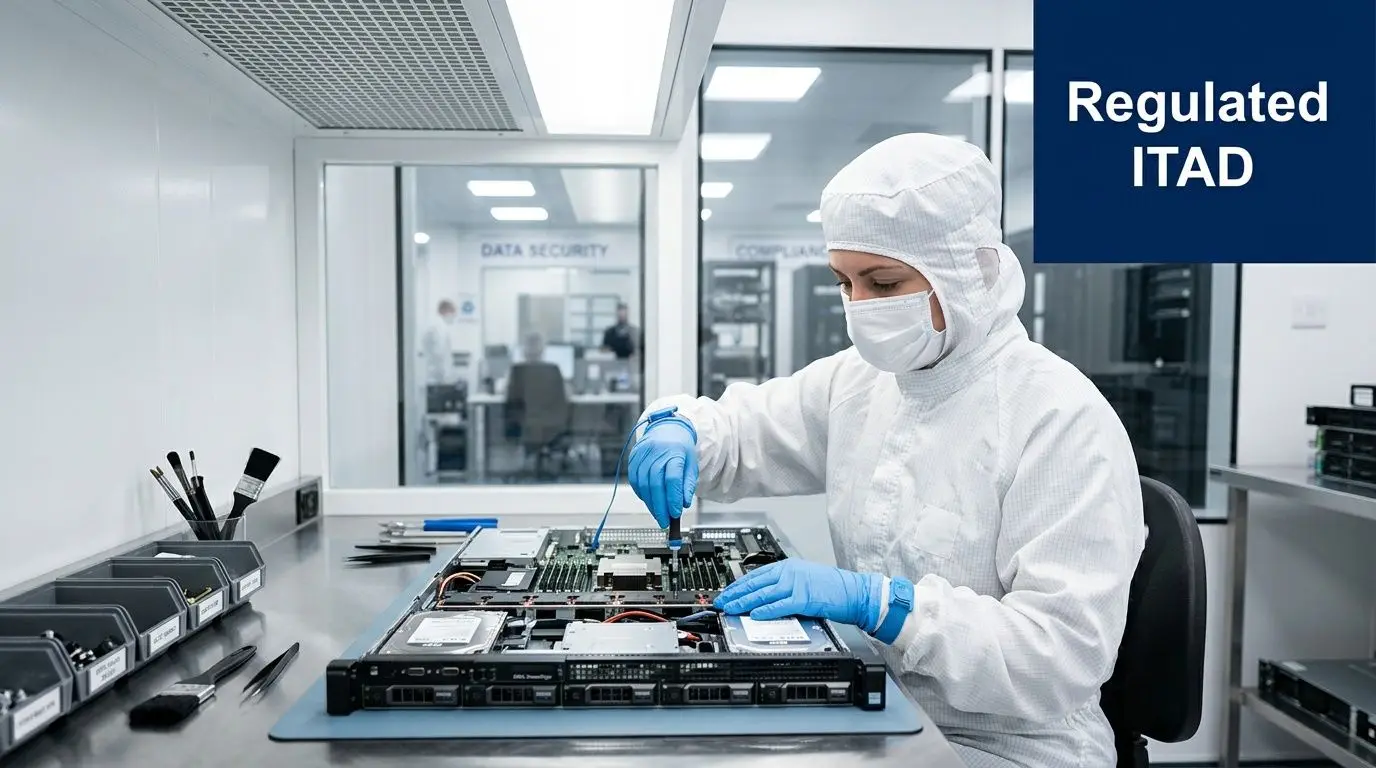
A hospital replacing nursing station PCs, imaging workstations, and legacy storage can’t treat retirement as a generic junk removal job. Assets may hold patient data, sit in controlled spaces, or require tightly scheduled access windows to avoid disrupting care operations.
In that setting, white glove service usually means escorted on-site handling, serialized pickup records, controlled movement through active facilities, and documented data destruction paths. Teams also need to leave areas clean, because clutter and packaging debris create real operational problems inside clinical environments.
Organizations evaluating healthcare workflows often look for providers with experience in HIPAA-compliant electronics recycling because privacy obligations don’t disappear when the equipment reaches end of life.
Financial institutions
A branch closure or trading floor refresh creates a different kind of pressure. The environment may not be medically sensitive, but the data and internal controls are. Old desktops, thin clients, printers, network devices, and storage systems can’t drift through an undocumented disposal stream.
White glove service helps by making the project repeatable across locations. The same procedures can be applied branch by branch, with verified removal, secure staging, and consolidated reporting. That consistency matters when compliance teams review disposal history across a portfolio, not just one office.
Education systems
School districts and universities face a scheduling challenge more than anything else. They often need to collect, sort, and process large numbers of laptops, tablets, carts, and peripherals inside a narrow academic break. White glove service works well here because it reduces campus disruption and speeds the transition from active use to audited disposition.
The strongest projects separate units by category on site, isolate damaged equipment, and maintain inventory discipline even when assets come from many rooms or buildings. Without that structure, summer refreshes turn into a scramble of missing chargers, mismatched carts, and incomplete records.
Data centers and labs
Data center migrations and lab decommissions are where weak vendors get exposed quickly. The hardware is dense, the environment is controlled, and a mistake can affect adjacent systems or ruin recoverable assets. White glove service is valuable here because technicians are expected to operate inside a live technical setting, not just collect boxes at the dock.
In sensitive environments, the provider’s field discipline matters as much as the recycling outcome.
That includes careful rack removal, site-specific access planning, packaging that matches the asset type, and documentation that survives audit review after the room is empty.
A Checklist for Selecting Your White Glove ITAD Partner
There’s a basic problem in this market. “White glove” has no universal quality benchmark. The gap is significant enough that White Glove Enterprise Consulting explicitly notes the lack of an industry-standard definition and argues that businesses should vet providers on verifiable standards such as NIST compliance, audit trails, and data destruction certifications instead of relying on marketing language.
That’s the right approach.
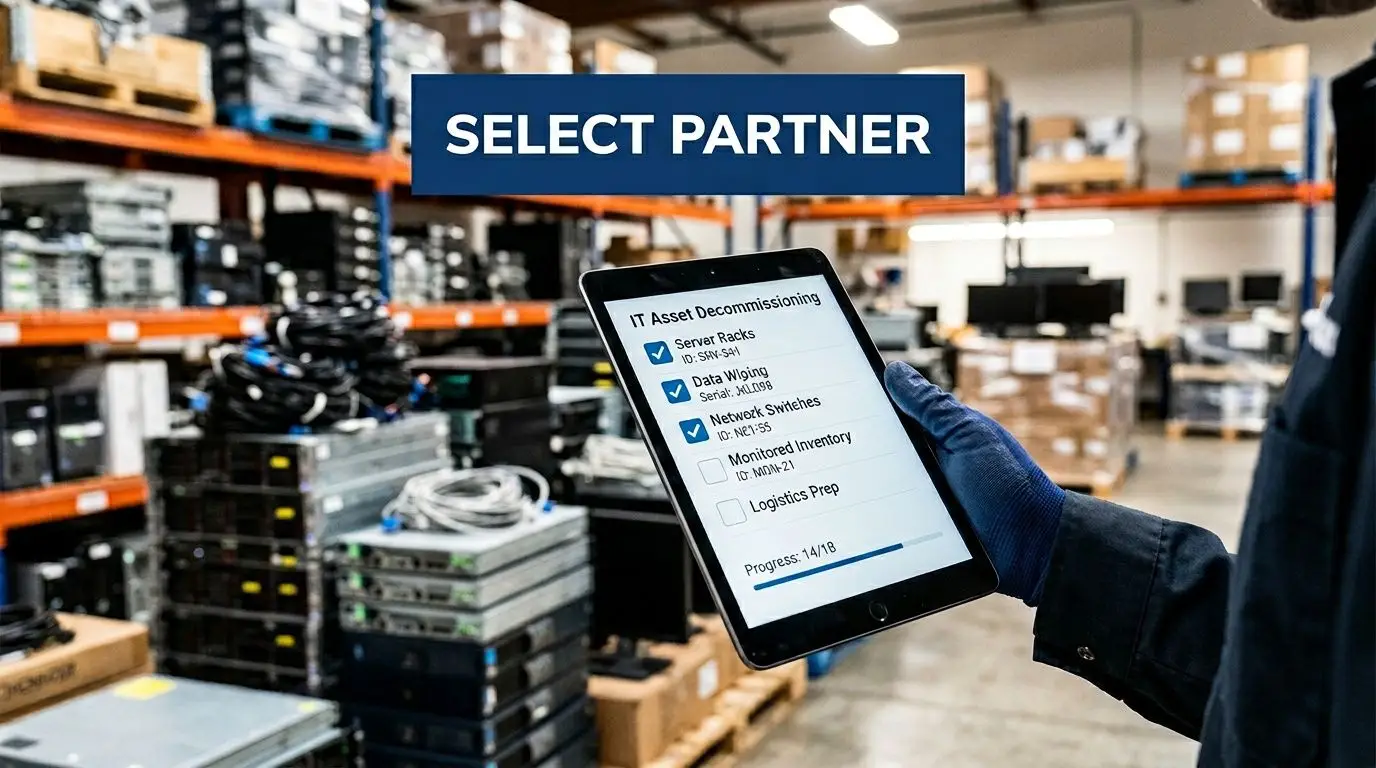
Questions worth asking before you sign
Use this list during vendor review. If a provider answers vaguely, assume the process is vague too.
- Ask for process detail. Request a step-by-step description of how assets move from room-level pickup to final disposition.
- Review destruction methods. Confirm whether the provider supports on-site and off-site options, and what documentation follows each method.
- Inspect chain-of-custody samples. Don’t settle for verbal assurances. Ask to see sample pickup records, serialized inventories, and final reporting packages.
- Check handling capabilities. Verify whether the team can perform de-installation, palletizing, reverse packaging, and room cleanup.
- Test exception management. Ask what happens if a serial number is unreadable, a drive is missing, or counts change during pickup.
- Confirm insurance and liability coverage. The provider should be able to explain coverage in practical terms and define where responsibility changes hands.
- Validate compliance alignment. Ask how their documentation supports your internal policies and regulatory obligations.
- Look for audit readiness. The reporting should be usable by IT, security, procurement, finance, and legal without major reconstruction.
What a strong answer sounds like
Good vendors answer with specifics. They’ll talk about field procedures, labels, packaging methods, handoff points, and final certificates. Weak vendors answer with slogans.
Practical rule: If the sales conversation sounds polished but the operational explanation sounds thin, keep looking.
A formal vendor due diligence checklist helps standardize that evaluation so procurement, IT, and compliance teams assess the same risks against the same criteria.
Frequently Asked Questions About White Glove ITAD
Is white glove service more expensive than standard e-waste recycling
Usually, yes. It includes more labor, more planning, tighter handling controls, and more documentation. But cost should be compared against the project you’re running. If your team would otherwise spend internal hours on de-installation, staging, packaging, inventory cleanup, and audit support, standard pickup often isn’t cheaper in any meaningful sense. It just hides the workload inside your own payroll and risk exposure.
What size project justifies a white glove approach
Large projects are obvious candidates, but size isn’t the only factor. A small batch of assets can still justify white glove service if the devices contain sensitive data, sit inside a restricted environment, or need careful de-installation to preserve value. One rack of storage can require more control than a truckload of generic peripherals.
How long does a typical project take
It depends on site access, asset volume, de-installation complexity, and whether data destruction happens on site or after transport. The important point is that a serious provider should give you a scoped plan, not a casual estimate. Projects run better when access windows, asset categories, custody points, and reporting expectations are defined before pickup day.
How is white glove ITAD different from consumer white glove delivery
Consumer white glove service usually focuses on placement, setup, and debris removal for delivered products. ITAD white glove service focuses on secure removal, controlled handling, chain of custody, data destruction coordination, and downstream reporting for retired assets. The service mindset is similar. The risk profile is completely different.
Does white glove service always mean on-site data destruction
No. Some organizations require it, while others approve off-site destruction or sanitization under documented custody. What matters is that the method is chosen intentionally, tied to policy, and reflected in the final record set.
What’s the biggest mistake buyers make
They assume “white glove” is a standard level of service. It isn’t. One provider may include de-installation, serialized inventory, reverse packaging, and closeout reporting. Another may mean a more careful pickup crew. Always ask what is included, what is documented, and what your team still has to do.
Conclusion
White glove service matters most when failure carries real consequences. In ITAD, that means data exposure, audit issues, avoidable asset loss, and internal disruption. A well-run program gives you controlled removal, documented custody, cleaner reporting, and a better chance to recover value from retired equipment.
For risk-averse IT leaders, that’s the difference between hoping a disposition project went well and being able to prove it did.
Contact Beyond Surplus for certified electronics recycling and secure IT asset disposal with white glove coordination for business and enterprise pickups.


