For businesses in Atlanta, GA, finding a reliable "e-waste recycling near me" service isn't just about clearing out old equipment—it's a critical component of data security and regulatory compliance. When retiring servers, computers, or specialized equipment, improper disposal poses a direct threat to your company's sensitive data, environmental standing, and overall reputation. This guide is designed specifically for commercial and enterprise clients in Atlanta seeking secure, compliant IT asset disposal solutions.
Why Atlanta Businesses Need a Certified Commercial E-Waste Partner
Retiring IT hardware is a standard part of the technology lifecycle for any Atlanta enterprise. However, the disposal process is often overlooked, creating significant risks that many companies only recognize after a data breach or compliance failure.
The primary concern isn't the physical hardware but the confidential data stored within. Obsolete hard drives can be a goldmine for cybercriminals, exposing everything from proprietary company data and customer information to financial records. This is a substantial issue.
Globally, the scale of electronic waste is staggering. In 2022, a massive 62 million tonnes of e-waste was generated, yet only 22.3% was properly documented, collected, and recycled. This gap represents a significant environmental and security risk for businesses everywhere, including those in Georgia. Billions of dollars in recoverable materials are lost, and countless devices containing sensitive data are discarded improperly. You can discover more insights about these e-waste statistics to understand the magnitude of the challenge.
Moving Beyond Simple Disposal to IT Asset Disposition (ITAD)
Viewing e-waste management as mere "disposal" is a strategic error. A certified partner provides a structured, end-to-end process known as IT Asset Disposition (ITAD). This comprehensive approach is designed to protect your Atlanta business at every stage, far beyond simple equipment hauling.
A robust ITAD program is founded on several key pillars:
- Data Security: Ensuring every bit of data is irretrievably destroyed according to certified standards like NIST 800-88.
- Environmental Compliance: Adhering to all federal, state, and local regulations to avoid significant fines and environmental liability.
- Chain-of-Custody: Providing detailed documentation that tracks every asset from your Atlanta facility to its final disposition.
- Value Recovery: Identifying assets with remaining resale value to help offset disposal costs and potentially generate revenue.
Choosing a certified commercial e-waste partner transforms a compliance burden into a strategic advantage. It allows you to secure your data, meet regulatory requirements, and demonstrate corporate responsibility—all while recovering value from retired assets.
Ultimately, partnering with a certified specialist provides peace of mind. You receive a clear, auditable trail proving your company handled its end-of-life electronics responsibly, safeguarding both your reputation and your bottom line. To build a secure and compliant asset retirement strategy, you must first understand the fundamentals. Learn more by exploring our guide on what IT Asset Disposition is and why it matters.
How to Vet Commercial E-Waste Recycling Vendors in Atlanta
A simple search for "e-waste recycling near me" in the Atlanta area will yield many results, but selecting the right partner requires careful scrutiny. When your company's data security and compliance are at stake, not all recycling vendors are created equal. A thorough vetting process is essential to protect your business from downstream liabilities.
The first step is to exclusively consider vendors with industry-recognized certifications. These are not just logos for a website; they represent a commitment to strict operational standards, verified by independent, third-party auditors. For any business handling sensitive corporate assets, these credentials are non-negotiable.
Key Certifications to Demand from Your Atlanta Partner
When evaluating potential vendors for your Atlanta-based operations, there are specific certifications you must require. Each one addresses a critical aspect of IT asset disposal, from environmental responsibility to ironclad data security.
- R2v3 (Responsible Recycling): This is the comprehensive standard for the industry, covering environmental protection, worker health and safety, and data security. An R2v3-certified vendor ensures your e-waste is managed responsibly throughout its entire lifecycle, including downstream partners.
- e-Stewards: Developed by the Basel Action Network, this certification enforces a strict no-export policy for hazardous e-waste to developing countries. It guarantees your retired equipment will not contribute to environmental and human rights issues abroad.
- NAID AAA: This certification is focused exclusively on secure data destruction. A NAID AAA certified company undergoes rigorous, unannounced audits to verify its processes for shredding, wiping, and physically destroying data-bearing devices. It is the gold standard for data security assurance.
This decision tree illustrates the direct link between proper e-waste management and the avoidance of catastrophic business risks, such as data breaches and severe compliance penalties.
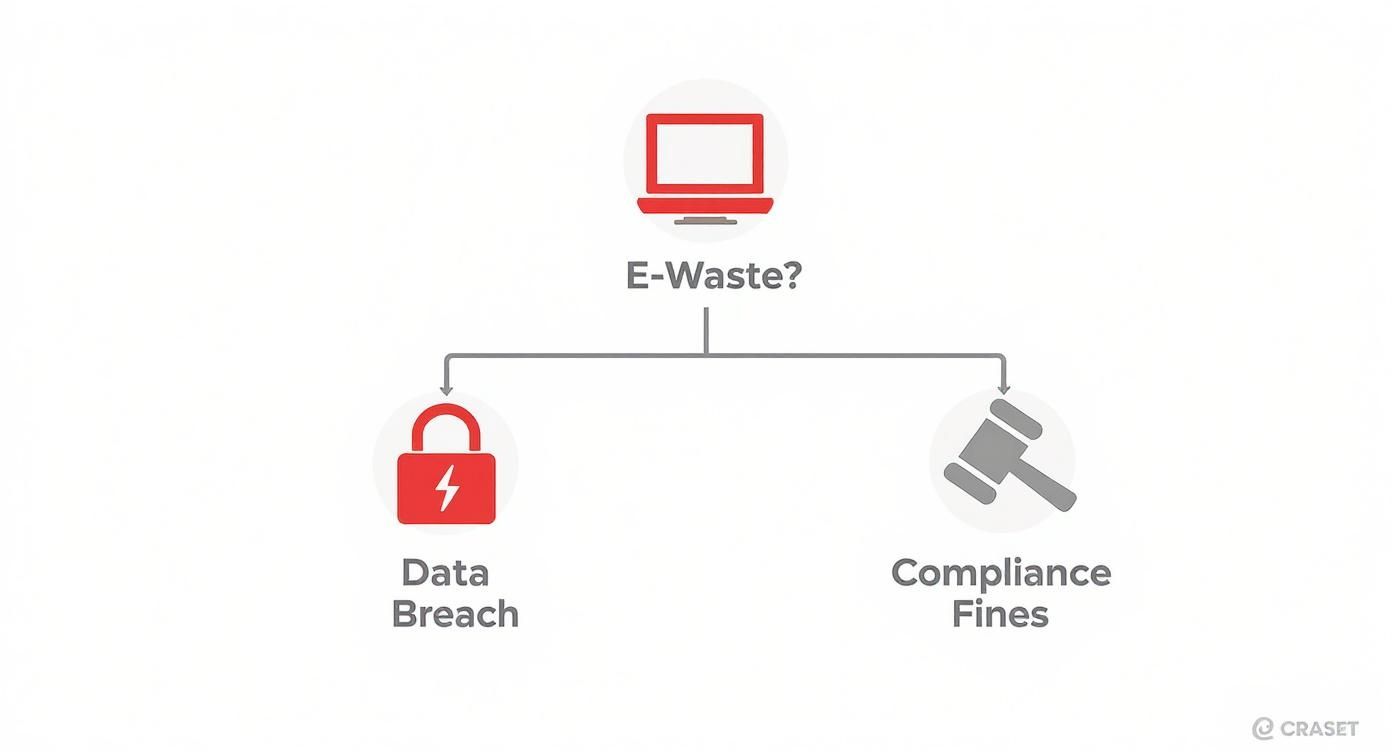
The key takeaway is that improper disposal is not merely an environmental issue; it is a direct threat to your company’s financial stability and reputation.
To help you compare these essential credentials, here is a breakdown of what each certification means for your business.
Comparing E-Waste Recycling Certifications for Commercial Services
This table provides a concise overview of the top-tier certifications for commercial e-waste recyclers and the guarantees they offer for your business's protection.
| Certification | Primary Focus | Key Benefit for Businesses |
|---|---|---|
| R2v3 | Comprehensive (Environment, Health, Safety, Data Security) | Holistic risk management; ensures responsible handling throughout the entire recycling chain. |
| e-Stewards | Preventing Illegal Export of Hazardous Waste | Protects brand reputation; guarantees assets won't cause environmental harm abroad. |
| NAID AAA | Secure Data Destruction | The highest level of assurance that sensitive corporate and customer data is permanently destroyed. |
Holding one or more of these certifications is a clear indicator that a vendor takes compliance and security as seriously as your business does.
Questions to Ask Potential Partners
Certifications are an excellent starting point, but you must delve deeper into a vendor's operational capabilities and track record.
Request recent, relevant client references, preferably from businesses in your industry or of a similar scale in the Atlanta metro area. A reputable vendor will have no issue connecting you with satisfied clients. You should also inquire about their process for handling specialized equipment. For instance, do they have documented experience with data center decommissioning or the proper management of sensitive medical or laboratory equipment?
Verifying a vendor’s process from pickup to final disposition is not just due diligence—it’s a fundamental risk management strategy. A clear chain-of-custody, backed by detailed documentation, is your only true defense in an audit.
A subtle but telling indicator of a vendor's professionalism is their market presence. Understanding if they leverage effective localized keyword research tactics to connect with local businesses like yours can signal their expertise and focus on the Atlanta market.
For a more detailed checklist, review our complete guide on the https://www.beyondsurplus.com/criteria-for-selecting-a-recycling-center/. This ensures your retired assets are managed securely and responsibly from the moment they leave your facility.
Achieving Ironclad Data Security in Asset Disposal
When your Atlanta business searches for "e-waste recycling near me," the focus should be less on the physical hardware and more on the sensitive data it contains. For any commercial entity, ensuring absolute data security during asset disposal is not just a best practice—it is a mandatory measure to prevent a potentially devastating data breach.
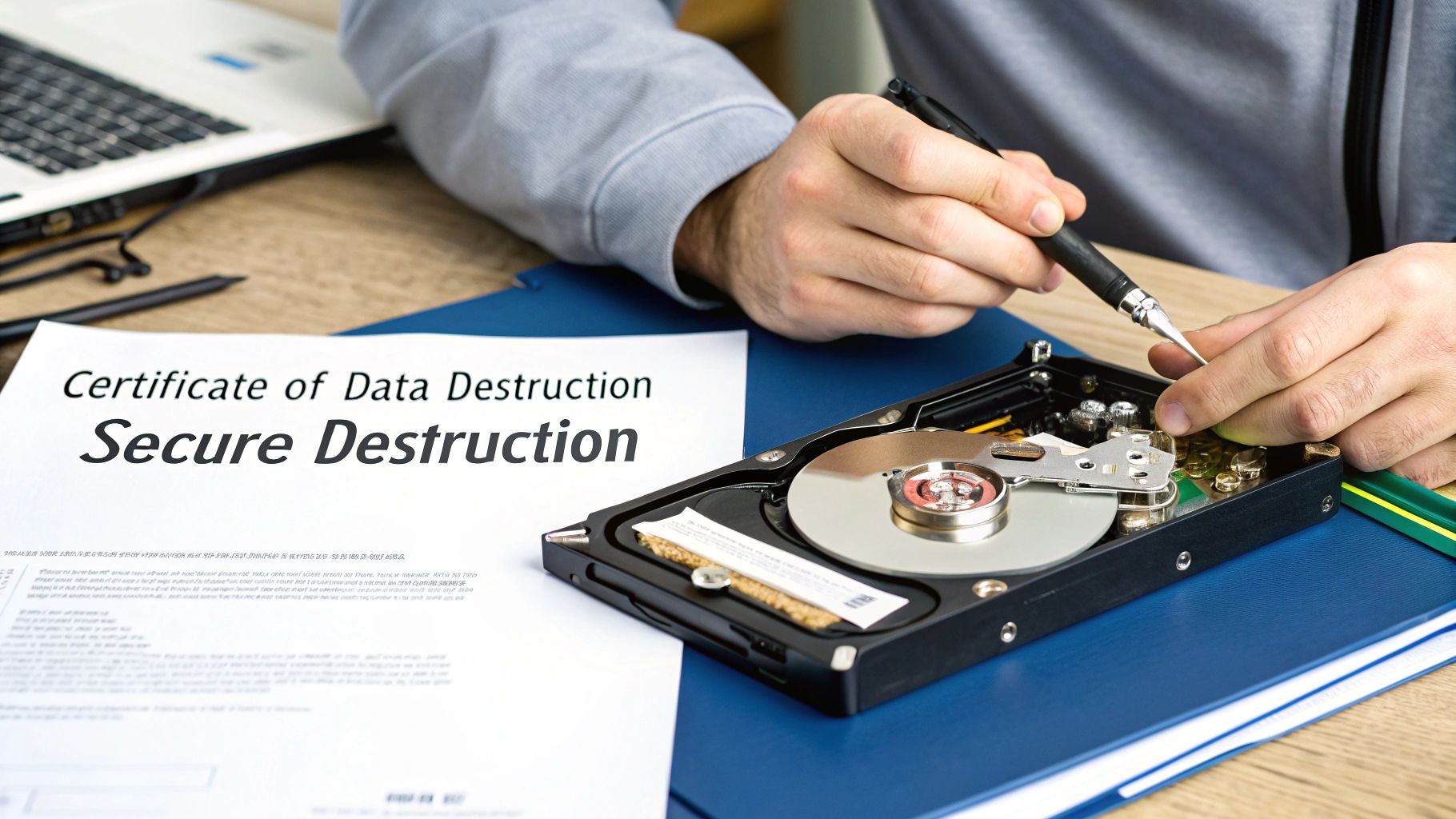
Simply deleting files or reformatting a hard drive is insufficient. With basic data recovery software, "deleted" information can often be restored, leaving your company completely exposed. This is why certified e-waste vendors adhere to strict, verifiable data destruction protocols designed to render information permanently unrecoverable.
Choosing the Right Data Destruction Method for Your Business
The optimal method for data destruction depends on the device type and your specific compliance requirements. A law firm in downtown Atlanta retiring laptops with client files has different needs than a manufacturing facility disposing of old control systems.
- Data Wiping (Sanitization): This process uses specialized software to overwrite every sector of a drive with random data, effectively destroying the original information. The recognized industry benchmark is the NIST 800-88 protocol. This is an excellent option for newer, functional hard drives intended for resale, as it preserves the asset's value. To learn more, see our detailed guide on the NIST SP 800-88 standard.
- Degaussing: For magnetic media such as traditional hard disk drives (HDDs) and backup tapes, degaussing uses a powerful magnetic field to permanently erase the stored data. The drive is rendered unusable, but the data is completely destroyed.
- Physical Shredding: This is the most secure and definitive method. Hard drives, SSDs, smartphones, and other data-bearing devices are fed into an industrial shredder that reduces them to small, irreparable fragments. This is the preferred method for end-of-life devices or those containing highly sensitive information.
The Critical Role of Documentation and Chain-of-Custody
Proof of destruction is as important as the destruction itself. Without a complete paper trail, you cannot prove compliance during an audit or legal proceeding.
A Certificate of Data Destruction is not just a receipt; it's a legal document that formally transfers liability from your organization to the vendor. It serves as your definitive proof that you took the necessary steps to protect your data.
Always demand a Certificate of Data Destruction for every project. This document should detail the date, method used, and serial numbers of all destroyed devices.
Equally important is a clear chain-of-custody record. This documentation tracks your assets from the moment they leave your Atlanta office to their final destruction and recycling, ensuring no security gaps. For a hospital in the Atlanta area retiring medical equipment regulated by HIPAA, this auditable trail is absolutely non-negotiable, providing both peace of mind and an essential legal safeguard.
Streamlining E-Waste Pickup and Logistics for Atlanta Companies
Coordinating the removal of bulky or numerous IT assets without disrupting business operations is a common challenge. While a search for "e-waste recycling near me" can identify vendors, the logistics of the pickup process often present the biggest hurdle. A seamless removal process is key to maintaining business continuity.
The foundation of a smooth pickup is thorough preparation. Before the truck arrives, your team should have a complete inventory of all assets slated for disposal. Servers should be disconnected, laptops consolidated, and peripherals gathered in a secure, easily accessible staging area. This simple step minimizes disruption to your daily workflow.
Tailoring Pickup Services to Your Business Needs
Every e-waste project is unique, and a professional recycling partner will offer flexible service models to accommodate your specific requirements.
Common service options include:
- Scheduled Pickups: Ideal for businesses with a regular turnover of IT assets, such as quarterly desktop refreshes or annual server upgrades.
- Full-Service Decommissioning: A comprehensive solution for major events like an office relocation, data center decommissioning, or a large-scale technology migration. This service often includes on-site technicians for disassembly, packing, and removal.
For companies with multiple locations across Georgia or nationwide, robust logistical support is essential. Investigating how a potential partner manages complex projects, such as leveraging nationwide reverse logistics services, is key to ensuring a consistent and secure process across all corporate sites.
Providing the Right Details for an Accurate Quote
To receive an accurate quote and ensure a smooth pickup, you must provide your vendor with specific, detailed information. A vague request to pick up "computers" is insufficient.
A well-prepared Statement of Work (SOW) is your most valuable tool. It eliminates ambiguity and potential surprises. By clearly outlining the project's scope, location details, and specific handling needs, you provide your vendor with everything required to assign the right resources and deliver a precise quote.
Be prepared to share the following project details:
- Inventory and Volume: An itemized list with quantities of servers, laptops, monitors, networking gear, and any specialized medical or lab equipment.
- Building Access: Information on loading docks, freight elevators, stairs, or any other access constraints at your Atlanta facility.
- Special Handling Requirements: Note any oversized or heavy items, such as full server racks or large enterprise printers, that may require special moving equipment.
Providing this information upfront allows the recycling partner to plan effectively, ensuring they arrive with the right size vehicle, appropriate staffing, and necessary equipment. This level of preparation transforms a potentially chaotic removal into a streamlined, professional operation.
Maximizing Value Recovery from Your Retired IT Assets
When your Atlanta business retires its electronics, it's not just an operational expense—it's an opportunity for value recovery. That collection of old IT assets can be a hidden revenue stream when managed through a strategic IT Asset Disposition (ITAD) program.
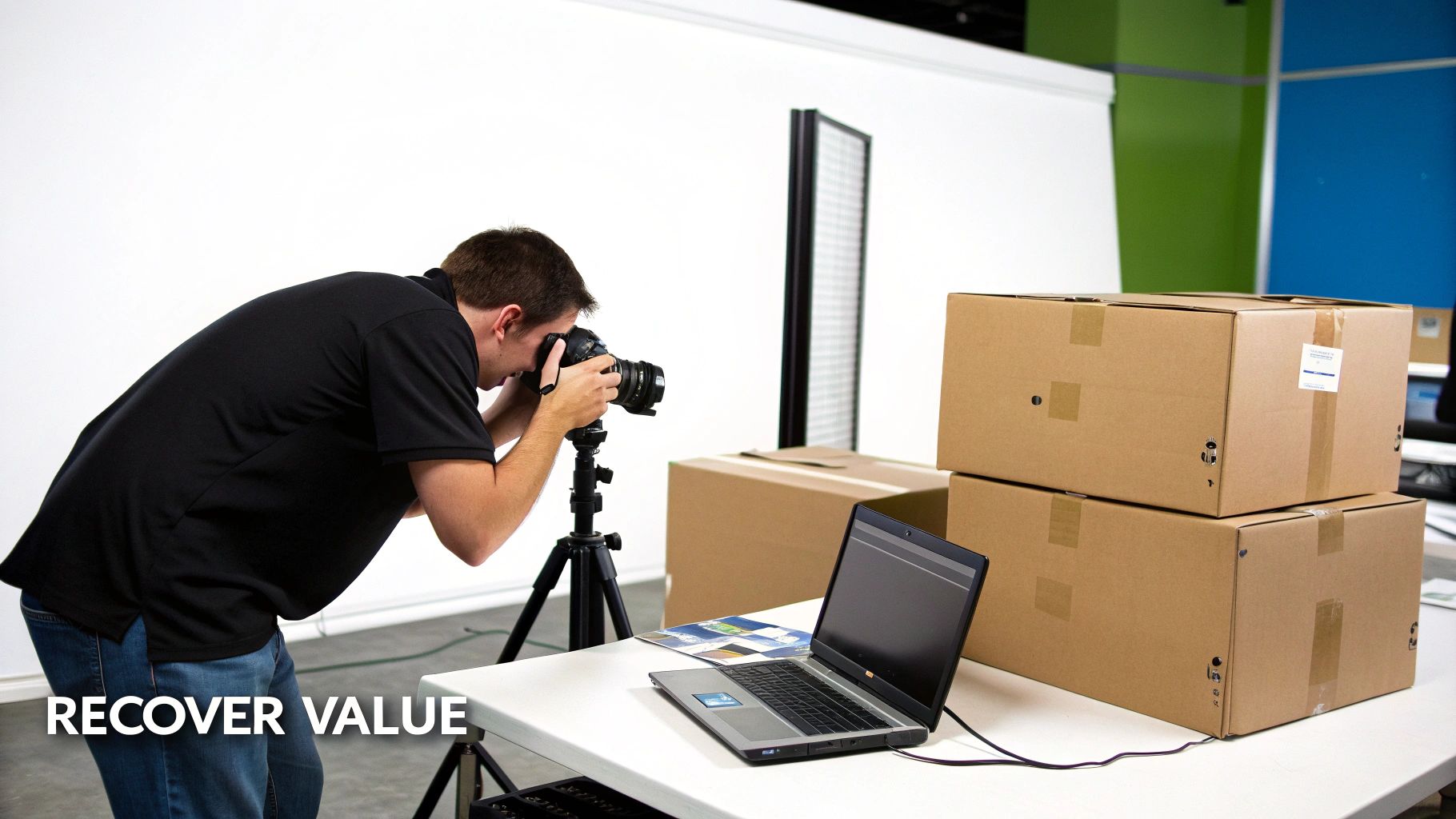
While consumer electronics depreciate quickly, enterprise-grade equipment often retains significant value. Assets such as servers, networking switches, corporate laptops, and specialized laboratory equipment can have a robust second life through remarketing channels or component salvaging.
Identifying Hidden Value in Your Retired Technology
The key to maximizing your return is partnering with an ITAD vendor who understands the secondary market for used enterprise technology. A certified vendor will appraise your assets based on factors like age, condition, brand, and current market demand.
There are several common avenues for value recovery:
- Direct Buyback: The vendor purchases your equipment outright for a lump sum.
- Revenue Sharing: The vendor remarkets the assets on your behalf and provides you with a percentage of the final sale price. This can often yield a higher return for in-demand items.
- Component Harvesting: For older or non-functional equipment, valuable components like RAM, CPUs, and power supplies can be salvaged and sold individually.
An experienced partner can advise on the best strategy for your specific inventory. For many organizations, the revenue generated from an IT equipment buy back service can significantly offset—or even exceed—the costs of recycling and secure data destruction.
The Importance of Certified Documentation
Beyond the financial return, the documentation you receive is your ultimate proof of responsible disposal. This paperwork is critical for internal audits, stakeholder reporting, and demonstrating corporate social responsibility. It serves as your evidence that you have met all legal and ethical obligations.
Your engagement with a recycling partner concludes not when the truck leaves your facility, but when you have certified documentation in hand confirming every asset was managed securely and in full compliance with all regulations.
Always ensure you receive the following key documents:
- Certificate of Recycling: Confirms that assets with no resale value were recycled in an environmentally sound manner, compliant with all local, state, and federal laws.
- Certificate of Data Destruction: Your legal proof that all data was securely and permanently destroyed according to certified standards.
- Detailed Asset Reports: A comprehensive report listing the make, model, and serial number of every device processed, creating a clear and auditable chain-of-custody.
This complete documentation package provides an auditable trail that protects your business from potential liability and closes the loop on your equipment's lifecycle.
Contact Beyond Surplus for certified electronics recycling and secure IT asset disposal services tailored for businesses in Atlanta, GA. We provide professional, compliant solutions for commercial and enterprise clients. Schedule a pickup today to get started.