
For IT, facility, and operations managers in Atlanta, Georgia, understanding the nuances of universal waste is not just about compliance—it's a critical component of risk management and operational efficiency. The EPA's universal waste regulations simplify the handling of specific hazardous waste categories, but misidentification can lead to significant fines and environmental liability. This guide provides a detailed breakdown of common universal waste streams for businesses, offering actionable strategies for secure, compliant, and efficient disposal of commercial e-waste and other regulated items.
This article will explore each major example of universal waste relevant to a commercial setting, from legacy IT equipment like CRT monitors to facility-wide systems such as fluorescent lamps and mercury thermostats. This guide is designed to give your Atlanta, Georgia business the strategic insights needed for effective IT asset recovery and secure e-waste management. You will learn not only what qualifies but also the best practices for handling, labeling, and recycling each item through professional electronics recycling services.
Properly managing universal waste is a key part of responsible IT asset disposition (ITAD) and corporate sustainability. Partnering with a certified expert like Beyond Surplus ensures your Atlanta organization meets and exceeds regulatory standards for computer recycling and electronic waste pickup, turning a complex obligation into a simple, documented process. This listicle will serve as your go-to resource for identifying and managing these common but often overlooked materials within your business facility.
1. Cathode Ray Tube (CRT) Monitors
Though largely replaced by flat-screen technology in modern enterprises, Cathode Ray Tube (CRT) monitors remain a significant concern in commercial asset management. These bulky devices are a classic example of universal waste due to their hazardous components, primarily the leaded glass in the funnel of the tube. An old office storeroom, data center, or university computer lab can easily contain dozens of these legacy displays, representing a substantial environmental liability if not managed correctly.
The U.S. Environmental Protection Agency (EPA) established streamlined regulations for universal waste to encourage proper collection and recycling. Classifying CRTs under this category makes it easier and less expensive for businesses to dispose of them responsibly through certified computer recycling services, diverting tons of hazardous material from landfills.
Why CRTs Are Regulated as Universal Waste
The primary reason CRTs require special handling is the presence of lead. A typical CRT monitor contains several pounds of lead, necessary to shield users from radiation. If a CRT is broken and sent to a landfill, this lead can leach into the soil and groundwater, posing serious health risks.
Proper recycling of CRTs is a complex process that involves carefully separating the leaded glass from the non-leaded panel glass. This recovered glass can then be used to create new products, while other materials like copper from the yoke and plastic from the casing are also recycled. This is a core function of secure e-waste management.
Actionable Tips for Managing CRT Disposal
For IT managers and facility operators in Atlanta, developing a strategy for legacy CRTs is key to reducing storage costs and ensuring compliance.
- Inventory and Segregate: Begin by conducting a full inventory of all CRT devices in storage. Segregate them from other electronic waste to prepare for a dedicated electronic waste pickup.
- Partner with Certified Recyclers: Work exclusively with an R2 or e-Stewards certified recycler like Beyond Surplus. These certifications guarantee that the hazardous materials within the CRTs will be managed safely and in accordance with all federal and state laws.
- Request Documentation: Always ask for a Certificate of Recycling or Certificate of Destruction. This document serves as your proof of compliance and transfers liability for the equipment to the recycling partner.
- Batch Your Pickups: To improve logistical efficiency, consolidate your CRT pickup with other universal waste items like batteries and lamps, or with a general IT asset disposal project.
Beyond Surplus specializes in handling obsolete enterprise equipment, including large-scale CRT clear-outs for corporations, healthcare facilities, and educational institutions in Atlanta, Georgia. Contact us for certified electronics recycling and secure IT asset disposal.
2. Fluorescent Lamps and Ballasts
Fluorescent tubes and compact fluorescent lights (CFLs) are ubiquitous in commercial settings, from office buildings and server rooms to hospital hallways. These items are a prime example of universal waste because they contain mercury, a potent neurotoxin. When Atlanta facility managers undertake lighting upgrades to more efficient LED systems, they often face the challenge of disposing of thousands of these lamps, creating a significant compliance responsibility.

The federal universal waste regulations provide a more manageable framework for collecting and recycling these common but hazardous items. This approach prevents large quantities of mercury from entering the environment through improper disposal.
Why Fluorescent Lamps Are Regulated as Universal Waste
The core reason for their regulation is mercury. A single fluorescent tube can contain a small amount of mercury, but the sheer volume of lamps used in commercial and industrial facilities makes the cumulative total substantial. If a lamp breaks, the mercury vapor can be released. Older magnetic ballasts may also contain Polychlorinated Biphenyls (PCBs), another hazardous substance requiring special handling, often managed during data center decommissioning or facility upgrades.
Recycling fluorescent lamps is a specialized process where the glass, metal end caps, and phosphor powder are separated. The mercury is safely captured and can be reused.
Actionable Tips for Managing Fluorescent Lamp Disposal
For facility and data center managers, having a clear process for lamp disposal is essential for safety and compliance.
- Establish Safe Collection Points: Designate specific collection areas with purpose-built, puncture-resistant containers for used lamps.
- Train Staff on Handling: Ensure maintenance personnel are trained on the proper procedures for removing, handling, and storing used lamps to prevent breakage.
- Consolidate for Efficiency: To reduce transportation costs, consolidate spent lamps from multiple buildings for a single, bulk pickup, especially during large-scale retrofits.
- Demand a Certificate of Recycling: Always partner with a certified waste management provider and request a Certificate of Recycling. This document is your official record that the mercury was processed in compliance with regulations.
3. Lead-Acid Batteries (UPS and Backup Power Systems)
Lead-acid batteries used in Uninterruptible Power Supply (UPS) systems are critical for operational continuity in data centers, hospitals, and financial institutions across Atlanta. These batteries are also a very common example of universal waste due to their hazardous composition, which includes heavy lead plates and corrosive sulfuric acid. A single large-scale data center UPS overhaul might involve replacing hundreds of these batteries, presenting a major waste management challenge.

The EPA's universal waste regulations simplify the process for businesses to manage these batteries, encouraging recycling over landfill disposal. This classification is vital for managing assets from routine maintenance and data center decommissioning projects.
Why Lead-Acid Batteries Are Regulated as Universal Waste
The hazardous nature of lead-acid batteries necessitates strict regulation. Each unit contains a significant amount of lead and sulfuric acid. If these batteries are disposed of improperly, the casings can crack, allowing lead and acid to contaminate groundwater.
Fortunately, lead-acid batteries are highly recyclable. A properly managed recycling process can recover over 99% of the lead and plastic, turning a hazardous liability into a valuable resource stream.
Actionable Tips for Managing UPS Battery Disposal
For Atlanta's facility managers and IT directors, a proactive strategy for UPS battery replacement is essential for compliance.
- Schedule and Coordinate: Plan battery replacements during scheduled maintenance windows. Coordinate logistics with a certified service provider for bulk removal.
- Use Certified Transporters: Ensure that any company moving the batteries off-site is a certified hazardous material transporter, a key part of secure e-waste management.
- Maintain Detailed Records: Keep a meticulous inventory of all backup batteries, including their locations, quantities, and replacement schedules for asset management and audits.
- Demand Proper Documentation: Always require a Certificate of Recycling and chain-of-custody documentation from your recycling partner like Beyond Surplus.
Beyond Surplus manages large-scale battery replacement projects for data centers and healthcare facilities in Atlanta, Georgia. We provide certified transport and ensure every battery is responsibly recycled, providing you with full documentation. Contact us for a quote.
4. Thermostats and Mercury-Containing Switches
Found in HVAC systems and legacy building automation equipment, mercury-containing thermostats and switches are a critical universal waste stream for businesses. For large facilities like hospitals or corporate campuses in Atlanta, a system-wide upgrade can generate hundreds of these devices. These items are a prime example of universal waste because managing them under these specific regulations prevents widespread mercury contamination during equipment disposal.
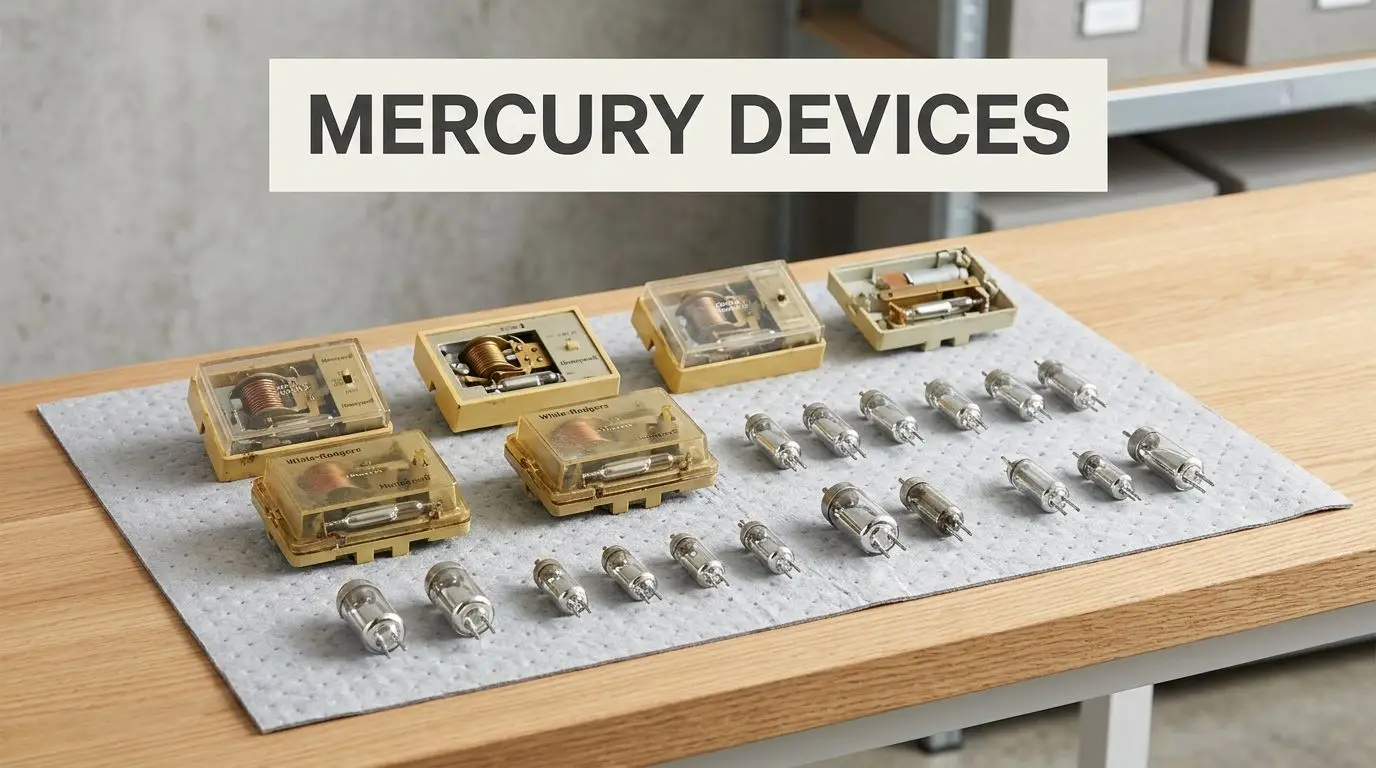
The EPA's universal waste rules simplify the collection and recycling process, encouraging businesses to properly dispose of them during facility upgrades, building demolitions, or equipment decommissioning projects.
Why Mercury-Containing Devices Are Regulated as Universal Waste
The core reason for regulation is the extreme toxicity of mercury. The small glass ampule inside a thermostat holds liquid mercury. If this ampule breaks, it can release invisible, odorless, and highly poisonous fumes.
Proper recycling involves carefully removing the mercury ampules in a controlled environment. The recovered mercury can then be purified and reused, while the remaining plastic and metal components of the thermostat are also recycled. This is often handled during medical equipment disposal or laboratory equipment disposal projects.
Actionable Tips for Managing Mercury Device Disposal
For Atlanta facility managers and demolition contractors, a clear plan for managing mercury-containing devices is essential.
- Identify and Segregate: Conduct thorough facility walk-throughs to identify and inventory all mercury-containing devices. Create separate, clearly labeled collection containers specifically for these items.
- Prevent Spills: Place absorbent material in the bottom of collection containers to help contain any accidental mercury spills from broken ampules.
- Store Safely: Store collected devices in a secure, segregated area away from high traffic to minimize the risk of breakage.
- Seek Certified Partners: Work with recyclers experienced in handling mercury waste, such as those that handle laboratory equipment disposal. Always request detailed recycling documentation for your compliance files.
5. Pesticides
While not typically associated with IT departments, pesticides are a frequent concern for facilities management in large commercial properties. Enterprises, schools, and government agencies in Atlanta often accumulate these materials from groundskeeping and building maintenance. These containers are a prime example of universal waste because even when empty, they can contain hazardous residues that require specialized handling.
The EPA's universal waste regulations simplify the disposal process for these common but hazardous items. By classifying them this way, the rules encourage organizations to collect and manage these containers properly, ensuring harmful chemicals are kept out of municipal solid waste streams.
Why Pesticides Are Regulated as Universal Waste
The core issue is the residual product they hold. Pesticides, by design, are toxic. If these containers are simply thrown in a dumpster, the remaining chemicals can leak during transport or in a landfill, leading to environmental contamination.
Proper management involves ensuring the containers are completely empty and then either triple-rinsed or processed by a certified handler. This prevents the active ingredients from causing harm and allows the container material itself to be recycled safely. This process is distinct from electronics recycling but is often part of a larger facility decommissioning project.
Actionable Tips for Managing Pesticide Disposal
For facility managers and compliance officers, creating a clear process for these materials is vital.
- Inventory and Segregate: Conduct a thorough walk-through of all storage areas. Immediately segregate any found pesticide containers from other waste streams like IT equipment or general trash.
- Verify and Document: Carefully document every container. Note the product name, any visible warning labels, and the quantity.
- Engage Certified Hazmat Specialists: Partner with a certified hazardous waste handler for transportation and disposal. They have the correct permits, equipment, and training to manage these items safely.
- Demand Full Documentation: Always require a Certificate of Disposal from your hazardous waste partner. This document is your official record of compliant disposal.
While Beyond Surplus focuses on IT asset disposal, we can advise on how to correctly segregate these non-IT universal waste items and recommend certified partners who specialize in compliant chemical handling.
6. Certain Lamps and Bulbs
Many commercial facilities in Atlanta are transitioning from older lighting technologies to digital and LED systems, which often leaves behind a significant amount of legacy equipment and materials. This is a classic example of universal waste because items like high-intensity discharge (HID), neon, and other specialty lamps contain hazardous substances like mercury. While less common than fluorescents, these lamps require specialized handling during disposal.
The streamlined regulations for universal waste help organizations manage these materials efficiently. Classifying this specialty lighting as universal waste simplifies the collection and recycling process for businesses, ensuring hazardous components are prevented from contaminating the environment.
Why Certain Lamps and Bulbs Are Regulated as Universal waste
The core reason for special handling is their hazardous content, primarily mercury. Though used in different applications than standard fluorescent tubes, lamps like HIDs (used in warehouses and parking lots) contain mercury that can be released if the bulb is broken. If discarded in a landfill, this mercury can be toxic to local ecosystems.
Proper management involves collecting these lamps intact and sending them to a certified recycler. The recycler will safely capture the mercury and separate the glass and metal components for recycling. This process is crucial for businesses undergoing major facility upgrades or data center decommissioning projects that involve lighting systems.
Actionable Tips for Managing Specialty Lamp Waste
For Atlanta's facility managers and department heads, a clear strategy is essential for managing the disposal of these materials during technology upgrades.
- Coordinate with Maintenance Teams: When planning a lighting retrofit, work closely with maintenance staff to inventory and segregate all specialty lamps.
- Segregate by Type: Keep different lamp types separate if possible. This can sometimes improve the efficiency of the recycling process. Use clearly marked, structurally sound containers.
- Partner with Certified Recyclers: Engage recyclers specializing in lamp recycling. Verify their certifications to ensure they meet all environmental standards for handling mercury-containing items.
- Document Everything: Maintain detailed records of the types and quantities of lamps sent for recycling. Request a Certificate of Recycling to document proper disposal for your compliance audits.
Beyond Surplus partners with certified specialists to manage the disposal of facility equipment during IT and data center decommissioning projects, helping organizations in Atlanta, Georgia, ensure compliance and sustainability.
Take Command of Your Universal Waste Strategy in Atlanta, Georgia
Understanding what constitutes universal waste is the first critical step for any Atlanta business; putting that knowledge into action is what defines a responsible and compliant enterprise. As we have explored, each example of universal waste carries its own set of rules, risks, and proper handling procedures. From the heavy metals in CRT monitors and the mercury in specialty lamps to the corrosive materials in lead-acid batteries, these items are not merely trash. They are regulated materials that demand a strategic management plan.
For businesses in Atlanta, Georgia, overlooking these requirements is not an option. The potential consequences of improper disposal—including steep regulatory fines, environmental cleanup costs, and significant damage to your company's reputation—are far too great. A well-defined waste management strategy is a fundamental component of operational excellence and corporate responsibility.
Key Takeaways for Your Universal Waste Program
Moving from awareness to action involves creating a clear, repeatable process for your business.
- Identification is Paramount: The first failure point is often misidentification. Train your facilities, IT, and operational staff to recognize items like mercury-containing lamps, different battery chemistries, and legacy IT equipment.
- Segregation and Storage are Non-Negotiable: Universal waste cannot be mixed with regular solid waste. Designate specific, clearly labeled accumulation areas. These containers must be structurally sound and marked with the words "Universal Waste" followed by the type of item (e.g., "Universal Waste – Lamps").
- Documentation Creates Your Defense: Proper record-keeping is your best defense in an audit. Maintain logs of when accumulation began, quantities stored, and shipping manifests from your recycling partner. This chain of custody proves due diligence.
Your Actionable Next Steps
Mastering universal waste management is about establishing a partnership with a certified specialist who can manage the complexity for you. The most important step you can take today is to formalize your disposal process by engaging a vendor who understands federal, state, and local Atlanta regulations. This simple action shifts the burden of compliance from your team to a qualified expert, allowing you to focus on your core business.
Contact Beyond Surplus for certified electronics recycling and secure IT asset disposal in Atlanta, Georgia. We specialize in the compliant recycling of business electronics, IT equipment, and data center assets, including many items classified as universal waste. Partner with us to ensure your organization's IT asset disposal practices are secure, sustainable, and fully compliant.


