

Atlanta IT teams know the scene. A storage room fills up with retired switches, routers, firewalls, rack gear, handsets, and server hardware from the last upgrade cycle. Nobody wants to throw away something that might still have value, but nobody wants to own the security risk of letting it sit there either.
That limbo is expensive. It ties up floor space, complicates audits, and leaves old assets in a gray area between production and disposal. For many Atlanta businesses, telecom asset recovery starts only when a lease ends, a site closes, or a compliance review forces action. By then, value has already started slipping.
Handled correctly, telecom asset recovery isn't just disposal with extra paperwork. It's a controlled business process that converts retired network equipment into one of three outcomes: resale, parts harvesting, or documented recycling. The true benefit is broader than resale proceeds. A strong program also reduces data exposure, creates a cleaner audit trail, and gives IT directors a repeatable way to clear obsolete equipment without guessing.
Introduction The Challenge of Retired Telecom Equipment
A pile of retired telecom gear usually creates two bad assumptions. The first is that it's all scrap. The second is that it's too risky to move until someone has time to figure it out. Both assumptions cost money.
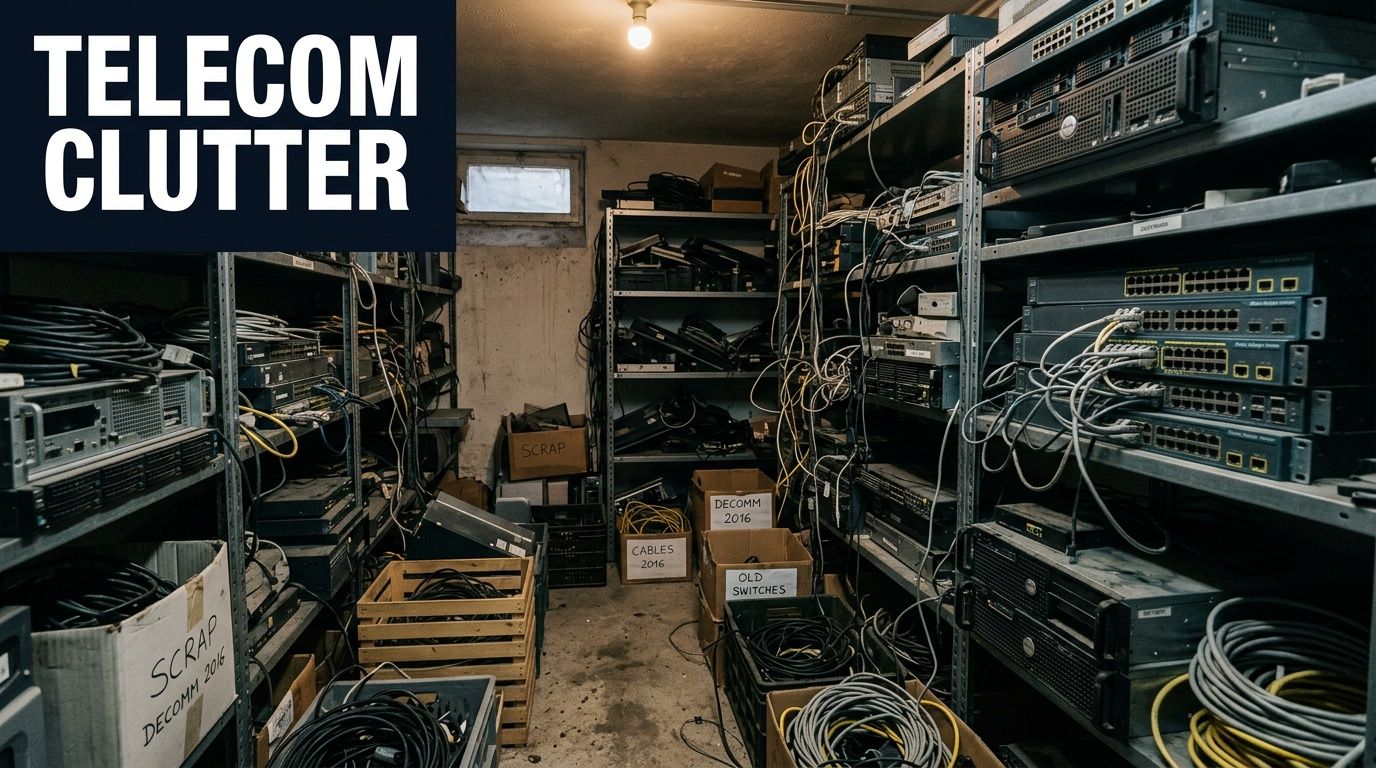
In practice, retired telecom assets usually fall into a mixed inventory. Some units still have secondary-market demand. Some are useful only for components. Some should go straight to certified recycling. The problem isn't just identifying which is which. The problem is doing it fast enough, securely enough, and with the documentation your legal, finance, and compliance teams can stand behind.
Atlanta organizations feel this pressure acutely because they often manage a mix of offices, branch locations, colocation environments, clinics, warehouses, and network closets spread across the region. That creates inconsistent storage conditions, incomplete records, and handoffs between multiple teams.
Old telecom equipment becomes more expensive when nobody owns the decision.
The companies that handle this well treat asset recovery as an operational discipline. They inventory gear before it disappears into back rooms, remove storage costs from the equation, and insist on a clear disposition path for every asset.
What Exactly is Telecom Asset Recovery
Telecom asset recovery is the controlled recovery of value from retired communications and network infrastructure equipment while protecting data and documenting final disposition. That includes remarketing reusable assets, testing equipment for redeployment, harvesting viable components, and recycling material that no longer has commercial use.
This category goes beyond desktop IT. It often includes:
- Carrier and enterprise networking gear: switches, routers, firewalls, load balancers, optical transport equipment, and network modules
- Voice systems: PBX hardware, enterprise phones, gateways, and supporting telecom appliances
- Data center and edge infrastructure: rack servers, storage, power distribution hardware, and related network equipment
- Site and mobility hardware: selected radio, backhaul, and supporting infrastructure components where recovery is practical and compliant
Why specialization matters
General e-waste recycling focuses on safe downstream processing. Telecom asset recovery starts earlier and asks a different question: what can still be reused, resold, or harvested before recycling becomes the final step?
That's why this work resembles fleet management more than junk removal. A mixed lot of retired telecom hardware has serial-level differences, firmware histories, cosmetic conditions, missing components, and varied demand across resale channels. A provider has to identify what belongs in each path instead of treating every pallet the same way.
The scale of the market reflects that demand. The global IT asset disposition market was valued at approximately $29.22 billion in 2025 and is projected to reach over $54 billion by 2030, with the IT and telecom sector accounting for over 30% of market revenue, according to Grand View Research on the IT asset disposition market.
What it looks like in practice
A proper telecom asset recovery program usually includes:
- Asset identification so equipment is logged before it leaves your control
- Data sanitization decisions based on the device type and risk profile
- Testing and grading to separate resale candidates from scrap
- Disposition reporting for finance, compliance, and internal audit
If you need a baseline on the broader discipline, Beyond Surplus explains IT asset disposition here.
The Strategic Business Value of Asset Recovery
The obvious return is resale. The less obvious return is operational discipline. A formal telecom asset recovery program improves cash recovery, reduces exposure, and stops obsolete equipment from absorbing budget after its useful life is over.

Direct financial return
Not every retired switch or server has resale value, but many mixed lots contain more recoverable value than teams expect. Complete working units may be remarketed. Partial systems may still hold value in power supplies, memory, interface modules, or other serviceable components. Commodity recycling is the floor, not the first choice.
Risk reduction that finance can understand
A room full of untracked assets creates legal and operational uncertainty. Nobody can confirm whether drives were wiped, whether serial numbers were captured, or whether restricted data ever sat on a given device. That uncertainty tends to show up later as extra labor, delayed signoff, or preventable audit friction.
The cost of doing nothing
Many organizations still compare only two numbers: expected resale revenue versus recycling cost. That's too narrow. Delayed action creates carrying costs that rarely appear in the recovery discussion until space runs out or an audit lands.
Industry analysis points to a major blind spot in asset recovery: the carrying costs of holding obsolete telecom equipment, including facility space, power, and maintenance. It also notes that energy often exceeds 92% of network operating costs, which makes delayed disposition more expensive when companies continue storing rapidly depreciating assets, as discussed in SiliconANGLE's analysis of telecom infrastructure economics.
Practical rule: If a business is paying to store gear it doesn't plan to redeploy, that gear should already be in a recovery workflow.
A useful internal review looks at more than resale proceeds:
- Storage burden: how much cage, closet, warehouse, or office space the retired equipment occupies
- Handling labor: who keeps moving, counting, or securing the same retired assets
- Security overhead: locks, access control, escort time, and exception handling
- Decision delay: how long finance waits for write-off support and disposition records
Telecom asset recovery works best when IT, facilities, procurement, and compliance all treat retired equipment as an active balance-sheet issue instead of a future cleanup job.
Navigating Data Security and Regulatory Compliance
For most IT directors, the biggest concern isn't resale. It's liability. The moment a retired telecom device leaves its production role, the question becomes simple: can you prove who handled it, how data was destroyed, and where the asset ended up?
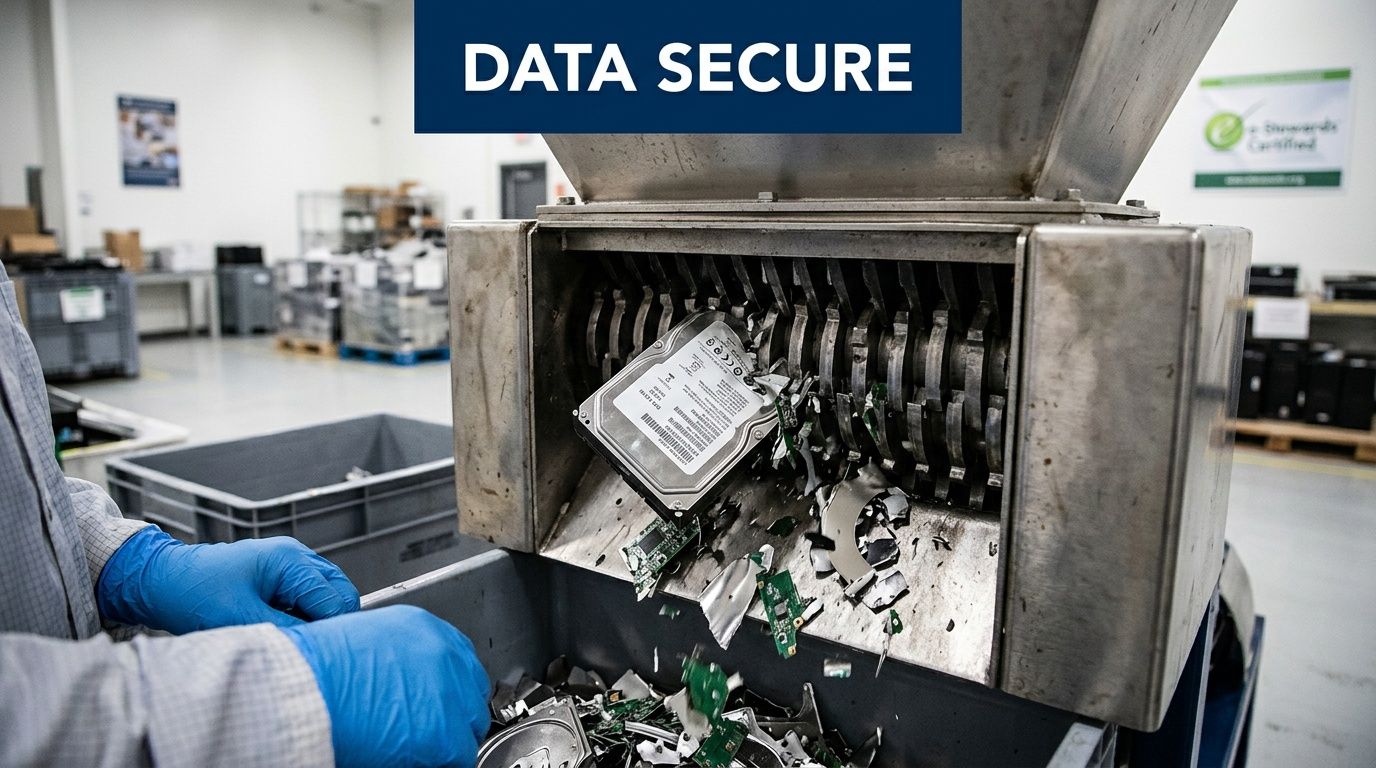
Chain of custody is the control point
A documented chain of custody records the movement of each asset from pickup through final disposition. That means named handoffs, inventory records, transport controls, processing status, and final certificates. Without that documentation, a company can't easily defend its process in an audit or internal investigation.
The compliance stakes are real. Hummingbird International's guide to monetizing retired IT assets notes that professional asset recovery depends on documented chain of custody, and that failing to maintain it, along with delaying decommissioning, accounts for nearly all value loss and compliance risk in recovery programs. The same guidance also ties proper documentation to standards like the FTC Disposal Rule.
Wiping versus physical destruction
Different assets require different data-destruction methods. Some storage media can be sanitized through certified wiping when reuse is appropriate. Other devices should go straight to physical destruction because the risk profile, device condition, or policy requirements leave no room for remarketing.
What matters is consistency. A provider should be able to state:
- Which devices are wiped
- Which devices are shredded
- What standard governs the process
- What certificate or report the client receives afterward
For organizations that need a technical reference point, NIST SP 800-88 guidance is outlined here.
Why sector rules change the workflow
Healthcare, finance, education, and government buyers don't evaluate telecom asset recovery the same way a small office does. They need evidence that disposition practices align with internal retention policies, privacy obligations, and records controls. The FTC Disposal Rule often comes up in general business contexts, while HIPAA and SOX matter in regulated environments where documentation quality is part of the risk posture.
That broader business case is one reason compliance shouldn't be treated as a back-office burden. Miles Hansford Law Firm on business compliance offers a useful management perspective on why disciplined compliance practices support business performance, not just legal defense.
If your vendor can remove equipment but can't produce a clean audit trail, you still own the risk.
A good telecom asset recovery process doesn't just erase data. It creates evidence.
The Complete Telecom End-of-Life Workflow
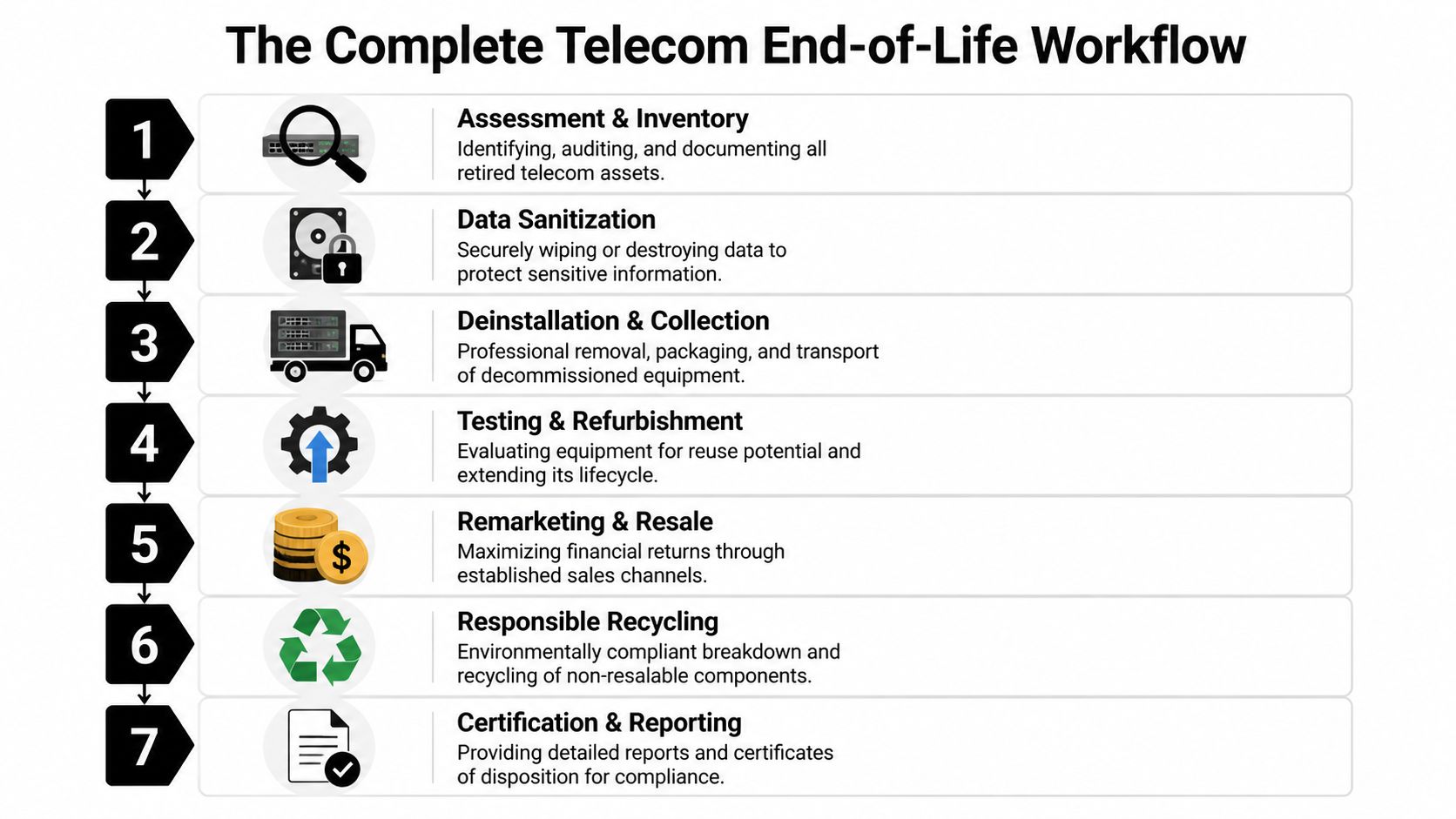
Most failed recovery projects don't fail at the recycler. They fail before pickup, when inventory is vague, site access isn't coordinated, and nobody has defined what gets wiped, resold, or destroyed.
Step one through three
Assessment and inventory
Start with what exists, where it sits, and whether the list is complete enough to move. Serial capture matters. Site conditions matter too. Gear in a secure MDF room is a different project from gear scattered across branch closets.Data sanitization planning
Decide early which assets require wiping, which require shredding, and which can be evaluated for refurbishment after sanitization. This avoids improvisation on pickup day.Deinstallation and collection
Carrier-grade and rack-mounted gear often needs careful de-racking, labeling, and packaging. Loose handling reduces resale options and increases disputes about condition.
Step four through seven
The back half of the workflow determines whether value is recovered or lost.
- Secure transport: Trucks, seals, manifests, and controlled handoff procedures should match the sensitivity of the load.
- Testing and triage: Equipment is sorted into resale, parts harvesting, or recycling streams.
- Remarketing or recycling: The processing path should fit the asset's condition and demand profile.
- Certification and reporting: Final records close the loop for IT, finance, and compliance.
A company managing a larger site closure or equipment refresh can use a more formal deinstallation model. This data center decommissioning process overview is a useful reference for structuring that work.
What works and what doesn't
A simple comparison usually reveals why some projects drag:
| Approach | What happens |
|---|---|
| Tag, count, and schedule early | Teams move faster because access, handling, and documentation are aligned |
| Wait until storage is full | Assets are harder to identify, more likely to be damaged, and slower to clear |
| Separate resale candidates from destruction streams | Reporting is cleaner and value recovery is easier to validate |
| Mix everything on pallets | Testing slows down and exception handling increases |
Equipment should leave the site with a defined status, not with unanswered questions.
How to Quantify and Maximize Recovered Value
Recovered value isn't one number. It's the sum of several decisions made well or made late. Age, condition, completeness, demand, handling quality, and resale channel all affect outcome.
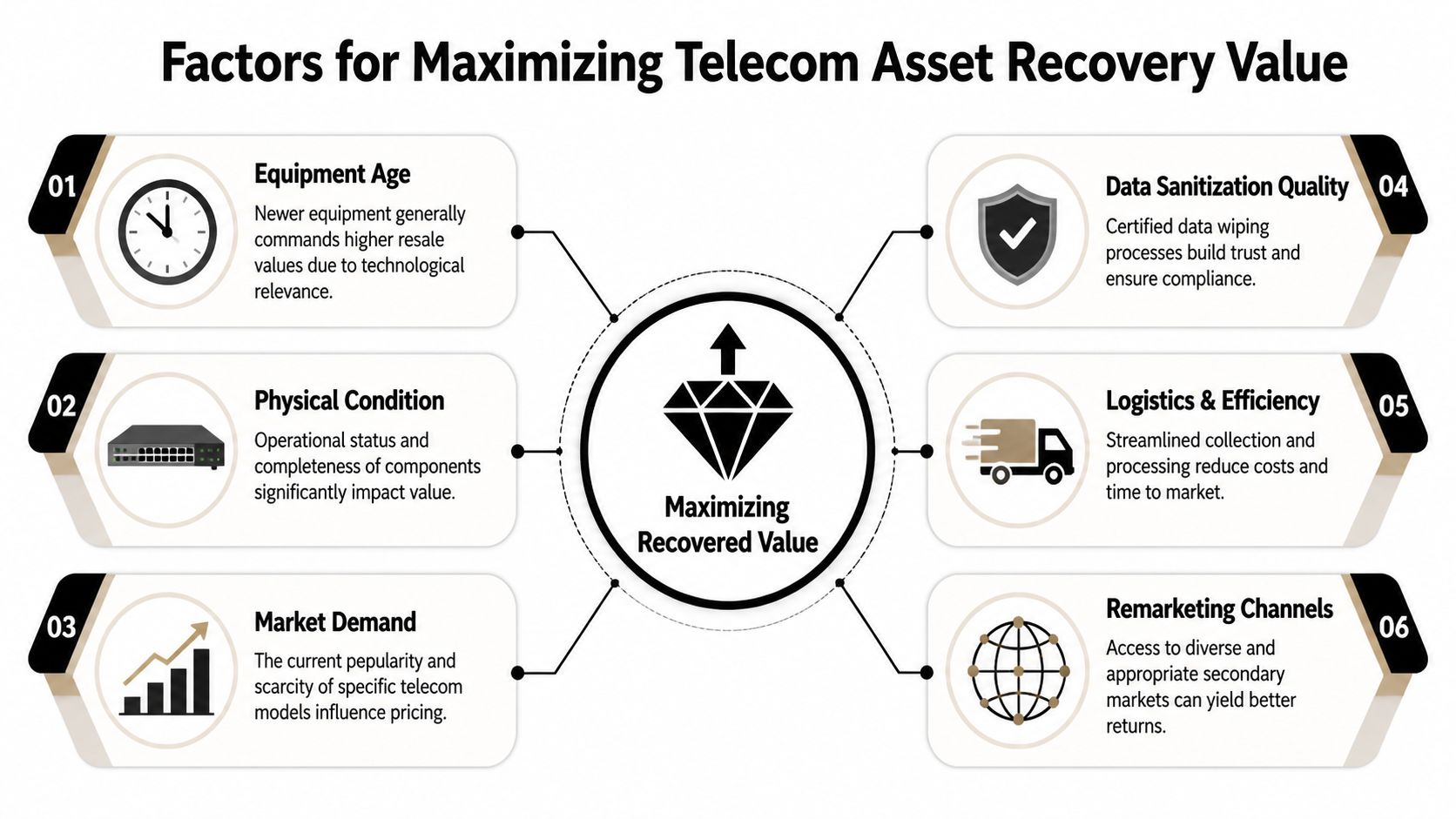
What actually drives value
A retired telecom lot usually contains different value tiers:
- Complete resalable units: best outcome when equipment is current enough, tested, and physically intact
- Parts recovery: useful when whole-unit demand is weak but components still move
- Commodity recycling: appropriate when equipment is obsolete, damaged, or no longer economical to refurbish
The mature European market shows why reuse matters. The telecom equipment refurbishment and recycling market in Europe surpassed $2.2 billion in 2025, with refurbishment services capturing 38% of the service-type segment, according to Future Market Insights on telecom refurbishment and recycling in Europe. That matters because it shows value isn't created only by scrapping material. It often comes from extending equipment life through refurbishment and redeployment.
Speed changes the outcome
Residual value falls when equipment sits too long, gets mixed with low-value scrap, or arrives without useful asset data. Buyers want clarity. They want model accuracy, condition notes, and confidence that data risk has been handled properly.
A practical review before disposition should ask:
- Is the equipment complete enough to sell as a unit?
- Did storage conditions hurt physical condition or traceability?
- Does the provider have channels for this exact class of telecom gear?
- Would component harvesting outperform full-unit resale?
Some organizations also compare expected paths through a telecom resale specialist. This telecom equipment resale page shows the kind of reuse-focused channel that can matter when evaluating recovery options.
The fastest way to lose value is to let good equipment age into scrap while waiting for a perfect project window.
A better way to think about the inventory
Don't treat the load as one pile. Treat it as a portfolio.
A lot may contain newer switches worth remarketing, older chassis worth parting out, and damaged accessories suitable only for recycling. When teams separate those categories early, they get cleaner settlement reports and fewer surprises.
Selecting Your Telecom Asset Recovery Partner in Atlanta
Choosing a vendor for telecom asset recovery shouldn't start with pickup price. It should start with control. If a provider can't explain its security steps, reporting structure, and downstream decision logic, the low quote won't look cheap later.
The checklist that matters
Use this shortlist when evaluating providers in Atlanta:
- Security process: Ask how assets are tracked from site exit to final disposition
- Data destruction options: Confirm whether the provider supports certified wiping, physical shredding, or both
- Reporting samples: Review inventory reports, certificates of destruction, and certificates of recycling before signing
- Logistics capability: Make sure the provider can support single-site pickups, multi-site projects, and scheduled removals
- Telecom market knowledge: Ask how they distinguish remarketing candidates from equipment that should be harvested or recycled
- Facility controls: Verify controlled access, receiving procedures, and separation between processing streams
What separates a capable provider
The strongest programs combine logistics, testing, and secure data wiping rather than treating them as unrelated services. Shields' discussion of obsolete network asset programs highlights how integrated operations can transform obsolete network assets into revenue while meeting strict compliance requirements.
That integrated model is what buyers should look for locally. In Atlanta, one option is a provider that can handle pickup, secure data destruction, remarketing evaluation, and final certificates through one workflow. This vendor due diligence checklist is a practical way to compare providers before you release any equipment.
Questions worth asking in the first call
A short discovery call should tell you a lot. Ask who captures serials, when chain-of-custody records start, how exceptions are handled, and what the final documentation package includes. If the answers are vague, the project probably will be too.
Implement Your Asset Recovery Strategy with Beyond Surplus
Telecom asset recovery works when companies stop treating retired equipment as clutter and start treating it as a controlled financial and compliance process. The upside isn't limited to resale. You also reduce storage drag, tighten data handling, and create a cleaner record for internal audit and external review.
For Atlanta businesses, that matters because retired telecom gear rarely sits in one place or under one team. It moves between closets, cages, offices, and storage rooms until no one is fully confident about what remains, what still holds value, or what still contains risk. A disciplined recovery strategy fixes that by assigning each asset a path and documenting the result.
The right partner should be able to manage secure pickup, data destruction, testing, remarketing evaluation, responsible recycling, and final reporting without forcing your team to stitch the workflow together on its own.
Atlanta organizations that need secure pickup, documented disposition, and practical support for telecom equipment retirement can contact Beyond Surplus to discuss asset recovery, data destruction, and ITAD project planning.


