
Your business is growing, but a long office lease still feels like the wrong kind of commitment. You need space your team can use now, enough flexibility to add seats without drama, and an environment that won't create IT headaches the minute laptops, client calls, and compliance requirements enter the picture.
Atlanta gives you real choice. As of Q4 2024, the city reached 240 coworking locations after adding three spaces in the quarter, with Midtown showing the highest density and strong MARTA access. That matters because growing teams usually don't fail on aesthetics. They fail on commute friction, weak infrastructure, cramped upgrade paths, and security assumptions that don't hold up once regulated data or larger headcounts are involved.
This guide focuses on the best coworking spaces in Atlanta for growing businesses through a practical lens. Not who has the nicest coffee bar. Who can support hiring, client meetings, secure work, and day-to-day operations without forcing another move six months later.
Atlanta is also a strong market for tech-driven firms. The city has become a meaningful secondary coworking market alongside Dallas Fort Worth, Denver, and Phoenix, and tech professionals often cluster around Tech Square near Georgia Tech and Atlanta Tech Village in Buckhead. For founders, IT leaders, and operations teams, that's useful context. You're not choosing from a niche category anymore. You're choosing from mature business infrastructure.
1. At-a-Glance: Comparing Atlanta's Top Coworking Spaces
A 12-person team signs for six desks because that fits the budget today. Four months later, hiring picks up, client calls need more privacy, and IT is fielding questions about guest Wi-Fi, badge access, and where sensitive conversations can happen. That is where coworking decisions stop being about amenities and start affecting operations.
Atlanta gives growing companies plenty of choice, but choice only helps if the space can support the next stage of the business. The right fit depends less on coffee bars and more on whether you can add headcount without relocating, protect client data in a shared environment, and give employees a location they will consistently use. Teams weighing startup density against a downtown footprint can also review Atlanta Tech Village Downtown.
The spaces below stand out for different business reasons. Some are better for startup recruiting and founder access. Others are stronger for private offices, enterprise-style meeting space, or a polished setting for client-facing teams. The point of this comparison is simple: choose a workspace that reduces friction as the company grows.
What to compare first
- Scalability path: Check whether the operator can move your team from coworking seats to a dedicated office or suite without forcing a second move.
- Location fit: Midtown supports transit access and recruiting. Buckhead often works better for firms that host clients. Other submarkets can make more sense if your staff is spread across the metro area.
- IT reliability: Ask how internet service is set up, whether there is redundancy, what private network options exist, and who supports outages after hours.
- Security controls: Review building access, office-level locking, visitor sign-in procedures, camera coverage in common areas, and how mail and package handling are managed.
- Compliance reality: If your business handles regulated client information, confirm early whether the space can support your policies. Do not assume a shared office setup will meet them by default.
Practical rule: If the sales team cannot answer direct questions about network setup, access control, and after-hours security, expect problems once your team is fully moved in.
2. Atlanta Tech Village (ATV)
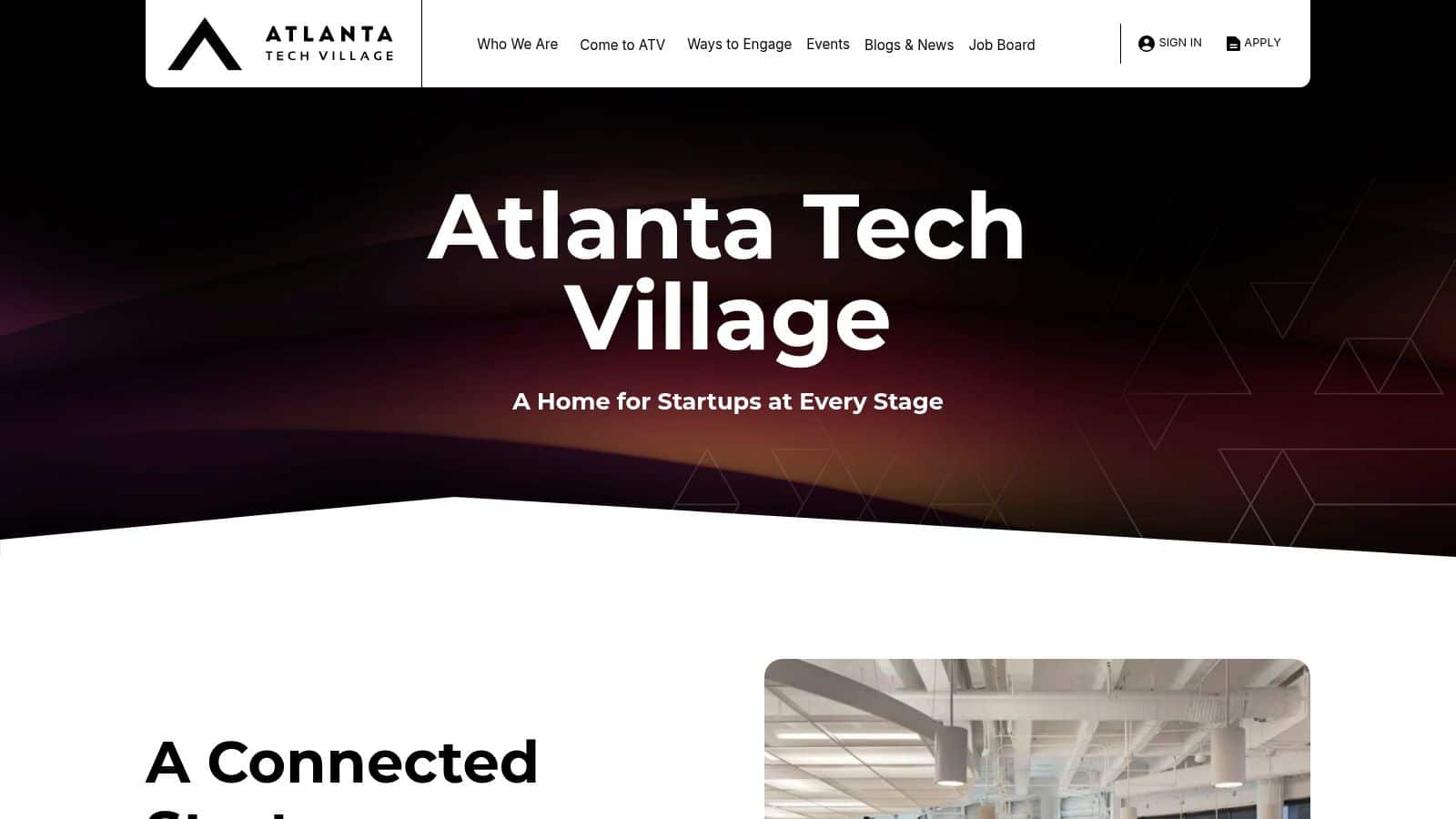
Atlanta Tech Village is the obvious short list choice for startup teams that want more than desks. Its advantage isn't just workspace. It's proximity to founders, advisors, events, and a startup culture that can speed up recruiting, partnerships, and problem-solving.
The operator's own setup is designed around community memberships, reserved desks, and private offices, with 24/7 access, mail service, parking options, and multiple Village sites including Buckhead and South Downtown. For tech founders who want to be in the middle of Atlanta's startup flow, that's hard to ignore. Businesses considering the downtown option can also review Atlanta Tech Village Downtown.
Where ATV works best
ATV is strongest when your business benefits from repeated founder contact and regular programming. Early-stage SaaS companies, product teams, venture-backed startups, and service firms selling into the startup market often get the most from that environment.
- Best fit: Tech startups, founder-led teams, venture-oriented companies
- Why it scales well: Clear membership structure and multiple workspace formats
- Main trade-off: The atmosphere is startup-heavy, which won't appeal to every business
The downside is focus. If your company is in law, compliance consulting, accounting, or another field that needs a quieter, more private tone, ATV can feel socially busy. Common areas can also get crowded when programming is active.
ATV is a growth accelerator if your team wants ecosystem access. It isn't the best fit if your team mainly wants privacy and predictability.
Explore current options at Atlanta Tech Village.
3. Industrious
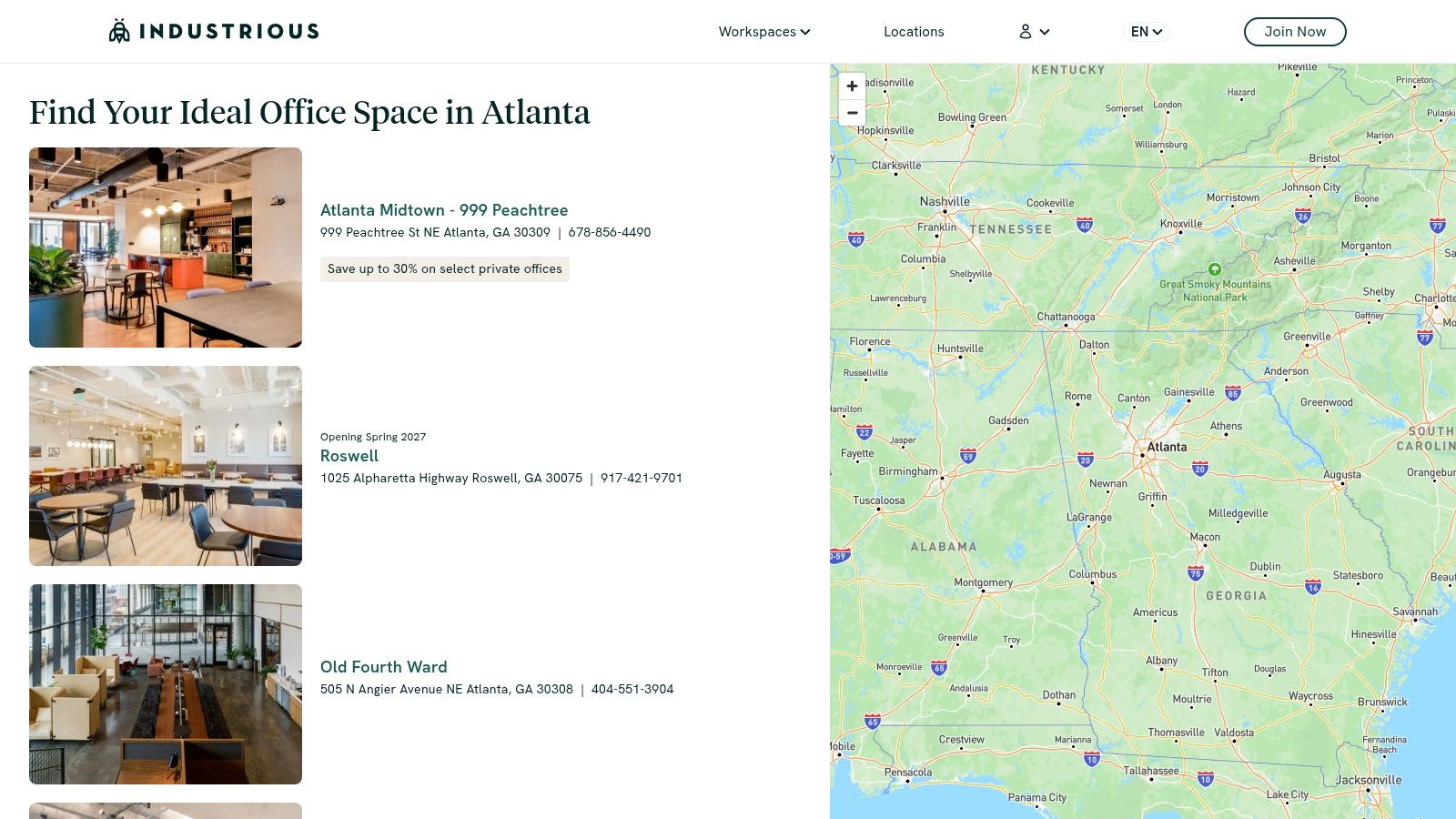
Industrious is a strong pick for teams that want consistency more than scene. The company operates across multiple Atlanta locations and has a broad national footprint, which matters if your leadership team travels or your company may add satellite space outside Georgia.
Its core appeal is operational polish. Private offices, team suites, coworking, and virtual memberships are wrapped in a hospitality-forward model with on-site staff, meeting rooms, event space, and 24/7 access to your home location. If your team values a steady experience across buildings, Industrious usually delivers that better than smaller local brands.
Why growing teams choose it
The practical benefit isn't just nicer finishes. It's fewer surprises. Businesses that need a professional setting for clients, hiring, and day-to-day execution tend to appreciate operators that standardize service and layout quality.
A few cautions matter. Pricing is often quote-based and will vary by building. That makes budgeting less transparent than some competitors. It's also a premium product, so cost-sensitive startups may decide the environment is excellent but not necessary.
One broader reason this category keeps attracting businesses is pricing discipline across the market. National median coworking rates stabilized at $225 per month for memberships and $30 for day passes, which suggests a market that has matured rather than expanded.
See Atlanta locations at Industrious.
4. WeWork (Colony Square, Midtown)
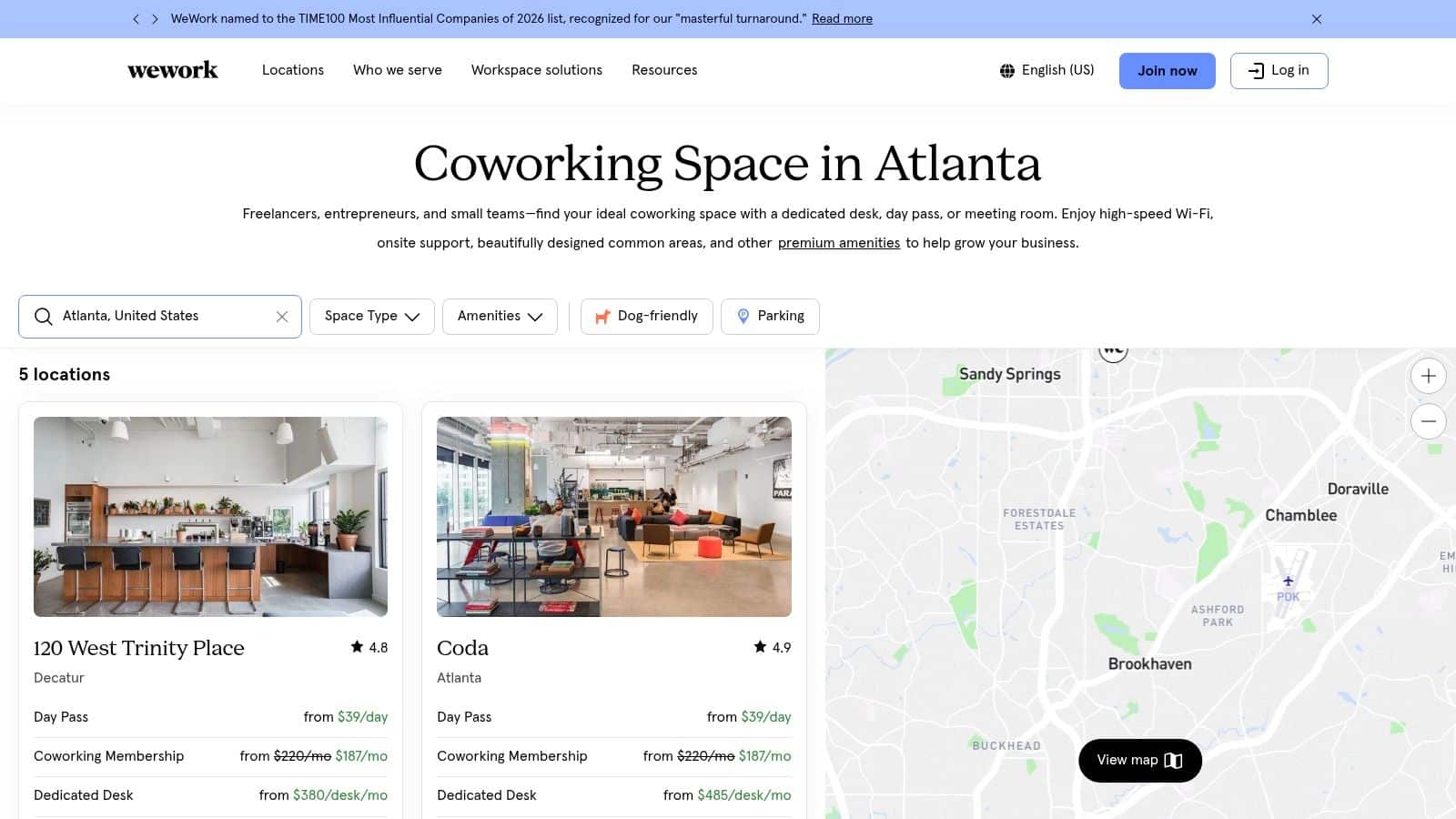
If location is your top filter, WeWork at Colony Square has a strong argument. Midtown is one of the easiest Atlanta districts for recruiting, transit access, lunch meetings, and post-work convenience. For teams trying to get employees back into the office without resentment, that matters more than branded kombucha.
WeWork's format is familiar and useful. Day passes, dedicated desks, private offices, team suites, and larger enterprise options give companies a path from one-person use to a much bigger footprint without a conventional lease. The space also benefits from Colony Square's built-in food and retail environment.
The real trade-off
WeWork works best when flexibility is the main objective. If your headcount is changing, if you're testing a new market team, or if you need a presentable Midtown base quickly, it solves those problems well.
What it doesn't automatically solve is certainty. Atlanta footprint details can evolve, so confirm availability and terms at the specific site you want. Midtown parking can also be expensive, and that can become a quiet but persistent employee complaint if your team drives in regularly.
Good coworking locations reduce recruiting friction. Great ones also reduce everyday excuses for not showing up.
Review current Atlanta availability at WeWork Atlanta.
5. Roam
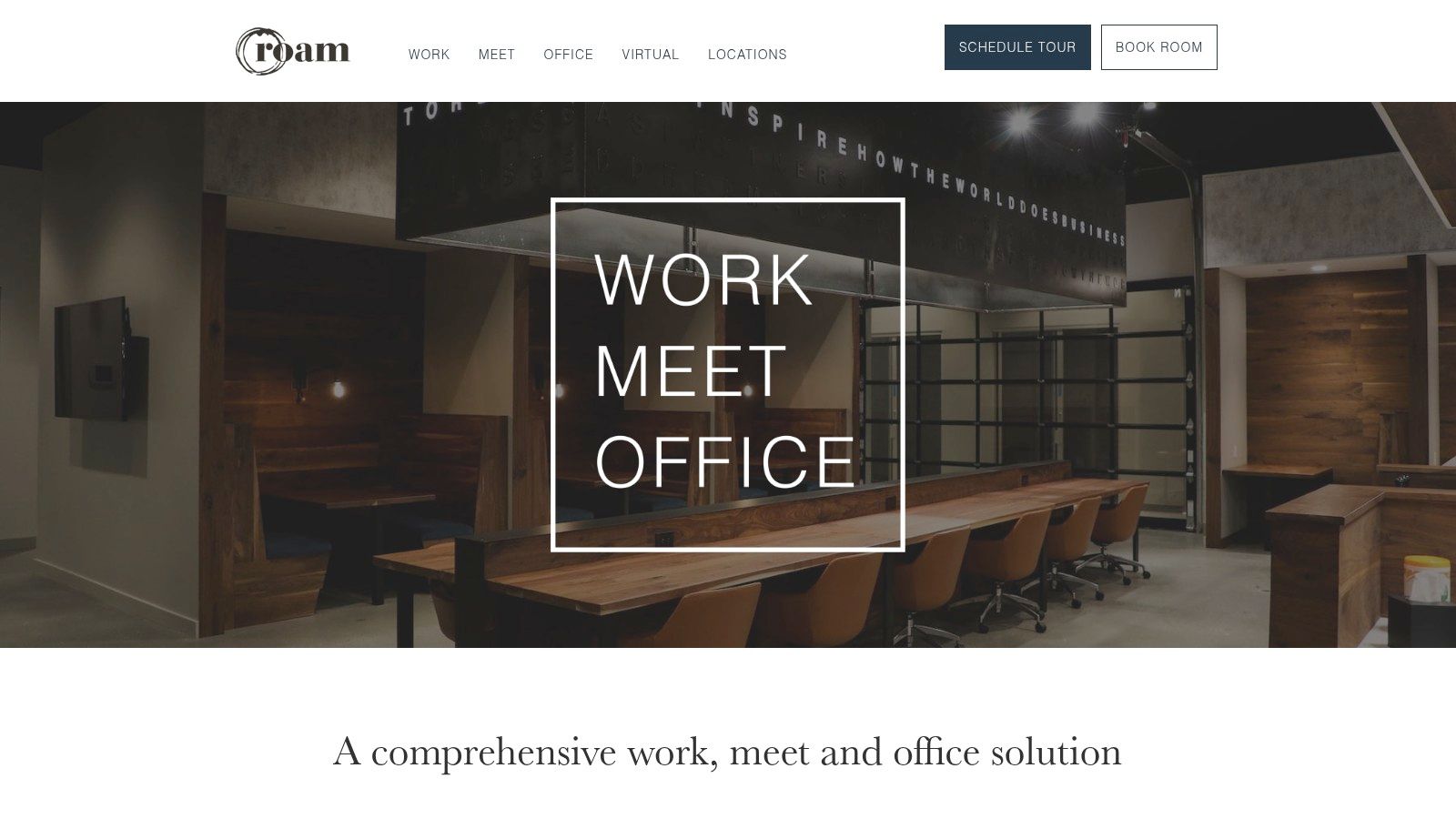
Roam is a practical choice for businesses that operate across multiple parts of metro Atlanta. Instead of forcing everyone into one central office, it gives members access across its locations and leans hard into meeting rooms, training space, and on-site support.
That makes it useful for distributed sales teams, consulting firms, training-heavy businesses, and companies with staff spread between intown and suburban corridors. The brand is less about startup buzz and more about functional flexibility.
What stands out
Roam publishes membership tiers and includes meeting-hour allocations, which is refreshing in a category where too much is hidden behind "contact us" forms. Its memberships are month-to-month, and the operator emphasizes access across Atlanta locations.
From Roam's published Buckhead-Peachtree plans, memberships start at $139 per month, with higher tiers at $199 and $299. Those plans also describe meeting-room hour inclusions and multi-location access, which helps teams estimate actual usage costs instead of guessing.
The limitation is that Roam feels more like a work-and-meet network than a classic startup hub. That's not a flaw. It's just a different product. If you need a large branded headquarters feel, another option may fit better.
Visit Roam.
6. Serendipity Labs (Atlanta Buckhead)
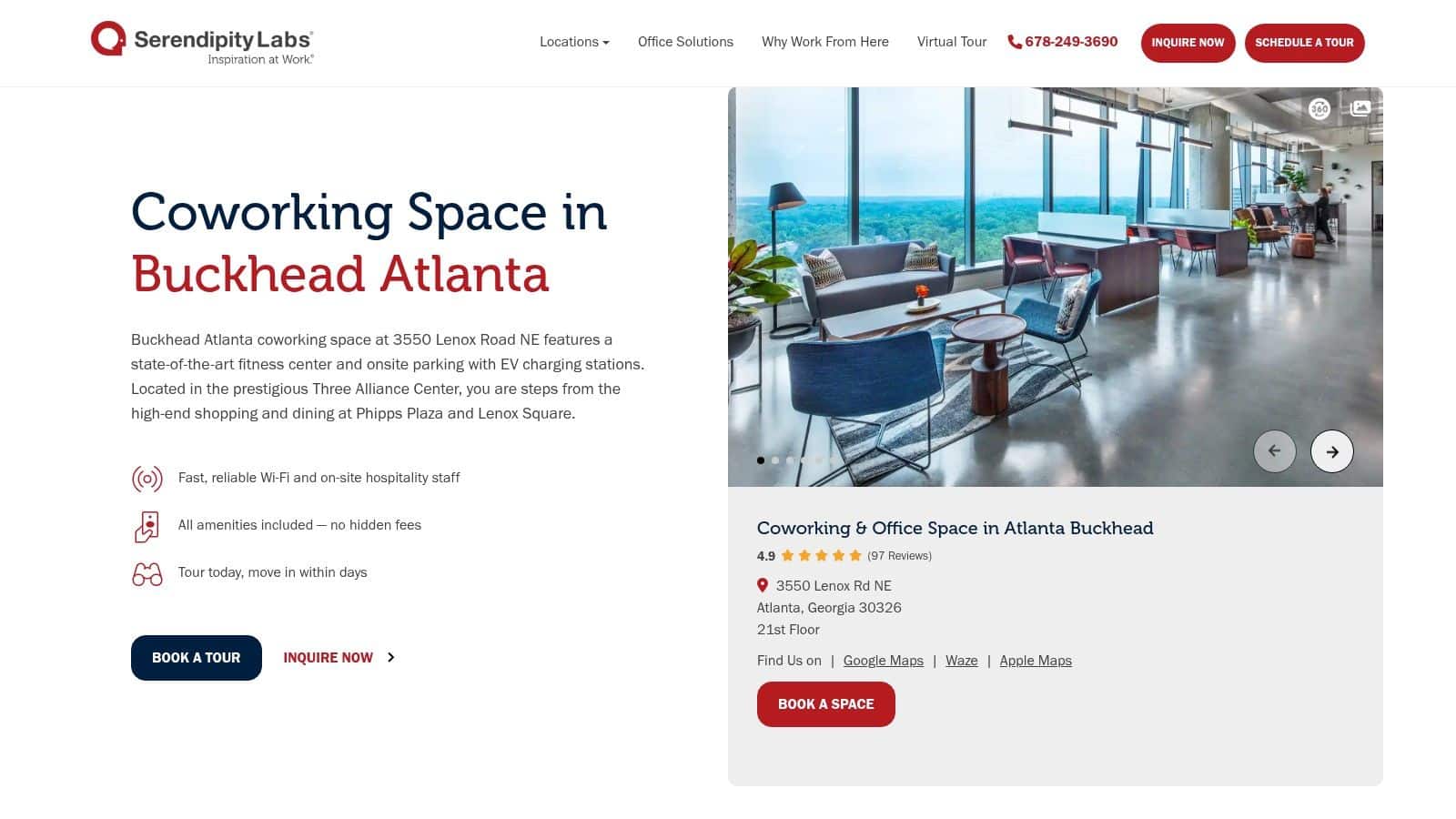
Serendipity Labs suits teams that need a polished setting and a bit more privacy than the average open coworking floor provides. In Buckhead, that often means professional services firms, executives meeting clients, and companies that want a refined but flexible office without committing to a traditional suite.
Its offer is straightforward. Private offices, team rooms, dedicated desks, coworking, and professionally managed meeting and event space, backed by concierge-style service and a broader network for travelers.
Where it earns its keep
The main benefit is tone. Serendipity Labs tends to present more like a professional work club than a startup clubhouse, which can be valuable if clients are regularly walking through the door.
- Best fit: Consulting, legal-adjacent, financial, and executive teams
- Operational upside: Better privacy posture and client-facing presentation
- Watch for: Quote-based pricing and Buckhead commute variability
For IT leaders, this kind of environment often works better for regulated discussions, executive calls, and controlled visitor interactions. It still requires diligence, but the layout style is usually more compatible with privacy-sensitive work than highly social coworking formats.
See the Buckhead location at Serendipity Labs Atlanta Buckhead.
7. Peachtree Offices
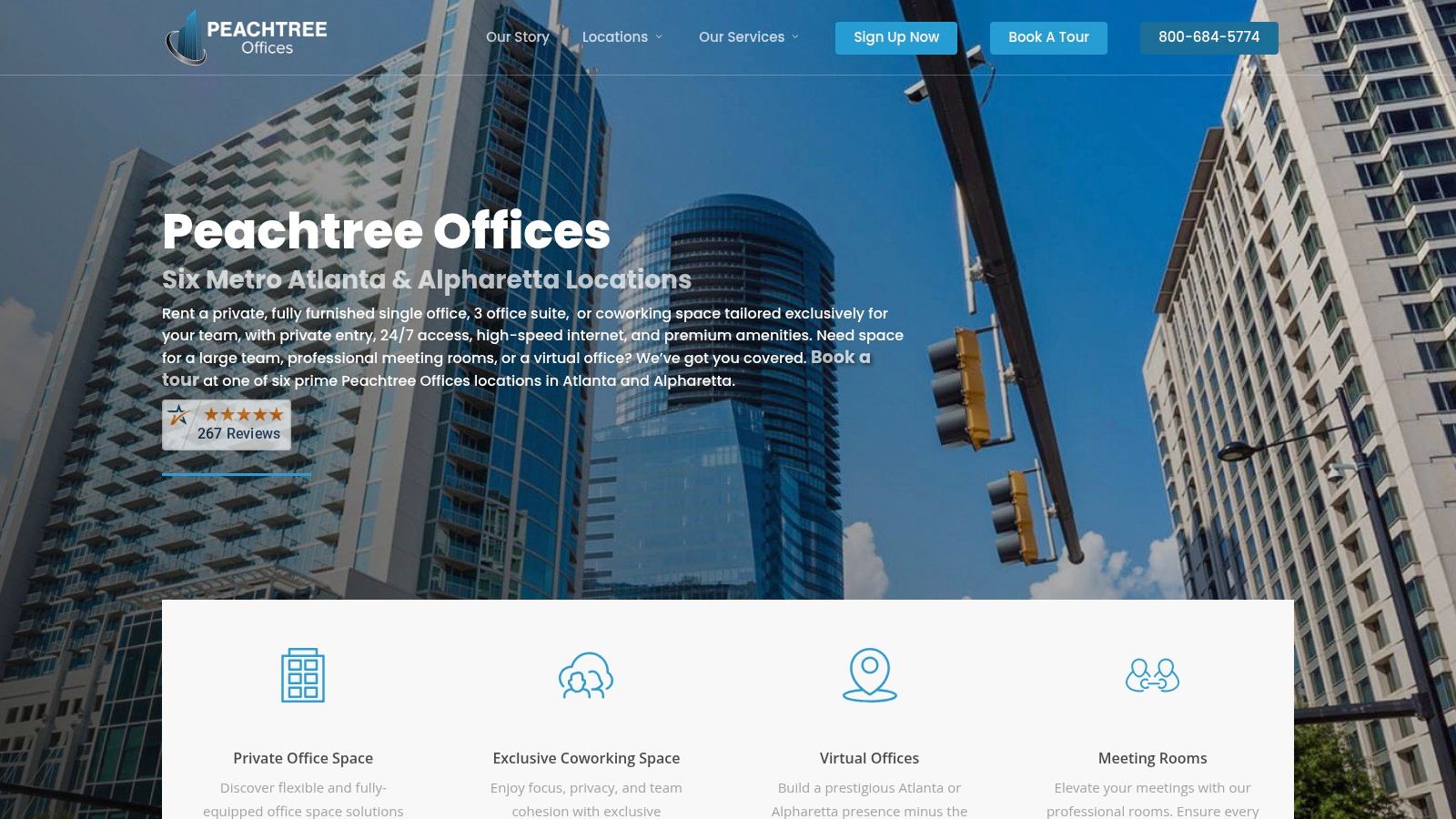
Peachtree Offices is one of the more practical local options for companies that care less about brand cachet and more about getting useful space on flexible terms. It offers furnished private offices, team-oriented shared rooms, virtual office services with live receptionist support, and meeting rooms across several Atlanta submarkets.
That local ownership angle matters. Smaller operators can sometimes be easier to work with when you need a custom setup, a fast move-in, or a straightforward answer from someone who directly manages the building relationship.
Best for no-drama office needs
Peachtree Offices is a good fit for service firms, small agencies, satellite teams, and businesses that need a credible office presence without paying for a hospitality-heavy experience they'll rarely use. Midtown, Downtown, Buckhead, and Alpharetta coverage also gives companies some room to match location to workforce geography.
The trade-off is atmosphere. Common areas can feel more utilitarian than national premium brands, and pricing for larger suites is often quote-based. Still, if your company wants functional office infrastructure over lifestyle perks, that's often a fair exchange.
One practical concern many coworking guides miss is end-of-life device handling. Providers may talk a lot about wifi and coffee but little about secure equipment retirement. For businesses with aging laptops, phones, or drives in a shared office environment, that omission matters.
Check locations and services at Peachtree Offices.
8. Lucid Private Offices
A 12-person team outgrows coffee-shop meetings and hot desks fast. The next problem is not aesthetics. It is whether the space can support private calls, basic access control, stable internet for cloud apps, and a clean path to add headcount without another move.
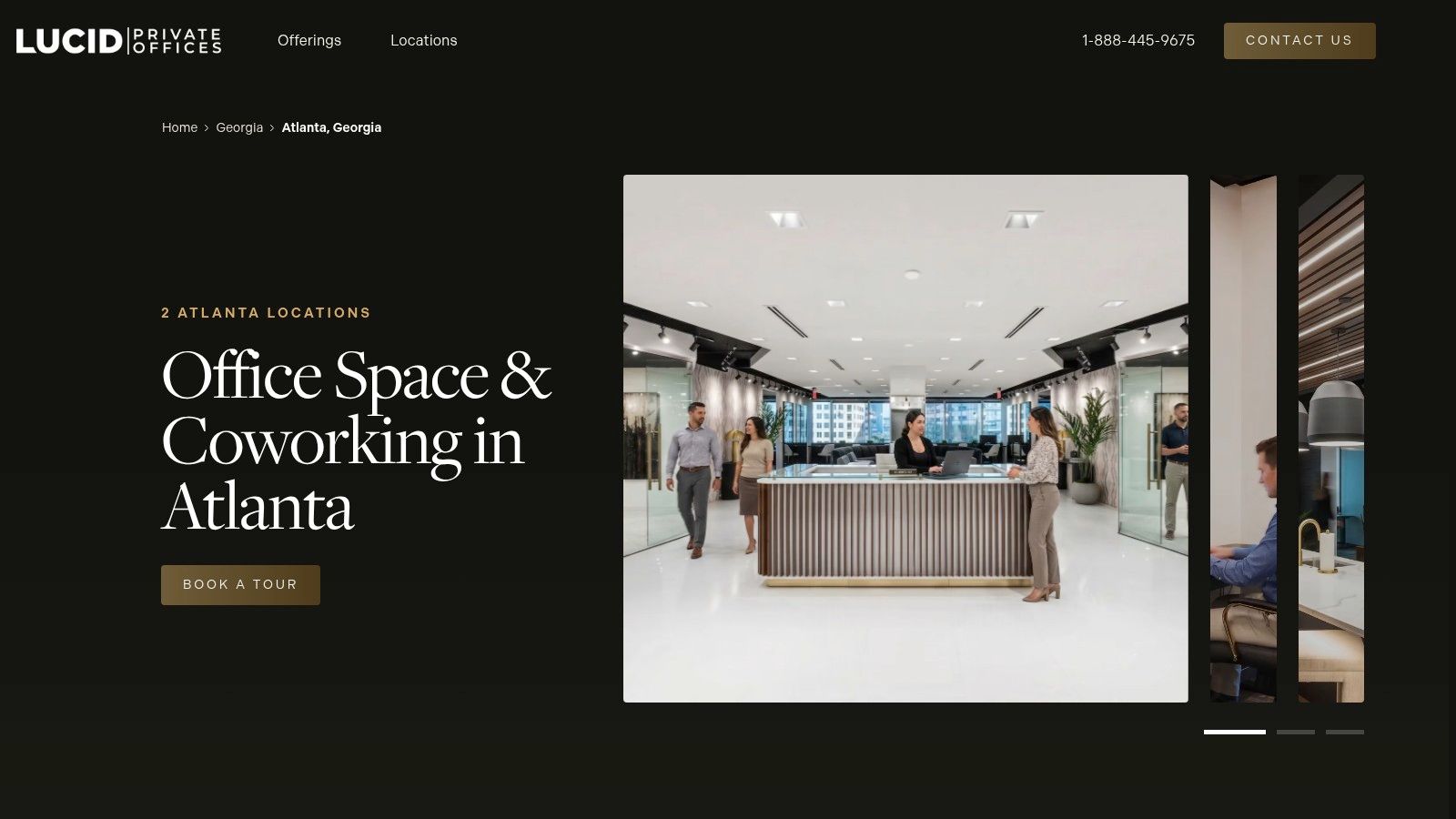
Lucid Private Offices fits companies that want enclosed space from day one. That matters for law firms, consultancies, financial services teams, recruiting firms, and any business handling client conversations that should not happen three feet from a shared lounge. A polished Buckhead address helps, but the stronger selling point is operational control. Teams can work behind a door, standardize how they use the office, and avoid the churn that often comes with open coworking floors.
Location flexibility is part of the appeal. Lucid also has metro options beyond Buckhead, including Alpharetta and Cumberland. For growing businesses, that creates practical choices around commute patterns, client access, and where to place a satellite team.
Where Lucid makes sense
Lucid works best for companies that already know privacy is a requirement, not an upgrade path. That changes the evaluation criteria. Instead of asking whether the community programming is active enough, ask how quickly the provider can provision offices, what internet redundancy exists at the location, how guest access is handled, and whether your team can add adjacent space if hiring picks up.
The trade-off is straightforward. Lucid offers less of the built-in networking energy that draws startups to open coworking brands. Companies that rely on founder community, frequent events, or informal lead flow may find the environment too quiet. Companies that care more about confidentiality, fewer distractions, and a more controlled day-to-day setup may see that as an advantage.
One issue I would verify on a tour is operational policy, not decor. Ask about after-hours building access, visitor logging, mailbox handling, support response times, and what options exist for secure device storage or disposal. Those details matter more than lounge design if your business has compliance obligations or a distributed IT setup.
Review options at Lucid Private Offices Atlanta.
At-a-Glance: Top 8 Atlanta Coworking Spaces for Growing Businesses
| Space | 🔄 Setup complexity | ⚡ Cost & onboarding | ⭐ Expected quality | 📊 Expected outcomes | 💡 Ideal use cases / tips |
|---|---|---|---|---|---|
| At-a-Glance: Comparing Atlanta's Top Coworking Spaces | None, summary infographic | N/A, comparison tool | ⭐⭐, overview-level | Quick shortlist across key criteria | Use to narrow options before site visits |
| Atlanta Tech Village (ATV) | Medium, membership tiers, programs | Moderate, transparent pricing; scales easily | ⭐⭐⭐, strong startup focus | Dense advisor/network access; good scale path | Best for high-growth tech startups seeking community |
| Industrious | Low–Medium, standard onboarding, some quotes | Higher-end pricing; easy to add locations | ⭐⭐⭐, consistent upscale experience | Reliable hospitality, predictable standards across cities | Ideal for teams wanting upscale, repeatable spaces nationally |
| WeWork (Colony Square, Midtown) | Low, flexible passes and desk options | Variable; flexible short-term commitments | ⭐⭐, broad, flexible product | Rapid scaling from day-pass to enterprise suites | Good for transit-oriented teams needing short leases |
| Roam | Low, month-to-month memberships | Moderate with published tiers & meeting credits | ⭐⭐, meeting-focused hospitality | Strong multi-location access and meeting capacity | Suited for distributed teams and training/workshops |
| Serendipity Labs (Buckhead) | Medium, quote-based for suites | Premium, concierge services; often quote-based | ⭐⭐⭐, professional, privacy-first | Client-facing address and managed events | Best for teams needing polished, private meeting space |
| Peachtree Offices | Low–Medium, local onboarding, flexible terms | Practical/quote-based for suites; flexible terms | ⭐⭐, pragmatic local operator | Turnkey private offices, virtual reception options | Good for teams preferring local ownership and simple terms |
| Lucid Private Offices | Medium, suite setup and customization | Premium; some published "from" pricing, larger suites by quote | ⭐⭐⭐, privacy and enterprise focus | Private furnished suites, enterprise internet, receptionist | Ideal for client-facing teams prioritizing privacy and reliability |
Making the Right Choice for Your Team
Your team signs for a five-person office. Six months later, you are onboarding three more hires, running daily client calls, replacing a stack of aging laptops, and asking the workspace operator questions that never came up on the tour. That is usually when a coworking decision gets tested.
For a growing business, the better choice is the space that holds up under operational pressure. Start with the basics that affect day-to-day performance: internet reliability, bandwidth options, ISP redundancy, guest network separation, after-hours access control, and visitor logging. If your company handles regulated data, those details are not administrative extras. They shape how safely your team can work and how easily your IT lead can support the office.
Growth also changes what "flexible" means. A space that works for eight people can become expensive or awkward at fifteen if meeting room access is tight, private office inventory is limited, or the provider cannot support a cleaner network setup. The primary trade-off is usually between short-term lease flexibility and long-term operational control. Business owners should ask what happens when headcount doubles, when executives need private call space, and when a client asks about physical security procedures before signing.
Device retirement belongs in that conversation too.
If you are moving offices, refreshing laptops, or clearing out old monitors and docking stations, secure disposal needs to be planned alongside the workspace move. The National Institute of Standards and Technology publishes Guidelines for Media Sanitization in NIST SP 800-88 Rev. 1, which is the standard many IT teams and downstream recyclers use when data-bearing devices are retired. Pickup policies also affect timing. Atlanta-area electronics recyclers often set commercial pickup minimums, and one local provider states free pickup typically starts at 10 to 15 items, while larger clear-outs may require palletized loads depending on the vendor.
That operational detail gets missed often. Old devices end up in closets, storage rooms, or under desks because no one assigned ownership early.
As noted earlier, coworking remains a small share of the broader office market, which is one reason Atlanta still offers a wide spread of options by budget, privacy level, and growth stage. That is useful if you evaluate spaces like an operator, not a casual buyer. Ask how the provider handles network changes, office expansions, access revocations, and documented chain of custody for retired hardware if your team is scaling quickly.
If your team depends on stable calling and internet performance, it also helps to compare business VoIP and fiber options before you commit to an office setup that needs to support hybrid work or client service.
Tour your finalists in person. Sit in the common area during a busy hour. Test the noise level, confirm after-hours entry procedures, and ask who owns the response if internet performance drops during a workday. For regulated businesses, add secure device retirement to the checklist before the first retired laptop gets left behind.
For Atlanta businesses evaluating coworking space, Beyond Surplus can help with the operational side that most office tours ignore: secure electronics recycling, IT equipment disposal, hard drive destruction, IT asset recovery, and logistics for office cleanouts or growth-related refreshes. Contact Beyond Surplus for certified electronics recycling and secure IT asset disposal.