

Atlanta's 2026 tech investment cycle will force IT leaders to treat asset disposition as an infrastructure function, not an afterthought. New builds, expansions, and public-sector upgrades create a second wave of work behind the headlines: server retirements, network removals, storage decommissions, lab closures, and end-of-life device pickup that must be scheduled, documented, and secured.
Atlanta is projected to receive over $10 billion in new development investments in 2026. Metro Atlanta had also become the second-largest U.S. data center market by total commissioned capacity by Q1 2026. For IT directors, the practical implication is straightforward. As more workloads shift into new colocation, cloud, airport, university, and municipal environments, more legacy equipment has to come out of old ones on a fixed timeline.
That changes how smart teams plan. Electronics recycling and secure IT equipment disposal now sit closer to migration planning, security, procurement, and facilities coordination. Teams that are expanding in this market should review why Atlanta is a prime data center hub before they finalize project dates, because density, power, carrier access, and regional growth all affect how quickly relocation and decommissioning work stacks up.
The trade-off is real. Fast project delivery often pushes disposal to the end of the schedule, but delayed ITAD creates avoidable risk: missed chain-of-custody steps, crowded staging areas, weak recovery on retired assets, and last-minute pickups that cost more than they should. Atlanta stands out because the investment wave is broad, touching cloud infrastructure, industrial corridors, downtown development, and city systems at the same time. That means 2026 planning should cover both deployment and removal from day one.
1. QTS Data Centers
QTS is one of the clearest signals that south metro Atlanta remains central to enterprise infrastructure planning. Its QTS Data Centers website points to the kind of hyperscale and enterprise environment that attracts migrations from older server rooms, leased cages, and legacy DR footprints.
That's the operational reality many IT teams underestimate. New capacity doesn't just create expansion. It creates disposal events, especially when IT teams consolidate multiple small environments into one cleaner, more scalable footprint. That's why Atlanta businesses watching colocation strategy should also review why Atlanta is a prime data center hub before they sign migration timelines that leave no room for decommissioning.
What works
- Carrier-rich strategy: QTS benefits from Atlanta's broader connectivity ecosystem, which helps enterprises reduce network friction during phased moves.
- Growth-friendly design: Multi-building development is useful for teams that want room for future expansion without changing metro area.
- Enterprise fit: This is the kind of environment that supports hybrid workloads better than many improvised in-house facilities.
Trade-offs
Southside siting can complicate logistics for teams concentrated in northern suburbs. It also places more pressure on move planning, vendor coordination, and chain-of-custody handoffs during removals.
Practical rule: If your migration plan starts with workloads and ends with disposal, it's backwards. Start with the inventory that must leave the old site.
2. Google
Google's Georgia data center footprint matters even for companies that won't ever buy colocation. When a cloud platform expands in-state, Atlanta enterprises usually revisit where latency-sensitive workloads belong and which on-prem systems no longer justify the cost to maintain.
That creates a familiar ITAD problem. Teams move applications first, then discover the old storage arrays, backup gear, network appliances, and test hardware are still sitting in a room nobody wants to own. Google's Georgia expansion makes cloud adoption easier. It doesn't remove the hard part of responsibly retiring the infrastructure left behind.
Best fit
Google is strongest for organizations already committed to Google Cloud, partner-led implementation, or cloud-native application roadmaps. It's less relevant if your team wants retail-style colocation flexibility.
Where teams get stuck
- Contract structure: Access happens through cloud agreements, not standard cage leasing.
- Location dynamics: LaGrange is useful regionally, but it isn't the same as in-city colocation for hands-on operations.
- Decommissioning lag: Hybrid exits often stall because no one owns the old hardware workstream.
The winning pattern is simple. Tie migration milestones to certified data wiping, serialized asset tracking, and scheduled electronic waste pickup before workloads leave the old environment.
3. Flexential
Flexential sits in a practical middle ground. It isn't the same hyperscale story as the largest campus builds, and that's exactly why many enterprise teams should pay attention. Mid-market colocation often lines up better with real migration budgets, real operating constraints, and real staffing models.
For Atlanta IT managers, that's useful because not every refresh is a cloud-only decision. Some organizations still need colocated infrastructure for compliance, latency, application dependencies, or staged exits from owned server rooms.
Why this can work well
Flexential's Atlanta-area presence gives enterprises a familiar operator with local continuity. For teams moving out of an office-based server room or aging regional facility, that can mean less organizational disruption than a bigger platform shift.
Smaller colocation projects often move faster, but they also expose every inventory mistake faster.
Main trade-offs
- Capacity pressure: Smaller footprints can pre-lease quickly.
- AI limits: Very large AI or HPC environments may outgrow this model sooner.
- Migration discipline: Fast deployment only helps if old assets leave on time.
Computer recycling and IT asset recovery planning have to sit inside the migration project, not outside it. If racks leave production but stay on your books, you haven't finished the move.
4. Georgia Tech Nexus
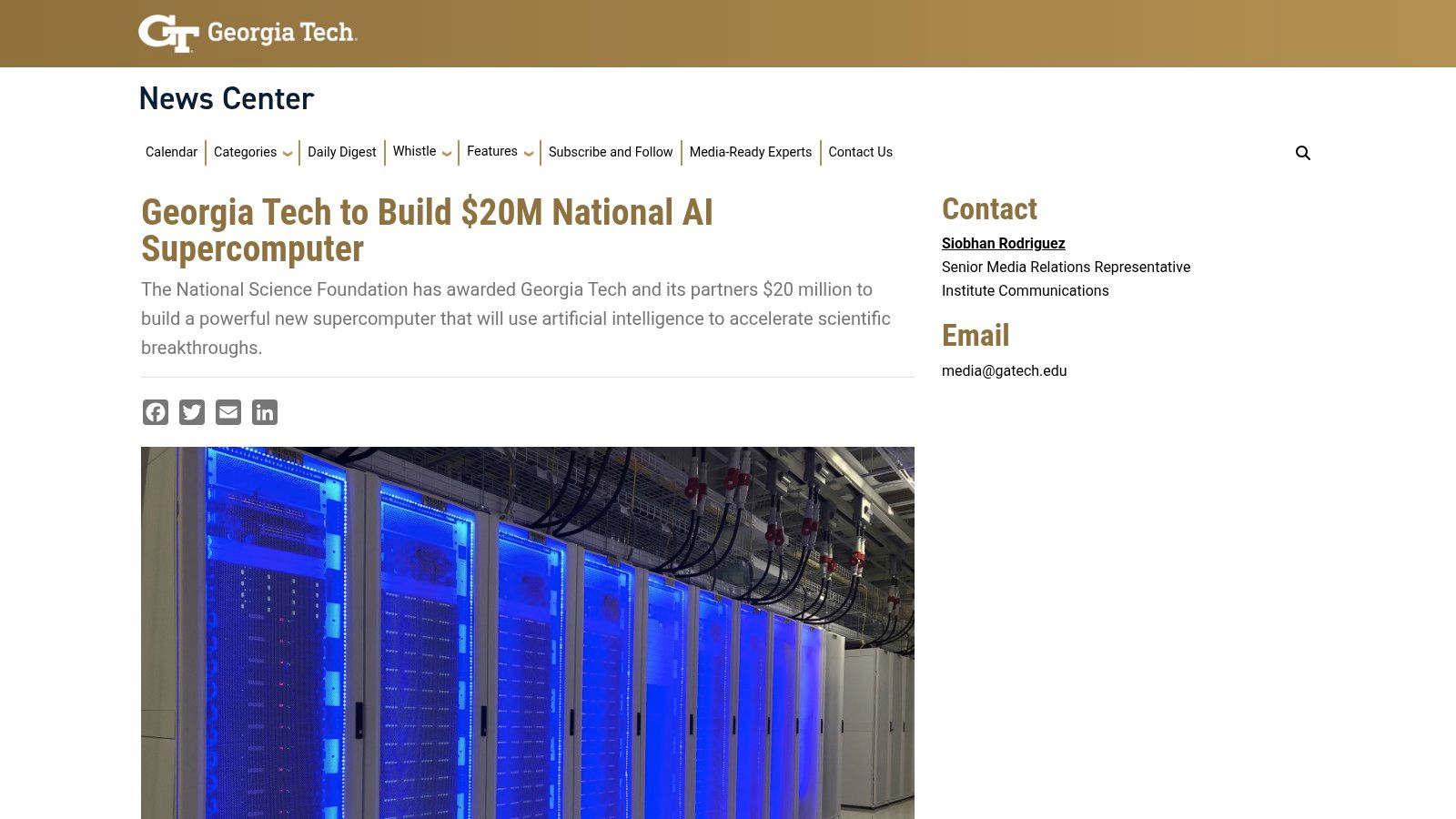
Georgia Tech's Nexus project changes Atlanta in a different way. It strengthens the region's AI and HPC identity through a research-led infrastructure build, not a commercial hosting model. The Georgia Tech announcement on Nexus makes that direction clear.
This matters to businesses because university-led AI infrastructure tends to pull talent, pilots, sponsored research, and specialized hardware procurement into the same orbit. That creates downstream disposal needs for lab systems, edge devices, storage, workstations, and retired research equipment. Companies following Atlanta's growth as a Southeast tech hub should treat academic infrastructure growth as part of the same asset lifecycle story.
Practical impact for ITAD
Research environments rarely retire uniform fleets. They retire mixed hardware with mixed data sensitivity. One room may hold GPU nodes, another may hold lab instruments, and a third may hold developer workstations loaded with project data.
That complexity changes the disposal approach:
- Lab-adjacent assets: Need sorting, not bulk haul-away assumptions.
- Research storage: Needs documented sanitization.
- Mixed ownership environments: Need chain-of-custody clarity before pickup.
The mistake here is using a standard office cleanout process for specialized equipment. It saves time on paper and creates risk in practice.
5. Hartsfield-Jackson Atlanta International Airport
ATL's digital infrastructure upgrade deserves more attention from IT leaders than it usually gets. The airport's media center update on digital connectivity work points to a broad modernization effort around wireless and digital services, and those projects usually generate large volumes of replaced network hardware, displays, sensors, and related electronics.
This is the kind of public infrastructure work that changes expectations for nearby enterprises too. Once airport systems, passenger services, and connected environments modernize, vendors, logistics operators, and service partners often follow with their own refresh cycles. That's why telecom-heavy organizations should keep telecom services in Atlanta on the radar alongside disposal planning.
What makes this different
A live airport environment changes everything. Equipment swaps happen in controlled windows, with strict access procedures and a low tolerance for delays. That means the back-end removal and recycling process has to be equally controlled.
Real trade-offs
- High complexity: Access, staging, and timing are tighter than in standard commercial buildings.
- Procurement barriers: Public-sector buying slows some projects.
- Asset mix: Wireless gear, cabling, endpoints, and signage often retire in uneven waves.
If your team handles airport, transit, or telecom refreshes, assume the disposal workflow will be audited even when nobody says the word “audit.”
6. City of Atlanta DOIM
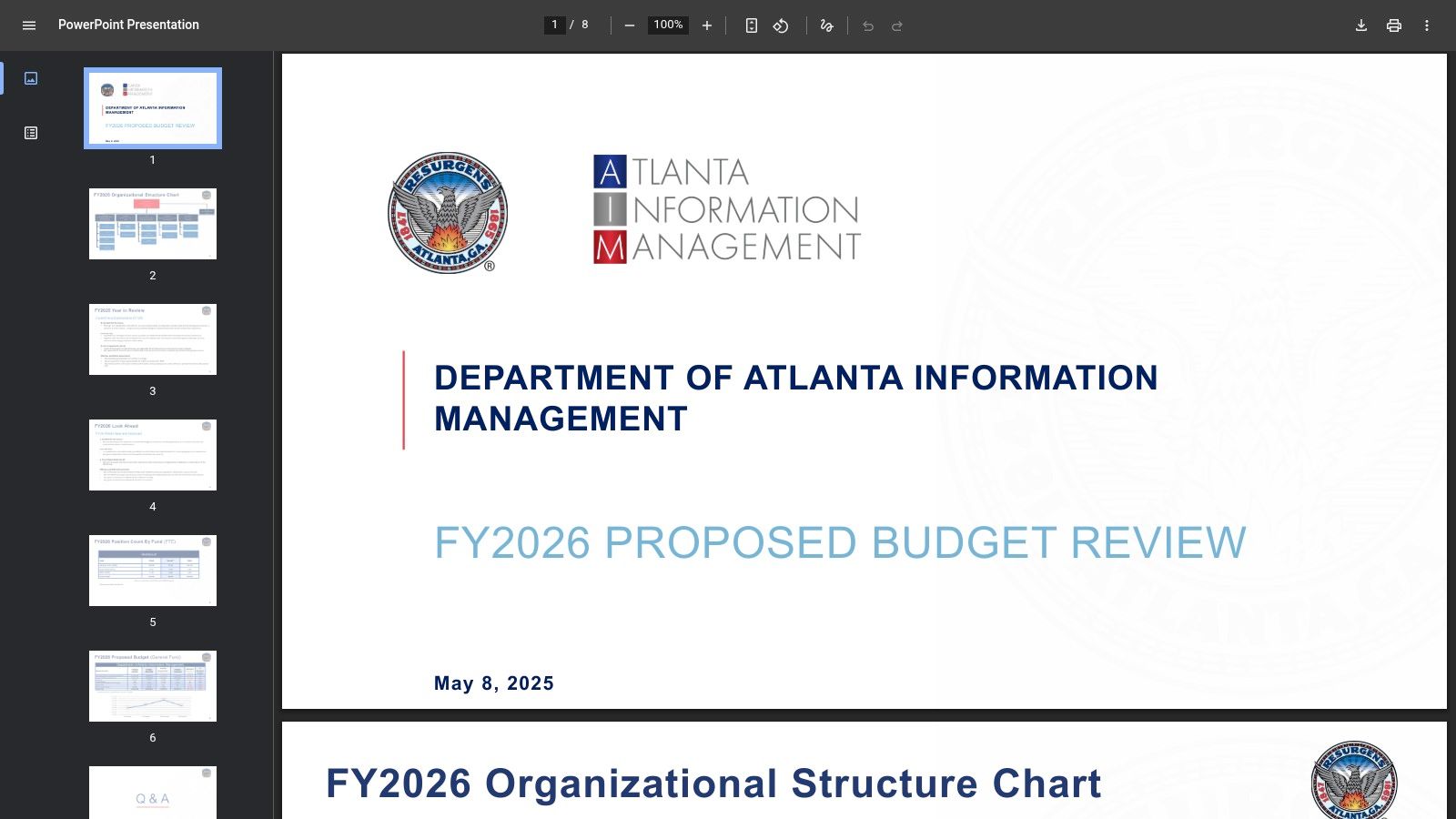
The City of Atlanta's FY2026 budget puts real scale behind municipal infrastructure. The city's proposed budget includes $9.3 billion in capital funding and a $3 billion operating plan, which is a meaningful signal for construction, systems modernization, and public IT operations. The DOIM side of that agenda is especially relevant because it points toward more structured infrastructure and AI adoption across city functions.
For disposal providers and enterprise IT teams that work with government, process matters more than speed. Public-sector decommissions usually require documented custody, clear reporting, and repeatable handling practices. Atlanta firms following how AI is impacting Atlanta businesses today should assume municipal AI adoption will raise scrutiny around retired devices and storage media, not lower it.
AI for Government Contracts is worth monitoring if your organization supports this category.
Where the opportunity is real
Government work can support multi-year refresh cycles and recurring pickup needs. It also pushes vendors to mature their documentation, serialization, and destruction workflows.
Where vendors fail
They treat public-sector asset disposal like a generic warehouse removal project. That doesn't hold up when agencies need certificates, disposition records, and chain-of-custody detail tied to procurement and policy requirements.
7. AWS
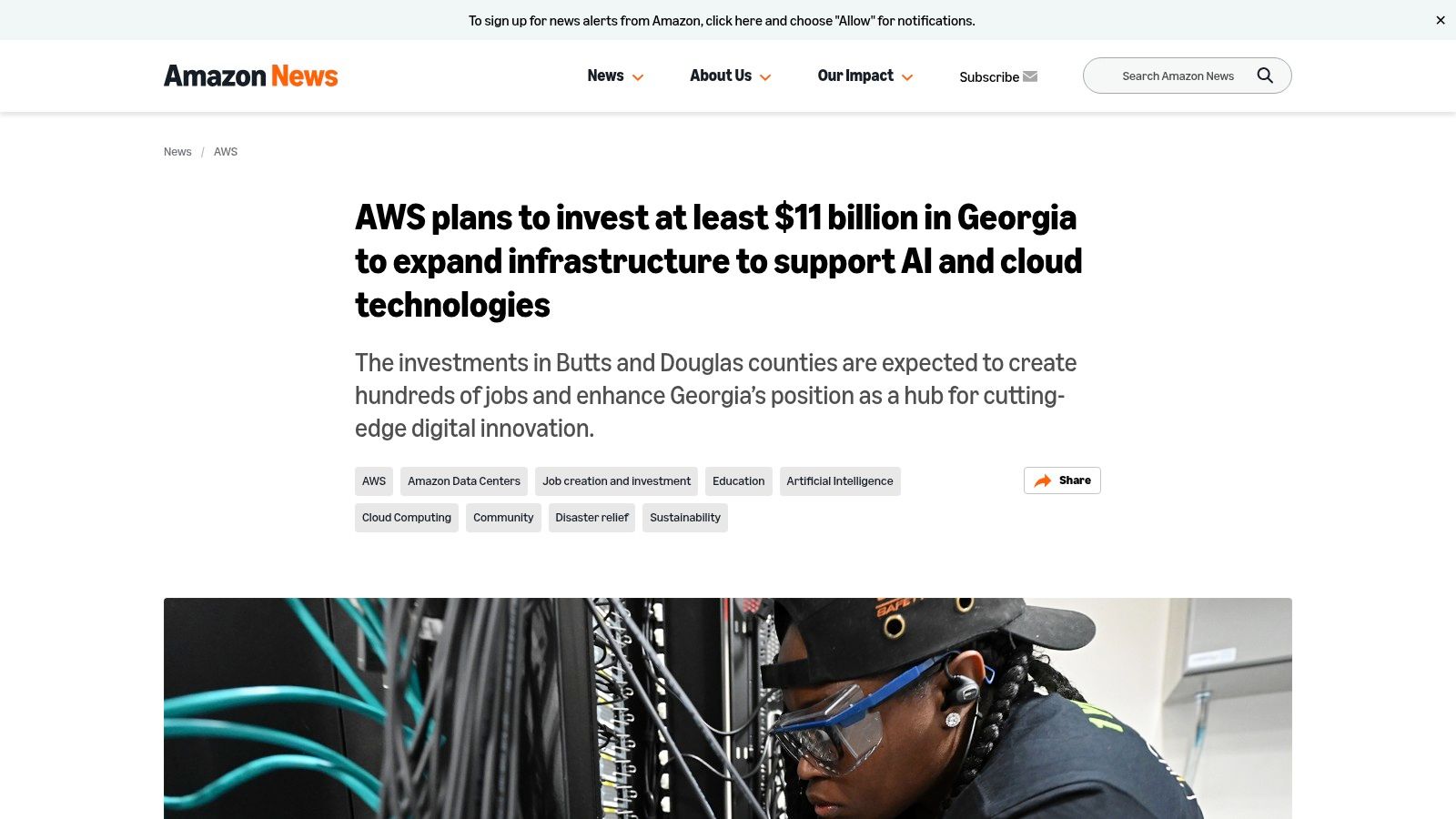
AWS is the biggest infrastructure signal in the state-level mix. Amazon announced an $11 billion investment in Georgia to expand cloud and AI infrastructure, and that has direct implications for Atlanta enterprises considering whether to keep aging on-prem environments.
The practical effect isn't abstract. When local or regional cloud capacity expands, finance teams push harder on data center exit plans, application teams revisit architecture, and facilities teams inherit the old room full of hardware. That's where Atlanta data center boom guidance becomes operational, not just strategic.
What AWS changes for local IT teams
AWS expansion improves the case for regional cloud adoption, multi-cloud competition, and lower-friction connectivity planning. It also raises the volume of retired enterprise hardware that needs secure e-waste management.
What doesn't change
- Cloud migration still leaves hardware behind
- Storage still needs destruction documentation
- Network gear still has to be removed, sorted, and recycled properly
- Old DR sites still need de-installation planning
A lot of teams assume cloud migration is the end of the infrastructure story. It's usually the start of the disposal story.
7-Project Comparison: Atlanta IT Investments 2026
| Item | 🔄 Implementation complexity | ⚡ Resource requirements | 📊 Expected outcomes | 💡 Ideal use cases | ⭐ Key advantages |
|---|---|---|---|---|---|
| QTS Data Centers (Fayetteville hyperscale campus) | High, multi‑phase construction, permitting & community engagement | Very high, land, power, fiber, local logistics and workforce | Large metro capacity addition; AI/HPC and enterprise colocation availability | Enterprise colocation, cloud & AI/HPC build‑to‑suit projects | Hyperscale power, direct Atlanta carrier connectivity |
| Google (LaGrange + Georgia footprint) | High, hyperscale build with cloud integration and contracted access | Very high, large power/network needs; Google operational model | Expanded Google Cloud regional capacity and ecosystem partnerships | Google Cloud customers seeking regional low‑latency access | Strong cloud ecosystem, grants and community partnerships |
| Flexential (fifth Atlanta‑area data center) | Moderate, mid‑market build with faster delivery timelines | Medium, ~4.5 MW initial capacity, interconnection platform | Quicker colocation availability with interconnect and compliance | Enterprises needing rapid colocation, interconnection and cloud on‑ramps | Established ATL presence and compliance‑ready services |
| Georgia Tech Nexus (AI/HPC supercomputer) | Moderate, NSF‑funded research deployment, allocation processes | Specialized, high‑density GPUs/accelerators, research IT resources | Increased regional R&D capacity, talent pipeline and collaborations | Academic research, benchmarking, industry‑academic pilots | Research‑optimized compute, funded national node access |
| Hartsfield‑Jackson ATL digital connectivity upgrade | Moderate‑High, phased deployment in a live airport environment | Medium, wireless infrastructure, sensors, cabling, managed services | Improved passenger connectivity, IoT enablement, vendor opportunities | Public‑sector integrators, managed services, IoT deployments | Broad user impact and public procurement opportunities |
| City of Atlanta DOIM (Tier 3 + AI initiatives) | High, Tier‑3 build plus strict governance and procurement | High, audited processes, secure lifecycle management, compliance | Hardened municipal services and formalized generative‑AI programs | Government IT, secure asset disposition, long‑term vendor engagements | High‑visibility government work with multi‑year contract potential |
| AWS (multi‑billion Georgia expansion) | High, multi‑site phased hyperscale expansion, staged capacity | Very high, massive power/fiber, enterprise agreements and carrier links | Substantial cloud & AI capacity growth; Local Zone low‑latency options | Enterprise cloud migrations, large AI/ML workloads | Unmatched scale, Direct Connect options and regional cloud capacity |
From Investment to Action Your ITAD Strategy for 2026
Atlanta's 2026 tech buildout will create a second wave that many IT teams underestimate. It will not stop at new capacity. It will also force faster retirement, redeployment, and disposal of existing assets across offices, labs, airport facilities, public-sector environments, and edge locations.
That is the operational implication behind the headline projects covered above. New data center capacity, airport connectivity upgrades, municipal infrastructure work, and research compute investments all change what stays in service, what gets reassigned, and what has to leave the environment under documented controls. For IT directors, the planning mistake is waiting until equipment is already stacked in a staging room, the move date is set, or a decommission window has been approved.
Georgia's wider business expansion supports the same conclusion. The state secured record new corporate investment activity, and Metro Atlanta continues to attract large employers that bring new facilities, new users, and new infrastructure demands. Industrial and logistics growth adds another layer. As noted earlier, that usually means more warehouse systems, more networked devices, and more equipment that eventually enters the disposition pipeline.
Capacity is the part many teams fail to test.
Atlanta's growth does not automatically mean local recycling, resale, and certified destruction providers can absorb every surge in retired equipment on your timeline. BeltLine reporting on infrastructure-led development points to broad job creation tied to investment activity, but it does not show whether end-of-life IT processing capacity is keeping pace across pickup coverage, downstream handling, and documentation requirements. This gap is significant because project delays often start in the final mile. Assets sit too long, chain-of-custody records get harder to reconcile, and site teams keep storing equipment that should already be off the books.
The practical response is to treat ITAD as part of project delivery. If your 2026 roadmap includes server refreshes, laptop retirement, medical equipment disposal, laboratory equipment disposal, product destruction, or a data center shutdown, set the disposition workstream early. Define inventory reconciliation rules, data destruction standards, resale approvals, packaging and pickup windows, certificate requirements, and final audit documentation before the first asset is disconnected. If relocation is part of the same initiative, coordinate early with teams that find business moving companies so movers, facilities staff, and ITAD vendors are not competing for the same access window.
Beyond Surplus is one Atlanta-based option for organizations that need electronics recycling, IT asset disposal, and secure data destruction with documented chain of custody. The larger point is operational. Disposition is infrastructure work, and Atlanta IT leaders who plan for it early will execute 2026 projects with fewer delays, lower compliance risk, and better asset recovery.
Contact Beyond Surplus for certified electronics recycling, secure IT asset disposal, data center decommissioning, and compliant asset lifecycle support for your Atlanta business.


