
If you're headed to the vmware atlanta office, you're probably not going for a casual visit. It's usually a roadmap discussion, a partner meeting, a product demo, or a technical session tied to virtualization, endpoint management, cloud operations, or an infrastructure refresh. The meeting itself matters, but the more useful question is what happens after you leave the building.
For most Atlanta IT teams, that's where the critical work starts. A conversation about migration, consolidation, or modernization almost always leaves older hardware behind. Many local organizations do a solid job planning resilience inside VMware environments, but a gap remains on the back end. Many Atlanta organizations lack formal processes for the secure data destruction and certified recycling of retired servers from their VMware environments, despite compliance obligations such as the FTC Disposal Rule, as noted in DC BLOX's discussion of IT resilience and disaster recovery.
That blind spot creates risk fast. Retired hosts, storage, backup appliances, test gear, and admin laptops don't stop being sensitive just because they've been powered down. If you need a refresher on how that process should work, this overview of IT asset disposition is a useful starting point.
An IT Professional's Guide to the VMware Atlanta Office
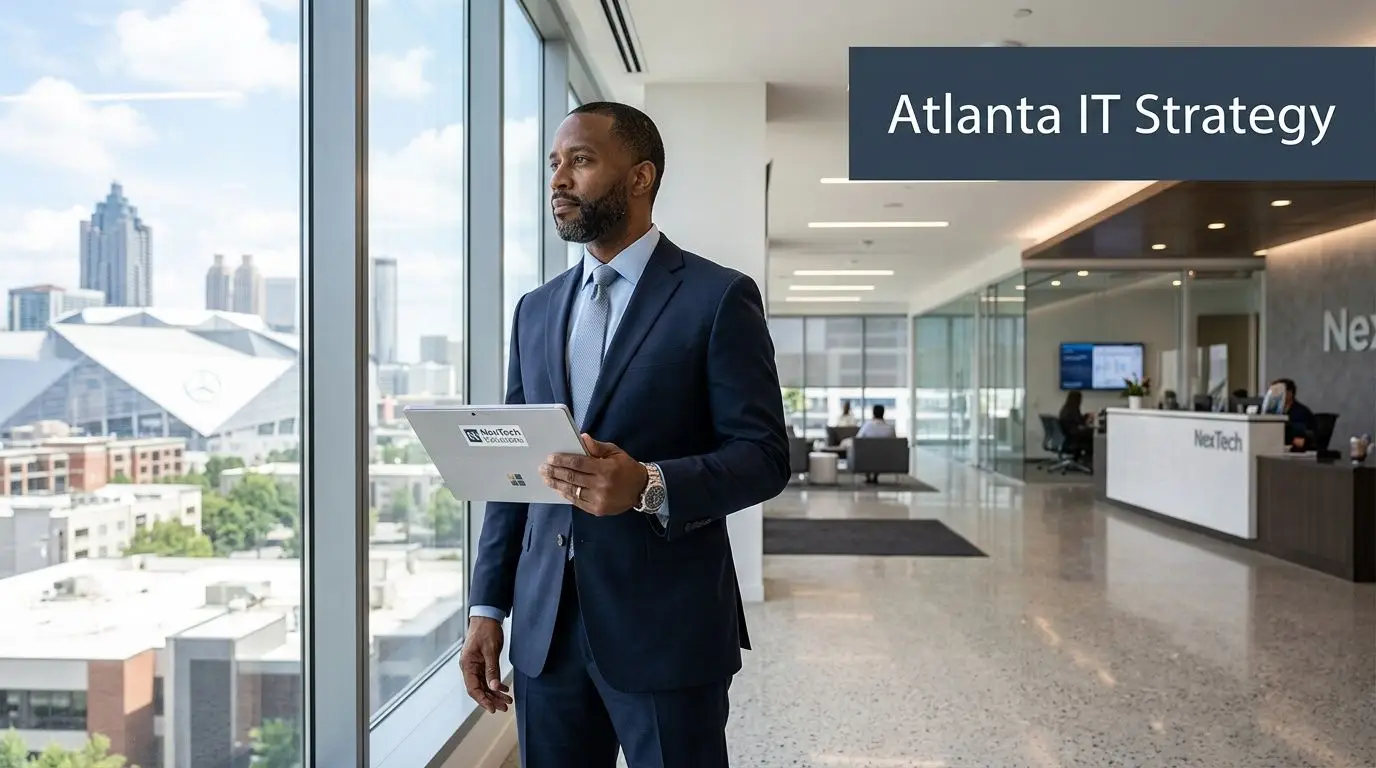
A typical visit starts the same way. You're reviewing notes in the parking lot, checking whether procurement wants pricing clarified, and making sure your infrastructure lead is aligned on the objective. That objective usually isn't "learn more about VMware." It's tighter than that. You need to validate an architecture, pressure-test a migration plan, or understand how a platform decision affects your Atlanta data center, branch offices, or recovery environment.
The vmware atlanta office is useful because local access shortens that loop. You can get face time with technical and business stakeholders without turning everything into a national escalation. That's valuable when you're trying to move quickly.
What experienced teams do differently
The strongest infrastructure teams don't stop at platform planning. They ask two parallel questions:
- What are we deploying next
- What are we retiring now
- Who documents the handoff
- How is data destruction verified
Practical rule: If a meeting is about new VMware architecture, someone on your side should already own the exit plan for the equipment being displaced.
That's the operational mindset that keeps projects clean. It also prevents the common Atlanta problem where new virtualization capacity gets approved, but old nodes, storage shelves, and lab systems sit in a cage or storage room with no documented disposition path.
Finding Your Way to Perimeter Center West
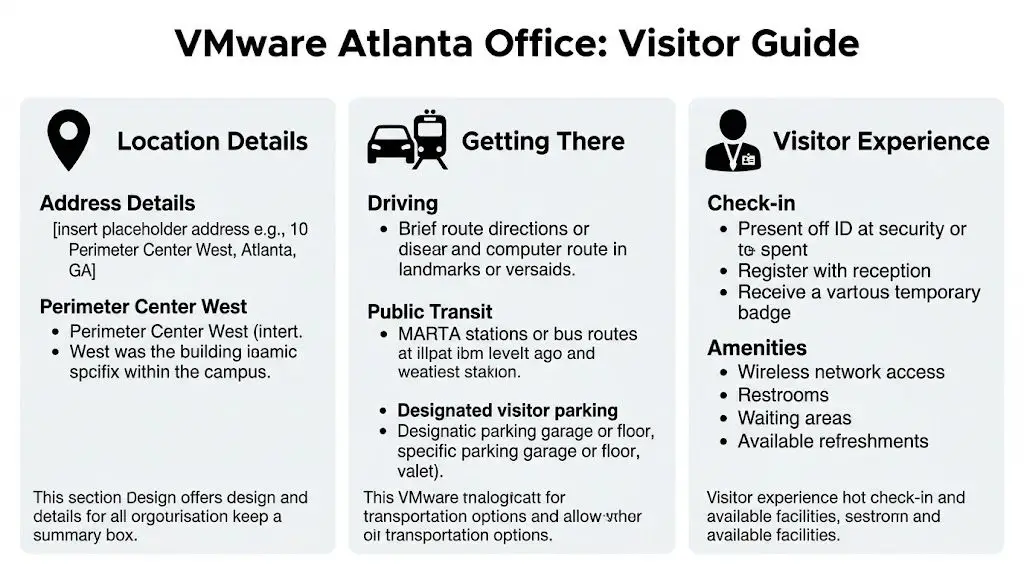
The VMware facility is located at 1155 Perimeter Center West in Sandy Springs, and it's described as a multi-suite enterprise hub focused on B2B software and cloud virtualization in this VMware Atlanta business profile. For visitors, that means you're not walking into a retail-style front door. You're arriving at a corporate office environment where access, timing, and check-in matter.
Arrival tips that save time
If you're driving in from the north or south side of Atlanta, build in extra time for Perimeter traffic and garage navigation. The area is business-friendly, but it isn't forgiving when you're late and trying to locate the right entrance.
If you're flying in, it helps to review the broader Atlanta business travel context around Hartsfield-Jackson Atlanta International Airport before you map your final leg to Sandy Springs.
A few practical habits help:
- Confirm your host name in advance so reception can match your arrival to the expected visitor list.
- Carry ID you can access quickly because badge procedures are standard in this type of office.
- Ask which suite you're visiting since a multi-suite footprint can create unnecessary hallway wandering.
- Don't assume equipment drop-off is allowed unless you've been told that explicitly.
Transit and check-in
For MARTA users, Sandy Springs is the obvious station to work from, followed by a short rideshare or local ground leg into Perimeter Center West. That's usually easier than trying to improvise the final stretch on foot if you're carrying a laptop bag and presentation materials.
Most problems with office visits aren't technical. They're basic logistics, like arriving at the wrong entrance or not knowing which internal contact is sponsoring your visit.
This also matters from an asset management perspective. Facilities like this often support dense technical environments, including lab gear and infrastructure systems. In practice, that means any future move, consolidation, or closure requires disciplined handling of equipment, media, and chain-of-custody records.
The History and Evolution of VMware in Atlanta
If you're heading into the VMware Atlanta office for a roadmap discussion, renewal meeting, or technical review, the site's history matters more than many visitors assume. Office history helps you judge what is likely handled locally, which conversations may route elsewhere, and how much continuity to expect from the team in the room.
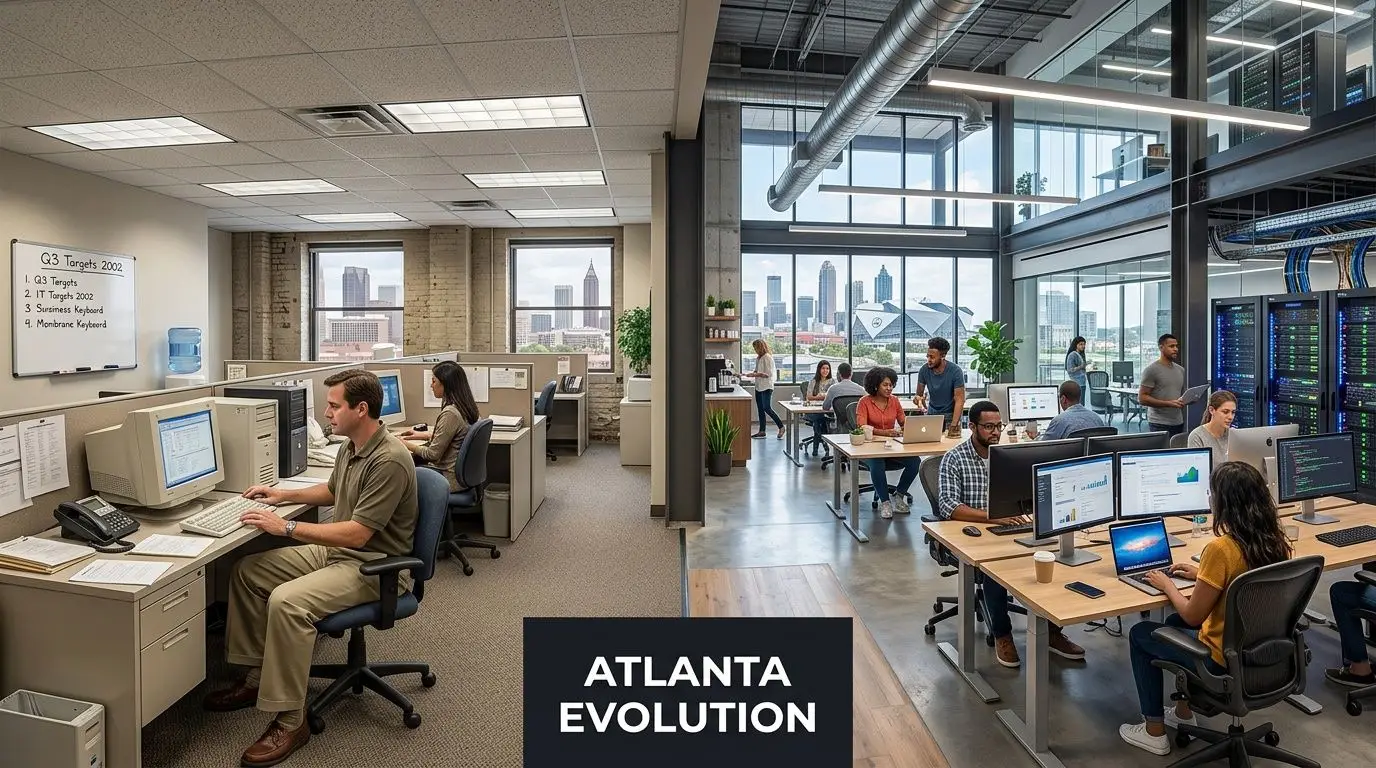
Atlanta took on a bigger role in VMware's footprint after the AirWatch acquisition in 2014, which anchored the Sandy Springs office to a product area with strong local roots in mobility and endpoint management. For IT leaders in Georgia, that changed the office from a regional presence into a place tied to meaningful engineering, enterprise customer activity, and hiring.
Why AirWatch changed the local equation
AirWatch gave VMware an established Atlanta operation with credibility in mobile device management. That mattered because local enterprise buyers could meet with people who understood endpoint policy, device enrollment, user access, and the operational headaches behind all of it.
For an asset manager, that history still matters. Teams shaped by endpoint and mobility work usually understand that infrastructure decisions do not stop at deployment. They affect refresh timing, redeployment options, audit trails, and eventual retirement of hardware that supported virtual desktops, mobile management, and back-end services.
That broader context also helps explain why the Perimeter area remains relevant to enterprise tech. A nearby node like Tech Village Atlanta reflects the wider mix of startup talent, operators, and enterprise experience around this part of the metro.
What changed under Broadcom
The office's role then shifted again after Broadcom acquired VMware. As noted earlier in the article, post-acquisition changes included workforce reductions in Sandy Springs. For visitors, that does not automatically mean the office lacks value. It means local presence and local authority are not always the same thing.
That distinction affects practical planning. A local meeting may still be the right place to sort out architecture questions, licensing friction, partner coordination, or relationship management. Final approvals, packaging decisions, and long-term account direction may sit with teams outside Atlanta.
I advise peers to read offices like this with an operator's eye:
- Local staff can still be highly capable even if budget authority sits elsewhere.
- Post-acquisition teams often cover broader territories, which can slow follow-up.
- Product discussions may stay local while contract terms and escalation paths move upstream.
- Infrastructure changes often show up later in the asset lifecycle through consolidation, support changes, and earlier retirement planning.
This is also where many IT teams miss the bigger operational link. A mature office footprint often points to a mature installed base in the region. Years later, that installed base creates decommissioning work. Hosts come out of service, storage is retired, backup appliances have to be wiped, and chain-of-custody records matter if equipment leaves a controlled environment. If your Atlanta visit involves platform consolidation or a VMware exit discussion, those downstream steps deserve airtime in the meeting, not after the project is already behind schedule.
Travel planning can shape that conversation too. If you're flying in for a full-day review with procurement and infrastructure stakeholders, Business Class Cheaper Than Coach: The Ultimate Guide is a practical resource for keeping trip costs under control without adding unnecessary travel friction.
Office history gives you operating context. It helps you estimate who can make decisions locally, how stable the team may be, and how early you should start planning for asset retirement if your VMware footprint is about to change.
Planning Your Visit Nearby Hotels and Amenities
If your meeting runs long, or you're stacking multiple appointments in Perimeter, stay close. That's usually better than trying to cross Atlanta between meetings. Perimeter Center gives business travelers enough flexibility for hotel, coffee, and dinner options without forcing you into a full downtown plan.
Business travel guide for Perimeter Center
| Venue | Type | Price Range | Distance from Office |
|---|---|---|---|
| Hyatt Regency Atlanta Perimeter at Villa Christina | Hotel | Upper-mid to upscale | Short drive |
| AC Hotel Atlanta Perimeter | Hotel | Upper-mid | Short drive |
| Crowne Plaza Atlanta Perimeter at Ravinia | Hotel | Mid to upper-mid | Short drive |
| Einstein Bros. Bagels area options | Coffee and quick breakfast | Casual | Short drive or rideshare |
| Perimeter Mall dining area | Lunch and dinner options | Varies | Short drive |
Use the table as a planning tool, not a promise of current rates or room availability. In this part of Atlanta, the best choice often depends on whether you're trying to host a client dinner, get in and out quickly, or stay near MARTA access.
What works for a productive day
For same-day visits, keep it simple:
- Choose a hotel with workspace if you'll need to jump on calls between meetings.
- Schedule lunch nearby instead of crossing neighborhoods and gambling on traffic.
- Use coffee shops for internal prep only. For customer conversations, hotel lounges are usually cleaner and quieter.
- Book flights with flexibility if your agenda may expand.
If you're traveling into Atlanta on a tighter budget but still need a comfortable fare strategy, Business Class Cheaper Than Coach: The Ultimate Guide is a practical read.
For visitors who have extra time after meetings, the Atlanta BeltLine business corridor context can help if you're extending the trip for additional local meetings or site visits.
The Strategic Importance of the Atlanta Office for IT Leaders
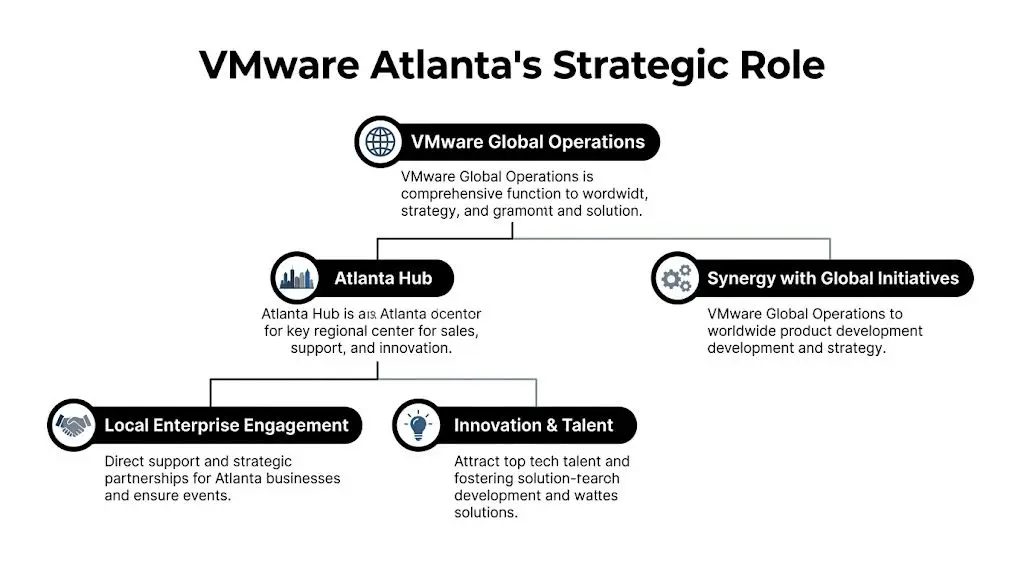
Atlanta matters, but it doesn't sit at the top of VMware's global hierarchy. VMware had 23,413 employees globally, with major concentrations in Bengaluru at approximately 3,670 employees and the San Francisco Bay Area at approximately 1,502, while Atlanta sits in the category of secondary hubs supporting between 1% and 3% of the total workforce, according to staffing analysis published by UnifyGTM.
How to use that reality
For IT leaders, this is good context. It tells you Atlanta is important enough to support meaningful customer and technical engagement, but it isn't necessarily where final strategic calls originate.
That should shape how you use the office.
- Local teams are often excellent for solution alignment, technical sessions, and relationship continuity.
- Enterprise-wide policy shifts may still come from larger hubs.
- Escalations work better when you know whether you're asking for execution help or a corporate exception.
Practical expectations
If you're meeting at the vmware atlanta office, use the local presence for what it's best at:
- Bring your systems engineers and operations leads, not just procurement.
- Use in-person meetings to clarify implementation friction before it becomes a support issue.
- Ask direct questions about ownership. Who handles product guidance locally, and who owns the final commercial or platform decision.
- Capture action items in writing the same day.
A secondary hub can still be highly useful. You just need to know whether you're talking to operators, architects, account teams, or decision-makers.
That distinction saves time and reduces the common frustration of expecting local teams to resolve issues they don't control.
Securely Decommissioning Your VMware Infrastructure in Atlanta
The most overlooked part of any VMware strategy is the gear that doesn't make the next phase. Hosts age out. Storage platforms get replaced. Test clusters collapse into fewer nodes. Branch hardware comes back after consolidation. If you don't have a documented decommission plan, your migration isn't done.
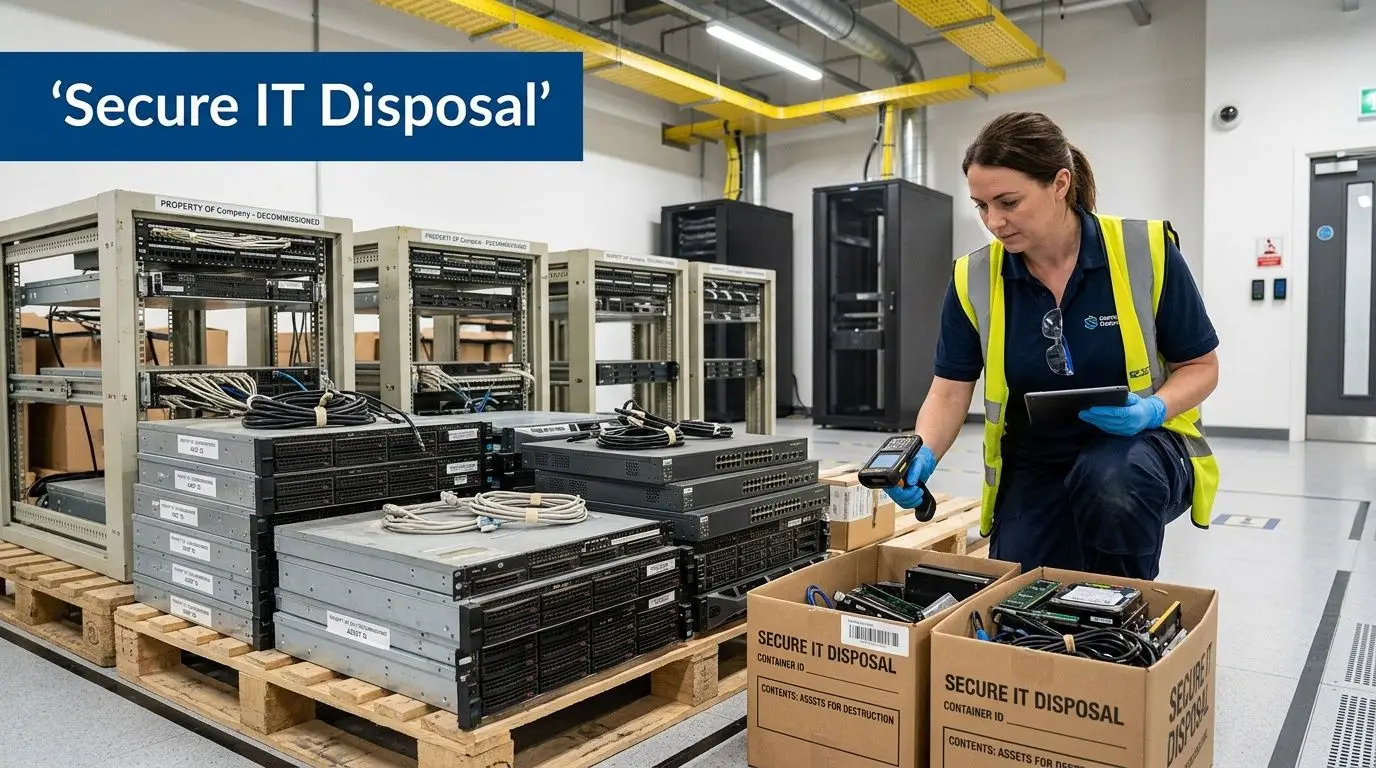
The post-acquisition changes in Sandy Springs are a useful reminder. The phased layoff of 217 employees at VMware's Atlanta office signaled likely hardware decommissioning activity involving surplus servers, networking gear, and laptops that require documented data destruction for compliance, according to Rough Draft Atlanta's reporting on the Sandy Springs layoffs.
What needs attention in a VMware environment
A VMware refresh usually leaves behind more than rack servers. It can include:
- SAN and NAS systems with embedded data that administrators forget to classify correctly at retirement.
- Top-of-rack switches and management gear that still hold useful configs and credentials.
- Backup appliances and replication targets that may contain older, broader copies of sensitive data than production systems.
- Admin laptops and jump systems used by infrastructure staff during migration work.
What good decommissioning looks like
The right process isn't complicated, but it does require discipline.
| Step | What matters |
|---|---|
| Inventory control | Match assets to serial-level records before anything leaves the site |
| Data destruction | Use wiping or physical destruction appropriate to the media and your policy |
| Chain of custody | Document who handled the equipment from removal through final processing |
| Downstream disposition | Separate remarketable equipment from scrap without losing tracking |
| Final reporting | Keep certificates and audit records with the project file |
For Atlanta organizations, one option is using a provider with a defined data center decommissioning process and the ability to handle secure pickup, data destruction, and recycling documentation. That's where a company like Beyond Surplus may fit, alongside other certified ITAD partners, depending on your scope and internal requirements.
Retiring VMware infrastructure isn't just a facilities task. It's a security event, a compliance event, and usually a finance event too.
What doesn't work is informal cleanup. I've seen teams migrate workloads cleanly, then lose momentum when the old environment is sitting in a cage waiting for "later." Later turns into quarter-end, then a site audit, then a scramble to reconstruct who touched what. Document the decommission path before the migration closes.
Common Questions About the VMware Atlanta Office
Is the VMware Atlanta office open to the public
Treat it like a corporate office, not a walk-in storefront. If you're visiting, schedule through your host or account contact first.
Can you drop off equipment for repair or disposal there
Don't assume you can. A business office isn't the same thing as a receiving center, service depot, or IT asset disposal location. Confirm any equipment handling in advance.
Who should coordinate a visit
For most organizations, the cleanest route is through your VMware account team, partner contact, or the employee hosting the session. If the meeting involves architecture review, include your infrastructure lead early so the agenda stays technical enough to be useful.
Is the office still strategically relevant after restructuring
Yes, but with realistic expectations. Local offices can remain important engagement points even when broader ownership changes affect staffing and decision flow.
When should ITAD planning start
Start before the migration, refresh, or office move is finalized. The old environment creates risk the moment it becomes "retired but not processed."
What's the main mistake teams make
They separate the meeting from the asset lifecycle. The meeting covers the future state. Operations still has to close out the past state securely and with documentation.
If your organization is planning a VMware refresh, office consolidation, lab cleanup, or data center shutdown in Georgia, Beyond Surplus can support certified electronics recycling, secure data destruction, and IT asset disposition with documented chain of custody.


