

You might be looking at Hartsfield-Jackson Atlanta International Airport from two very different angles today. Maybe you’re a traveler trying to make a connection without wasting time. Maybe you’re an operations leader, IT manager, or logistics planner who sees ATL as a gateway for equipment, people, and business continuity.
Both views are correct. hartsfield-jackson atlanta international airport is a passenger airport, but it also functions like a high-speed commercial engine for the Southeast. That’s why it deserves more than a basic terminal guide.
Welcome to the World's Busiest Crossroads
ATL feels less like a single building and more like a moving system. Flights, baggage, concessions, security, cargo, maintenance, networked devices, and ground transport all have to work together without much margin for delay.
That scale is easy to underestimate until you look at the numbers. Hartsfield-Jackson Atlanta International Airport handled 108.1 million passengers in 2024, generated a direct economic impact of $34.8 billion in metro Atlanta, and supported 645,834 metric tons of cargo, according to the Airport Chamber’s 2024 ATL traffic report.
Why that matters to travelers
For passengers, that scale usually shows up in practical ways:
- More route options because ATL functions as a major connecting point
- More activity at every hour so timing matters more than at smaller airports
- More services on site because the airport supports a constant flow of travelers
Why that matters to businesses
For companies, the airport is part of the region’s operating backbone. Cargo movement, technician travel, urgent parts shipments, and time-sensitive equipment routing all benefit from a hub that rarely sits still.
That’s especially relevant for firms working in technology, healthcare, retail, and field services. When teams are coordinating office closures, infrastructure refreshes, or equipment redeployment, proximity to ATL can simplify transportation planning and speed decision-making.
Practical rule: If your business depends on fast movement of staff, hardware, or replacement equipment, ATL isn’t just nearby infrastructure. It’s part of your operating model.
Atlanta’s broader innovation ecosystem matters here too. Companies managing growth, relocation, and hardware turnover often overlap with the startup and enterprise networks around Atlanta Tech Village, where device refresh cycles and secure disposition planning tend to show up sooner than many teams expect.
Navigating the Airport Layout and Terminals
The easiest way to understand ATL is to think in straight lines, not circles. The airport is built to move large volumes of people through a repeatable pattern.
Start with the big picture
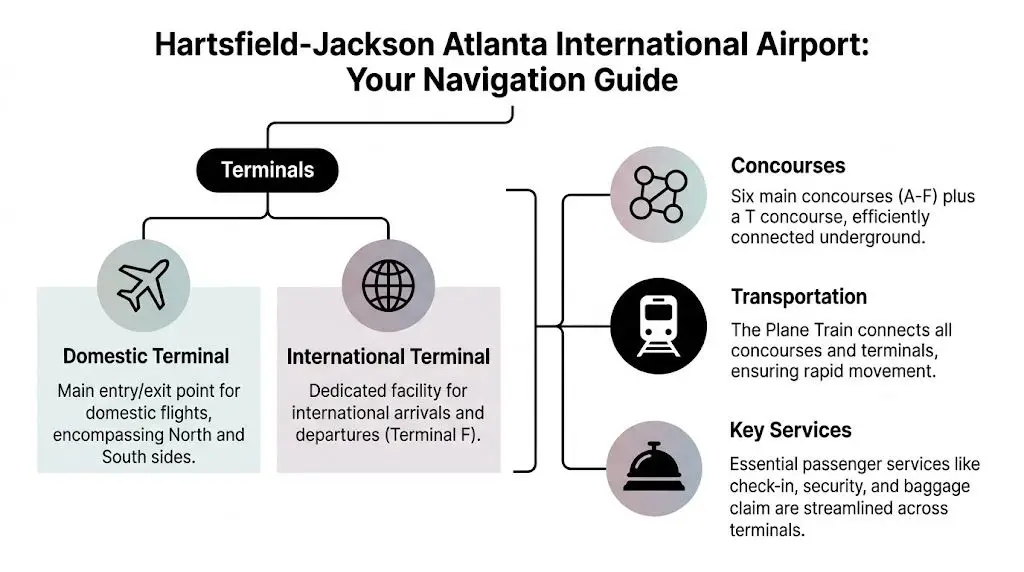
ATL began as Atlanta Municipal Airport in 1925 and today includes seven concourses, with passenger traffic recovering from 42.9 million in 2020 to 108.1 million by 2024, as summarized in the Hartsfield-Jackson Atlanta International Airport history and traffic overview.
Those seven concourses are T, A, B, C, D, E, and F.
The airport has two main terminal entry points:
- Domestic Terminal for most domestic departures and arrivals
- International Terminal for many international check-ins and arrivals, especially around Concourse F
The layout that confuses first-time visitors
Many travelers assume “terminal” and “concourse” mean the same thing. At ATL, they don’t.
A simple mental model helps:
| Part | What it does |
|---|---|
| Domestic Terminal | Main front-door area for check-in, baggage, and ground access |
| International Terminal | Separate front-door area for international processing |
| Concourses T to F | Gate areas where flights depart and arrive |
| Plane Train | Underground connector that links the concourses |
Think of the Plane Train as the airport’s central connector. It moves people between gate areas quickly, while the terminals serve as the major entry and processing zones.
How to avoid wrong-turn stress
Use this sequence:
- Check your airline and gate area before leaving for the airport
- Confirm whether you should enter through domestic or international access
- Clear security at the correct side when possible
- Ride the Plane Train if your gate is farther down the line
If your boarding pass says one thing and your rideshare app drops you at another entrance, trust the airline information first.
Frequent travelers usually get tripped up by timing, not by the map itself. The airport’s structure is logical. What changes is where crowds build and how far your gate may be from curbside.
A Complete Guide to Ground Transportation and Parking
Your airport day often goes right or wrong before you ever see a security checkpoint. At ATL, the best ground option depends on one thing first. Are you optimizing for cost, simplicity, or control?
Choosing your way in
Some travelers want the least expensive route. Others need door-to-door convenience, especially with luggage, project materials, or a group.
Here’s a practical comparison.
ATL Ground Transportation Options at a Glance (2026)
| Method | Location | Est. Cost to Downtown | Best For |
|---|---|---|---|
| MARTA rail | Airport station connected to terminal area | Varies | Solo travelers and cost-conscious trips |
| Rideshare | Designated pickup zones | Varies | Flexible scheduling |
| Taxi or limo | Ground transportation pickup areas | Varies | Simple curb-to-destination service |
| Hotel shuttle | Hotel-designated pickup areas | Varies | Overnight business travel |
| Rental car | Rental Car Center | Varies | Multi-stop trips and regional travel |
| On-site parking | Airport parking decks and lots | Varies | Travelers driving themselves |
What usually works best
- MARTA rail works well when you’re headed into central Atlanta and don’t need extra cargo space.
- Rideshare is useful when your arrival time may shift.
- Taxi or car service can be easier when you want a predictable pickup flow.
- Rental cars make sense for site visits, suburban meetings, or facility tours.
Parking decisions for business travelers
If you’re driving yourself, the issue isn’t just proximity. It’s how fast you can enter, park, unload, and reach check-in without friction.
For facility managers and property teams benchmarking airport access points, traffic circulation, pedestrian flow, and lot organization often matter more than they expect. A useful outside reference is this guide to modern parking lot design standards, which helps explain why certain lots move smoothly while others create bottlenecks.
A quick decision filter
Ask these questions before you leave:
- Need the lowest cost: public transit may be the first option to check
- Carrying equipment cases: rideshare, taxi, or rental car is usually easier
- Traveling with colleagues: one vehicle may simplify reimbursements
- Returning late: choose the option with the least uncertainty on pickup
Ground transportation at ATL isn’t hard. The mistake is treating every trip the same way. A same-day sales call, a multi-day conference, and a site migration project all need different arrival plans.
Optimizing Your Check-In Security and Amenities
A smooth ATL experience usually comes down to sequencing. Check in early, keep your documents ready, and reduce how many decisions you need to make inside the terminal.
Check-in without wasting motion
Most major airlines support mobile boarding passes and self-service kiosks. If you’re not checking a bag, digital check-in can remove one entire line from your day.
If you are checking bags, arrive with your ID, confirmation details, and bag tags process in mind. That sounds basic, but ATL punishes hesitation more than smaller airports do because the flow is constant.
Security strategy that actually helps
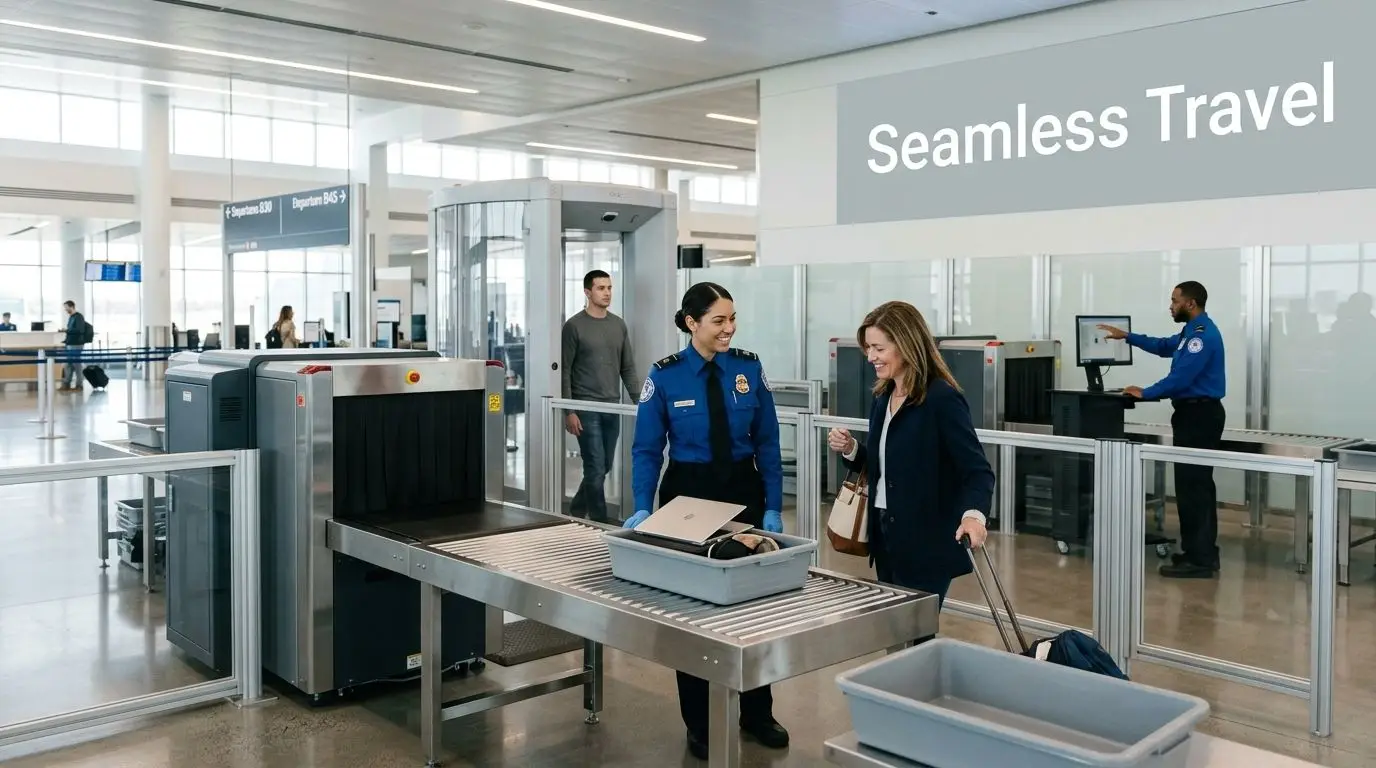
Security lines move best when travelers separate preparation from screening. Have your identification and boarding pass accessible before you reach the front. Keep electronics, liquids, and outerwear organized based on your screening lane requirements.
For frequent flyers, trusted traveler options can reduce uncertainty. For occasional travelers, the biggest gain often comes from entering the airport through the most logical side for your airline and gate.
One strong habit beats five small hacks. If you arrive organized, ATL becomes much easier to handle.
Using the concourses well
Once you’re past security, the airport opens up. Lounges, workspaces, dining, and rest areas are spread across the concourses, so it helps to decide whether you want to stay near your gate or use extra time more deliberately.
A few smart choices:
- Need to work: look for lounge access or quieter seating away from gate clusters
- Need a reset: build in time for food before your final gate move
- Traveling with sensitive devices: keep laptops and storage media physically close, especially during meal stops
For business travelers, it’s worth understanding the basics of data sanitization before retiring or redeploying laptops that travel through airports frequently. The airport leg of a trip is often where hardware is most exposed to loss, mix-ups, or rushed handling.
The Commercial Heartbeat ATL Cargo and Business Logistics
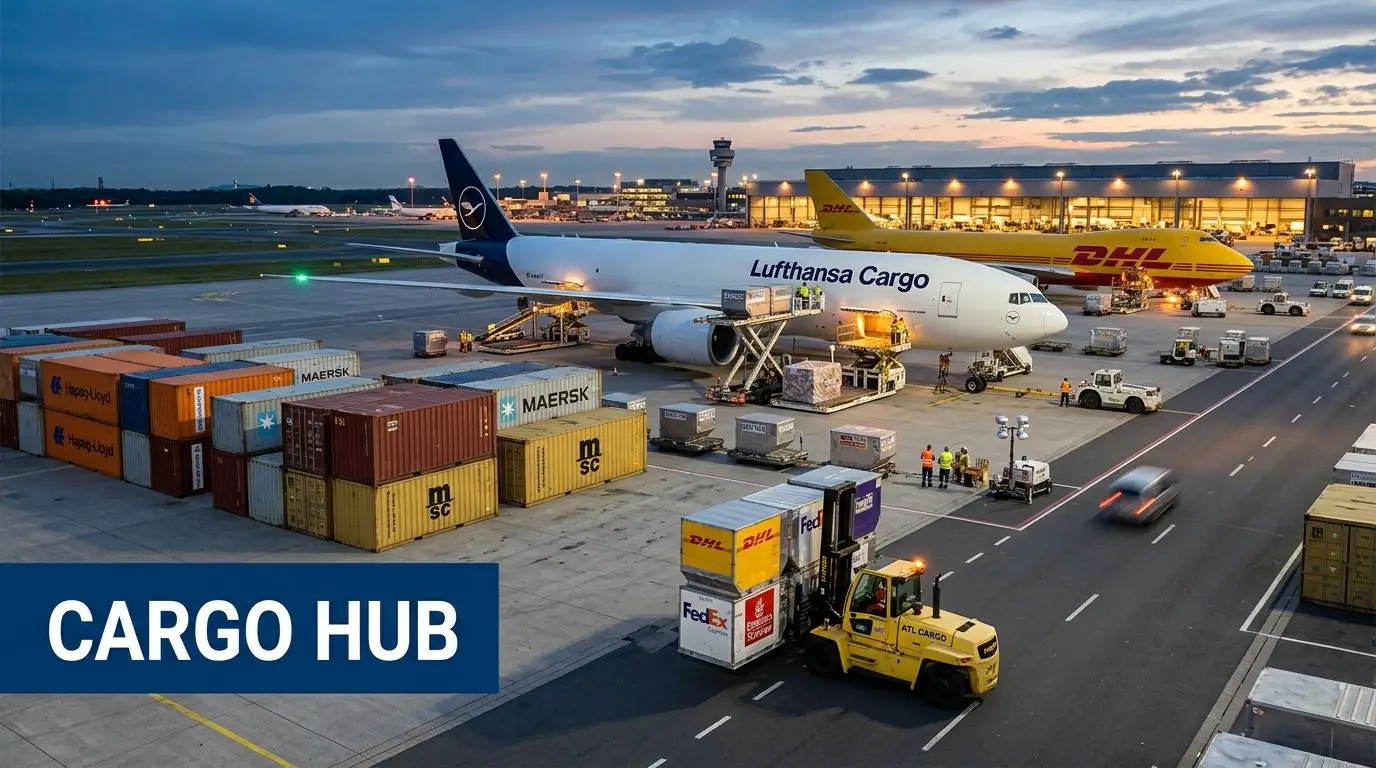
Passenger traffic gets the headlines, but cargo and commercial movement explain a lot about ATL’s strategic value. The airport connects people, but it also supports time-sensitive freight, enterprise service operations, and complex supply chains that rely on reliable routing through Atlanta.
Why businesses care about ATL beyond flights
Companies use the airport ecosystem in several ways:
- Field operations travel for technicians, engineers, and project staff
- Urgent freight movement when equipment or parts can’t wait for standard routing
- Vendor access for airport-adjacent properties, concessions, and service contractors
- Regional coordination for multi-site operations across the Southeast
That mix matters for IT and facilities teams. Servers, networking gear, point-of-sale devices, access control hardware, and display systems all move through lifecycle stages. Purchase, deployment, support, replacement, and secure retirement all create logistics decisions.
The airport itself is a giant technology environment
ATL’s physical size creates technology management demands of its own. The terminal complex covers 6.8 million square feet and includes 192 gates, which creates major IT asset management challenges for the systems that support operations, according to the ATL factsheet.
That means thousands of technology touchpoints can be involved in airport operations and airport-adjacent business activity, including:
- Passenger-facing hardware such as displays, kiosks, and payment systems
- Operational systems tied to access control, baggage support, and monitoring
- Back-end infrastructure including servers, storage, and network equipment
What this means for IT asset disposition
When an airport, airline tenant, concession operator, or nearby business refreshes equipment, the challenge isn’t only removal. It’s chain of custody, data security, scheduling, and keeping operations live while old assets are retired.
That’s where structured IT asset disposition becomes important. One example is data center ITAD, which covers secure de-installation, transport coordination, data destruction, and downstream recycling documentation for retired enterprise hardware.
Airport ecosystems generate a special kind of e-waste problem. The equipment is distributed, time-sensitive, and often tied to regulated or business-critical workflows.
For logistics managers, ATL works best when it’s treated as part transportation hub and part operating platform. The cargo side supports movement. The technology side supports continuity. Businesses that plan for both usually avoid the expensive scramble that happens at end of life.
ATL Sustainability and Responsible Tech Management
Sustainability at an airport often gets framed around aircraft, fuel, buildings, and transportation. That’s important, but it’s incomplete. A modern airport also depends on a large stream of electronic equipment that will eventually be upgraded, removed, replaced, or decommissioned.
Sustainability includes retired electronics
ATL’s 2021 ESG+P Report commits to environmental stewardship, and that commitment creates a practical need for on-site data destruction and certified e-waste recycling during technology upgrades, as noted in the ATL ESG+P report.
For business tenants and service providers, that changes the conversation. Responsible recycling isn’t only about clearing out a storage room. It’s about proving that drives were handled correctly, devices were processed responsibly, and liability didn’t stay with the original owner.
Where teams get stuck
The confusing part is that sustainability and security can seem like separate goals.
They aren’t.
If a company removes old laptops, networking gear, servers, or point-of-sale equipment without secure handling, it may reduce clutter but increase legal and operational risk. If it focuses only on data destruction and ignores downstream recycling practices, it may miss internal ESG expectations.
A better approach usually includes:
- Documented chain of custody from pickup through processing
- Data destruction controls that fit the sensitivity of the assets
- Recycling records that support internal reporting and audits
- Clear scope planning before a renovation, closure, or technology refresh
For organizations aligning airport-adjacent projects with broader environmental goals, Atlanta’s electronics recycling initiatives offer a useful local reference point for how secure recycling and sustainability planning can work together.
A Hub for Business Hotels and Local Services
Around ATL, the airport boundary and the business district often blur together. Hotels, meeting spaces, distribution sites, service vendors, and office users all operate on airport time. Fast arrivals matter. So do short transfers, reliable pickups, and equipment handling that doesn’t derail the schedule.

Why nearby hotels matter to operations teams
Business hotels near the airport do more than provide overnight rooms. They often become temporary work zones for project teams, interview sites, pre-deployment meeting points, and staging areas before regional travel.
That’s useful for:
- Implementation teams flying in for short site visits
- Procurement groups coordinating vendor meetings
- IT and facilities staff managing phased upgrades across multiple locations
The local service ripple effect
ATL’s fifth runway project was designed to increase capacity by 40%, from 184 flights per hour to 237 flights per hour, according to Airport Technology’s overview of the Hartsfield-Jackson expansion project.
For nearby businesses, higher throughput doesn’t just mean more planes. It means more pressure on supporting systems, more technology refresh activity, and more retired hardware that has to be handled correctly.
That creates practical needs across the local market:
- Office relocations near the airport
- Retail and concession technology swaps
- Warehouse and service depot equipment retirements
- Data center and network room cleanouts tied to modernization
The businesses closest to ATL often have a logistics advantage, but only if they use it deliberately. Quick access to transportation corridors helps. So does having a plan for what happens to aging devices, storage media, and infrastructure equipment once they come out of service.
Your Partner in Travel and Technology
ATL works because many systems move at once. Travelers see gates, checkpoints, and baggage claim. Business teams see something else: a dense logistics environment where time, security, and infrastructure all matter.
That’s why airport planning and technology planning often overlap. A delayed executive trip is one problem. A poorly managed hardware refresh, unsecured drive disposal, or rushed decommissioning project is another.
Teams that manage risk seriously often benchmark their oversight models against centralized security concepts such as a Global Security Operations Center, where visibility, escalation paths, and documented response processes matter. The same mindset helps when retiring business technology tied to travel-heavy or distributed operations.
For organizations evaluating reuse before recycling, Atlanta technology reuse is often part of the conversation. Some assets still have value, others need certified destruction, and the right path depends on data sensitivity, condition, and compliance needs.
If your organization needs certified electronics recycling, secure data destruction, IT asset disposition, product destruction, or data center equipment decommissioning tied to Atlanta logistics, contact Beyond Surplus.


