When your business needs to dispose of electronics near me, the only secure and compliant option is a certified IT Asset Disposition (ITAD) provider. For any organization with bulk equipment or stringent data security requirements, a professional ITAD service like Beyond Surplus is the most reliable way to mitigate risk and ensure regulatory compliance.
A Business Guide to Professional Electronics Disposal
Developing a formal strategy for retiring old IT equipment is a critical component of corporate governance. The right disposal path depends on the type of assets, their volume, and your organization's specific data security policies. Improperly disposing of old devices is not an option; they contain hazardous materials that require specialized handling and sensitive data that must be certifiably destroyed.
For any business, the stakes are significantly higher than for a consumer. A poorly managed disposal process can lead to severe data breaches, substantial fines for non-compliance with regulations like the FTC Disposal Rule, and significant environmental penalties. Understanding the available professional services is the first step toward building a secure and compliant end-of-life strategy for your corporate IT assets.
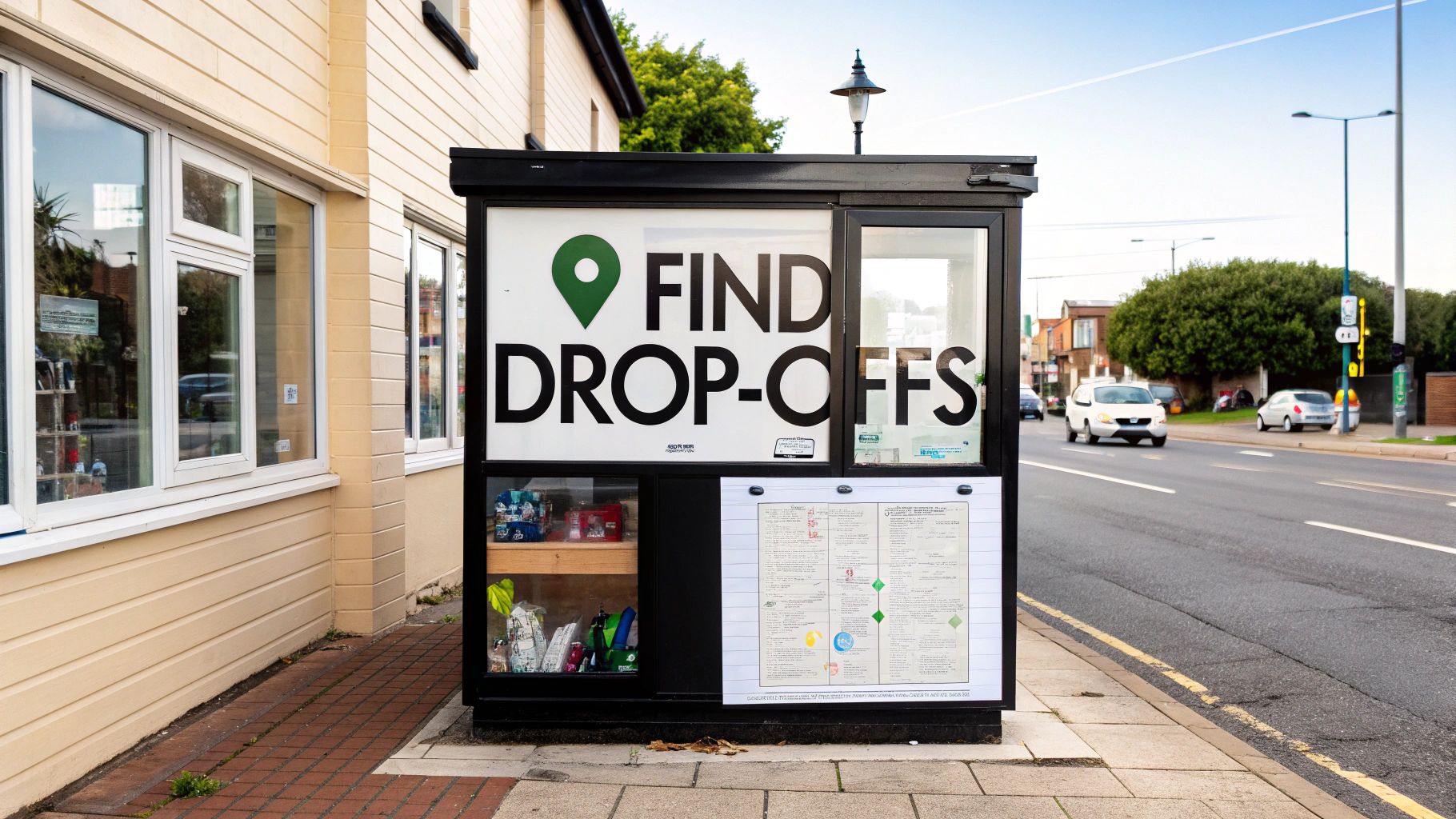
Comparing Pickup vs. Drop-Off Services for Businesses
Not all disposal methods are suitable for a commercial environment. While certified drop-off centers are available, they are designed for residential use and lack the security and documentation required for business compliance. For any organization disposing of more than a few non-sensitive items, these facilities are impractical and insecure.
This is where professional pickup services are essential for businesses. An ITAD partner provides a comprehensive, secure, and documented solution tailored for corporate needs.
Key advantages of a professional ITAD pickup service include:
- Secure Logistics: Professional packing and transportation of assets directly from your facility, data center, or office.
- Chain of Custody: Documented tracking of your equipment from the moment it leaves your premises to its final disposition, ensuring accountability.
- Certified Data Destruction: On-site or off-site data wiping or physical shredding is performed before any recycling or remarketing occurs.
- Compliance Documentation: Issuance of Certificates of Recycling and Data Destruction, which are essential for audit trails and regulatory compliance.
While you can learn more about finding certified e-waste recycling near me, it's critical for businesses to engage services that specifically cater to corporate requirements. Residential-focused solutions, such as local house clearance and rubbish removal services, do not offer the necessary data security protocols for commercial assets.
Comparing Electronics Disposal Methods for Businesses
Use this table to quickly compare common electronics disposal methods and identify the best fit for your company's specific needs, from retiring a few laptops to full data center decommissioning.
| Disposal Method | Ideal For | Data Security Level | Typical Cost | Convenience Factor |
|---|---|---|---|---|
| Local Drop-Off | Not Recommended for Business Use | Low to None | Often Free | Low |
| Pickup Service | Businesses with 10+ items, sensitive data, heavy equipment | High (Certified) | Varies (often free for valuable assets) | High |
| Mail-In Program | Single, high-value devices (laptops, phones) for repair/trade-in | Medium | Varies (often free) | Medium |
| ITAD Partner | Full office cleanouts, data centers, ongoing asset retirement | Very High (Certified & Documented) | Varies by scope | Very High |
This breakdown clarifies why a professional ITAD partner is the only appropriate choice for businesses prioritizing security and compliance.
Choosing The Right Disposal Partner for Your Business
The best choice is the one that aligns with your organization’s risk management and compliance framework. For a data center decommissioning, a company-wide technology refresh, or the disposal of medical and laboratory equipment, you absolutely require the security, scale, and certified processes of a dedicated ITAD vendor. The sensitivity of your data and the volume of your equipment will clearly point toward a professional and responsible path forward.
Why Your Corporate E-Waste Strategy Is a Business Imperative
Obsolete corporate equipment accumulating in a storage closet isn't just an inventory issue—it's a significant liability. This e-waste represents one of the most pressing challenges for modern businesses.
Ignoring proper disposal is no longer a viable option. The risks are too great, spanning from severe environmental damage to the kind of catastrophic data security breaches that can destroy a company's reputation. A proactive e-waste strategy has become an essential part of responsible corporate governance.
The Staggering Scale of E-Waste
The volume of discarded electronics is growing at an alarming rate. Globally, e-waste is one of the fastest-growing waste streams on the planet, driven by shorter technology life cycles in the corporate world.
In 2022, the world generated an astonishing 62 million tonnes of electronic waste, with projections showing a rise to 82 million tonnes by 2030. More alarmingly, only 22.3% of it was properly collected and recycled, leaving vast amounts of hazardous—and valuable—materials unaccounted for. You can explore more of these sobering e-waste statistics and projections.
This flood of obsolete technology places immense pressure on our environment and waste management infrastructure. For any business, this data should serve as a catalyst to transition from a reactive disposal mindset to a structured, proactive IT asset disposition plan.
Environmental and Compliance Risks for Businesses
The consequences of improper electronics disposal extend far beyond wasted resources. Corporate IT equipment is filled with hazardous materials that can cause lasting environmental harm if they end up in a landfill.
- Lead: Found in old CRT monitors and solder, it can leach into groundwater and cause severe neurological damage.
- Mercury: Used in flat-screen displays and fluorescent lamps, this potent neurotoxin contaminates soil and waterways.
- Cadmium: A known carcinogen present in rechargeable batteries and circuit boards, posing serious health risks upon exposure.
When these substances are not managed by certified recyclers, they create significant environmental liabilities for the originating business. You can get a deeper look at the specific dangers in our guide to the environmental impact of electronic waste.
For a business, partnering with a certified e-waste recycler is a strategic risk management decision. It’s how you prevent environmental contamination, ensure compliance with complex disposal regulations, and transform a potential liability into a clear demonstration of corporate responsibility.
Choosing a certified partner guarantees these harmful materials are managed safely, protecting both the environment and your company's legal standing. For any business looking to "dispose of electronics near me," selecting a compliant vendor is the most critical first step.
Unlocking the Value in Your Retired IT Assets
That storage room filled with retired IT equipment isn't just a disposal challenge—it's a source of recoverable value. While most businesses see old electronics as a liability, a certified IT Asset Disposition (ITAD) partner views them as a stockpile of valuable resources waiting to be reclaimed.
This practice is often referred to as "urban mining"—the process of extracting precious and base metals from discarded electronic devices. Instead of allowing IT assets to depreciate to zero, your business can leverage a professional partner to tap into the economic potential within their circuitry.
The Hidden Wealth in Your E-Waste
Nearly every piece of enterprise electronics—from servers and laptops to specialized medical or laboratory equipment—contains a surprising quantity of valuable materials. Certified recyclers use sophisticated, environmentally sound processes to safely extract these elements from circuit boards, processors, and connectors.
These materials include:
- Gold and Silver: Used in connectors and on circuit boards for their excellent conductivity.
- Copper: Found extensively in wiring, heat sinks, and printed circuit boards.
- Palladium: A precious metal used in capacitors and other critical components.
- Aluminum: A lightweight metal used for frames, casings, and heat sinks.
By recovering these materials, your company can generate a financial return on assets previously written off as worthless. This process not only benefits your bottom line but also significantly reduces the environmental impact associated with mining for virgin materials. A professional partner can convert a disposal cost into a revenue stream.
Choosing a certified ITAD partner is essential to unlocking this value chain responsibly and securely. They are the critical link between retiring your old technology and reclaiming its economic worth, all while adhering to the strictest environmental and data security standards.
The Untapped Economic Potential
The global scale of this hidden value is immense. In 2022, the total estimated value of metals contained within the world's e-waste reached an incredible $91 billion. This includes vast quantities of copper, iron, and gold.
However, despite this enormous potential, only about $28 billion of that value was recovered through formal recycling channels. You can see the full breakdown of the value of metals in global e-waste on Statista.com.
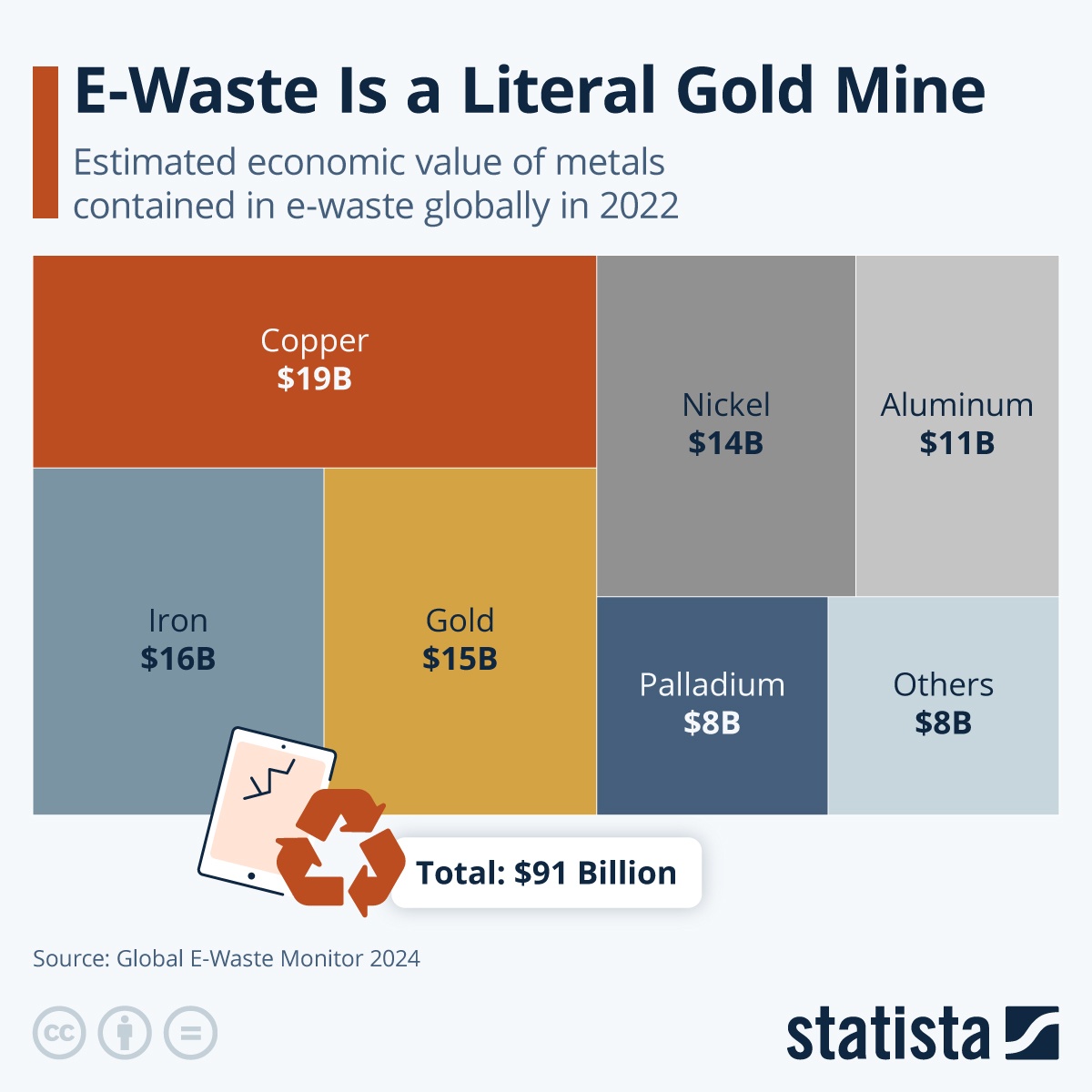
This significant gap represents a major opportunity for businesses. When you search for how to "dispose of electronics near me," partnering with an ITAD vendor skilled in value recovery is not just a responsible choice—it's a strategic financial decision that captures revenue that would otherwise be lost to a landfill.
How to Prepare Your Devices for Secure Disposal
Before any device leaves your premises, data security must be the absolute top priority. Retired servers, laptops, and storage arrays contain sensitive corporate, customer, and employee information, creating a massive liability if not handled correctly.
Simply deleting files or performing a factory reset is insufficient for business purposes. Residual data is often easily recoverable with commercially available software, leaving your organization exposed to a breach. Proper data destruction is a non-negotiable step in the corporate IT asset disposal process.
First, ensure you have a complete, verified backup of any critical information that must be retained. Once confirmed, the entire focus must shift to the certified and permanent eradication of the original data. For any business, this requires moving beyond simple deletion to professional, documented data destruction methods.
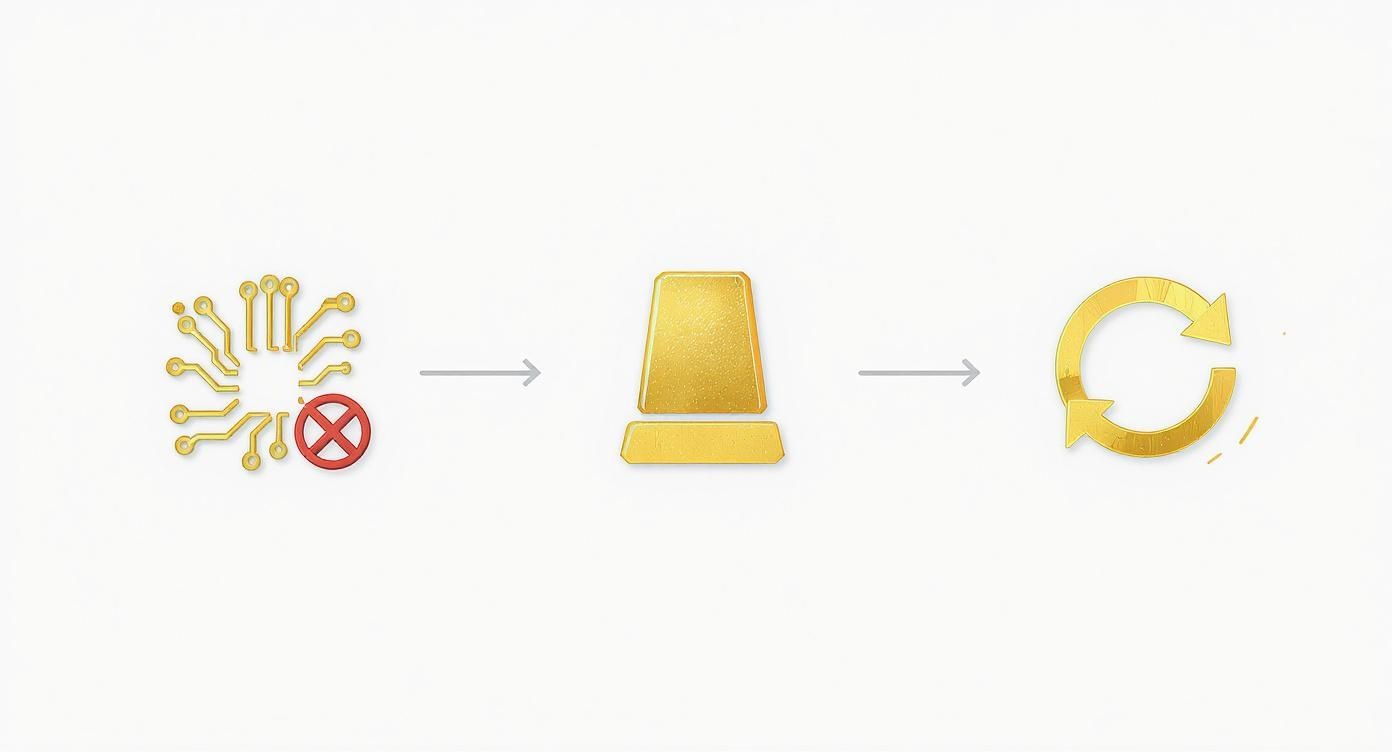
This process is about more than just managing waste. Responsible disposal feeds a circular economy where valuable materials from old tech are reclaimed and put back to use.
The Critical Difference Between Wiping and Shredding
For certified data destruction, businesses have two primary, highly effective options: software-based data wiping and physical destruction (shredding). The appropriate method depends on whether the equipment has potential resale value and your company's internal security policies.
- Software-Based Data Wiping: This method uses specialized software to overwrite a storage device with random data, typically in multiple passes, rendering the original data irrecoverable while preserving the hardware. This is the ideal solution for assets intended for refurbishment and resale.
- Physical Shredding: For obsolete drives or those containing highly sensitive information, physical shredding is the ultimate solution. The hard drive is mechanically pulverized into small metal fragments, providing a 100% guarantee that the data can never be accessed.
For more technical details, our guide on how to prepare your computers, tablets, and phones for recycling breaks down these steps. It is essential reading for any IT manager or procurement professional overseeing an equipment refresh.
Compliance and the Certificate of Destruction
For any business, compliance is mandatory. Regulations such as the FTC Disposal Rule, HIPAA, and FACTA legally require organizations to securely destroy sensitive data. Failure to do so can result in crippling fines, legal action, and irreparable reputational damage.
This is precisely why obtaining a Certificate of Destruction (CoD) is so critical. This legal document serves as your official, auditable proof that your data-bearing assets were destroyed in accordance with industry best practices and legal standards.
A Certificate of Destruction is more than just paperwork; it is your proof of due diligence. It formally transfers liability from your organization to the disposal vendor and is an indispensable component of any corporate compliance and risk management strategy.
When you search to "dispose of electronics near me," partnering with a certified ITAD vendor that provides this documentation is non-negotiable. It ensures your data is handled securely and your organization is protected, transforming a complex process into a secure, documented, and worry-free solution.
Selecting a Certified and Compliant Disposal Partner
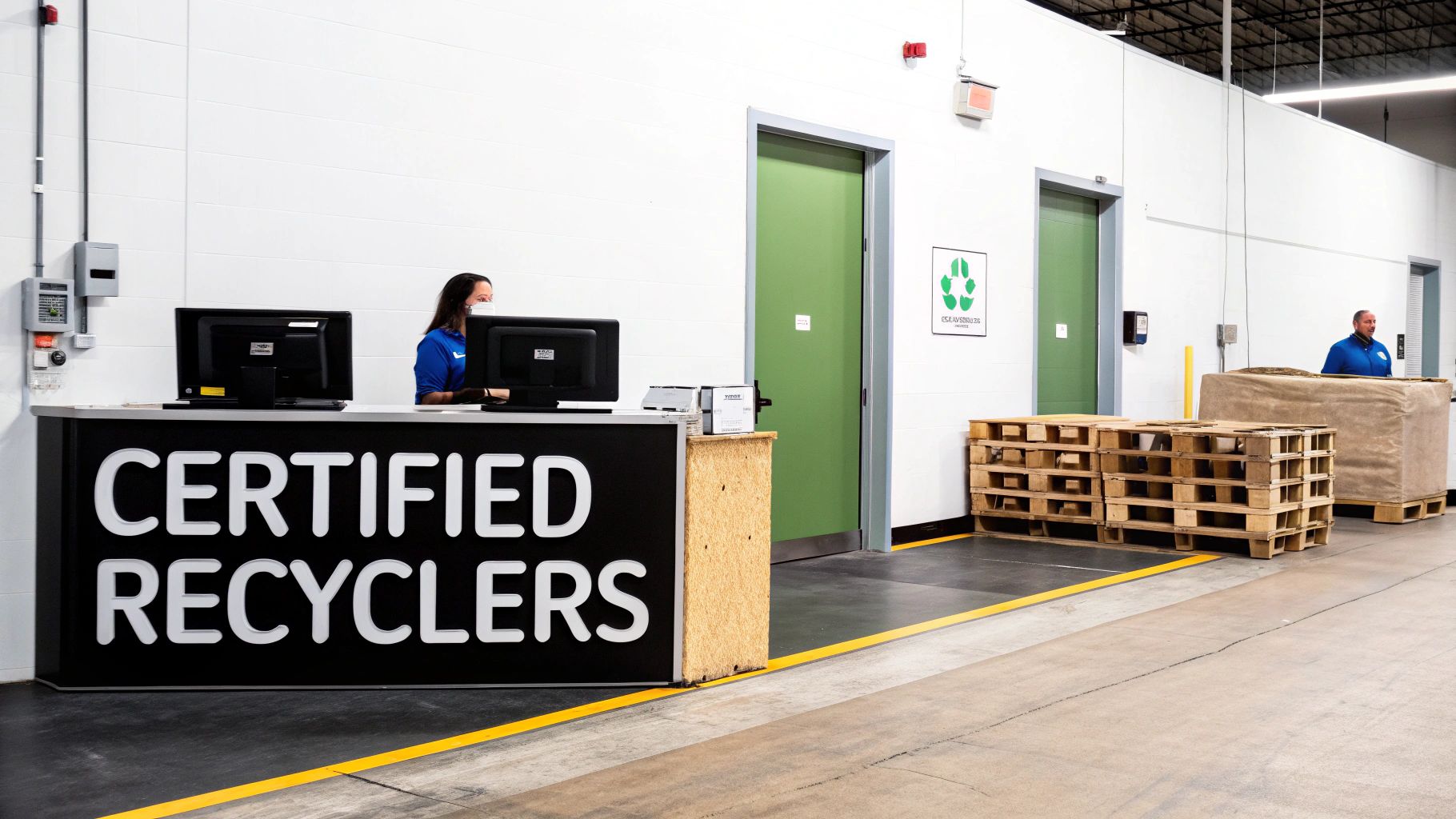
When you begin searching for how to "dispose of electronics near me," you will encounter a wide variety of vendors. However, not all recyclers are created equal. Choosing the right IT Asset Disposition (ITAD) partner is a critical business decision that directly impacts your data security, brand reputation, and environmental compliance.
Selecting an uncertified or unqualified partner can lead to disastrous outcomes, including data breaches from improperly sanitized hard drives, significant fines for regulatory non-compliance, or the discovery that your old equipment was illegally dumped overseas. A certified, compliant partner is not just a vendor; they are an essential extension of your risk management team.
Decoding Key Industry Certifications
The most reliable indicator of a recycler's commitment to security and responsible practices is their industry certifications. These are not merely logos for a website; they represent rigorous, ongoing audits by independent bodies that scrutinize a vendor’s entire operational process.
The two premier certifications to look for in the United States are:
- R2v3 (Responsible Recycling): A leading global standard that covers environmental protection, worker health and safety, data security, and the chain of custody for all materials. An R2v3 certified facility has demonstrated that its operations are secure, transparent, and environmentally responsible.
- e-Stewards: Widely considered the gold standard for environmental and social responsibility. The e-Stewards standard has a strict, zero-tolerance policy against exporting hazardous e-waste to developing nations, ensuring your assets are managed ethically.
When a vendor holds these certifications, it signifies a substantial investment in infrastructure, processes, and transparency. This provides your business with the assurance that your retired assets are in capable hands. For a deeper dive, review our guide on the criteria for selecting a recycling center.
Essential Services Businesses Should Demand
Certifications are the foundation, but a true ITAD partner offers a suite of services designed specifically for corporate needs. These services provide the documentation and security necessary to protect your company, both legally and financially. Internally, many businesses use robust IT asset management software to track every device, ensuring a seamless and accountable transition to disposal.
Your prospective partner must provide:
- Serialized Asset Tracking: Detailed inventory reports that track every individual asset by serial number from the point of collection to its final disposition.
- Secure Chain-of-Custody Logistics: A documented, unbroken trail of custody, including sealed, GPS-tracked trucks and secure handling protocols at every stage.
- Certified Data Destruction: Verifiable data wiping or physical shredding services, accompanied by a Certificate of Destruction as proof of completion.
Never engage a vendor that cannot provide a clear, auditable downstream chain of custody. Your business has a right to know exactly where your materials are processed after they leave the primary facility. This transparency is the only way to ensure they are not being irresponsibly exported or dumped.
Asking detailed questions during your due diligence process is critical. Inquire about their downstream vendors, audit procedures, and the specific documentation they provide. This thorough vetting is your best defense against the significant risks of improper electronics disposal.
Common Questions About Electronics Disposal
For any business, disposing of retired IT assets can feel like a complex and high-stakes process involving data security, environmental regulations, and legal liabilities. It is natural for IT, facility, and procurement managers to have questions before entrusting a vendor with corporate hardware.
Here are answers to some of the most common questions from businesses planning their electronics disposal strategy.
What Kind of Business Electronics Can Be Recycled?
A common misconception is that only standard office equipment like computers and printers are recyclable. In reality, a certified ITAD vendor is equipped to handle a comprehensive range of commercial, medical, and industrial equipment.
This includes, but is not limited to:
- Data Center Hardware: Servers, networking switches, storage arrays (SANs), and rack-mounted equipment.
- Office Equipment: Desktops, laptops, monitors, VoIP phones, printers, and associated peripherals.
- Specialized Assets: Medical devices, laboratory equipment, and industrial electronics, which often have unique handling and data sanitization requirements.
Always confirm with your ITAD provider, especially for unusual or hazardous items like large battery backup systems (UPS) or legacy CRT monitors, as these require specialized disposal processes.
Is Wiping Our Hard Drives In-House Secure Enough?
An internal IT team running a standard format on hard drives is a common practice that can leave a business dangerously exposed. Basic deletion and formatting processes often leave residual data that can be recovered with readily available software, creating a significant risk of a data breach.
For true corporate data security that meets audit and compliance standards, you must use certified data destruction methods. This means either using specialized software to perform a multi-pass data wipe compliant with NIST 800-88 standards or, for ultimate security, physically shredding the drives. A professional ITAD partner will issue a Certificate of Destruction as auditable proof that the process was completed correctly.
A Certificate of Destruction is your official legal proof that data-bearing devices were permanently destroyed in a compliant way. This document is non-negotiable for audit trails and demonstrates due diligence, protecting your organization from the massive financial and reputational damage of a data breach.
Are There Free Disposal Options for Businesses?
"Free" e-waste recycling events or retail take-back programs are designed exclusively for residential consumers, not for commercial enterprises. These programs lack the essential security protocols, chain-of-custody documentation, and certified data destruction services that businesses are legally required to use.
Professional ITAD services involve real operational costs, including secure transportation, certified technicians, specialized data destruction equipment, and environmentally compliant recycling infrastructure. Businesses should view this cost not as a fee, but as an investment in corporate risk management. It is the critical barrier protecting your organization from a potential data breach, regulatory fine, or environmental liability.
For a more comprehensive overview, explore our guide to common electronics recycling questions. A "free" disposal option can ultimately cost a business far more in the long run.
When your business needs a certified, secure, and compliant partner to dispose of electronics, Beyond Surplus provides end-to-end solutions. We offer nationwide pickup, certified data destruction, and detailed reporting to ensure your assets are managed responsibly from start to finish. Contact Beyond Surplus today to schedule your IT asset disposal service.