

Most IT directors don't start looking for a certified telecom recycling company USA because they want a sustainability badge. They start because a telecom closet, MDF room, or decommissioned branch site has turned into a liability. Old PBX cabinets, failed VoIP handsets, retired switches, rack servers, patch panels, and a pile of drives no one wants to touch are still sitting on the books, still holding data risk, and still tied to disposal rules.
That's where mistakes happen. A facilities team schedules a generic junk hauler. A local recycler promises pickup but can't explain downstream processing. Someone assumes old telecom gear has no sensitive data because it isn't a laptop. Then an audit request, breach review, or vendor questionnaire lands on your desk and you need proof, not a promise.
The scale of the problem is larger than generally understood. In 2019, the world generated 53.6 million metric tons of e-waste, and only 17.4 percent was officially documented as properly collected and recycled, leaving 70.8 percent unrecycled according to Sadoff Electronics Recycling e-waste statistics. For telecom equipment, that gap isn't just an environmental issue. It's a chain-of-custody issue.

Introduction The Hidden Risks in Your Telecom Closet
A telecom retirement project usually looks harmless at first. A few shelves of handsets. Some obsolete routers. A stack of call manager appliances from a migration completed months ago. But once equipment leaves your control, three risks show up fast: data exposure, environmental liability, and missing documentation.
Old telecom gear still creates current risk
Telecom hardware often holds more business data than nontechnical stakeholders expect. Voicemail systems, UC appliances, contact center servers, firewalls, conference units, and network devices can retain credentials, call logs, IP assignments, configuration files, and storage media. If your recycler can't tell you exactly how those assets are inventoried, wiped, shredded, and documented, you're relying on trust when you should be relying on evidence.
A second problem is classification. Teams often mix resale-grade assets, scrap-only equipment, batteries, cabling, and data-bearing devices in one pickup. That shortcut makes life easier for loading, but harder for audit defense. Different material streams need different handling, and certified processors separate them with far more discipline than a basic hauler.
A telecom disposal project isn't finished when the truck leaves. It's finished when your records show what left, who handled it, how data was destroyed, and where materials went next.
What usually goes wrong
In practice, weak vendors fail in predictable ways:
- No serialized intake: They remove pallets but don't tie individual assets to your pickup.
- No secure data workflow: They talk about “erasing everything” but can't name the standard used.
- No downstream visibility: They can't show where boards, metals, plastics, and hazardous components end up.
- No final paper trail: They issue a generic receipt instead of defensible compliance documents.
That's why “recycling” by itself isn't enough. Business disposal needs a process that stands up when legal, compliance, procurement, and security all ask the same question: prove it.
Why Certified Matters More Than Recycled
Any company can say it recycles electronics. That claim alone tells you almost nothing.
A certified recycler is the difference between a licensed mechanic who documents the repair and a guy in a parking lot who says he fixed the brakes. Both may touch the equipment. Only one gives you a process you can defend later.
Certification is risk control
For enterprise telecom equipment, certification matters because your problem isn't just removal. Your problem is transferred liability. If a vendor mishandles data-bearing devices, exports material improperly, or loses asset accountability, your organization still owns the consequences until documentation says otherwise.
Three business concerns usually drive the decision:
- Data security: Devices must be sanitized or destroyed using documented methods, not informal shop practices.
- Environmental compliance: Hazardous and focus materials need controlled processing, not vague claims about “zero waste.”
- Brand protection: Customers, regulators, and procurement reviewers care how your organization handles retired assets.
Recycled can mean almost anything
A non-certified operator may still pick up equipment and break it down. What they usually can't provide is audited proof of how they manage downstream vendors, restricted materials, and data-bearing media. That gap matters most when you're disposing of telecom racks, network cores, or branch equipment from regulated environments.
The logistics question matters too. The EPA notes that cross-country shipping by national firms can increase disposal carbon footprint by 20 to 30 percent, which makes regional certified providers with efficient routing more practical for compliance and sustainability goals, as noted by telecom recycling guidance discussing transport impact.
What to look for behind the label
A useful certification posture should produce operating proof, not marketing copy. Ask whether the vendor can show:
- Current certifications: Not expired PDFs buried on a website.
- Asset-level tracking: Especially for servers, storage, firewalls, and telecom controllers.
- Downstream controls: Who receives shredded fractions, boards, batteries, and metals.
- Final reporting: Including destruction and recycling documentation.
If you're comparing providers, review their electronics recycling certifications and standards the same way you'd review insurance or security controls. The certificate matters, but the process behind it matters more.
Practical rule: If a vendor can explain pickup scheduling faster than they can explain chain of custody, keep looking.
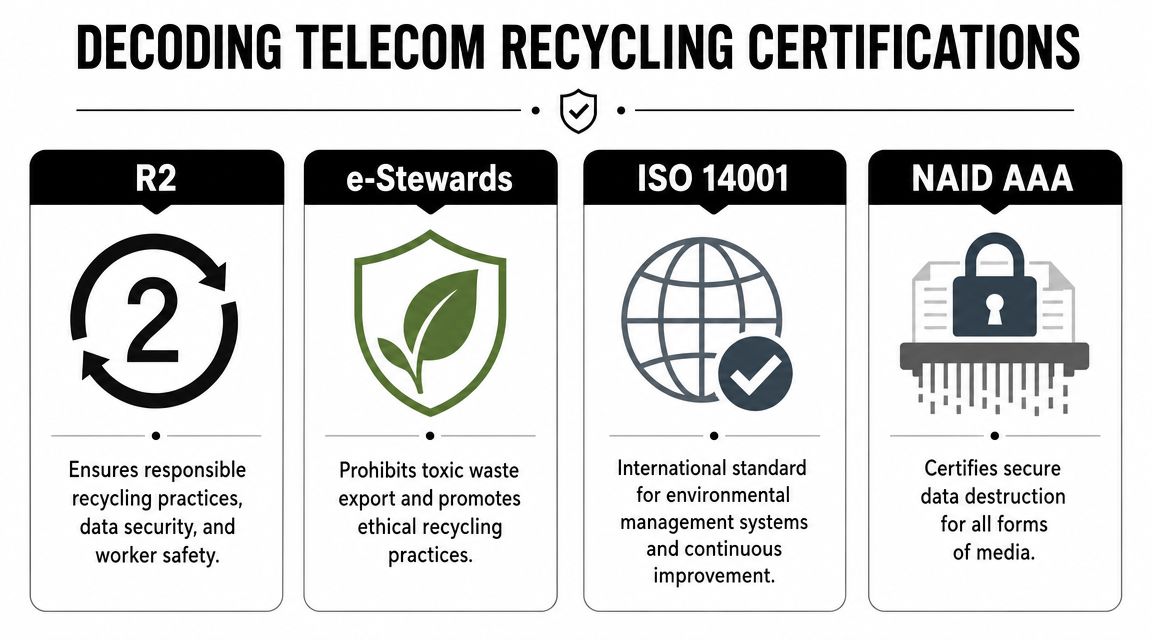
Decoding The Alphabet Soup of Certifications
Procurement teams often see a stack of acronyms and assume they all mean the same thing. They don't. Each certification answers a different risk question.
R2v3 for process control and downstream accountability
For most business buyers, R2v3 is the starting point. The R2 standard, managed by SERI, is the most widely adopted global certification for electronics reuse and recycling, and Appendix E is especially relevant to telecom because it allows in-house materials recovery for high-volume scrap like cabling and circuit boards, according to First America's summary of R2 and telecom recycling.
That matters operationally. In-house recovery can reduce handoffs, shorten material movement, and give you better visibility into how scrap streams are processed. For telecom environments with lots of copper-bearing cable, boards, power supplies, and mixed rack gear, that's a real advantage.
If your team wants a plain-English primer, review what R2 certification means in practice.
e-Stewards for stricter export and ethics expectations
e-Stewards is often relevant when organizations want a strong position on downstream ethics and export restrictions. It's commonly viewed as a high-bar standard for responsible electronics management. In vendor reviews, it can be a useful differentiator for companies with strict ESG, public-sector, or institutional procurement requirements.
For many IT directors, e-Stewards isn't an either-or decision against R2. It's part of a broader diligence discussion. The right question is whether the vendor's documented process matches your legal and contractual risk profile.
NAID AAA for data destruction verification
NAID AAA matters when the retired telecom asset stores data or configuration history. That includes servers, SSDs, HDDs, call recording systems, security appliances, and many network devices. A vendor can be strong on recycling and still weak on media destruction. That's why data-destruction certification deserves separate review.
When a provider claims secure sanitization, ask what media they wipe, what media they shred, and what evidence they issue after each method.
ISO standards for management discipline
ISO certifications usually tell you something about the maturity of the facility and its management systems.
A simple way to read them:
| Certification | What it helps indicate |
|---|---|
| ISO 14001 | Environmental management discipline |
| ISO 45001 | Worker safety systems |
| Other management certifications | Repeatable internal controls and audit readiness |
None of these replace chain-of-custody proof. They support it.
The strongest vendors don't hide behind acronyms. They connect each certification to a document, a control, and a specific operational step.
The Unbreakable Chain of Custody Explained
Chain of custody is the discipline that turns disposal into a defensible business record. Without it, you're left with a pickup receipt and a lot of assumptions.
What a real chain of custody looks like
For telecom equipment, the process should start before removal. Your vendor should define the scope of pickup, identify data-bearing assets, and align handling instructions with your site conditions. Once equipment moves, each transfer point should be documented.
A practical chain of custody usually includes:
- Pickup authorization with site, date, and service scope.
- Controlled loading by trained personnel.
- Asset intake recording at the receiving facility.
- Serialized reconciliation for devices that require tracking.
- Sanitization or destruction records for applicable media.
- Final disposition reporting tied back to the original load.
Why downstream due diligence matters
The weak point in many recycling programs is what happens after the first processor touches the equipment. That's why R2v3's downstream rules matter. R2v3 requires recyclers to track focus materials, including items like circuit boards, from receipt to final destination, and that audited verification can reduce illegal e-waste export risk by up to 90 percent compared with non-certified operations, according to the EPA's explanation of certified electronics recyclers.
That requirement is more than a technical standard. It closes the excuse gap. A vendor can't merely say materials “went to a partner.” They need documented verification.
The documents that actually protect you
Ask for records that can survive an audit or legal review, not just a billing packet. That usually means:
- Inventory report tied to the pickup
- Chain-of-custody log showing handling continuity
- Downstream documentation where relevant
- Certificate package such as a certificate of destruction for retired IT assets
If the vendor hesitates when you ask for sample reporting, that tells you a lot.
Your Vendor Vetting Checklist and Critical Questions
Most recycling RFPs are too soft. They ask whether a vendor is certified, insured, and available for pickup. They don't ask how the vendor proves control when the equipment is in motion, under processing, or sent downstream.
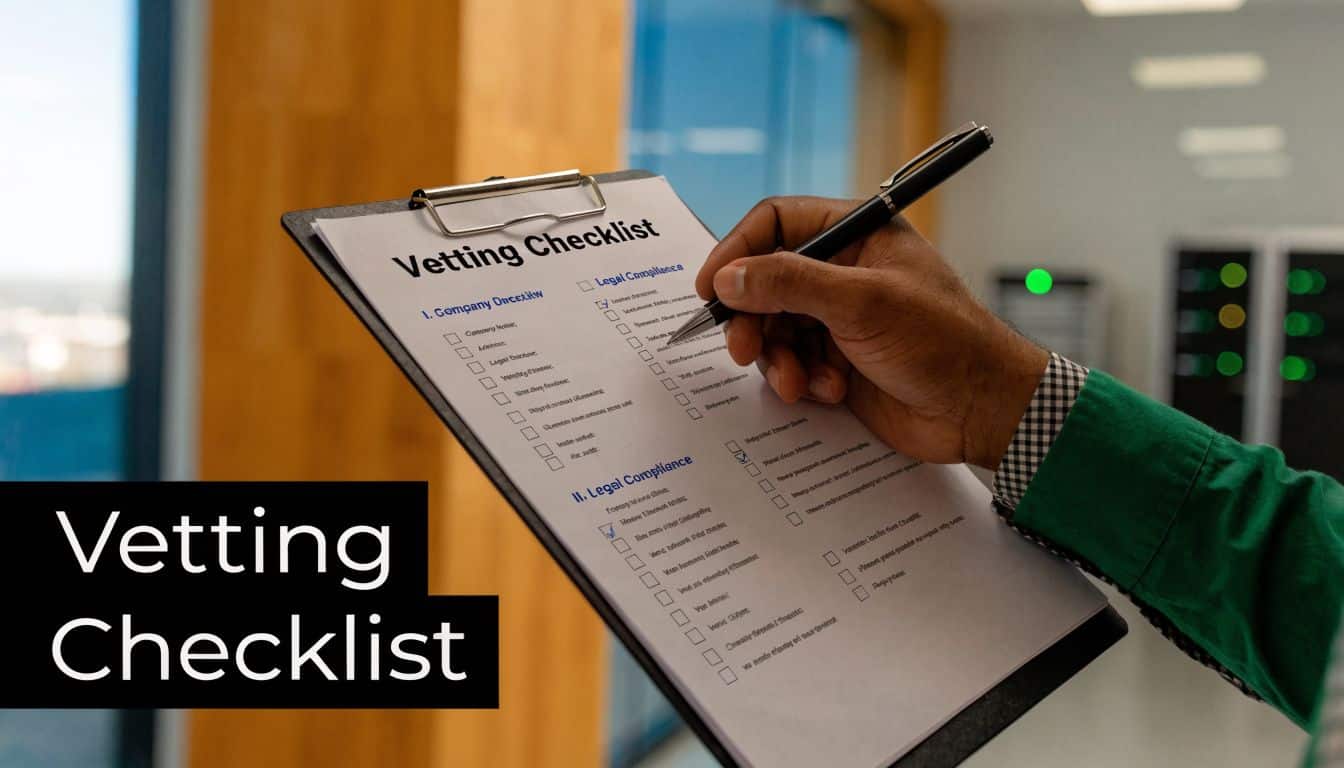
Use this checklist before you approve any vendor
A strong telecom recycling review should cover operations, security, and paperwork.
- Verify active certifications: Ask for current certificates and the exact facility name that holds them.
- Confirm site handling: Find out whether equipment goes straight to the certified facility or through transfer points first.
- Check data workflow: Require a clear answer on wiping, shredding, exceptions, and failed media handling.
- Review reporting samples: Ask to see anonymized inventory and destruction reports before award.
- Inspect downstream disclosure: They should explain who receives boards, batteries, cable, and scrap fractions.
- Clarify logistics: Determine whether they use their own fleet, approved carriers, sealed containers, or subcontractors.
- Match service to asset type: A telecom room cleanout isn't the same as a data center decommission or office refresh.
For a structured procurement review, many teams use a vendor due diligence checklist for ITAD and recycling providers.
Questions that expose weak vendors fast
Don't ask broad questions like “Are you secure?” Ask questions that force process detail.
“Show me the documents you issue from pickup through final disposition.”
That single request reveals whether the vendor has a repeatable compliance model or just a sales pitch.
Other useful questions:
- Where does the equipment go first after pickup?
- Which assets are tracked by serial number, and which are tracked by weight or lot?
- When do you wipe media, and when do you physically destroy it?
- Who signs off on chain-of-custody exceptions or missing assets?
- How do you handle failed drives removed from telecom servers or storage arrays?
- Can you separate resale candidates from scrap-only material without breaking custody?
Red flags worth acting on
Some answers should end the conversation quickly.
| Red flag | Why it matters |
|---|---|
| “We can destroy everything, no problem.” | Vague language usually means vague controls. |
| “Our partner handles that part.” | Unclear downstream accountability creates liability. |
| “We don't usually provide sample reports.” | Weak documentation often follows. |
| “Serial tracking costs extra on all jobs.” | They may not be built for enterprise compliance. |
A good vendor won't mind hard questions. Knowledgeable clients ask them every day.
Core Services to Expect From a Top Tier Recycler
Once you've vetted the provider, the next issue is scope. A mature telecom disposition partner shouldn't offer one generic “recycling” service. They should offer a menu of controlled services tied to your risk level and asset mix.
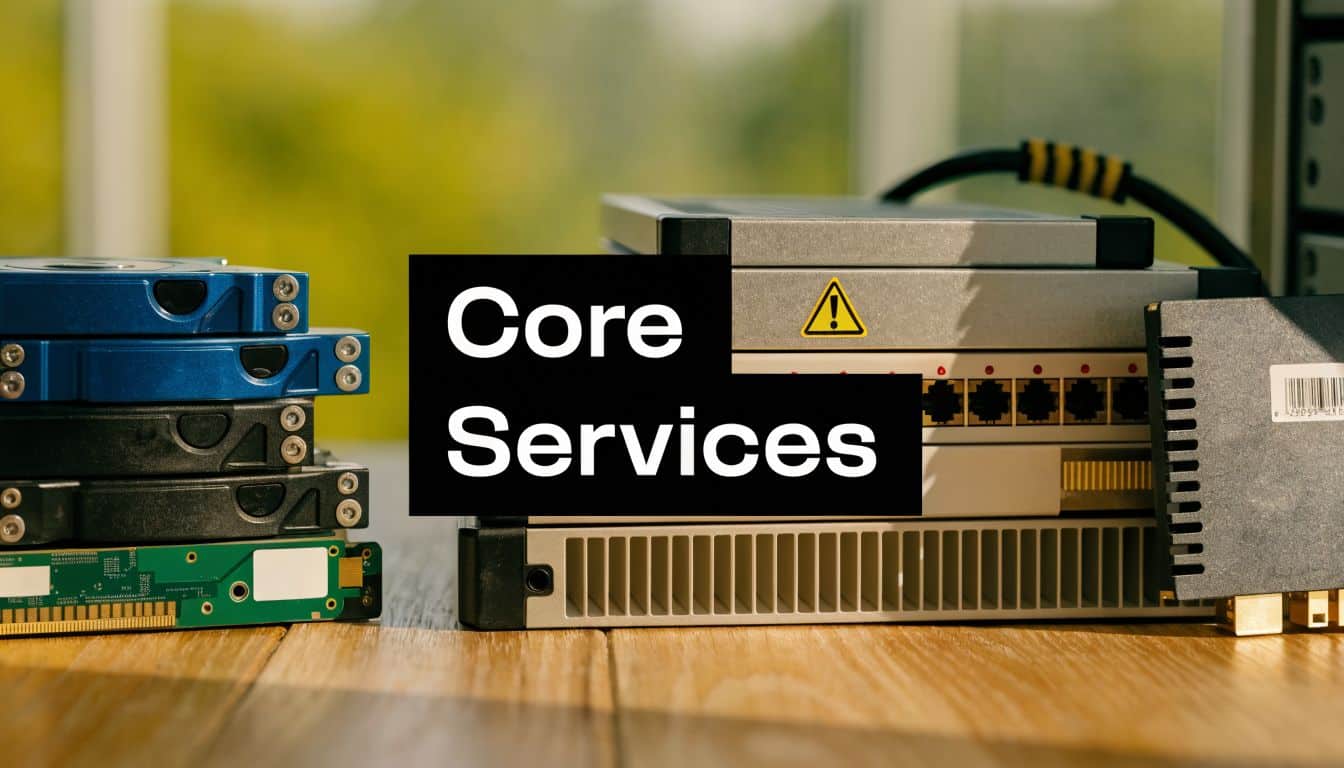
Data destruction options that match the asset
For data-bearing telecom hardware, certified destruction protocols under standards like R2v3 and NAID AAA use DoD 5220.22-M wiping or physical shredding that conforms to NIST 800-88 guidelines, which ensures data is unrecoverable and supports compliance with rules such as the FTC Disposal Rule, as explained in this telecom equipment recycling overview.
That gives you two common paths:
- Logical data wiping: Best when remarketing or reuse is possible and the device supports verified sanitization.
- Physical shredding: Best when media is failed, unsupported, highly sensitive, or outside reuse policy.
The right provider will help you choose by asset category, not by convenience.
De-installation and site logistics
Telecom projects often fail before recycling begins. Equipment has to be powered down, unracked, disconnected, staged, packed, and removed without disrupting active infrastructure. That's different from a simple office pickup.
Look for capabilities such as:
- Rack de-installation
- Branch or multi-site pickup coordination
- Packing and palletization
- Loading dock and access planning
- Separation of live versus retired equipment
Asset recovery and material segregation
Not every retired telecom asset is scrap. Some switches, handsets, server components, optics, and power modules may still hold resale or parts value. A top-tier provider should be able to distinguish between remarketing candidates and nonrecoverable material without losing custody or mixing records.
One practical example is Beyond Surplus, which offers eco-friendly telecom equipment disposal services along with pickup, de-installation support, certified data wiping, and hard drive shredding for business clients. That kind of bundled model works when you need one vendor to manage removal, data controls, and final reporting under a single process.
Good ITAD service turns one mixed pile of telecom assets into separate, documented streams for remarketing, destruction, recycling, and hazardous handling.
Reporting that closes the loop
The final service isn't transportation or shredding. It's documentation. Your closeout packet should reflect what was received, what was destroyed, what was recycled, and what was recovered for value. If that packet is thin, the service is incomplete.
Partnering for Risk Free Telecom Asset Disposition
The right certified telecom recycling company USA isn't just a company that can haul equipment away. It's a company that can prove what happened to every meaningful asset class after pickup. That's the distinction IT directors need to keep in focus.
Certification matters because it supports a system. Chain of custody matters because it shows the system operated. Vendor vetting matters because not every company with a truck, a shredder, or a recycling logo can meet enterprise standards.
For telecom environments, the practical goal is simple. You want a partner that can handle retired infrastructure without creating a second problem in legal, compliance, procurement, or security. That means documented intake, clear data-destruction methods, disciplined downstream handling, and final records that hold up under scrutiny.
If you manage branch closures, network refreshes, UC migrations, or data center cleanouts, treat end-of-life telecom handling as a controlled compliance workflow. The cheapest pickup usually isn't the lowest-risk decision. The vendor with the clearest evidence usually is.
Contact Beyond Surplus for certified electronics recycling, secure telecom equipment disposition, and documented IT asset disposal support that helps your team maintain a defensible chain of custody.


