

Your Georgia team is probably dealing with some version of the same problem. A laptop refresh is underway, a closet is filling with retired devices, a branch office needs pickup, and someone has to answer a hard question: how do you remove the equipment fast without creating a data security mess or losing whatever value is still in the hardware?
That's where Georgia ITAD solutions become useful as an operating process, not just a disposal event. The right approach protects data, documents every handoff, and gives your organization a realistic path to resale, recycling, or destruction based on the actual condition of the assets.
Understanding IT Asset Disposition in Georgia
IT asset disposition, or ITAD, is the controlled process of retiring business technology. That includes collection, inventory, data sanitization, transport, remarketing, recycling, and final reporting. If your organization treats retirement as an afterthought, the problems usually show up later in the form of missing serial numbers, unclear destruction records, and inflated assumptions about resale value.
The market scale makes the point clearly. The global ITAD market was valued at USD 17.5 billion in 2025 and is projected to reach USD 40.1 billion by 2035, while the U.S. market is estimated at USD 5.3 billion in 2025 according to Global Market Insights on the ITAD market. That tells you ITAD isn't a niche cleanout service. It's a major operating category tied to compliance, sustainability, and asset monetization.
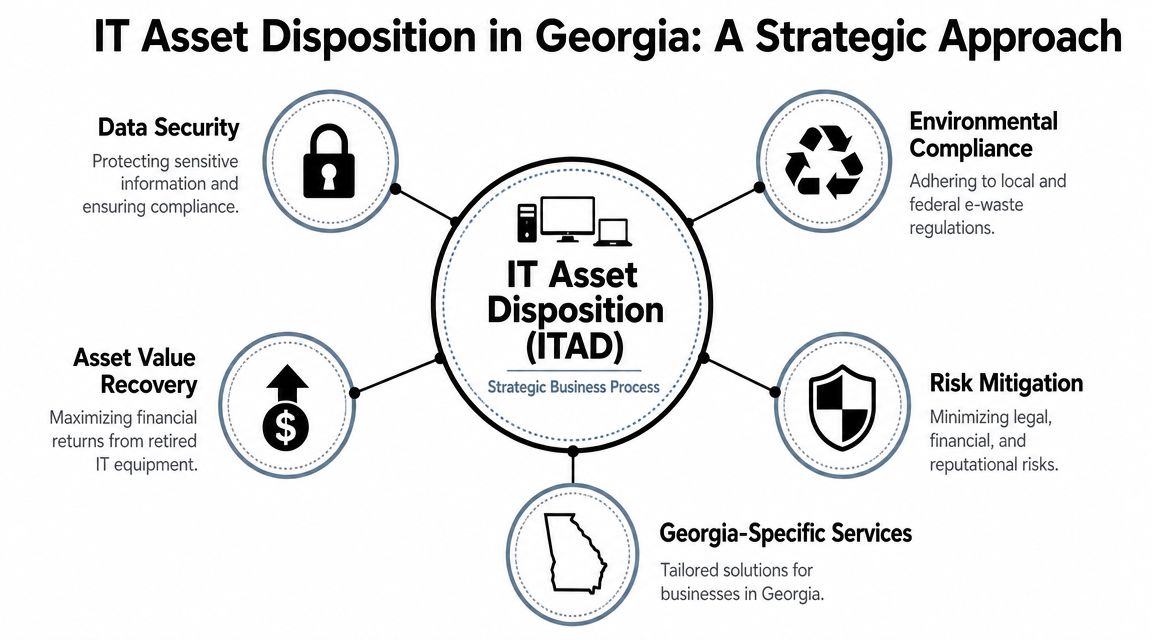
What a mature ITAD program actually does
A strong ITAD program usually has four jobs:
- Protect data by making sure drives are wiped or destroyed before anything leaves the chain of control.
- Reduce operational risk by documenting every asset from pickup through final disposition.
- Support environmental handling so unusable equipment is processed responsibly instead of dumped into informal channels.
- Recover value where possible through resale, component harvesting, or buyback workflows.
If you want a useful baseline on lifecycle discipline before assets even reach retirement, this guide on optimizing IT assets for Indiana SMBs is worth reading because good ITAD starts with good asset records.
Practical rule: If your team can't quickly answer what equipment you retired, where it went, and how data was removed, you don't have an ITAD process. You have a disposal habit.
Georgia organizations also need to think locally and nationally at the same time. A single Atlanta pickup is one operational model. Coordinating retired gear from multiple offices across the country is another. Both still depend on the same foundation: inventory control, secure handling, and a clear disposition path. If you need a plain-language overview of the process itself, this primer on what IT asset disposition means is a useful starting point.
Navigating Critical ITAD Compliance and Regulations
Compliance is where many internal disposal plans break down. Your organization may know retired devices contain sensitive information, but the gap usually appears in execution. Who verified destruction? What standard was used? Can you produce records if legal, audit, or procurement asks six months later?
Where Georgia organizations get exposed
For many businesses, the FTC Disposal Rule is the practical baseline. If your organization handles consumer information, you need a disposal process that prevents unauthorized access to that information when devices are discarded, transferred, or recycled. In plain terms, tossing storage media into surplus without documented sanitization is a bad plan.
Healthcare organizations have an added layer. Under HIPAA, retired computers, drives, mobile devices, and diagnostic systems can all become data exposure points if protected health information remains accessible. The failure often isn't dramatic. It's ordinary. An old workstation is moved into storage, a copier gets picked up without drive handling, or a server leaves a site before anyone confirms destruction.
What compliant execution looks like
A workable compliance posture usually includes:
- Asset identification before pickup so your team knows what data-bearing devices are in scope.
- Clear disposition instructions for wipe, shred, degauss, recycle, or remarket.
- Restricted handling during staging, transport, and processing.
- Final documentation that your legal, IT, and procurement teams can keep on file.
The biggest compliance mistake isn't choosing the wrong destruction method. It's failing to create an auditable record of the right one.
Environmental handling matters too. Georgia businesses don't just need data protection. They need disposal workflows that keep retired electronics out of improper downstream channels. That includes batteries, circuit boards, storage media, and mixed hardware loads from offices, labs, clinics, and data environments.
If you're building a local disposal policy or reviewing your current controls, this Georgia secure IT disposal guide can help frame the process in operational terms instead of legal jargon.
Core On-Site and Off-Site ITAD Services
Most organizations don't need “ITAD” in the abstract. They need specific services matched to the asset type, location, and risk level. The right service mix for a law firm with laptops isn't the same as the right mix for a hospital imaging department or a data center decommissioning project.
Data destruction options
When security teams compare methods, the core question is simple: does the device need to remain usable after data removal?
| Method | Description | Best For | Value Recovery |
|---|---|---|---|
| Data wiping | Software-based sanitization that removes data while preserving device usability | Newer laptops, desktops, and reusable enterprise equipment | Highest potential if the device remains marketable |
| Degaussing | Magnetic erasure for compatible media, typically ending reuse of the storage device | Certain magnetic storage where data elimination takes priority | Limited, because the media usually isn't reused |
| Physical destruction | Shredding or crushing storage media so data can't be recovered | High-sensitivity drives, failed media, or strict destruction requirements | Lowest on the storage component, though other hardware may still be recyclable |
Logistics and removal planning
Operational execution determines whether projects succeed or fail. On-site service works when your organization needs controlled removal from a live office, medical environment, or secure facility. Off-site service works when transport controls are strong and the provider can reconcile everything at receipt.
Look for these capabilities:
- On-site pickup coordination for Atlanta-area offices, warehouses, and campuses
- De-installation support for racks, networking gear, and data center hardware
- Secure packaging and transport for drives, servers, endpoints, and peripherals
- Multi-site scheduling when assets are spread across Georgia and beyond
For organizations that need local pickup support, on-site electronics recycling in Georgia is one example of how these removals can be structured.
Reporting that operations teams can use
A good ITAD report should help your team close a ticket, reconcile an asset list, and answer an audit question. If the output is only a generic service summary, it won't help much. You want serialized records, disposition outcomes, and documentation tied back to what left your site.
Unlocking Value from Your Retired IT Assets
A lot of ITAD content oversells the recovery side. Yes, some retired hardware still has resale value. But not every pallet of equipment turns into a credit. That's especially true when your inventory includes broken systems, missing drives, obsolete peripherals, mixed manufacturers, or hardware that takes too much labor to sort and test.
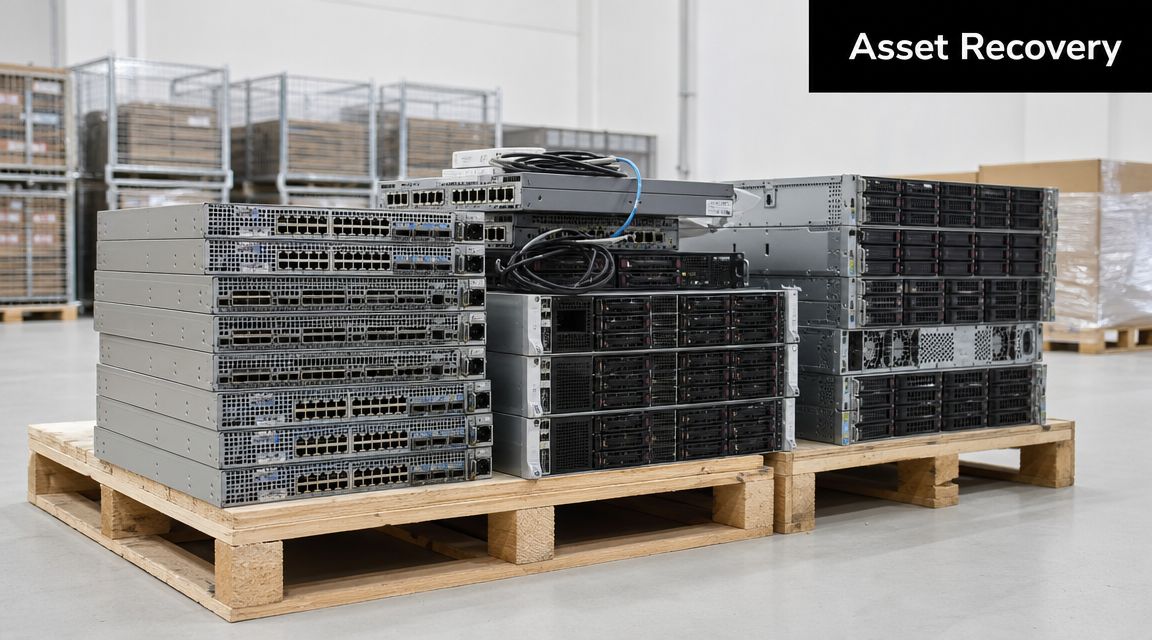
What usually holds value
In practice, the most promising categories tend to be recent-model business laptops, enterprise servers, networking gear, and some specialty equipment with active secondary demand. Clean inventories matter. Devices with intact components, known specs, and documented condition are easier to resell than mixed carts of unverified hardware.
The resell versus recycle decision
Experienced IT managers achieve cost savings. A neutral industry source notes that assets are typically sorted and only a subset is monetizable, which means organizations can overestimate salvage value if they don't account for logistics and processing costs, as explained by Close the Loop USA on what IT asset disposition is and why it matters.
That's the key decision framework:
- Resell when the hardware is current enough, complete enough, and consistent enough to justify testing and remarketing.
- Recycle when labor, transport, sorting, data handling, and low demand erase the upside.
- Split the batch when only part of the load deserves remarketing and the rest should move straight to responsible recycling.
Older fleets often look profitable on a spreadsheet because no one priced the handling time.
This is why your organization should ask for a net-value view, not just a gross estimate. The right conversation isn't “what's the highest possible recovery number?” It's “what remains after pickup, audit, sanitization, sorting, and downstream processing?”
If your team is reviewing recovery options in Georgia, asset recovery services can help frame what equipment is better suited for buyback versus recycling.
The Importance of Chain-of-Custody Documentation
If you only focus on one part of ITAD, make it chain of custody. It's the clearest dividing line between a controlled retirement process and a risky one. Without it, your organization may know assets left the building, but you can't prove who handled them, when they changed hands, or what happened to the data-bearing components.
What chain of custody looks like in practice
A proper chain starts at pickup. Assets are tagged, counted, and matched to an inventory list. Transport isn't just a truck ride. It's a documented transfer. When the load arrives at the processing facility, the inventory should be reconciled again, ideally down to serial number or other unique asset identifiers.
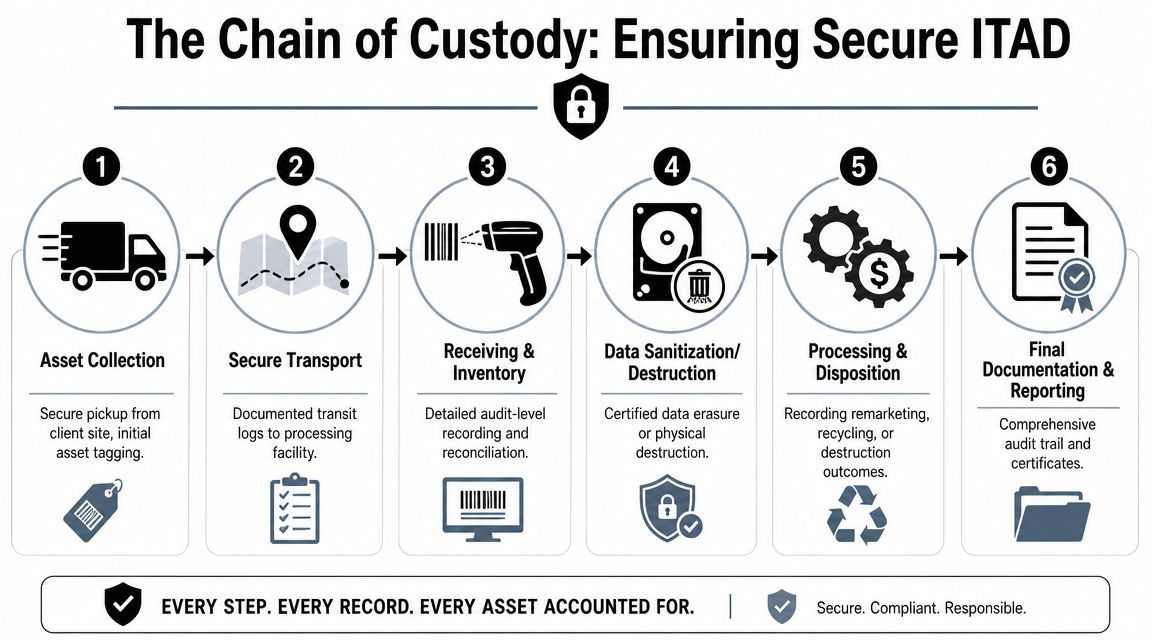
Recognized providers use serialized tracking and certificates of destruction to ensure no recoverable data remains before assets are resold or recycled, which directly reduces breach exposure and supports audit defensibility, as outlined by ReluTech's ITAD services overview.
Why the documentation matters later
The operational value shows up after the pickup is over:
- Audit response gets easier because your team has records tied to actual assets.
- Legal exposure is lower because you can show due diligence.
- Internal reconciliation improves because finance, IT, and procurement can close the loop on retired equipment.
When an organization can produce serialized tracking and final destruction records quickly, most compliance questions become manageable.
Certificates matter here. They aren't just administrative paperwork. They become part of your proof that the media was handled, destroyed, or processed as required. This is why many teams insist on retaining a formal certificate of destruction with the rest of their asset retirement records.
A Checklist for Choosing Your Georgia ITAD Vendor
A vendor shortlist usually looks good until your organization asks harder questions. Then the differences show up fast. One provider can pick up from an Atlanta office this week but struggles with out-of-state locations. Another can support a national rollout but gives vague answers on resale returns, downstream recycling, or Georgia-specific handling requirements.
That is why vendor selection should be treated as an operating decision, not a purchasing formality. Your organization is balancing three things at once: risk reduction, financial recovery, and logistics. A good Georgia ITAD partner should be able to explain the trade-offs clearly.
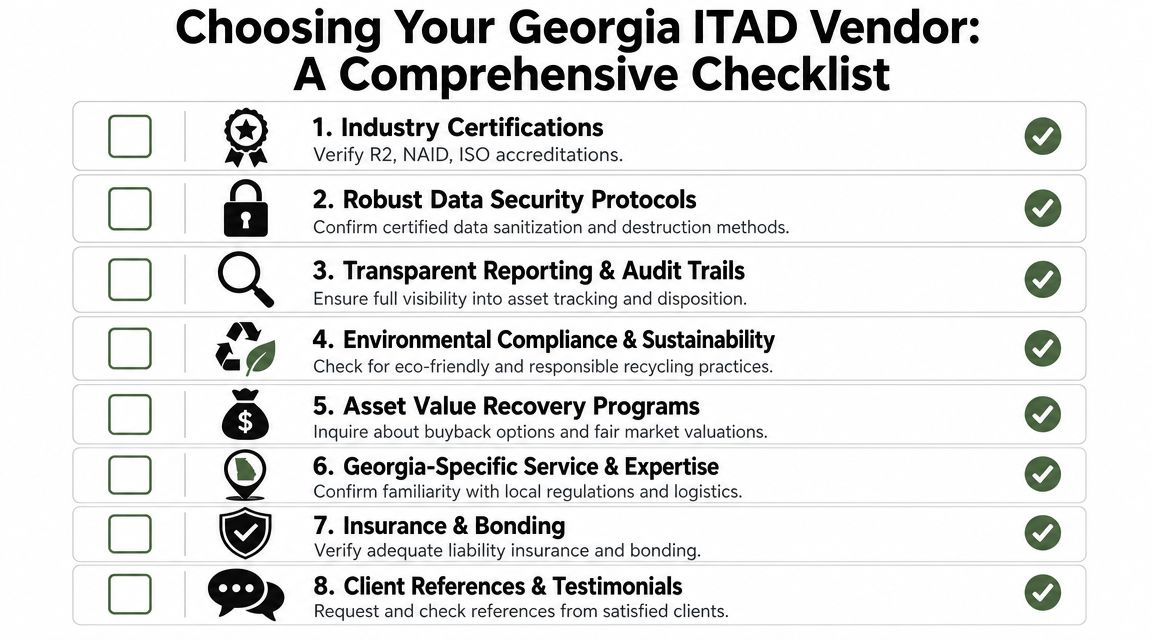
Questions worth asking before you sign
- Which certifications do you hold, and are they current? Ask for the actual documents. Logo badges alone are not enough.
- How do you decide between wiping, shredding, remarketing, and recycling? The answer should vary by device type, media type, and your risk tolerance.
- Can you support on-site service in metro Atlanta when timing matters? Local pickup capacity matters during office closures, refresh cycles, and urgent removals.
- Can you also manage multi-site projects outside Georgia? If your organization has branch offices elsewhere, national coordination may matter as much as local responsiveness.
- How do you estimate resale value? A serious provider should explain what equipment is likely to retain value and what should go straight to recycling.
- What reporting do you deliver at project close? Ask to see sample inventories, disposition summaries, and client-ready documentation.
- How do you handle equipment with no resale market? You want a clear answer on downstream processors and material handling, not a generic recycling statement.
- Are you insured and bonded? A qualified provider should answer this directly and provide proof if requested.
- Can you provide references from organizations with a similar footprint or compliance profile? A healthcare group, school system, manufacturer, and multi-site corporate office often need different execution models.
Red flags that deserve attention
Some problems show up before the first pickup.
- Vague language such as “general recycling certificate” without asset-level detail
- No clear process for intake, transport controls, or receiving verification
- Inflated value claims before the vendor has reviewed age, condition, specs, and volume
- The same recommendation for every project regardless of device class, location count, or data sensitivity
The strongest vendors are specific about trade-offs. They will tell your organization when resale is realistic, when recycling is the better financial choice after labor and logistics, and when local Atlanta service should be paired with broader nationwide support.
Beyond Surplus is one Georgia-based option in this category, providing ITAD, data destruction, electronics recycling, and logistics coordination for business clients. Whether your organization uses that provider or another one, the standard should stay the same: documented controls, realistic value expectations, and a service model that fits both Georgia operations and any locations beyond the state.
Partner with Beyond Surplus for Your Georgia ITAD Needs
The strongest ITAD programs don't separate security, compliance, and value recovery into different conversations. They treat them as one operating decision. Your organization retires equipment. Data must be removed. Assets have to move through a documented process. Some hardware can be remarketed. The rest should be recycled or destroyed without creating risk.
That's also why ITAD keeps gaining importance as a long-term function. The global ITAD market is projected to reach USD 28.56 billion by 2030 with a projected 7.6% CAGR, according to ASCDI market coverage on global ITAD growth. The practical takeaway isn't just market growth. It's that secure disposition has become part of normal IT operations.
For Georgia businesses, the decision usually comes down to execution. Can your provider pick up from Atlanta efficiently? Can they support branch locations outside the state? Can they give you the documentation your auditors, compliance team, and procurement staff will need later? And can they give you a realistic answer about resale versus recycling instead of promising value that never materializes?
If you can answer yes to those questions, your ITAD process is probably doing its job.
Contact Beyond Surplus for certified electronics recycling and secure IT asset disposal in Georgia, including business pickup, data destruction, asset recovery, and chain-of-custody documentation.


