

A telecom closet usually becomes urgent only when a lease ends, a phone system gets replaced, or a site consolidation starts. Then someone opens a back room and finds shelves of Cisco handsets, Avaya cards, PBX shelves, routers, gateways, and power supplies that nobody wants to touch because the project now blends finance, security, and disposal.
That’s where teams make expensive mistakes. They treat legacy telecom gear as junk and miss resale value, or they treat it as simple surplus and overlook stored data, chain-of-custody gaps, and recycling obligations. If you need to sell telecom equipment, the right question isn’t only “what will a buyer pay?” It’s also “what liability leaves with this hardware, and what proof do we keep?”
The Hidden Value and Risk in Your Telecom Closet
Legacy telecom equipment sits in a strange category. It often looks obsolete to the internal team, but parts of it still move in active secondary channels because other organizations need spares, compatible modules, or short-term support inventory. At the same time, that same gear can contain call logs, configuration files, credentials, voicemail data, and network information that should never leave your control without proper sanitization.

The scale of the broader market matters here. The global telecom equipment market is projected to grow from USD 695.72 billion in 2026 to USD 942.76 billion by 2031, according to Mordor Intelligence telecom equipment market data. More network investment means more refresh cycles, more retired hardware, and more organizations trying to decide whether to resell, redeploy, or recycle aging assets.
Practical rule: The older the telecom room looks, the more disciplined the process needs to be.
What works is a disposition plan that treats each asset as both a potential recovery item and a potential compliance event. That means separating reusable gear from scrap, documenting serials before pickup, and deciding early whether your priority is top-dollar unit pricing or controlled risk transfer.
What doesn’t work is the casual cleanup method. A facilities team pallets mixed telecom gear, sends it to the first local buyer, and assumes a factory reset solved the security problem. In regulated environments, that approach leaves too many unanswered questions.
For organizations that want the resale side without losing control of the process, a structured surplus electronics resale program in Georgia is often a better starting point than an ad hoc liquidation. The point isn’t to overcomplicate the project. It’s to make sure cash recovery doesn’t create a larger problem six months later.
Foundations for a Profitable Sale Inventory and Valuation
You can’t negotiate well if your own inventory is vague. Buyers pay on identifiable assets, not on descriptions like “old phones” or “miscellaneous telecom parts.” The strongest sellers provide a clean asset file before the first pricing conversation starts.
Build an inventory buyers can actually use
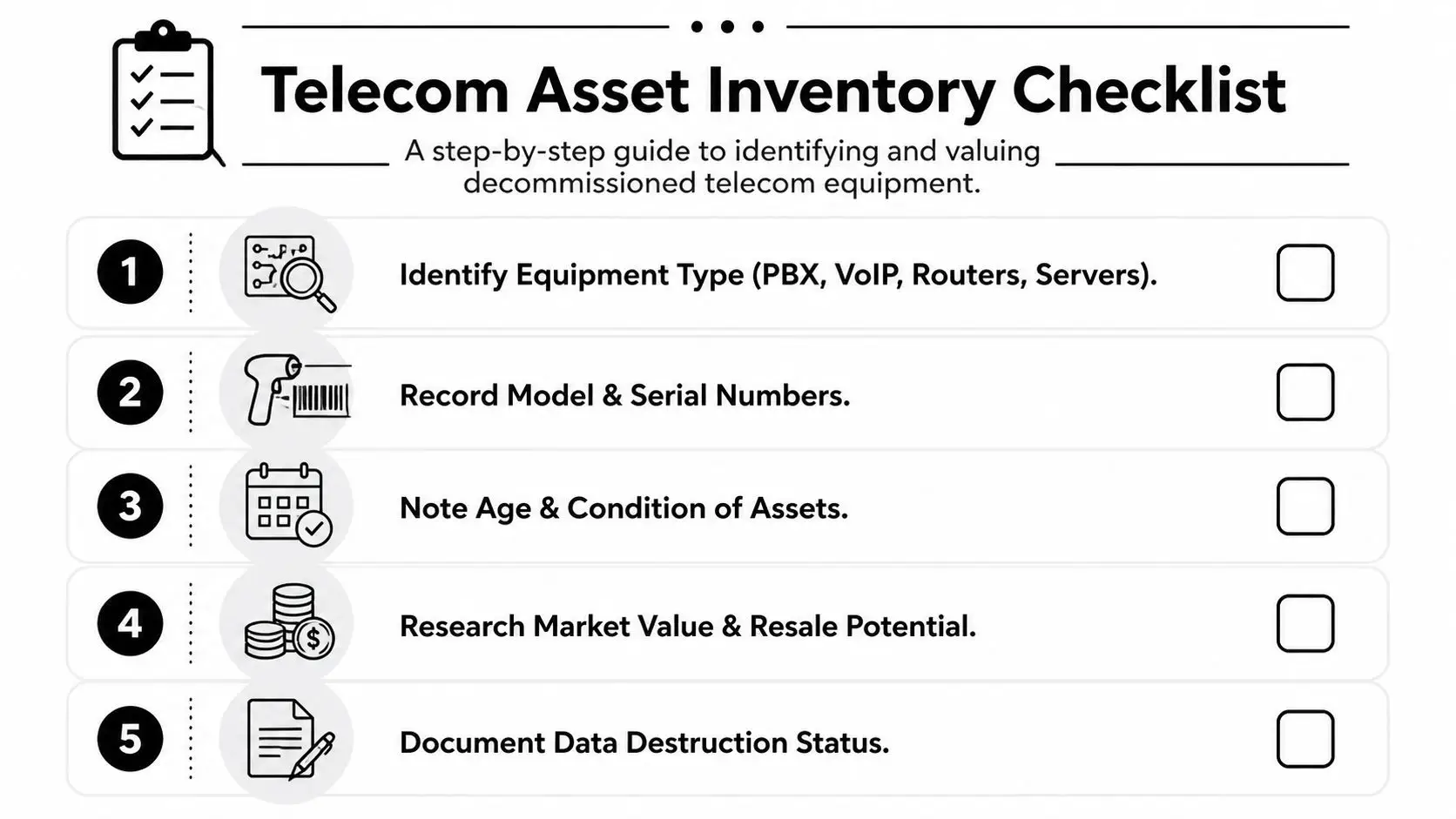
A useful telecom inventory includes more than manufacturer and quantity. It should let a buyer determine compatibility, resale demand, and testing assumptions without endless back-and-forth.
Capture these fields at minimum:
- Manufacturer and family. Cisco, Avaya, Mitel, Polycom, ShoreTel, Nortel, Panasonic, and similar brands don’t move the same way in secondary channels.
- Exact model number. A handset family may look identical while carrying very different value depending on revision.
- Serial number or asset tag. This matters for audit trails and for validating production runs.
- Physical condition. Note cracked screens, broken clips, missing faceplates, bent ports, rack damage, or cosmetic wear.
- Completeness. Handsets with stands, power supplies, cards with matching daughterboards, and chassis with rails or licenses often price differently than incomplete lots.
- Data status. Mark whether the asset is pending wipe, wiped, or slated for shredding.
Grade before you price
Most losses happen before negotiation starts. Teams combine tested and untested units in one line item, overstate condition, or fail to mention missing accessories. That forces the buyer to price defensively.
A better approach is to split the list into clear categories:
- Working pull inventory for gear removed from live environments under controlled conditions.
- Untested inventory for items with uncertain function.
- Parts harvest inventory for incomplete, damaged, or low-demand units.
- Recycling-only inventory where value comes from compliant downstream processing, not reuse.
A detailed inventory doesn’t slow the sale. It reduces discounting.
Understand how valuation really works
There isn’t one universal used price for telecom gear. Valuation changes with timing, geography, demand cycles, model relevance, and how much labor the buyer expects to invest before resale. The pricing method that works best is setting a realistic range that leaves room for negotiation while balancing value recovery against transaction speed, as explained in Telecom Recycle’s guide to selling used phone equipment.
That same guidance identifies the common error on both ends. Sellers either underprice and give away margin, or overprice and kill buyer interest. In practice, both mistakes come from weak inventory discipline.
What raises and lowers buyer confidence
A buyer’s offer usually improves when the package is easy to process. That sounds basic, but it affects real outcomes.
- Raise confidence with documentation. Export asset lists from your CMDB or telecom management platform if possible.
- Improve recoverability with sorting. Separate phones, line cards, gateways, routers, and accessories by model.
- Protect value with photos. Clear lot photos reduce assumptions about damage and missing pieces.
- Avoid mixed pallets. Tossing e-waste, batteries, cabling, and reusable telecom gear together makes the whole load harder to price.
If you need a benchmark from a company that handles enterprise recovery channels, IT equipment resale services in Georgia reflect the kind of intake detail serious buyers expect. The main lesson is simple. Clean data gets cleaner offers.
The Non-Negotiable Core Data Destruction and Compliance
Selling telecom equipment without a documented data destruction process is where value recovery projects go wrong. The hardware isn’t the sensitive asset. The data is.
A lot of telecom gear stores more than people remember. IP phones can retain directories and credentials. Voicemail systems may contain message data. Routers, session border controllers, firewalls, and call managers can hold configuration backups, VPN settings, certificates, and administrator accounts. Even if the device seems old, the information on it can still be current enough to create risk.
A reset is not a compliance strategy
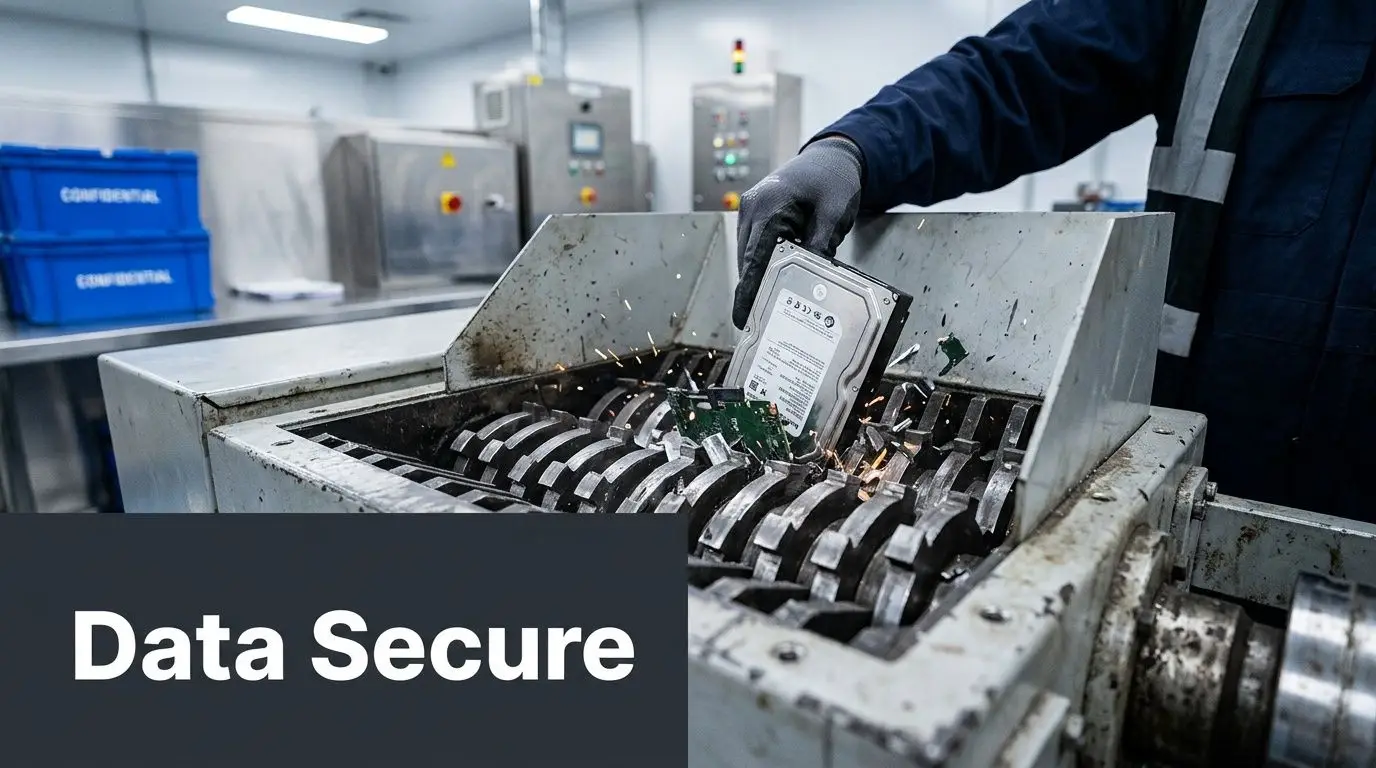
Factory resets help with operational reuse. They don't replace enterprise sanitization controls. Devices fail resets, settings survive in unexpected partitions, and removable media gets overlooked. That’s why serious ITAD programs rely on repeatable wiping standards or physical destruction when wiping isn’t practical.
For small mobile devices, even consumer-oriented guidance can help explain the gap between deletion and proper wipe steps. This Trade.com.au advice for selling an iPhone is useful because it shows how much preparation is needed before a device changes hands. Enterprise telecom gear needs the same mindset, only with stronger documentation and tighter custody.
What the paperwork must prove
If you operate in healthcare, finance, government, or any environment with audit pressure, your disposition records matter as much as the technical destruction method. You need documents that answer four questions:
- What asset was processed
- Who handled it
- What happened to the data
- When title and liability transferred
The records that matter most are usually:
- Chain-of-custody logs that document movement from your site to processing.
- Certificates of data destruction tied to the actual asset set.
- Settlement reports showing what was resold, harvested for parts, or recycled.
- Certificates of recycling for assets that don’t qualify for resale.
If the vendor can’t document custody from pickup through final disposition, you’re not transferring enough risk.
Security and recovery aren’t opposites
A common mistake is assuming you must choose between resale value and data security. In reality, the best programs decide asset-by-asset. Wipe and resell what is appropriate. Physically destroy media where the risk profile demands it. Recycle low-value gear that would cost more to test and remarket than it will return.
That’s one reason ITAD channels fit enterprise telecom projects so well. For enterprise organizations, particularly those in healthcare, finance, and government, ITAD channels can mitigate regulatory risk while enabling rapid asset recovery, and the right channel depends on equipment volume, urgency, and data security requirements, according to this used IT equipment sales channel guide.
Where service scope matters
Some vendors only buy equipment. Others manage de-installation, serialized intake, data destruction, recycling, and settlement under one chain of custody. That difference becomes important when the project includes racks, phones, media, batteries, and edge gear across multiple sites.
One factual example is telecom equipment disposal services, which combine removal and secure processing rather than treating telecom resale as a simple broker transaction. That model tends to fit organizations that care about both recovery and defensible compliance.
Choosing Your Path DIY Sales vs Strategic ITAD Partnership
Once inventory and security requirements are defined, the channel decision becomes clearer. You have two broad paths. You can run the sale yourself through marketplaces, local buyers, and one-off deals. Or you can hand the project to a strategic ITAD partner that handles recovery and compliance together.
Neither path is automatically wrong. The right choice depends on volume, urgency, internal labor capacity, and how much risk your organization can absorb.
Where DIY sales make sense
DIY works best when the lot is small, the assets are easy to identify, and your team has time to manage the details. A handful of modern conference phones or an isolated batch of unopened handsets might fit that model.
DIY gets harder when you add any of the following:
- Mixed asset lots with phones, cards, gateways, and storage media
- Multi-site pickups that require synchronized removal
- Regulated environments where documentation must stand up to review
- Tight project deadlines tied to lease exits or infrastructure upgrades
Why enterprises often choose ITAD
The practical advantage of an ITAD partner isn’t just convenience. It’s process control. One team handles serialized intake, secure transport, data sanitization, downstream routing, reporting, and final settlement.
That matters because a sale can fail in places that don’t show up on the quote sheet. A truck arrives without the right packing materials. A buyer disputes condition because the inventory was sloppy. A business unit asks for destruction records months later and nobody can match the certificate to the original asset list.
If you’re evaluating providers, a formal vendor due diligence checklist helps separate brokers from operators who can support compliance and reporting.
Sales Channel Comparison
| Criteria | DIY Sales (e.g., eBay) | Strategic ITAD Partner |
|---|---|---|
| Value recovery | Potentially higher per-unit pricing on select items | More consistent bulk pricing and broader lot acceptance |
| Data security | Managed internally, easy to miss steps | Integrated wiping, shredding, and documentation |
| Compliance and reporting | Seller must assemble records independently | Chain-of-custody and destruction reporting built into process |
| Labor effort | High. Listing, packing, shipping, disputes, tracking | Lower. Single managed workflow |
| Transaction speed | Varies by item and marketplace demand | Faster for larger or mixed enterprise lots |
The real cost of DIY isn’t listing time. It’s all the control gaps between listing and final disposition.
The decision standard that holds up
Use a simple test. If the project involves meaningful data risk, high volume, or executive visibility, choose the channel that reduces operational variance. For enterprise telecom, that usually means strategic ITAD. If the project is tiny and low-risk, DIY can be fine.
The key is honesty about internal capacity. Many IT teams can sell telecom equipment. Fewer teams want to spend weeks doing it while also defending the process to security, legal, and finance.
Executing the Sale Logistics Negotiation and Finalization
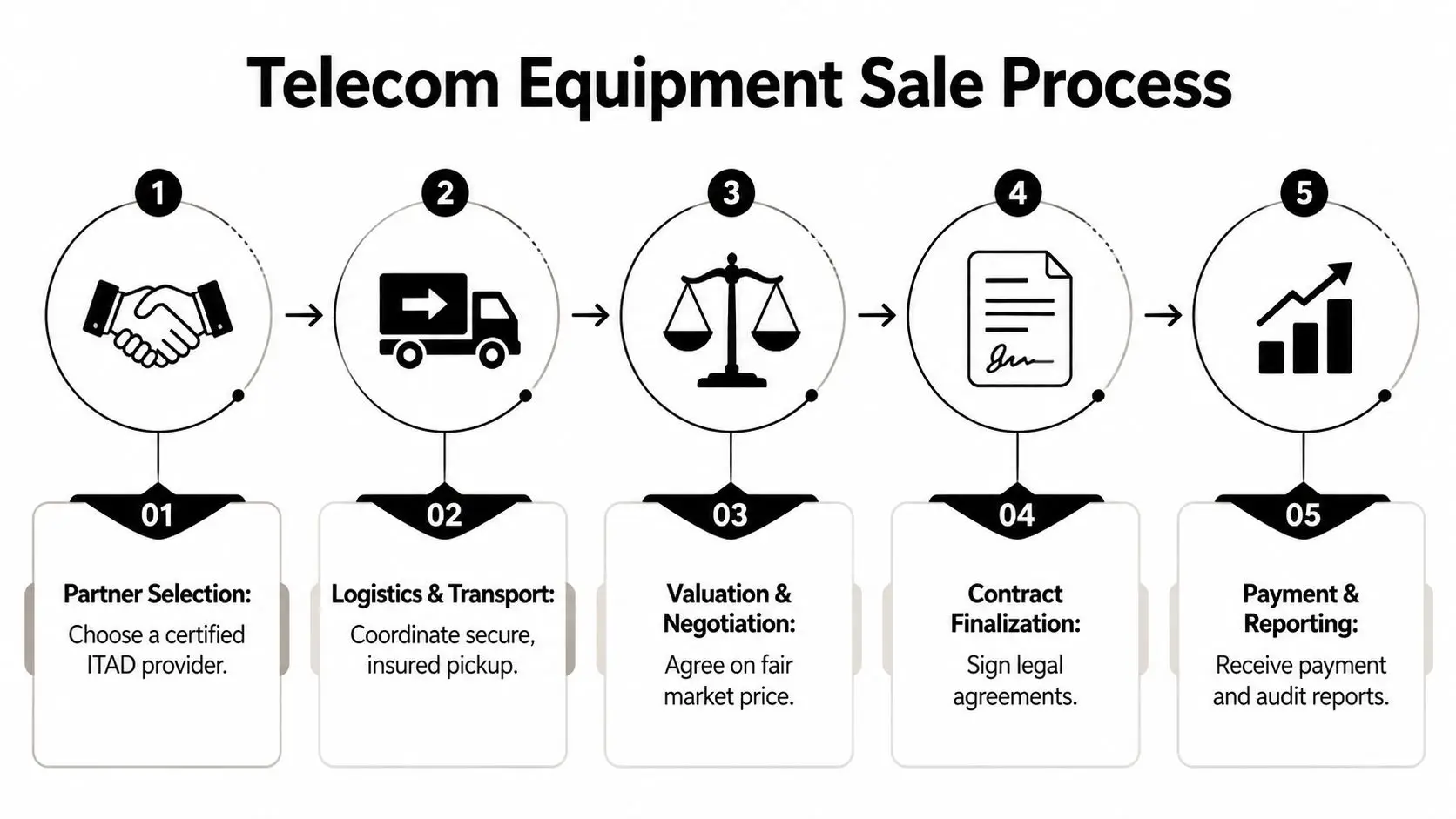
Once the buyer or ITAD partner is selected, execution starts to matter more than theory. A good deal can still go sideways during pickup, reconciliation, or final paperwork if nobody defined the operating details.
Prepare the lot before pickup day
Most telecom sale delays come from preventable site issues. Assets aren’t staged. Cabinets are still live. Loose cards and power adapters are spread across departments. Nobody knows which pallet contains media-bearing devices.
Before transport is scheduled, lock down these basics:
- Finalize the asset list. Freeze adds and removals so reconciliation stays clean.
- Tag exceptions clearly. Mark anything pending wipe, subject to shred, or excluded from sale.
- Consolidate accessories. Group handsets with stands, power supplies, and expansion modules where possible.
- Confirm access conditions. Freight elevators, dock hours, security escorts, and badge requirements need to be known in advance.
A managed IT asset removal service is useful here because the removal scope often affects both valuation and timing. De-installation labor, packing complexity, and site restrictions all shape the final economics.
Negotiate scope, not just price
Strong sellers don’t spend the entire negotiation on unit value. They also confirm the service envelope around the transaction.
Review these points before approval:
- Data handling method for each asset class
- Testing assumptions and condition grading rules
- Ownership transfer point during pickup or receipt
- Freight responsibility and insurance coverage
- Reporting package delivered after processing
- Payment timing and settlement format
That last point matters more than many teams expect. A high quote with vague settlement terms is often weaker than a slightly lower quote with precise reconciliation rules.
When a quote looks unusually high, check the assumptions before you celebrate.
Close with documents that protect your side
At minimum, your file should include a signed scope of work, pickup records, asset reconciliation, and final settlement paperwork. Some organizations also use a formal bill of sale framework to clarify ownership transfer. If your legal team wants a baseline document, this standard legal bill of sale can help frame the discussion, though enterprise transactions usually add service and liability language beyond a simple template.
There’s also a strategic reason to get this right. A growing trend is sell-then-replace programs, where organizations liquidate legacy telecom systems and apply the proceeds to newer communications platforms. In that context, older Cisco and Avaya systems from 2015 to 2019 can still command 20 to 40% of list value in secondary markets, according to Synergy Tel’s equipment resale guidance. That makes accurate settlement and clean records more than an accounting detail. It turns surplus into a budget input for the next deployment.
Transforming Surplus into a Strategic Asset
The companies that handle telecom refreshes well don’t treat the leftovers as an afterthought. They treat end-of-life equipment as a managed asset class. That single shift changes everything about the outcome.
Instead of a rushed cleanup, the project becomes a controlled workflow. Inventory gets normalized. Reusable gear is separated from scrap. Data-bearing devices are sanitized or destroyed with records that hold up later. The finance team gets recovery value it can recognize. Security gets documentation. Facilities gets the space back.
What the strongest programs have in common
They usually share a few habits:
- They start before the move deadline so valuation and logistics aren’t compressed.
- They match the sales channel to the risk profile instead of chasing the highest theoretical unit price.
- They insist on auditable records for destruction, recycling, and title transfer.
- They treat telecom resale and compliant recycling as part of one lifecycle rather than two unrelated tasks.
That’s why selling enterprise telecom gear is less about unloading hardware and more about managing the full disposition path correctly. When you do that well, old PBX shelves, VoIP phones, routers, and cards stop being storage-room clutter. They become recovered capital, reduced liability, and completed governance.
Frequently Asked Questions About Selling Telecom Equipment
Can I sell telecom equipment that’s missing power supplies or handsets?
Yes, but incomplete lots usually get priced differently. Missing accessories increase testing time and reduce resale confidence. Separate complete units from incomplete ones so the buyer doesn’t discount the entire lot.
Should we wipe everything before requesting a quote?
Not necessarily. You should identify what contains data and decide the sanitization path early, but many organizations request a quote first so the buyer can align pricing with wipe, shred, resale, and recycling options. What matters is that nothing leaves without a documented plan.
Is older telecom gear ever worth more as parts than as a complete system?
Often, yes. Some legacy platforms sell better as expansion cards, replacement handsets, or specific modules because buyers are supporting installed systems rather than buying full stacks. That’s why mixed lots should be sorted instead of sold as generic scrap.
When is recycling the better choice than resale?
Recycle when the asset has weak demand, poor condition, missing components, or a risk profile that makes destruction the smarter outcome. The goal isn’t to force resale. It’s to maximize total recovery while minimizing exposure.
What should I ask any buyer before pickup?
Ask how they document chain of custody, how they handle data-bearing devices, how exceptions are reconciled, and when title transfers. If the answers are vague, keep looking.
If your organization needs to sell telecom equipment without losing control of data security, reporting, and downstream handling, contact Beyond Surplus. They provide business-focused ITAD, secure data destruction, telecom equipment disposition, and value recovery services that support enterprise compliance and audit needs.


