

Those little labels you see on bins of old batteries or fluorescent lamps aren't just for show. Think of universal waste labels as a critical communication tool for specific types of hazardous waste that are common in almost every business, especially those with office electronics. These aren't just stickers; they're your first and most important step in proving you're handling things the right way.
A Simpler Path for Common Hazardous Waste
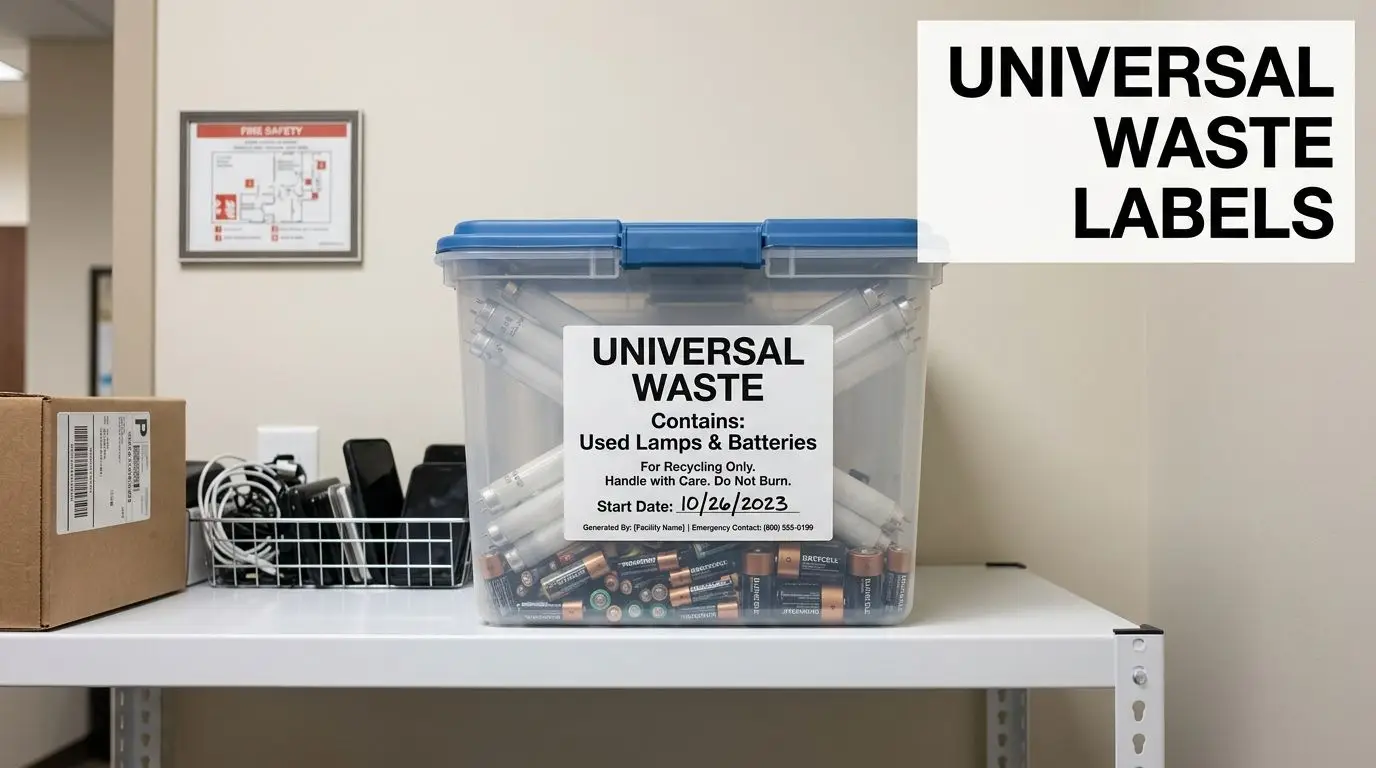
For any business managing IT equipment or other electronics, getting a handle on universal waste labels is a must for a compliant asset disposition process. These labels are a core part of the EPA's Universal Waste Rule, a set of regulations specifically designed to make recycling certain hazardous materials easier and cheaper for businesses.
Instead of forcing you to manage every dead battery or burnt-out fluorescent bulb as fully regulated hazardous waste—a process that is both incredibly complex and expensive—this rule creates a more practical path. By correctly labeling these items, you're signaling to everyone that you're managing them under these much simpler, less stringent standards.
The whole point of a universal waste label is to clearly state what's inside a container. This ensures safe handling and proper recycling, all while showing you're compliant with the EPA's streamlined rules.
Why Proper Labeling is a Non-Negotiable for Your Business
Let's be blunt: getting this wrong is a huge business risk. Improperly managed universal waste can lead to some seriously hefty fines from the EPA or state environmental agencies. Even a single violation, like one missing or incorrect label, can be enough to trigger a full audit of your facility and do real damage to your company’s reputation.
On the flip side, getting your labeling right delivers some clear wins:
- Shows Compliance: It’s the simplest, most visible way to prove to an inspector that you're following federal and state regulations.
- Keeps People Safe: Clear labels prevent accidents and mishandling, protecting both your employees and the waste handlers down the line.
- Proves Responsibility: It’s a key piece of the chain-of-custody documentation that shows your business handles assets responsibly, which is something more clients and stakeholders care about.
- Avoids Costly Fines: This is the easiest way to steer clear of penalties that can climb into the thousands of dollars for each violation.
In short, these labels are your first line of defense when managing the end-of-life for common electronic components. They are a simple tool with a massive impact on your operational risk, budget, and environmental credibility. You can dive deeper into how to manage these materials in our complete guide to universal waste disposal.
If you’re an IT manager, facility manager, or anyone involved in procurement, mastering the basics of universal waste is non-negotiable. It protects the business from liability and makes sure retired assets are handled in an environmentally sound and legally compliant way from the second they're taken out of service. This guide will walk you through exactly what you need to know.
Understanding Federal EPA Labeling Requirements
To build a compliant universal waste program, you have to start with the foundational rules set by the Environmental Protection Agency (EPA). These federal regulations, found in 40 CFR part 273, create the baseline for how every business in the country must handle universal waste.
Think of these rules as the non-negotiable minimum. Getting them right is the absolute first step to staying compliant and avoiding some pretty hefty penalties.
The heart of the EPA's requirement is straightforward. Every container, package, or individual piece of universal waste—if it’s not in a container—must be clearly labeled or marked. This isn't just a suggestion; it's a core responsibility for the business that creates the waste.
The Three Essential Labeling Components
Under federal law, a compliant label needs to have specific information to be valid. The EPA’s goal is simple: anyone, from your own team to a waste hauler or a regulator, should be able to tell what's inside a container instantly, with no guesswork involved.
A compliant label must clearly show:
- The phrase "Universal Waste": This is the main identifier. It signals that the material is being managed under the simpler Universal Waste Rule.
- The specific type of waste: You have to state what's actually in the container. For instance, you'd add "Batteries," "Lamps," or "Mercury-Containing Equipment."
- The handler's responsibility: While this isn’t text on the label itself, the duty to apply it falls squarely on the business that generated the waste.
For example, a drum full of old laptop batteries needs to be marked with the words “Universal Waste—Batteries.” A box of spent fluorescent bulbs from the office must be labeled “Universal Waste—Lamps.” This exact wording is what inspectors will be looking for.
When to Apply the Label
Timing is just as critical as what the label says. According to EPA rules, you must label or mark the universal waste container as soon as the first piece of waste goes inside. You can't put it off until the container is full or you're ready to ship it.
This immediate labeling rule is one of the most common spots where facilities fail an inspection. A regulator who sees an unlabeled container with even a single battery in it can write a violation on the spot.
The responsibility for labeling rests with the "handler" of the waste, which in a business setting, is the company itself. Whether it’s your IT department, facilities crew, or a designated employee, they need to be trained to slap the right label on the container the moment it’s put into service.
The growing focus on these rules is a major reason the global hazardous label market is booming. This market, which includes universal waste labels for e-waste, was valued at USD 1.68 billion in 2026 and is projected to hit USD 2.66 billion by 2032. It’s a clear sign of how vital these labels are for staying on the right side of regulations.
Consequences of Non-Compliance
Ignoring these federal rules can hit your business hard, both financially and operationally. The EPA and state agencies can issue significant fines for non-compliance, which are often calculated per violation, per day. A single unlabeled drum could easily turn into a penalty costing thousands of dollars.
Beyond the fines, a simple labeling mistake can trigger a much deeper audit of your entire waste management program, tying up your staff and resources. In a worst-case scenario, regulators could decide to reclassify your universal waste as fully hazardous waste. That would throw your business into a far more complex, burdensome, and expensive set of management standards.
Proper labeling is your simplest and most effective tool for avoiding all of this. To make sure your procedures are up to snuff, take a look at our detailed guide on the role of universal waste systems in modern business operations.
How State Regulations Change The Labeling Rules
While the federal EPA rules establish a solid foundation for universal waste management, true compliance is often a local affair. Think of the federal regulations as the floor, not the ceiling. States have the authority to adopt the Universal Waste Rule as is, or they can implement stricter requirements—and many of them do.
This is a critical concept for any business, especially those with operations in multiple locations. What keeps you compliant in one state might not be enough in another. Failing to recognize these local nuances is one of the easiest ways for a company to fall into accidental non-compliance, facing fines and penalties despite their best efforts.
Understanding these variations isn't just about avoiding fines; it's about mastering the specific environmental obligations of the communities where you operate.
State-Specific Requirements Beyond The Federal Baseline
State environmental agencies can, and often do, add their own layers to universal waste regulations. These variations can change several key aspects of your labeling and handling procedures.
A few common ways states modify the rules include:
- Adding Waste Types: Some states add items to their universal waste list that are not covered federally. This is especially common with electronic waste.
- Mandating Extra Label Information: A state might require more than just the basics. For example, they may mandate that the accumulation start date be clearly written on every label.
- Shortening Accumulation Times: While the federal limit is one year, a state could theoretically impose a shorter timeframe for certain wastes.
These differences mean you cannot rely on a one-size-fits-all approach. A corporate-wide policy must be flexible enough to accommodate the strictest regulations in any state you do business in.
A Tale Of Two States: California vs. Georgia
To see just how much the rules can differ, let’s compare two major business hubs. These examples show why IT and facility managers must verify local laws.
California's Stricter Approach
California is well-known for its stringent environmental laws. The state's universal waste program is a perfect example, going significantly beyond federal requirements.
- E-Waste is Universal Waste: Unlike the EPA, California specifically classifies most electronic devices, like computers and TVs, as universal waste. This broadens the scope of items that must be managed under these rules.
- Mandatory Accumulation Start Date: Every single container of universal waste in California must be marked with the date accumulation began. This isn't just a best practice; it's a legal requirement.
- CRT Glass: California has specific handling and labeling rules for Cathode Ray Tubes (CRTs) from old monitors and TVs due to their leaded glass content.
In California, a label for a box of old keyboards might need to say "Universal Waste—Electronic Devices" and include a clear start date, a requirement that doesn't exist at the federal level for those specific items.
Georgia’s Alignment with Federal Rules
The Georgia Environmental Protection Division (EPD) largely aligns its universal waste regulations with the federal EPA standards. For businesses operating in Georgia, this simplifies compliance, as the core federal rules are the primary guide.
However, even with this alignment, it's crucial to remain vigilant. The Georgia EPD still maintains the authority to enforce these rules vigorously. This means that while no extra information may be required on your universal waste labels, getting the federal basics right—such as "Universal Waste—Batteries" and applying the label immediately—is paramount.
For businesses managing large volumes of IT equipment, understanding the nuances of how Georgia's rules apply to different materials is essential. You can explore a more detailed breakdown of these materials by reading about our approach to universal waste.
The key takeaway is clear: federal rules are your starting point, but state regulations dictate the final compliance strategy. For any business with a regional or national footprint, verifying local laws isn't optional—it's a fundamental part of responsible and risk-free asset management.
Managing Accumulation Times And Keeping Records
Getting the label right is just the first step. Once that universal waste label is on a container, a critical clock starts ticking. The EPA gives both Small and Large Quantity Handlers of Universal Waste up to one year to gather this waste on-site. That one-year countdown begins the very moment the first battery, bulb, or device is placed inside.
This deadline is non-negotiable. If you let that one-year mark pass, your easily managed universal waste instantly becomes a fully regulated hazardous waste. This mistake can trigger inspections and costly penalties, so tracking your start date isn’t just a good idea—it's a mandatory part of the label in many states.
Documenting Your Accumulation Start Date
The most direct way to track this one-year limit is by writing the date on the universal waste label itself. The day the first item goes into your drum or pallet box becomes the "accumulation start date."
Here are a few practical ways to keep tabs on this crucial timeframe:
- Date the Label: As soon as a container goes into service, grab a permanent marker and write the date on the label. This is the simplest method and the one inspectors prefer to see.
- Keep a Central Log: For larger facilities managing many containers, a central logbook or spreadsheet can work. You'll track each container's ID number and its corresponding start date, but be sure the container is still clearly marked to link back to your log.
- Use an Inventory System: Some operations use inventory management software to track their waste containers. These systems can be a lifesaver, automatically flagging containers that are approaching their one-year accumulation limit.
Whatever method you choose, the objective is the same: to prove exactly how long that waste has been at your facility.
The Importance Of Meticulous Recordkeeping
Beyond just dating the label, solid recordkeeping is your best defense during an inspection. These records are your proof that you’re managing everything responsibly, from the moment waste is generated until it’s handed off for final processing.
Accurate records like shipping papers, manifests, and Certificates of Recycling are not just paperwork. They are your official evidence that you've followed the rules, managed your timelines, and transferred liability to a certified processor.
This entire process flows from the top down, starting with federal rules that are then adapted at the state level, ultimately defining what your business needs to do to stay compliant.
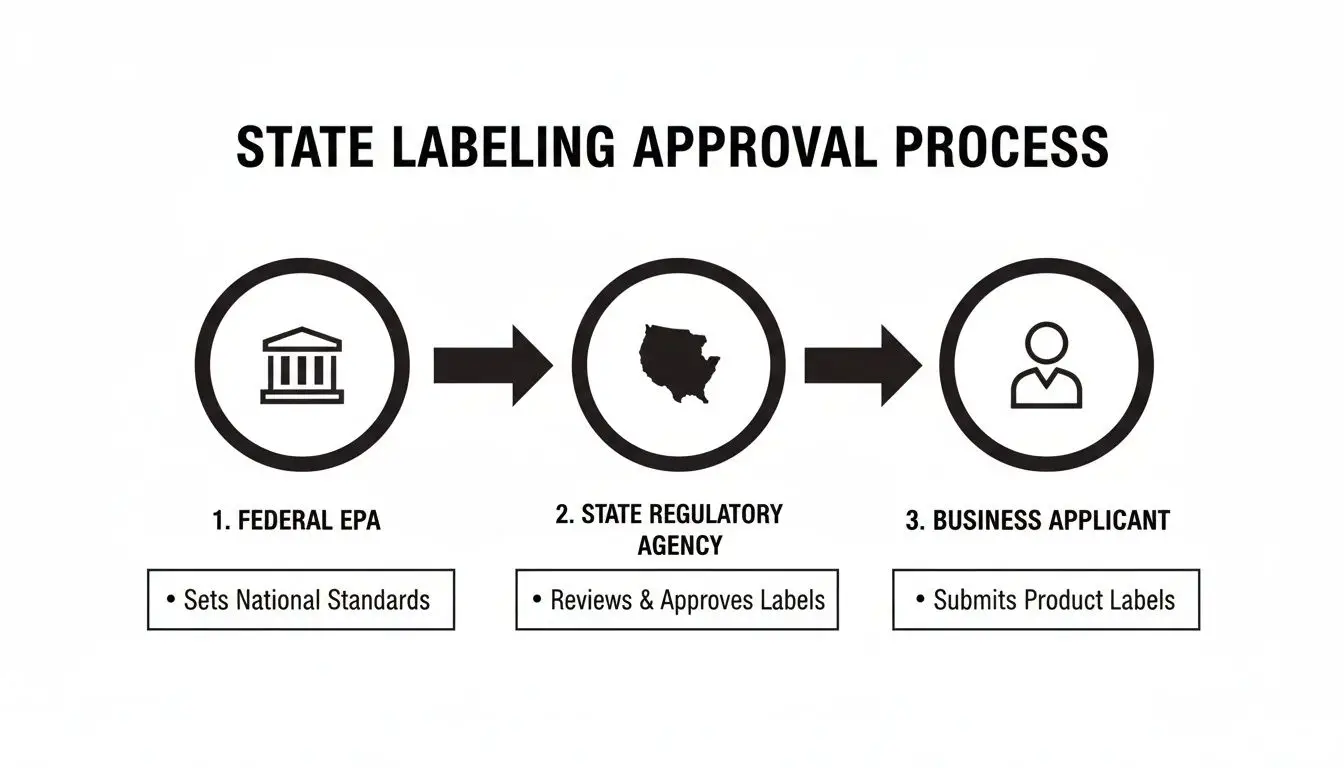
As this diagram shows, federal EPA guidelines set the foundation, but state agencies often add their own specific requirements for businesses to follow. The need for clear, compliant labeling is a huge driver behind the growth of the industrial labels market, which was valued at USD 67.8 billion in 2026 and is expected to hit USD 139.1 billion by 2035.
This is exactly where a good ITAD partner makes a difference. When you work with a certified expert like Beyond Surplus, the burden of tracking dates and managing paperwork shifts to us. We handle the complexities so your business stays compliant without the headache. A proper universal waste system isn't just about disposal—it's about protecting your organization.
Best Practices for Labeling in Your Facility
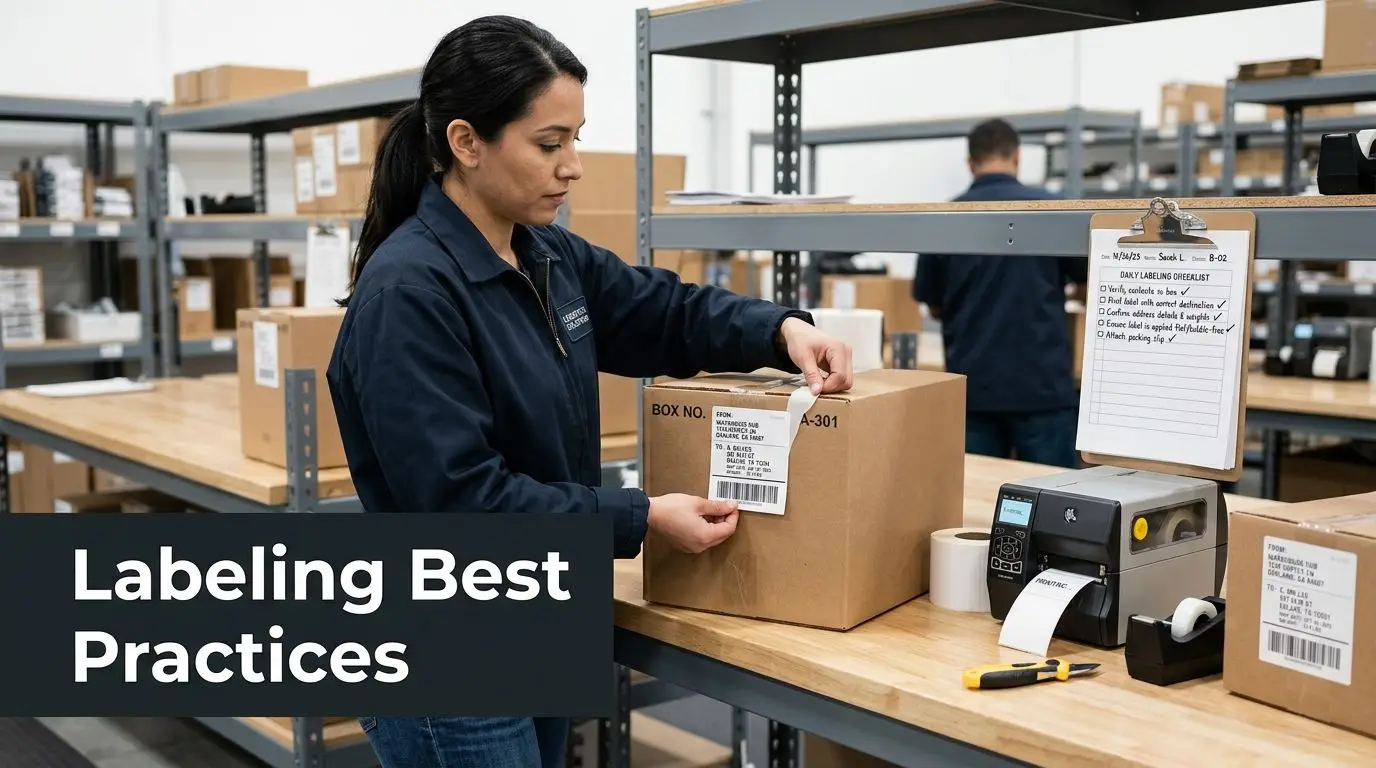
Moving from regulatory theory to real-world application, building a solid labeling system is about creating habits that remove guesswork and ensure consistency across your facility. Good labeling isn't just about avoiding fines; it’s about making sure any employee or auditor can instantly know what's in a container, when it arrived, and how to handle it.
A system built on clear standards and durable materials keeps small mistakes from becoming expensive compliance problems. Ultimately, the goal is to make correct labeling a simple, automatic part of your workflow, not a frantic scramble when an inspector shows up.
Create Standardized and Pre-Printed Labels
Consistency is the foundation of a strong labeling program. Instead of relying on handwritten labels that can be hard to read, it's far better to use standardized, pre-printed universal waste labels. This approach ensures every container has the necessary information in a clear, professional format.
A good template should always include:
- The required phrase “Universal Waste—”
- A clear spot for the specific type of waste (like Batteries or Lamps).
- A bold, easy-to-find space for the “Accumulation Start Date.”
Using one approved template across your facility helps everyone recognize waste containers immediately. Staff can process them faster, and inspectors can verify compliance with just a glance, which speeds up audits and cuts down on human error.
Focus on Durability and Placement
A perfect label doesn’t do any good if it peels off, fades, or is stuck on the back of a container. The physical label and where you put it are just as important as the information on it. Think about the entire journey your container will take, from a desk to the loading dock.
Pay attention to these practical details:
- Material Matters: Choose weather-resistant materials like BOPP (biaxially-oriented polypropylene) or vinyl. This is especially important for containers stored in damp areas or outside, as these materials resist moisture, smudging, and tearing.
- Ink and Adhesives: Use permanent ink that won't fade under warehouse lights or sunlight. The label’s adhesive needs to be strong enough to stick to your containers, whether they're plastic bins, cardboard boxes, or metal drums.
- Prime Placement: Always put labels on the front of a container, at eye level if possible. Avoid placing them over seams, curves, or bumpy surfaces where they are more likely to peel off or get damaged.
The real test for a label is simple: can someone who has never seen it before read it easily from a few feet away? If not, the label isn't doing its job.
Train Staff and Establish Clear Accumulation Areas
Your labeling system is only as effective as the people using it. It's important to provide regular, hands-on training for all staff who handle universal waste, from IT techs swapping laptop batteries to facilities crew changing light bulbs.
Training should be direct and simple. It should focus on how to identify common universal waste items and what to do next: put the item in the right container and make sure the accumulation date is filled in.
Set up specific, clearly marked accumulation areas for your universal waste containers. These spots should be in low-traffic, secure locations, away from the day-to-day bustle. Using clear signs like "Universal Waste Batteries" or "Universal Waste Lamps" for each area reinforces the system and prevents mixing up different waste streams.
This organized approach not only keeps you compliant but also lines up with wider corporate sustainability efforts. The growing focus on environmental responsibility has boosted demand for eco-friendly labeling. The Sustainable Labels Market was valued at USD 52.8 billion in 2026 and is expected to hit USD 115.4 billion by 2035, growing at 8.7% each year. By choosing sustainable label materials, your business shows a commitment to the environment that goes hand-in-hand with your compliance work. You can read the full research about sustainable labeling trends to better understand its growing importance.
How An ITAD Partner Simplifies Compliance
After digging through federal laws, state-specific rules, and tight deadlines, trying to manage universal waste on your own can feel like a full-time job. The risks are real, from steep fines for one mislabeled box to long-term liability if your waste is handled incorrectly down the line. For any manager, that’s a lot of pressure pulling you away from your actual job.
There's a simpler, more secure way to handle it: partnering with a certified IT Asset Disposition (ITAD) expert.
Transferring Risk and Guaranteeing Compliance
Working with a professional ITAD partner like Beyond Surplus means you get to hand off the entire compliance headache. Instead of your team worrying about training, proper labeling, and tracking accumulation dates, that whole responsibility moves to an expert. This isn't just about convenience—it's a smart way to transfer risk.
A certified partner knows exactly what to do and takes full ownership of the process:
- Proper Handling and Segregation: They can spot and separate different universal waste streams, like batteries and lamps, right away to prevent any mix-ups.
- Compliant Labeling: They use the correct universal waste labels with all the required federal and state information, including start dates.
- Documentation and Auditable Records: You get solid proof, like Certificates of Recycling, that show you did everything right. This documentation legally transfers liability from your company to theirs.
The Tangible Business Value of Expert Partnership
Bringing in an ITAD vendor isn't just another business expense; it's an investment in protecting your company. The value goes far beyond simply having someone haul away your old equipment. It’s about the peace of mind you get from knowing you’re safe from the financial and reputational fallout of a compliance violation.
By outsourcing, you are not just getting rid of old electronics. You are acquiring guaranteed compliance, a transparent chain of custody, and the assurance that every asset is managed according to the highest industry and regulatory standards.
A good partnership turns a complicated internal problem into a smooth, managed service. It means that if a regulator ever asks how you handle your old IT assets, you have a clear, documented, and fully compliant answer ready to go.
For businesses looking for a secure way to manage their electronics at the end of their life, the first step is understanding the benefits of different ITAD companies near me. Letting experts handle the complexities of universal waste is simply the smartest move your organization can make.
Common Questions About Universal Waste Labels
Even with the best intentions, the rules around universal waste labels can get confusing. Let's clear up some of the most common questions we hear from IT and facility managers to make sure your practices are fully compliant and risk-free.
What Happens If I Fail To Label Universal Waste Correctly?
Getting a universal waste label wrong isn't a small oversight—it can be a costly one. The EPA or state agencies can issue fines reaching thousands of dollars per violation, per day. A simple labeling error can also get your materials reclassified as fully hazardous waste.
Suddenly, that box of batteries falls under a much more complicated and expensive set of hazardous waste rules. Beyond the fines, incorrect labels create real safety hazards for your team and waste handlers, and it breaks the essential chain of custody. This can expose your business to serious long-term liability. The best way to avoid these risks is to partner with a certified ITAD vendor.
Can I Use One Label For A Pallet Of Mixed Universal Waste?
No, and this is a frequent and costly mistake. You can't use a single, general label for a pallet that holds different kinds of universal waste. Every distinct waste stream needs its own specific label.
For example, imagine a pallet with one drum of used batteries and a separate box of old fluorescent lamps. Each container must be labeled individually. The first needs a label that says "Universal Waste—Batteries," while the second requires one stating "Universal Waste—Lamps." You also can't mix different waste types in the same container—they must be kept separate, with each label accurately describing what's inside.
Do I Need A Label On Every Single Battery Or Just The Box?
You only need to label the outer container you use to collect the waste. There's no federal rule requiring you to put a universal waste label on every single battery, lamp, or other small item.
Whether you're using a simple cardboard box, a 55-gallon drum, or a plastic bucket, a single, easy-to-read "Universal Waste—Batteries" label on the main container is all you need.
The key principle here is that anyone handling the container should know exactly what's inside without opening it. You are also responsible for keeping that container closed and in good shape to prevent any spills or breakage.
Is All E-Waste Automatically Considered Universal Waste?
This is a major point of confusion for many businesses. Under federal EPA law, "e-waste" as a broad category is not universal waste. The federal program is specific, listing items like batteries, lamps, certain pesticides, and equipment containing mercury.
However, many states, including California, have expanded their own universal waste programs to include electronic devices or components like CRT monitors. This simplifies the recycling process for those items. More importantly, almost all electronics contain parts that are federally-listed universal wastes, like batteries and the mercury lamps in older backlights. It's critical to know your state's specific rules and work with a certified recycler who can correctly manage these mixed materials.
Managing these details is what Beyond Surplus does best. We take the guesswork out of compliance, ensuring every item is handled, labeled, and recycled according to all federal and state regulations. For a partnership that guarantees compliance and eliminates risk, contact us today.


