

When your company's old electronics are recycled, they don't just disappear. They enter a secure, multi-stage process called IT Asset Disposition (ITAD). For businesses, this journey is designed to turn potential liabilities into documented compliance by securely destroying data, sorting devices for refurbishment or recovery, and providing serialized certificates that prove every regulation was followed. It’s a commercial-grade system built to protect your business from start to finish.
What Happens to Your Retired IT Assets?
Ever wonder what really happens to your company's old servers, laptops, and networking gear after they leave your facility? The moment you hand them over to a certified partner like Beyond Surplus, they begin a structured journey designed to manage risk and recover value for your business. This isn't just "disposal"—it's a meticulously managed process that transforms a complex compliance headache into a clear, auditable system for commercial IT equipment.
At its core, the ITAD journey is built on three key pillars: absolute data security, strict regulatory compliance, and smart value recovery. Following this process ensures that retiring your old technology doesn't create new problems, like a costly data breach or environmental fines. To get a better handle on the entire framework, it’s worth exploring what IT Asset Disposition is and why it’s so critical for any modern business.
The Foundation of Responsible E-Waste Management for Business
This first phase sets the stage for everything that follows. It's about shifting from a mindset of "getting rid of old stuff" to strategically managing end-of-life assets for enterprise environments. The goal is to create a transparent, secure, and environmentally sound outcome for every single piece of equipment.
This involves:
- Establishing a Secure Chain of Custody: We track every commercial asset from the moment it leaves your door to our processing facility. Nothing gets lost.
- Prioritizing Data Destruction: Our top priority is guaranteeing that no sensitive company or customer information can ever be recovered. Period.
- Adhering to Environmental Regulations: We ensure hazardous materials are diverted from landfills, keeping your business in line with all local and federal laws.
- Identifying Value Recovery Opportunities: We assess which assets can be remarketed to put money back into your IT budget.
This infographic breaks down the ITAD journey's core focus on security, compliance, and value generation.
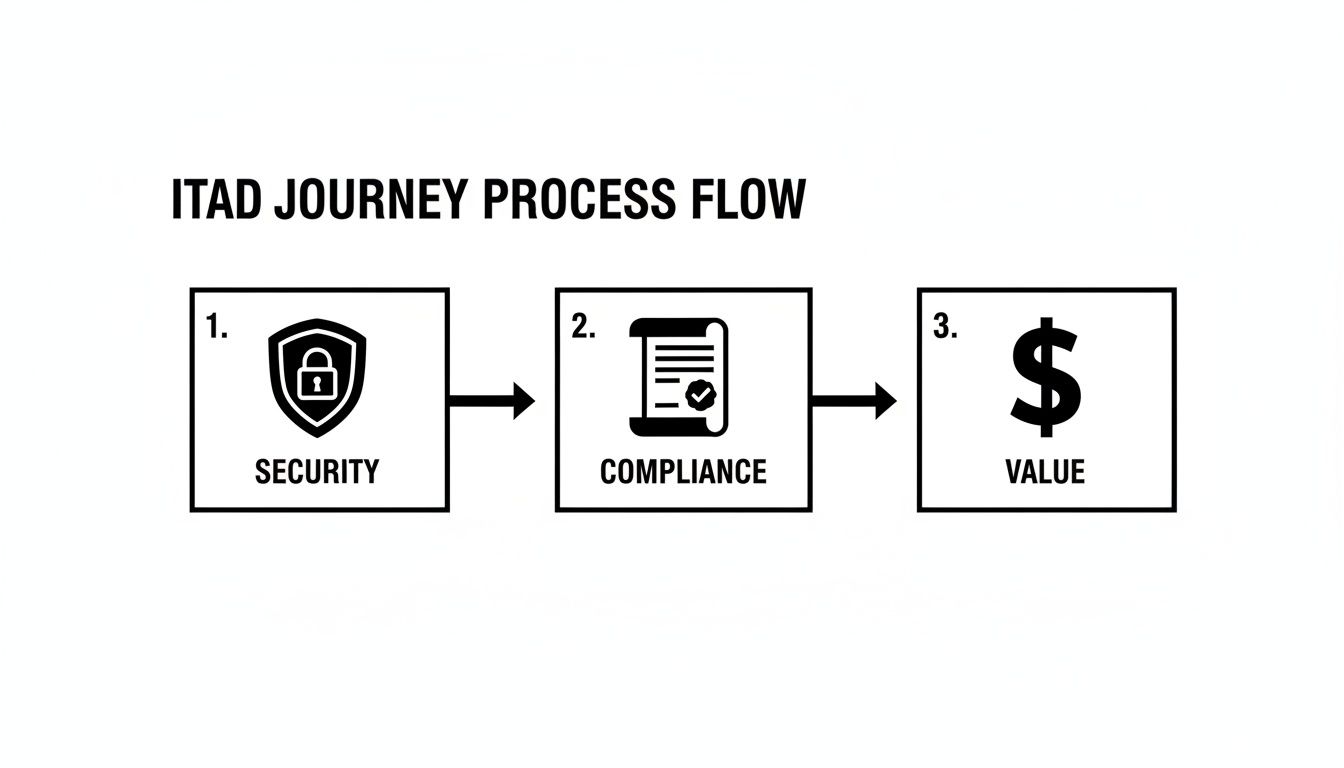
As the flow shows, each stage is tightly interconnected, ensuring a secure and compliant process from start to finish. To see how this fits into the bigger picture, you might want to look into the principles of IT Asset Management (ITAM). This broader discipline provides the context for why a professional ITAD program is so essential for corporate governance.
Ultimately, the journey begins with your decision to partner with a certified expert who can navigate the complexities for you, turning a logistical challenge into a strategic win.
Securing Your Assets from Your Door to Ours
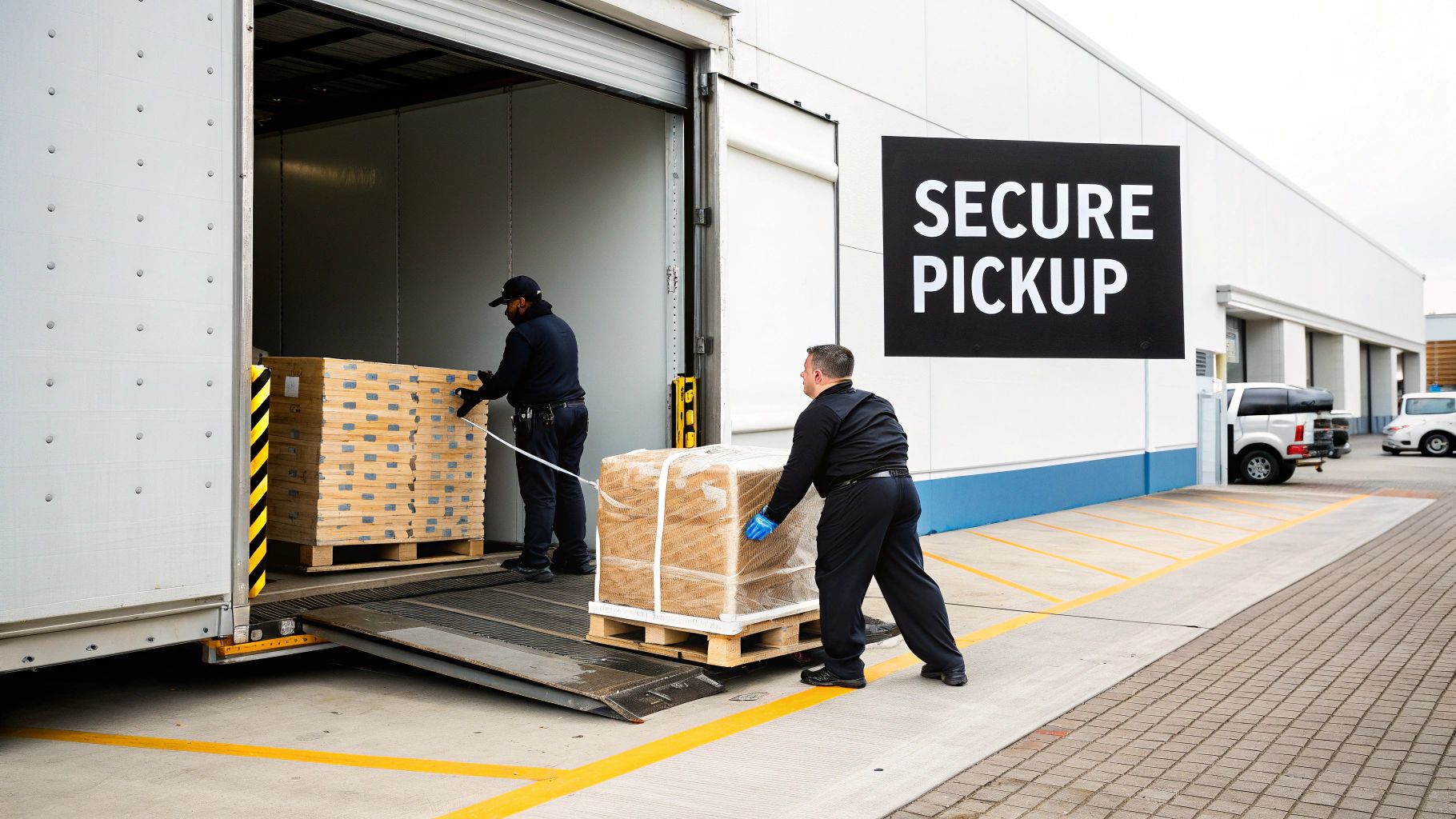
The journey of your retired electronics starts the moment they leave your sight, making this first step absolutely critical for data security. This isn't just about moving boxes from point A to point B; it's a carefully managed logistics operation designed to create an unbreakable chain of custody. A professional ITAD provider like Beyond Surplus ensures that from your business's door to our secure facility, every single asset is tracked and accounted for. This eliminates the huge risks that come with using non-specialized movers or general freight companies.
Think of it as the foundation for corporate data security and regulatory peace of mind. Without a documented, secure handoff, your organization is wide open to data breaches, lost assets, and compliance headaches before the recycling process even truly begins.
Establishing an Auditable Chain of Custody
The chain of custody isn’t just a buzzword; it’s a physical, documented paper trail that follows every piece of equipment. This process kicks off at your location with several key security measures designed to protect your assets while they're on the move.
Here are the key parts of a secure pickup:
- Serialized Asset Tagging: Before anything is loaded, each device—whether it's a server, laptop, or hard drive—is individually tagged and scanned. This creates an initial inventory list that we check meticulously upon arrival, guaranteeing nothing goes missing.
- Secure, Sealed Transportation: Your assets are loaded into locked, sealed vehicles. These seals have unique numbers that are documented. They can only be broken by authorized staff at our facility, preventing anyone from tampering with the shipment in transit.
- GPS-Tracked Logistics: Our trucks and those of our transportation partners are equipped with GPS tracking. This gives us real-time visibility into the location of your assets, adding a powerful layer of security and accountability.
This detailed approach is a world away from the high-stakes gamble of using a standard moving company. Generic movers simply don't have the protocols for asset tracking or data security. To them, your sensitive IT equipment is just another box on the truck.
Using an unvetted transportation service for IT assets is like sending your company's financial records through the mail in an unsealed envelope. The risk of loss or theft is unacceptably high and entirely avoidable with a professional ITAD partner.
The Importance of a Secure Receiving Facility
The secure transit process concludes when the truck arrives at a certified ITAD facility. This is no ordinary warehouse. Our receiving docks are access-controlled, monitored by 24/7 video surveillance, and operated by background-checked security personnel.
When the truck pulls in, the documented seal is inspected and then broken by authorized staff. The entire shipment is then moved into a secure, segregated holding area. It’s here that we pull out the initial inventory list created at your site and carefully reconcile it against the items we’ve received. Every serial number is checked off, confirming that the chain of custody has been maintained without a single gap.
This rigorous receiving process is the final handshake, officially confirming that your assets have been safely transferred. At this point, the liability shifts from your organization to ours, and we're ready to move on to the next critical stage: secure data destruction and asset processing.
Triage Sorting and Sanitizing Your Data
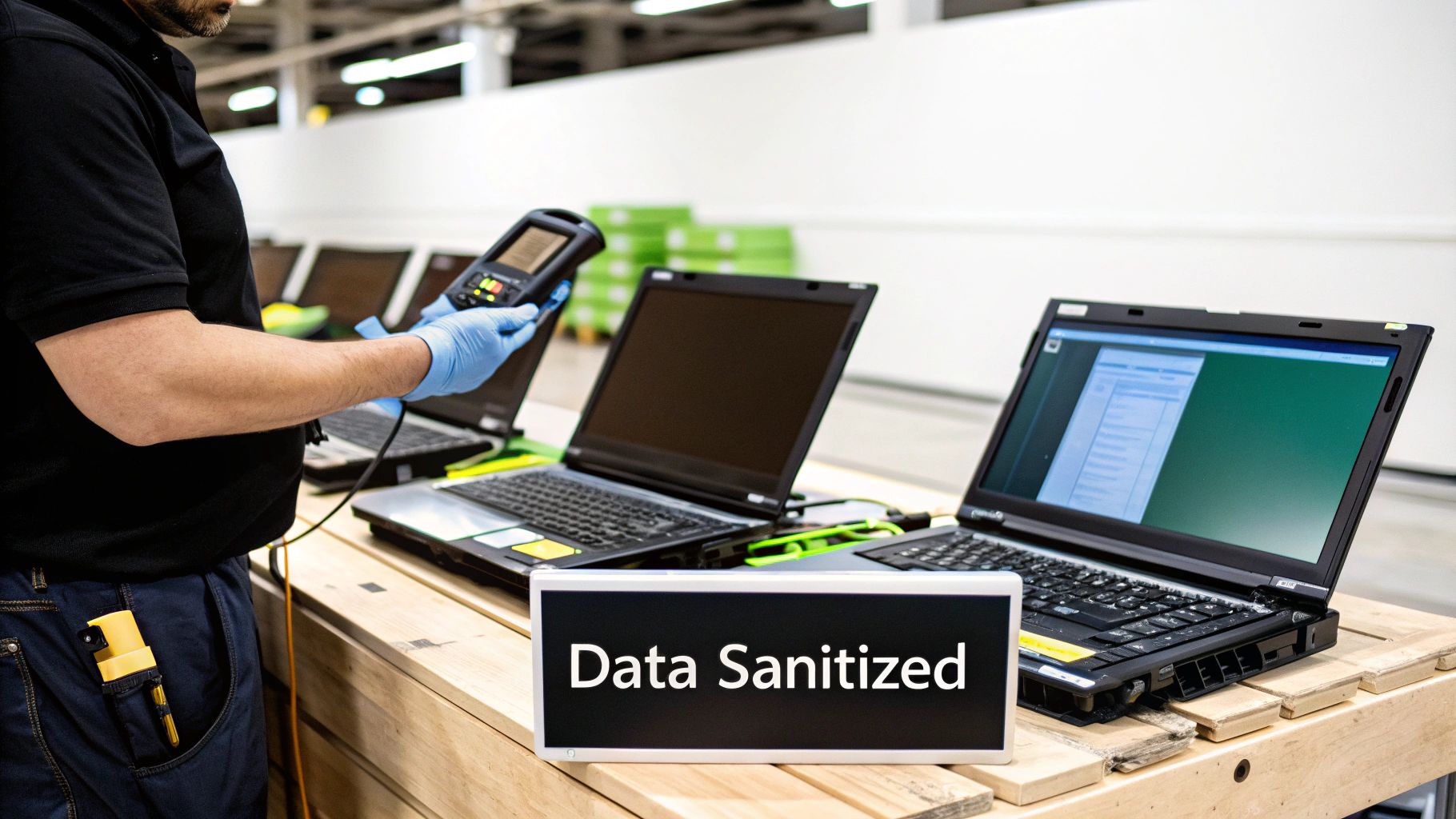
Once your old electronics arrive at our secure facility, they don't just sit on a pallet. The first thing we do is begin a process called triage. Think of it like an emergency room for IT gear—our technicians immediately get to work, carefully inventorying, testing, and sorting every single piece.
This hands-on evaluation is critical. It’s where we figure out the best path forward for each device. Is it a good candidate for refurbishment and resale? Can its components be harvested for parts? Or is it at the end of its life, destined for responsible material recycling? This initial assessment creates a clear roadmap, ensuring we can recover the maximum value for your business while sticking to strict environmental and security protocols.
The Unbreakable Rule Data Destruction Comes First
Before we even think about refurbishment or recycling, we tackle the most important step of all: complete and irreversible data destruction. In the commercial ITAD world, protecting your sensitive information is non-negotiable. A data breach can cost a company millions, which is why we handle this part of the process with extreme seriousness.
We use two primary methods to guarantee your data is gone for good: data sanitization and physical destruction. The right choice depends on the device's condition and your company’s specific security needs.
Software-Based Data Sanitization
For hard drives and other storage devices that are still functional and slated for potential reuse, we use a sophisticated software-based wiping process. This isn't the same as dragging files to the trash bin or formatting a drive. We use specialized software to overwrite the entire drive with random binary data, sometimes multiple times.
This method follows the tough guidelines of the NIST 800-88 standard, ensuring data is forensically unrecoverable. It effectively "sanitizes" the drive, preserving the hardware's usability while giving your business total peace of mind. If you want to dive deeper, you can learn more about what data sanitization is and how it protects your business.
A simple "delete" command on a computer just removes the signpost pointing to a file, leaving the actual data right where it was, ready to be recovered. Professional data sanitization is more like shredding a document into confetti and then setting the confetti on fire—that information is never coming back.
The Finality of Physical Destruction
Sometimes, a hard drive is too old, broken, or contains information so sensitive that a company’s policy demands the highest level of security. In these cases, physical destruction is the only answer. It’s brute-force, unambiguous, and leaves zero chance of data survival.
The process often involves:
- Degaussing: For high-security projects, we start by degaussing. This uses an incredibly powerful magnetic field to instantly wipe all data from magnetic media like hard drives and tapes.
- Shredding: Next, the storage device is fed into an industrial shredder. These machines are beasts, grinding drives into small, unrecognizable chunks of metal and plastic. Data recovery is physically impossible.
For businesses needing to dispose of retired IT assets, understanding the differences between these data destruction methods is key to ensuring compliance and security.
Comparing Data Destruction Methods for Business IT Assets
| Method | Process Description | Security Level (NIST 800-88) | Best For | Verification |
|---|---|---|---|---|
| Software Sanitization | Uses specialized software to overwrite every sector of a drive with random data, making original data unrecoverable. | Clear, Purge | Functional devices intended for reuse or resale. | Software-generated report confirming successful overwrite on each drive serial number. |
| Degaussing | Exposes magnetic storage media (HDDs, tapes) to a powerful magnetic field, erasing all data instantly. | Purge | High-security magnetic media that will be destroyed anyway; renders the drive inoperable. | Degausser logs and physical inspection for markings confirming the process. |
| Physical Shredding | The drive is physically ground into small fragments by an industrial shredder. | Destroy | Non-functional, damaged, or obsolete drives; situations requiring absolute, visible proof of destruction. | Certificate of Destruction detailing serial numbers; visual confirmation of shredded material. |
By choosing the right method—or a combination of them—we provide an auditable and foolproof way to destroy your data. This ensures your company is protected from potential breaches and stays fully compliant with regulations like HIPAA, FACTA, and the FTC Disposal Rule. Only when this stage is complete can the assets safely move on to the next phase of their journey.
The Art of Manual and Mechanical Dismantling
Once we've securely wiped all the data, electronics that can't be refurbished or reused move on to the demanufacturing stage. This isn't just a junk pile; it's a highly organized process where our technicians break down old equipment to separate valuable commodities from potentially hazardous materials. It’s a smart combination of skilled handiwork and powerful machinery, all working to turn yesterday’s IT assets into clean, raw materials for tomorrow’s products.
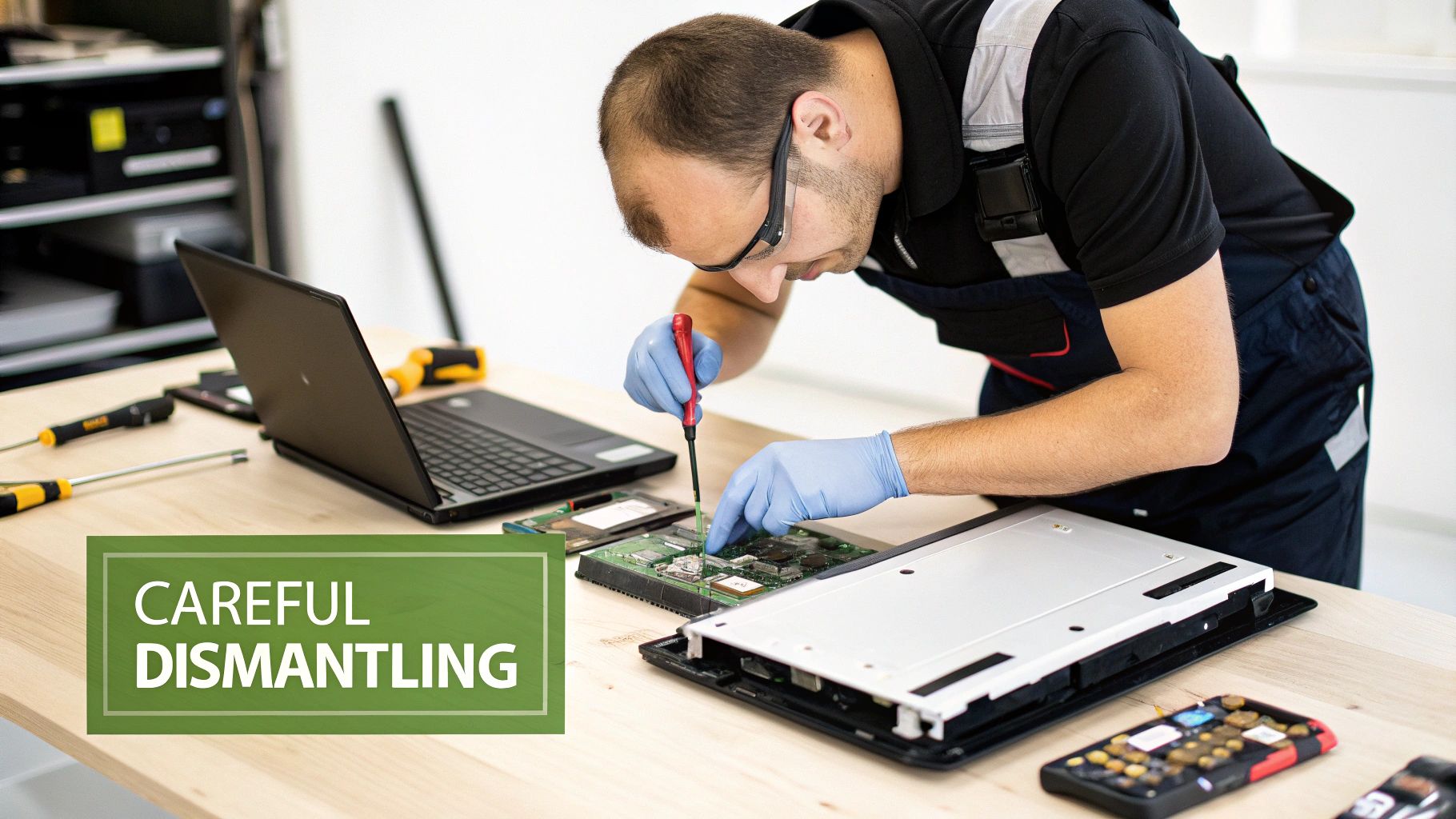
The first stop is always manual dismantling. In our specialized deconstruction areas, trained technicians take apart every device by hand. You can picture it as a reverse assembly line. This hands-on step is absolutely essential for safety and environmental compliance because it lets us carefully pull out specific hazardous parts that machines would just shred.
Isolating Hazardous Materials
During this manual stage, our technicians are like surgeons, zeroing in on specific components that could cause environmental trouble if not handled properly. This critical sorting ensures that harmful substances are pulled out of the main recycling stream and sent to our specialized downstream partners for correct treatment.
Here are the key things we remove by hand:
- Batteries: Whether it's lithium-ion, NiCad, or another type, batteries are fire risks and contain heavy metals. We carefully remove them for specialized recycling.
- Mercury-Containing Components: Old LCD screens and monitors have fluorescent lamps inside that contain a small amount of mercury, which we safely extract.
- Leaded Glass: Those big, heavy CRT monitors have leaded glass that has to be managed separately to prevent any lead contamination.
- Ink and Toner Cartridges: We pull these out for either remanufacturing or their own unique recycling process, keeping plastics and leftover chemicals out of the landfill.
This careful, by-hand separation is truly one of the pillars of responsible e-waste recycling. To get a better feel for why this matters so much, you can check out the basics of electronics recycling explained in our other guide.
Scaling Up with Mechanical Separation
After the hazardous materials and some high-value items like circuit boards are out, we're left with the shells and frames—mostly plastics and metals. Now they’re ready for the big machinery. This is where automation takes over, efficiently breaking down and sorting huge volumes of material.
The manual demanufacturing process is the safeguard that enables the powerful efficiency of mechanical shredding. By removing the hazardous elements first, we ensure the downstream process is both safe and yields the highest quality of clean, separated materials.
The material gets fed into massive industrial shredders that use powerful blades to chop everything into small, consistent pieces. This mix of shredded plastic, steel, aluminum, and other metals then heads down a conveyor belt for automated sorting.
First, powerful over-band magnets snatch all the ferrous metals (like steel) out of the mix. Next up, eddy current separators create a magnetic field that literally repels non-ferrous metals like aluminum and copper, kicking them into their own collection bin. Finally, advanced optical sorters use infrared cameras and jets of air to identify and blast different types of plastics into separate streams, ensuring we end up with clean, high-grade materials ready for the final step.
Recovering Value from Raw Materials
After all the careful manual sorting and mechanical shredding, we’re left with clean, separated streams of raw materials. This is where the real magic happens—the final, fascinating stage in the journey of your old electronics. These materials are now ready to re-enter the global supply chain, not as waste, but as valuable commodities for new manufacturing.
This last step is the circular economy in action. Instead of your company's old IT gear sitting in a landfill, its plastics, base metals, and precious metals are sent off to specialized smelters, refineries, and mills. Here, they're transformed back into their pure forms, ready to build the next wave of products. It’s a tangible demonstration of the economic and environmental value created when businesses choose to recycle their electronics the right way.
From Circuit Boards to Precious Metals
The most valuable materials we recover from e-waste almost always come from printed circuit boards (PCBs). These little boards are packed with precious and semi-precious metals, and getting them out is a highly specialized process. The shredded circuit board material is sent to advanced smelters that know exactly how to handle it.
These facilities use sophisticated pyrometallurgical (heat-based) and hydrometallurgical (chemical-based) techniques to isolate and purify the metals. It’s a complex refining process, but it allows them to extract:
- Gold (Au)
- Silver (Ag)
- Copper (Cu)
- Palladium (Pd)
- Platinum (Pt)
The metals that come out of this process are just as pure as newly mined materials and are sold on the global commodities market. By reclaiming these resources, we dramatically cut down on the environmental damage and staggering costs of mining new ore. To get a sense of the scale of what we're losing when we don't recycle, it's worth seeing how many precious metals are thrown away each year.
Transforming Base Metals and Plastics
While precious metals grab the headlines, recovering base metals and plastics is just as critical for a successful circular economy. After all, these materials make up most of an electronic device’s weight and volume.
The process for these materials is a bit more direct but no less important:
- Steel and Aluminum: These metals, which were separated out by magnets and eddy currents, are compressed into massive, dense bales. They are then shipped directly to steel mills and aluminum foundries to be melted down and reformed into new sheet metal, parts, and components.
- Plastics: The sorted plastics, separated by type (like ABS or polystyrene), are cleaned up, shredded into small pellets, and sold to manufacturers. These pellets can be used to make everything from new computer cases and office furniture to car parts and building materials.
This entire value recovery chain is a testament to how important the e-waste industry has become. The global electronics recycling market is growing fast, reflecting the sheer volume of materials being processed. It was valued at USD 43.2 billion in 2025 and is projected to hit USD 147.9 billion by 2035, with PCs and laptops being a major driver. This growth underscores the massive economic potential locked away in retired IT assets. You can find more insights about the electronics recycling market's growth on factmr.com.
By transforming old equipment into raw materials, certified recycling closes the loop on the product lifecycle. It conserves natural resources, reduces energy consumption, and provides a domestic source of valuable materials, strengthening supply chains.
This final transformation is the ultimate goal of any good ITAD process. It ensures every single part of your retired assets is handled with maximum security, environmental responsibility, and economic intelligence. The journey ends not with waste, but with a new beginning for valuable resources.
Getting Your Proof of Compliance and Security
Once your old IT gear has been physically processed, the job still isn't quite done. For any business, the last—and arguably most important—step is getting the official paperwork that proves you’ve met all your legal and corporate governance duties. Think of this documentation as your shield. It’s the concrete, legal proof that your company's sensitive data was properly destroyed and all equipment was handled in an environmentally sound way.
This paperwork becomes your auditable record, protecting your organization from the hefty legal and financial consequences of non-compliance. It's the final piece of the puzzle that officially closes the loop on the IT asset disposition process and transfers liability from your shoulders to your certified recycling partner.
The Power of Certified Documentation
Two key documents complete the chain of custody and give you verifiable proof of responsible disposal: the Certificate of Data Destruction and the Certificate of Recycling. Any reputable ITAD partner will issue these detailed reports for every single batch of assets they handle, giving your business the evidence you need for internal audits or regulatory check-ins.
So, what should you look for in these certificates?
- A Unique Serialized Number: This is essential for tracking and verification.
- An Itemized List of Assets: It should detail every single device by its make, model, and serial number.
- Date and Method of Destruction: The certificate needs to specify exactly when and how the data was destroyed (e.g., NIST 800-88 compliant wipe, physical shredding).
- Statement of Compliance: Look for a formal declaration that the entire process followed relevant environmental and data privacy laws like HIPAA, FACTA, and any state-specific regulations.
This isn't just a simple receipt; this level of detail is non-negotiable. To see what makes a document legally sound, you can learn more about the specifics of a Certificate of Destruction.
Why This Paperwork Is Your Legal Safeguard
In today's regulatory climate, just saying you recycled your electronics isn’t enough—you have to be able to prove it. These certificates are your legal defense if an auditor comes knocking or you're ever caught in a data breach investigation. They demonstrate due diligence and show that you entrusted your assets to a vendor with strong industry certifications and compliant processes.
A Certificate of Destruction is more than just a piece of paper; it is a legally binding document that formally confirms the permanent and irreversible destruction of your company's sensitive data, protecting you from future liability.
Beyond the legal protection, this documentation also highlights the positive environmental impact of your decision. Formal e-waste management has a massive upside, helping to avoid primary ore extraction equivalent to 900 million tonnes and preventing 93 million tonnes of CO2-equivalent emissions globally. These emission cuts come from recapturing refrigerants and avoiding the need to mine for new metals, making your compliance efforts a direct win for sustainability. By securing this final proof, you not only protect your business but also validate your commitment to corporate social responsibility.
Answering Your Top E-Waste Questions for Business
When it's time to handle IT asset disposition, we find that most business owners, IT managers, and facility managers have the same core concerns. Getting clear on data security, environmental compliance, and value recovery is what separates a smart business decision from a risky one. Here are straightforward answers to the questions we hear most often.
How Can I Be Certain My Data Is Destroyed?
This is the big one, and for good reason. Certified ITAD vendors provide verifiable proof of data destruction using methods that meet strict standards like NIST 800-88. This isn't just a simple file deletion; we're talking about multi-pass data wiping, degaussing (which uses powerful magnets to scramble data), and the physical shredding of hard drives and other storage media into tiny pieces.
You should always walk away with a serialized Certificate of Data Destruction. This document lists every single drive by its unique serial number, creating a legal, auditable record that your data has been permanently eliminated. It’s your tangible proof of compliance.
What Happens to Hazardous Materials?
Electronics are full of stuff you don't want in a landfill—mercury in LCD screens, lead in old CRT monitors, and cadmium in batteries. Professional e-waste recyclers are set up to manage these materials safely.
During the manual dismantling phase, our technicians carefully remove these components. From there, they are sent to specialized, vetted downstream partners who handle them according to strict environmental regulations. This prevents those toxic materials from ever contaminating soil or water.
Is It Possible to Recover Value from Old IT Equipment?
Absolutely. Many businesses can get a return on their retired IT assets through a process known as IT Asset Value Recovery (ITAVR). It's a simple idea: if your gear isn't ancient and still works, it has value.
A certified partner will test and assess your equipment for its resale potential. Devices that are still functional can be refurbished, securely wiped, and sold on secondary markets. The best part? The vendor shares a portion of that revenue back with your company.
Why Can't Our Business Just Use a Standard Waste Hauler?
Using your regular waste hauler for electronics is a massive, and often illegal, gamble for any business. They simply don't have the secure chain of custody, the certified data destruction tools, or the environmental know-how required for e-waste. This isn't just a small oversight; it's a huge liability.
Improper disposal can quickly lead to a data breach nightmare, steep fines for breaking environmental laws, and a major hit to your company's reputation. A specialized electronics recycler is your only real defense against these risks. The problem is only getting bigger; e-waste is the fastest-growing waste stream on the planet. In 2022 alone, the world generated 62 million tonnes of it, but the documented global collection and recycling rate was a shockingly low 22.3%. You can learn more about the global scope of e-waste on 4thbin.com.
Choosing a certified ITAD provider isn't an expense; it's an investment in risk management. It ensures your company is protected from the legal, financial, and reputational fallout of a data breach or environmental violation.
Contact Beyond Surplus for certified electronics recycling and secure IT asset disposal. https://www.beyondsurplus.com


