
Atlanta’s growth story in 2026 starts with concentration, not just scale. In the latest Metro Atlanta reporting period, education and health services added 23,500 jobs, with healthcare and social assistance accounting for 94% of that growth. That’s the clearest signal in Atlanta’s fastest growing industries in 2026. One sector isn’t merely expanding. It’s reshaping how large employers buy, deploy, retire, and document technology.
For IT directors, data center operators, healthcare administrators, and procurement teams, that matters because industry growth changes end-of-life pressure. More hiring means more devices. More facilities mean more racks, drives, monitors, clinical systems, and network gear. More regulation means tighter chain-of-custody controls and stronger destruction records.
Atlanta also sits inside a broader infrastructure story. Nationally, hyperscale data center services rank among the fastest-growing industries for 2026, with a projected 28.9% revenue growth rate and a $271.6 billion market size. In practical terms, Atlanta businesses aren’t just watching local demand rise. They’re operating in a market where AI infrastructure, healthcare expansion, and compliance-heavy sectors are all pulling harder on IT asset disposition.
That’s why the smartest reading of Atlanta’s fastest growing industries in 2026 isn’t just “where jobs are.” It’s where secure disposal, electronics recycling, IT asset recovery, and audit-ready documentation become operational requirements. If your team manages refresh cycles, branch closures, clinic upgrades, or server retirement, this list points directly to where demand is tightening. For readers tracking adjacent workforce movement, truck driving schools in Atlanta Georgia also reflect the city’s broader logistics and infrastructure base.
1. Data Center Decommissioning and IT Asset Recovery
Atlanta’s digital infrastructure growth creates a less visible secondary market. Hardware eventually exits service, and when it does, companies need controlled de-installation rather than basic hauling. That’s why data center decommissioning and IT asset recovery belong near the top of any practical industry ranking for business operators in Atlanta.
The pressure is strongest in cloud, fintech, healthcare, and higher education. A regional bank consolidating server rooms, a university replacing aging storage arrays, or a software company relocating offices all face the same challenge. They need extraction, serialization, data destruction, transport, and downstream disposition handled as one governed process.
What separates decommissioning from ordinary recycling
A true decommissioning project starts before pickup. Teams document server serial numbers, map rack locations, flag drives that require shredding, and coordinate cutover dates with procurement and deployment schedules. That’s where many projects succeed or fail.
Operational rule: If the retirement plan isn’t tied to the replacement plan, logistics costs rise and accountability gets blurry.
For Atlanta organizations watching major IT investments coming to Atlanta in 2026, the implication is straightforward. New infrastructure spending creates future retirement volume. The larger the deployment cycle, the more valuable early decommissioning planning becomes.
- Document assets early: Record model numbers, drive counts, and configurations before the first technician touches a rack.
- Match destruction method to risk: Sensitive environments often separate drives for physical shredding while other devices may qualify for verified wiping.
- Preserve resale value: Functional servers, storage arrays, and networking gear lose value when removal is rushed or incomplete.
A healthcare network decommissioning imaging-adjacent IT, for example, can’t treat retired hardware like office surplus. The chain of custody has to be as deliberate as the installation plan.
2. Secure IT Equipment Disposal and Data Destruction Services
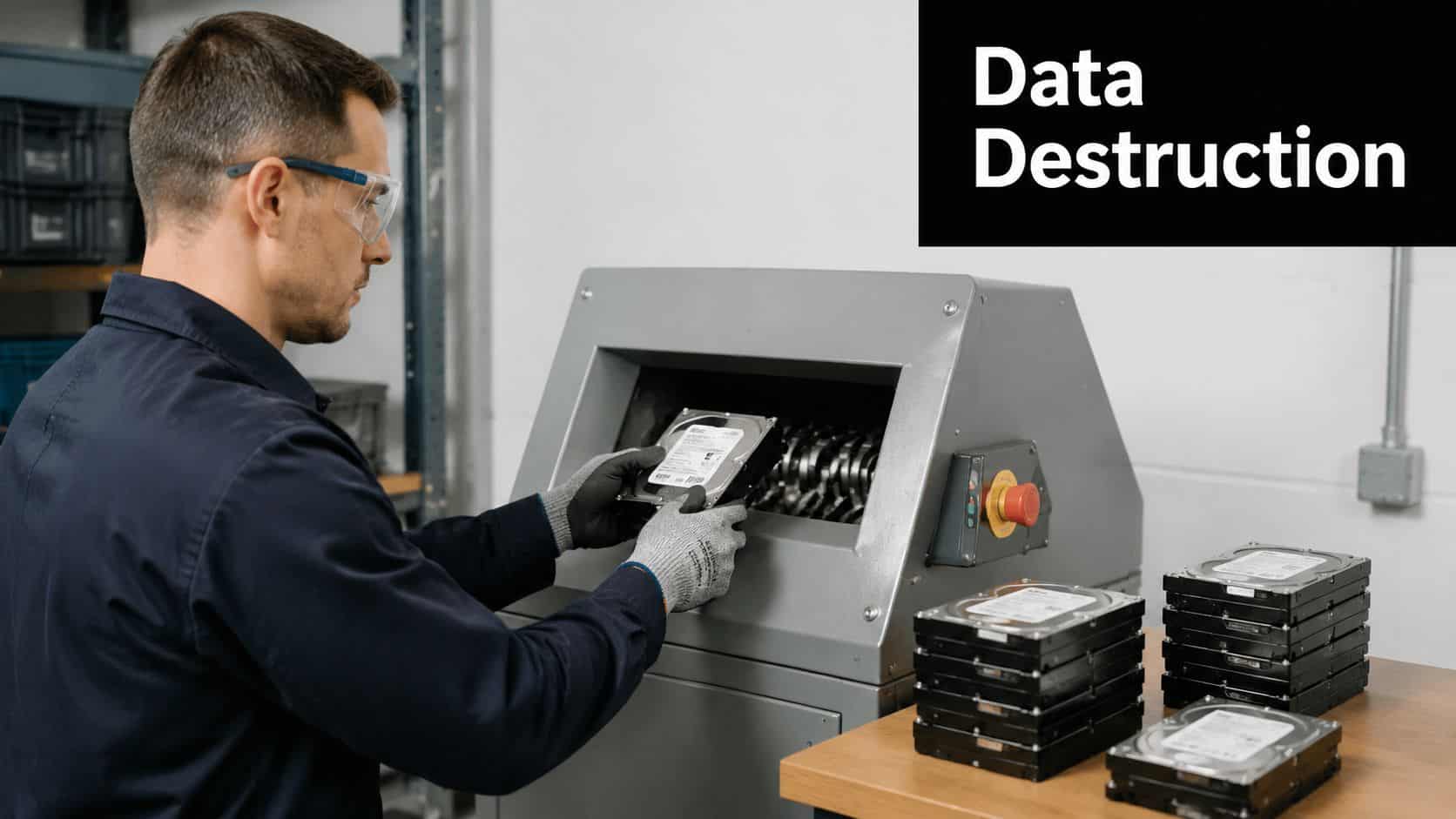
Secure IT equipment disposal has moved out of the facilities basement and into formal risk management. That change is especially clear in Atlanta because the city serves healthcare systems, financial firms, schools, and government-linked organizations that hold regulated data across large device fleets.
The growth driver here isn’t only hardware turnover. It’s liability. A failed desktop, branch-office laptop, or retired SAN shelf can carry legal exposure long after its accounting value reaches zero.
Why destruction standards now shape vendor selection
The verified data on hyperscale infrastructure points to a compliance-heavy environment for end-of-life hardware. That national expansion is tied to rigorous chain-of-custody expectations and FTC Disposal Rule adherence for decommissioned drives, making certified shredding and data wiping standard for enterprise infrastructure teams.
That same logic now applies well beyond hyperscale operators. A medical practice retiring EHR workstations, a law firm disposing of document review laptops, and an insurer replacing claims systems all need proof, not promises. Beyond Surplus tracks these shifts in secure data destruction trends in Atlanta.
Destroying a drive is only half the job. The other half is producing documentation an auditor can follow months later.
Use a tighter retirement policy if your environment includes PII, payment data, patient information, or internal legal records.
- Separate high-risk media: Flag drives from finance, HR, legal, and clinical systems before pickup.
- Ask for audit-ready records: Certificates should align with internal inventories, not sit as standalone PDFs with no asset references.
- Set recurring schedules: Businesses with steady refresh cycles usually reduce internal storage clutter by using scheduled pickups.
In Atlanta, secure disposal isn’t a niche add-on anymore. It’s part of basic governance.
3. Medical and Laboratory Equipment Disposal and Refurbishment
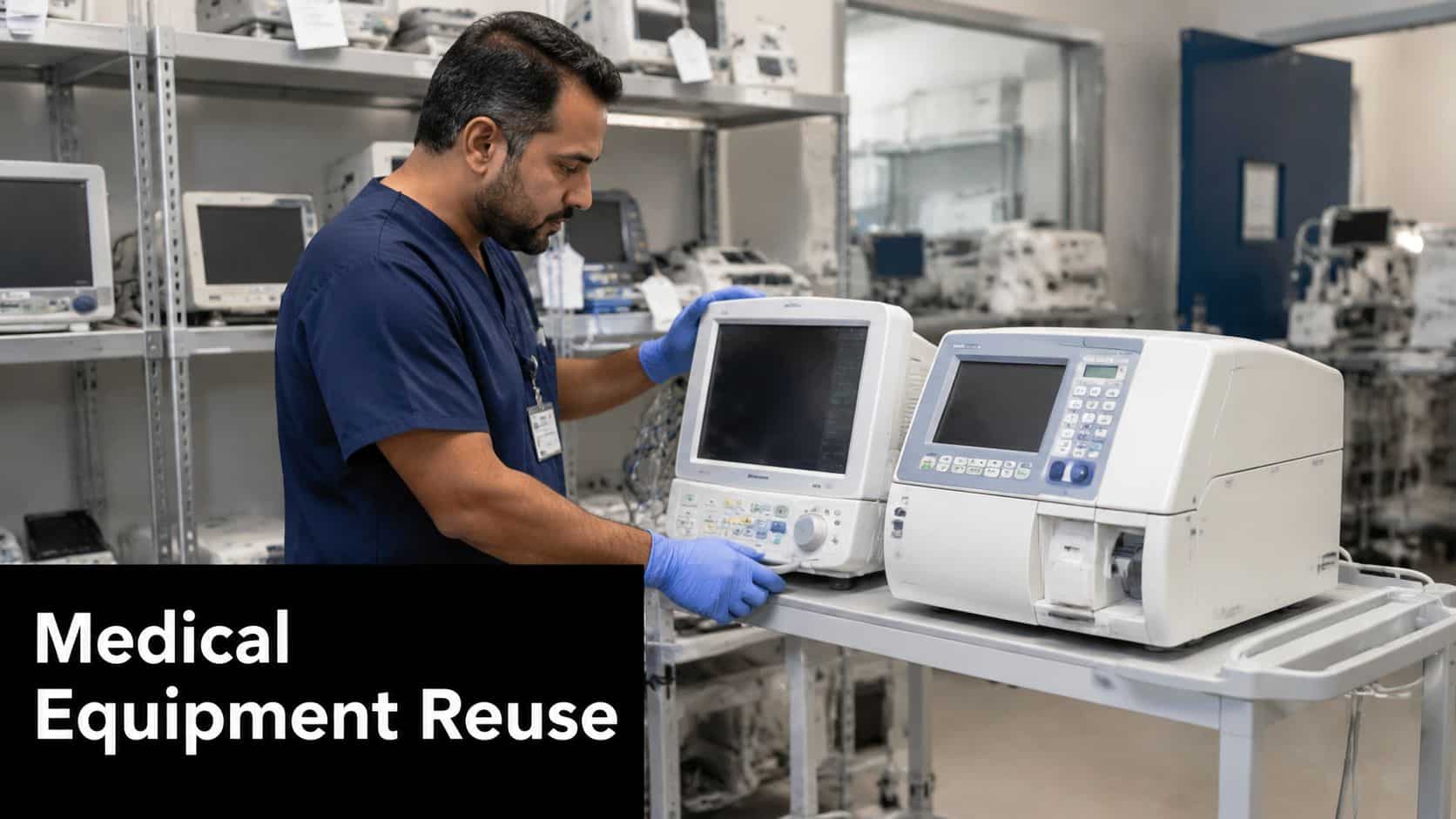
Healthcare leads Atlanta’s employment expansion, and that operational growth flows directly into medical and laboratory equipment retirement. When hospitals add capacity, clinics modernize, and lab networks consolidate, they don’t just buy new systems. They also inherit old monitors, analyzers, carts, and networked devices that need compliant removal.
This category is more complex than general ITAD because many assets sit at the intersection of biomedical engineering, patient privacy, and equipment resale. A retired infusion pump and a retired nurse-station PC don’t move through the same process, even if both contain data or regulated components.
The overlooked challenge in healthcare modernization
Many healthcare leaders focus on acquisition and installation timelines. Disposal gets pushed late, which creates storage issues, incomplete records, and rushed vendor decisions. That’s risky for organizations handling networked diagnostic equipment or lab devices with embedded storage.
For teams planning major clinical upgrades, medical equipment disposal guidance for healthcare assets is most useful when reviewed before replacement orders are finalized.
A few Atlanta scenarios show why this service category is growing fast:
- Hospital refreshes: Cardiac monitors, patient monitoring stations, and mobile workstations leave service in batches.
- Imaging upgrades: Support equipment, connected consoles, and peripheral systems often create more disposal work than expected.
- Lab consolidation: Acquired practices may leave behind analyzers, printers, local servers, and specialty accessories.
Clinical equipment retirement works best when IT, biomed, compliance, and facilities sign off on the same asset list.
Refurbishment also matters. Some devices still hold reuse value if they’ve been maintained, decontaminated, and documented correctly. That changes disposal from a pure cost center into a mixed recovery decision.
4. IT Buyback and Value Recovery Services
A surprising number of Atlanta businesses still treat retired hardware as waste first and financial assets second. That’s backward. In a disciplined ITAD program, buyback sits upstream of recycling because resale potential disappears once handling gets sloppy, parts go missing, or device histories are unclear.
This is especially relevant for mid-market firms and enterprise refresh cycles. A consulting company replacing loaner laptops, a manufacturer rotating engineering workstations, or a financial institution retiring branch desktops may be sitting on meaningful residual value even when equipment is no longer ideal for primary use.
Why valuation belongs in the retirement workflow
Buyback works when finance, IT, and operations plan together. Procurement knows replacement timing. IT knows condition and specs. The ITAD partner knows where secondary demand exists. When those three views align, organizations recover value without compromising data security.
Atlanta companies looking to maximize value with ITAD services in Georgia usually improve outcomes by bundling valuation with secure destruction and logistics, instead of treating each as a separate vendor event.
The best candidates are predictable:
- Business laptops and workstations: Especially when chargers, docks, and configuration details are retained.
- Servers and storage gear: Stronger recovery potential when rails, caddies, bezels, and power supplies remain matched.
- Specialized enterprise devices: Engineering systems, production control hardware, and quality peripherals can hold resale demand.
A company replacing MacBook fleets or high-spec Dell Precision towers, for example, should get valuation before scheduling scrap processing. The same logic applies globally in secondary-device markets, which is why content like buy refurbished iPhones UK tracks buyer interest in professionally renewed hardware.
Buyback doesn’t replace recycling. It makes recycling the final step for what has no further market use.
5. E-Waste Pickup and Logistics Coordination for Enterprise Locations
For distributed businesses, the primary bottleneck in electronics recycling isn’t disposal capacity. It’s coordination. Multi-site healthcare groups, retailers, manufacturers, and school systems often know what needs to leave. They just don’t have a clean process for staging, inventorying, and moving it.
That’s why logistics coordination has become its own growth category inside commercial e-waste management. The Atlanta market is particularly suited to it because many organizations operate across the metro area while also managing regional locations throughout the Southeast.
Where enterprise programs break down
Most breakdowns happen at the facility level. One office pallets monitors correctly. Another mixes drives with printers. A third leaves equipment uncounted in a storage room. By pickup day, nobody trusts the inventory.
The better approach is a repeatable playbook supported by a vendor experienced in business e-waste recycling in Georgia.
- Assign one local contact per site: Facilities or IT should own staging and signoff.
- Create standard staging rules: Separate loose media, whole systems, batteries, and specialty equipment.
- Consolidate pickups when possible: Fewer, better-prepared pickups usually improve control and documentation.
An Atlanta pharmacy network closing select locations, for instance, may need POS terminals, back-office PCs, receipt printers, and networking hardware removed from multiple addresses in one cycle. A manufacturer may need pickups from plant floors, warehouses, and offices under different site contacts. Those aren’t recycling-only problems. They’re logistics problems with compliance consequences.
Well-run pickup programs reduce internal labor, shorten project timelines, and produce cleaner records at the end.
6. Product Destruction and Secure Liquidation Services
Some items shouldn’t be resold, donated, or remarkedeted at all. Product destruction exists for those cases. In Atlanta, demand comes from manufacturers, distributors, retailers, healthcare-adjacent businesses, and technology firms that need verifiable destruction for defective, proprietary, recalled, or brand-sensitive goods.
This category goes beyond hard drives and laptops. Companies may need to destroy prototype devices, cosmetically defective electronics, expired branded accessories, recalled inventory, or proprietary components that could leak into gray markets.
Brand protection is the real differentiator
Organizations usually arrive here after a painful lesson. A recalled unit resurfaces online. A prototype appears in the wrong hands. A defective accessory gets resold under the original brand. Destruction becomes the cheaper option compared with legal cleanup and reputational damage.
Secure liquidation starts with one question. Should this item ever re-enter commerce in any form?
If the answer is no, the process should be explicit. Inventory must be listed, destruction method defined, witness options clarified, and certificates retained. That applies whether the client is destroying telecom accessories, test hardware, point-of-sale devices, or labeled retail goods.
Common Atlanta scenarios include technology companies retiring engineering prototypes, retailers eliminating obsolete inventory with brand markings, and distributors removing damaged electronics from circulation after warehouse incidents. In each case, the client needs proof of destruction that can stand up in a legal, insurance, or internal review context.
The strategic shift here is simple. Product destruction is no longer a last-resort warehouse cleanup service. It’s part of corporate risk control.
7. Compliance and Regulatory Documentation Services for Electronics Recycling
For many organizations, documentation is now the product. Pickup, shredding, wiping, and recycling still matter, but the lasting business value is the paper trail that proves what happened, when it happened, and which assets were involved.
That’s why compliance documentation has become one of the fastest-rising service layers around electronics recycling in Atlanta. The city’s concentration of healthcare, finance, education, and enterprise IT creates a client base that can’t rely on informal receipts or generic “items removed” summaries.
Documentation turns disposal into a defensible process
A complete record usually includes serialized asset lists, chain-of-custody forms, data destruction confirmation, and certificates of recycling. Those documents help organizations answer internal audit questions, insurer requests, privacy reviews, and regulator inquiries without rebuilding the project after the fact.
Many vendors demonstrate clear distinctions in their service. A recycler may remove equipment responsibly yet still provide records too thin for audit use. A stronger ITAD partner builds documentation into the workflow from intake through final disposition.
Use that standard when evaluating providers:
- Match every certificate to inventory: Device model and serial references matter.
- Keep records centrally: Compliance teams shouldn’t chase site managers for old PDFs.
- Write disposal rules into policy: Retirement procedures need the same consistency as onboarding and procurement.
A school district disposing of student devices, a healthcare provider retiring nurse-station hardware, and a government contractor replacing secured systems all need different internal approvals. They share one requirement. Their records must hold up after the equipment is gone.
8. Sustainable Circular Economy and Environmental Stewardship in E-Waste Management
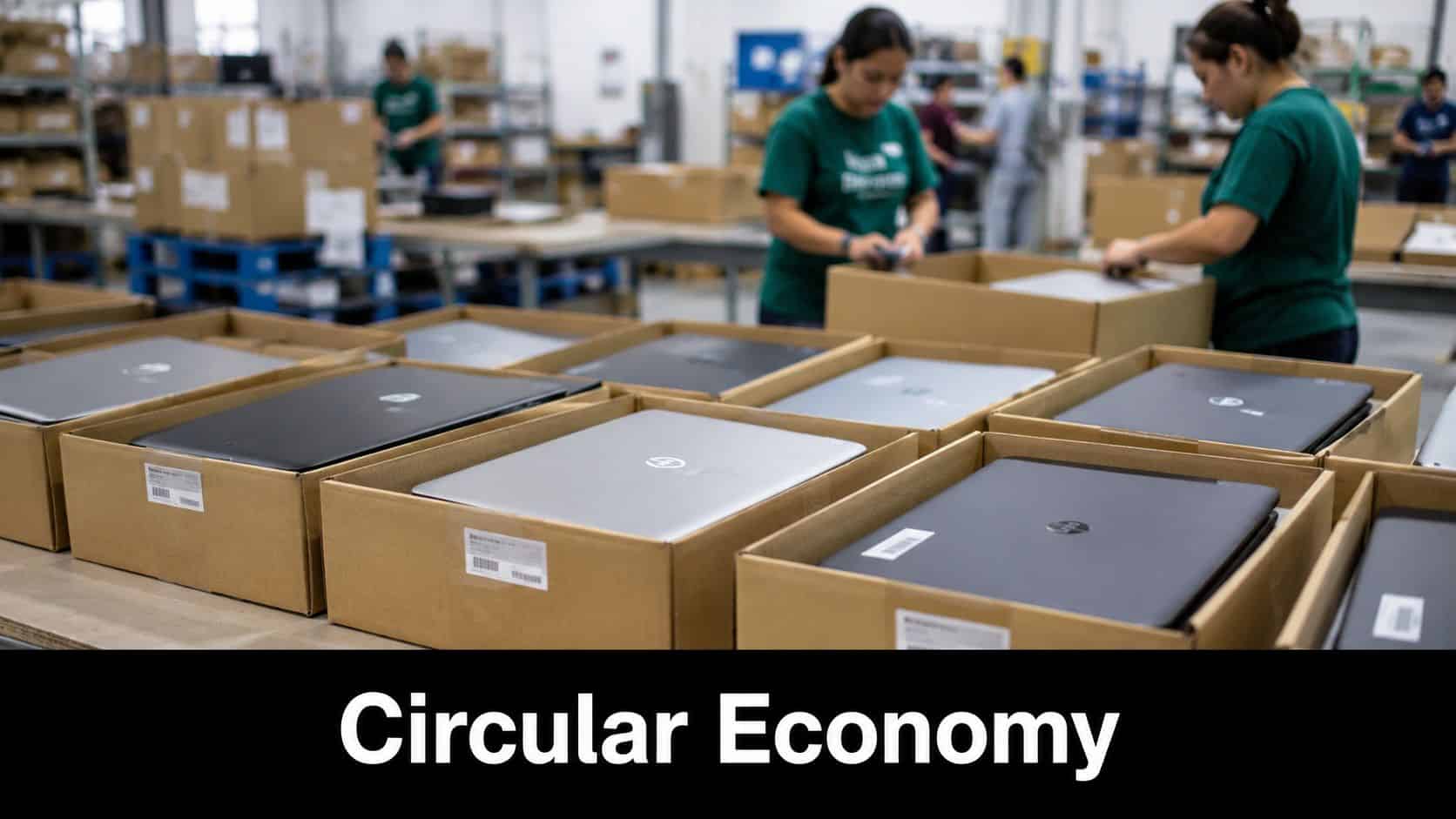
The most mature Atlanta organizations no longer treat e-waste as a narrow disposal issue. They manage it as part of a circular economy strategy that includes reuse, refurbishment, controlled recovery, and transparent downstream processing.
This shift matters because sustainability teams and IT teams often work from different assumptions. IT wants security and speed. Sustainability wants reuse and diversion. A strong commercial recycling program gives both sides a shared operating model.
Circular thinking changes procurement decisions too
When companies believe an asset’s end-of-life path is opaque, they optimize only for purchase price and deployment. When they know equipment can be wiped, refurbished, resold, donated, or responsibly recycled through documented channels, refresh strategy gets smarter.
That’s especially relevant in Atlanta’s large business market. The Metro Atlanta MSA has more than 3.1 million nonfarm jobs, which means millions of workstations, peripherals, mobile devices, and specialized systems eventually enter the retirement pipeline. Even modest improvements in reuse discipline produce material operational benefits at that scale.
A practical circular program often includes these moves:
- Refurbish what still functions: Good business laptops and monitors shouldn’t default to scrap.
- Recover commodities responsibly: Non-repairable equipment should still move through transparent material recovery.
- Report the outcome internally: Sustainability claims need chain-of-custody support from the ITAD side.
Circular economy language can sound abstract. In practice, it means fewer unmanaged stockpiles, cleaner audits, and a better return on every technology refresh.
Atlanta 2026: Comparison of Top 8 E‑Waste & IT Asset Recovery Services
| Service | Implementation Complexity 🔄 | Resource Requirements ⚡ | Expected Outcomes 📊 | Ideal Use Cases 💡 | Key Advantages ⭐ |
|---|---|---|---|---|---|
| Data Center Decommissioning and IT Asset Recovery | High, multi-site coordination, scheduling, regulatory controls | High, heavy-lift logistics, certified technicians, tracking systems | Strong value recovery (15–40%), audit-ready compliance, reduced data-breach risk | Enterprise datacenter shutdowns, consolidations, HQ relocations | Comprehensive lifecycle management, chain-of-custody, ESG support |
| Secure IT Equipment Disposal and Data Destruction Services | Medium, on-site/off-site scheduling, verification workflows | Medium, shredders/erasure tools, certified software, documentation | High data security and compliance, liability transfer, verifiable destruction | Healthcare, finance, legal, PII/regulated data environments | NIST/R2-certified destruction, flexible models, audit trails |
| Medical and Laboratory Equipment Disposal and Refurbishment | High, biohazard handling, FDA/HIPAA protocols, decontamination | High, biomedical training, specialized transport, disposal permits | Significant resale/refurb recovery (20–60%), regulatory compliance | Hospitals, imaging centers, labs, medical device manufacturers | Enables resale/donation, compliance documentation, reduced waste |
| IT Buyback and Value Recovery Services | Low–Medium, valuation, testing, inventory workflows | Medium, assessment teams, resale channels, payment processing | Revenue offset (typically 5–25%), lower refresh net cost | Enterprise refresh cycles, mid-market asset liquidation | Generates funds for CAPEX, simplifies vendor coordination, quick payout |
| E-Waste Pickup and Logistics Coordination for Enterprise Locations | Medium, multi-site routing, staging, scheduling | Medium–High, fleet, tracking, consolidated inventory systems | Operational efficiency, centralized reporting, reduced internal overhead | Retail chains, healthcare networks, multi-branch organizations | Single point of contact, consistent service levels, real-time visibility |
| Product Destruction and Secure Liquidation Services | Medium, method selection, permitting, witnessed processes | Medium, destruction facilities, documentation, environmental controls | Definitive irreversible disposal, removes resale risk, regulatory proof | Recalled goods, defective inventory, counterfeit prevention | Brand protection, audit-ready evidence, regulatory compliance |
| Compliance and Regulatory Documentation Services for Electronics Recycling | Medium, jurisdictional variance, detailed asset tracking | Low–Medium, records systems, legal/compliance expertise | Audit-ready records, reduced legal/environmental liability | Regulated industries (healthcare, finance, government), audits | Simplifies audits, standardized certificates, retention-ready documentation |
| Sustainable Circular Economy and Environmental Stewardship in E-Waste Management | Medium–High, program design, donation/refurb logistics | High, refurbishment centers, material recovery tech, reporting tools | Reduced environmental impact, improved ESG metrics, social impact | Corporations with ESG targets, sustainability programs, donors | Material recovery, brand differentiation, supports UN SDGs |
Putting Insights into Action
Atlanta’s fastest growing industries in 2026 tell a clearer story than a generic “top sectors” list. Healthcare is driving employment growth at a pace that changes equipment turnover patterns across hospitals, clinics, labs, and administrative offices. Hyperscale infrastructure is expanding nationally with direct relevance for Atlanta’s role as a Southeast data hub, and that expansion increases demand for secure decommissioning, certified data destruction, and chain-of-custody discipline. For business leaders, the important insight isn’t just which sectors are hiring. It’s which sectors are generating more regulated hardware at end of life.
That matters because ITAD strategy is often written too late. Teams plan procurement, rollout, migration, and staffing, then address retirement only when old equipment starts filling storage rooms or auditors ask for records. In Atlanta, that reactive model won’t hold up well. Healthcare expansion creates recurring waves of device retirement. Data center growth creates more high-risk media handling. Multi-site organizations need coordinated pickup and documentation, not one-off cleanouts.
Business decision-makers should translate these industry signals into operating rules. Treat decommissioning as part of project planning, not post-project cleanup. Build secure destruction requirements into procurement and asset retirement policies. Ask for serialized records, certificates, and chain-of-custody forms that support audits later. Review whether servers, laptops, monitors, and specialty devices qualify for buyback before they move into scrap channels. If your company manages several locations, standardize staging and pickup procedures so every office follows the same process.
The bigger takeaway is that Atlanta’s growth is producing two parallel opportunities. One is obvious: more business activity in healthcare, infrastructure, and enterprise technology. The second is more strategic: stronger organizations will use IT asset recovery, secure electronics recycling, and documentation-first disposal programs to lower risk while recovering value from equipment they already own.
For IT directors, that means fewer surprises during refresh cycles. For compliance teams, it means cleaner evidence. For procurement leaders, it means more disciplined lifecycle management. And for executives, it means technology retirement becomes a controlled business function instead of an afterthought.
Apply these findings to optimize your 2026 asset disposal strategies. Contact Beyond Surplus for certified electronics recycling and secure IT asset disposal.
Beyond Surplus helps Atlanta organizations turn technology turnover into a controlled, documented process. Contact Beyond Surplus for secure data destruction, electronics recycling, IT asset recovery, product destruction, and data center decommissioning support.


