
If you're retiring a laptop fleet next month, the resale quote isn't the first decision to make. First decide how you'll protect the data, track each asset, and document where equipment goes. That sequence matters whether you're clearing an Atlanta office or decommissioning data-center hardware.
Computer Equipment Liquidation Atlanta: Sell and Recycle Surplus IT Assets
Table of Contents
- What Surplus IT Liquidation Really Means in Atlanta
- Choosing Between Resale and Physical Destruction
- Preparing Atlanta Equipment for Pickup or Drop-Off
- On-Site Versus Off-Site Data Destruction
- Qualifying an ITAD Vendor and Scheduling the Pickup
- Compliance, Sustainability, and Downstream Accountability
- Common Mistakes and Your Next Step in Atlanta
What Surplus IT Liquidation Really Means in Atlanta
A Midtown financial firm has 200 laptops to retire. Some are ready for resale, some have damaged drives, and the accessories are scattered across offices. The IT director needs the equipment out on schedule, but also needs to show what happened to every data-bearing device. That's not just a pickup. It's a controlled asset disposition job.
Liquidation is the process of assessing surplus equipment and recovering value from items suitable for resale. Recycling routes equipment or components that can't be reused to material recovery. Disposal is the broader end-of-life decision, including resale, donation, recycling, or destruction. Those terms aren't interchangeable: each describes a different outcome, and each should be supported by records.
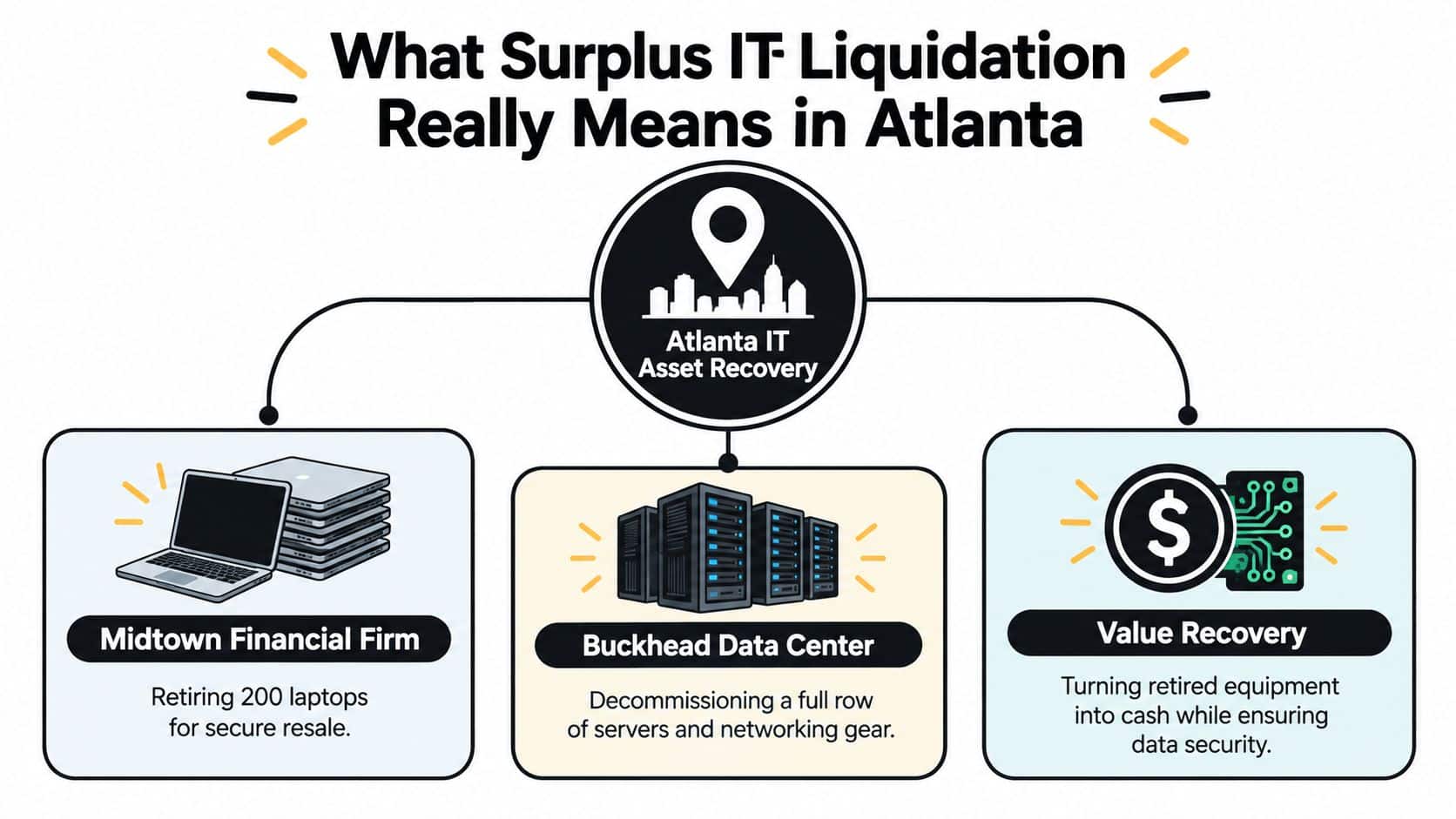
The scale of the waste stream makes responsible recovery more than a housekeeping issue. The world generated 62 billion kilograms of e-waste in 2022, and only 22.3% was documented as formally collected and recycled in an environmentally sound manner. The Global E-waste Monitor projects that generation could reach 82 million tonnes by 2030 (Global E-waste Monitor). For a business, the practical lesson is to sort equipment for reuse, component recovery, and responsible recycling rather than treating every retired device as trash.
One workflow, from inventory to outcome
Start with an inventory and a decision for each asset. Track its serial number, condition, storage media, data-security treatment, and final disposition. Keep custody records from the time equipment leaves your site through processing. That record should connect the item or controlled lot to its final outcome, not just confirm that a truck arrived.
For teams comparing how surplus stock can be cleared, Ruit's guide to liquidación de stock offers useful context on liquidation as a route for managing excess inventory. In IT, though, the sale is only one part of the job. Data controls and evidence have to travel with the asset.
Practical rule: Don't sign off on a pickup plan until you know how data-bearing equipment will be handled and what records you'll receive afterward.
Choosing Between Resale and Physical Destruction
The resale-versus-destruction decision should follow the data risk, not the highest offer. The FTC Disposal Rule treats the sale, donation, or transfer of computer equipment containing consumer information as a form of disposal. Transferring a device doesn't remove the original holder's responsibility to protect that information (FTC guidance on disposing of consumer-report information).
The FTC's standard is to take reasonable measures so information derived from consumer reports can't be read or reconstructed. Apply that principle to each asset, then select a method and retain evidence that fits the device's condition and intended outcome.
| Asset type | Recommended method | Typical recovery | Required evidence |
|---|---|---|---|
| Working laptop with a functioning drive | Sanitize using an approved method, verify the result, then assess for resale | Resale may be appropriate if condition and demand support it | Serial-linked sanitization and verification record, plus disposition record |
| Encrypted SSD with usable hardware | Consider cryptographic erase when the encryption and key-management conditions support it; verify and document the process | Resale may remain possible after appropriate data controls | Serial, method, verification outcome, and resale or disposition record |
| Failed or non-rotating drive | Quarantine and use physical destruction when reliable sanitization isn't possible | Usually limited to parts or recycling, depending on the device | Serial or controlled-lot record, destruction certificate, and exception note |
| Legacy equipment with sensitive regulated data | Choose a method that meets the organization's confidentiality requirements; destroy media if reuse can't be defended | Recovery comes second to protecting the data | Sanitization or destruction evidence tied to the asset and custody record |
The FTC doesn't require one universal destruction technology for every device. The decision should account for information sensitivity and whether the chosen method can make the information unreadable and unreconstructable. For a working laptop, a verified sanitization path can preserve resale options. A failed drive is different: a wipe log can't establish that inaccessible media was cleared.
For a closer look at the trade-offs between selling equipment and sending it to recycling, compare the computer buyback and recycling options.
A high bid can be the wrong bid if the vendor can't explain custody, sanitization, exceptions, and final disposition. Price the whole job, including inventory, security controls, transport, and documentation, not just the equipment.
Preparing Atlanta Equipment for Pickup or Drop-Off
A clean handoff starts with a usable asset list. Capture serial numbers where available, model, quantity, condition, and whether the device contains storage media. Flag missing or unreadable serials instead of leaving them off the inventory. If your list doesn't reconcile with the equipment on the dock, you'll have a documentation problem before processing even starts.
Separate drives that can't be reliably sanitized. Mark them clearly, store them securely, and make sure the pickup team knows they're exceptions requiring a different disposition. Don't leave failed drives inside laptops that have been counted as ordinary resale units.
Make the load easy to reconcile
Accessories affect both handling and the potential value of reusable equipment. Bag and label chargers, docks, keyboards, and other matched accessories by asset or controlled lot. Keep equipment grouped by type and condition so a receiving team can compare the physical load against your inventory without guessing.
For palletized loads, use stable, labeled pallets and keep serial-bearing devices accessible for reconciliation. At a suite pickup, identify the loading route, elevator or dock requirements, and an on-site contact before the crew arrives. If you're considering drop-off, confirm the arrangement with the provider first. Beyond Surplus identifies its Smyrna/Atlanta facility as a local drop-off option, but commercial teams should coordinate acceptance and handling details before transporting a business load. Its computer recycling preparation guidance can help staff get equipment ready.
Residential mail-in programs and small parcel shipments aren't substitutes for a planned commercial liquidation. A large fleet or server-room load needs inventory control, suitable packaging, and a custody plan from your site to the receiving facility.
Use this handoff checklist the day before pickup:
- Reconcile the list: Match the inventory to equipment staged for removal.
- Isolate exceptions: Secure failed or otherwise non-wipeable storage media.
- Group accessories: Label matched items so reusable systems aren't undervalued.
- Prepare the route: Confirm dock access, staging space, and the site contact.
- Confirm paperwork: Agree on how pickup quantities and custody transfers will be recorded.
On-Site Versus Off-Site Data Destruction
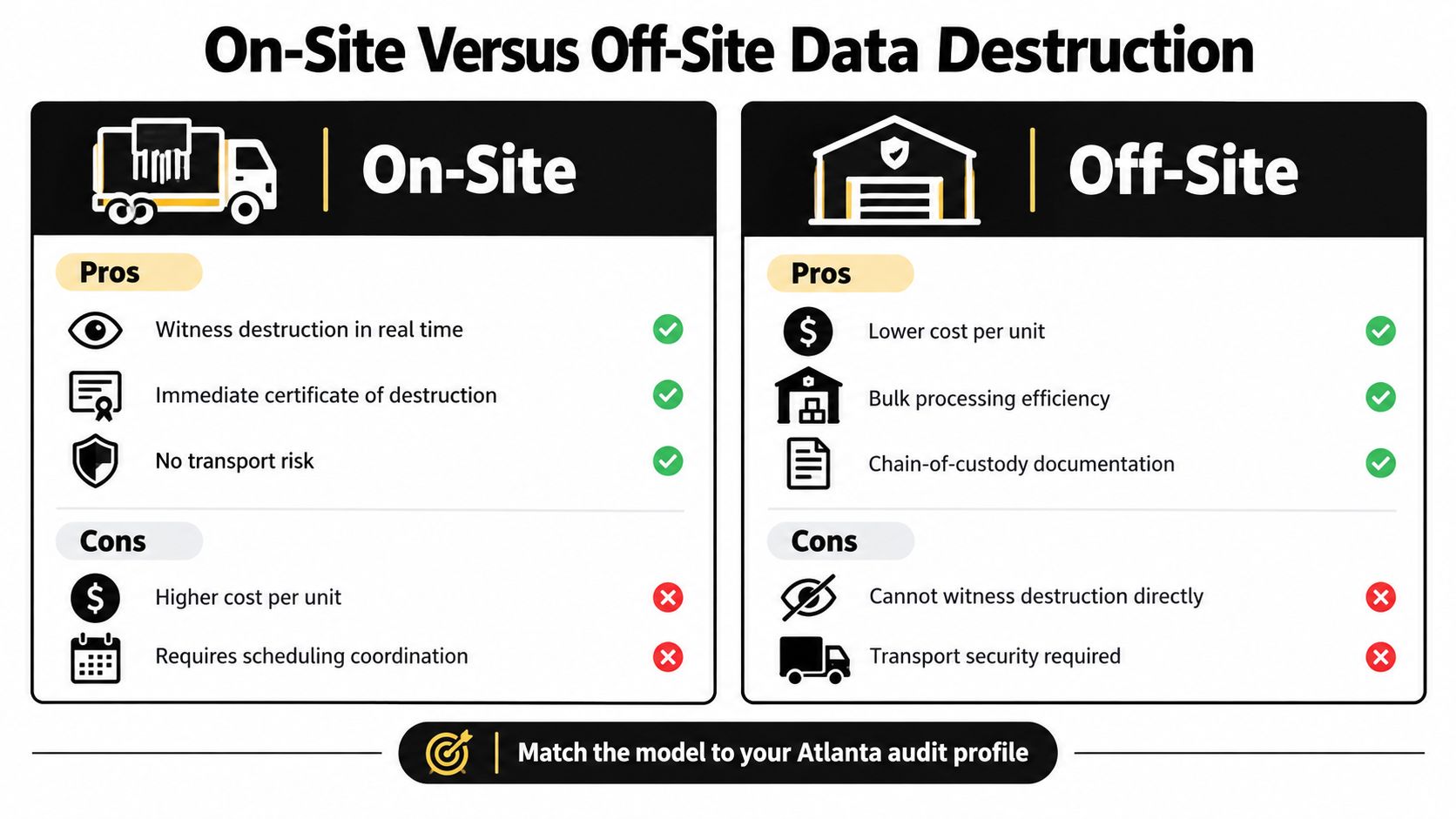
Choose the destruction model based on what your auditors need to see and what your operation can support. On-site destruction brings the equipment or media through a controlled process at your location. Off-site processing moves assets to a secure facility, where the provider performs the agreed sanitization or destruction under documented custody.
NIST defines sanitization as rendering access to target data infeasible for a given level of effort, and recommends verification because successful execution alone doesn't prove that data was removed (NIST Special Publication 800-88 Revision 1). A completed log line is not enough by itself. The record should identify the media, the method, and the verification result. If a drive fails verification or can't be processed reliably, quarantine it and document the alternate disposition.
Match the model to your audit profile
On-site shredding lets an authorized witness observe destruction at your facility. Ask what the certificate will identify, such as the date, service performed, and the assets or controlled lot covered. It can suit teams that need direct observation, but it requires coordination and may be less convenient for mixed loads where some equipment is destined for resale.
Off-site processing can be more practical for larger or mixed inventories, provided the provider documents custody and processing outcomes. You'll need to understand how equipment is secured in transit, who handles it at each stage, and how exceptions are reported. That matters whether your Atlanta organization handles financial, healthcare, or government records.
- On-site strengths: Direct witness option, no off-site transport before destruction, and immediate process visibility.
- On-site trade-offs: Scheduling constraints and less flexibility when equipment needs evaluation for reuse.
- Off-site strengths: Centralized processing and practical handling for mixed or bulk equipment.
- Off-site trade-offs: Requires documented transport controls, custody transfers, and clear processing evidence.
For a separate perspective on computer-disposal considerations in another market, see Nerds 2 You Edmonton's disposal advice. For Georgia-specific service-model considerations, review on-site versus off-site ITAD services.
My rule is straightforward: request on-site destruction when witnessing the process is a business requirement. Choose off-site handling when documented custody, verified processing, and appropriate certificates meet your control requirements.
Qualifying an ITAD Vendor and Scheduling the Pickup
A vendor's pickup promise doesn't tell you whether its controls will stand up to review. Before you schedule, ask how the provider qualifies its own processes, tracks assets, manages exceptions, and oversees downstream handlers. The FTC identifies practical due-diligence steps that include reviewing an independent audit, checking references, requiring recognized certification, and evaluating information-security policies (FTC guidance on the Disposal Rule).
Ask for evidence, not assurances
Request a sample certificate and ask what it covers. Does it identify serial-numbered assets or only a general load? How are failed drives, missing equipment, and items sent to downstream processors recorded? Ask for references from organizations with relevant requirements, such as healthcare or finance peers, and review how the provider documents its security controls.
A vendor scorecard should include:
- Process evidence: Independent audit information, security policies, and any relevant recognized certifications.
- Operational references: Customers whose data-protection and logistics needs resemble yours.
- Downstream visibility: The names and roles of processors, plus how transfers and final outcomes are documented.
- Exception handling: A written process for missing assets, failed sanitization, damaged equipment, and quantity differences.
- Certificate details: The fields and delivery timing for recycling and data-destruction records.

Scheduling works better when you give the operations team a realistic picture of the load: equipment types, approximate quantities, location access, packaging status, and whether media destruction must happen on-site. Beyond Surplus describes its logistics as using its own fleet and transportation partners, with business pickups available across the contiguous United States. A small office may need a straightforward pickup; a multi-site project needs coordinated windows, site contacts, and consistent paperwork.
Set the pickup window around your change-management freeze, not on top of it. Confirm who can release equipment, when custody transfers, when certificates are due, and what happens if the asset count differs from the manifest. Its ITAD vendor qualification questions provide a useful starting point for those conversations.
Put the important terms in writing: when custody and liability transfer, when documentation will arrive, and how the provider will resolve exceptions. If those terms are vague, keep looking.
Compliance, Sustainability, and Downstream Accountability
A sustainable outcome isn't established by a truck leaving your building or a certificate using the word “recycled.” Your closeout file should show what happened to the assets and materials after pickup. Reuse can preserve equipment value and avoid premature material processing, but it only makes sense when data has been handled appropriately and the next destination is documented.
EPA data offers a useful benchmark, though it's historical rather than a current local performance measure. U.S. consumer-electronics recycling was estimated at 41.7% in 2014, while Electronics Challenge participants sent 99.6% of collected material to certified recyclers (EPA electronics generation and recycling data). The contrast reinforces why businesses should ask where material goes and request records, rather than relying on a broad recycling claim.
Build a closeout record an auditor can follow
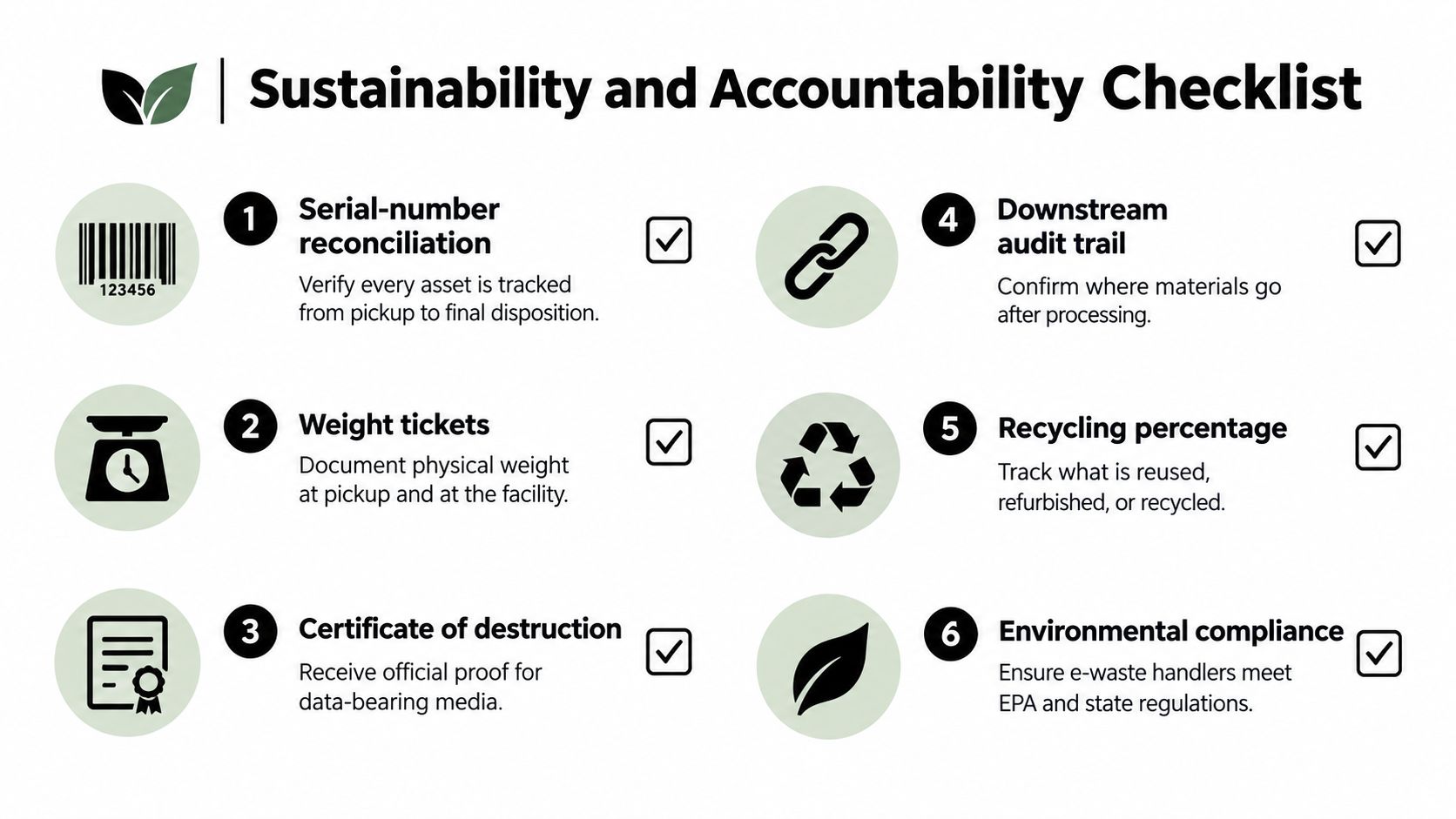
Use a checklist that connects the pickup to the final disposition:
- Serial reconciliation: Match received assets to the inventory and record discrepancies.
- Custody history: Keep the pickup record and each documented transfer.
- Data outcome: Retain the asset-linked sanitization or destruction evidence.
- Material weights: Request weight tickets for equipment sent to recycling.
- Downstream records: Obtain certificates or other documentation showing final processing.
- Special fractions: Keep separate handling records for batteries, CRTs, lamps, and other regulated materials.
If your organization wants to extend a device's useful life before disposition, RepairSeeker's right-to-repair resource offers context on repair as an alternative to immediate replacement. Repair or resale shouldn't bypass data controls, and it doesn't answer the downstream-accountability question by itself.
A certificate is one piece of evidence, not proof that every item in a shipment followed the same path. Keep it alongside the inventory, custody records, processing dates, exception notes, and recycling documentation. For a practical reference on maintaining those records, use this guide to chain-of-custody documentation.
Common Mistakes and Your Next Step in Atlanta
Atlanta IT teams make the same avoidable mistakes when a refresh deadline gets close. They treat liquidation as a commodity pickup, accept a vague certificate, send data-bearing devices directly to shredding without an asset list, or price equipment before anyone checks whether it works. Each shortcut makes the final outcome harder to verify.
Use a better move for each:
- Vague pickup quote: Ask for the service scope, custody process, data treatment, and documentation before comparing bids.
- Generic certificate: Request records that identify assets or controlled lots and explain exceptions.
- Unsorted devices: Separate working equipment, failed media, and recycling candidates before collection.
- Untested inventory: Grade reusable equipment so viable assets aren't undervalued or sent straight to material recovery.
- Unclear downstream route: Ask who handles the equipment after pickup and what evidence confirms the final disposition.
The cheapest pickup isn't necessarily the lowest-risk option. If the provider can't reconcile equipment, explain its data process, and document downstream transfers, the apparent savings come with unanswered questions. Handle the work as one controlled process, from inventory through final records.
For an Atlanta-area business, the next practical step is to confirm whether the load is best suited to pickup or coordinated drop-off, then align the inventory and data plan before equipment leaves your site.
Beyond Surplus provides business IT asset disposition, electronics recycling, secure data destruction, and equipment value recovery, with Atlanta-area drop-off at its Smyrna facility and pickup logistics for organizations. Review the services and contact the team through Beyond Surplus to coordinate your equipment retirement and documentation needs.


