

About 201,200 helmets in the United States, plus approximately 26,800 in Canada, were included in the 2025 recall announced by CPSC for 509 helmets because they could fail to provide sufficient crash protection. For an organization holding affected inventory, that's not a returns problem. It's a controlled-destruction job with a safety consequence if even part of the load goes missing.
Recalled helmet destruction services connect physical disablement with accountable handling. Facility managers need to know what leaves the quarantine area. Procurement needs an agreed scope. Risk teams need evidence that the affected batch was made unusable and its final destination recorded. A refund photograph alone doesn't answer all those questions.
Table of Contents
- What Recalled Helmet Destruction Services Are and Why They Matter
- Destruction Records and Chain of Custody
- How a Recalled Helmet Job Runs
- What Changes Cost and Turnaround
- How to Choose a Destruction Provider
- Frequently Asked Questions About Recalled Helmet Destruction
- Book a Destruction Scope Before Units Move
What Recalled Helmet Destruction Services Are and Why They Matter
A commercial recalled helmet destruction service collects affected helmets from an organization, makes each unit permanently unusable, controls transfers, recovers materials where feasible, and provides destruction documentation matched to the inventory count. The service supports schools, rental fleets, employers, distributors, healthcare organizations, public agencies, and retailer reverse-logistics teams.
The scale warrants formal controls. U.S. PIRG Education Fund's bicycle-helmet recall analysis identified 143,018 U.S. bicycle helmets across 14 recalls from January 1, 2023, through April 30, 2024, involving failures to meet federal safety requirements; eight recalls involved children's or youth helmets.
For a concrete remedy, the CPSC Retrospec Scout recall notice covered approximately 72,000 U.S. helmets, plus 150 in Canada, on January 11, 2024, and required stop-use, strap cutting, initials and date markings, photographic proof, and disposal.
Major recalled-helmet volumes that drive destruction programs
The recall volumes below illustrate the inventory challenge. Where event-specific failure or remedy details aren't established here, the table identifies the document needed rather than guessing.
| Event | Approx. U.S. units | Stated failure | Public remedy pattern |
|---|---|---|---|
| Aggregate, Jan 1 2023 to Apr 30 2024 | 143,018 across 14 recalls | Failed federal safety requirements; 8 recalls involved youth or children's helmets | Physical alteration then disposal, often with photo proof |
| Retrospec Scout, Jan 11 2024 | 72,000, plus 150 in Canada | Coverage, positional stability, labeling | Stop use, cut straps, mark initials and date, photograph, then dispose |
| 509 helmets recalled in 2025 | 201,200, plus about 26,800 in Canada | Insufficient crash protection | Disable then dispose per notice |
| Bell Sports, June 2025 | 31,200 | Confirm against the event-specific CPSC notice | Obtain the event-specific remedy before authorizing work |
| Target Back Trails, 2005 | 494,000 | Confirm against the archived recall notice | Obtain the archived remedy before authorizing work |
PIRG's chronology identifies the Target Back Trails action as the largest bicycle-helmet recall in CPSC history. These events require segregation, controlled transport, documented destruction, and reporting, not just warehouse space.
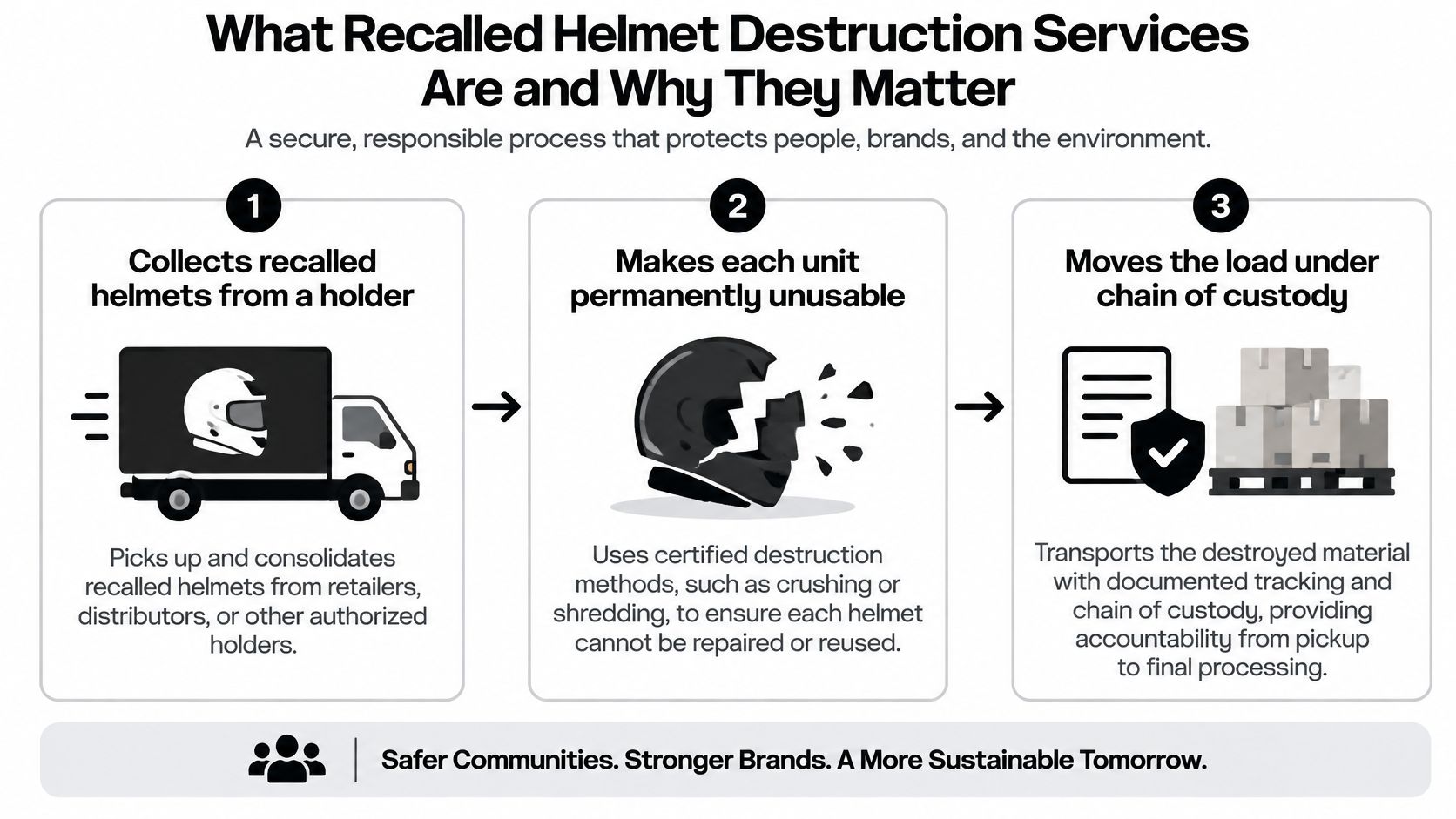
A helmet left in a donation bin or resale pallet can return to use. Our recalled children's product destruction service addresses that disposition problem.
When procurement teams select replacement inventory, Blitz Surf Shop's guide can help them compare helmet sizes and styles. Fit guidance, however, doesn't establish whether existing inventory matches a recall. That requires product-label and batch verification.
Destruction Records and Chain of Custody
A refund photo can prove that a helmet was altered. An organizational file must establish what happened to the whole batch. Say a facility holds several cages of recalled helmets. An image showing cut straps doesn't establish that every cage was processed, that unaffected stock was excluded, or that the remaining shells reached an authorized destination.
The CPSC NQDTPBOR helmet recall notice illustrates the refund-proof approach: disable the product, photograph it, and submit identifying information. Other notices may add markings or different submission requirements. The controlling document is always the actual notice, not a familiar procedure borrowed from another recall.
Build the custody packet as work happens
Don't reconstruct the record from emails after the truck has left. Create documents in the order the inventory changes status:
- Recall match: Save the notice and the manufacturer, model, lot, or serial information establishing which units are affected.
- Written authorization: Identify the owner approving destruction, the permitted method, and the evidence required.
- Intake record: Reconcile the physical count against the quarantine hold and record discrepancies.
- Transfer record: Log container identifiers, seal IDs, carrier and receiving personnel, and handoff times.
- Destruction evidence: Connect before-and-after photographs, the operator, method, date, and processed count.
- End-state evidence: Retain the recycling or disposal receipt with the completed certificate.
Use a relay-baton test: can the next person prove they received the inventory the previous person released? A blank handoff weakens the connection between the warehouse hold and the final certificate.
Practical rule: A certificate should summarize a supported record, not substitute for missing custody evidence.
Refund proof versus an organizational destruction record
| Control | Consumer refund proof | Organizational record | Why it matters |
|---|---|---|---|
| Disablement | Cut retention straps | Cut straps and complete any further authorized destruction that prevents return to service | Stops accidental reuse or resale |
| Identity | Initials, date, sometimes order number | Manufacturer, model, lot or serial, and quantity reconciled to the hold | Identifies the recalled batch |
| Evidence | Photo of the altered helmet | Before-and-after photographs tied to the batch count | Supports closeout and audit |
| Custody | Usually no organizational transfer log | Intake log, sealed transfer, named operator, authorization | Documents control against diversion |
| End state | Disposal per the notice | Recycling or disposal receipt retained with the certificate | Separates unusable from responsibly processed |
Preventing reuse, satisfying the remedy, and recovering material are separate objectives. The EPA federal electronics-recycling guidance makes a useful distinction: physical processes such as shredding can leave media suitable for recycling, while chemical destruction may prevent recycling and require special handling. That guidance concerns electronics, not helmet-specific mandates, but it demonstrates why method and downstream destination belong on separate scope lines.
At Beyond Surplus, we provide product destruction with documented chain of custody and sustainable material recovery built in. Certificates of destruction are available upon request, so specify that deliverable when arranging the job through our recall certificate of destruction service. Clients who need to witness destruction can perform visual verification at our Smyrna warehouse.
Keep the completed packet with the recall file, not solely among ordinary waste invoices.
How a Recalled Helmet Job Runs
Start with the product identity, not the destruction machine. The CPSC bicycle-helmet recall directory supports checking exact product information and following the applicable remedy, which may require strap cutting, photographs, identifying marks, and disposal. A familiar brand name isn't enough to authorize destruction of an entire product line.
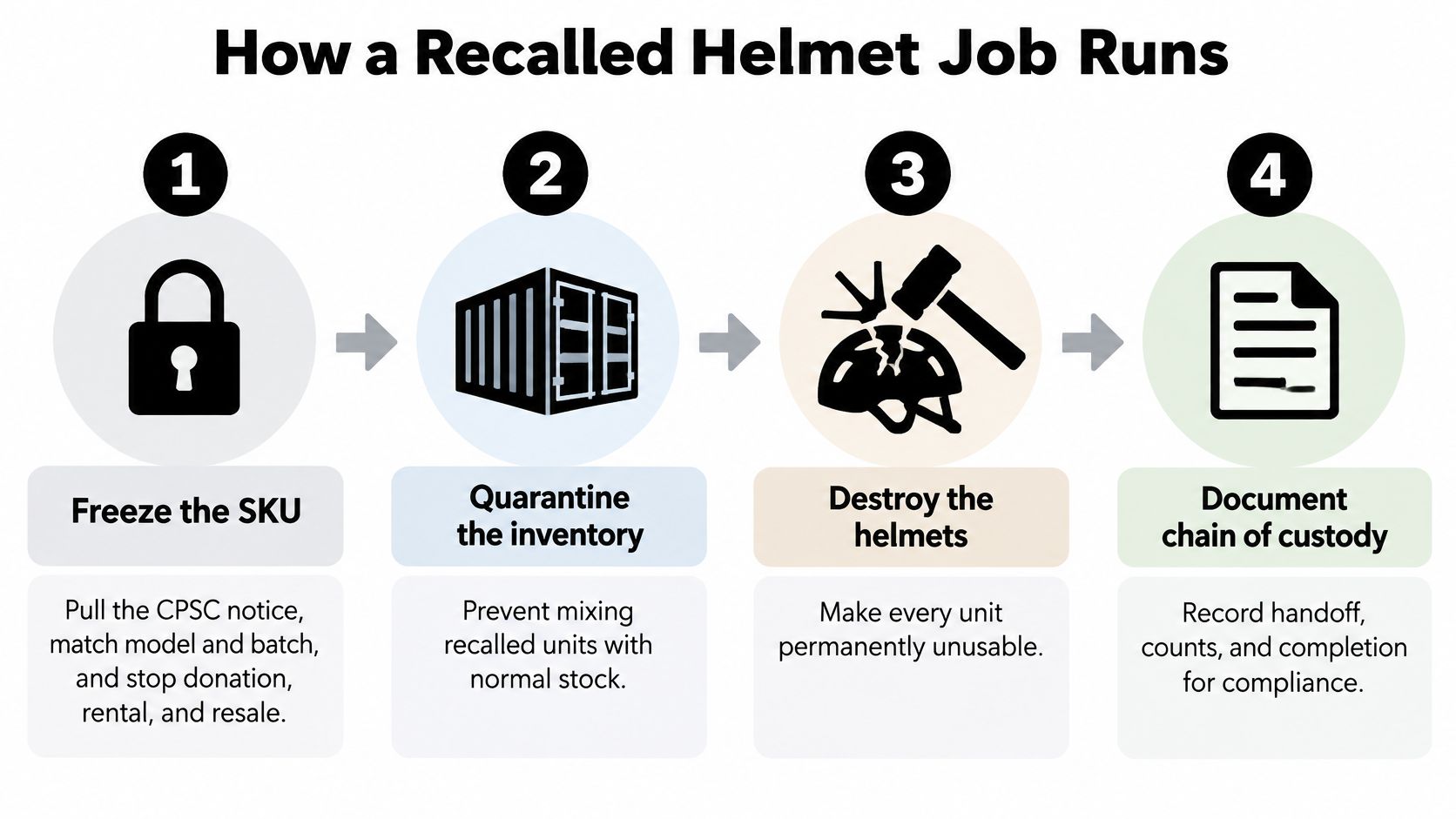
A facility-ready workflow
Freeze the SKU. Pull the notice, match the model and batch, and block rental, resale, donation, and internal issue. Apply the hold in the inventory system as well as on the shelf so another department can't release the stock.
Quarantine the inventory. Use a marked cage or controlled storage area. Separate recalled units from normal stock and from helmets awaiting assessment for crash damage or age. Physical separation prevents a picking error from undoing the electronic hold.
Count and identify. Record manufacturer, model, lot or serial where present, and a unique batch tally. Photograph product labels while they're legible. Don't repaint or polish damaged shells to make them appear acceptable for redistribution.
Authorize the method in writing. Include strap severance where the notice requires it. If the organization needs shells physically destroyed as well, specify de-manufacture or shredding rather than assuming strap removal covers the contract.
Stage the evidence. Photograph the inventory before processing and the disabled products afterward. Keep identifiers visible and connect each image group to a recorded count so photographs remain useful after packaging labels are removed.
Control the outbound load. Record seals and reconcile pickup quantities with receiving quantities. We handle planning, heavy lifting, and nationwide logistics coordination, with commercial pickup available across the contiguous United States.
Process materials accurately. Separate plastics, foam, and hardware only where an identified downstream outlet can accept them. Record non-recyclable residue under the disposal route agreed in the scope. Don't describe a mixed, unaccepted load as recycled because it passed through a recycling facility.
Close against the same inventory. Reconcile processed quantities, remaining holds, and documented exceptions before requesting the certificate. The receiving and destruction records must explain every unit released from quarantine.
Keep mixed loads distinguishable
Mixed gaylords require internal separation, not a single generic label. A recalled model, an impact-damaged helmet, and an unaffected product can need different authorizations even when they arrived together.
Our recalled-product disposal for warehouses can be scoped around these inventory controls. For equipment that fails reuse standards, is unrepairable, old, obsolete, or contractually barred from remarketing, our process uses recycling and complete destruction through de-manufacture and/or physical shredding.
Units out must reconcile with units in. An unexplained shortage is an open exception, not a completed job.
What Changes Cost and Turnaround
Price must follow scope. There isn't a verified public helmet-destruction rate card to quote here, and an electronics recycling pickup offer doesn't establish the cost of destroying recalled safety products. Procurement should request a written commercial proposal that separates transport, preparation, processing, evidence, and downstream handling.
The largest workload difference may be documentation rather than tonnage. A uniform pallet with accessible labels is different from loose helmets requiring individual identification, photography, and sorting. Finance needs to know which service it's approving before operations promises a closeout date.
Cost and timing drivers for a recalled-helmet load
| Driver | Lower-effort case | Higher-effort case | Typical effect |
|---|---|---|---|
| Count | Single pallet, single model | Multi-site or mixed SKUs | More sorting and reconciliation |
| Method | Strap cutting and photography when the notice permits | Shredding or de-manufacture to prevent return to service | Equipment time and residue handling |
| Place | Dock pickup to a destruction facility | On-site crew plus witness | Travel, staging, and appointment coordination |
| Evidence | Batch photographs tied to a count | Photograph every unit and maintain a serial log | More processing and closeout work |
| Geography | Single-metro pickup | Contiguous U.S. multi-stop sweep | Freight coordination and a longer calendar |
Treat any proposed schedule as provisional until the inventory and evidence requirements are settled. A consultation response, truck appointment, destruction date, and certificate delivery are different milestones. Booking collection doesn't mean the recall file will close that day.
Agree on milestones rather than assumptions
For a straightforward load, the scope should identify when authorization is due, when collection can occur, and what must be received before documentation is finalized. For a school or fleet sweep, each location needs a named coordinator and a count-confirmation deadline.
A national retailer's reverse-logistics program also needs a defined cutoff for incoming returns. Without it, additional units can keep arriving after the original batch has been processed.
Don't promise finance a recall-close date based only on the truck's arrival date.
On-site strap cutting with a witness requires deliberate staging and observation. Centralized shredding can be operationally appropriate for volume and for scopes that require shells not to survive as helmets. Neither option should be selected before checking the recall instructions and the holder's evidence needs.
Material value also needs its own line. Don't assume recovered plastics or hardware will fund secure processing, and don't confuse accepting scrap with accepting responsibility for a recalled SKU.
Our nationwide recalled-product destruction service supports commercial logistics planning. Confirm the method, pickup conditions, witness arrangements, and documentation deliverables together, then approve a schedule the facility and risk teams can both support.
How to Choose a Destruction Provider
Buy risk control, not merely waste removal. A suitable proposal starts with the specific recall notice and identifies how the affected inventory will be contained, disabled, documented, and processed downstream. A generic e-waste description doesn't establish those controls.
Safety screening matters beyond formal recalls. The CPSC Resellers Guide advises destroying helmets showing crash or impact evidence, including cracked, broken, or scuffed shells, and those with frayed or broken straps or buckles; it also recommends that helmets older than five years not be resold. Intake staff therefore need distinct hold categories rather than permission to cosmetically refurbish questionable stock.
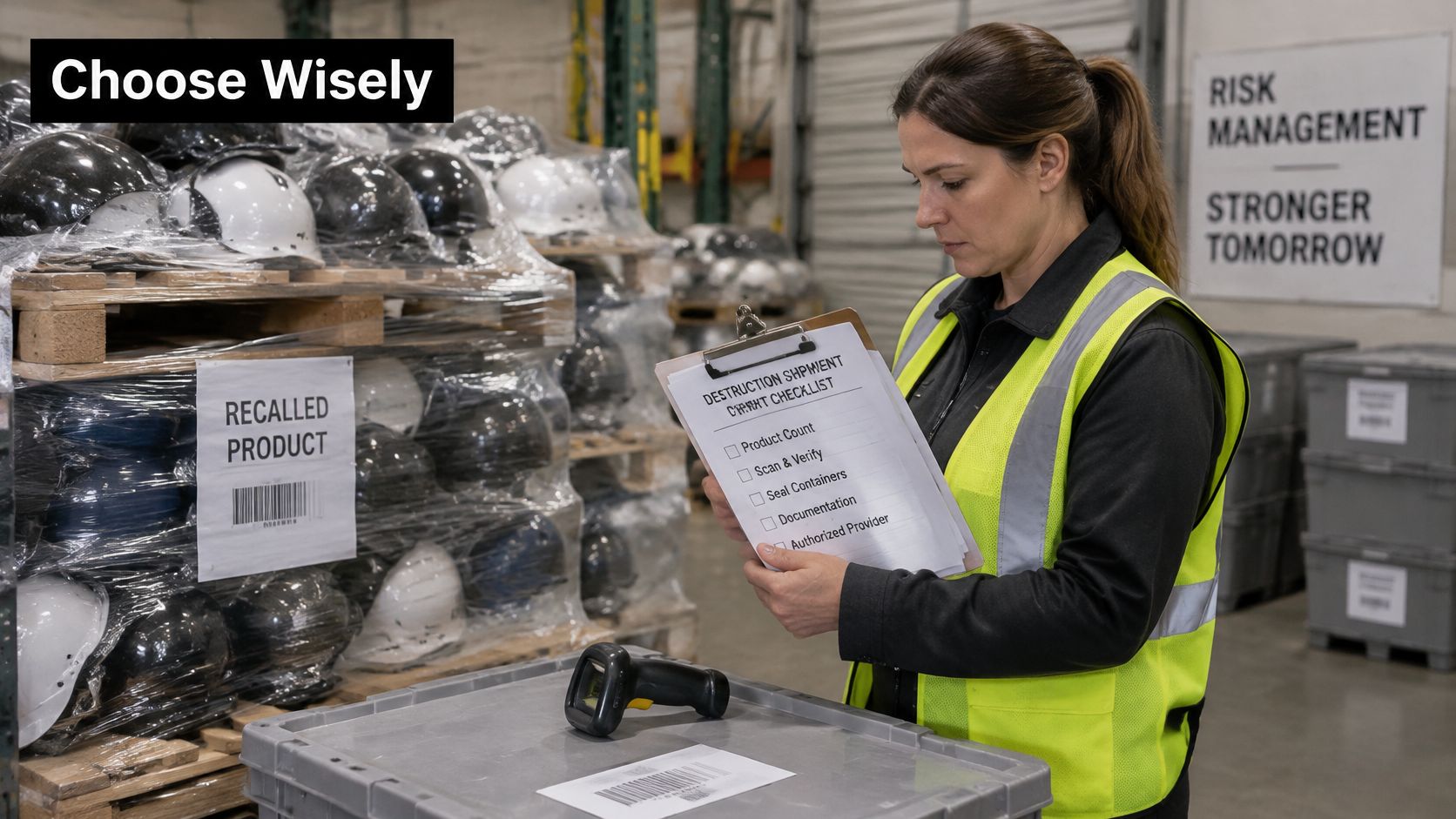
Test the proposal against the organization
Consider a school district managing youth helmets from different model years. Its selection criteria should emphasize batch matching, an authorized disposition list, and records the board or safety office can retain. A weight-only receipt won't explain which program inventory was removed.
A distributor holding unsold recalled goods has a different exposure. Its scope should emphasize sealed outbound loads, controlled receiving, and explicit restrictions against secondary-market diversion. An offer to inspect the recalled lot and donate apparently good units is not a substitute for following the notice.
Reject weak evidence packages:
- Weight ticket only: It doesn't establish the destruction method or unit identity.
- Unindexed photo dump: It doesn't reconcile processed quantities.
- Unnamed downstream handoff: It leaves the holder unable to trace the load.
- Unqualified recovery promise: It doesn't explain which materials have an accepting outlet.
Put the acceptance criteria in writing
At Beyond Surplus, our first step is a no-obligation consultation assessing equipment, volume, data destruction requirements, and timeline. Our recalled-product disposal for manufacturers provides a starting point for defining a commercial destruction scope.
Keep helmet processing distinct from any accompanying IT asset disposal. A data-destruction credential or serialized hard-drive certificate shouldn't be treated as a helmet-specific processing specification.
Send these questions with the inventory:
- Method: What physical result will constitute completed destruction?
- Custody: Who records each release and receipt?
- Certificate fields: Will the document identify the authorized batch and reconciled count?
- Witness option: What observation arrangement satisfies our internal policy?
- Final destination: Which fractions will be recycled, and which will be disposed of?
The strongest proposal answers those questions before collection, not after an exception appears.
Frequently Asked Questions About Recalled Helmet Destruction
How soon should a certificate be issued?
Arrange issuance against the final reconciled count after the agreed end-state evidence is available. The document shouldn't attest to destruction before destruction occurs. If downstream receipts remain outstanding, keep that milestone open rather than treating a pickup receipt as final proof.
What if the destination count is short?
Pause closeout and compare the intake log, container identifiers, seal records, and receiving count. Record the variance and investigation outcome in writing before issuing a certificate that represents the batch as complete. Do not replace the expected quantity with the smaller received quantity without proper documentation.
Who carries liability if a helmet resurfaces?
Liability isn't decided by the certificate alone. Contracts, applicable law, the facts of the incident, and the parties' conduct all matter. A complete custody record can support evidence of proper handling, but counsel should assess responsibility and any contractual allocation of risk.
Does a certificate replace the recall remedy?
No. The notice may require specific markings, photographs, submissions, or other actions that a commercial certificate doesn't perform. Keep the certificate with evidence that the applicable remedy steps were completed, and resolve bulk-processing arrangements with the recall administrator where necessary.
Can a partly recalled lot be processed together?
Yes, provided the organization authorizes the scope and preserves model- and batch-level distinctions. Count and photograph the affected groups separately, and make the certificate or its attachment clear about which units it covers. Unaffected inventory shouldn't be destroyed merely because it shares a shipping container.
These answers are operational starting points for review with counsel, not legal advice. A destruction file supports a decision; it doesn't independently settle every legal question.
Book a Destruction Scope Before Units Move
If affected helmets are already identified, quarantine them now. Don't stage them for donation, employee giveaways, or scrap sale while waiting for a perfect inventory. An estimated count can support initial scoping, provided it's clearly labeled and reconciled before final closeout.
The immediate decision is who can authorize disposition and what evidence the organization needs. Facility staff can control access and prepare the load. Procurement can approve the commercial scope. Risk or compliance can define the records needed to support the organization's recall response.
Prepare a usable scoping package
Send enough information to distinguish the load without creating unnecessary administrative work:
- Product identity: Manufacturer, model, batch information, and photographs of readable labels.
- Inventory status: Estimated count, storage location, mixed-stock issues, and any outstanding reconciliation.
- Site details: Pickup addresses, dock access, staging restrictions, and local coordinators.
- Destruction requirement: The applicable notice and any additional requirement for shredding or de-manufacture.
- Observation requirement: Whether a witness is mandatory and who can approve the evidence.
- Closeout requirement: The target recall-file deadline and certificate information your organization needs.
A no-obligation consultation is useful because volume, method, and timeline affect both collection planning and the final documentation. If the project also includes computers, laptops, laboratory equipment, or other retired business assets, identify those streams separately. Helmet disablement and secure IT asset disposal require different acceptance criteria.
Make release conditional on approval
Before dispatch, designate who can release the quarantine hold and who can accept the completed file. Require written approval for changes to quantities, methods, or downstream destinations.
The useful action today is concrete: secure the matching models, prepare the count, and obtain an approved destruction scope. Don't move unidentified shells into an ordinary waste stream and expect a photograph to resolve the missing record afterward.
Beyond Surplus offers commercial product destruction with documented chain of custody, material recovery, and certificates of destruction available upon request. Visit Beyond Surplus to scope recalled helmet destruction, coordinate pickup across the contiguous United States, and agree on recycling or disposal after the products are made unusable.


