

Atlanta families entering 2026 face four separate pressures that often get lumped together as a single affordability problem. Coverage can change first, then premiums and out-of-pocket costs, then appointment availability, then the way providers are paid. Each pressure shows up differently in a household budget or at a clinic desk, which is why a family can feel squeezed even when one part of the system looks stable.
The clearest way to read the year is to separate those layers. Coverage affects whether people can keep insurance at all. Cost affects what families owe at renewal, at the pharmacy, and after a visit. Access capacity affects how long they wait for pediatric, behavioral health, or primary care appointments. Reimbursement policy affects whether local practices can absorb demand or decide they cannot take on more patients.
That breakdown matters in Atlanta because the metro's healthcare strain will not feel uniform. A parent renewing marketplace coverage may face a different problem from a caregiver looking for a therapist who still accepts new patients. A family that can technically keep insurance may still lose practical access if the nearest office is booked out or stops taking a plan. For a broader look at how Atlanta households are balancing these pressures with other everyday expenses, see Beyond Surplus's Atlanta family living guide.
Table of Contents
- Why 2026 Represents a Tipping Point for Atlanta Families
- Coverage and Medicaid Shifts Reshaping Georgia
- What Rising Costs Look Like for an Atlanta Family
- Telehealth, Digital Tools, and In-Home Care
- Pediatric Access, Mental Health, and Reimbursement Reality
- A Day in the Life of an Atlanta Family in 2026
- Practical Steps Atlanta Families Can Take This Quarter
Why 2026 Represents a Tipping Point for Atlanta Families
Atlanta families are heading into 2026 with four separate pressure points, and they do not all hit the same way. Coverage can change whether a child stays linked to a pediatrician. Cost can change whether a parent fills a prescription on time. Access capacity can change how long a family waits for an appointment. Reimbursement policy can decide whether a clinic keeps offering the visit type a household needs.
The first pressure point is coverage stability. National enrollment data already show that Medicaid and CHIP are under strain, and that matters in Atlanta because coverage churn often shows up before a family ever sees a headline about policy. The KFF Medicaid Enrollment Tracker is useful here because it shows the broader direction of travel, while local families feel the practical version of that trend as renewal notices, plan changes, and gaps that can interrupt routine care.
The second pressure point is what coverage costs once a family is enrolled. A plan can still strain a budget even if nobody in the household becomes uninsured. Premiums, deductibles, copays, and drug costs do not appear in the same line item, but families feel them together when they try to keep up with school physicals, specialist visits, and ongoing treatment.
The third pressure point is access capacity. Atlanta households do not only need coverage, they need an available clinician, an open appointment slot, and a practice that is still accepting the plan they have. When those pieces do not line up, the result is often a delayed visit, a longer drive, or a decision to postpone care until the problem gets harder to ignore.
The fourth pressure point is reimbursement policy. That sounds abstract, but it reaches families through the services clinicians are willing to keep offering. If payment rules make a visit type hard to sustain, the effect can be visible in a pediatric office, a behavioral health clinic, or a follow-up appointment that now takes longer to schedule. For Atlanta parents tracking a teen social anxiety guide for parents, the policy question is not academic, it shapes whether care is actually available when a child needs it.
These four pressures matter because they act on different parts of the household experience. Coverage affects whether care is included at all. Cost affects what gets delayed or dropped from the budget. Access affects how quickly care can be used. Reimbursement affects what the local system continues to provide. The point of 2026 is not just that healthcare feels more expensive. It is that the financial, operational, and policy stress lines are converging at the same time, and families will see that convergence in ordinary decisions about doctors, prescriptions, and work schedules.
For readers who want a broader local context, the complete guide to living in Atlanta in 2026 helps frame how housing, transit, and healthcare expenses interact across the same household budget.
Coverage and Medicaid Shifts Reshaping Georgia
Georgia's coverage picture is shifting in three directions at once, and families feel each one in a different part of the budget or a different step in the care process. Medicaid and CHIP churn is one pressure point. KFF's March 2026 update showed child enrollment falling in every state, and in the 49 states plus D.C. with complete age data, the number of children enrolled was down by 445,000 from February 2020 to March 2026. For Atlanta parents, that means the state's safety-net coverage is losing ground in a way that reaches children directly.
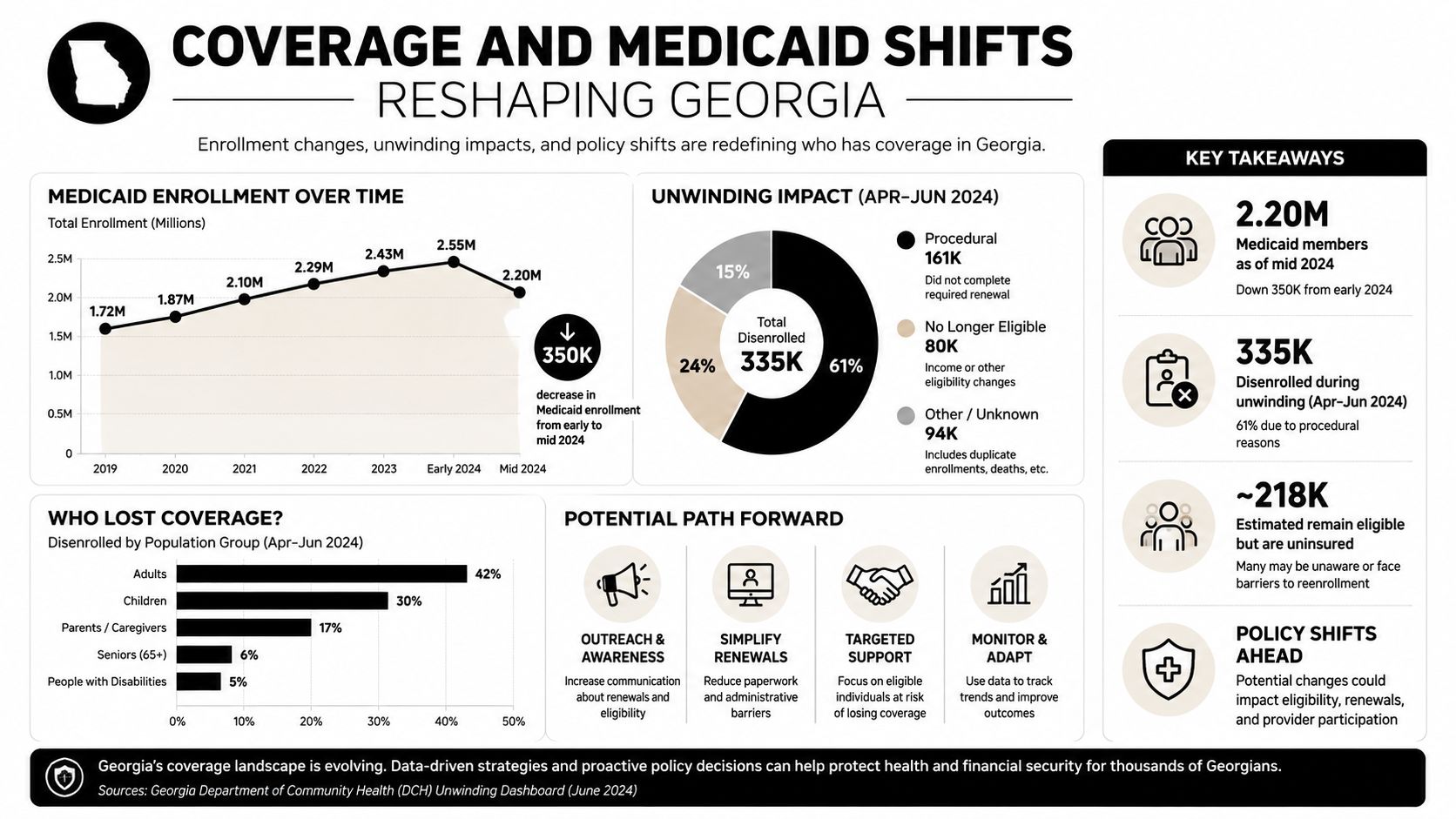
Who gets hit first
Georgia Access creates a second layer of pressure. One state health policy update said the exchange had already lost more than 190,000 enrollees in the first phase of 2026 enrollment (Healthy Future GA update). Families often experience that shift as a smaller plan choice set, a renewal notice that looks unfamiliar, or a premium that no longer fits the same household income. For the lowest-income households, the risk is losing coverage altogether. For middle-income families, the pressure shows up as plan switching, narrower networks, or higher monthly premiums.
The third pressure point is the premium shock. In Georgia and Atlanta more broadly, marketplace premiums are projected to rise by 194% if enhanced premium tax credits expire at year-end (WABE on Georgia health gap). That does not mean every family will face the same dollar increase, but it does mean the direction is clear. Net premiums become harder to absorb, and when that happens, some families delay enrollment, others choose less generous plans, and some go uninsured.
Employer coverage gets pulled into the same shift. When a spouse or dependent faces a marketplace premium jump, a family may move toward a higher-deductible employer plan or a narrower network, even if the coverage is technically still in place. The result is broader than exchange enrollment alone. Coverage instability starts in one policy channel and then spills into the household's total insurance setup.
Practical rule: if a plan change makes you hesitate for even a few days, the household budget has already started to steer healthcare decisions.
What Rising Costs Look Like for an Atlanta Family
For Atlanta families, 2026 healthcare pressure starts with a number, not a slogan. The Milliman Medical Index puts average annual healthcare cost for a family of four at $37,824 in 2026, with per-person costs at $8,460, and says that was a 7.9% increase, the fastest annual rise in more than a decade outside the pandemic period (Milliman Medical Index coverage). That kind of increase shows up in monthly budgeting before it shows up in a clinic waiting room.
From premiums to skipped care
The earlier strain point is easier to see in benchmark spending. Health System Tracker reports that in 2023, a family of four with employer-sponsored coverage paid $6,296 in premiums and $3,564 out of pocket (Health System Tracker). Those costs are not optional extras. They are the fixed bills that start crowding out dental care, specialist follow-ups, therapy sessions, and prescriptions when the premium line rises faster than household income.
Georgia's access ranking makes that squeeze harder to absorb. WalletHub ranked the state 49th overall for healthcare in 2026, including 49th for access and 49th for the percentage of insured adults. For Atlanta households, that means higher prices are landing in a market where getting an appointment, a referral, or a covered provider is already difficult.
The effect is sharper for parents who are managing developmental, behavioral, or chronic care needs. A family may postpone a specialist visit, move to a cheaper plan with a higher deductible, or look for a payment workaround such as using ABLE accounts for autism expenses. That kind of planning is not limited to unusual situations. It becomes relevant whenever recurring medical bills start competing with rent, groceries, and transportation.
The budget effect also changes behavior. Families stop asking only what a plan costs and begin asking whether a visit is worth the short-term strain, which is how delayed care becomes routine. For a closer look at how those pressures fit into household expenses, see Beyond Surplus's Atlanta cost of living guide.
Telehealth, Digital Tools, and In-Home Care
Atlanta families are using telehealth and digital care for one reason above all others, they need a faster way to close the gap between concern and appointment. Telehealth helps most when a child needs a follow-up, a parent is managing a chronic condition, or a family needs behavioral support without another long drive across the metro. It matters most when the next available in-person slot is too far away or too late to change the outcome.
Where virtual care fits best
Children's Healthcare of Atlanta says its new Adamsville and Union City locations are designed so families are 30 minutes or less from a Children's facility, and the Adamsville site is meant to support training and some behavioral-health and autism services (Children's Healthcare of Atlanta announcement). That points to a system that sees access as a travel-time issue, not only a building issue. Virtual care fills a different gap, especially for follow-up questions, medication check-ins, and situations where a long in-person trip is not necessary.
Parents dealing with adolescent anxiety often need a mix of practical guidance and timely support. Resources like this teen social anxiety guide for parents can help alongside a clinician's plan. The value is not in replacing care. It is in helping a family decide when a digital touchpoint is enough and when an in-person visit cannot wait.
Virtual care works best when it reduces friction, not when it ignores travel time, waitlists, and coordination problems.
In-home care plays a similar role for families who cannot keep adding cross-town trips to a workweek already stretched thin. The most useful digital tools are the ones that make repeat touchpoints easier, not the ones that add another portal log-in. For Atlanta households, the key measure is not whether a service is technologically advanced. It is whether it cuts one missed appointment, one school absence, or one unnecessary drive.
That is also why the wider shift toward digital systems matters outside the exam room. Analysts at Beyond Surplus's piece on how AI is transforming Georgia's economy describe how automation is changing work patterns across the state, and families feel that change when care tools have to fit around school pickups, shift work, and home responsibilities. If a platform saves time but adds confusion, the burden shifts back to the household. If it shortens a care task without extra steps, it starts to matter in real life.
Pediatric Access, Mental Health, and Reimbursement Reality
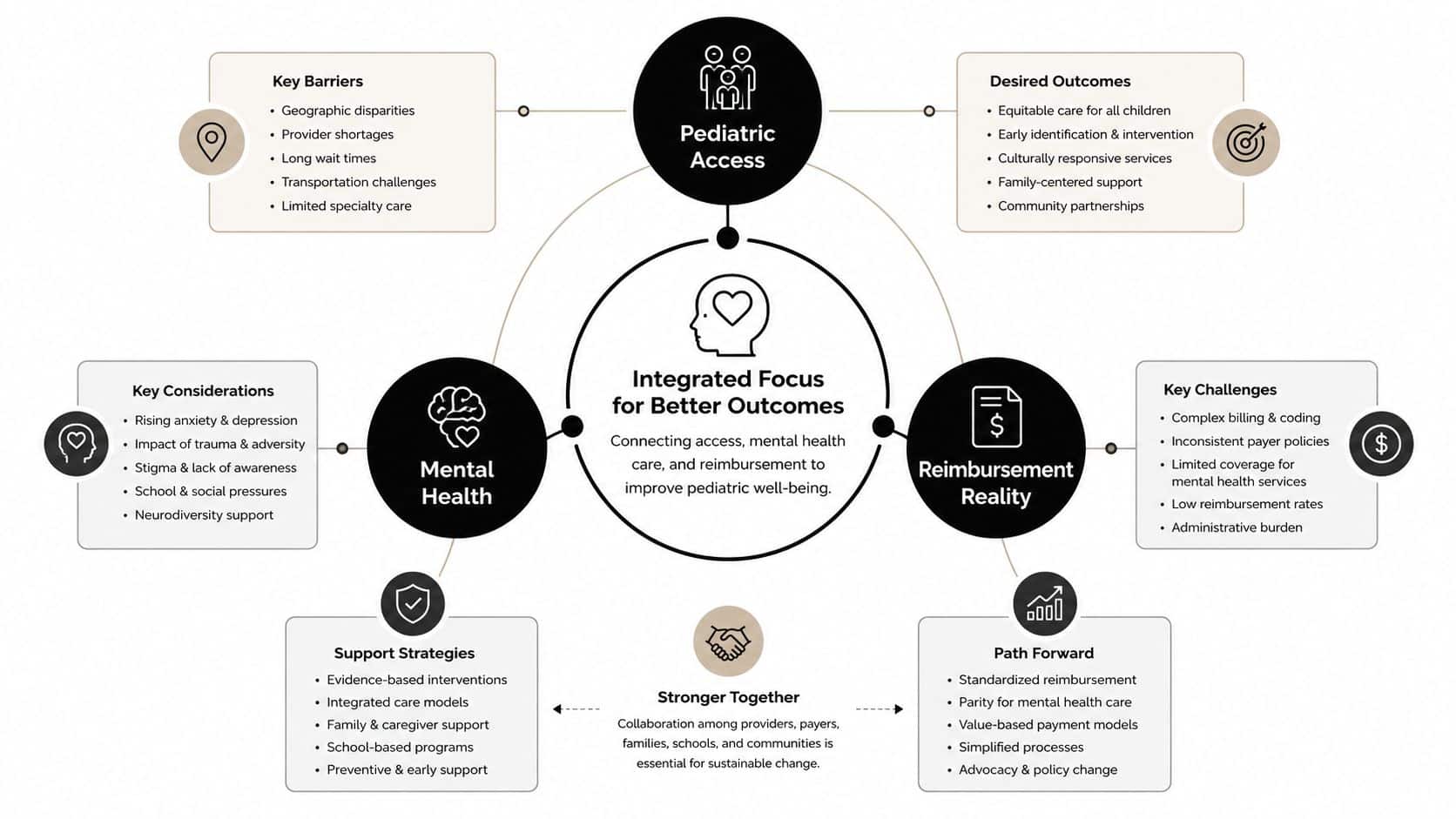
Children's access in Atlanta is often described as a location problem, but the deeper constraint is capacity. New pediatric sites can shorten the drive for families, yet they do not automatically create a same-week appointment, reduce a therapy queue, or speed up behavioral-health follow-up. Access only improves when staffing, scheduling, and payer rates can support the added footprint.
That distinction matters because a closer clinic does not fix a thinner provider network. It can help with travel time, parking, and school pickup logistics. It does not, by itself, guarantee that speech therapy, occupational therapy, physical therapy, or counseling will be available when a child needs it.
Why location isn't the whole answer
Reimbursement is the pressure point that decides whether capacity grows. As noted earlier, some Georgia therapy clinics are warning that payer changes can reduce expected payment enough to force schedule tightening, limits on Medicaid volume, or staff stretched across more demand. That is how a policy change in the payment system shows up in a family's week, fewer available slots, longer waits, and more calls that end without a concrete appointment.
The enrollment picture adds another layer of strain. KFF Medicaid Enrollment Tracker shows child enrollment falling in every state from March 2025 to March 2026, and child enrollment across the 49 states plus D.C. with complete age data was down by 445,000 from February 2020 to March 2026. Fewer covered children do not automatically mean easier access. The remaining children often have more persistent needs, so the same provider base can still face heavy demand.
That is why the more useful question for Atlanta parents is not whether a new pediatric site is opening nearby. It is whether the system can absorb demand for pediatric therapy and behavioral care without turning a local expansion into a longer wait elsewhere. If staffing and reimbursement do not support the new footprint, the family may save driving time but still spend weeks waiting for treatment.
When reimbursement tightens, waitlists tend to expand before headlines do.
The mental health piece follows the same pattern. Behavioral concerns rarely arrive as one obvious emergency. They show up in repeated school calls, sleep problems, missed milestones, or rising frustration at home. When those signs run into an underpaid therapy system, families feel a split between visible progress, such as a new location, and invisible loss, such as slower access to care. That tension is a central pediatric story in 2026.
A Day in the Life of an Atlanta Family in 2026
A dual-income Atlanta family with two children can feel four different pressure points in the same month. Coverage changes affect which plan they keep. Cost changes affect what they pay at renewal and at the pharmacy. Access capacity affects whether they can get a child seen quickly. Reimbursement policy affects whether a provider can keep offering the appointment times the family needs.
One child is on PeachCare, the other is on an employer plan, and the parents are reviewing whether to keep the current marketplace option after the premium notice arrives. The mother checks telehealth availability for a fever visit before leaving work, because a same-day virtual slot is easier than crossing town for a short appointment.
The next week, the family drives to a Children's follow-up after being told the nearest site is still the fastest option. Traffic, parking, and the return trip turn a “routine” visit into a half-day event. Later that month, they are waiting on a therapy appointment, and the provider cannot confirm how quickly the next slot will open after reimbursement changes tighten scheduling.
Where the pressure lands
The father's employer plan looks stable on paper, but the family is comparing deductible levels and asking whether a switch would reduce the strain if the spouse's premium jump hits hard enough. They are also checking in-network status for children's care, because a narrow network can erase the value of having coverage at all. By the end of the month, the family has not faced one dramatic crisis, but they have made a series of small decisions that each carry a cost.
Those decisions add up to a few repeated friction points:
- Renewal stress: paperwork, deadlines, and subsidy changes make the annual insurance review feel urgent.
- Care delay: telehealth helps with quick issues, but specialty follow-up still requires planning.
- Time loss: even a short drive to pediatric care can become a major schedule disruption.
- Budget squeeze: therapy copays and premium changes compete with other monthly bills.
The story is that Atlanta families are making a dozen smaller tradeoffs, and each one moves the household budget and the care calendar in the same direction, toward more caution and less flexibility. A weekend plan can disappear because one parent has to leave early for an appointment, and a second visit can get pushed out because the first one already took too much time.
Families that build a routine around care also start sorting the city by access, not just by commute. A doctor's office near work may be easier than one near home, and the same is true for errands, school pickups, and time between appointments. For a broader look at how daily routines and local amenities shape family decisions, family-friendly outdoor attractions in metro Atlanta can be part of the same planning conversation.
Practical Steps Atlanta Families Can Take This Quarter
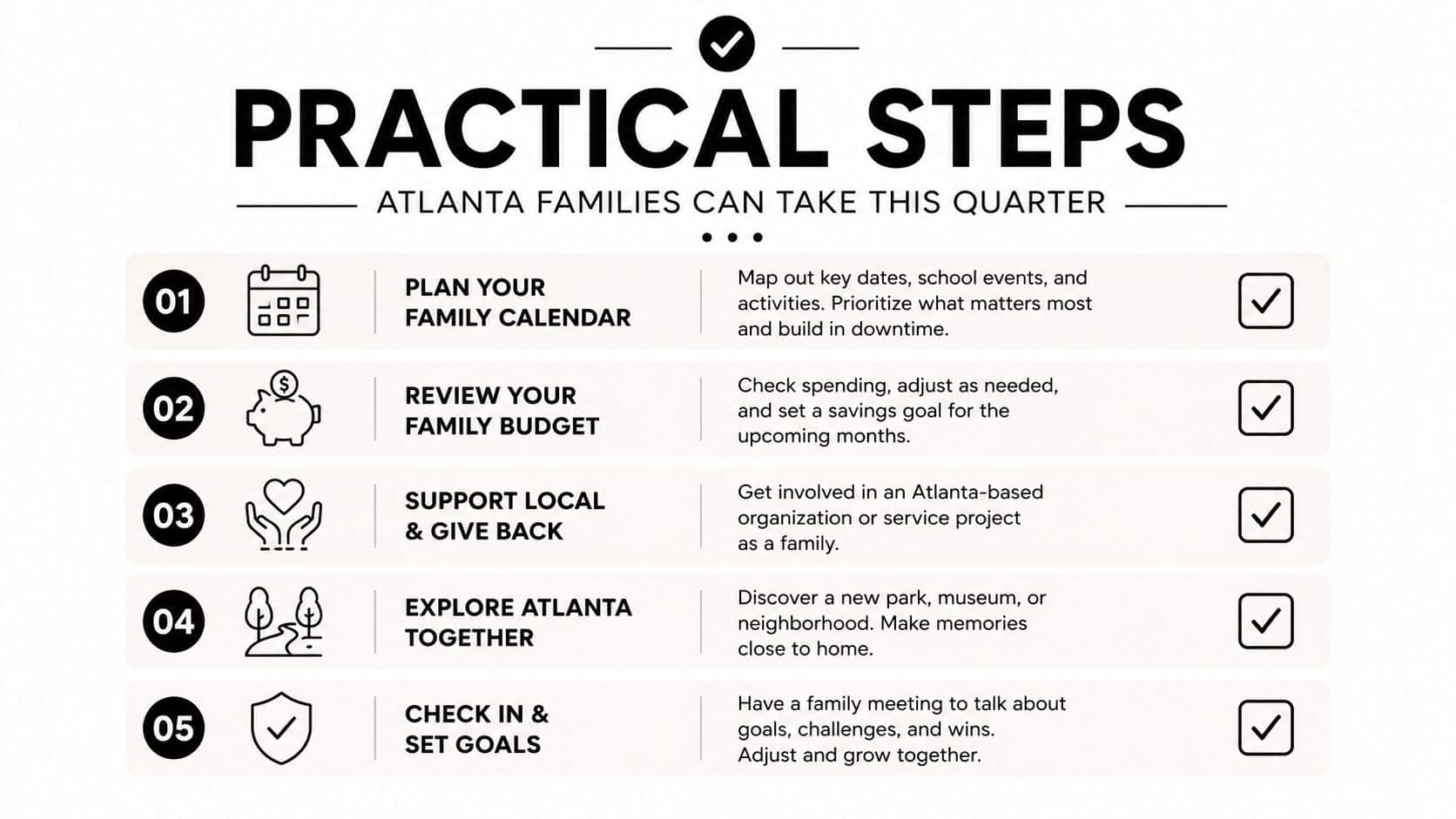
The smartest move in 2026 is to treat healthcare like a quarterly planning item, not a once-a-year surprise. If you're buying coverage, renewing benefits, or managing a child's therapy schedule, the next 90 days matter. The point is to catch the pressure before it becomes a missed visit or a bill you didn't budget for.
What to do first
- Re-shop marketplace coverage now. If enhanced premium tax credits expire, Georgia marketplace costs can jump sharply, so compare plans before renewal becomes an emergency.
- Confirm children's in-network status. Verify whether Children's Healthcare of Atlanta and Grady are in your plan's network, then ask about referral rules before you need a specialist.
- Ask about telehealth follow-up. For routine pediatric check-ins, medication review, and some behavioral support, virtual care can prevent unnecessary travel.
- Check PeachCare eligibility. If a child's coverage changed during Medicaid unwinding, re-screening can prevent an avoidable gap.
- Call therapy offices about waitlists. If providers are adjusting schedules because of reimbursement pressure, families need to know before a missed month turns into a missed season.
If you're trying to build a cushion for premium changes, pairing your insurance review with Koru household budget tips can make the next decision less reactive. The useful mindset is simple, healthcare costs need a place in the family budget before they arrive in the mailbox.
Decision rule: if a plan is only affordable when nothing goes wrong, it's not really affordable for a family with kids.
Atlanta families don't need perfect coverage to make 2026 manageable. They need fewer surprises, better network checks, and a clear sense of which visits can be virtual, which ones can't, and which plan changes will change the budget.
Beyond Surplus helps Atlanta families and organizations think through the practical side of change, from cost planning to relocation decisions that affect access, commute time, and household stability. If you're making healthcare, budget, or move decisions this year, visit Beyond Surplus for local guidance that helps you plan with more clarity and less guesswork.


