

Atlanta's startup scene is no longer a well-kept secret; it's a nationally recognized hub of innovation and growth. For entrepreneurs on the ground in Atlanta, Georgia, however, turning a brilliant idea into a funded venture requires more than just hustle. It demands a deep understanding of the local capital ecosystem, especially when considering the lifecycle of business equipment from acquisition to disposal. The funding landscape is constantly shifting, with new players, evolving sector preferences, and changing deal structures defining who gets checks and why. Knowing the specific Atlanta Startup Funding Trends Every Entrepreneur Should Know is critical for positioning your company for a successful fundraise, just as understanding secure IT equipment disposal is for operational integrity.
This article cuts through the noise to deliver a clear, actionable guide for Atlanta-based businesses. We will detail the dominant venture capital trends, highlight burgeoning industry hotspots like FinTech and HealthTech, and break down typical deal sizes by stage. You'll get insights into which accelerator programs are making the biggest impact and how corporate venture arms are shaping the market. To understand the broader investment ecosystem influencing Atlanta, exploring lists of top United States investors can provide valuable context. As you plan your growth, remember that responsible management of company assets, including electronics recycling, is a key component of a sustainable business model. Let's decode the patterns you need to master to secure capital in the ATL.
1. Soaring Seed and Pre-Seed Rounds Redefine Early-Stage Fundraising
One of the most significant Atlanta Startup Funding Trends Every Entrepreneur Should Know is the dramatic growth in the size and availability of seed and pre-seed capital. Gone are the days when a $500,000 seed round was the standard. Now, in 2026, it's increasingly common to see Atlanta-based startups raising initial rounds of $2 million to $4 million, even before generating substantial revenue.
This shift is driven by a confluence of factors: a larger pool of local and national investors focused on the Southeast, the rising costs of technical talent, and the need for a longer runway to achieve product-market fit. Investors recognize that undercapitalized startups struggle to compete. They are now more willing to write larger initial checks to give founders the resources to build a solid team and iterate on their product without the constant pressure of immediate fundraising. This initial capital investment is often used to acquire essential IT infrastructure, making future secure laptop disposal and computer recycling a critical consideration for IT managers.
Actionable Steps for Entrepreneurs:
- Adjust Your Ask: Don't anchor your fundraising goal to outdated benchmarks. Build a detailed 18-24 month budget that accounts for key hires, marketing experiments, and product development, and use that to justify a larger seed round.
- Show Capital Efficiency: While asking for more, you must also demonstrate a clear plan for how every dollar will be used to create value. Present a milestone-based budget that ties funding directly to achieving specific, measurable business objectives.
- Engage with a Wider Net: The investors fueling this trend include not just local VCs like Atlanta Ventures and TTV Capital, but also an influx of funds from the Bay Area, New York, and beyond who see Atlanta as a prime market. Broaden your outreach to include these non-local players.
2. Fintech and SaaS Continue to Dominate VC Portfolios
Another one of the key Atlanta Startup Funding Trends Every Entrepreneur Should Know is the sustained dominance of Financial Technology (Fintech) and Software as a Service (SaaS) in attracting venture capital. Atlanta has cemented its reputation as a global hub for payments and financial services, creating a rich ecosystem of talent, corporate partners, and experienced investors. VCs continue to place big bets on startups disrupting everything from banking and lending to B2B payments and compliance.
This focus is fueled by the city's deep roots in the financial industry, with giants like Global Payments, Fiserv, and NCR providing a powerful anchor. Investors are confident in the local talent pool and the built-in advantages Atlanta startups have in this sector. Consequently, Fintech and B2B SaaS companies often find a more receptive audience and can command higher valuations, as investors understand the market dynamics and potential for massive scale. These tech-heavy businesses also generate significant e-waste, requiring specialized services for data center decommissioning and secure electronic waste pickup.
Actionable Steps for Entrepreneurs:
- Lean into the Ecosystem: If your startup is in Fintech or SaaS, actively network within the local community. Attend events at hubs like the Atlanta Tech Village and connect with mentors and executives from established financial companies. This demonstrates you understand the city’s unique strengths.
- Solve a Niche Problem: While the sectors are hot, they are also crowded. Don't just build a generic SaaS tool. Instead, identify a specific, high-pain problem within a vertical, such as compliance for community banks or payment automation for construction firms. A focused solution is easier to sell and fund.
- Highlight Your "Atlanta Advantage": In your pitch deck and investor conversations, explicitly state why being in Atlanta gives you a competitive edge. This could be proximity to key customers, access to specialized talent from Georgia Tech, or partnerships with local financial corporations.
3. The Rise of Circular Economy: Funding for ESG and ITAD Ventures
A fascinating and impactful part of Atlanta Startup Funding Trends Every Entrepreneur Should Know is the growing investor appetite for businesses in the circular economy, specifically electronics recycling and IT Asset Disposition (ITAD). While not a typical tech startup, these ESG-focused (Environmental, Social, and Governance) companies are attracting serious attention from business owners and IT managers across Atlanta, Georgia. The funding path often diverges from the standard VC model, favoring a bootstrapped-to-acquisition journey built on sustainable revenue from commercial services.
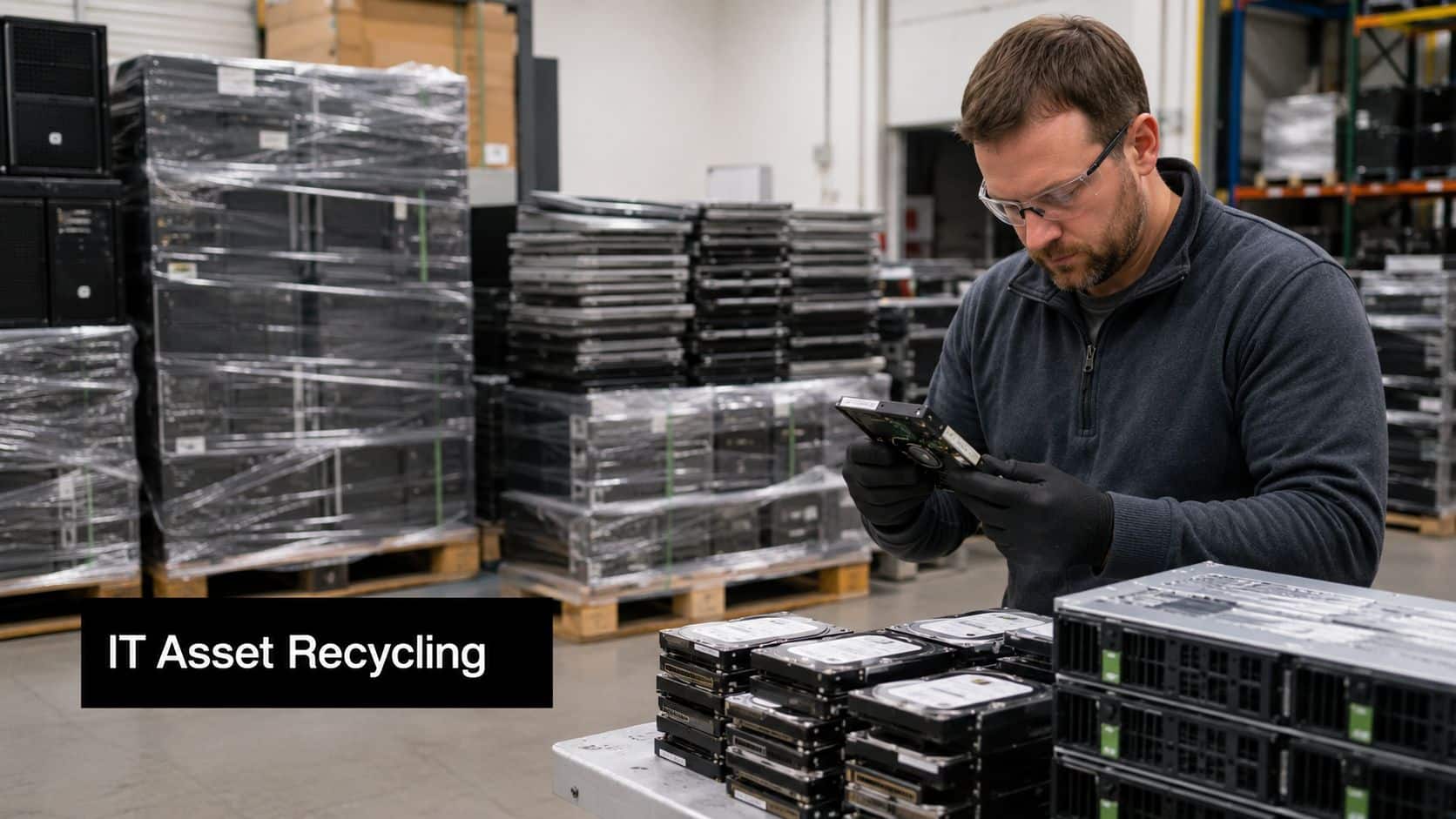
This trend is fueled by increasing corporate demand for responsible e-waste management and data security, creating a profitable and recurring revenue stream. Instead of dilutive venture rounds, founders in this space, like those at Beyond Surplus, often focus on operational excellence to fuel organic growth. This makes them highly attractive targets for private equity firms or larger strategic acquirers looking to buy established, cash-flow-positive operations. Investors see a clear, low-risk path to returns through consolidation in a fragmented but essential industry focused on services like medical equipment disposal and laboratory equipment disposal.
Actionable Steps for Entrepreneurs:
- Focus on Unit Economics: Your primary pitch isn't a massive, speculative market. It's about demonstrating profitability from day one. Show investors a clear, repeatable process for acquiring assets, processing them securely, and generating revenue through IT asset recovery and recycling.
- Build a Compliance Moat: In the ITAD industry, certifications (like R2, e-Stewards) and adherence to data privacy regulations (like HIPAA, GDPR) are your competitive advantage. These create a barrier to entry and justify premium pricing, which is highly attractive to savvy investors and business customers.
- Target Impact and Strategic Investors: Instead of traditional tech VCs, direct your outreach to impact investing funds, family offices with a sustainability mandate, and private equity groups specializing in environmental services or business-to-business service models.
4. Corporate Venture Capital (CVC) Becomes a Mainstream Player
A critical Atlanta Startup Funding Trend Every Entrepreneur Should Know is the ascendance of Corporate Venture Capital (CVC) as a primary source of capital and strategic partnership. Major Atlanta-based corporations like The Home Depot, Coca-Cola, and UPS are no longer just potential customers; their venture arms are now some of the most active investors in the ecosystem, writing significant checks into local startups that align with their long-term strategic goals.

This trend offers a dual benefit. Beyond the funding, a CVC investment can unlock unparalleled access to distribution channels, industry expertise, and a built-in customer base. These corporate partners are seeking to invest in innovation that can give them a competitive edge, from supply chain logistics and fintech to marketing technology and sustainability—a category that includes secure e-waste management. For an Atlanta startup, securing an investment from a local corporate giant can validate its business model and supercharge its growth in ways traditional VC funding cannot.
Actionable Steps for Entrepreneurs:
- Map Your Strategic Alignment: Before approaching a CVC, thoroughly research the parent corporation's strategic priorities. Clearly articulate in your pitch how your startup's technology or service helps them solve a core business problem or enter a new market.
- Prepare for a Different Due Diligence: CVCs often have a longer and more complex diligence process that involves multiple business units, not just the investment team. Be prepared to demonstrate your value to operational stakeholders, not just prove your financial projections.
- Engage Both Sides of the House: Build relationships within the corporate venture arm and simultaneously with potential champions inside the relevant business units. An internal advocate who understands the strategic value of your solution can be your most powerful asset in securing a deal.
5. The Rise of Alternative and Niche Funding Sources
While venture capital often grabs the headlines, one of the most practical Atlanta Startup Funding Trends Every Entrepreneur Should Know is the increasing viability and accessibility of alternative and niche funding sources. Not every high-growth company is a fit for the traditional VC model. Recognizing this, Atlanta’s ecosystem has developed a robust network of alternative capital providers, including revenue-based financing, specialized grants, and industry-specific angel groups.
These options are gaining traction because they offer founders more flexibility and control. For instance, revenue-based financing allows companies to secure growth capital without diluting equity, with repayments tied directly to monthly revenue. This model is ideal for SaaS, e-commerce, and other businesses with predictable income streams. Similarly, a growing number of corporate and non-profit grants are available for startups focused on specific social or technological challenges, such as developing better methods for secure product destruction or enhancing data security in IT asset disposal.

Actionable Steps for Entrepreneurs:
- Explore Revenue-Based Financing: If you have consistent monthly revenue, investigate firms that specialize in this model. They provide an excellent way to fund marketing or inventory expansion without giving up ownership.
- Target Industry-Specific Angel Groups: Look beyond generalist investors. Atlanta has angel networks focused on everything from health-tech to logistics. These investors bring deep industry knowledge and connections in addition to capital.
- Seek Out Grant Opportunities: Dedicate time to researching federal, state, and corporate grants. Organizations like the Georgia Research Alliance (GRA) and various programs at Georgia Tech offer significant non-dilutive funding for startups aligned with their missions.
Your Next Move: Choosing the Right Path
The Atlanta startup ecosystem is alive with opportunity, but success requires more than a great idea; it demands a sophisticated understanding of the capital landscape. Throughout this guide, we've dissected the core Atlanta startup funding trends every entrepreneur should know. From the rise of FinTech and SaaS as investor favorites to the specific metrics that matter in a pre-seed versus a Series A round, the path to securing capital is clear for those who do the work.
The key takeaway is that a one-size-fits-all fundraising strategy no longer cuts it. Your approach must be as finely tuned as your product. This means aligning your business stage with the right type of investor, whether that’s an angel captivated by your vision or a data-driven VC scrutinizing your ARR. It involves building relationships long before you need the cash and understanding the valuation dynamics that will shape your company's future. For businesses in Atlanta, Georgia, this strategic planning must also extend to operational aspects like partnering with a certified provider for Atlanta electronics recycling services to manage technology end-of-life securely and responsibly.
- Audit Your Position: Re-evaluate your current stage, sector, and capital needs against the trends detailed in this article. Where do you align, and where are the gaps?
- Target Your Outreach: Create a focused list of Atlanta-based VCs, angel groups, and accelerator programs that have a documented history of investing in companies like yours.
- Refine Your Narrative: Adjust your pitch deck and financial models to speak directly to the metrics and milestones that matter to your target investors.
The founders who succeed will be those who not only recognize these shifts but also proactively adapt their strategies to them. By using this knowledge, you can position your venture not just to survive, but to thrive in Atlanta's dynamic funding environment.
Contact Beyond Surplus for certified electronics recycling and secure IT asset disposal. As your startup grows, managing your physical assets, especially technology, becomes critical. For expert, certified IT asset disposal and electronics recycling in Atlanta, trust Beyond Surplus. We provide secure data destruction and responsible e-waste management solutions that protect your sensitive information and ensure environmental compliance, helping you focus on scaling your business.


