
When your business searches for "hard drive shredding services near me," you're doing more than just checking off an operational task—you're making a critical security move. A single retired hard drive can hold a treasure trove of sensitive data, from private client information to your company's financial records. If you dispose of it improperly, you're essentially opening a door to a devastating data breach, which can lead to massive financial penalties and damage to your reputation that's hard to come back from.
Why Shredding Hard Drives Is a Critical Security Mandate for Businesses
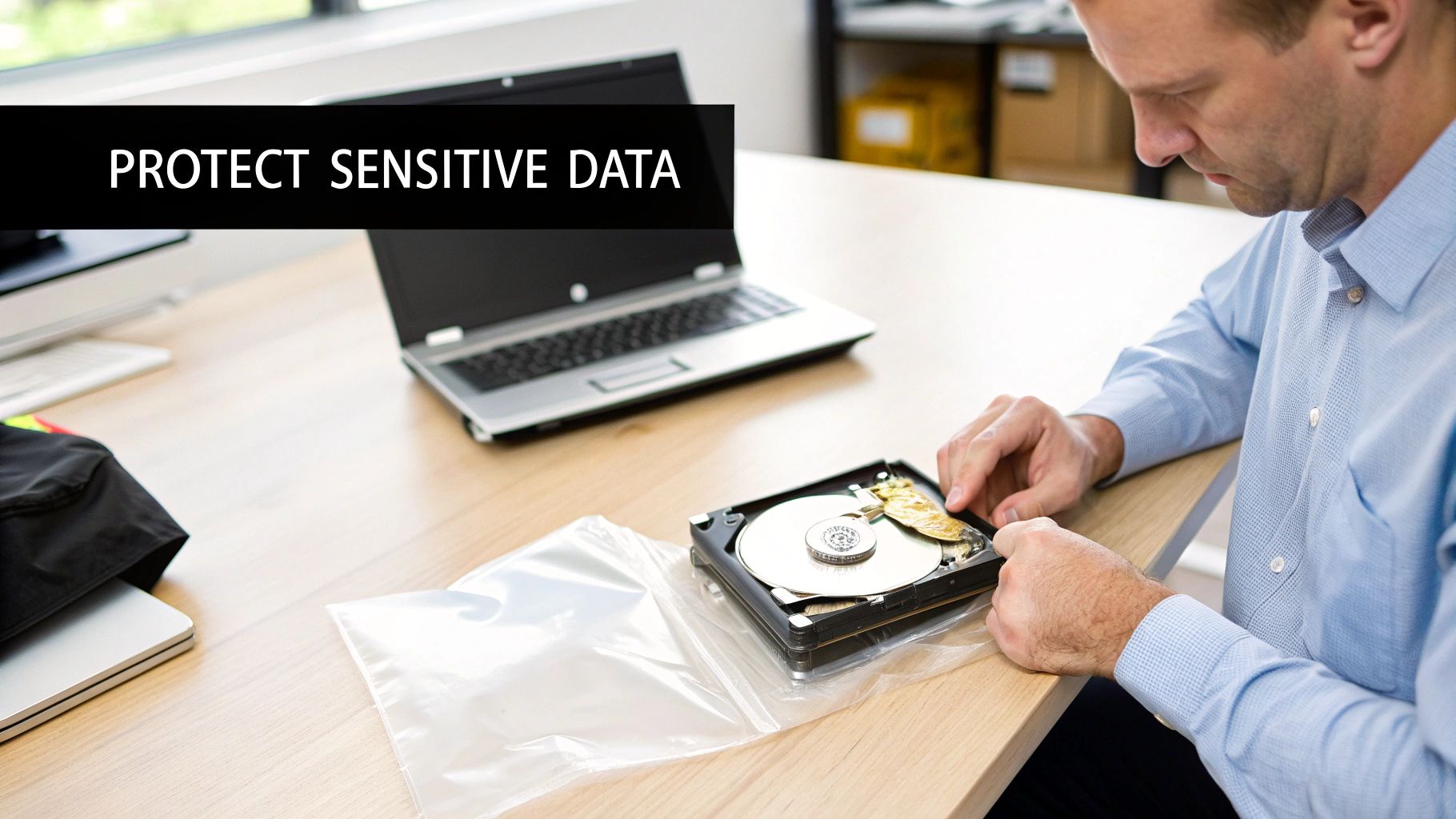
Failing to properly destroy data on old IT assets isn't just a minor slip-up; it's a major business liability. For commercial and enterprise clients, those retired hard drives, solid-state drives (SSDs), and other storage devices sitting in a closet are a hidden but very real threat. Just deleting files or formatting a drive isn't enough for a business environment. With today's software, that data can often be recovered, leaving your entire organization completely exposed.
Physical destruction through shredding is the only way to guarantee your business data is 100% irrecoverable. This isn't just about erasing data; it's about physically pulverizing the storage platters into tiny, unrecognizable pieces. Imagine turning a top-secret document into confetti—once it's shredded, there's no piecing that information back together.
The Real Risks of Improper Disposal for Your Company
The fallout from neglecting secure data destruction is widespread and can shake every part of your business. Understanding these risks makes it clear why professional shredding isn't just an option—it's a non-negotiable part of managing your IT assets.
Here are the key vulnerabilities for businesses:
- Data Breaches and Reputational Damage: A single compromised drive can trigger a public data breach, shattering customer trust that might take years to rebuild. The average cost of a data breach is staggering, often running into the millions.
- Regulatory Non-Compliance: Laws like HIPAA for healthcare, FACTA for consumer information, and the FTC Disposal Rule for financial data all require secure data destruction. Ignoring these rules can lead to steep fines and legal battles.
- Intellectual Property Theft: Those old drives could be hiding your trade secrets, proprietary research, or future business plans. If that information gets into a competitor's hands, the damage to your market position could be catastrophic.
From Operational Cost to Security Investment
It’s a huge mistake for a business to see hard drive shredding as just another disposal expense. You should think of it as a vital piece of your cybersecurity and risk management strategy. It's a proactive investment that protects your organization from potential disaster. Your business invests in firewalls and antivirus software to protect your live data, right? You need to do the same for your retired assets by investing in their secure destruction. You can learn more about this on our detailed guide to secure data destruction practices.
The chain of custody for a retired hard drive is just as important as the security protocols for your live servers. Once an asset leaves your control, its data becomes a liability unless you have documented proof of its complete and permanent destruction.
Of course, shredding is just one part of the puzzle. Beyond physically destroying old drives, it's crucial for organizations to have strong strategies for protecting active data, too. This means exploring a range of methods, including modern secure storage solutions to protect your data. Taking this kind of holistic approach ensures your business is secure throughout the entire data lifecycle—from the moment it's created to its final disposal—closing security gaps and reinforcing your commitment to protecting sensitive information.
Choosing Between On-Site And Off-Site Shredding
When your company starts searching for "hard drive shredding services near me," you'll quickly run into a key decision: should the shredding happen at your location or theirs? This isn't just a matter of convenience. It's a strategic choice that comes down to your company's security needs, compliance rules, and operational logistics.
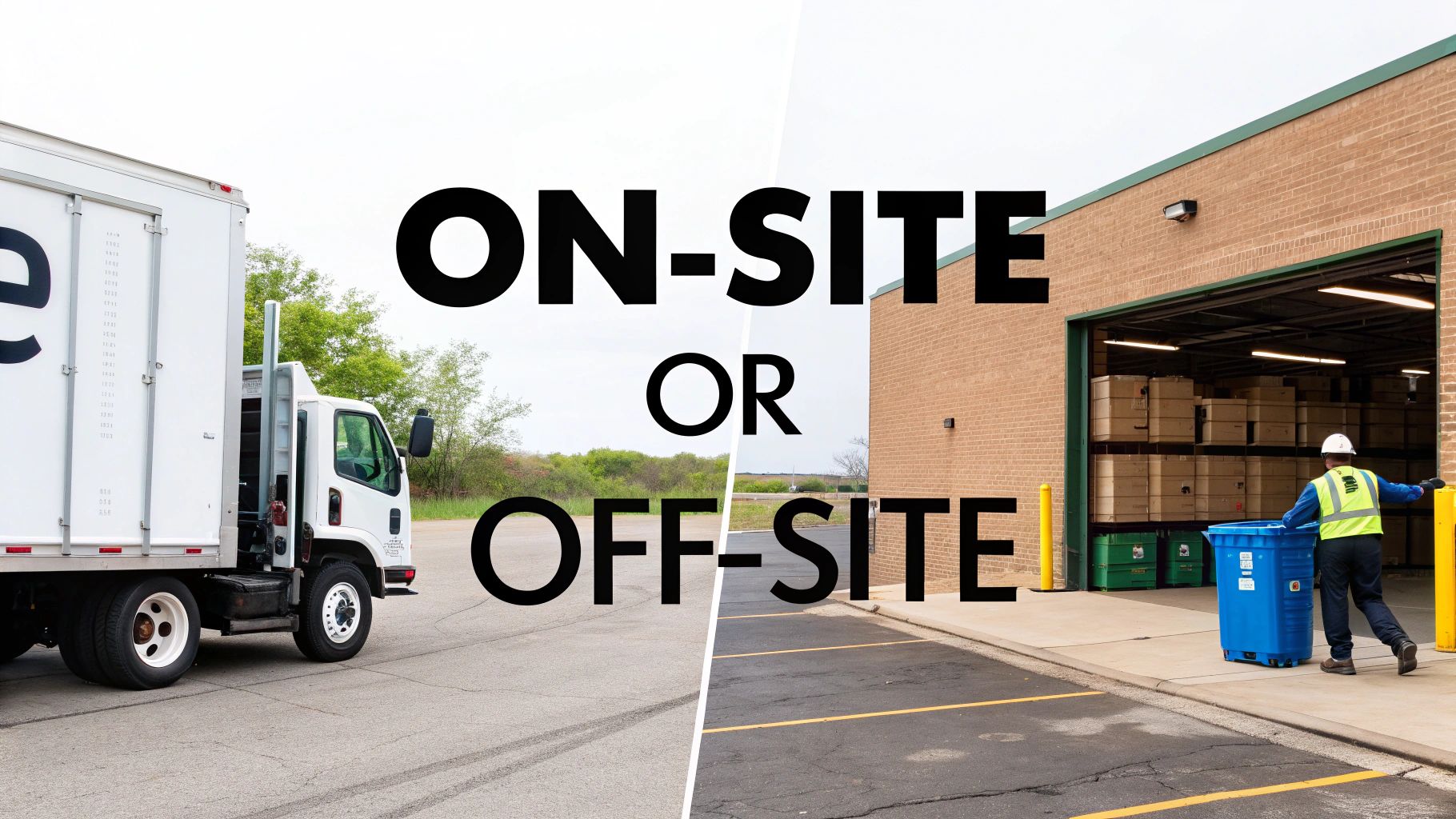
Think of on-site shredding as the ultimate in verified security. A mobile shredding truck pulls up to your building, and you get to watch the entire destruction process from start to finish. This is non-negotiable for many businesses in highly regulated fields like healthcare and finance.
Off-site shredding, on the other hand, is like using a secure, audited bank vault. It’s an incredibly efficient and often more affordable option, especially when your business is dealing with a large quantity of old hard drives and need to be mindful of your budget.
On-Site Shredding For Maximum Security
On-site, or mobile, shredding brings the whole operation to you. A specialized truck outfitted with an industrial-grade shredder parks at your facility, and your hard drives are turned into tiny metal fragments right before your eyes.
This method is the gold standard for any organization that absolutely cannot have a break in the chain of custody. It gives you unmatched peace of mind and is often the top pick for businesses dealing with strict data privacy laws.
Here’s why it’s so popular for commercial clients:
- Immediate Verification: You and your team can witness the entire process, from scanning each drive's serial number to watching it get pulverized. There's no doubt that every single drive is gone.
- Unbroken Chain of Custody: Your hard drives never leave your property intact. This completely eliminates the risk of them getting lost or stolen while in transit.
- Compliance Assurance: For industries under the thumb of regulations like HIPAA, FACTA, or GLBA, having eyewitness proof of destruction is an auditor's dream.
Off-Site Shredding For Efficiency And Scale
Off-site, or plant-based, shredding is a different approach. Your hard drives are picked up in locked, secure containers and transported in GPS-tracked vehicles to a specialized destruction facility. The entire process is managed with a strict, documented chain of custody from your door to the shredder.
This route is incredibly efficient and often more cost-effective, particularly when you have a large volume of media to destroy. It’s perfect for big IT asset retirement projects, data center decommissioning, or for businesses that don’t have the space for a massive shredding truck. If you want to see how this works for larger projects, you can learn more about our California hard drive shredding services to get a better sense of the scale.
Off-site shredding is not less secure; it's differently secure. A certified facility operates under constant surveillance and audited procedures, much like a financial institution handling cash. The security is built into the facility's infrastructure and rigorous processes.
Making The Right Choice For Your Business
So, how do you decide? It really boils down to your organization's specific risk profile, internal policies, and operational needs.
To make things a bit clearer, here’s a direct comparison of the two commercial services:
Comparing On-Site vs Off-Site Hard Drive Shredding
| Feature | On-Site Shredding | Off-Site Shredding |
|---|---|---|
| Location | At your facility | At a secure, specialized plant |
| Verification | Witnessed destruction in person | Documented with a Certificate of Destruction |
| Chain of Custody | Never leaves your premises intact | Secure, documented transport |
| Best For | Maximum security, compliance, smaller volumes | Large volumes, cost-effectiveness, logistics |
| Cost | Generally higher per drive | Typically more economical |
| Logistics | Requires space for a large truck | Simple pickup process |
Ultimately, if your company handles extremely sensitive data like patient records or financial details and need to prove witnessed destruction for an audit, on-site shredding is your best bet.
But if you’re tackling a huge hardware refresh and need a budget-friendly, secure, and efficient solution, off-site shredding at a certified facility is a fantastic and completely reliable choice. Both paths lead to the same destination: the total, irreversible destruction of your data.
Understanding Data Destruction Compliance And Certifications
Navigating the web of data privacy laws is a huge task for any business today. When you're searching for "hard drive shredding services near me," you're not just looking for someone to get rid of old equipment; you're looking for a partner in compliance. Regulations like HIPAA, FACTA, and GLBA don't just suggest secure data destruction—they demand it.
Getting this wrong isn't just a security slip-up; it's a fast track to eye-watering fines and legal trouble. These laws are built on accountability, requiring you to prove you did everything necessary to protect sensitive information from creation to destruction. This is exactly why professional, certified shredding is a non-negotiable part of modern risk management for any enterprise.
The Importance Of Chain Of Custody
Think of the chain of custody as the documented, unbroken trail that follows your hard drives from the moment they leave your office to their final pulverization. This careful record-keeping is your proof of due diligence, showing exactly who handled your drives, when, and where. It creates an auditable paper trail that will stand up to any scrutiny.
A secure chain of custody isn't complicated, but it is meticulous. It typically involves:
- Asset Tagging: Every hard drive is inventoried and given a unique serial number before it goes anywhere.
- Secure Transport: Your devices are moved in locked, sealed containers, often inside GPS-tracked vehicles.
- Controlled Access: Only authorized, background-checked professionals handle the assets at the secure facility.
- Documented Handoffs: Every time the drives change hands, it's logged, creating a seamless and verifiable history.
This process eliminates any gaps where a drive could get lost, stolen, or accessed by the wrong person. It turns disposal from a potential liability into a documented, secure procedure.
Your Legal Proof The Certificate Of Destruction
Once your hard drives have been turned into tiny pieces of metal, you'll receive a Certificate of Destruction. This is much more than a receipt. It's a legally binding document that officially transfers liability for the data from your company to the destruction vendor.
This certificate is your ultimate proof of compliance. It details everything from the date of destruction and the specific serial numbers of the shredded drives to the method used. Most importantly, it includes a statement confirming the data is gone forever. If your business is ever audited or faces a legal challenge, this certificate is the definitive evidence that you met your obligations.
A Certificate of Destruction is not just paperwork; it is your legal shield. It confirms that you have fulfilled your duty to protect sensitive information, effectively closing the loop on your data security responsibilities for those assets.
Why Certifications Like NAID And R2 Matter
So, how do you know a vendor’s promises of security and compliance are legitimate? This is where third-party certifications come in. They provide independent, unbiased proof that a company meets the highest industry standards for security, environmental responsibility, and professional operations.
Two of the most critical certifications to look for are:
- NAID AAA Certification: This is the gold standard for the data destruction industry. A NAID AAA certified vendor has passed rigorous, unannounced audits of their security protocols, employee screening, and operational procedures. Choosing one guarantees you’re getting a secure, auditable process.
- R2 Certification (Responsible Recycling): While NAID is all about security, R2 is focused on environmental compliance. It ensures that after your drives are shredded, the leftover electronic scrap is managed in an environmentally sound and safe manner. You can learn more by exploring the specifics of R2 certification in our guide.
The growing focus on these standards is clear in the market. The hard drive shredding services industry is expected to grow significantly, reaching USD 1.2 billion by 2033 from USD 0.72 billion in 2024. This boom is fueled by rising data security concerns and the need for businesses to meet tough regulatory demands. Partnering with a certified provider ensures you’re aligned with best practices in a field that’s only getting more complex.
The Hard Drive Shredding Process From Start To Finish
Ever wonder what actually happens to your company's hard drives after a professional data destruction service picks them up? It's not just about tossing them in a machine. The process is a carefully managed, high-security journey from your office to total oblivion, designed to protect your data and keep you compliant.
It all starts with a meticulous collection and inventory process. Whether a team comes to your facility or you drop off the drives, the first step is accounting for every single device. Each hard drive, SSD, or tape has its serial number scanned and logged.
This initial scan is what kicks off the chain of custody. Think of it as a detailed manifest for your data. This list ensures total accountability from the moment your assets leave your sight.
Secure Logistics and Transportation
Once everything is logged, the drives are sealed in locked, tamper-evident containers for their trip. This isn't just a simple delivery; it's a critical security step that prevents anyone from getting their hands on your hardware while it's on the move.
Certified providers use GPS-tracked vehicles and follow strict logistics protocols. This controlled movement is key to maintaining that secure chain of custody, giving you a documented trail that proves the exact drives that left your office are the same ones that arrived for destruction.
The Industrial Shredding Stage
This is where the magic happens. Upon arrival, the locked containers are opened inside a secure facility, and your inventoried hard drives are fed into an industrial-grade shredder. These aren't your average office paper shredders—they're powerful machines built to tear through steel, plastic, and complex electronics.
The shredder's massive blades obliterate the drives, destroying the platters, casings, and all the tiny internal components. What comes out the other side is a pile of metal and plastic confetti, making data recovery completely impossible. To learn more about why this final step is so critical, check out our guide on how to dispose of hard drives securely.
The infographic below breaks down the key compliance steps in this secure process.
As you can see, a secure hand-off, certified shredding, and documented proof are the three pillars of a fully compliant data destruction plan.
Final Documentation and Responsible Recycling
After the shredding is complete, you receive the single most important piece of paper in the whole process: the Certificate of Destruction. This is a legally binding document confirming your media was destroyed according to industry standards. It includes the serial numbers of every device, officially transferring liability away from your organization and giving you definitive proof of compliance.
But the process doesn't end there. The shredded material is considered e-waste and is sent to a certified downstream recycling partner, never a landfill.
The shredded remains of your hard drives are considered e-waste. A responsible ITAD partner ensures this material is processed according to strict environmental standards, separating metals like aluminum and steel for reuse and safely managing any hazardous components.
This closes the loop, ensuring your data is not only gone for good but that the physical hardware is recycled responsibly. The technology behind this is constantly improving, with the global market for hard disk destruction equipment valued at USD 1,760 million in 2024. Leading systems can now recover up to 98% of precious metals from destroyed SSDs, turning old tech into valuable raw materials.
How To Choose The Right Hard Drive Shredding Partner
Picking a vendor to destroy your old hard drives is a massive security decision, not just another item to check off your procurement list. The company you choose is literally handling the final, irreversible step in protecting your organization's most sensitive data. This isn't the time to pinch pennies; it's about finding a genuine security partner who can prove they'll safeguard your information.
Making the right call means looking past the price tag and really digging into a vendor's certifications, insurance, and documented procedures. This guide will walk you through the essential questions to ask so you can properly vet any hard drive shredding service and feel confident they meet the highest standards.
Verify NAID AAA Certification
The first and most important question your business should ask is simple: "Are you NAID AAA Certified?" This isn't just some fancy industry badge. Think of it as the gold standard for secure data destruction.
The National Association for Information Destruction (NAID) performs tough, unannounced audits on companies that hold this certification. These audits aren't a walk in the park; they cover every single aspect of the operation, including:
- Employee Screening: Making sure every single staff member with access to your sensitive materials has passed a rigorous background check.
- Security Infrastructure: Checking that the facility has 24/7 surveillance, controlled access, and a secure environment from top to bottom.
- Process Integrity: Confirming their chain of custody and destruction processes are locked down and meet strict, verifiable standards.
When you choose a NAID AAA Certified provider, you get that third-party assurance that your vendor is held to the highest security protocols in the business.
Scrutinize Their Chain of Custody Procedures
A secure chain of custody is the documented, auditable trail that tracks your hard drives from the moment they leave your office to the second they're turned into tiny metal fragments. One weak link in that chain can expose everything. Ask them to walk you through their process in detail.
A vendor should be able to clearly articulate their entire process, from asset scanning and secure transport in locked containers to documented handoffs and final destruction. Vague answers are a significant red flag.
A transparent and solid chain of custody is your best defense against data getting lost or stolen while in transit. It’s a core piece of any comprehensive IT asset disposition strategy, ensuring total accountability. You can learn more about how this fits into the bigger picture by reading our guide explaining what IT asset disposition is.
Confirm Adequate Insurance Coverage
Let's talk worst-case scenarios. What happens if something goes wrong? A reputable data destruction partner must carry enough insurance to protect you if the unthinkable happens. Ask for proof of their insurance and look for two specific types:
- General Liability Insurance: This covers physical damages, but it's not nearly enough on its own.
- Downstream Data Breach / Professional Liability Insurance: This is the one that really matters. It's the critical coverage that protects you financially if a data breach happens because of the vendor's mistake.
Without this specialized insurance, all the financial and legal fallout could land right back on your company's shoulders.
Review Their Certificate of Destruction
Finally, ask to see a sample Certificate of Destruction. This document isn't just a receipt; it's your legal proof that you complied with data privacy laws. A proper certificate should be detailed and defensible in an audit.
Make sure it includes:
- A unique serial number for tracking.
- The date and location where the shredding took place.
- A list of the destroyed media, ideally with serial numbers if you requested that level of tracking.
- The signature of an authorized representative from their company.
The market for secure hard drive destruction is booming—valued at around USD 1.65 billion in 2024 and expected to skyrocket to USD 5.05 billion by 2035. This massive growth shows just how seriously businesses are taking data security. It also means it's more important than ever to partner with a vendor who provides meticulous, legally sound documentation. You can see more stats on this rapidly growing market in the full industry report.
Common Questions About Commercial Hard Drive Shredding
Even after you've decided to go with a professional service, it’s normal to have some practical questions about how hard drive shredding actually works for a business. The logistics, costs, and little details can seem confusing at first. This section cuts through the noise and gives you clear, direct answers to the questions we hear most often from our corporate clients.
What Is The Difference Between Data Wiping And Physical Shredding?
This is a big one. Think of it like this: data wiping is a software solution, while shredding is a physical one.
Data wiping, or sanitization, uses special software to overwrite every bit of your hard drive with random junk data. This makes the original information incredibly difficult for anyone to piece back together. It's a great option if your business plans to reuse or resell the hard drives, since the hardware is left perfectly intact and functional.
Physical shredding, on the other hand, is the end of the road for the drive. An industrial shredder literally pulverizes the entire device into tiny, twisted pieces of metal. There is no coming back from this. It's the only way to guarantee the data is 100% irrecoverable. If your business is dealing with strict compliance rules like HIPAA or has sensitive company secrets on those drives, shredding isn't just the best option—it's often the only one.
How Much Do Hard Drive Shredding Services Cost?
There’s no simple, flat rate for commercial hard drive shredding because the cost depends on a few key things. Getting a custom quote is always the way to go for an accurate number.
Here’s what typically influences the price:
- Quantity of Drives: The more you have, the lower the per-drive cost. Volume discounts are pretty standard in the industry.
- Service Type: On-site shredding, where a mobile shred truck comes to you, usually costs more per drive. You're paying for the convenience and logistics. Off-site shredding at a secure facility is typically the more budget-friendly choice.
- Your Location: How far are you from the service provider? This can affect travel and transportation costs, especially for off-site jobs.
- Additional Services: Need someone to remove the drives from hundreds of computers? Or require detailed serial number tracking for your audit trail? These extra services will naturally affect the final price.
What Happens To The Shredded Hard Drive Material?
After your drives are turned into a pile of metal confetti, they don’t just get dumped in a landfill. That shredded material—a mix of aluminum, steel, plastics, and circuit board components—is securely transported to a certified electronics recycling facility.
At the recycling plant, the e-waste goes through a complex sorting process. Huge magnets and other advanced technologies separate the different materials. These commodities are then cleaned up and sent back into the manufacturing supply chain to be used in new products. This whole process is often governed by standards like R2 (Responsible Recycling) to ensure everything is handled in an environmentally sound way.
The goal of a certified ITAD partner is twofold: ensure absolute data security through destruction and then guarantee environmental responsibility through proper recycling of the physical remnants.
Do I Need To Remove Hard Drives From Computers Myself?
You can, but you definitely don't have to. Most full-service IT Asset Disposition (ITAD) companies, including Beyond Surplus, can handle this for you. It’s a huge time-saver, especially if your business is dealing with a big office cleanout or decommissioning a data center.
Letting your provider pull the drives saves your IT team countless hours of tedious work. More importantly, it keeps the chain of custody secure from the very start. The provider’s technicians are trained to pull drives efficiently while documenting the whole process, so nothing gets missed or misplaced. It just makes the whole project simpler and more secure for your business.
Can You Shred Solid-State Drives (SSDs) Too?
Yes, absolutely. SSDs might not have the spinning platters of a traditional hard disk drive (HDD), but they still hold your sensitive business data on tiny memory chips. They must be physically destroyed to be secure.
Specialized shredders are built to tear through these devices and pulverize the flash memory chips inside. This also applies to USB flash drives, memory cards, and other similar media. In fact, data wiping software can sometimes be less effective on SSDs because of how they store data. For SSDs, physical destruction is the most certain way to know the data is gone for good. Just make sure to ask your provider if they have the right equipment to handle both HDDs and SSDs.
For businesses seeking a certified and reliable partner for secure data destruction, Beyond Surplus offers comprehensive on-site and off-site hard drive shredding services. We provide a documented chain of custody and a Certificate of Destruction to ensure your organization remains compliant and secure. Contact us today for a complimentary quote for your IT asset disposal needs.