

Atlanta, Georgia businesses are heading into a very different end-of-life cycle for IT equipment in 2026. One local analysis says 68% of Atlanta enterprises prioritize sustainability, 74% still lack a formal ITAD plan, and projected 2026 upgrades will generate 12,000 tons of e-waste in the metro area according to Beyond Surplus's Atlanta 2026 upgrade analysis. That combination changes the conversation. IT asset disposal is no longer a cleanup task at the end of a refresh. It's part of the refresh itself.
The most important shift isn't volume alone. It's that Atlanta organizations now have to make disposal decisions under pressure from AI infrastructure upgrades, hybrid workforce logistics, security obligations, and sustainability reporting. Companies that still rely on ad hoc pickup requests or blanket shredding policies will leave value on the table and create avoidable compliance gaps.
Atlanta's 2026 ITAD Tipping Point
Atlanta's 2026 ITAD environment is defined by a mismatch between intent and execution. Many organizations want sustainable disposal. Far fewer have built a formal process that tells IT, security, facilities, and procurement what happens when devices leave service.
That gap matters more in Atlanta than in many markets because the city supports large healthcare systems, financial firms, logistics operations, universities, and a dense data center ecosystem. Atlanta's role as a data center hub means refresh cycles don't just produce office laptops and monitors. They also generate servers, storage arrays, networking gear, and specialized equipment with very different risk profiles.
What changed in 2026
A simple recycle-and-destroy model doesn't fit current conditions. Some retired assets still have resale value. Others need verified sanitization before remarketing. Some must go straight to destruction because of sector rules, internal policy, or the nature of the data and workloads involved.
Practical rule: Treat ITAD as an operating process, not a warehouse event.
The companies handling 2026 well are separating assets into lanes early:
- Resale lane: Devices that can be sanitized, tested, and remarketed.
- Destruction lane: Media and hardware that require verified destruction.
- Restricted lane: Specialty or regulated assets needing tighter handling and documentation.
What doesn't work anymore
Three habits keep causing problems in enterprise environments:
- Late planning: Teams approve a hardware refresh first and ask disposal questions later.
- Single-path thinking: Everything gets shredded, or everything gets sent to recycling, regardless of condition.
- Weak documentation: Pickup happens, but no one can easily prove serial-level custody or final disposition.
In 2026, Atlanta businesses need a disposal workflow that stands up to internal audit, security review, and sustainability scrutiny.
Trend 1 The AI Driven Hardware Refresh
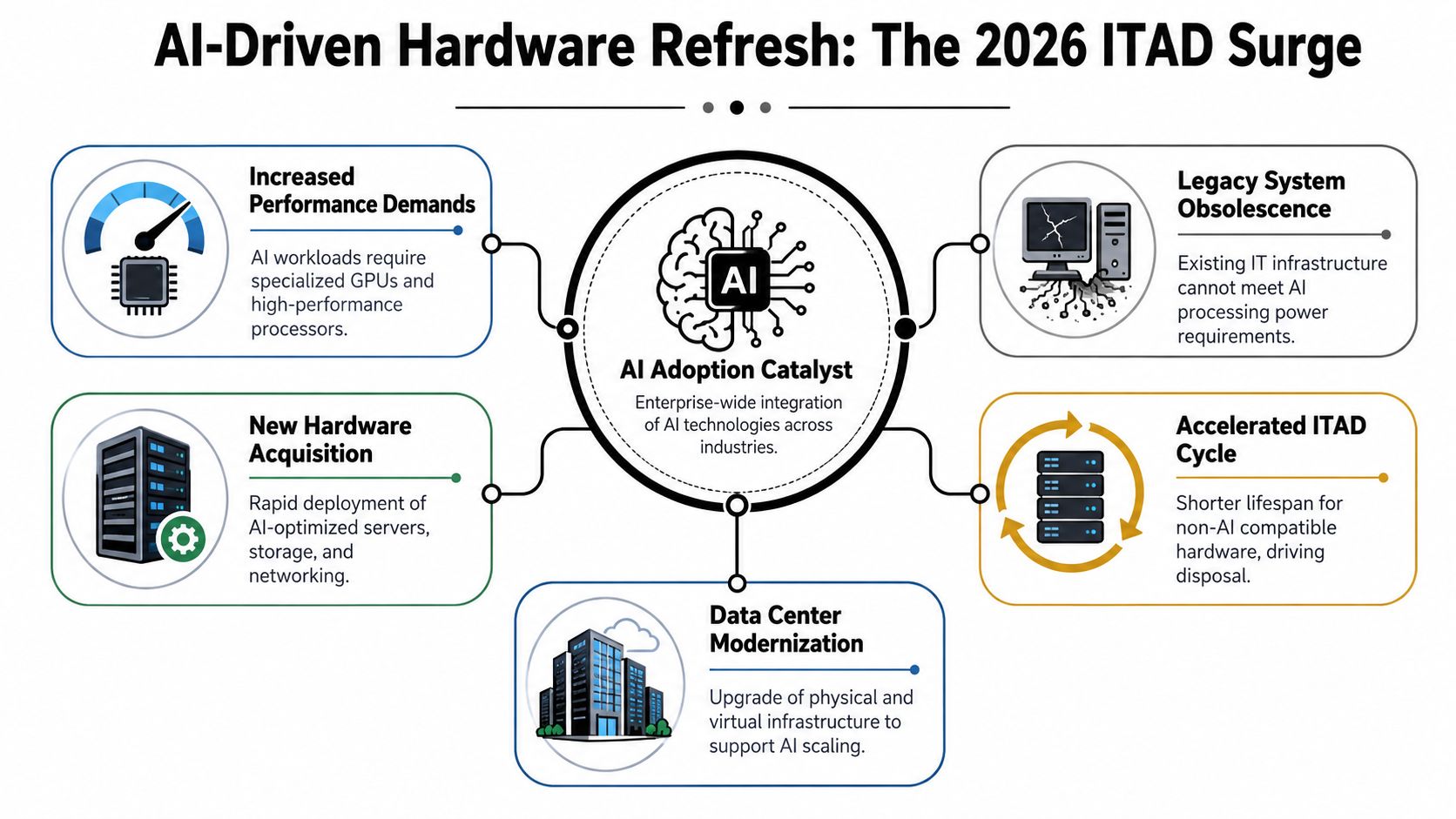
AI adoption is changing the timing and economics of IT retirement. Industry analysis says AI adoption is accelerating hardware refresh cycles, and Atlanta organizations now face a practical question: does that surge create more equipment suitable for resale, or does it push more assets into secure destruction because of compliance and proprietary model concerns, as noted in NCS Global's ITAD trends analysis?
Why AI changes disposal decisions
This isn't a routine performance upgrade. AI readiness often pushes organizations to replace equipment because the old environment no longer matches the workload. That affects:
- enterprise laptops and engineering workstations
- servers supporting training or inference workloads
- storage tied to larger datasets
- networking hardware inside upgraded environments
How AI is impacting Atlanta businesses today is already visible in procurement decisions. The ITAD side follows immediately after.
Resale or destruction
The wrong move is deciding too early that every AI-displaced asset belongs in one stream.
A better decision model looks like this:
| Asset type | Better first question | Common mistake |
|---|---|---|
| User devices | Can it be sanitized and redeployed or resold? | Destroying all endpoints by default |
| Servers | Does the configuration still fit a secondary market? | Treating all retired data center gear as scrap |
| Storage media | Can sanitization be verified to internal policy? | Assuming deletion is enough |
| Networking gear | Is it current enough to retain remarketing value? | Letting it sit until value drops |
Assets displaced by AI often lose strategic value before they lose market value.
Atlanta firms should decide based on data sensitivity, resale condition, and chain-of-custody requirements, not on the label "old hardware."
Trend 2 Data Security for the Hybrid Workforce
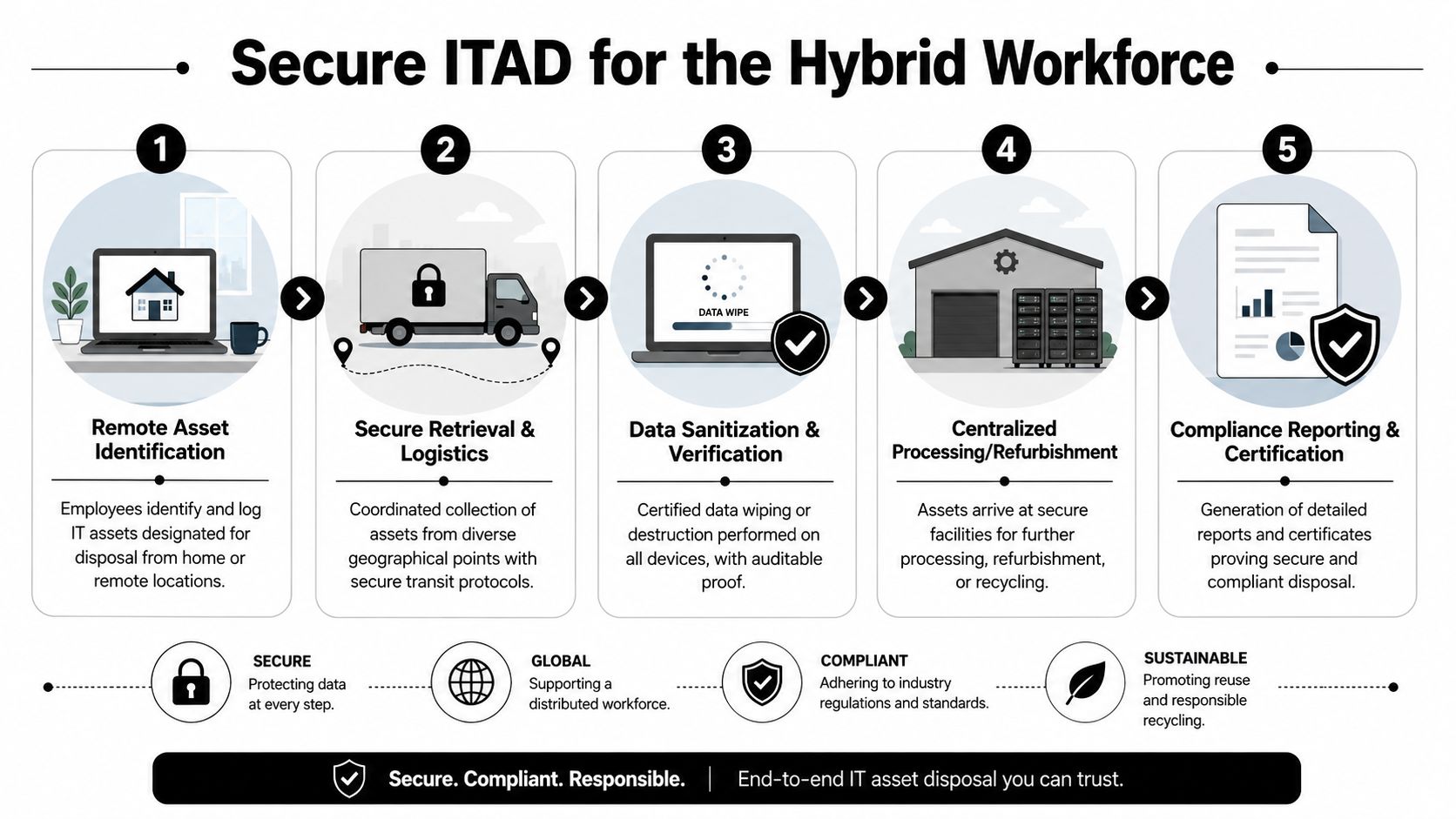
Hybrid work broke the old ITAD collection model. Devices aren't sitting in one office waiting for a truck. They're spread across homes, branch sites, shared workspaces, and storage closets. In that environment, retirement becomes a governance issue.
Recent guidance for mixed environments says organizations need a documented workflow that covers pickup coordination, verifiable sanitization to standards such as NIST 800-88, and certificates of destruction to transfer liability, especially in regulated sectors, according to ReWorx guidance on Atlanta IT workflow trends.
The workflow that holds up
A secure hybrid ITAD process usually includes:
- Asset retirement approval tied to a ticket or asset record.
- Pickup or return instructions based on employee location.
- Custody documentation from handoff through processing.
- Verified sanitization or destruction with the right standard applied.
- Final reporting that security, compliance, and finance can all use.
Teams that want to reduce exposure earlier in the lifecycle should also pay attention to tools focused on Averta's PII leakage prevention, because disposal risk often starts long before a device is physically retired.
What regulated teams should insist on
For Atlanta healthcare, finance, education, and public-sector organizations, the disposal file matters almost as much as the physical handling.
Look for:
- Serialized reporting: You need item-level visibility, not a generic load receipt.
- Standard-based sanitization: Internal policy should reference recognized methods such as NIST 800-88 where appropriate.
- Certificates that close the loop: Secure data destruction practices in Atlanta should produce documentation your legal and compliance teams can retain.
If a remote laptop can't be tracked from user handoff to final processing, the risk isn't operational. It's evidentiary.
Trend 3 The Shift to Value Recovery and ESG Reporting
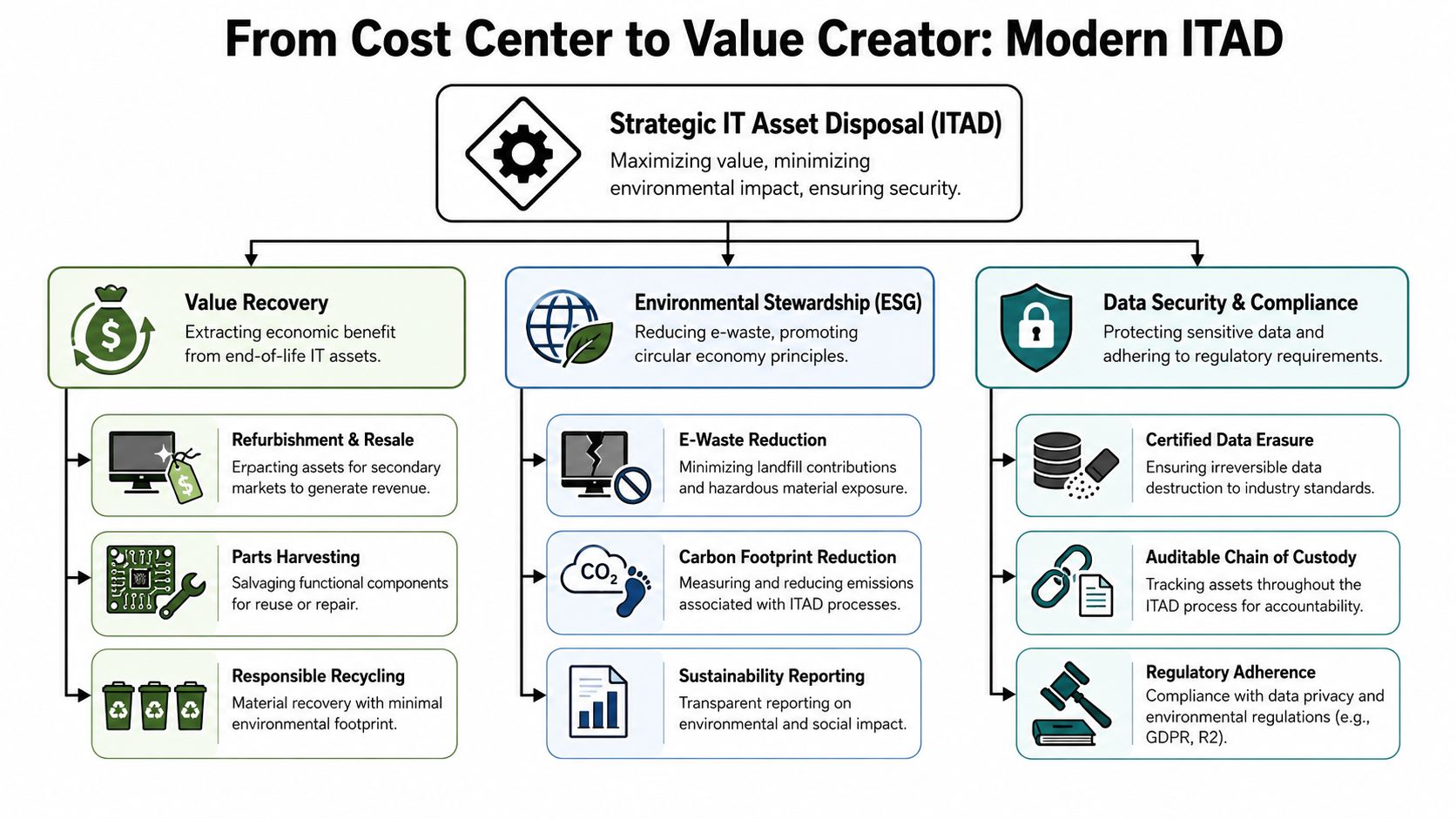
Modern ITAD is moving away from destruction-first thinking. Global market analysis projects the ITAD market will grow at a 13.07% CAGR from 2026 to 2035, driven by demand for secure data destruction, remarketing, and certified e-waste recycling, according to Precedence Research's ITAD market outlook. The more important takeaway for Atlanta businesses is operational. Disposition now works best when it's managed as a controlled supply chain with asset tracking and verifiable erasure.
Why blanket destruction is expensive
Destroying everything feels safe. It also eliminates opportunities to recover value from equipment that can be sanitized, tested, and sold into secondary channels.
A stronger program asks three questions:
- Is the asset data-bearing?
- Can data be verifiably removed to policy?
- Does the device still have useful market life?
If the answer to all three lines up, remarketing should be considered before destruction.
ESG needs evidence, not slogans
Sustainability reporting is getting more specific. General claims about recycling aren't enough when leadership or customers want to know what happened to retired equipment.
Georgia IT disposal and ESG considerations usually come down to proof:
- what was reused
- what was destroyed
- what was recycled
- how custody was documented
Good ITAD reporting supports finance, security, and ESG at the same time. That's why it has become a business process instead of a hauling service.
Trend 4 Navigating Atlanta's Local ITAD Landscape
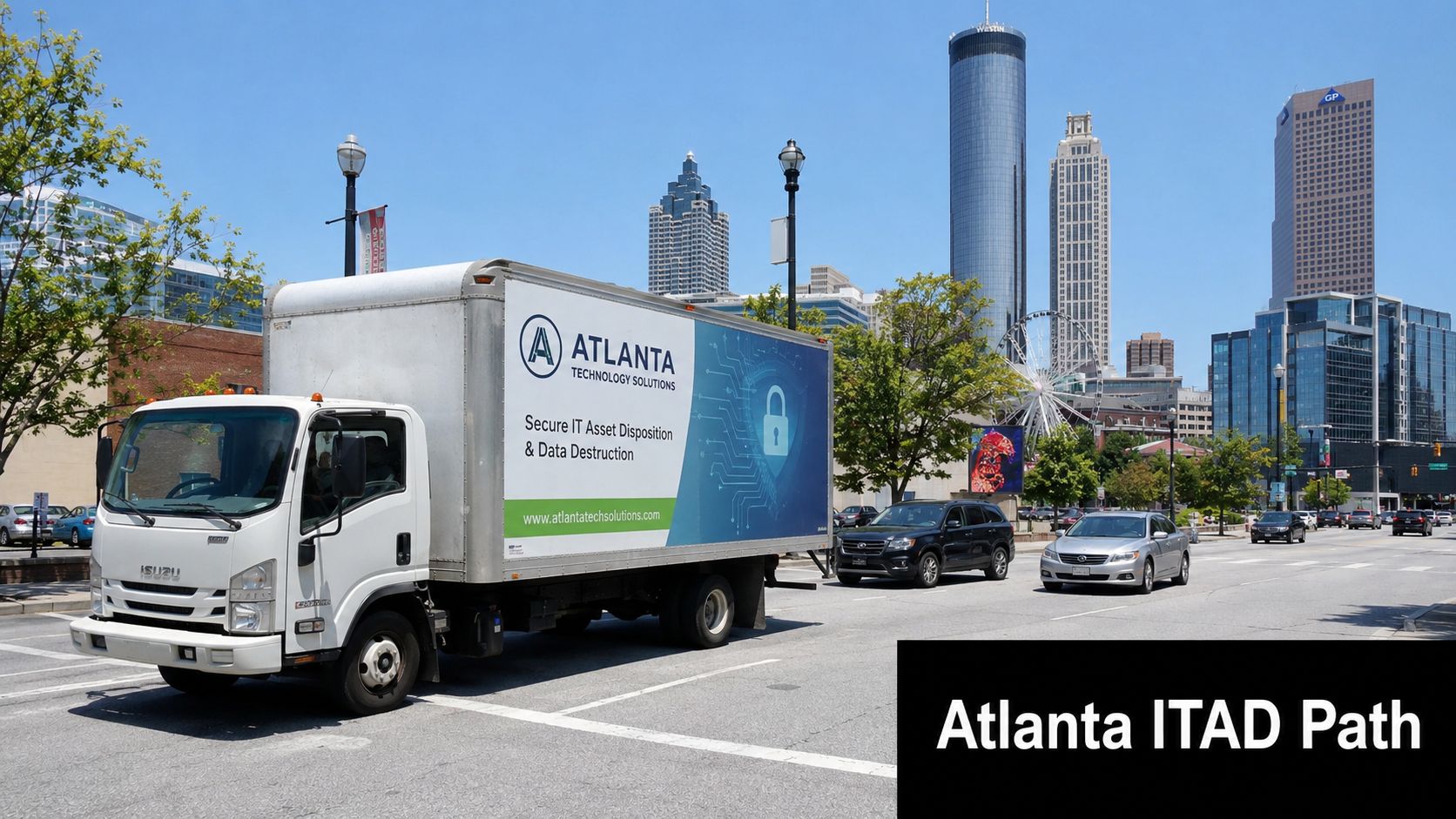
The Atlanta market is part of a much larger expansion in certified disposal demand. The U.S. IT asset disposition market was valued at $2.66 billion in 2022 and is projected to reach $4.90 billion by 2032, according to Custom Market Insights on the U.S. ITAD market. For Atlanta companies, that means local providers are operating inside a long-term growth cycle, not a temporary spike.
What local buyers need to evaluate
Atlanta creates a real logistics challenge. Some pickups happen in dense urban offices. Others happen in suburban campuses, medical facilities, warehouses, school systems, and data environments spread across the metro.
When evaluating an ITAD partner, local businesses should focus on practical capacity:
| Local issue | Why it matters |
|---|---|
| Pickup coordination | Multi-site retirements fail when scheduling is loose |
| Secure transportation | The custody gap often appears between site exit and facility intake |
| Processing fit | Office electronics and data center hardware shouldn't follow the same workflow |
| Reporting depth | Regulated teams need more than a recycling receipt |
What usually goes wrong
A provider may be able to collect equipment but not manage the full chain correctly. That's where Atlanta buyers need discipline. Ask how assets are tracked, when data-bearing media is separated, what documentation is issued, and how mixed loads are triaged after intake.
The city's 2026 environment favors companies that can handle both routine office refreshes and more controlled enterprise retirements without improvising the process.
Your 2026 Atlanta ITAD Playbook
The companies that handle 2026 well won't rely on one big cleanup event. They'll build a repeatable process before devices start piling up.
Start with an internal audit
Don't begin with pickup. Begin with visibility.
Review:
- Asset classes: laptops, desktops, monitors, servers, storage, networking, mobile devices
- Data exposure: which categories hold regulated, sensitive, or proprietary information
- Location spread: headquarters, branch offices, employee homes, warehouses, and data environments
- Disposition options: resale, redeployment, recycling, destruction
This is also where sales, procurement, and operations need the same language. If your teams struggle to align asset status with business action, a general guide for sales enablement is useful for tightening handoffs and ownership across departments.
Write the policy before the refresh
A working ITAD policy should answer operational questions clearly:
- Who authorizes retirement?
- Which assets require sanitization versus destruction?
- What chain-of-custody records are mandatory?
- When does finance review equipment for recovery value?
- How are remote-worker assets returned?
The best ITAD policy is boring. It removes judgment calls from stressful moments.
Vet vendors like a risk manager
Ask direct questions:
- Do you provide serialized asset reporting?
- Can you document chain of custody from pickup through final processing?
- Do you issue certificates of data destruction and recycling?
- How do you handle remote and multi-site pickups?
- How do you separate resale candidates from destruction-only assets?
How to choose an ITAD vendor in Georgia step by step is a good framework for structuring that review. One Atlanta option, Beyond Surplus, offers business pickup, certified data destruction, IT buyback, and reporting aligned with compliance and liability transfer requirements.
Build a three-lane process
Your operational model should route each asset into one of three outcomes:
- Return to market when sanitization and condition support value recovery.
- Component or material recovery when the device no longer makes sense for reuse.
- Secure destruction when compliance or data sensitivity overrides resale potential.
That decision should happen before the truck arrives, not after equipment is stacked on a pallet.
Partnering for Future Ready ITAD in Atlanta
The big lesson from IT Asset Disposal Trends in Atlanta for 2026 is simple. Disposal isn't the last step anymore. It's part of infrastructure planning, security operations, and sustainability management.
AI-driven refreshes will push more equipment out of service faster. Hybrid work will keep assets distributed. Compliance teams will expect stronger proof. Finance will want recovery value where it's available. Those pressures don't cancel each other out. They have to be managed in one coordinated process.
Atlanta businesses that treat ITAD as a controlled end-of-life program will be in a stronger position than those still using ad hoc pickups, spreadsheet tracking, and blanket destruction. The right approach combines serial-level tracking, secure sanitization or destruction, practical logistics, and reporting that stands up to internal and external review.
If your organization is planning a 2026 refresh, now is the time to decide how assets will move, how data will be handled, and where recovery value fits into the plan.
Atlanta businesses can contact Beyond Surplus to build a 2026 ITAD program around secure data destruction, electronics recycling, IT asset recovery, and audit-ready reporting for enterprise equipment across the metro area.


