Mon-Fri 8:30AM – 4:30PM

404-905-8235

IT Buy Back

Donate Today!

Datacenter Services

Product Destruction

Who We Serve

Home » Electronics Recycling & Secure Data Destruction in Georgia » Recycle E Waste Near Me: A Business Guide for Atlanta, GA

Recycle E Waste Near Me: A Business Guide for Atlanta, GA

Your Atlanta office just finished a refresh. The old environment is sitting in a conference room or on a pallet in the warehouse: laptops, docks, monitors, switches, a few aging servers, maybe gear from a lab, clinic, or branch office. Someone types recycle e waste near me into Google and gets a map full of nearby drop-off locations.

That search feels productive. For a business, it often points in the wrong direction.

Commercial e-waste disposal isn't just about getting equipment out of the building. It has to protect data, document custody, satisfy internal audit requirements, and fit the logistics of how your company operates. In Atlanta, that's the difference between a local convenience stop and a real ITAD process.

The Problem with Searching for E-Waste Recycling Near You

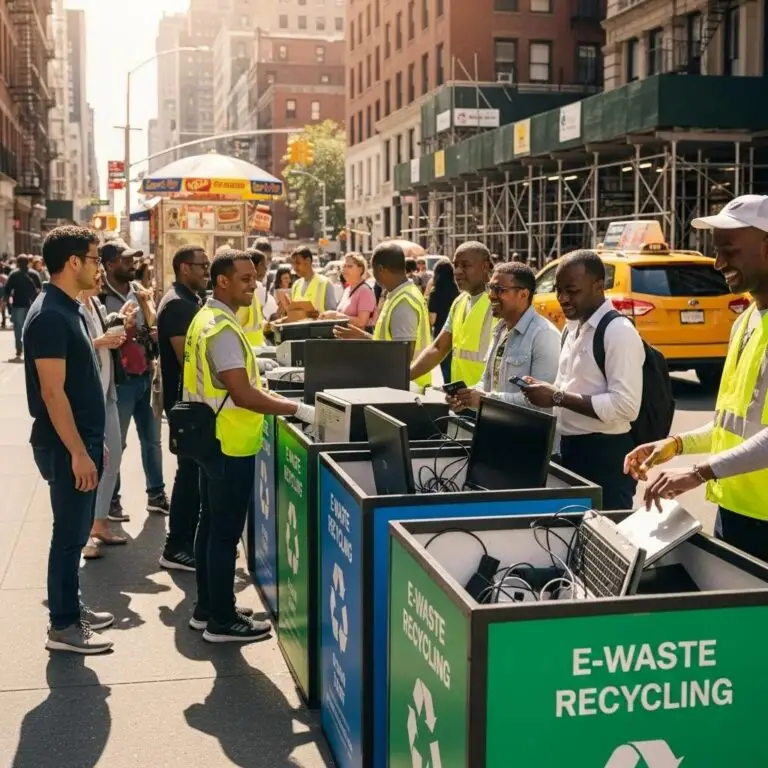
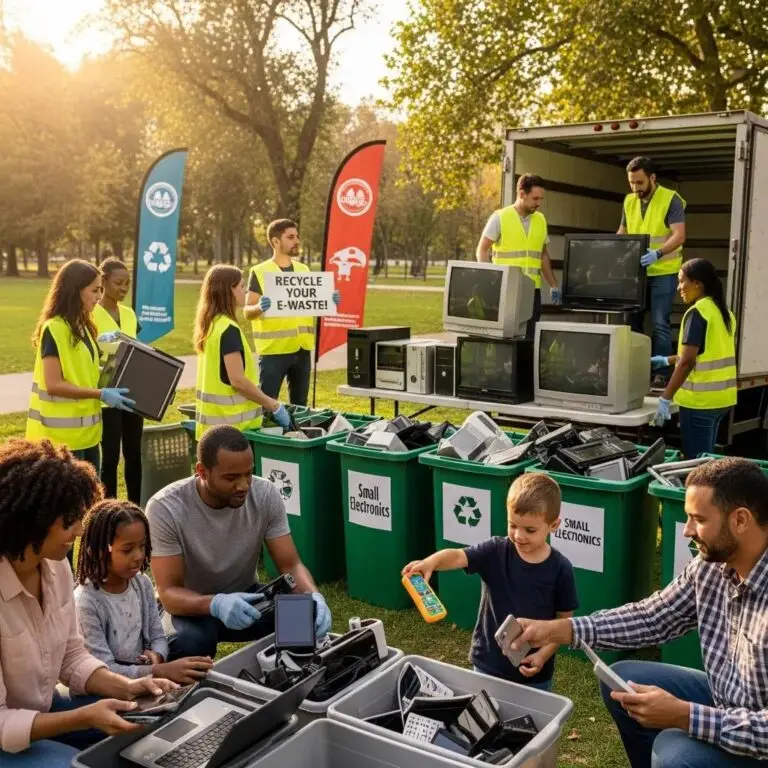
Most map results for recycle e waste near me are built around consumer behavior. They favor municipal centers and public drop-off programs. That works for an old keyboard from a home office. It doesn't work well when a company needs to retire a batch of laptops, remove storage media, or clear a server room without breaking chain of custody.

Recycle E Waste Near Me: A Business Guide for Atlanta, GA

Why local search results often miss the business requirement

The issue isn't that local recycling centers are useless. It's that they're usually not designed for regulated business assets.

Most recycle e-waste near me searches return municipal drop-off centers that lack certified data destruction capabilities. Organizations subject to FTC Disposal Rule or HIPAA need certified data destruction with documented proof, which creates a gap between what search results show and what businesses need, as reflected by the Smyrna Recycling Center information.

A business disposing of retired endpoints, storage devices, or network hardware has to ask different questions:

  • Who logs the assets
  • Who handles drives before destruction
  • What paperwork proves destruction
  • When liability transfers
  • How pickup works for bulk volume

A public drop-off page rarely answers any of that.

What businesses actually need instead

For a commercial project, proximity is only one buying factor. Security, documentation, and operational fit matter more.

Practical rule: If the provider can't explain chain of custody and data destruction documentation before pickup, it isn't the right fit for business IT assets.

That hidden gap is why many companies start with a local search, then end up needing a more specialized provider after legal, compliance, or procurement gets involved. A better starting point is to review options built for business electronics recycling near you, not just public drop-off listings.

Identifying Compliant ITAD Partners Not Just Local Recyclers

A recycler moves material. An ITAD partner manages risk.

That distinction matters because the e-waste stream is massive. Americans generate approximately 47 pounds of e-waste per person annually, and Illinois' structured recycling framework shows why organized collection matters. Under that statewide approach, 47 counties collected 9.94 million pounds of covered devices in 2023, according to Kane County's electronics recycling program summary. For a business, the lesson is straightforward: informal disposal isn't enough once devices contain data, serial-numbered assets, or equipment subject to internal controls.

Recycle E Waste Near Me: A Business Guide for Atlanta, GA

The first screen is credentials

Start by separating companies that market recycling from companies that can support compliance.

Look for providers that can clearly document recognized environmental and security standards such as R2 or e-Stewards. If a vendor avoids the certification conversation and pivots straight to pickup scheduling, that's a warning sign. You need evidence that the process is auditable, not just convenient.

A useful internal review starts with these checks:

  • Certification scope: Ask which facilities are certified and whether the actual processing site is included.
  • Data handling: Confirm whether the company performs wiping, shredding, or both.
  • Documentation: Require sample certificates and downstream reporting before approval.
  • Asset tracking: Ask whether serial-number reporting is available for the equipment you plan to retire.

Then test the operation, not just the sales pitch

A compliant vendor should be able to describe what happens from dock pickup to final disposition without hand-waving.

If the answer to "what happens after your truck leaves" is vague, the due diligence isn't finished.

Ask practical questions. Is media destruction done on-site or off-site? Are assets inventoried at pickup or after receipt? How are exceptions handled when a drive can't be wiped? What happens to batteries, lamps, or damaged equipment that requires different handling?

Those details expose whether you're dealing with a true process company or a hauler.

A shortlisting framework that works

Use a narrow procurement filter instead of a broad web search.

Review area What to verify
Security process Wiping standards, shredding options, custody controls
Environmental handling Certified downstream process, documented material flow
Reporting Certificates, serial-level records, audit trail
Logistics Pickup capability, packaging guidance, site coordination

For teams that need a structured review, this ITAD vendor due diligence checklist is the kind of framework worth using before legal or procurement signs off.

Evaluating E-Waste Service Models for Your Business Needs

Not every Atlanta project needs the same service model. The right fit depends on volume, media sensitivity, site access, and whether you're disposing of a single office worth of hardware or coordinating assets across multiple locations.

Recycle E Waste Near Me: A Business Guide for Atlanta, GA

Scheduled pickup works for straightforward refresh cycles

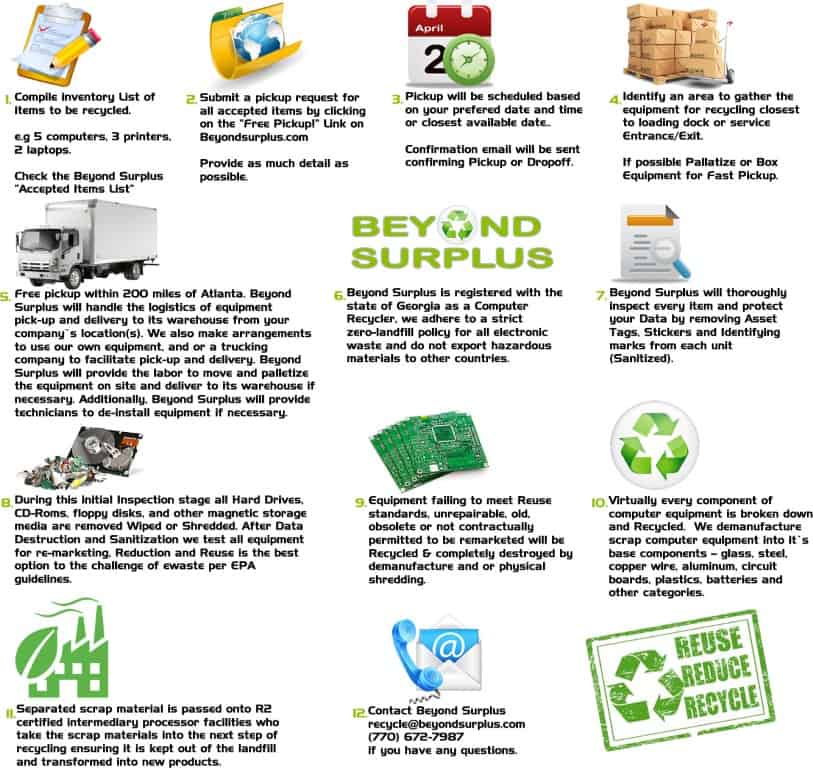
If your company has packaged, non-urgent equipment at one facility, scheduled pickup is often the cleanest option. The vendor arrives, loads, documents the handoff, and processes assets off-site.

This model usually fits:

  • Office refreshes
  • Storage room cleanouts
  • Routine laptop turnover
  • End-of-lease hardware returns

It tends to be the least disruptive option for business operations.

On-site service fits higher-risk assets

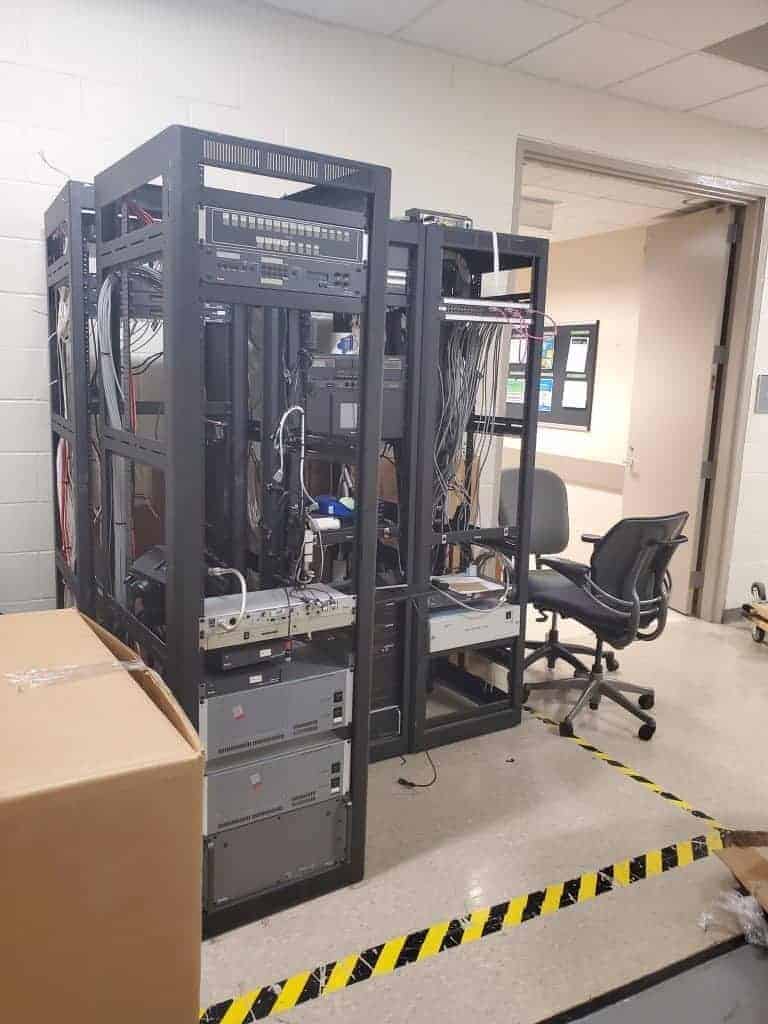
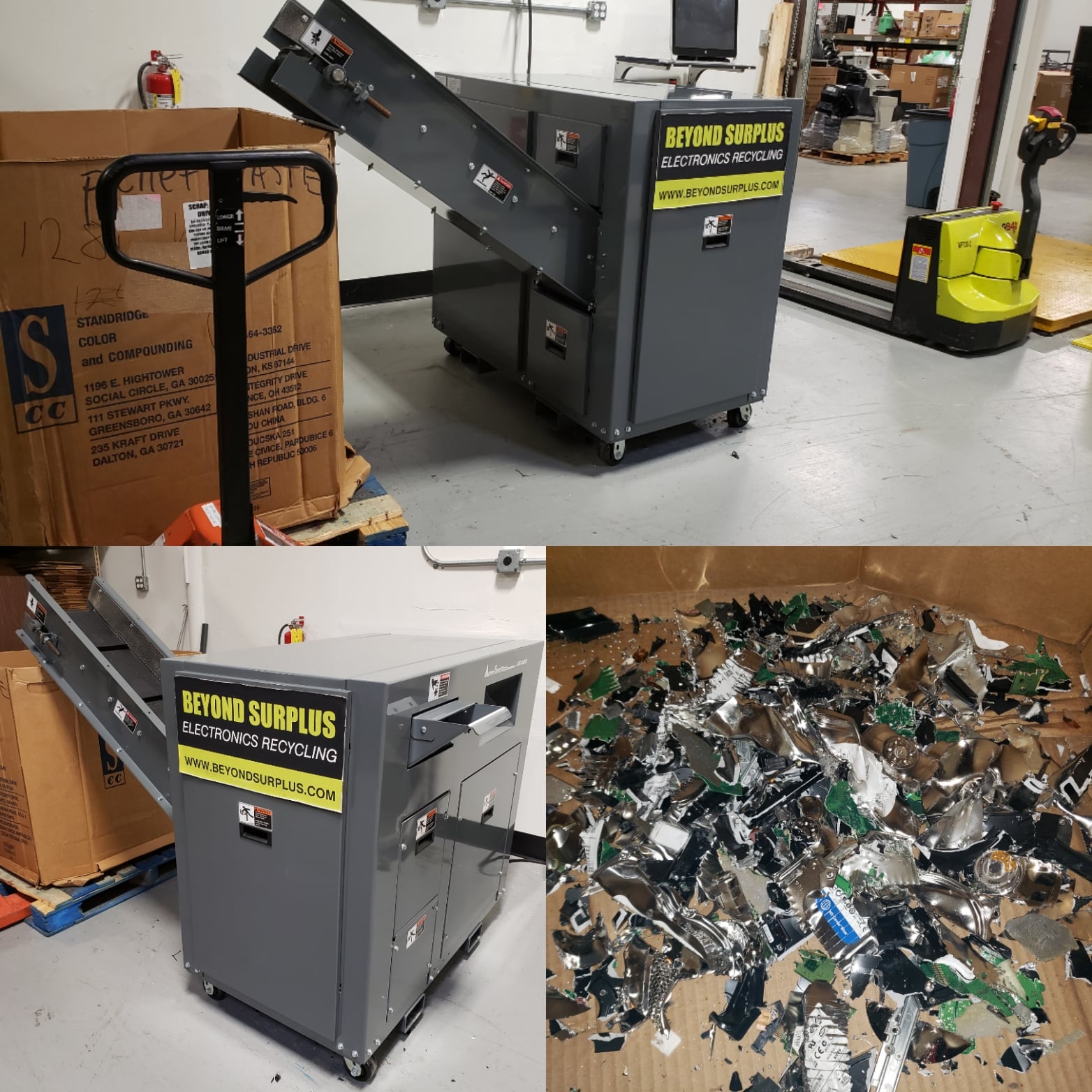
When you need more control, on-site work makes sense. That may include hard drive shredding, supervised packing, or deinstallation support in a server room.

Choose this model when:

  • Your legal team requires witnessed destruction
  • Assets contain regulated data
  • Equipment can't leave intact
  • The project involves racks, servers, or storage arrays

On-site service usually costs more effort to coordinate, but it can reduce internal friction when security or compliance teams need direct visibility.

Managed logistics solves multi-site complexity

This is the service model most local search results fail to surface. Typical proximity-based results focus on drop-off. Enterprise buyers often need coordinated pickup, not an address.

Typical near me searches default to local drop-off options, omitting the fact that enterprise-scale challenges require nationwide service capabilities. Certified ITAD providers like Beyond Surplus operate their own fleets and coordinate logistics nationally for organizations managing data centers or multi-site office relocations, as described in this overview of electronics recycling service coverage and logistics.

For Georgia teams planning branch pickups or regional removals, a provider with dedicated IT equipment pickup in Georgia is usually more practical than trying to standardize several local vendors.

Match the service to the job

A simple decision guide helps:

  • Single office, boxed assets, normal timeline: scheduled pickup
  • Sensitive media, internal observers, strict controls: on-site service
  • Multiple sites, deinstallations, staggered pickups: managed logistics

The mistake is choosing based on distance alone. Businesses should choose based on control points.

Ensuring Secure Data Destruction and Full Liability Transfer

For business assets, the hardware itself is rarely the main risk. The data is.

Old laptops, desktops, servers, firewalls, copiers, and storage arrays often hold credentials, patient records, financial files, employee information, client contracts, or internal configuration data. Once an asset leaves your custody without documented destruction, your company may still own the exposure.

Recycle E Waste Near Me: A Business Guide for Atlanta, GA

Data destruction has to happen before recycling

Certified e-waste facilities must perform data wiping before physical recycling. Hard drives must undergo certified wiping protocols such as NIST 800-88 or on-site shredding, and certificates of recycling and data destruction create documented chain of custody that transfers liability from the client to the recycling facility, according to this explanation of how certified electronics recycling handles data destruction.

That sequence matters. Recycling is the end of the physical process. Security starts before that.

Wiping and shredding are not interchangeable

Software sanitization and physical destruction serve different purposes.

Use certified wiping when the asset may be reused, remarketed, or returned with value intact. Use physical shredding when media is damaged, non-wipeable, restricted by policy, or too sensitive to release in any readable form.

A vendor should be able to tell you:

  • Which media can be wiped
  • Which media must be shredded
  • How failed drives are handled
  • What report ties the destruction method to asset identity

If the provider only says "we destroy everything," ask what that means operationally. Good programs don't rely on broad promises. They rely on documented methods.

The certificate matters more than many buyers realize

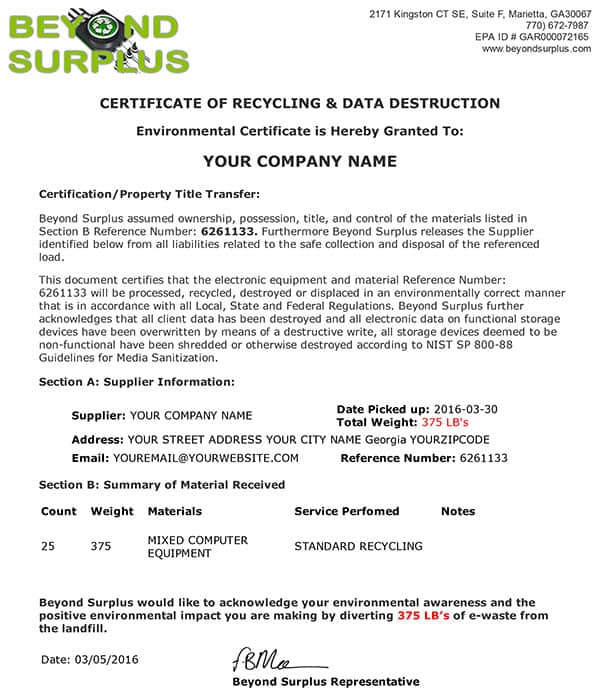
A Certificate of Data Destruction is not just a receipt. It is evidence for audit, legal review, and internal governance. It should align with your inventory, match the scope of the pickup, and identify what method was used.

A chain-of-custody gap usually doesn't show up during pickup. It shows up later, when your team needs proof.

What works in practice is a package of documents, not a single page. That often includes pickup records, serial-level reporting where applicable, destruction confirmation, and a final recycling certificate. This is why buyers should review a sample certificate of destruction process and documentation before approving a vendor.

Where companies get this wrong

The common failures are avoidable:

  • Using public drop-off channels for business devices: easy in the moment, hard to defend later.
  • Assuming "recycled" means "data destroyed": it doesn't.
  • Skipping serial-number reconciliation: that weakens audit defensibility.
  • Letting multiple internal teams hand off assets informally: custody becomes blurry fast.

For healthcare, finance, government, and any company with confidential records, secure destruction isn't an upgrade. It's part of the disposal requirement.

How to Prepare Your IT Assets for Disposition

Most disposition problems start before the truck arrives. Internal preparation determines whether the project moves cleanly or turns into a scramble over missing equipment, untagged devices, and uncertain ownership.

Start with inventory and separation

You don't need a perfect spreadsheet. You do need a usable one.

List what you're sending, where it sits, and whether it contains storage. Split the inventory into practical categories such as laptops, desktops, servers, network gear, monitors, printers, mobile devices, and loose drives. That makes pickup faster and reporting cleaner.

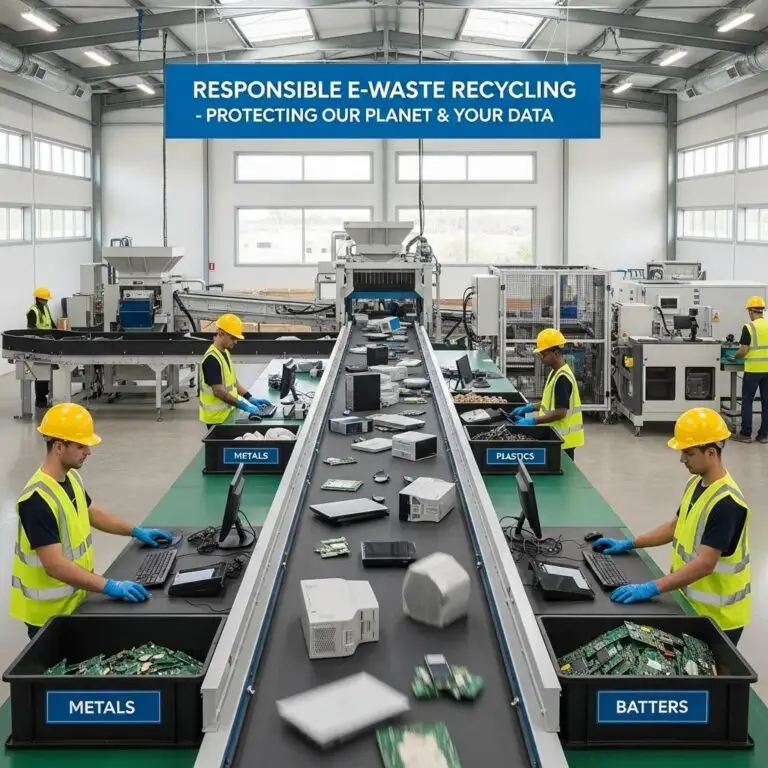
Professional e-waste recycling facilities use multi-stage mechanical separation that starts with shredding material into small pieces, then separating ferrous and non-ferrous metals through magnetic and eddy current methods. Understanding that process helps businesses see why separating equipment types before pickup improves recovery efficiency, as explained in this guide to mechanical separation in e-waste recycling.

Use a simple internal checklist

What works well for most business cleanouts:

  • Tag assets clearly: Mark anything that must be wiped, shredded, or excluded from pickup.
  • Isolate loose media: Put hard drives, SSDs, backup tapes, and removable media in a separate container.
  • Identify special handling items: Flag batteries, broken screens, or equipment from medical or lab environments.
  • Confirm ownership: Resolve leased equipment, vendor-owned devices, or shared department assets before pickup day.
  • Assign one site lead: One person should approve the final handoff.

The smoother the prep, the easier it is for your vendor to give accurate reporting back to finance, IT, and compliance.

Ask the vendor a few operational questions early

Before scheduling, get clarity on acceptance rules, packaging expectations, and value recovery potential. Some equipment can still be refurbished or remarketed. Some should go straight to destruction and recycling.

This Atlanta-specific guide on preparing computers, tablets, phones, iPads, and iPhones for recycling is a useful reference for internal teams that need a practical pre-pickup checklist.

Preparation isn't glamorous, but it cuts confusion and protects the chain of custody.

The Beyond Surplus Solution for Atlanta Businesses

Atlanta companies usually don't struggle to find somewhere to drop electronics. They struggle to find a process that satisfies IT, compliance, facilities, procurement, and security at the same time.

That's the gap a commercial ITAD program is meant to solve. The right provider should pick up equipment, control data risk, support audit requirements, and handle the physical disposition path without forcing your team to stitch together separate vendors.

What a business-grade solution should include

At a minimum, a commercial program should cover these functions in one workflow:

  • Pickup and logistics coordination for offices, warehouses, and technical spaces
  • Documented chain of custody from handoff through processing
  • Certified wiping or physical destruction for data-bearing media
  • Recycling documentation for environmental and internal reporting
  • Value recovery options when equipment still has remarketing potential

Those elements matter more than whether the provider is the closest dot on a map.

Where this fits in Atlanta operations

For a single-site law office, the job may be a routine pickup with serialized destruction records. For a regional healthcare group, it may require on-site shredding and tighter custody procedures. For a company leaving a floor in Midtown or decommissioning infrastructure in a suburban facility, the challenge is often labor, loading, and timing rather than just recycling.

One Atlanta-based option is Beyond Surplus in Georgia, which provides business electronics recycling, secure data destruction, IT asset disposition, and pickup coordination for organizations in Georgia and across the United States.

The practical takeaway for buyers

If you're searching recycle e waste near me for a business project in Atlanta, don't choose a vendor the same way a consumer would. Choose one the way you'd choose any risk-sensitive service provider.

Review the credentials. Test the documentation. Match the service model to the project. Make sure data destruction happens before recycling. Require proof that liability transfers with the record trail to support it.

That approach protects more than old hardware. It protects your company from preventable exposure and wasted internal effort.


Contact Beyond Surplus for certified electronics recycling and secure IT asset disposal.

author avatar
Beyond Surplus

Related Articles

E Recycle Near Me: A Business Guide to Secure IT Disposal

E Recycle Near Me: A Business Guide to Secure IT Disposal

A storage room full of retired laptops, a rack of decommissioned servers, a few printers nobody wants to touch, ...
Certified E-Recycle Near Me: Secure IT Asset Disposal

Certified E-Recycle Near Me: Secure IT Asset Disposal

Your search probably started with a simple problem. There’s a closet, cage, or back room filling up with retired ...
VMware Atlanta Address: A Complete Visitor’s Guide (2026)

VMware Atlanta Address: A Complete Visitor’s Guide (2026)

TL;DR: VMware Atlanta is located at 1155 Perimeter Center West, Suite 1000, Atlanta, GA 30338. A verified main ...
No results found.

Don't let obsolete IT equipment become your liability

Without professional IT asset disposal, you risk data breaches, environmental penalties, and lost returns from high-value equipment. Choose Beyond Surplus to transform your IT disposal challenges into opportunities.

Join our growing clientele of satisfied customers across Georgia who trust us with their IT equipment disposal needs. Let us lighten your load.