

Meta description: Atlanta, Georgia is rising fast as a tourism destination, driven by global connectivity, major events, film production, and neighborhood culture. For hotels, venues, and operators, that growth also raises urgent IT disposal and data security demands.
Atlanta isn't just attracting more attention. It's operating at a scale that changes how local businesses plan capacity, staffing, technology, and risk. In 2024, Georgia recorded over 174 million total visitors who spent more than $45 billion at hotels and restaurants, with Atlanta driving much of the state's urban hospitality and convention activity, according to WSB Radio's coverage of Georgia's tourism record.
That headline matters because it reframes the question behind why Atlanta is one of America's fastest-growing tourist destinations. This isn't only about attractions or airport traffic. It's about a city that now sits at the intersection of global access, event infrastructure, business travel, entertainment production, and neighborhood-level visitor appeal. For local operators, that means more opportunity, but also more operational stress in the systems that support guests, conventions, and temporary event buildouts.
Atlanta's Unprecedented Rise as a Tourism Powerhouse
Three straight record years at the state level from 2022 through 2024 point to more than a post-pandemic rebound. For Atlanta operators, that pattern signals a demand base with staying power.
The more useful question is not whether Atlanta is attracting visitors. It is what kind of demand is growing, and what that demand requires behind the scenes. Cities tend to compound tourism revenue when they can pull from several visitor segments at once, especially ones with different booking cycles and spending profiles. Atlanta fits that model.
Why the trend looks durable
Atlanta draws revenue from multiple channels that reinforce each other instead of competing for the same narrow visitor base:
- Business travel: conventions, meetings, trade shows, and headquarters-related trips
- Leisure travel: sports, dining, nightlife, and neighborhood exploration
- International visitation: travelers who start or route their Georgia trip through Atlanta
- Production-related stays: film and television crews that book rooms, rent venues, and use local vendors for extended periods
That mix improves resilience. If leisure softens in one quarter, convention calendars, corporate travel, or production activity can still support occupancy and venue demand. For hotels, event spaces, restaurants, and service vendors, this creates a steadier operating environment than a city that depends mostly on seasonal sightseeing.
It also changes capital planning.
Higher tourism volume pushes more spending into guest-facing and operational technology, including check-in hardware, point-of-sale devices, digital signage, routers, tablets, kiosks, access-control systems, and temporary A/V setups for events. As replacement cycles shorten, the burden does not stop at procurement. Operators also have to retire aging equipment, wipe sensitive data, document chain of custody, and avoid storing obsolete devices in back offices, banquet closets, or loading docks.
That is where Atlanta's tourism surge becomes an operational issue, not just a marketing story. More visitors and more events usually mean more devices in circulation, more short-term installations, and more endpoints that eventually become electronic waste. For hospitality and venue operators, that raises direct questions about compliance, data security, storage space, and disposal costs.
Atlanta's broader corporate expansion adds another layer of support to this trend. Companies relocating or growing in the metro area increase meeting volume, vendor activity, and hotel demand, reinforcing the same visitor economy discussed in this analysis of why more companies are moving their headquarters to Atlanta.
The Global Gateway Hartsfield-Jackson and Unmatched Connectivity
The strongest structural reason behind Atlanta's rise is simple. Access.
Georgia welcomed 13.92 million overnight visitors in 2024, including 5.09 million international tourists, a 21.6% increase over the peak pre-pandemic year of 2019, according to Georgia tourism statistics compiled by Road Genius. A large share of that flow runs through Atlanta, which gives the city an advantage many destinations can't replicate. It's easier to reach, easier to route through, and easier to plug into for both business and leisure travelers.
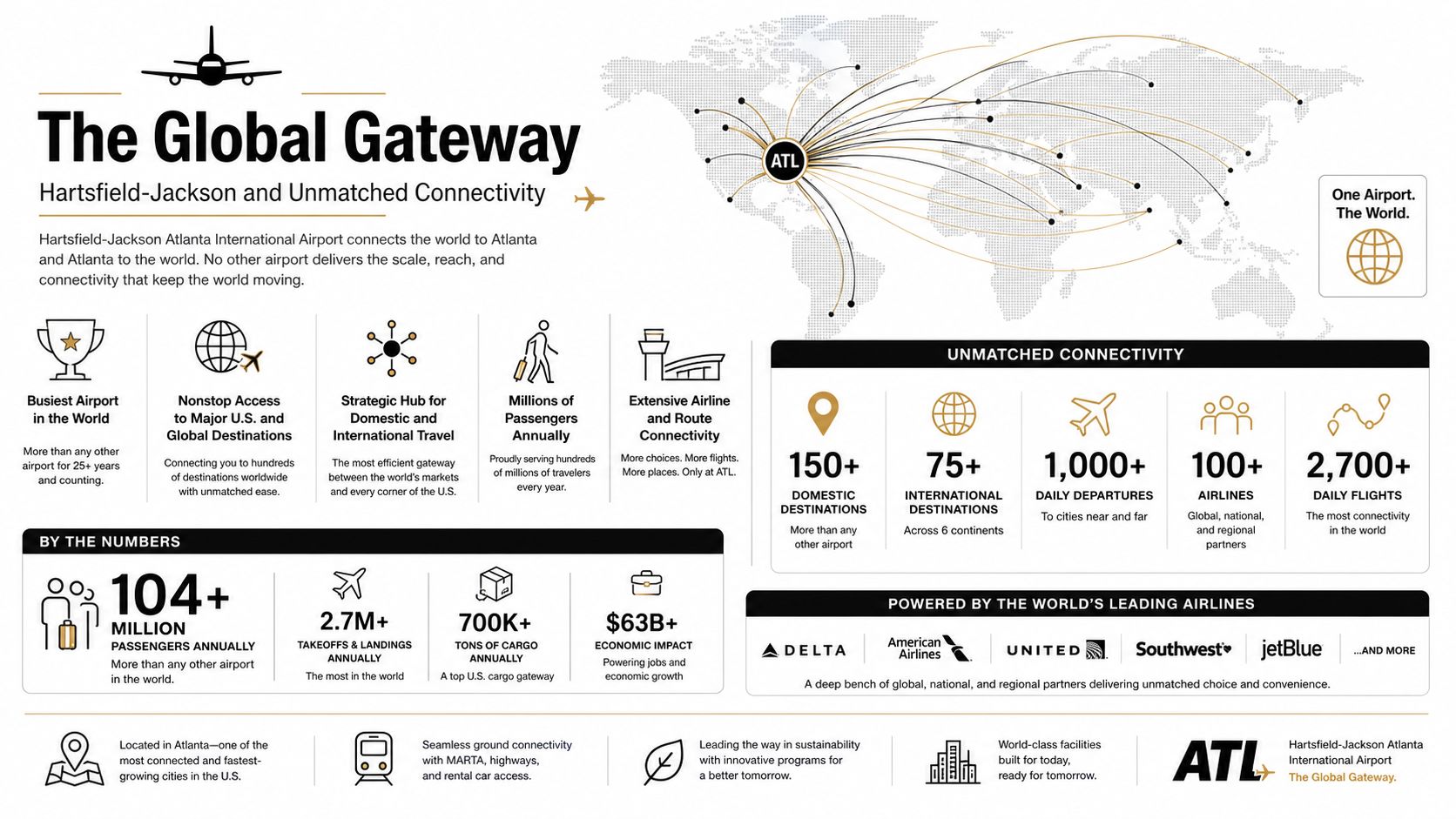
Connectivity changes traveler behavior
A highly connected airport doesn't just increase arrivals. It reduces friction.
When a city is straightforward to reach from domestic and international markets, it becomes more attractive for:
- Conference organizers choosing attendance-friendly locations
- Corporate travel teams managing schedules and routing
- International visitors entering the Southeast
- Weekend leisure travelers comparing convenience across competing cities
That convenience compounds. A city with easier access tends to win more events, more stopover spending, and more short-notice bookings.
Why operators should care
For hotels, restaurants, event vendors, and property managers, connectivity creates a steadier mix of guest types. Instead of depending on one seasonal surge, Atlanta can pull traffic from conventions, airline-linked business trips, sports weekends, and international itineraries across the calendar.
That makes tourism demand less narrow and more resilient. It also creates a more complex operating environment, because businesses need technology systems that can support high turnover and varied visitor expectations.
Travelers may choose Atlanta for convenience. Operators have to deliver on that promise once they arrive.
The airport's role also shapes nearby commercial ecosystems, from hospitality corridors to logistics-heavy service providers. That broader footprint is part of what makes Hartsfield-Jackson Atlanta International Airport more than transportation infrastructure. It's a demand engine for the regional visitor economy.
A Magnet for Major Events and Corporate Travel
Large events change the economics of tourism. They concentrate demand into fixed dates, fixed districts, and fixed operating windows, which raises revenue potential for local operators and raises execution risk at the same time.
High-value visitors change the economics
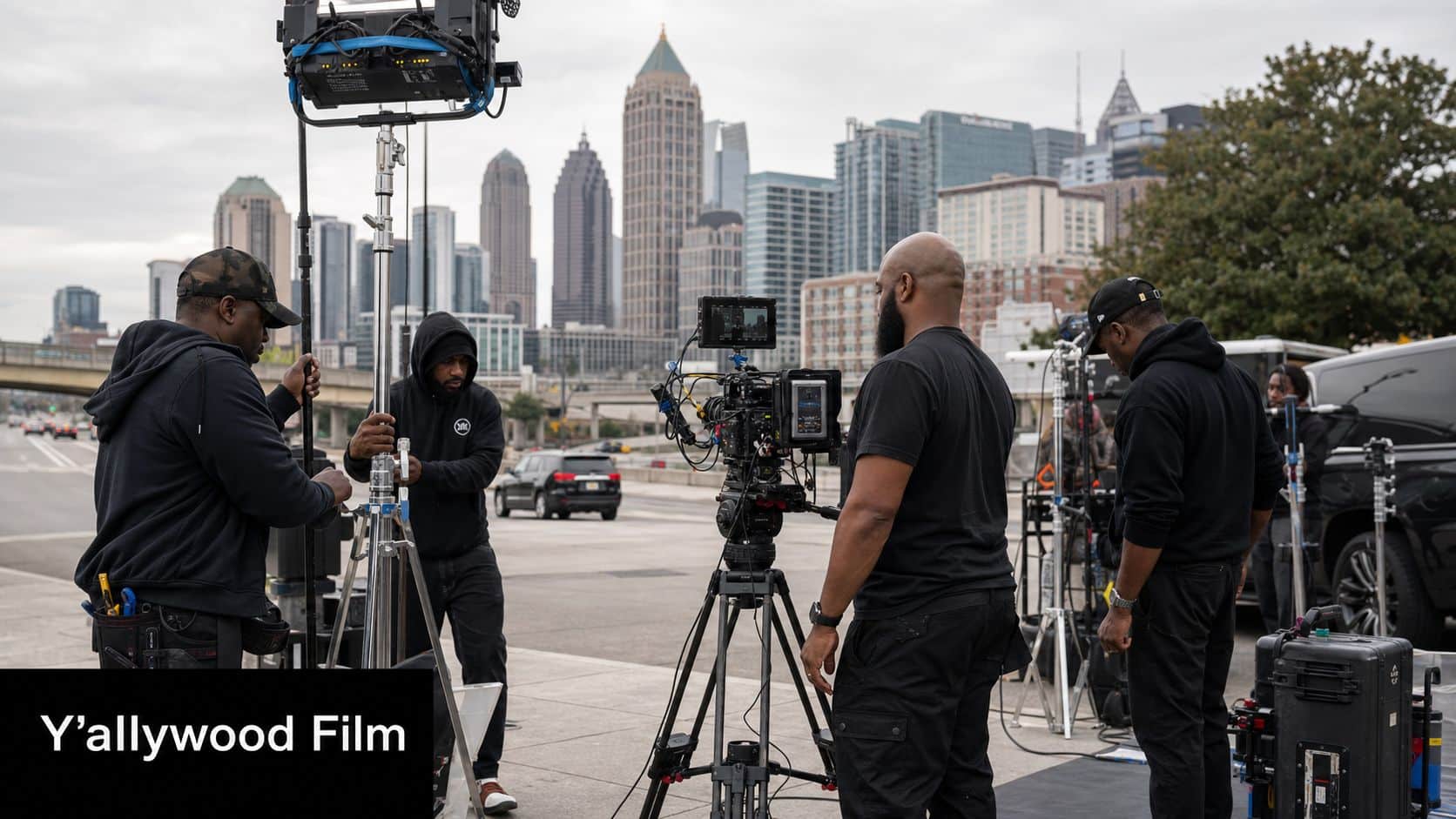
Atlanta's advantage is not only that it draws visitors. It can host large groups with spending patterns that look different from a typical weekend trip. Convention attendees, corporate teams, sports travelers, exhibitors, and vendor staff book in blocks, buy on deadline, and depend on coordinated venue operations. For hotels, caterers, transportation providers, and event spaces, that usually means higher average transaction values and tighter service expectations.
As noted earlier, Georgia posted another record tourism year. In Atlanta, the operational significance is clear. A meaningful share of visitor revenue is tied to meetings, conventions, and corporate travel, where spending extends beyond lodging into food service, equipment rental, registration systems, temporary staffing, and on-site tech support.
Facilities such as the Georgia World Congress Center and the city's stadium network strengthen that position. They let Atlanta compete for conventions, championships, branded experiences, and multi-day corporate gatherings that many peer markets cannot absorb at the same scale.
Event traffic creates margin, but it also creates turnover
The demand pattern is attractive because it is concentrated and repeatable:
- Hotels fill room blocks, shoulder nights, and meeting space
- Restaurants and caterers get scheduled group demand with clearer staffing forecasts
- A/V and operations teams manage rapid setup, breakdown, and reset cycles
- Venue and procurement teams replace or rotate hardware used for registration, payments, presentations, and guest services
That last point gets overlooked in tourism coverage. Event volume increases the number of laptops, kiosks, tablets, badge printers, point-of-sale devices, networking gear, and digital displays moving through hospitality and venue environments. Some assets are redeployed. Others are retired quickly because they were bought for a specific event cycle, a client requirement, or a temporary capacity spike.
That creates a less visible cost center. More visitors and more events usually mean more obsolete electronics, more devices holding attendee or guest information, and more chances for data to remain on equipment that is headed to storage, resale, or disposal.
For local operators, this explains why leisure content captures only part of Atlanta's tourism story. Consumer interest still matters, and guides to things to do in Atlanta this weekend help convert discretionary trips. But the city's stronger performance is also tied to business infrastructure that drives recurring, high-intensity demand. The businesses that benefit most are often the ones that can handle both the revenue opportunity and the operational residue it leaves behind.
A convention city wins by processing volume efficiently. That includes guests, equipment, and the retired devices left after the event ends.
Hollywood of the South The Film Industry's Magnetic Pull
Atlanta's tourism momentum isn't powered by travel infrastructure alone. The city has also become culturally legible to visitors in a different way. People feel like they already know it.
Film and television production changed that. The local economy gained not just studio activity, but also a stream of cast, crew, vendors, and support teams who live in the city for weeks or months at a time. They aren't classic tourists, yet they use hotels, short-term lodging, transport, catering, event spaces, and local entertainment in ways that closely resemble high-value travel demand.
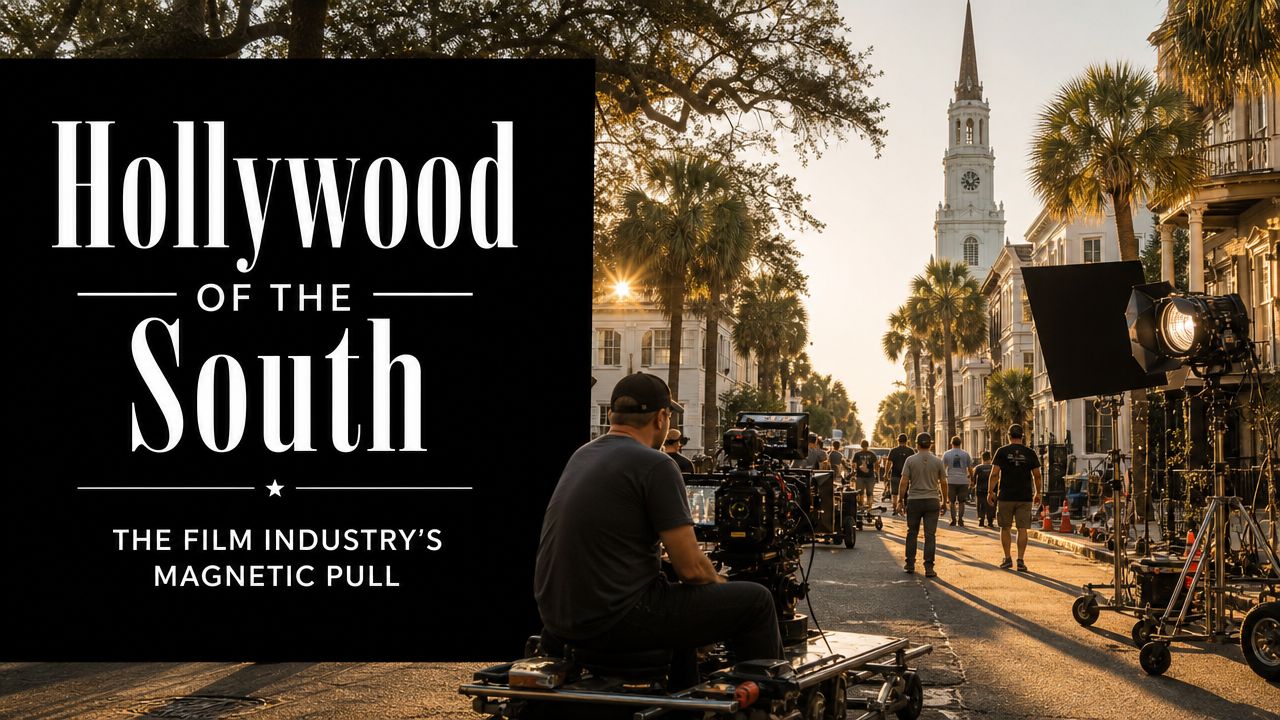
Screen visibility becomes destination marketing
Film production gives Atlanta something many cities spend heavily to build: repeated global exposure. Neighborhoods, streetscapes, venues, and skyline shots become familiar to audiences before they ever book a ticket.
That familiarity matters because it shortens the emotional distance between awareness and visitation. A city seen on screen often feels more current, more culturally central, and more worth exploring in person.
The effect on local operators
The film economy influences tourism in at least three practical ways:
- Long-stay occupancy: crews and production support staff create lodging demand beyond weekend tourism
- Location-driven visitation: fans look for recognizable places and districts
- Brand lift: Atlanta gains relevance as a city where culture is produced, not just consumed
This kind of demand is also more diversified. It doesn't rely on one attraction or one seasonal pattern. A city with active production, live events, and strong business travel is harder to displace because it reaches visitors through multiple channels at once.
On-screen exposure doesn't replace airport access or convention space. It amplifies them by making the city more desirable before the booking decision starts.
For business operators, that cultural visibility has a practical implication. Tourism demand becomes stickier when visitors can combine meetings, leisure, nightlife, and familiar filming locations in the same trip.
Vibrant Neighborhoods Culture and Culinary Scene
Air access may get travelers in the door, but neighborhoods are what persuade them to stay longer and come back. Atlanta's appeal deepens once visitors move beyond the airport and convention center grid.
The city offers a layered experience rather than a single tourist core. Inman Park feels different from West Midtown. The BeltLine creates movement between districts instead of keeping visitors isolated in one corridor. Restaurants, bars, markets, and walkable stretches give travelers reasons to extend an itinerary that may have started as a business trip.
Why leisure depth matters
A city grows faster as a destination when it can convert one type of visitor into another. Corporate travelers become weekend return guests. Event attendees add dining and nightlife. International arrivals tack on neighborhood exploration.
That mix is valuable because it raises the odds of repeat visits and broadens where money gets spent across the metro.
A few strengths stand out:
- Distinct neighborhoods: visitors can choose historic, industrial, arts-driven, or upscale environments
- Strong food identity: Atlanta offers enough range to support both destination dining and casual discovery
- Flexible trip design: visitors can blend meetings, sports, nightlife, and local exploration without leaving the city
The local business takeaway
For operators, neighborhood strength makes demand less dependent on one venue or district. Visitors don't only spend where they sleep. They move.
That movement benefits restaurants, boutique hotels, event spaces, transportation providers, and retail corridors that might not sit in the traditional convention footprint. It also raises the need for distributed technology support, because guests now expect frictionless payment, connectivity, and digital service across multiple touchpoints.
Atlanta's evening economy plays a role here too. Leisure spending often follows daytime events, and a city with credible after-hours options captures more of that wallet share. That's part of what gives Atlanta nightlife and bar districts outsized importance in the broader tourism equation.
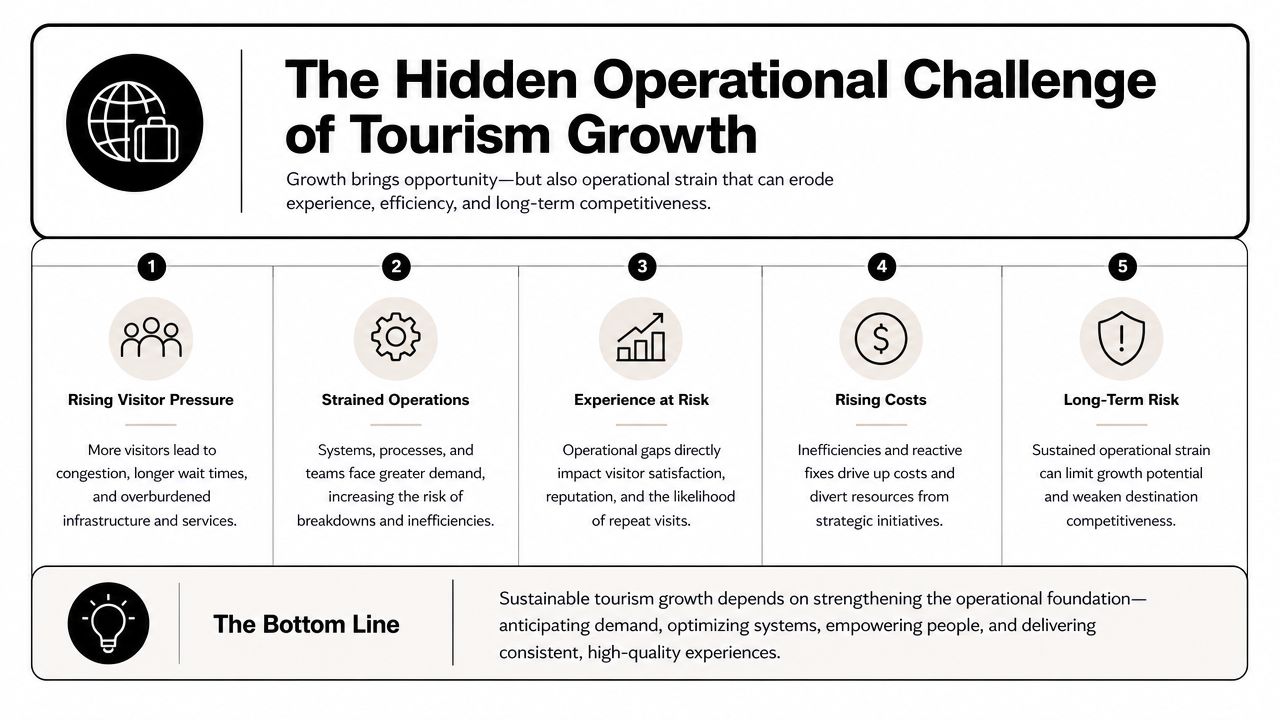
The Hidden Operational Challenge of Tourism Growth
Atlanta's visitor economy adds volume fast. For operators, that means more rooms turned, more events loaded in and out, more devices deployed across guest service, payments, access control, A.V., and back-office operations.
The result is easy to underestimate. Tourism growth does not only raise revenue. It also increases the flow of retired laptops, payment terminals, check-in tablets, badge printers, networking gear, digital signage, storage media, and guest-abandoned electronics moving through hotels, venues, convention spaces, and third-party event vendors.
That creates a disposal problem, but more significantly, a risk management problem. The Federal Trade Commission states that businesses subject to the Disposal Rule must take reasonable measures to protect consumer information during disposal, and that standard becomes harder to meet when aging devices sit untracked in storage rooms, loading areas, or post-event equipment cages. For Atlanta operators trying to sort through local requirements, this Atlanta e-waste laws and business compliance guide outlines the disposal and documentation issues that tend to surface once hardware leaves active use.
Where the e-waste pressure comes from
In hospitality and events, e-waste builds through several channels at once.
- Guest-facing hardware: tablets, in-room technology, payment devices, displays, and abandoned personal electronics
- Event equipment: network gear, badge printers, kiosks, access-control devices, A.V. accessories, and loaner laptops
- Back-of-house systems: aging servers, office computers, storage devices, phones, and telecom equipment
Each category has different handling requirements. A display with no storage is not the same as a point-of-sale terminal or a laptop used by temporary event staff. Some equipment still holds regulated data. Some has resale value. Some becomes hazardous storage clutter if no one owns the retirement process.
Why this becomes a management issue fast
Higher occupancy and heavier event calendars usually shorten replacement cycles. Devices are moved more often, swapped out under deadline pressure, and retired by teams focused on opening the next room block or turning the next event. That is how disposal risk becomes an operational blind spot.
For hotel groups and venue operators, the burden is cross-functional. IT cares about data destruction. Facilities cares about clearing space. Finance cares about asset recovery. Legal and compliance care about chain of custody and documentation. If those functions are not aligned, old hardware tends to accumulate in exactly the places auditors, regulators, and cyber insurers do not want to see it.
Software can improve scheduling and vendor coordination. Guides like this tour operator software guide help teams organize field operations and customer logistics. But software does not close the final gap. Physical devices still need a documented retirement process, secure data destruction, and a local partner that can move quickly when a renovation, convention teardown, or fleet refresh creates a sudden surge in equipment.
Turning Compliance into a Competitive Advantage
Atlanta's tourism growth raises the stakes for back-of-house operations. Every sold-out weekend, convention reset, hotel renovation, and temporary event build adds pressure to retire devices quickly, document the process correctly, and avoid creating a data-security problem in the middle of a revenue surge.
The strategic shift is straightforward. Operators that treat IT asset disposition as a controlled business process, rather than a cleanup task assigned after the fact, reduce legal exposure, recover more value from usable equipment, and free staff to focus on guests and event execution.
The business case for proactive ITAD
The economics matter. Business-grade laptops, servers, networking gear, and point-of-sale systems do not all belong in the same disposal stream. Some assets still carry secondary-market value. Others require certified destruction because they held customer, payment, employee, or attendee data. A strong ITAD program sorts those categories early, which improves recovery and lowers the odds of mishandling regulated information.
For Atlanta operators, that distinction is increasingly practical, not theoretical. Hotels, venues, universities, healthcare conference hosts, and corporate event teams often refresh hardware in waves tied to openings, renovations, tenant turnover, or event calendars. If retired equipment sits in storage too long, value drops, audit risk rises, and internal ownership gets blurry.
A workable framework usually includes four decisions:
- Classify assets before pickup: identify what can be resold, what must be destroyed, and what needs special handling
- Require documentation: chain-of-custody records and data-destruction certificates matter for insurers, auditors, and regulated clients
- Tie retirement to refresh cycles: schedule disposition during planned upgrades instead of after storage areas fill up
- Use local compliance rules as an operating standard: this Atlanta e-waste laws and business compliance guide outlines the local requirements businesses need to account for
Why better disposal processes strengthen the brand
Guests rarely see retired hardware. They do see the operational outcomes. Faster room turns, fewer front-desk disruptions, cleaner event setups, and less downtime all depend on technology systems that are maintained, replaced, and removed with discipline.
There is also a brand and sales angle. Event planners, corporate buyers, and institutional partners increasingly ask operational questions that used to stay in the back office. They want to know how vendors handle data-bearing devices, sustainability reporting, and chain of custody. In that environment, documented ITAD practices can support procurement conversations, not just compliance files.
Travel operators in other markets already face the same pattern. Regulation starts as an administrative burden, then becomes part of competitive positioning. Resources like these Local Law 18 strategies for owners show how quickly operators can gain an advantage when they build process discipline before enforcement or market pressure forces the issue.
Atlanta's tourism boom creates more revenue opportunity, but it also creates more retired hardware, more sensitive data exposure, and less margin for informal disposal habits. Beyond Surplus helps businesses address that pressure with certified electronics recycling, secure IT asset disposition, hard drive shredding, value recovery, and documented chain-of-custody services. Contact Beyond Surplus for certified electronics recycling and secure IT asset disposal.


