

Atlanta, Georgia gives IT and enterprise leaders no shortage of places to network, but most calendars don't separate casual meetups from rooms where security, compliance, and vendor risk are important. If you're responsible for infrastructure, procurement, data governance, or end-of-life technology decisions, the wrong event wastes an afternoon. The right one can surface a vetted service partner, a peer who has solved the same disposal problem, or an investor-backed company that needs lifecycle support now.
This guide focuses on the top business networking events in Atlanta where technology conversations have substance. It also fills a gap that general networking roundups leave open. Existing Atlanta event coverage rarely addresses ITAD, data security, or compliance-specific networking, even though one industry report found that 68% of IT directors in major markets cite a lack of specialized venues for data security and e-waste compliance as a barrier to responsible ITAD adoption, and no aggregated Atlanta event guide includes a dedicated ITAD or data destruction meetup according to this Atlanta networking gap analysis. If you're pursuing sponsorships at any of these events, this winning sponsorship proposal guide is a useful companion.
1. Venture Atlanta
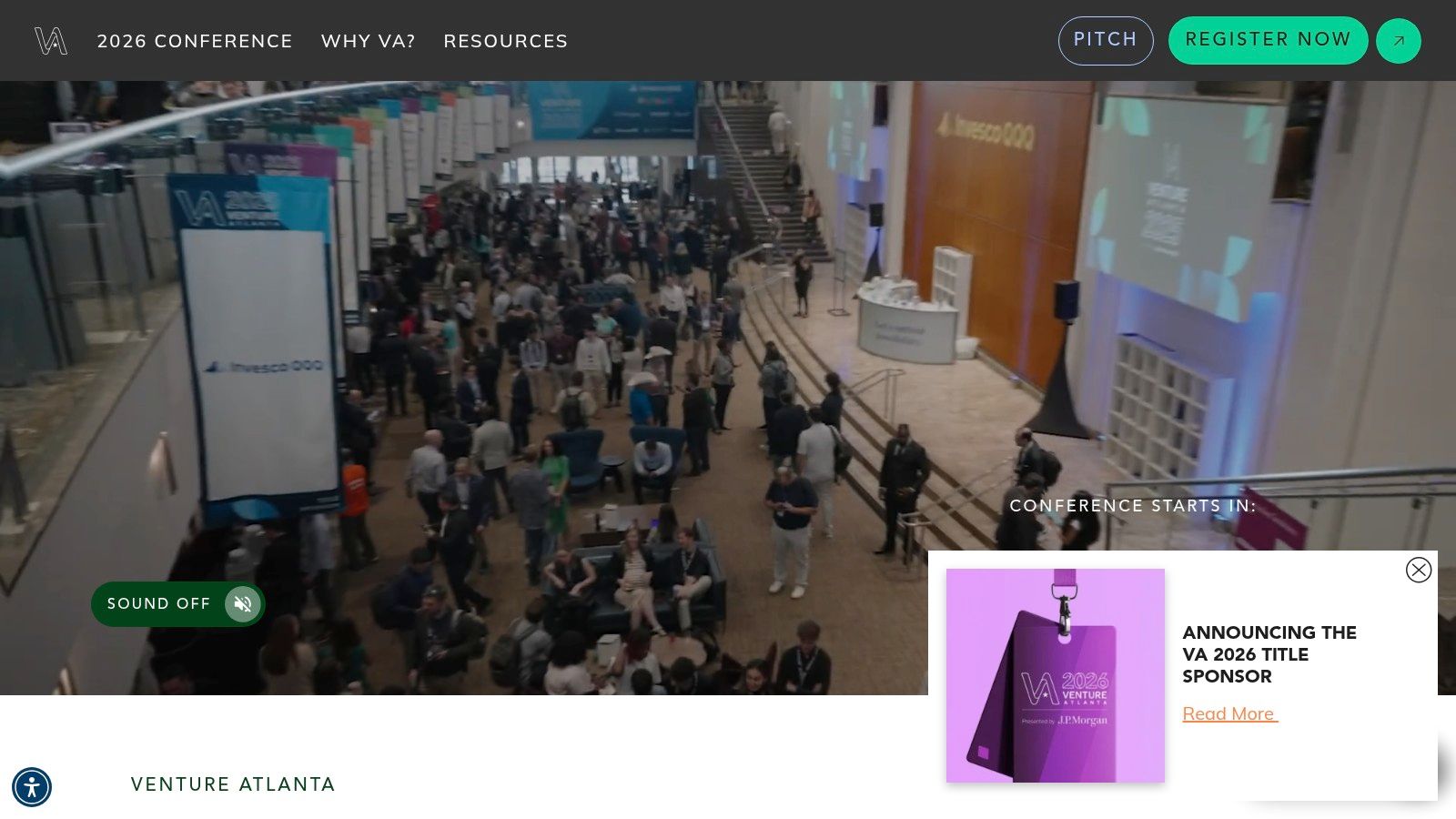
Venture Atlanta is the one event on this list where scale and deal velocity matter more than comfort. It's widely recognized as the premier technology business networking event in the Southeast and is scheduled for October 14 to 15, 2026, at The Woodruff Arts Center and Atlanta Symphony Hall, bringing together founders, investors, and industry innovators for two days of curated sessions and networking, according to the event listing.
For ITAD, electronics recycling, and technology lifecycle firms, that matters because the audience includes the kind of operators who inherit retired infrastructure after growth, consolidation, or migration. It isn't an event to "see what happens." You need meetings on the calendar before you arrive.
Where it pays off
Venture Atlanta is strong when your target account list includes growth-stage companies, private equity-backed operators, or service partners that touch cloud, cybersecurity, healthtech, and fintech. The curated format helps. You get fewer random conversations and more buyer-side discussions about expansion, decommissioning, and vendor stack changes.
A useful prep step is reviewing Atlanta's startup momentum through how Atlanta became a top destination for tech startups. That context sharpens your pitch when founders ask why asset recovery and secure recycling should be planned early.
Practical rule: Bring a short compliance-first opener, not a recycling-first opener. "How are you handling retired drives, test hardware, and chain of custody as you scale?" starts a better conversation than "Do you need e-waste pickup?"
Trade-offs
This isn't a low-lift mixer. It can feel crowded and rushed, and the people you want to meet are often moving between sessions, investor meetings, and private dinners. If you don't pre-book, you may only get hallway conversations.
Use it when:
- Your team sells into growth companies: Fast-scaling firms often discover asset controls after the first painful office move or hardware refresh.
- You need channel partners: MSPs, cloud consultants, and security advisors can become better referral paths than direct outreach.
- You can follow up fast: A solid contact is worth little if your email lands a week later.
Skip it if you want deep technical working sessions. This is an executive networking environment first.
2. Technology Association of Georgia (TAG) and Georgia Technology Summit
TAG is less a single event than a repeatable networking system. That's its advantage. Instead of betting everything on one annual conference, you can build presence through the Georgia Technology Summit and TAG's society-driven programming across areas like fintech, digital health, data science, and information security.
For enterprise sellers and internal technology leaders, that recurring cadence is useful. A healthcare IT manager may show up in a digital health setting. A security leader may be more reachable through an InfoSec-focused program than on a crowded expo floor.
Best fit for regulated-industry outreach
TAG is especially practical when your market includes finance, healthcare, and public-sector-adjacent organizations. Those buyers don't usually respond to generic sustainability messaging. They respond to documentation, process, and risk reduction.
That aligns with broader demand for integrated, data-driven decision-making. The Atlanta Integrated Marketing Summit and DigiMarCon Atlanta are cited among Georgia's top 2025 marketing leadership events, with adoption of integrated marketing tools exceeding 78% among participating CMOs according to Georgia event market coverage. Different audience, same lesson. Leaders in Atlanta increasingly expect precise targeting and relevant outreach.
If you're mapping where service demand is growing around the city, Atlanta's most in-demand business services this year is a useful read before you choose which TAG circles to prioritize.
What works and what doesn't
TAG works when you treat it like a long game.
- Work the societies, not just the summit: Niche rooms produce better conversations than broad conference traffic.
- Tailor by vertical: Healthcare buyers care about disposition controls differently than fintech buyers.
- Stay visible between events: One appearance doesn't build trust.
The best TAG strategy isn't "attend once." It's showing up often enough that people stop seeing you as a vendor and start seeing you as part of the Atlanta tech ecosystem.
The downside is fragmentation. Event details can sit across different pages and communities, and some opportunities are more member-oriented. Still, for enterprise networking in Atlanta, TAG is one of the most practical platforms because it supports repetition.
3. Fintech South
Fintech South is where Atlanta's finance, payments, fraud, risk, and security conversations tighten up. If your company handles secure IT asset disposal, drive destruction, or certified downstream processing, this is one of the clearest rooms for that message. Financial firms don't need a lecture on why retired hardware is risky. They need a vendor that sounds operationally mature.
That makes the event more valuable than a general startup meetup if your target accounts include banks, processors, payment companies, and regtech teams. Even casual conversations here tend to move toward controls, auditability, and vendor trust.
The right angle for this crowd
Finance leaders usually don't care about "free recycling" as an opening line. They care about how hardware leaves custody, how drives are handled, and whether your process will withstand internal scrutiny. For Atlanta businesses, that also connects to real local pricing decisions. Commercial electronics recycling pickups in Atlanta are typically free only when a business has a minimum threshold of 10 to 20 major IT assets or a full pallet, according to Atlanta pickup guidance. That detail helps frame realistic conversations about logistics instead of vague promises.
Trade-offs and tactics
Fintech South is concentrated and relevant, but it's still an annual event. You won't get the always-on relationship building that chapter events or recurring mixers provide.
Use it well by:
- Leading with risk language: Discuss retired payment terminals, employee laptops, test devices, and backup media.
- Asking about mergers and office moves: Those trigger disposal projects.
- Following up with documentation: A one-page process overview beats a general capabilities deck.
Don't use startup language with compliance teams. "Circular economy" may resonate later. "Documented chain of custody" works first.
4. Atlanta Technology Professionals (ATP)
Atlanta Technology Professionals sits in a productive middle ground. It's more focused than a broad city networking mixer, but less formal than a major conference. That balance makes it one of the better Atlanta options for meeting IT directors, infrastructure leaders, and technology vendors without fighting through conference-scale noise.
For Beyond Surplus-type outreach, ATP is useful because operational technology leaders often show up with practical problems. Equipment refreshes. Office consolidations. Storage cleanup. Lab shutdowns. Legacy systems no one wants to own.
Where ATP conversations go deeper
ATP works best when you want peer-level dialogue rather than speed networking. You can ask better questions here: How are you handling decommissioned rack gear? Who signs off on media destruction? Does procurement require certificates of destruction before final closeout?
That makes ATP a strong venue for teams that support infrastructure hiring, upgrades, and lifecycle planning. IT hiring trends in Atlanta and skills in demand adds good context because hiring pressure often reveals where teams are stretched thin and likely to outsource secure disposition.
Smaller practitioner groups often generate better vendor opportunities than large expos because buyers will explain the problem behind the problem.
What to expect
ATP's biggest strength is signal quality. The audience is often closer to the actual work of infrastructure and operations. That means fewer superficial exchanges and more realistic discussions about timelines, approvals, and constraints.
Its weakness is access. Some higher-value sessions can be member-oriented or limited. If you only show up once without joining the community, you may not get the full benefit. Still, for IT leaders who want practical Atlanta networking, ATP is one of the most usable rooms in the city.
5. Atlanta Tech Village Startup Chowdown
Startup Chowdown at Atlanta Tech Village is the opposite of a formal summit. It's casual, recurring, and useful because of that. If your goal is to build a pipeline of startup and growth-company relationships over time, few Atlanta events are easier to revisit consistently.
The format matters. People are more approachable over lunch than in a packed keynote hallway. Founders, operators, product leaders, and service providers tend to circulate quickly, so you can test messaging and learn which problems are surfacing in the startup market right now.
Why it works for IT lifecycle conversations
Growth companies often delay formal asset management until a move, a hiring surge, or a cloud transition forces the issue. Startup Chowdown is where those issues first surface conversationally. Someone mentions a storage room full of old laptops. Another team is closing a satellite office. A founder realizes investor due diligence is exposing weak disposal policies.
That's why Atlanta Tech Village's role in the startup ecosystem matters if you're networking here. It helps position your service as part of the operating stack, not a cleanup vendor called at the last minute.
Best use of your time
This event rewards repetition more than polish.
- Go often enough to be recognized: Familiarity drives follow-up.
- Keep your intro short: This isn't the room for a long capabilities speech.
- Look for trigger moments: Office moves, hardware refreshes, compliance reviews, and fundraising prep are all entry points.
The trade-off is informality. You can leave with a dozen decent conversations and no immediate deals if you don't follow up quickly. Midday timing also makes it harder for some enterprise buyers to attend. Even so, for top business networking events in Atlanta that support steady relationship building, Startup Chowdown earns its place.
6. Atlanta Startup Village at Atlanta Tech Village
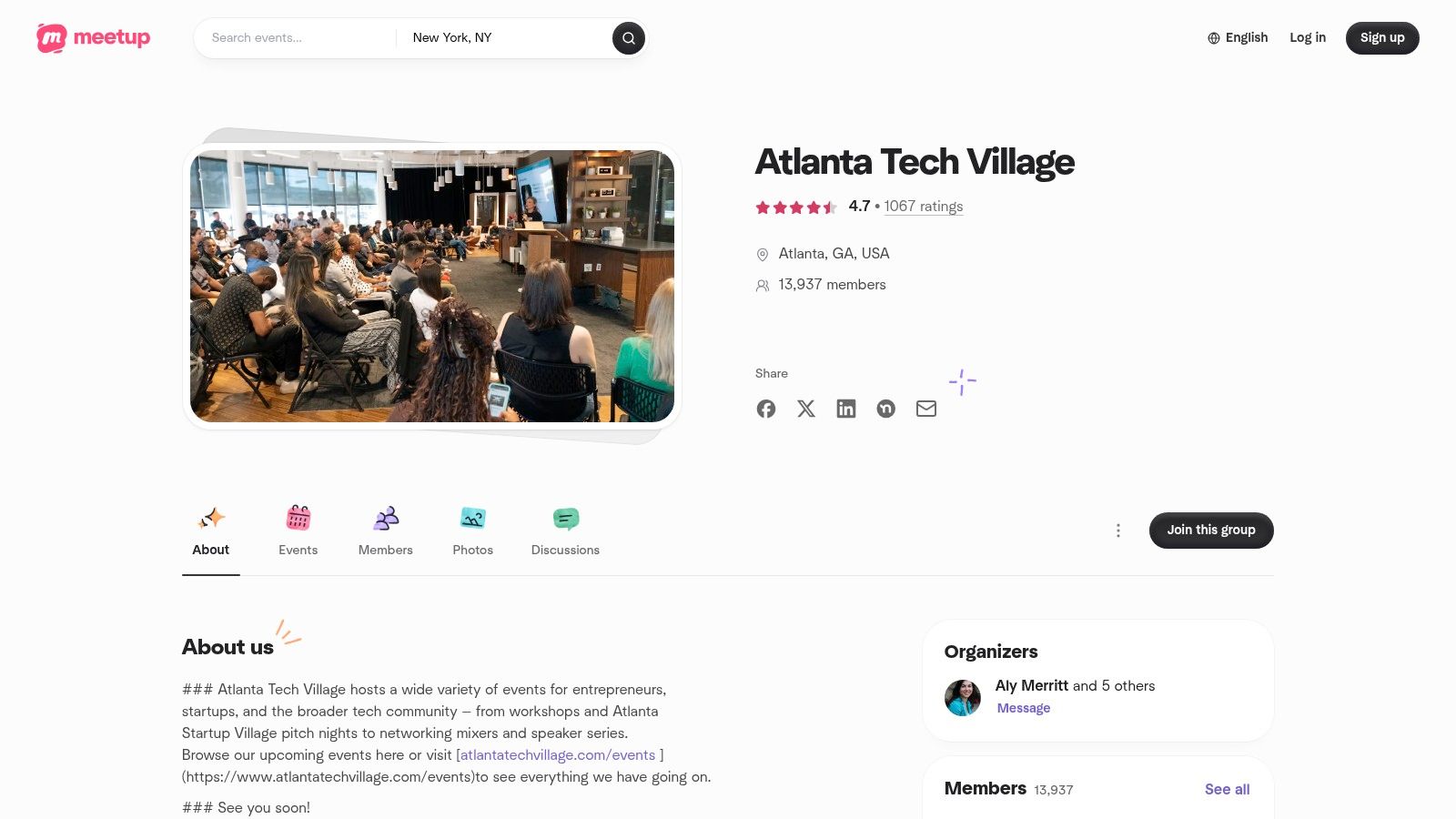
Atlanta Startup Village is one of the better monthly options if you want to meet technical founders and operators in one shot. The pitch format creates a useful shortcut. You hear what companies are building, what stage they're in, and often where their operational strain is starting to show.
That makes it relevant for ITAD and secure recycling firms, especially when startups are graduating from ad hoc equipment handling to policy-driven processes. It's also a strong place to spot channel partners early, including MSPs, security consultants, and managed infrastructure providers.
A faster read on technical buyers
The networking windows before and after the pitches are where the value sits. Listen for clues that a company is maturing operationally. Hardware-heavy onboarding, remote device sprawl, shared test equipment, and rapid hiring all point to future disposition and chain-of-custody needs.
If you're working with founders or startup service partners, Atlanta startup funding trends every entrepreneur should know helps frame smarter conversations around growth and operational readiness. Companies also use directories and visibility tools to widen their reach, so boost startup visibility can be relevant for founders you meet there.
Limits of the event
Atlanta Startup Village is startup-heavy by design. You won't meet the same density of large-enterprise executives that you'd find at more established industry organizations. Popular sessions can also feel crowded, which makes arrival timing matter.
If you want one clean sentence for this room, use this: "When your team refreshes laptops or shuts down a test environment, who owns secure disposition and data destruction?"
That question is simple, operational, and hard to ignore.
7. ISACA Atlanta Chapter
ISACA Atlanta Chapter is the most compliance-specific room on this list. If your work intersects with audit, governance, data security, or documented controls, you can have direct conversations with the people who care how a process holds up under review.
That focus makes it unusually valuable for IT asset disposition, secure drive handling, and certificates of destruction. Most broader networking guides ignore a key issue for regulated buyers: how to vet who you're meeting. That's a real concern. A 2024 Gartner survey found that 74% of IT managers in healthcare and finance worry about partnering with non-compliant vendors during networking events, as summarized in this Atlanta networking analysis.
The right conversation for ISACA
Don't pitch recycling. Discuss controls.
Ask whether their organization requires documented disposition, whether internal audit reviews destruction records, and how they evaluate outside vendors. If you're attending as a service provider, be prepared to talk through chain of custody, certificates, downstream handling, and on-site versus off-site data destruction. In Atlanta, business-grade electronics drop-offs can start at $20 per unit, bulk pickups can range from $0.50 to $1.50 per pound, and on-site data destruction can cost between $5 and $15 per drive according to Atlanta recycling pricing guidance. Those ranges can help anchor realistic budgeting discussions.
Why this chapter stands out
ISACA's smaller settings are often an advantage. People attend to learn, maintain professional standing, and discuss risk. That produces more serious exchanges than a general business happy hour.
The trade-off is that your message has to be precise. Security and audit professionals won't respond well to vague claims. They want process detail, evidence, and a clear explanation of how your service reduces exposure.
Top 7 Atlanta Business Networking Events Comparison
| Event / Group | Implementation complexity 🔄 | Resource requirements 💡 | Expected outcomes 📊 | Ideal use cases ⚡ | Key advantages ⭐ |
|---|---|---|---|---|---|
| Venture Atlanta | High 🔄🔄🔄, large annual conference; pre-book meetings | High 💡, sponsorship/booth costs, travel, dedicated team | High 📊 ⭐⭐⭐, access to 1,600+ founders, investors, enterprise buyers | Scale outreach; source partnerships; pitch to PE/VC portfolios | High density of qualified decision-makers; multi-vertical investor presence |
| TAG, Georgia Technology Summit & societies | Medium 🔄🔄, mix of large summit and niche societies | Medium 💡, membership preferred, event fees, ongoing engagement | Medium‑High 📊 ⭐⭐, repeatable touchpoints into regulated industries | Build quarterly outreach; target compliance-heavy IT buyers | Deep domain tracks; consistent cadence; multiple niche channels |
| Fintech South (by TAG) | Medium 🔄🔄, industry-focused annual conference | Medium 💡, event pass, targeted content/booth | High for finance 📊 ⭐⭐⭐, concentrated access to compliance-minded finance buyers | Position ITAD/security to banks, processors, paytech/regtech | Concentrated fintech audience; strong regional and industry visibility |
| Atlanta Technology Professionals (ATP) | Low‑Medium 🔄🔄, recurring panels, socials, some invite-only | Medium 💡, membership/sponsorship for best value; time for relationship building | Medium 📊 ⭐⭐, high signal-to-noise among mid‑to‑senior tech leaders | Peer-level relationship building with CIOs, IT directors, data center teams | Balanced calendar of social and content events; substantive peer conversations |
| Atlanta Tech Village, Startup Chowdown | Low 🔄, informal, twice‑monthly lunch format | Low 💡, low-cost entry, minimal logistic needs | Medium 📊 ⭐, pipeline building with founders and product leaders | High-frequency pipeline building; early-stage lead gen | Low-cost, high-frequency access to startups and product leaders |
| Atlanta Startup Village (ASV) | Low‑Medium 🔄🔄, monthly pitch event; can be crowded | Low‑Medium 💡, low cost but requires active follow-up | Medium 📊 ⭐⭐, efficient way to meet many startup teams and VCs | Rapid outreach to CTOs, DevOps, product leaders; visibility in startup ecosystem | Efficient format for meeting many technical decision-makers quickly |
| ISACA Atlanta Chapter | Medium 🔄🔄, technical, CPE-focused meetings; some member limits | Low‑Medium 💡, sponsorship/training costs; tailored technical materials | High for audit/security 📊 ⭐⭐⭐, targeted, substantive engagement with CISOs/auditors | Position secure data destruction/compliance to audit and security leaders | Highly targeted practitioner audience; smaller settings conducive to demos |
From Networking to Action Secure Your Assets and Partnerships
The best Atlanta networking event isn't always the biggest one. It's the one that matches your job to the room. Venture Atlanta is strong when you need market density and access to founders, investors, and fast-scaling operators. TAG is better when you want recurring touchpoints across multiple technology communities. Fintech South and ISACA Atlanta become the right choice when compliance, auditability, and data security aren't side topics. They're the main event.
That distinction matters because networking in enterprise technology isn't social for the sake of being social. Buyers evaluate whether you understand operational constraints. Peers remember whether your questions were informed. Partners decide quickly whether you can support regulated environments or whether you'll create work for legal, audit, and security teams.
For IT leaders attending these events, a few habits consistently improve results. Lead with a narrow problem statement. Ask who owns retired hardware, removable media, and end-of-life devices inside the organization. Find out whether office moves, hardware refreshes, M&A activity, or data center changes are coming up. Then follow up with something concrete. A draft chain-of-custody workflow, a sample certificate package, or a short outline of how pickups, data destruction, and disposition approvals are handled.
For service providers, the same rule applies. Don't rely on a broad sustainability pitch when the buyer is worried about liability transfer and documentation. Atlanta is a strong market for technology growth, but it's also full of healthcare, finance, education, and public-sector organizations that need process discipline. If your team can speak clearly about secure pickup, hard drive shredding, certified wiping, IT buyback, and final reporting, you'll stand out fast.
Beyond Surplus fits directly into those conversations. The company supports businesses across Atlanta and nationwide with electronics recycling, secure data destruction, IT asset disposition, product destruction, data center de-installations, and logistics coordination. That combination matters after the event ends, when a promising conversation has to become an actual project with scheduling, documentation, and risk controls attached.
Attending top business networking events in Atlanta opens the door. What happens next determines whether the event produced a contact or a contract. If your team needs a partner that can help close the loop on retired technology securely and responsibly, contact Beyond Surplus for certified electronics recycling and secure IT asset disposal in Atlanta. We help organizations turn end-of-life hardware into a controlled, compliant part of asset management instead of a lingering risk.
Connect with Beyond Surplus to plan secure electronics recycling, IT asset disposal, data destruction, and enterprise pickup logistics for your Atlanta organization.


