

When your Fort Worth business needs to dispose of an old hard drive, simply deleting files or reformatting the disk is not enough. For businesses in Texas, true data security requires physical destruction or certified data wiping to ensure sensitive information is permanently eliminated and your company remains compliant with data privacy laws. Partnering with a professional electronics recycling firm like Beyond Surplus for services in Fort Worth is the only way to guarantee compliance and security.
Why Secure Hard Drive Disposal Is Non-Negotiable for Fort Worth Businesses
In a commercial environment, a retired hard drive isn't just old equipment; it's a potential data bomb loaded with sensitive corporate, client, or patient information. Common methods like reformatting can leave behind data fragments recoverable with forensic tools. For any Fort Worth organization, this creates a massive, unacceptable risk.
Imagine the real-world consequences for a Texas business. A healthcare provider in the Dallas-Fort Worth area that improperly disposes of an old workstation could face crippling HIPAA fines if patient records leak. A financial firm in downtown Fort Worth that discards a server without certified data destruction could suffer devastating reputational damage and legal action if client financial data is compromised.
Secure hard drive disposal isn’t just an IT task—it's a core component of your company's risk management and cybersecurity strategy. Beyond Surplus offers specialized IT equipment disposal services across the United States, including Fort Worth, to mitigate these risks.
The Financial and Reputational Stakes
A data breach from improperly disposed assets can lead to severe consequences for your Fort Worth enterprise:
- Massive Regulatory Fines: Penalties under regulations like HIPAA, SOX, and the FTC Disposal Rule can easily reach millions of dollars.
- Loss of Customer Trust: A public data breach shatters client confidence, directly impacting your revenue and market standing in the competitive Texas market.
- Legal Liability: Your organization can be sued for failing to protect confidential information, leading to expensive lawsuits and brand damage.
Understanding broader Data Loss Prevention strategies is essential. Secure disposal is the final, critical step in the data lifecycle, ensuring that end-of-life assets don't become your biggest liability.
Market Trends Reflect Growing Urgency
The intense focus on data security is clearly reflected in market growth. The global hard disk destruction equipment market was valued at USD 1,760 million in 2024 and is projected to climb to USD 2,559 million by 2032.
This surge is fueled by tougher data privacy regulations and the non-negotiable need for certified destruction. Businesses are now spending over USD 450 million annually on this equipment just to comply with mandates like HIPAA and GDPR, especially when fines can be as high as 4% of annual global turnover.
The most reliable way to mitigate risk is to treat every retired hard drive as if it contains your most valuable trade secrets. Professional destruction provides the only verifiable guarantee that this data will never be compromised.
This mindset shift—from seeing old hardware as junk to recognizing it as a security risk—is absolutely vital for businesses in Fort Worth and across Texas. A professional IT Asset Disposition (ITAD) partner like Beyond Surplus handles the entire process, from maintaining a secure chain of custody during pickup to providing a Certificate of Data Destruction, validating your compliance.
That certificate is your legal proof of due diligence, effectively transferring liability. To learn more, see our guide on how to protect your company from data breaches with secure data destruction practices.
Choosing Your Data Destruction Method
When it's time to get rid of old hard drives, the choice of disposal method has significant consequences for data security, compliance, and asset value. As an IT manager or business owner in Fort Worth, you must weigh these factors carefully. The three primary methods—wiping, degaussing, and shredding—each address different business needs.
Making the wrong call is costly. For instance, simply wiping a drive that held sensitive patient records may not satisfy HIPAA's end-of-life requirements, creating a compliance nightmare. Conversely, shredding a batch of high-capacity SSDs that could have been securely erased and resold is a direct financial loss.
Software-Based Data Wiping
Data wiping, or data erasure, uses specialized software to overwrite every part of a hard drive with random data, often in multiple passes. This ensures the original information is permanently unrecoverable.
This is the ideal option when you intend to reuse, remarket, or donate the hardware. It preserves the physical integrity of the drive while sanitizing it to strict standards like the NIST 800-88 Purge method.
- Best For: Laptops, desktops, and servers being refreshed for internal use or sold to recover value.
- Verification: The process generates a detailed, tamper-proof report certifying the data wipe was successful, which is crucial for your audit trail.
- Limitation: This method is ineffective for drives that are damaged or will not power on, as the software requires access to the drive to function.
For a Fort Worth company upgrading its employee laptops, wiping the old drives allows for safe resale, turning a disposal cost into a revenue stream through secure e-waste management.
Degaussing For Magnetic Media
Degaussing is a specialized process that uses a powerful magnetic field to instantly destroy all data on magnetic storage media. It works by scrambling the magnetic coating on a drive's platters where data is stored.
This method is often required in high-security environments where no risk of data survival is acceptable. It is highly effective for old magnetic tape backups and traditional hard disk drives (HDDs).
Important: Degaussing permanently destroys a hard drive, rendering it unusable. It is a destruction method, not a sanitization method for reuse. It is also 100% ineffective on Solid-State Drives (SSDs), which do not use magnetic storage.
Because of its specific applications, it's vital to know when to use it. Learn more about the technology in our guide on what is degaussing and how it fits into a secure disposal strategy.
This flowchart can help you visualize the decision point: do you need to destroy the asset, or can you sanitize it for reuse?
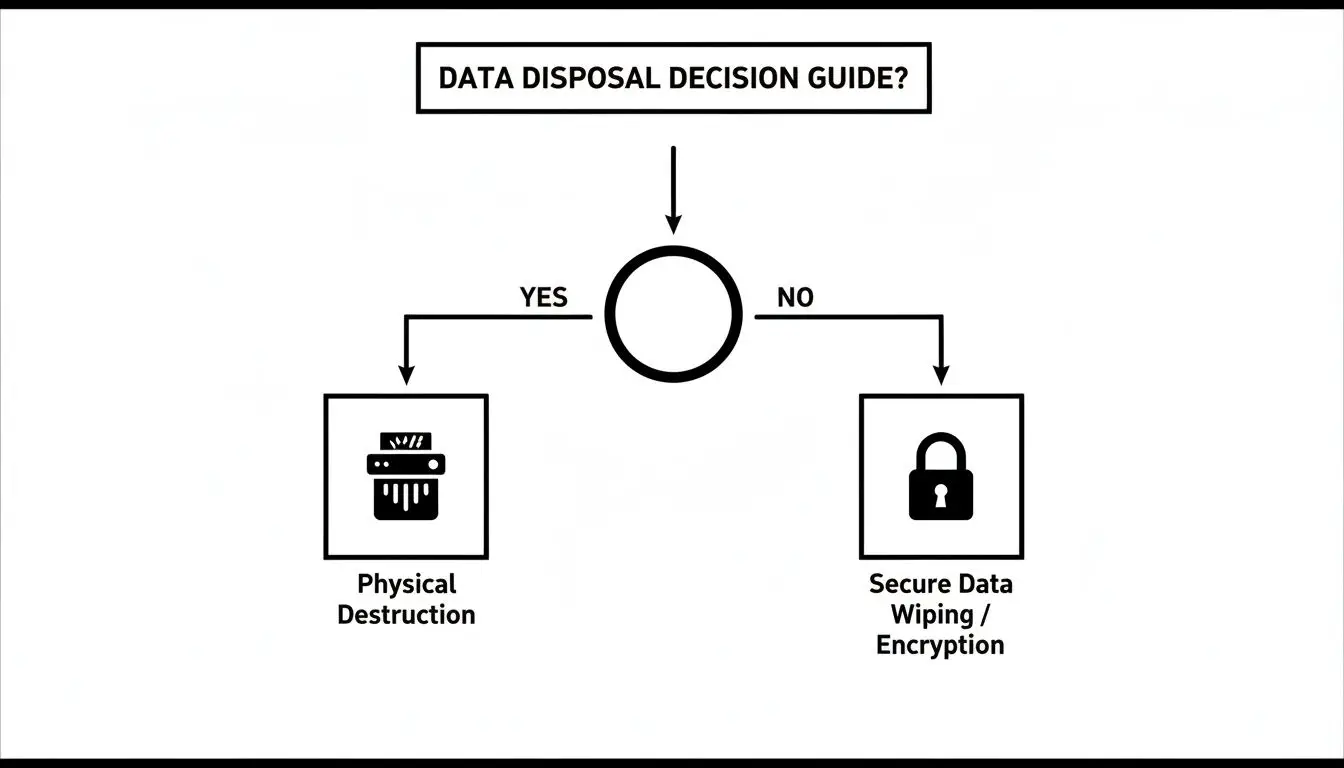
As you can see, the path is clear. If an asset is at the end of its life, physical destruction is the only surefire path. If it still has value, secure wiping lets you unlock it.
Physical Destruction And Shredding
For end-of-life assets, failed drives, or situations where compliance rules demand the highest level of security, physical destruction is the definitive solution. This process uses industrial shredders to grind hard drives and other media into tiny metal fragments, making data recovery physically impossible.
Physical destruction is the only method that provides 100% certainty that the data is gone forever. This is why it is the required standard for government agencies, healthcare providers, and financial firms handling sensitive information. For businesses in Fort Worth, Texas, this is the gold standard for secure computer recycling.
During a data center decommissioning project, Beyond Surplus can bring shredders on-site, allowing managers to witness the destruction of their drives. This provides a clear, auditable chain of custody from server rack to shredder, delivering a Certificate of Destruction and complete peace of mind.
To make the right choice, this table breaks down the key differences to help you select the best approach for your specific needs.
Hard Drive Disposal Methods At-a-Glance
| Method | Security Level | Best For | Compliance Alignment | Allows Reuse? | Verification |
|---|---|---|---|---|---|
| Software Wiping | High | Reusing or reselling functional drives | NIST 800-88 Purge, HIPAA, PCI DSS | Yes | Software-generated certificate |
| Degaussing | Very High | End-of-life magnetic media (HDDs, tapes) | DoD, NSA, some HIPAA scenarios | No | Visual confirmation, log reports |
| Shredding | Absolute | All failed or end-of-life media, SSDs | NIST 800-88 Destroy, DoD, NSA, HIPAA | No | Certificate of Destruction, visual proof |
Each method has its place in a comprehensive IT asset disposition plan. By matching the method to asset lifecycle and data sensitivity, you ensure security without needlessly sacrificing value.
The Gold Standard of Physical Destruction
When data must be permanently destroyed, nothing surpasses physical destruction. While secure wiping is ideal for reusable drives, shredding is the only way to be 100% certain that end-of-life data is unrecoverable. This involves industrial machines designed to pulverize the platters and chips where data resides.
For any business, especially those in regulated industries like healthcare or finance in Fort Worth, this method eliminates all doubt.
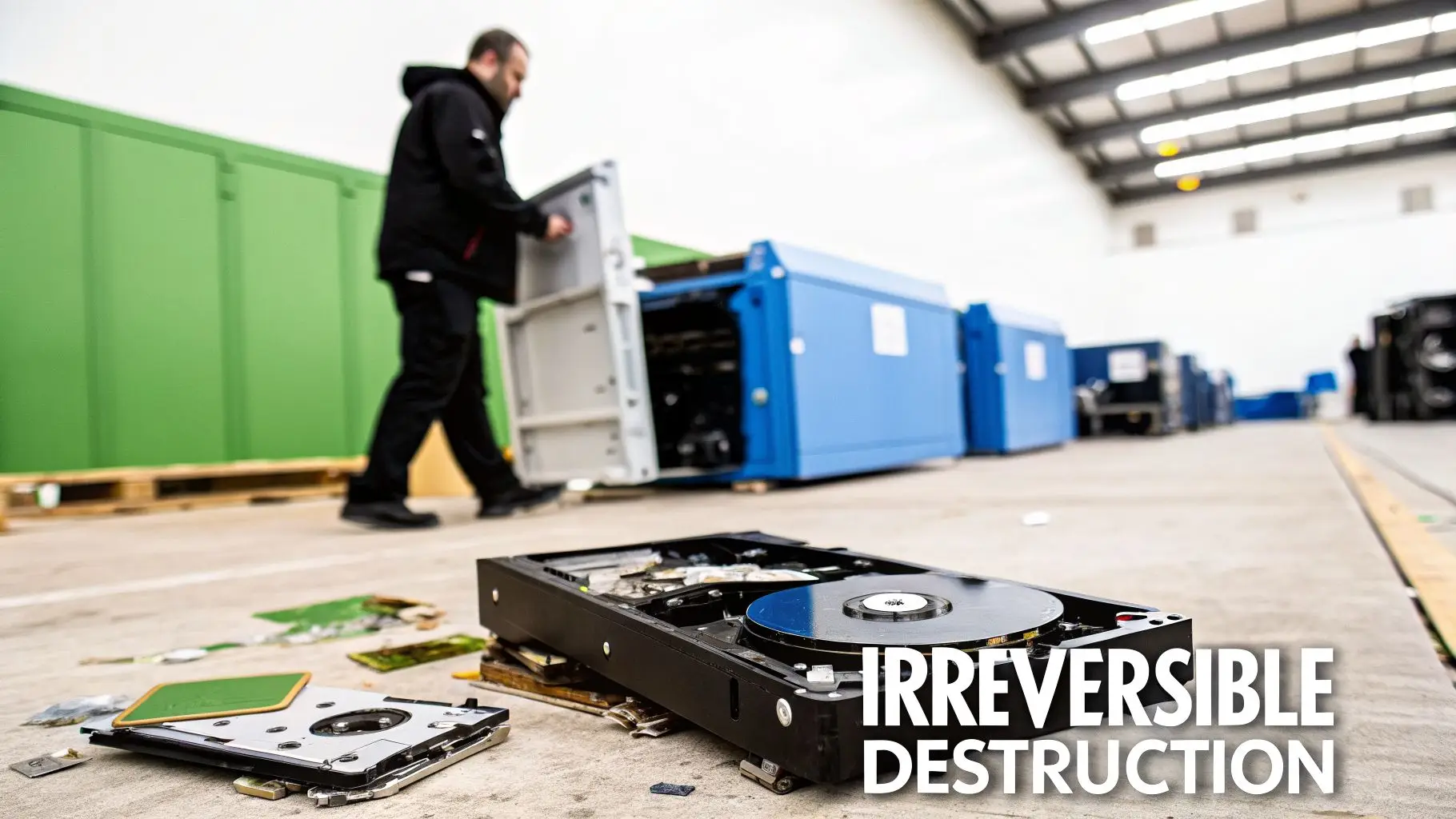
What Happens During Physical Destruction
Industrial shredders use immense force to shear, grind, and tear entire devices into tiny, mangled pieces, obliterating the magnetic platters in HDDs and the NAND flash memory chips in SSDs. At that point, data recovery is physically impossible.
Key considerations for professional shredding:
- Particle Size Matters: For organizations with strict compliance needs, the size of the shredded pieces is non-negotiable. NSA/CSS specifications require a tiny maximum shred size to render forensic tools useless.
- On-Site vs. Off-Site: On-site shredding brings a mobile shred truck to your Fort Worth location, providing an unbeatable chain of custody as you witness the destruction.
- Solid-State Drives (SSDs): SSD data is stored on multiple small memory chips. Drilling a hole may miss some, leaving data recoverable. Professional shredders are designed to turn the entire drive into confetti, ensuring every chip is destroyed.
This level of certainty makes physical destruction the go-to method for compliance when a device is retired.
The Importance of an Auditable Process
Shredding is about more than destruction; it’s about creating a documented, legally defensible audit trail. A certified ITAD partner like Beyond Surplus provides a secure, documented process from start to finish.
The need for this security is growing rapidly. In 2024, the global hard drive destruction market reached USD 1.65 billion and is projected to hit USD 5.05 billion by 2035. Business leaders now understand that simply deleting files is a recipe for disaster.
A data center decommissioning in Fort Worth is a prime example. As old servers are taken offline, on-site shredding creates a perfect, unbroken chain of custody. Every drive's serial number is scanned before it enters the shredder, and the process can be video-recorded for compliance records.
This meticulous documentation is what sets a professional ITAD service apart. It provides concrete proof that you took every step to dispose of hard drive securely. This proof includes:
- Serialized Inventory: Each drive is tracked by its unique serial number.
- Video Verification: On request, a video recording provides undeniable proof of destruction.
- Certificate of Destruction: Your official legal document, listing every asset destroyed by serial number and formally transferring liability.
Physical destruction eliminates risk, protecting your Fort Worth organization from data breaches and steep fines. Learn more about Beyond Surplus's professional hard drive shredding services and how we deliver complete security.
Navigating Data Destruction Compliance and Certification
When your Fort Worth business disposes of an old hard drive, you are handling a potential legal landmine. For any Texas company, adhering to data protection laws is mandatory.
Regulations like HIPAA, the Sarbanes-Oxley Act (SOX), and the FTC Disposal Rule have strict guidelines for data protection through final destruction. Getting this wrong poses a huge financial and reputational risk. This is why data disposal policies, including those for things like SharePoint GDPR Compliance, must be airtight.
The Certificate of Data Destruction: Your Legal Shield
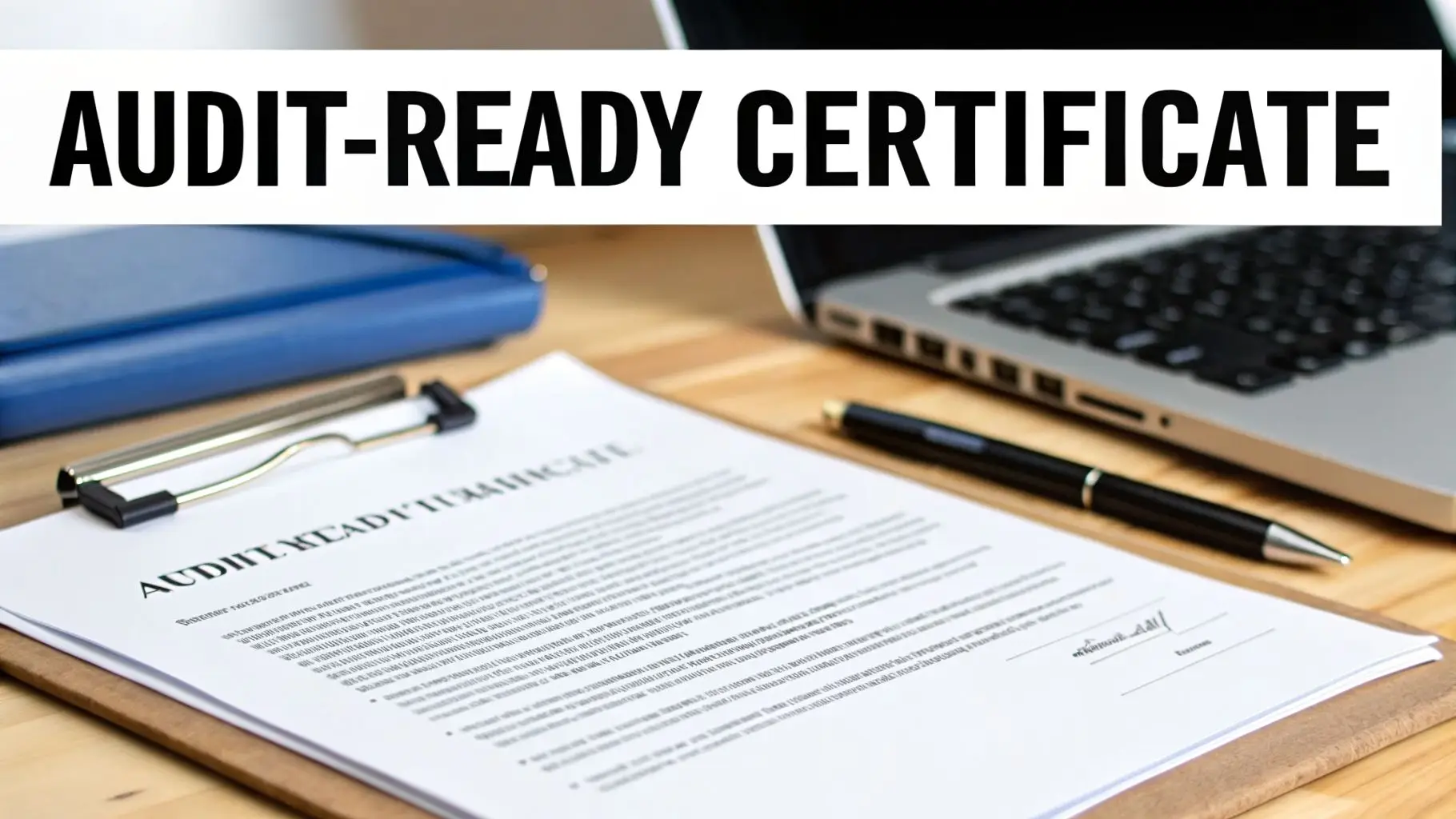
The Certificate of Data Destruction is your most critical document. It is legal proof that you followed the law and securely disposed of your hard drives, formally transferring liability from your business to your disposal vendor. In an audit or security investigation, this certificate is your first line of defense.
An audit-proof certificate must include:
- Unique Serial Numbers: A complete inventory of every single hard drive destroyed.
- Method of Destruction: A clear description of how the drives were destroyed (e.g., shredded) and the standard followed.
- Date and Location: The exact date and physical address of destruction.
- Chain of Custody: A log of who handled the drives, from pickup at your Fort Worth site to final disposal.
- Signature of Witness: An authorized signature from the vendor confirming proper execution.
A certificate missing these details is worthless in an audit.
Vetting Vendors: The Power of Certification
Choosing the right partner for data destruction is critical. The easiest way to vet them is by checking industry certifications, which are third-party proof that a company's security and environmental practices meet established standards.
Look for these certifications when evaluating partners for your Fort Worth business:
- R2v3 (Responsible Recycling): The top-tier standard for electronics recycling, covering data security, environmental protection, and worker safety.
- RIOS (Recycling Industry Operating Standards): An integrated management system that proves a commitment to quality and safety.
- NAID AAA Certification: The gold standard specifically for data destruction, enforced with surprise audits.
Working with a certified vendor means outsourcing your risk to a proven expert. You can learn more about standards like NIST 800-88 in our comprehensive guide on NIST SP 800-88.
The business world's focus on secure disposal is massive. The hard disk destruction equipment market is valued at over USD 450 million, driven by sectors like finance, government, and healthcare. A 2022 study found that 42% of professionally wiped drives still held recoverable data, reinforcing why physical destruction is the only foolproof method.
Finding the Right IT Asset Disposal Partner in Fort Worth
Attempting to handle secure hard drive disposal internally exposes your Fort Worth business to serious and unnecessary risks. A professional IT Asset Disposition (ITAD) vendor isn't a luxury—it's a strategic necessity. A true partner manages the entire end-of-life process with the precision your business requires.
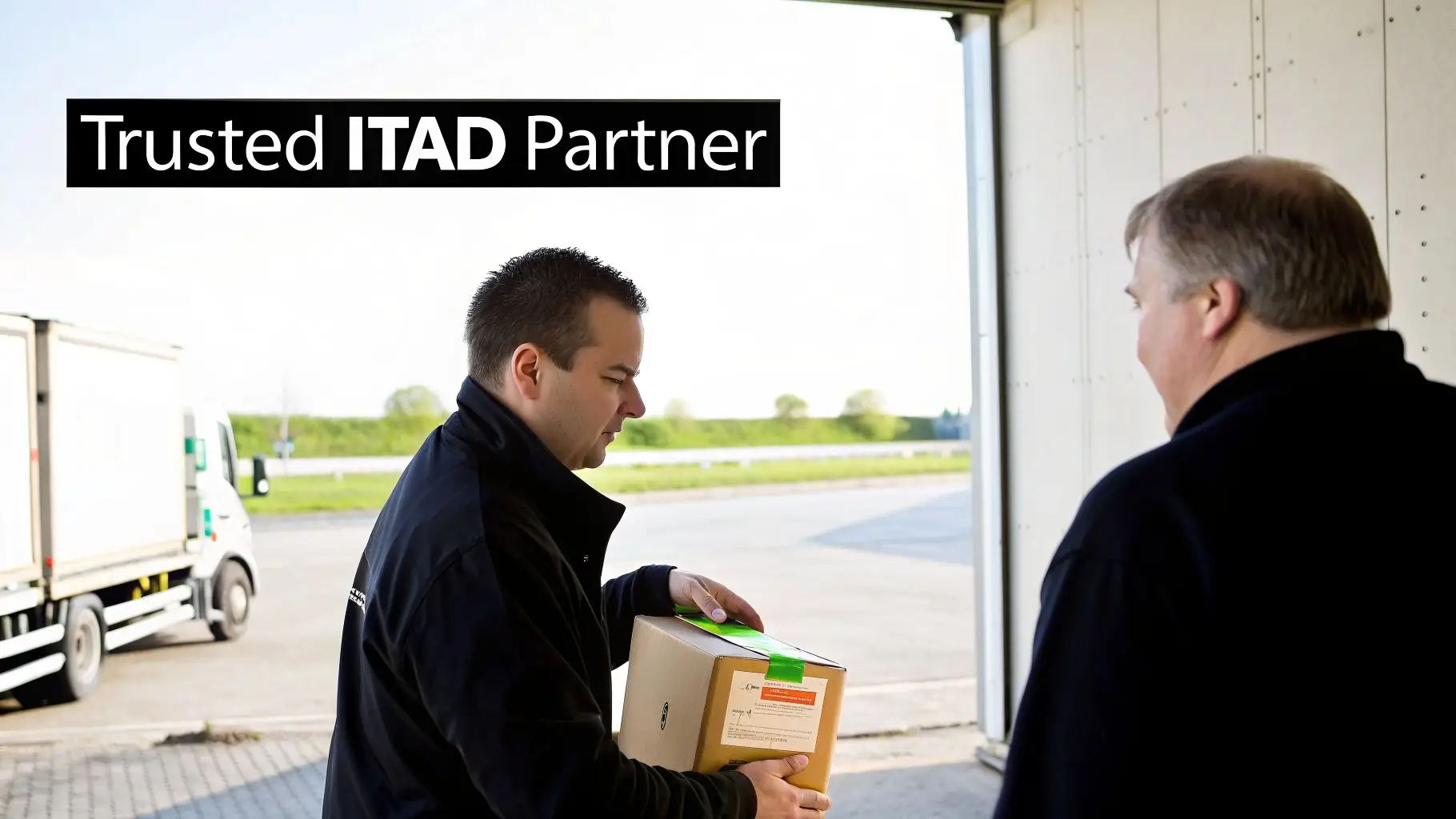
A certified ITAD provider like Beyond Surplus delivers a fully documented service built to protect your company, unlike a simple scrap hauler who offers no verifiable security or legal protection. This is a critical distinction for any commercial enterprise looking for secure electronics recycling in Fort Worth.
Vetting Potential Partners: A Checklist for IT Managers
Choosing the right partner requires due diligence. Use the points below as a checklist when evaluating vendors for your Fort Worth operations. A reputable vendor will have clear, confident answers. You can also use our comprehensive vendor due diligence checklist for a deeper evaluation.
Key Questions to Ask Your ITAD Vendor
Certifications and Compliance: Are they certified to R2v3, RIOS, or NAID AAA? These are non-negotiable. Always ask for copies of their current certificates.
Data Destruction Methods: Do their methods—shredding, wiping, degaussing—meet your needs? Can they handle both HDDs and SSDs effectively?
Chain-of-Custody and Logistics: How do they secure assets from your Fort Worth facility? Look for GPS-tracked, company-owned vehicles and uniformed, background-checked employees.
Reporting and Documentation: Will you receive a serialized Certificate of Data Destruction? It must be detailed, legally defensible, and audit-ready.
On-Site Services: Do they offer on-site hard drive shredding in the Fort Worth area? This offers ultimate peace of mind by eliminating transportation risks.
Insurance Coverage: Do they carry adequate general liability and data breach insurance?
Downstream Vendor Management: Do they have a transparent process for vetting downstream partners for recycling and materials processing?
A professional ITAD partner is a key part of your asset lifecycle management, boosting efficiency and reducing risk.
A security researcher found a discarded computer from a medical clinic in a public dumpster. Because the hard drive wasn't destroyed, he easily accessed thousands of patient records. This breach was 100% preventable.
Beyond Disposal: Value Recovery and Efficiency
A strategic ITAD partnership can generate revenue. Top-tier vendors like Beyond Surplus offer IT asset recovery and buyback programs for retired equipment with remaining value.
After securely wiping data to NIST 800-88 standards, they can refurbish and resell assets like laptops, servers, and networking gear on your behalf. This turns your IT refresh cycle into a smart financial move, with revenue offsetting disposal costs or funding your IT budget.
Answering Your Top Hard Drive Disposal Questions
Let's address common questions from Fort Worth IT managers and business owners about secure data destruction.
Can’t I Just Drill Holes in Our Drives?
This DIY myth provides a false sense of security. Drilling a hole in an HDD might damage some data, but large sections of the platters remain intact and recoverable. It's even less effective for SSDs, as data is stored on multiple tiny chips, many of which will be missed by a drill.
Professional shredding is the only way to guarantee total destruction. It pulverizes the entire drive—all platters and memory chips—into irrecoverable fragments.
What Is the Real Difference Between Wiping and Degaussing?
Both are valid methods, but they serve different purposes.
Data Wiping (Erasure): A software-based process that overwrites data, leaving the drive functional. Ideal for when you want to reuse or resell hardware.
Degaussing: A hardware-based process using a powerful magnetic field to scramble data on magnetic media like HDDs, rendering the drive permanently useless. It has zero effect on SSDs.
The rule is simple: wipe to reuse, but degauss or shred to destroy.
What Happens to the Shredded Material?
Shredded material is not sent to a landfill. As a certified ITAD partner, Beyond Surplus follows a strict, environmentally responsible recycling process. The e-waste is securely transported to a certified downstream recycling facility where it is sorted into commodities like aluminum, steel, and precious metals for reuse in new products. This supports your Fort Worth company's sustainability goals.
What Does Professional Hard Drive Shredding Cost?
Cost varies based on volume, location (on-site vs. off-site shredding), drive type, and additional services like serialized reporting. On-site shredding at your Fort Worth facility generally costs more but offers maximum security. Always request a detailed quote that breaks down all charges. A transparent vendor will explain their pricing and the security value provided.
Navigating IT asset disposal is critical for protecting your business. For certified electronics recycling and to dispose of hard drives securely in Fort Worth, trust the experts at Beyond Surplus. Contact us today for a comprehensive quote and ensure your data is destroyed correctly.


