
For businesses in California, disposing of outdated IT equipment is a critical matter of data security and strict legal compliance. The state’s regulations are among the most stringent in the nation, prohibiting the disposal of old hardware in landfills. Companies require certified California e-waste services that provide secure data destruction, transparent asset tracking, and verifiable compliance documentation to mitigate risks.
Partnering with a certified IT asset disposal (ITAD) provider is essential for protecting your organization from the significant financial penalties and brand damage associated with non-compliance and data breaches. This guide outlines how to navigate California’s regulations and implement a secure, compliant electronics recycling program for your enterprise.
Navigating E-Waste Obligations for California Businesses
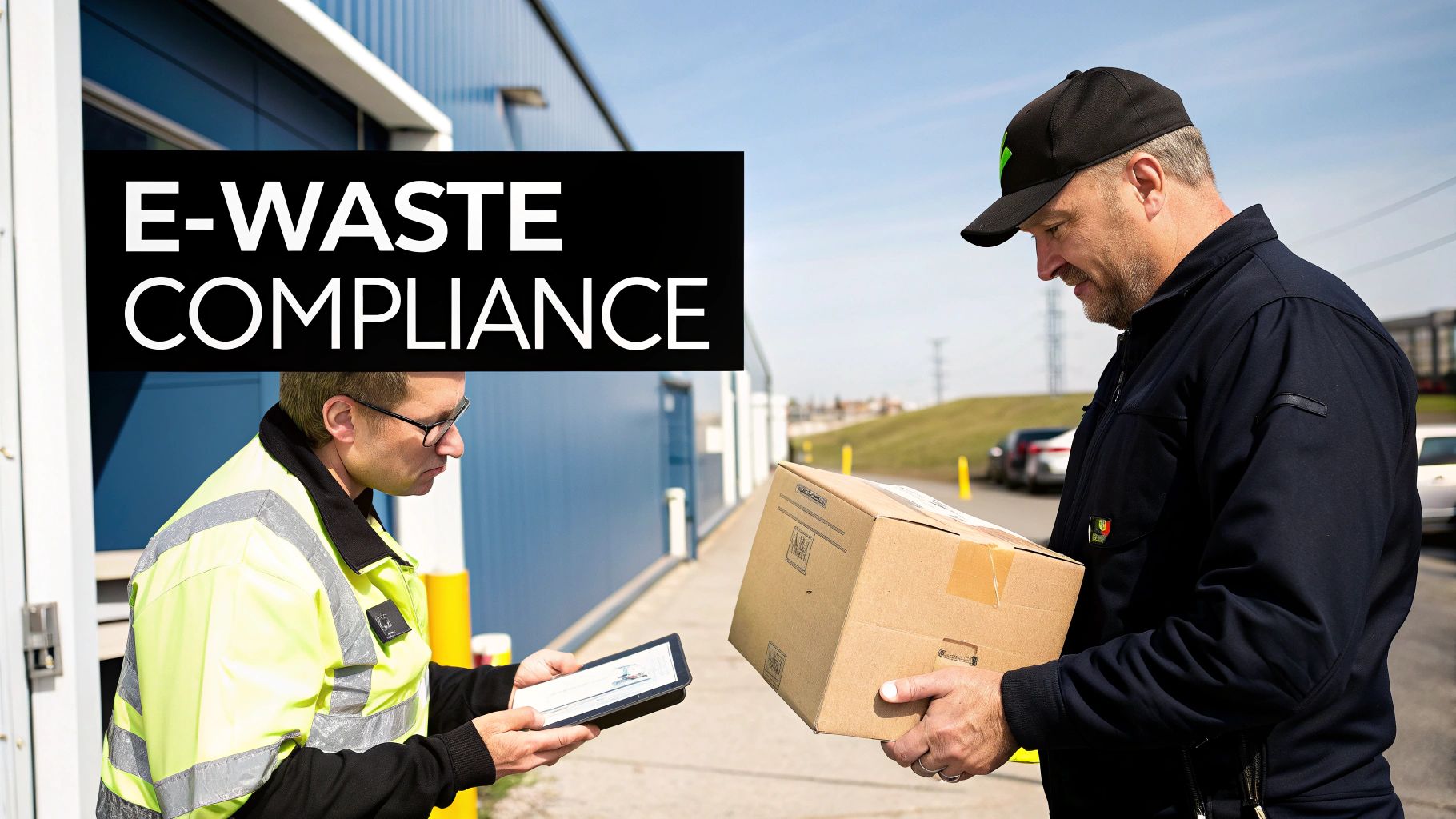
In California, retiring corporate technology is governed by a robust legal framework, making a professional IT Asset Disposition (ITAD) service a necessity for any business. An effective ITAD program is a core component of a company’s risk management strategy, ensuring every piece of equipment is handled securely from the moment it leaves your facility.
This secure process is vital for protecting sensitive corporate data from exposure during transit and processing. For IT managers and procurement professionals, partnering with a certified provider is the only way to guarantee this level of security and ensure full compliance with state and federal laws.
Pillars of a Compliant ITAD Program
To meet California’s stringent standards, a qualified e-waste service provider must deliver on several key components. These are the fundamentals that protect your business from liability.
- Secure Chain of Custody: An unbroken, auditable trail tracks each asset from pickup to final disposition, ensuring nothing is lost or mishandled.
- Certified Data Destruction: All data-bearing devices—including servers, laptops, and hard drives—must be sanitized according to industry standards, with the process formally documented.
- Verifiable Compliance Reporting: Proper documentation serves as proof of due diligence. This includes serialized asset lists and official certificates confirming secure disposal.
The most critical documentation you will receive is a serialized report and a formal Certificate of Destruction. This certificate is your legal evidence that all data was securely and permanently destroyed, transferring liability away from your organization.
This guide provides insight into California’s rules, the scope of professional ITAD services, and how to select a partner that not only meets legal requirements but also safeguards your company’s most valuable information assets.
Understanding California’s Strict E-Waste Regulations
California is a global pioneer in managing end-of-life technology. The state’s Electronic Waste Recycling Act (SB 20) established one of the country’s most mature and demanding regulatory frameworks, setting a high bar for responsible electronics management.
For businesses operating in the state, compliance is not optional. You are legally required to partner with certified recyclers who adhere to rigorous operational standards. This mandate makes professional, certified California e-waste services a legal necessity, not just a best practice. Working with a compliant provider is your primary defense against steep fines and reputational harm.
The Foundation of California’s E-Waste Program
In 2005, California launched the nation’s first comprehensive e-waste recycling program. The Covered Electronic Waste (CEW) Recycling Program has been in continuous operation, creating a powerful infrastructure of over 600 collection sites and more than 30 state-approved recyclers.
This network has collectively recovered over 2 billion pounds of electronics, providing businesses with a competitive market of certified ITAD professionals who can ensure every device is processed securely and in accordance with state law.
Defining “Covered Electronic Waste” (CEW)
Understanding the term “Covered Electronic Waste” is key to meeting your obligations. The official definition primarily includes devices with video displays.
- Computer Monitors: Includes older CRT models and modern flat-screen LCDs.
- Laptops: All portable computers with an integrated screen.
- Televisions: Any TV with a screen larger than four inches diagonally.
- Tablets: Devices such as iPads and other tablet computers.
It is critical for businesses to recognize that the state’s official CEW list is only a starting point. A comprehensive ITAD strategy must account for all corporate electronic assets, especially servers, networking equipment, and storage arrays that contain sensitive company data, even if they are not technically classified as “CEW.”
Properly managing these items is about more than avoiding penalties; it demonstrates a commitment to data security and environmental stewardship. A certified partner ensures all equipment is managed according to state law and industry best practices. Explore our certified California electronics recycling solutions to learn how we help businesses maintain compliance.
The Challenge of Battery-Embedded Devices
The landscape of e-waste is constantly evolving, with the proliferation of devices containing non-removable, embedded batteries presenting a significant challenge for businesses. From corporate laptops and tablets to the IoT sensors used in modern facilities, these products require specialized handling at their end-of-life.
This technological shift demands a partner capable of navigating the complex compliance and hazardous materials regulations associated with modern electronics.
California’s Regulations for Battery-Embedded Products
California is at the forefront of addressing the risks associated with Covered Battery-Embedded Products (CBEPs). The state has updated its e-waste regulations, impacting any business managing a large inventory of modern technology.
Key considerations for your business include:
- Specialized Handling: Embedded lithium-ion batteries pose a fire risk if damaged during transport or processing. Certified handlers must follow strict protocols for safe removal and disposal.
- Compliance Documentation: Your ITAD partner must categorize these devices correctly and provide documentation proving that all handling complied with new state mandates.
- Logistical Complexity: Managing these devices requires an understanding of a dual regulatory framework to ensure every component is processed correctly.
The core issue with CBEPs is that the battery cannot be easily removed. This design choice fundamentally alters end-of-life management, making professional, certified handling a legal requirement.
In September 2022, California passed SB 1215, which formally integrated CBEPs into the state’s CEW Recycling Program. Effective January 1, 2026, a new recycling fee will be applied at the point of sale for these products.
For companies deploying numerous battery-powered devices in California, this new rule makes it imperative to work with an ITAD provider who can track these asset categories and document compliant handling. You can learn more about how California recycling fees will apply for battery-embedded products from 2026. Failing to comply introduces serious environmental and safety risks, alongside significant regulatory penalties.
What a Secure ITAD Program Includes
A comprehensive IT Asset Disposition (ITAD) program is a business’s primary defense against data breaches and regulatory fines. A secure program is built on the non-negotiable pillars of secure data destruction, certified recycling, and a transparent chain of custody.
The chain of custody provides an unbroken, auditable trail for your assets, from your facility to their final disposition. This documentation is what formally transfers liability from your business to your certified ITAD partner.
Key Components of a Secure Program
For any California business, an ITAD partner’s process must include specific, verifiable steps that form a defensible data security and environmental compliance strategy.
- Serialized Asset Tracking: Every device is individually tagged and tracked, ensuring a detailed inventory for your records and preventing asset loss.
- Certified Data Destruction Methods: Data is sanitized to NIST 800-88 standards or physically shredded. The method used is documented for each asset.
- Downstream Vendor Audits: A reputable partner vets and regularly audits its downstream vendors to guarantee all materials are handled responsibly and securely throughout the entire recycling process.
Technological evolution continually introduces new risks, making these components more critical than ever.
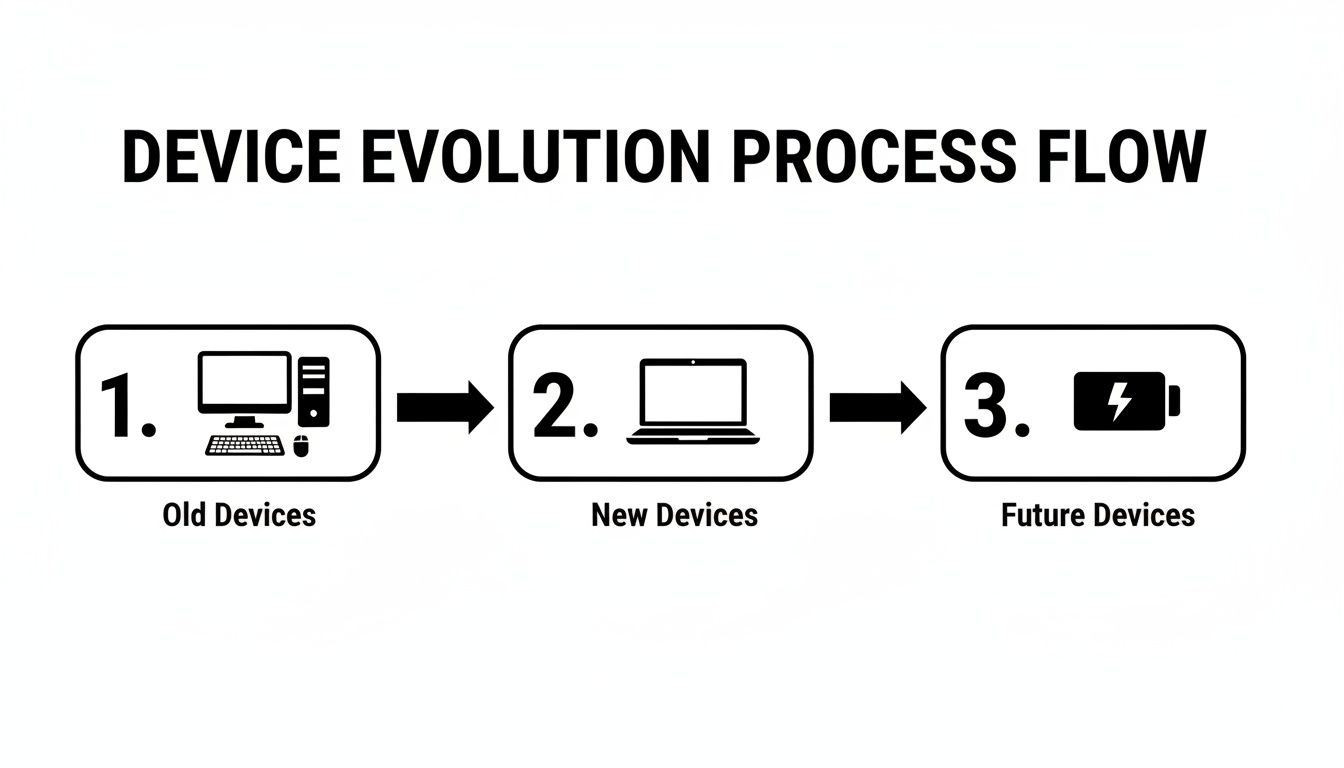
The transition from simple desktops to complex, battery-embedded devices has raised the stakes for data security during the disposal process.
The Importance of Official Documentation
The primary goal of a secure ITAD program is to provide undeniable proof of compliance. This documentation is essential during audits or legal challenges. A certified partner delivers a full suite of services designed to protect your business.
| ITAD Service | Process Description | Primary Business Benefit |
|---|---|---|
| Secure Logistics | GPS-tracked, sealed trucks and vetted personnel transport assets from your site. | Risk Mitigation during transit. |
| Serialized Auditing | Each asset is inventoried with its make, model, serial number, and condition. | Asset Management & Accountability |
| Data Destruction | Data is wiped to NIST 800-88 standards or drives are physically shredded. | Data Breach Prevention & Compliance |
| Certified Recycling | Materials are processed at R2 or e-Stewards certified facilities. | Environmental Compliance |
| Reporting & Certificates | You receive a Certificate of Data Destruction and a Certificate of Recycling. | Legal & Auditable Proof |
These services create a closed-loop system that protects your business from liability at every stage.
The most critical documents you will receive are the Certificate of Data Destruction and the Certificate of Recycling. These are legally binding records confirming your data was properly destroyed and your hardware was processed according to all state and federal laws.
Without this complete paper trail, your business remains exposed to risk. For businesses seeking a truly robust program, the first step is understanding the details of professional California ITAD services to achieve full compliance and close any security gaps.
Coordinating Logistics for Statewide Operations in California
Managing IT asset retirement across multiple California sites—from San Diego to Sacramento—presents a significant logistical challenge. A streamlined, statewide logistics plan is essential for any business with a distributed presence.

A professional ITAD partner provides secure, coordinated pickups across the state, utilizing trained personnel, GPS-tracked vehicles, and strict chain-of-custody protocols. Whether it’s a data center in the Bay Area or a branch office in the Central Valley, every asset is transported securely.
A Single Point of Contact for Your Enterprise
For facility managers and IT departments, the primary benefit is simplification. Instead of managing multiple vendors and schedules, you gain a single point of contact for all scheduling, tracking, and reporting needs.
This unified approach ensures that every location adheres to the same high standards for security and compliance, from your Los Angeles headquarters to your Fresno satellite office. This consistency eliminates guesswork and significantly reduces your team’s administrative burden.
A centralized logistics plan is the foundation of a defensible ITAD program. It ensures your chain-of-custody documentation is complete and consistent across your entire organization, which is critical for audit preparedness.
Key Logistical Services for California Businesses
A capable partner will offer a flexible suite of services tailored to the needs of businesses operating throughout California. These are carefully planned operations designed to protect your assets from start to finish.
Look for key offerings like:
- Scheduled Pickups: Ideal for routine asset retirement cycles, enabling consistent service across all your California locations.
- On-Demand Services: Flexibility for special projects like office relocations, data center decommissioning, or large-scale equipment upgrades.
- Secure On-Site Services: Professional teams can securely pack and palletize equipment on-site, ensuring it is protected and ready for transit.
- Serialized Asset Scanning: Every item is scanned and logged before leaving your facility, initiating a secure and auditable chain of custody from the very start.
While Beyond Surplus provides nationwide pickup services, it can also be useful to know where certified processing facilities are located. You can learn more about finding certified electronics drop-off locations that meet professional standards. A reliable logistics partner transforms a complex, multi-location disposal challenge into a secure and manageable process.
How to Choose the Right Certified E-Waste Partner in California
Selecting the right partner is the most critical decision in your e-waste management strategy. For any California business, this choice directly impacts your data security, environmental compliance, and legal liability. A qualified partner acts as a shield against risk, while an uncertified vendor can expose you to significant fines and reputational damage.
Begin by verifying industry-standard certifications. These credentials represent a commitment to rigorous, independently audited standards for handling e-waste securely and responsibly.
Essential Certifications to Verify
When evaluating potential providers for California e-waste services, your checklist must include these non-negotiable certifications:
- R2 (Responsible Recycling): This certification demonstrates that the provider meets high standards for environmental protection, worker health and safety, and data security throughout the recycling chain.
- e-Stewards: Considered one of the most stringent standards, e-Stewards certification guarantees that no hazardous e-waste is exported to developing nations and that all processes meet top-tier environmental and social criteria.
- NAID AAA: This is the gold standard for data destruction. A NAID AAA certified partner has undergone extensive, unannounced audits to verify that their data sanitization and destruction processes are completely secure.
Beyond certifications, assess a company’s operational transparency. Ask detailed questions about their downstream vendor management, insurance coverage (including pollution and data breach liability), and the thoroughness of their reporting. A reputable partner will welcome this scrutiny and provide clear, direct answers.
Key Questions for Your Vetting Process
A thorough vetting process is your best defense against risk. You must understand how your assets will be handled from the moment they leave your facility to their final disposition.
An informed choice is the foundation of a defensible ITAD program. The goal is to find a provider who offers a transparent, secure, and fully compliant service that protects your brand, your data, and your bottom line.
A critical part of this process is ensuring their data destruction methods meet federal guidelines. For example, verify their process for achieving NIST SP 800-88 compliance. This standard provides the framework for proper data sanitization, and a qualified partner should be able to demonstrate exactly how they adhere to it.
FAQs: Commercial E-Waste Services in California
Business owners and IT managers often have questions about managing end-of-life electronics. Getting clear answers is the first step toward making informed decisions that keep your company secure and compliant. Here are some of the most common questions about commercial e-waste in California.
Is My Business Required to Use a Certified Recycler in California?
Yes. California law explicitly requires that all e-waste be managed by state-approved collectors and recyclers. For businesses, this means partnering with a provider holding a certification like R2 or e-Stewards is a legal mandate, not an option.
A certified partner is your primary defense against liability. It provides an auditable trail that proves you are complying with state regulations and protects your company from the severe consequences of a data breach or environmental violation. This partnership culminates in official Certificates of Recycling, your documented proof of due diligence.
What Is the Difference Between E-Waste Recycling and ITAD?
This is a critical distinction. While the terms are often used interchangeably, they refer to two very different levels of service and security.
- E-Waste Recycling focuses primarily on the environmentally safe recovery of raw materials from obsolete electronics. Its main goal is to prevent hazardous materials from entering landfills.
- IT Asset Disposition (ITAD) is a comprehensive, strategic process designed for businesses. A true ITAD service includes secure logistics, guaranteed data destruction, serialized asset tracking, potential value recovery through remarketing, and detailed compliance reporting.
For any organization handling sensitive data or operating under strict regulatory requirements (e.g., healthcare, finance), ITAD is the only responsible choice. It is designed to address risk, value, and compliance in a way that basic recycling does not.
Can You Handle Pickups from Multiple Business Locations Across California?
Yes. A key advantage of working with a professional ITAD provider is the logistical capability to support businesses with a statewide presence. We offer secure, fully documented pickups from offices throughout California, including Los Angeles, the San Francisco Bay Area, San Diego, and all regions in between.
This centralized logistics model simplifies your entire asset retirement program. It ensures consistent, high-security protocols at every location and provides unified reporting for your entire enterprise, streamlining compliance audits and internal asset tracking.
For California businesses in need of a partner that provides certified data destruction, compliant recycling, and seamless statewide logistics, Beyond Surplus offers the expertise and documentation required to manage your IT assets with complete confidence.
Schedule your secure electronics recycling pickup today.


