

An IT director receives a request from legal: prove that a specific group of laptops, servers, and hard drives was securely destroyed two years ago. The disposal vendor has sent a certificate, but it lists only a total device count. There are no serial numbers, no technician identifier, and no clear link to the original pickup.
That's the pressure point where compliance documentation either protects an organization or exposes a gap. A defensible IT asset disposition, or ITAD, record isn't a post-destruction receipt. It's an evidence trail that connects intake, custody, processing, data sanitization, recycling, and final disposition. This guide shows compliance officers, IT managers, procurement teams, and facility leaders how to build that trail for commercial and enterprise electronics recycling programs.
Table of Contents
- The Moment a Compliance File Gets Tested
- What Compliance Documentation Means in IT Asset Disposition
- The Core Documents Every ITAD Program Needs
- Mapping Documents to Regulations and Industry Requirements
- Procurement and Vendor Risk Checklists for Documentation
- Retention Timelines and Recordkeeping Architecture
- Sample Outlines for Chain of Custody and Certificates of Destruction
- How Beyond Surplus Supports Defensible Compliance Documentation
The Moment a Compliance File Gets Tested
The request may arrive after a facility refresh, a data breach investigation, a vendor change, or a HIPAA review. Someone asks for proof that a particular device was destroyed, and the answer depends on records created long before the question was asked.
A strong file lets the team identify the asset, confirm who handled it, verify the approved sanitization method, and locate the final disposition record without reconstructing the project from emails. A weak file forces staff to compare an old inventory spreadsheet with a generic certificate and hope the totals match.
Build evidence before the pickup
Start with an asset-level inventory. Record serial numbers, asset tags, device type, media type, location, and the business owner. That information establishes what entered the ITAD process and gives later documents something precise to reference.
At pickup, add the date and time, origin, destination, named handlers, and transfer acknowledgment. During processing, capture the sanitization method, technician, date, and location. Final recycling or destruction records should point back to the same identifiers.
Practical rule: If an auditor can't follow one device through the file, the record is incomplete even when the overall project appears successful.
The evidence chain should also survive a vendor transition. If one provider collects the equipment and another downstream processor handles recycling or destruction, your records need to show where custody changed and which party performed each activity. Compliance documentation built this way gives legal, audit, and security teams a direct answer instead of a document hunt.
What Compliance Documentation Means in IT Asset Disposition
In ITAD, compliance documentation means the controlled records that demonstrate how an organization handled data-bearing assets, regulated electronics, and reportable waste streams under applicable legal, contractual, and internal requirements. It covers more than a policy file. It proves what happened to specific equipment and who was responsible at each stage.
Three characteristics separate defensible ITAD records from ordinary business paperwork:
- Asset-specific: The record identifies each device by serial number, asset tag, or another unique identifier.
- Method-specific: It states how data was sanitized or destroyed, rather than using broad wording such as “processed securely.”
- Lifecycle-specific: It follows the asset from collection and storage through transport, processing, data destruction, recycling, and final disposition.
Think of each device as carrying an asset passport
An asset passport starts at the client's dock. It records the equipment's identity and condition, then gains custody entries as the device moves through a secure container, transportation route, processing facility, sanitization station, and downstream channel. The final record shows whether the asset was recycled, destroyed, reused, resold, or transferred for another approved outcome.
That approach aligns with the practical detail described in this secure data destruction guidance, where the quality of the evidence depends on connecting the physical asset to the action performed.
The document set usually includes a chain-of-custody log, inventory, data destruction certificate, recycling certificate, manifests, audit trails, contractual controls, and downstream certification records. The important question isn't whether each document exists separately. It's whether the documents agree with one another and preserve continuity from intake to final disposition.
The Core Documents Every ITAD Program Needs
An ITAD compliance file should be assembled as a connected record set. Each document answers a different audit question, but the chain-of-custody record provides the spine that holds the file together.
Chain of custody
The chain-of-custody log proves where an asset was, when it moved, and who accepted responsibility. It should include the date and time of each handoff, origin, destination, named custodians, serial number, asset tag, media type, condition notes, transport controls, and acknowledgment from both parties.
For an enterprise refresh, a batch number may help organize the job, but it shouldn't replace serialized detail. A batch-level record can show that equipment moved. It may not show what happened to a particular server or drive.
Certificates of destruction and recycling
A certificate of destruction should identify each data-bearing device, its media type, sanitization method, date, location, and responsible operator. A certificate of recycling should identify the equipment processed, the recycler, processing date, and downstream outcome where applicable.
A generic statement that “all equipment was destroyed” is difficult to defend. The certificate becomes stronger when it references the asset inventory and chain-of-custody record.
Manifests and downstream records
Manifests, weigh tickets, shipping records, and downstream processor documentation help prove how equipment entered the appropriate waste or recovery stream. Industry guidance also emphasizes retaining the recycler's current R2 or e-Stewards certification with the compliance file, alongside records identifying the recycler, date, and equipment processed.
Audit trails and contracts
System audit trails show who created, approved, changed, or released a record. Retention settings matter because a missing system event can weaken an otherwise complete file.
The service-level agreement and statement of work establish the vendor's obligations. Include requirements for serial-number reporting, approved sanitization methods, incident notification, subcontractor controls, downstream transparency, insurance, and record delivery before payment.
| Document Type | What It Proves | Critical Field for Audit |
|---|---|---|
| Chain of custody | Each handoff and custody change | Serial number and transfer acknowledgment |
| Destruction certificate | Device-specific data destruction | Sanitization method and operator |
| Recycling certificate | Processing and recycling outcome | Equipment identity and processing date |
| Manifest or shipping record | Movement through a waste or recovery stream | Origin, destination, and equipment detail |
| Audit trail | Record activity and approvals | User, action, and timestamp |
| SLA or statement of work | Enforceable vendor obligations | Documentation and subcontractor requirements |
For broader control context, teams can also consult this guide to IT security compliance. Internally, maintain a chain-of-custody documentation record that connects the vendor packet to the organization's asset register.
Mapping Documents to Regulations and Industry Requirements
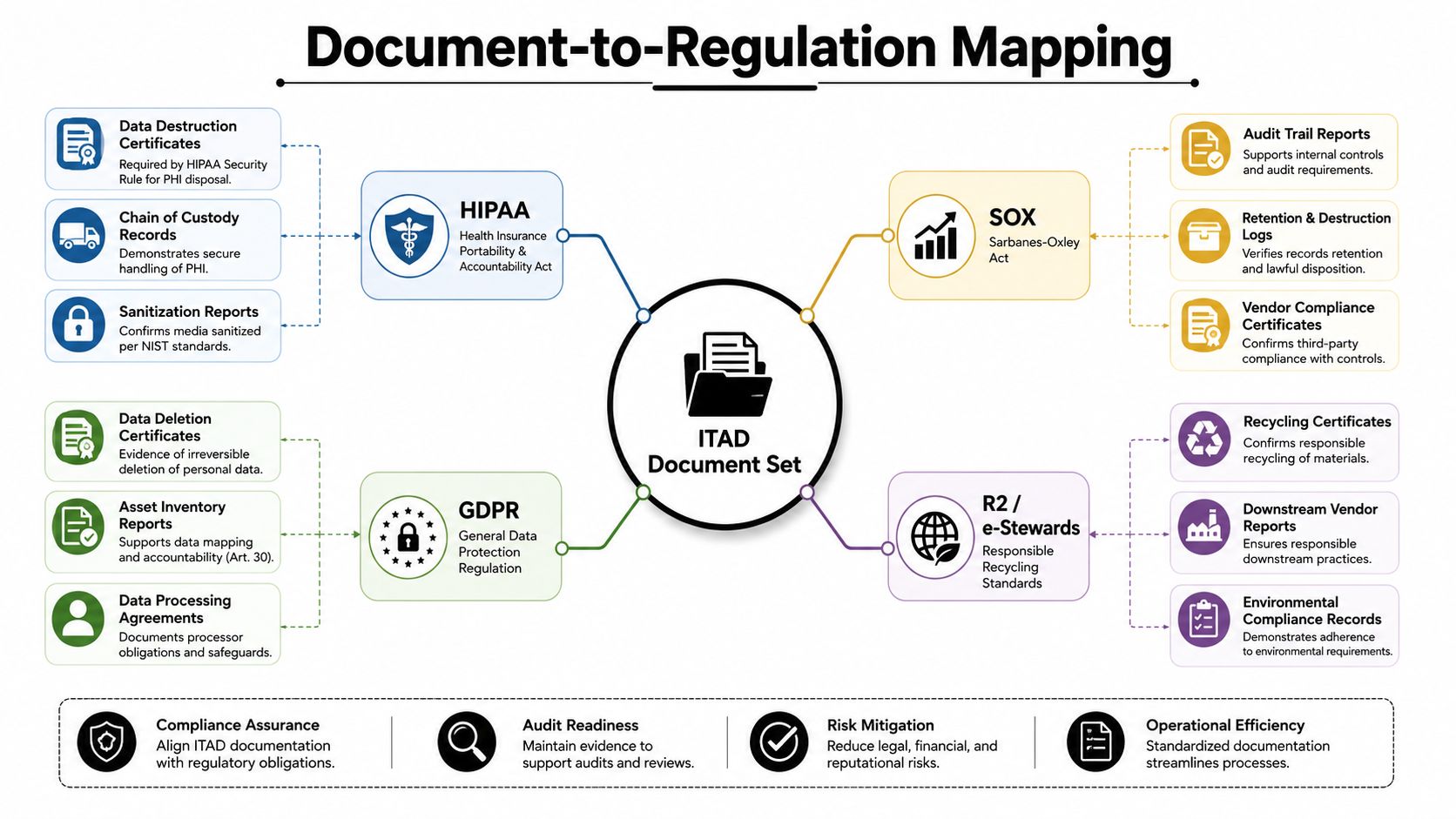
Different frameworks may ask different questions about the same retirement event. The efficient approach is to maintain one controlled evidence set, then map each record to the obligations it supports.
HIPAA and health information
Under the HIPAA Security Rule, covered entities and business associates must retain required compliance documentation for at least six years after creation or the date it was last in effect, whichever is later, as described in this HIPAA compliance documentation reference. That requirement includes policies, procedures, documented actions, activities, and assessments tied to the Security Rule.
For device disposition, the relevant evidence may include the asset inventory, chain of custody, sanitization record, destruction certificate, complaint or incident records, and vendor agreement.
FTC Disposal Rule
The FTC Disposal Rule applies to businesses and individuals that maintain or possess consumer reports or related records for a business purpose. It requires appropriate measures for disposing of sensitive information derived from those materials. The FTC says the rule became effective on June 1, 2005, following publication in the Federal Register on November 24, 2004, as stated in its Disposal Rule guidance.
A commercial compliance file should show what information-bearing assets were handled, when disposal occurred, and which process was used.
NIST, EPR, FISMA, and CMMC
NIST SP 800-88-style records should connect the sanitization method to the specific media and device. State extended producer responsibility requirements may call for equipment, shipment, or recycling documentation. Federal contractors may need evidence that supports FISMA or CMMC controls.
One retirement event can therefore generate an EPR manifest, NIST sanitization record, and federal evidence record. A documented procedure, such as this resource on drafting IT procedures for business, helps teams assign ownership instead of creating disconnected files. Organizations can also align the workflow with NIST SP 800-88 practices.
Procurement and Vendor Risk Checklists for Documentation
Procurement teams should evaluate the vendor's evidence process before approving a disposal project. A polished certificate doesn't compensate for unclear subcontractors, expired qualifications, or a sanitization method that doesn't fit the media.
Vendor qualification checklist
Ask the provider to document:
- Certification status: Confirm current R2 or e-Stewards certification and retain the applicable record.
- Security alignment: Review ISO/IEC 27001 alignment, information-security controls, and available assurance reports.
- Healthcare readiness: Confirm whether a business associate agreement is available when protected health information may be involved.
- Insurance coverage: Verify coverage relevant to data incidents, transportation, environmental liability, and professional services.
- Downstream scope: Identify where processing occurs and whether downstream processors are disclosed and controlled.
- Method validation: Confirm that the provider distinguishes HDD, SSD, NVMe, tape, mobile devices, and other media types.
The contract should require serialized certificates, documented transfer acknowledgments, incident escalation, retention support, and delivery of records before accounts payable releases final payment.
Per-job review before approval
Before closing the work order, compare the vendor packet with the original inventory.
- Match identifiers: Every data-bearing device should appear by serial number or asset tag.
- Check the method: Confirm the recorded sanitization or destruction method matches the media type.
- Review dates: Verify pickup, handoff, processing, and destruction dates form a coherent sequence.
- Confirm operators: Ensure the technician or responsible processor is identifiable.
- Trace downstream movement: Match manifests, shipping records, and recycling documentation.
- Resolve exceptions: Investigate missing, reused, resold, or damaged assets before filing the project as complete.
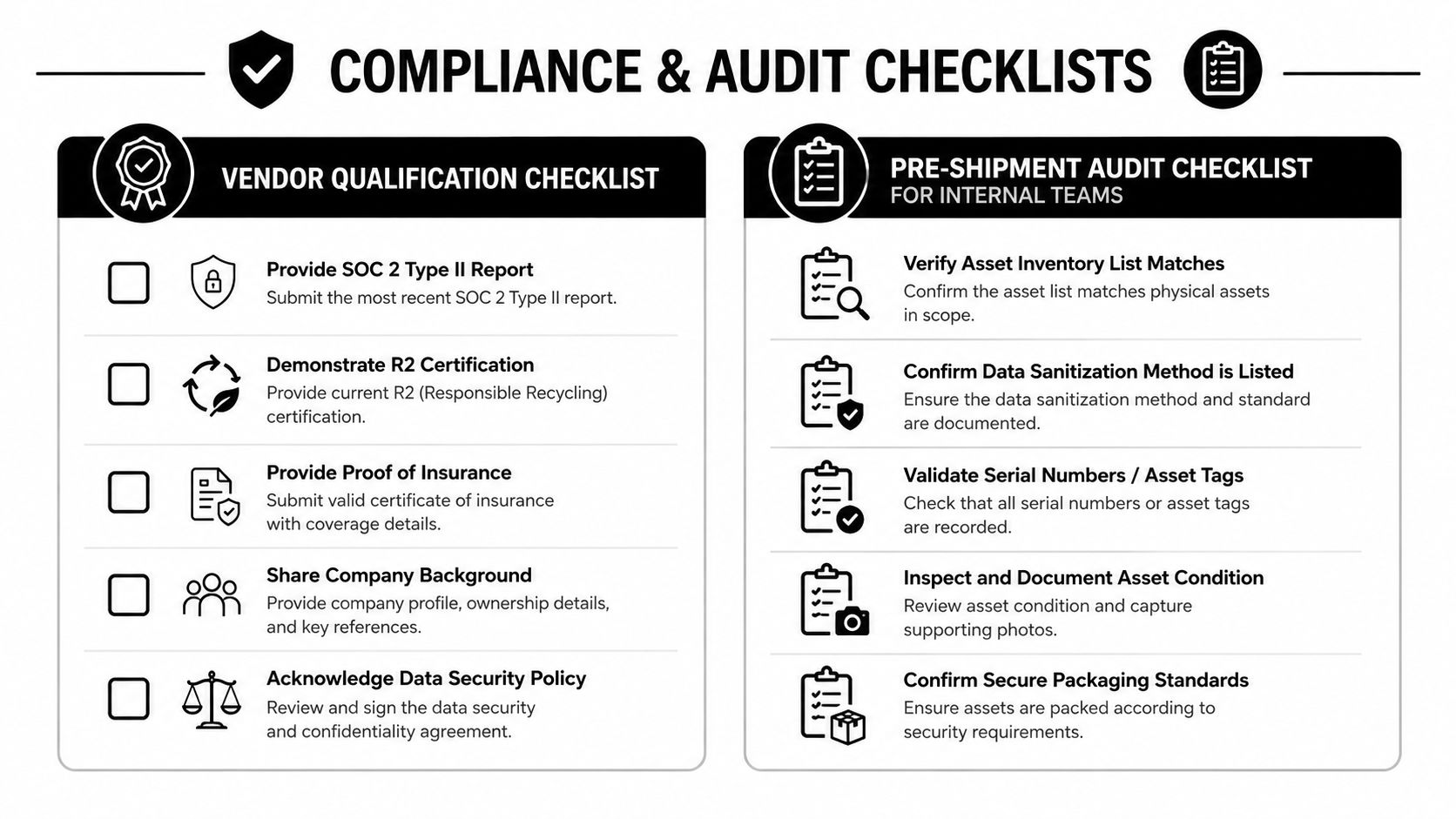
The highest risk is often documentation mismatch, not failed destruction. A missing serial number, expired certification, or wrong media method can make a completed action difficult to prove.
This vendor due diligence checklist gives procurement and compliance teams a practical starting point for formal review.
Retention Timelines and Recordkeeping Architecture
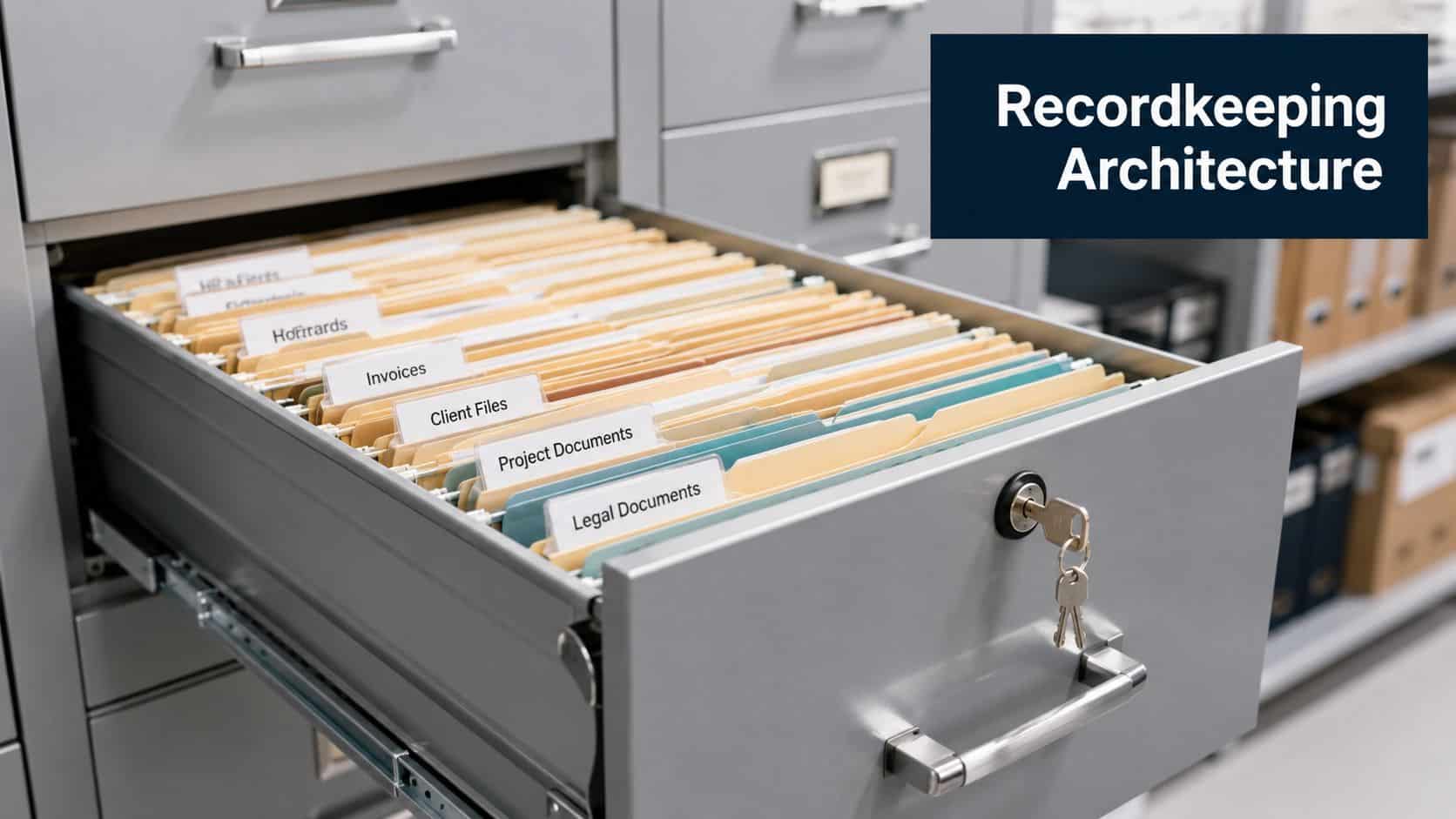
Retention rules should shape the storage design from the start. Keeping a certificate in an email inbox may satisfy a short-term convenience need, but it won't reliably support an investigation, litigation hold, or audit years later.
HIPAA requires covered entities and business associates to retain required Security Rule documentation for at least six years, measured from creation or the date the documentation was last in effect, whichever is later. The SEC adopted a records-retention rule in 2003 requiring accounting firms to retain certain audit and review records for seven years, with the rule effective March 3, 2003, and applying to audits and reviews completed on or after October 31, 2003. The rule covers workpapers and other records containing conclusions, opinions, analyses, or financial data, as described in this SEC retention reference.
Use storage tiers
Operational logs need fast access, while archival evidence needs integrity and controlled retention.
- Hot logs: Keep searchable operational logs for 60 to 90 days to support triage and incident response, based on the retention model described in this HIPAA-focused logging guidance.
- Indexed review storage: Retain searchable records for 12 to 24 months when teams need investigation and audit access.
- Cold archives: Preserve certificates, inventories, manifests, and custody records for the longest applicable regulatory or contractual period, often aligning with the six-year HIPAA documentation clock.
ISO/IEC 27001 Clause 7.5 treats these records as controlled documented information. A document register should track owner, version, approval status, review date, classification, protection, retention, and disposition. If rules conflict, use the longest applicable period and document why that decision was made.
Sample Outlines for Chain of Custody and Certificates of Destruction
Use these outlines to review vendor paperwork before accepting a completed ITAD job.
Chain-of-custody log
The record should contain:
- Asset identity: Serial number, asset tag, equipment type, and media type.
- Starting condition: Working, damaged, incomplete, or other relevant condition notes.
- Collection event: Date and time, origin location, named releasing employee, and receiving custodian.
- Transport controls: Sealed or locked container details, vehicle or shipment reference, and destination.
- Processing handoff: Date and time, facility, named handler, and transfer acknowledgment.
- Final activity: Sanitization, shredding, recycling, reuse, resale, or another approved disposition.
- Cross-reference: Work order, inventory file, certificate number, and downstream record.
Certificate of destruction
A defensible certificate should list each device rather than only the project total. Include the serial number, asset tag, media type, sanitization method, date and location, technician identifier, and a reference to the custody log.
For NIST SP 800-88-style documentation, identify whether the action used a clear, purge, or destroy category when applicable. The certificate should also state whether the device was wiped, shredded, or processed through another approved method.
A strong certificate can be reconciled to the inventory and custody record without guesswork. A weak certificate uses broad language, omits identifiers, or leaves the responsible operator unknown. Teams comparing vendor outputs can use this destruction certificate format as a reference point for the fields that matter.
How Beyond Surplus Supports Defensible Compliance Documentation
A defensible ITAD program connects serialized inventory, custody records, method-specific sanitization evidence, recycling documentation, and downstream processing records. Beyond Surplus provides secure ITAD services that include serialized certificates of recycling and data destruction, hard drive shredding, and certified data wiping for commercial projects.
The company maintains chain-of-custody records from pickup through final processing and supports documentation needs associated with the HIPAA Security Rule, FTC Disposal Rule, and NIST SP 800-88 practices. Its Atlanta and Smyrna facility supports regional business drop-offs, while nationwide pickup logistics support enterprise and multi-site programs that need a consistent record standard.
Contact Beyond Surplus for certified electronics recycling, secure data destruction, IT equipment disposal, and documented chain-of-custody support. Visit Beyond Surplus to discuss a commercial ITAD project and build an evidence file that can withstand audit review.


