

Only 22.3% of global e-waste was formally collected and recycled in 2022, so data center recycling is the controlled pathway for enterprise hardware that keeps retired equipment out of poorly documented waste streams. A disciplined program protects data, preserves reuse value, and creates evidence that every asset reached an appropriate endpoint.
For an IT director, decommissioning isn't a matter of just moving servers out of a room. The project must answer several questions in the right order: Which equipment can keep working? Which storage devices require sanitization or destruction? Who handled each asset? What materials were recovered? Can the organization prove the result to auditors, customers, and regulators?
Table of Contents
- Understanding the Scale and Need for Data Center Recycling
- The End-to-End Data Center Recycling Process
- Regulatory Compliance and Documentation Requirements
- Reuse Versus Recycling, Measuring the Trade-Offs
- Circular Economy Gaps and Documentation Standards
- Selecting a Certified IT Asset Disposition Partner
- Common Data Center Recycling Pitfalls and How to Avoid Them
Understanding the Scale and Need for Data Center Recycling
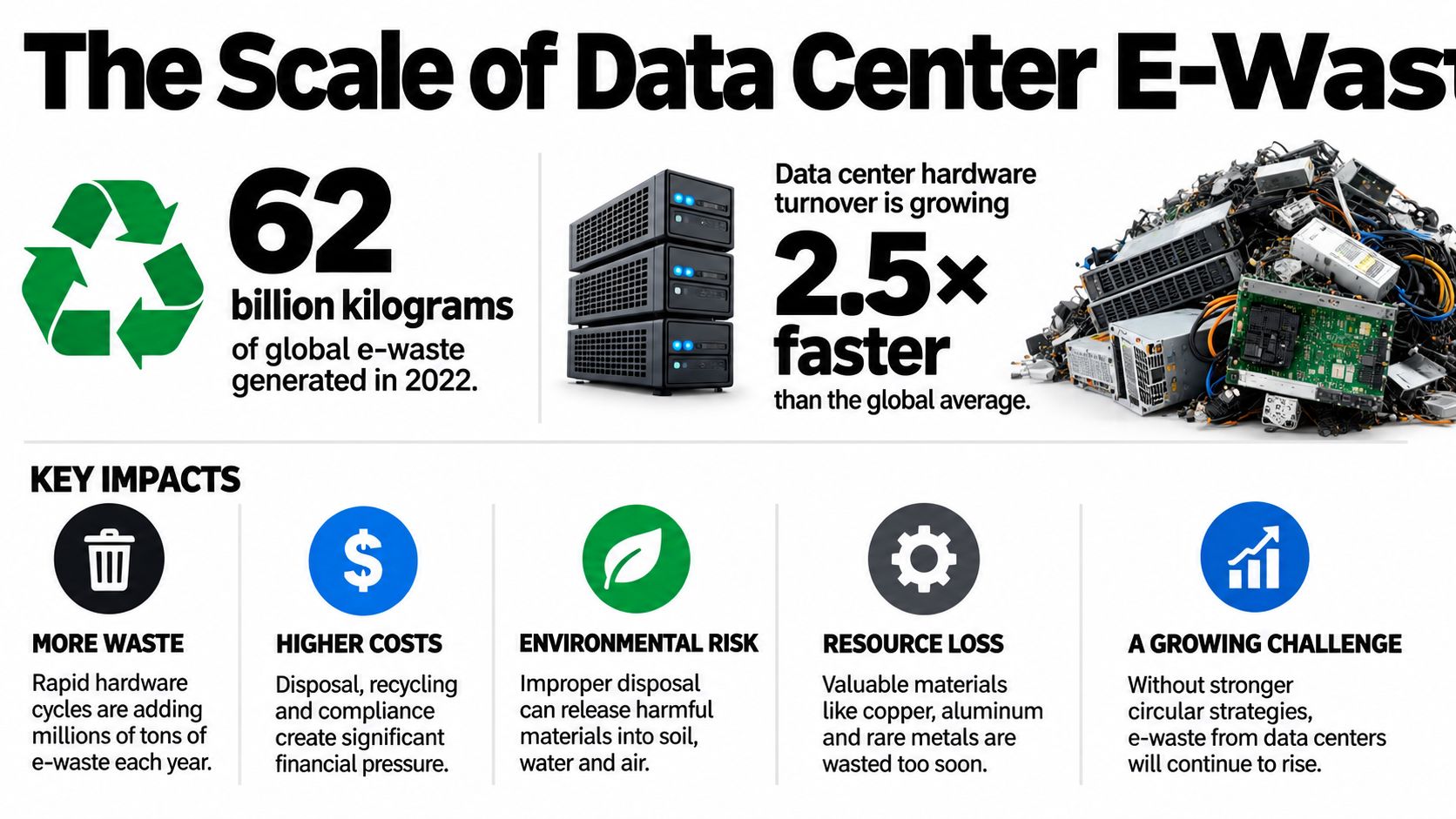
In 2022, the world generated approximately 62 billion kilograms of discarded electrical and electronic equipment, equal to 7.8 kilograms per person. Only 22.3%, or approximately 13.8 billion kilograms, was documented as formally collected and recycled through environmentally sound channels, according to the Global E-waste Monitor 2024.
Data centers concentrate high-value equipment within a limited removal window. A refresh may include servers, storage arrays, network switches, racks, power systems, monitors, cables, batteries, and cooling equipment. Facility closures and migrations can multiply the volume, while time pressure increases the risk of incomplete inventories, weak custody records, and premature disposal.
Why formal channels matter
Formal processing has an environmental benefit beyond keeping equipment out of uncontrolled waste streams. It avoided roughly 93 million tonnes of carbon-dioxide-equivalent emissions in 2022, largely by reducing demand for new mining and primary material production. That figure makes the decision framework practical: compare the material and carbon value of extending usable hardware life with the impact of a refresh, then require documented reuse rates and a chain of custody for the chosen route.
Informal processing can expose workers and communities to hazardous substances. The World Health Organization identifies e-waste as hazardous) because improper recycling can release lead, mercury, and dioxins. For an enterprise, controlled routing supports occupational safety, customer assurance, regulatory defensibility, and vendor oversight.
A credible program records each asset's destination and supporting evidence. Beyond Surplus's environmental impact reduction services illustrate the reporting and responsible processing an IT asset disposition partner should provide.
The End-to-End Data Center Recycling Process
A successful project starts before the first rack is disconnected. The team needs an asset register that records serial numbers, barcodes, location, equipment type, condition, storage media, and intended disposition. That inventory lets the project manager separate reuse, refurbishment, component harvesting, material recovery, and destruction instead of sending every asset down one route.
Start with disposition, not demolition
The first decision is whether an asset still has operational or resale value. Tested servers may support another workload, spare parts may keep an existing environment running, and obsolete equipment may still contain recoverable steel, aluminum, copper, and precious metals. Sending all equipment directly to a shredder can destroy value and make sustainability reporting less meaningful.
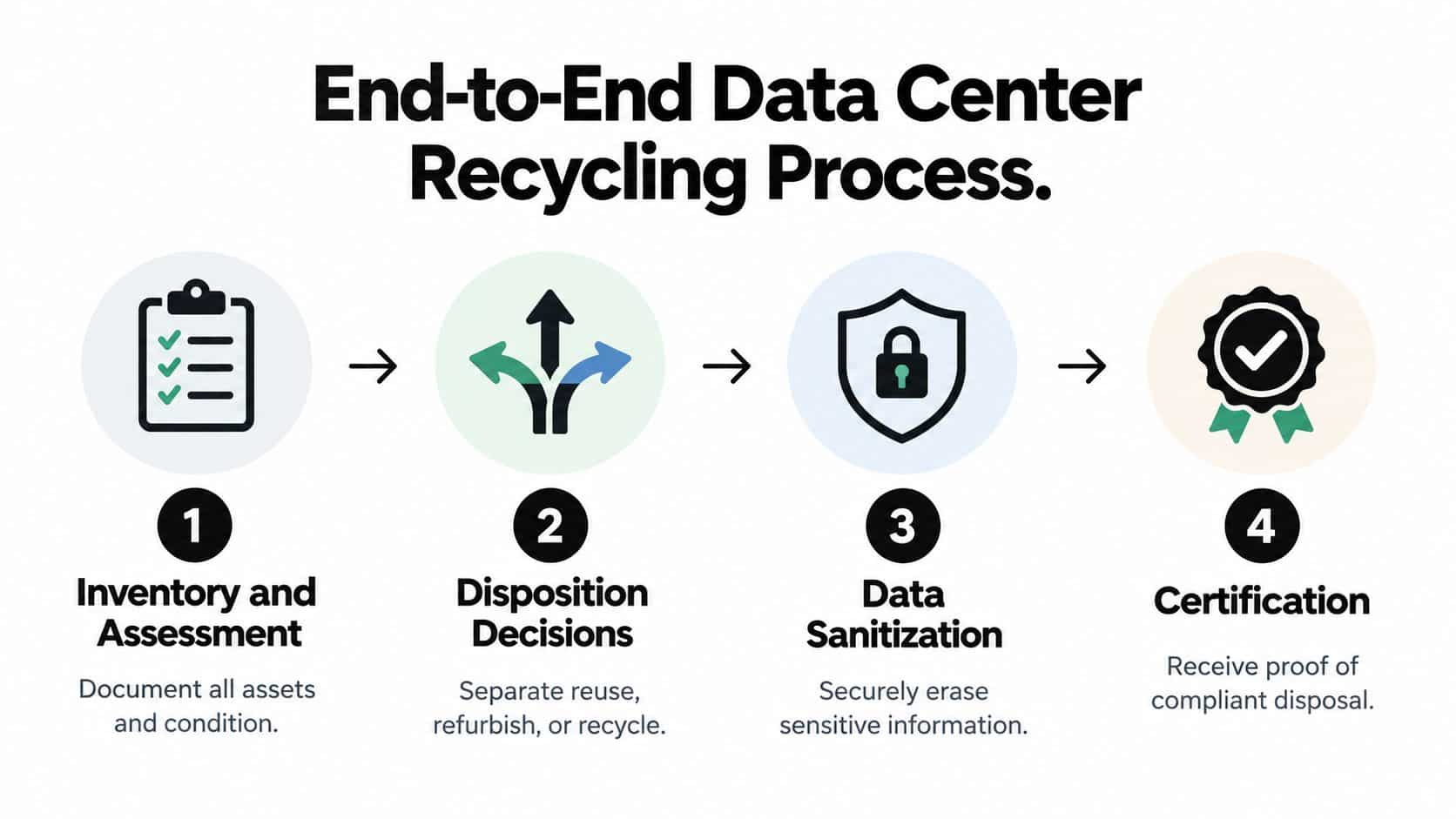
Storage-bearing assets require a separate security decision. NIST SP 800-88 defines three sanitization outcomes: Clear protects against simple recovery and may permit reuse, Purge uses block erase or cryptographic erase for stronger protection and may also permit reuse, and Destroy uses shredding or pulverizing when media are damaged or data sensitivity requires permanent inaccessibility. The NIST media sanitization publication provides the basis for matching the method to the media and information risk.
Control custody through final processing
After approval, the logistics plan should define who disconnects, packages, transports, receives, and processes each asset. Sealed containers, scheduled pickups, documented handoffs, and receiving scans reduce the chance of an unexplained gap. If outside movers handle equipment, organizations should verify office movers before booking and confirm that their scope, insurance, security controls, and handoff records fit the decommissioning plan.
At the processing facility, steel chassis, aluminum heat sinks, and copper cables can be separated through mechanical methods. Printed circuit boards may undergo shredding followed by chemical or thermal treatment to recover valuable metals such as gold. For large cable inventories, a specialist data center cable mining and wire removal service can help distinguish recoverable material from general residual waste.
The final file should connect the asset register to sanitization evidence, custody events, disposition results, weights by material stream, and certificates. Common deliverables include a recycling certificate, a data destruction certificate, and an asset disposition summary. These documents serve different purposes, so one generic “recycled” statement shouldn't replace them.
Regulatory Compliance and Documentation Requirements
A defensible recycling project connects regulatory duties to an evidence chain. Privacy requirements address unauthorized access, sector rules protect sensitive information, tax guidance specifies acceptable media sanitization, and recycler certifications cover environmental and downstream controls. The record should follow each asset from removal to its final disposition, much like a parcel whose tracking history shows every handoff.
Map information risk to the media
The IRS media sanitization guidance states that simple deletion isn't sufficient for media containing Federal Tax Information. Approved approaches include clearing through overwriting, purging through ATA Secure Erase or degaussing, and destruction through disintegration, incineration, pulverizing, shredding, or melting. Media that will not be reused must be destroyed.
Healthcare organizations need procedures for protected health information. Organizations handling consumer information must also take reasonable steps to prevent unauthorized access during disposal. The control depends on the data and the organization, yet the test remains practical: can the company show what happened to every storage-bearing asset?

Build an audit-ready evidence set
A defensible chain of custody should record:
- Asset identity: Serial number, barcode, equipment description, and originating site.
- Custody history: Removal, transport, receipt, storage, and processing events.
- Sanitization record: Approved method, applicable standard, verification result, and operator or system record.
- Disposition outcome: Reuse, resale, refurbishment, component recovery, recycling, or destruction.
- Downstream evidence: Processing facility identity, material stream, and final certificate.
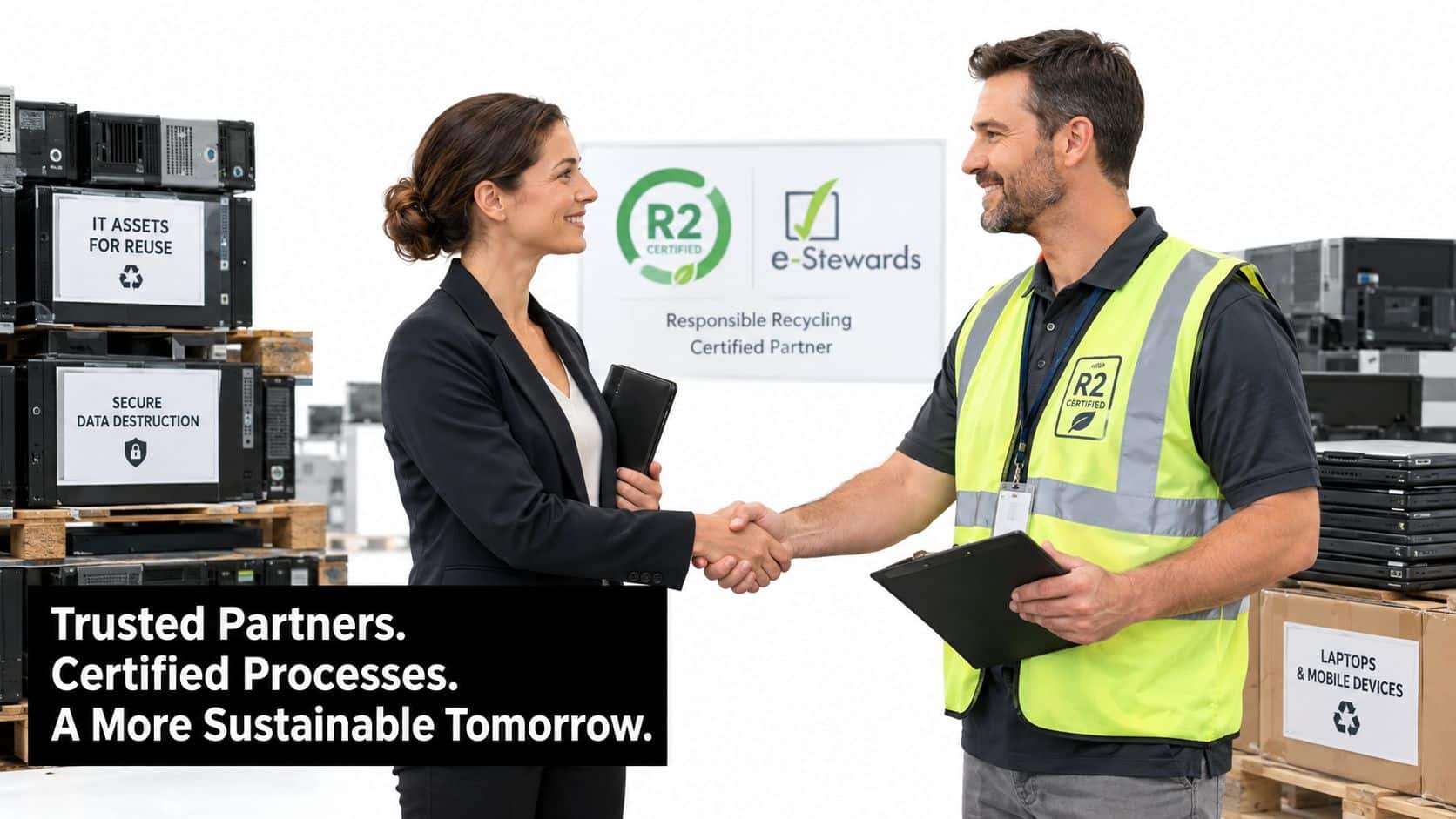
The EPA's electronics recycling guidance identifies R2, the Responsible Recycling Standard, and e-Stewards as certification standards for electronics recyclers. Independent third-party audits assess areas such as environmental protection, safe material management, downstream-handler controls, reuse, recycling, and data destruction. That distinction matters when comparing a documented processing route with a vendor's general recycling claim.
For media-specific controls, review NIST 800-88 data destruction standards. Create the records before custody changes hands, then reconcile them against sanitization results, disposition decisions, and downstream certificates. Paperwork collected afterward cannot repair an undocumented gap.
Reuse Versus Recycling, Measuring the Trade-Offs
Recycling is not automatically the lowest-impact endpoint. The right decision depends on whether continued operation creates unacceptable security, reliability, energy, or support risk compared with the impact of manufacturing and transporting replacement equipment.
A peer-reviewed data center equipment case study found that refurbishing a server and extending its usable life reduced average life-cycle impact by 23% compared with replacing and recycling it after a conventional four-year service life. The same study found that treatment, dismantling, and recovery reduced average impact by 24% compared with a business-as-usual recycling route. These findings support a controlled decision process, not a blanket reuse or recycling policy. See the peer-reviewed server life-cycle case study.
Compare the actual pathway
A 2025 review reports that some hardware may remain usable for roughly nine years, which challenges the assumption that a five-year refresh is always environmentally optimal. That doesn't mean every older server should remain in production. It means the decision should account for workload efficiency, failure history, firmware support, replacement requirements, transportation, resale value, and verified sanitization needs.
| Criteria | Reuse Consideration | Recycling Consideration |
|---|---|---|
| Condition | Test processors, memory, drives, power supplies, and network hardware | Select recovery when testing fails or repair isn't practical |
| Workload | Retain equipment for suitable, noncritical workloads | Replace when performance or efficiency no longer meets requirements |
| Security | Use verified Clear or Purge where reuse is approved | Use Destroy when media cannot be reliably sanitized |
| Support | Confirm firmware, spares, and technical support | Recover materials when support and parts are unavailable |
| Value | Consider resale, redeployment, and component harvesting | Document ferrous, nonferrous, PCB, and residual streams |
Component-level reuse differs from whole-server resale. A CPU, memory module, drive, or network card may have value even when the complete chassis doesn't. The refurbish or recycle decision guide can help teams translate those distinctions into an asset-level disposition policy.
Circular Economy Gaps and Documentation Standards
A recycling certificate proves that a provider completed a stated process. It may not prove how many assets were reused, which components were recovered, where downstream processing occurred, or whether exported material received equivalent environmental and security controls. That distinction matters when sustainability reports, customer questionnaires, procurement reviews, or regulatory audits require more than a diversion claim.
A 2025 sustainable data center roadmap calls for harmonized global standards covering reuse, refurbishment, recycling, and sanitization of data-bearing equipment, along with stronger extended-producer-responsibility rules. The recommendation highlights a practical weakness in the current market: organizations often receive a final certificate without comparable evidence that explains the full material and custody pathway.
Ask for comparable records
Modern infrastructure makes this gap more important. Hyperscale and AI deployments introduce specialized hardware, liquid-cooling systems, batteries, racks, and power equipment that may not fit traditional server-recycling assumptions. A vendor should explain how each category is weighed, tested, reused, dismantled, or sent to a qualified downstream facility.
Request documentation that includes:
- Serial-number inventory: The submitted population and exceptions.
- Sanitization standard: The method used for each storage-bearing asset.
- Destruction exceptions: Failed drives, damaged media, or items removed from reuse.
- Material weights: Separate reporting for relevant material streams.
- Disposition breakdown: Reuse, refurbishment, resale, component recovery, and recycling.
- Downstream evidence: Facility identity, certifications, transfer records, and final processing documentation.
Audit principle: “Recycled” describes an outcome category. It doesn't, by itself, describe custody, security, material recovery, or downstream accountability.
This level of detail helps procurement teams compare providers on evidence rather than marketing language. It also lets sustainability and security teams use the same asset-level records instead of maintaining disconnected reports.
Selecting a Certified IT Asset Disposition Partner
Vendor selection should begin with proof. Request the current certification scope, covered locations, audit status, insurance details, and downstream requirements. These records show whether the provider's controls apply to your facilities and asset types, rather than only to another site or service.
Use a practical due diligence checklist
A capable ITAD partner should demonstrate:
- Inventory control: Scanning, reconciliation, and reporting from pickup through final disposition.
- Sanitization discipline: Documented NIST SP 800-88-aligned processes, verification, and physical destruction for failed or sensitive media.
- Custody visibility: Secure transport, receiving controls, exception management, and traceable handoffs.
- Downstream transparency: Named processing partners, certification evidence, and export controls where applicable.
- Reporting depth: Separate certificates for data destruction and recycling, plus an asset disposition summary.
- Operational coverage: Pickup and logistics support that match the project footprint and facility schedule.
Beyond Surplus is an Atlanta-based ITAD and electronics recycling provider offering nationwide pickup, certified data wiping, on- or off-site hard drive shredding, data center de-installations, IT equipment disposal, product destruction, and recovery reporting. Its business services support enterprises, healthcare providers, financial institutions, government agencies, schools, and other organizations with chain-of-custody requirements.
Ask each vendor to explain how its records support the reuse decision. A provider should show how testing, resale, refurbishment, component recovery, and material recycling are documented, so you can compare extending hardware life with replacing it. This evidence connects environmental value to workload, security, and financial decisions.
Infrastructure teams may also need removal coordination, including turnkey telecom infrastructure when network and communications equipment forms part of a larger facility project. Before signing, request sample certificates, an exception report, a chain-of-custody workflow, and evidence of downstream material handling.
Use questions to ask before hiring an ITAD company as a procurement worksheet. A vendor that cannot explain its records before the project begins may not produce a defensible file afterward.
Common Data Center Recycling Pitfalls and How to Avoid Them
The first mistake is treating every retired server as homogeneous e-waste. A failed chassis may contain working memory, processors, network cards, power supplies, or storage components, while another unit may be suitable for refurbishment or resale. Inventory equipment by condition and residual value before approving destruction.
The second mistake is assuming that a standard refresh interval automatically produces the best environmental result. The evidence that some hardware may remain usable for roughly nine years means the organization should compare supportability, workload performance, failure rates, energy requirements, security exposure, and replacement impacts. A longer service life can preserve embodied value, but only when the system remains reliable and defensible for its intended workload.
Correct the process before assets leave site
A third failure is accepting a vague recycling claim without asset-level evidence. If the provider can't show which assets were sanitized, which were destroyed, which were reused, and which downstream facility processed the material, the organization can't accurately defend its disposition program.
Use these controls during planning:
- Test components first: Evaluate CPUs, memory, drives, power supplies, and network hardware before whole-server disposal.
- Separate material streams: Document ferrous, nonferrous, printed circuit board, cable, battery, and residual categories where applicable.
- Approve destruction exceptions: Record why a device couldn't be sanitized for reuse and why physical destruction was required.
- Verify custody: Require written confirmation that the approved sanitization process was completed before transfer.
- Reconcile final reports: Compare pickup inventory, receiving records, destruction certificates, reuse records, and recycling weights.
Operational rule: Don't approve a truck departure until the inventory, security method, custody owner, and final reporting requirements are clear.
The strongest data center recycling program is selective. It extends useful life where security and reliability permit, recovers components when whole-system reuse fails, and sends remaining material through documented, environmentally sound channels.
Beyond Surplus provides data center decommissioning, secure data destruction, IT equipment disposal, electronics recycling, product destruction, and documented asset recovery for business projects. Visit Beyond Surplus to discuss a controlled pickup, sanitization, reuse, and recycling plan for your organization.


