

A procurement manager approves a vendor because the proposal says NAID AAA certified. Weeks later, an asset inventory shows a serialized drive that never appears on a destruction certificate. The vendor has a recognizable badge, but the buyer still can't answer the questions that matter: Which facility handled the device? Who controlled it between pickup and destruction? What happened to assets routed for reuse?
That gap is why NAID AAA certification should be treated as a starting line, not a finish line. It can provide meaningful evidence that a destruction provider maintains controlled processes, but it doesn't replace your own inventory reconciliation, contract review, regulatory mapping, or facility-level verification. For commercial IT asset disposal, the certificate matters only when its scope matches the service, location, media, and evidence your organization needs.
Table of Contents
- What NAID AAA Certification Actually Proves
- The Audit Process and What Auditors Verify
- Compliance Implications Under HIPAA, GLBA, PCI DSS, FERPA and the FTC Disposal Rule
- How NAID AAA Compares to R2v3 and e-Stewards
- Verifying a Vendor's Certification in Practice
- Vendor Evaluation Checklist and Questions to Ask
- Key Takeaways for ITAD Buyers
What NAID AAA Certification Actually Proves
NAID AAA Certification was launched in 2000 by the National Association for Information Destruction, or NAID, as a voluntary program for secure information destruction. The program is now administered by i-SIGMA, and its model relies on third-party validation rather than a vendor's self-attestation. The program's internal quality-control separation requirements were included from the beginning in 2008, and i-SIGMA notes that amended IRS Publication 1075 in 2016 acknowledged the value of NAID AAA Certification. i-SIGMA's certification overview documents that governance history.
That history gives the credential weight. It doesn't make the badge a universal security certification.
The boundary of the badge
NAID AAA focuses on secure information destruction operations. In practical terms, that can include paper destruction, hard-drive shredding, degaussing, secure wiping, solid-state media destruction, controlled storage, personnel procedures, and chain-of-custody documentation. Public descriptions of the program also identify facility security, incident response, equipment controls, scheduled audits, surprise audits, and annual renewal as important parts of the certification model. SecureScan's explanation of NAID AAA connects those controls with the technical outcomes defined by NIST SP 800-88, Clear, Purge, and Destroy.
The certificate doesn't automatically prove that a vendor:
- Manages your entire IT asset inventory correctly.
- Sanitizes live data-center systems before decommissioning.
- Controls every downstream reseller or refurbishment partner.
- Maintains a mature cybersecurity program across its corporate environment.
- Holds certification at every facility under the same brand.
- Meets every requirement in HIPAA, GLBA, PCI DSS, FERPA, or state privacy laws.
Those exclusions are operationally important. A vendor can control the destruction step while your own team loses track of assets before pickup, approves the wrong sanitization method, or sends equipment to a location outside the certificate's scope.
Practical rule: Ask what the certificate verifies, then build separate controls for everything it doesn't.
For business buyers, NAID AAA is strong evidence of a controlled destruction process. It isn't evidence that the vendor's full ITAD operation is compliant from intake through resale. If your program also includes electronics recycling, asset recovery, product destruction, or data-center decommissioning, review the provider's broader certifications and procedures through resources such as Beyond Surplus's electronics recycling certification information. The procurement decision should rest on documented scope, not the logo's visual reassurance.
The Audit Process and What Auditors Verify
A vendor can present a polished certificate while an unverified location handles your assets. Start the audit review by matching the certificate to the actual service path, then demand evidence from the facility, staff, equipment, and records involved.
NAID AAA has value because the provider must demonstrate repeatable controls under independent review. Public program descriptions state that a certified company completes an initial audit, undergoes scheduled and surprise audits, and renews annually. That recurring oversight tests whether procedures remain active after the sales process ends.
Separate the service scope from the brand name. Confirm whether the provider handles paper, electronic media, or both. Confirm whether destruction occurs at a fixed facility, at your site, or through a mobile operation. The evidence package should match that route, not a broader corporate description.
What the auditor should see
An auditor may review physical security, access controls, employee screening records, incident-response procedures, equipment controls, storage conditions, transport practices, and chain-of-custody records. For media sanitization, NIST SP 800-88 provides the framework of Clear, Purge, and Destroy, helping determine whether a device can be reused or requires physical destruction. NIST media-sanitization guidance helps translate a vendor's method into your asset-disposition policy.
Ask how the facility applies those methods to hard disk drives, solid-state drives, removable media, and paper records. “Secure destruction” is not sufficient evidence. The documented method should identify the media type, intended outcome, equipment used, and records produced.
| Audit Area | What Auditor Reviews | Risk It Mitigates |
|---|---|---|
| Facility security | Restricted access, storage controls, surveillance, and documented procedures | Unauthorized handling or removal |
| Personnel controls | Screening, training, and role responsibilities | Insider misuse and procedural failure |
| Equipment controls | Destruction equipment, maintenance, and operating procedures | Incomplete or ineffective destruction |
| Chain of custody | Handoffs, transport records, asset identifiers, and certificates | Unreconciled media and missing evidence |
| Incident response | Escalation, investigation, and notification procedures | Delayed response after an exception |
| Technical sanitization | Methods appropriate to the media and intended disposition | Recovery from improperly processed devices |
For procurement teams reviewing custody records, Beyond Surplus's chain-of-custody explanation provides useful context. An audit validates the provider's control framework. It does not reconcile your complete asset list, approve your disposition decisions, or replace your own sampling.
What the audit doesn't settle
Certification does not establish that the vendor's client contract is appropriate, that downstream reuse relationships are controlled, or that every facility operated by the parent company falls within scope. Sample certificates against serialized inventory, pickup records, and facility addresses. Confirm that the location processing the assets is the location covered by the certificate.
The planned cybersecurity expansion makes this verification more important. i-SIGMA materials indicate that, effective October 1, 2026, NAID AAA is scheduled to add explicit cybersecurity requirements covering a documented cybersecurity policy, expanded access controls for servers, storage, and network equipment, and annual security risk analysis expectations. The published NAID AAA field guide describes the shift. Request written evidence of those controls and their implementation at the relevant site. Treat a legacy certificate as a starting point, not proof that the additional requirements are already operating.
Compliance Implications Under HIPAA, GLBA, PCI DSS, FERPA and the FTC Disposal Rule
NAID AAA helps with the destruction evidence portion of a compliance program. It doesn't make the client compliant by association. Every regulated organization still needs a documented policy, a defensible media-sanitization decision, inventory controls, appropriate contracts, and retained records.
The FTC Disposal Rule illustrates the point. It requires covered businesses to take reasonable measures so consumer information can't be read or reconstructed when electronic media is discarded. The rule applies to entities handling consumer report information, including financial, insurance, lending, and similar businesses. This summary of the FTC Disposal Rule describes the secure wiping or destruction expectation. NAID AAA can support evidence that the destruction vendor follows controlled procedures, but it doesn't show whether your organization identified every data-bearing device before disposal.
Map the certificate to each regime
HIPAA requires covered entities and business associates to address the disposal of protected health information. A NAID AAA provider can support the physical destruction portion, but the healthcare organization still needs the right business associate arrangements, internal authorization, and a documented decision about whether media should be cleared, purged, or destroyed.
GLBA and its Safeguards Rule require financial institutions to protect customer information through an appropriate security program. A certified destruction provider can help document reasonable disposal practices. It can't verify that the institution's asset inventory, access controls, retention schedule, or pre-disposal data collection process worked correctly.
PCI DSS includes secure media destruction expectations for payment environments. The buyer should map the vendor's destruction method and certificates to the organization's cardholder-data procedures, then separately retain evidence for transport, access, and exception handling. A destruction certificate doesn't substitute for system logs or encrypted-transfer records.
FERPA creates obligations around student records. Schools and universities should require asset-level evidence and clear subcontractor terms, especially when retired laptops, servers, or removable media move between sites. The certification helps where destruction occurs, but it doesn't resolve an institution's broader records-management responsibilities.
State laws and the FACTA framework can add further duties. A recent compliance summary reports that 32 U.S. states have specific laws mandating secure disposal or destruction of personal information, 25 states regulate electronics disposal, and all 50 states have breach-notification laws that can make a lost drive reportable. The state ITAD compliance summary provides those figures. This patchwork makes location, custody, and incident procedures procurement issues, not administrative details.
A certificate supports your file. It doesn't become your file.
Retain the certificate, the signed service agreement, pickup records, serialized asset reports, exception records, and destruction certificates together. That package gives auditors and counsel a clearer account of what happened, when it happened, and who controlled the assets.
How NAID AAA Compares to R2v3 and e-Stewards
NAID AAA and environmental recycling certifications answer different questions. NAID AAA asks whether information destruction is controlled and independently reviewed. R2v3 and e-Stewards address broader electronics-recycling responsibilities, including environmental handling and downstream accountability. None should be selected by logo count alone.
| Standard | Primary Focus | Audit Rigor | Data Destruction Scope | Downstream Controls | Best Fit |
|---|---|---|---|---|---|
| NAID AAA | Information destruction | Recurring independent review with scheduled and surprise audits | Destruction operations for paper and electronic media within certified scope | Must be examined separately by the buyer | Secure destruction specialists |
| R2v3 | Responsible electronics recycling and reuse | Facility-based certification with process-specific scope | Confirm the facility's applicable data-sanitization scope | Broader lifecycle and downstream accountability | ITAD and reuse programs |
| e-Stewards | Responsible electronics recycling and environmental stewardship | Facility and process controls focused on responsible recycling | Confirm the certified service scope and method | Strong emphasis on downstream responsibility | Programs with strict environmental and downstream requirements |
R2v3 deserves careful reading because the certificate's scope matters. A provider may hold R2v3 while the particular process you need, such as data sanitization, falls outside the listed scope. Review Beyond Surplus's explanation of R2 certification before accepting a broad claim as proof of a specific capability.
The practical verdict
Use NAID AAA when secure information destruction is the central control. Use R2v3 or e-Stewards when recycling, reuse, environmental compliance, and downstream processing also drive the risk. For a regulated ITAD program that handles data-bearing electronics, NAID AAA plus an appropriate recycler certification is typically the minimum credible combination, subject to facility scope and contract terms.
The combination still doesn't replace site verification. A certified recycler may not hold NAID AAA at the facility that receives your drives, and a NAID AAA provider may not control the downstream path for equipment approved for resale. Treat each standard as a control layer, not as a universal compliance seal.
Verifying a Vendor's Certification in Practice
Verify the vendor before issuing a purchase order. Start with the issuing body's public directory, then match the listing to the facility, service scope, and certificate status. A sales-provided PDF supports the review, but it does not replace independent verification.
Follow the evidence trail
Use this sequence:
- Search the public NAID AAA directory. Confirm that the certificate is active and identify the certified location. A certification claim on the corporate website is not enough.
- Request the current certificate. Check the certificate number, facility address, covered services, and expiration information.
- Review audit evidence. Request the latest third-party audit letter or equivalent record. Examine the audited operation, open findings, and corrective-action status.
- Check other certifications separately. For R2v3 or e-Stewards claims, use the relevant certifier's directory and verify the facility-level scope.
- Review insurance. Request current general liability, cyber liability, and environmental insurance certificates. Check coverage limits and exclusions against the assets and services being purchased.
- Test any mobile operation. Ask which operator performs on-site destruction, what equipment is used, how custody is recorded, and whether the mobile service falls within the certified scope.
The cybersecurity expansion scheduled for October 1, 2026 deserves a separate diligence request. Ask the provider for written confirmation of its documented cybersecurity policy, relevant access controls, and planned approach to annual security risk analysis under the updated specification. A vendor that cannot explain its transition plan has left a material gap in the review.
Verify the actual processing site
Certifications attach to specific locations and operations, not merely to a brand. If a vendor collects equipment in one city and sends it elsewhere, identify the facility that performs destruction and the location covered by the certificate. Require disclosure of any subcontractors, transport partners, or mobile operators that handle the assets.
Require the certificate of destruction to reconcile with the asset inventory by serial number or defined lot. Beyond Surplus's explanation of certificates of data destruction provides useful context for assessing the evidence it should contain. A certificate proves a documented event, not every control around custody, access, or downstream handling.
Remove the vendor from the shortlist if it will not disclose facility scope, audit status, or custody steps. Certification is the starting line. The purchasing decision still depends on location-specific proof and enforceable records.
Vendor Evaluation Checklist and Questions to Ask
Put the requirements in the RFP. A sales presentation can't create enforceable custody, notification, or indemnification obligations. Organize the questionnaire around paper evidence, operational execution, and contract protection.
Paper verification
Ask the vendor to provide:
- Active certification: “Provide the current NAID AAA certificate, certificate number, certified address, covered services, and expiration information.”
- Audit evidence: “Provide the latest independent audit letter, including open findings and corrective-action status.”
- Insurance: “Provide current general liability, cyber liability, and environmental insurance certificates.”
- Cybersecurity evidence: “Describe the documented cybersecurity policy, access controls, and risk-analysis evidence applicable to the certification requirements effective October 1, 2026.”
- Downstream terms: “Identify every downstream processor and state which party remains liable for its handling.”
Red flags include a logo without a certificate, a certificate for a different location, an audit summary with no scope, or a refusal to identify downstream parties.
Operational verification
Require answers that describe the work, not just the outcome:
- Transport: “How are assets sealed, tracked, and protected from pickup through intake?”
- Destruction: “Which method applies to each media type, including hard disk drives, solid-state drives, tapes, and paper?”
- Evidence: “Will certificates identify individual serial numbers, defined lots, or both?”
- Exceptions: “How are unreadable labels, damaged devices, missing assets, and failed destruction events escalated?”
- Records: “How long are certificates, custody records, and exception reports retained?”
Watch for generic claims such as “everything is shredded” when the disposition plan includes reuse, wiping, or resale. A single method may be inappropriate for different media and business requirements.
Contractual verification
Your agreement should address:
- Indemnification: What losses and claims does the vendor cover?
- Notification: How quickly must the vendor report a suspected loss or breach?
- Liability: Are data-breach caps consistent with the risk?
- Audit rights: Can you inspect records or conduct an agreed unannounced audit?
- Subcontractors: Do custody, security, insurance, and notification duties flow down?
- Exit support: Will the vendor help transfer inventories, records, and active work to a replacement provider?
Use Beyond Surplus's vendor due-diligence checklist as a starting point for structuring those questions.
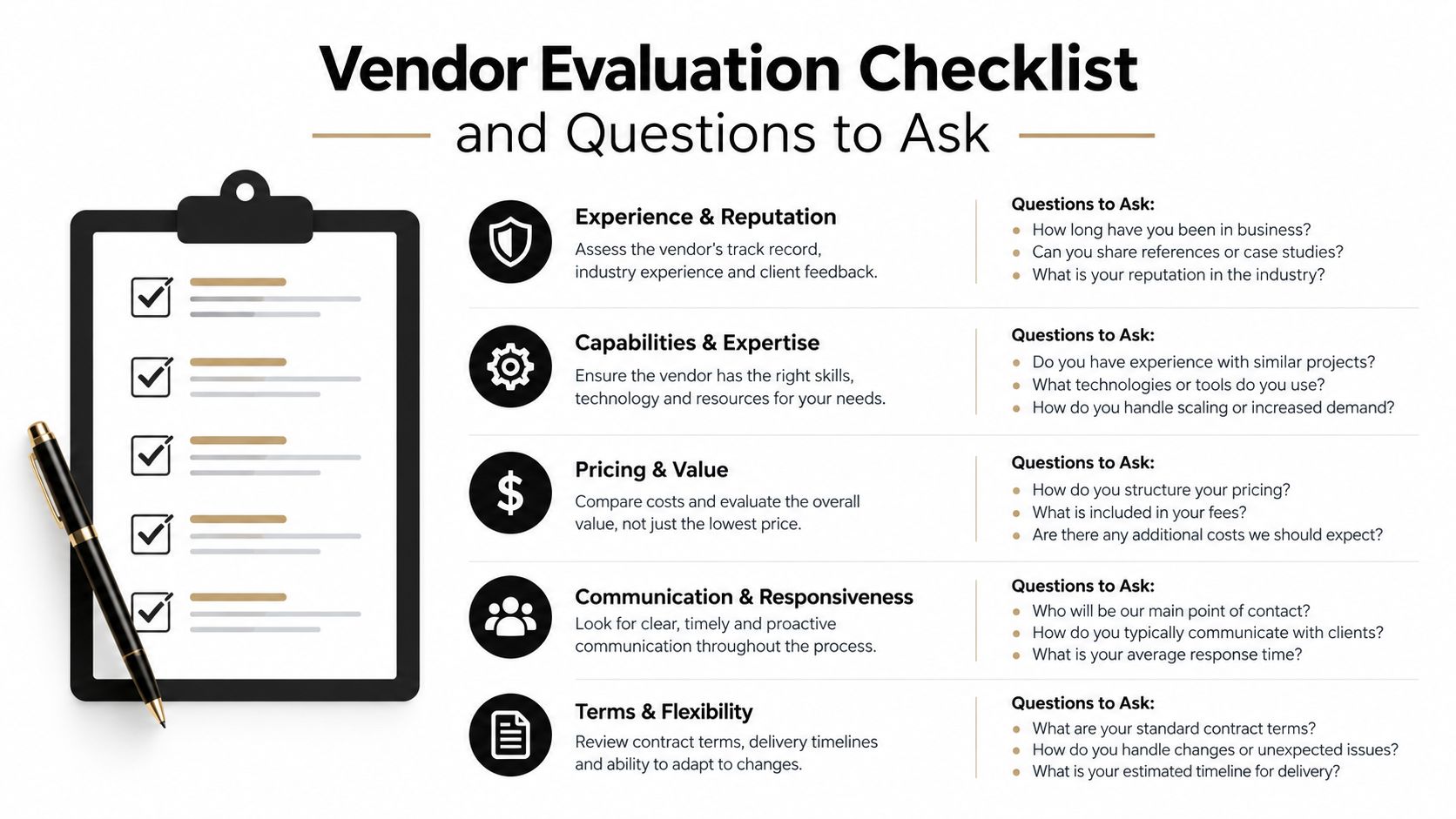
The strongest vendor answers are specific, document-backed, and consistent across the proposal, facility tour, certificate, and contract. If those sources conflict, stop the procurement process until the discrepancy is resolved in writing.
Key Takeaways for ITAD Buyers
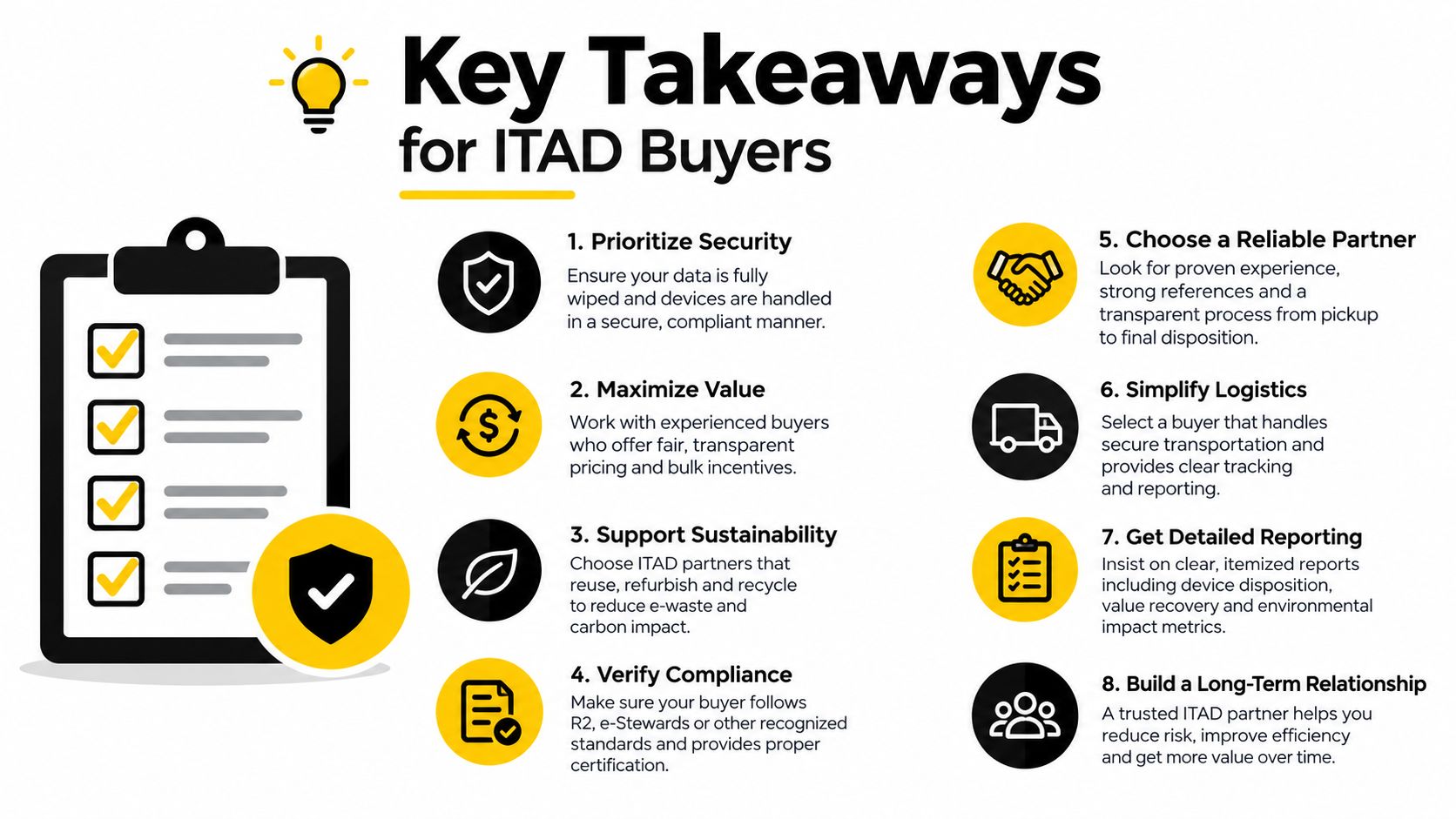
A certificate can be valid while your disposal process still has gaps. Before approving a vendor, verify that the active NAID AAA certificate covers the exact facility, service, and operating method assigned to your assets. Compare the certificate with the issuing directory, then request written evidence for the cybersecurity requirements scheduled to take effect on October 1, 2026. Treat that specification as a procurement requirement, not as proof of compliance today.
Test the vendor's records against your own inventory. Match serialized certificates of destruction to approved assets, investigate exceptions, and confirm that the selected method fits each media type. If equipment will be reused or recycled, check the relationship between NAID AAA coverage and the applicable R2v3 or e-Stewards scope, including process-specific limits.
Actions to complete before approval
- Confirm the facility: Verify the address, service scope, active status, and coverage for mobile operations.
- Request cyber evidence: Ask for the written policy, access-control documentation, and risk-analysis evidence relevant to the specification scheduled to take effect October 1, 2026.
- Map the regulations: Align the vendor file with your HIPAA, GLBA, FERPA, PCI DSS, FTC Disposal Rule, and state-law obligations.
- Keep the evidence: Retain signed certificates, custody records, inventory reconciliations, incident reports, and approved method decisions.
- Review reuse controls: Identify downstream processors and require contractual accountability before assets leave the primary facility.
- Match method to media: Use NIST SP 800-88's Clear, Purge, and Destroy outcomes to support each disposition decision. Do not apply one universal method.
- Check common failure points: Look for expired certification, mobile-only coverage without defined fixed-site scope, missing downstream accountability, and certificates that do not reconcile to inventory.
- Schedule recurring review: Recheck certification status, insurance, audit evidence, and service scope quarterly.
The certificate becomes a live control only when your team keeps testing it. Vendor status, facility operations, and your asset-disposition requirements can all change as systems, contracts, and regulations evolve. Make location-specific verification part of vendor governance, and require written resolution for any conflict between the proposal, facility tour, certificate, records, and contract.
Beyond Surplus provides business IT asset disposition, secure on-site or off-site hard-drive destruction, certified data wiping, electronics recycling, product destruction, and data-center de-installation support with documented chain of custody. Visit Beyond Surplus to discuss a workflow matched to your facility, media, inventory, and compliance requirements.


