

Think of the EPA's universal waste requirements as a special, streamlined lane for certain types of hazardous waste. It’s like an express checkout for common but potentially harmful items like batteries and lamps, designed to make recycling them far easier than navigating complex disposal rules.
What Are Universal Wastes in a Business Context?
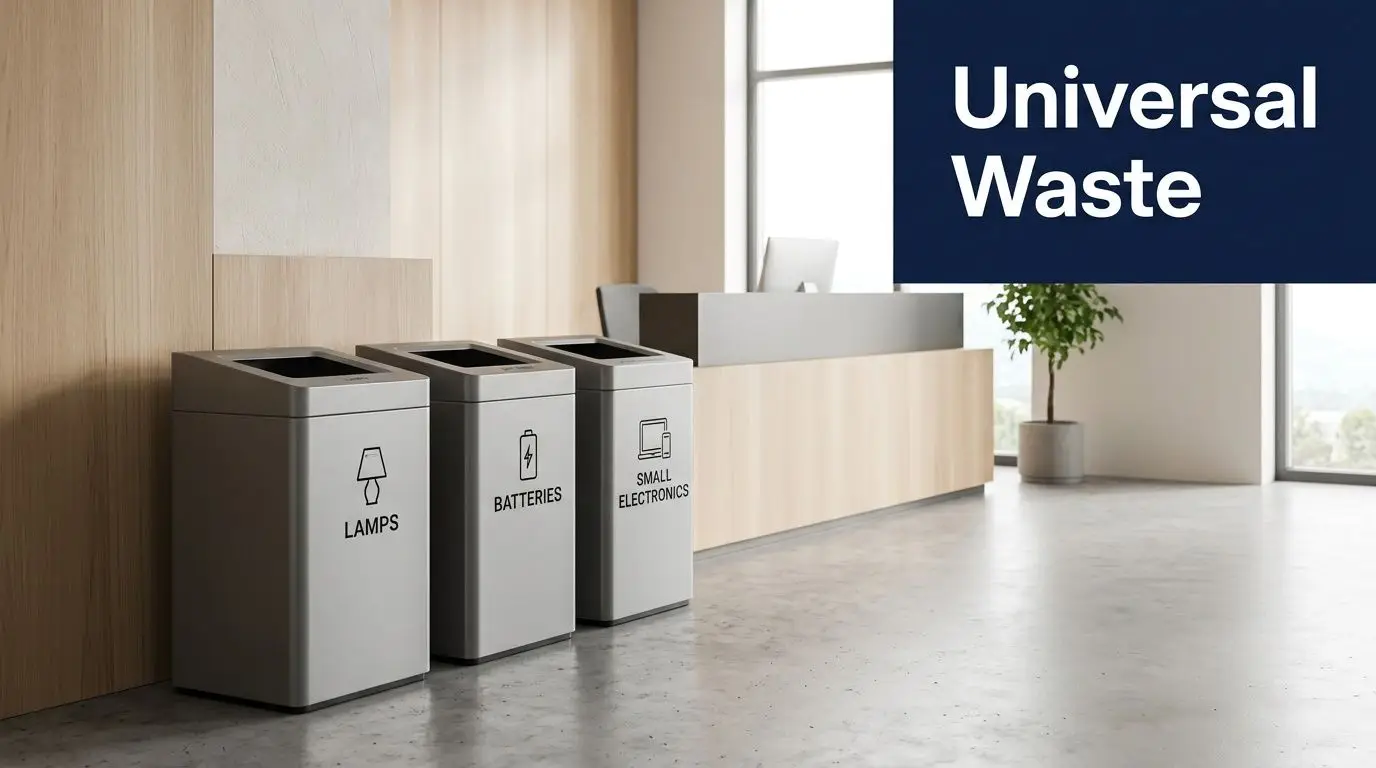
For any business, waste management regulations can feel like a maze. The Resource Conservation and Recovery Act (RCRA) lays down strict, often expensive, standards for handling hazardous materials. But the U.S. Environmental Protection Agency (EPA) wisely recognized that some common items, while technically hazardous, don't warrant such intense oversight—especially if they’re headed for recycling.
This insight led to the creation of the universal waste program back in the 1990s. Before we jump into what qualifies, it’s helpful to have a solid grasp of what makes something "hazardous" in the first place. For a great overview, there are resources dedicated to understanding hazardous waste, what qualifies, and how it's disposed of safely.
At its core, the program simplifies the rules for common items like batteries, pesticides, mercury-containing equipment, and lamps. This system is a game-changer for businesses because it encourages recycling over landfilling, a critical goal in the ITAD sector where managing electronic waste is a daily reality.
The Business Advantage of Universal Waste Rules
For any commercial operation, the main benefit is simple: it makes life easier. Managing materials under the universal waste framework is less of a headache and more cost-effective than dealing with the full set of RCRA hazardous waste regulations. This simplified approach brings some key perks for IT and facility managers.
Here’s what that looks like in practice:
- Longer Storage Times: You can accumulate universal waste on-site for up to one year. This gives you incredible flexibility, allowing for fewer, more efficient pickups and smarter logistical planning—perfect for after a big tech refresh or data center cleanout.
- Less Paperwork: Universal waste shipments don’t need a full hazardous waste manifest. This slashes the administrative burden and complex record-keeping, freeing up your team's valuable time.
- Lower Compliance Costs: With simpler rules for labeling, storage, and transport, the overall cost of staying compliant drops. It makes it far easier for businesses of all sizes to do the right thing without breaking the bank.
- A Push Toward Recycling: The whole system is built to make recycling the path of least resistance. By simplifying the collection and transport of these materials to a certified recycler, the EPA helps keep toxic substances like mercury and lead out of our landfills. For a closer look at the official terms, check out our guide on the official universal waste definition.
For an IT manager, this means those old batteries from your uninterruptible power supplies (UPS) or the fluorescent lamps from the office ceiling don't need the same intense management as highly toxic chemical waste. Getting a handle on these rules is a smart move that reduces liability and makes your operations more efficient and sustainable.
How to Identify Universal Waste at Your Facility
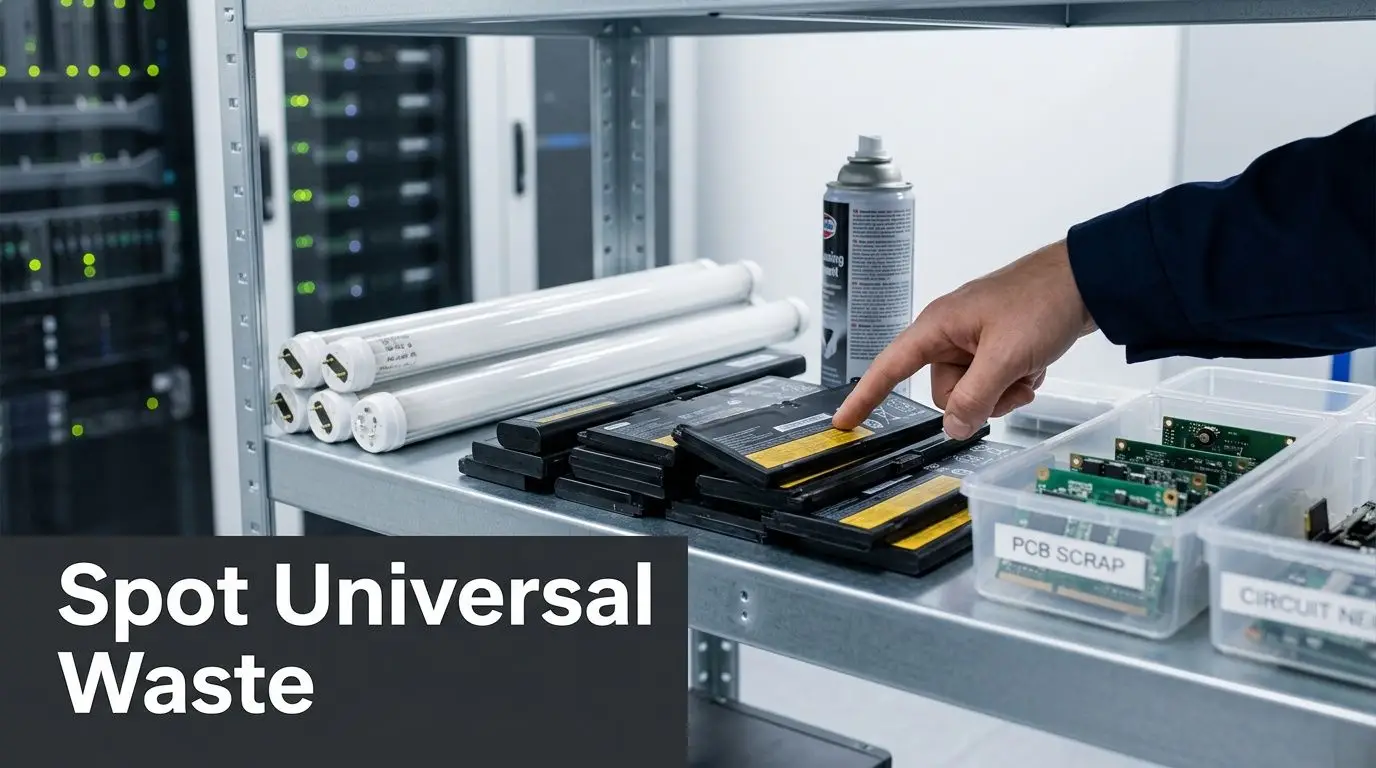
For anyone managing a business, an IT department, or a facility, knowing how to spot universal waste is the first real step toward solid compliance. Think of all the items hiding in plain sight—in your server rooms, storage closets, and offices. Getting this right prevents some costly headaches, like accidentally mishandling regulated materials or, just as bad, over-managing items that aren’t even a concern.
Identifying universal waste isn't just about memorizing a list. It’s about understanding why these items get special treatment. They contain small but potent amounts of hazardous materials like mercury, lead, or cadmium. These are things you definitely don’t want in a landfill, but they can be managed safely through a more flexible set of recycling rules.
Once you get the hang of it, you can walk through your site and confidently know what’s what. This builds a strong foundation for your entire disposal strategy.
The Federal Categories of Universal Waste
The EPA set up a few broad categories that act as the backbone for universal waste requirements. While individual states often add their own twists, these federal classifications cover the most common items your business will generate.
Here are the main types you'll run into:
- Batteries: This is a huge one. Be on the lookout for spent nickel-cadmium (Ni-Cd), sealed lead-acid (common in UPS systems), mercuric oxide, and of course, the lithium-ion batteries that power laptops, tools, and phones.
- Lamps: This covers more than just your standard office light. Think fluorescent tubes, compact fluorescent lamps (CFLs), high-intensity discharge (HID) lamps, and other bulbs that contain mercury. You’ll find them in overhead lighting, projectors, and warehouse fixtures.
- Mercury-Containing Equipment: Beyond just lamps, this category includes older thermostats, barometers, pressure gauges, and certain types of switches that use liquid mercury.
- Pesticides: This is less common for a standard office, but it’s relevant for businesses in agriculture or property management that might have recalled, suspended, or unused pesticides on hand.
- Aerosol Cans: This category applies to cans that still have propellant or product inside—the kinds you’d find in a maintenance closet or workshop.
State-Specific Additions and Why They Matter
While the federal list is a great starting point, here's where things can get tricky. Individual states have the power to add items to their own universal waste programs, which means compliance gets very specific to your location. For example, some states have added electronic devices (e-waste), antifreeze, or paint to their lists to make proper recycling easier.
A prime example of state-level variation is how different jurisdictions treat electronic waste. While some states incorporate e-waste into their universal waste programs to streamline recycling, others regulate it under separate, specific e-waste laws. Relying only on federal rules could put you out of compliance at the state level.
Understanding both federal and state-level definitions is non-negotiable. An item that is just "scrap" in one state could be a regulated universal waste in another, impacting your handling, storage, and disposal obligations.
This gets even more complex if your business operates in multiple states. The process that works for your facility in Georgia might not cut it for a site in California or New York. This is exactly where partnering with a knowledgeable ITAD provider becomes a game-changer, as they stay on top of the different regulatory environments for you.
To help you get started, we've put together a quick-reference table. It's designed to help you easily spot common universal waste items you might find around your office or facility.
Common Universal Waste Items in a Business Setting
| Waste Category | Common Business Examples | Key Handling Consideration |
|---|---|---|
| Batteries | Laptop batteries, UPS backup batteries, batteries from servers and medical devices. | Must be stored to prevent short-circuiting and leaks. Damaged batteries require special handling. |
| Lamps | Fluorescent tubes from overhead lighting, projector bulbs, HID lamps from exterior lighting. | Must be stored in a way that prevents breakage to avoid releasing mercury vapor. |
| Mercury-Containing Equipment | Older thermostats, certain industrial switches, medical diagnostic equipment. | Must be handled carefully to keep the mercury-containing ampules or components intact. |
This table covers the big ones, but if you're looking for a more exhaustive list, we have a detailed breakdown of common universal waste examples that dives deeper into specific equipment and components.
Small vs Large Quantity Handlers Explained
When it comes to universal waste, the EPA doesn't treat every business the same. Your specific compliance rules all hinge on one key factor: the total amount of universal waste you have on-site at any single moment. This one detail places you in one of two categories—a Small Quantity Handler (SQH) or a Large Quantity Handler (LQH).
Knowing your status is absolutely critical. It determines everything from your paperwork and record-keeping duties to employee training requirements. Getting it wrong can lead to serious fines, especially if you're tackling a big project like an office-wide tech refresh or data center cleanout where waste can pile up fast.
The magic number is 5,000 kilograms (about 11,000 pounds). Think of it as a water line—this isn't your total over a year, but the maximum amount you have stored at any one time. If your waste levels ever cross that line, your handler status—and your responsibilities—change instantly.
What It Means to Be a Small Quantity Handler (SQH)
If your business keeps less than 5,000 kg of universal waste on hand at all times, you’re considered a Small Quantity Handler. This is the most common status for small and mid-sized companies, and the compliance rules are thankfully pretty straightforward.
As an SQH, your main responsibilities are about common-sense safety and prevention:
- Proper Containment: You have to manage your universal waste in a way that prevents it from leaking or breaking. This could mean storing old batteries in non-conductive containers to stop short circuits or keeping fluorescent bulbs in their original boxes to prevent them from shattering.
- Clear Labeling: Every container or individual item needs to be clearly marked. For instance, a drum of spent batteries should have a label that reads "Universal Waste—Batteries" and includes the date the very first battery was added.
- Employee Awareness: You need to make sure employees who handle this waste know the right procedures and what to do if something spills. You don't need a formal training program, but basic awareness is non-negotiable.
For an SQH, the goal is simple: handle waste safely to protect your team and the environment. You can find more practical tips by reading our guide on designing universal waste systems.
Stepping Up to a Large Quantity Handler (LQH)
The moment your total accumulated universal waste hits that 5,000 kg mark, you officially become a Large Quantity Handler. This is a crucial point: your LQH status sticks for the rest of the calendar year, even if your waste levels drop the next day. A single large project can elevate your compliance duties for months.
As an LQH, you have to follow all the SQH rules, plus several stricter ones:
- Obtain an EPA Identification Number: This is a unique ID that formally registers your facility with the EPA as a site handling significant quantities of waste.
- Maintain Detailed Shipping Records: You must document every single shipment of universal waste that leaves your site. These records need to track what was shipped, how much, and its destination.
- Keep Records for Three Years: All your shipping manifests and records must be kept on file for at least three years from the date of shipment.
- Implement Formal Employee Training: LQHs are required to provide and document formal training to make sure employees are experts in proper handling and emergency procedures.
The EPA created this distinction to scale the rules to the risk. Small handlers just need to contain, label, and inform. But crossing that 5,000 kg threshold triggers the full suite of LQH requirements, including the EPA ID and detailed record-keeping.
Practical Example: An IT department decides to replace 200 old UPS systems. The weight of the sealed lead-acid batteries alone could easily top 11,000 pounds. The second those batteries are staged for recycling, the facility instantly becomes an LQH, triggering all the stricter compliance duties for the rest of the year.
Your Core Compliance Action Plan
Knowing the rules for universal waste is one thing, but putting them into action is what really protects your business. This is your practical guide to building a compliant universal waste program from the ground up, or just tightening up the one you already have.
We’ll focus on the three non-negotiables: proper on-site storage, clear labeling, and solid employee training. Think of this as your blueprint for sidestepping common but costly mistakes—like storing old batteries improperly or missing an accumulation start date—that can lead to serious fines.
The Foundation: On-Site Storage and Containment
Your first and most important job when managing universal waste is simple: keep it contained. The goal is to store these items in a way that prevents anything from leaking or breaking into the environment. No cracked lamps, no leaking batteries, and definitely no spilled mercury.
For example, keep old fluorescent bulbs in their original boxes or a designated fiber drum. The whole point is to prevent breakage, which would release mercury vapor. Batteries need to be stored so they can't short-circuit or get crushed.
Key Takeaway: Your universal waste storage area needs to be clearly marked. It should be a secure spot, away from high-traffic areas, where the containers won't get damaged or exposed to the weather.
This flow chart breaks down how to determine your handler status, which is the first step in knowing your specific storage and handling duties.
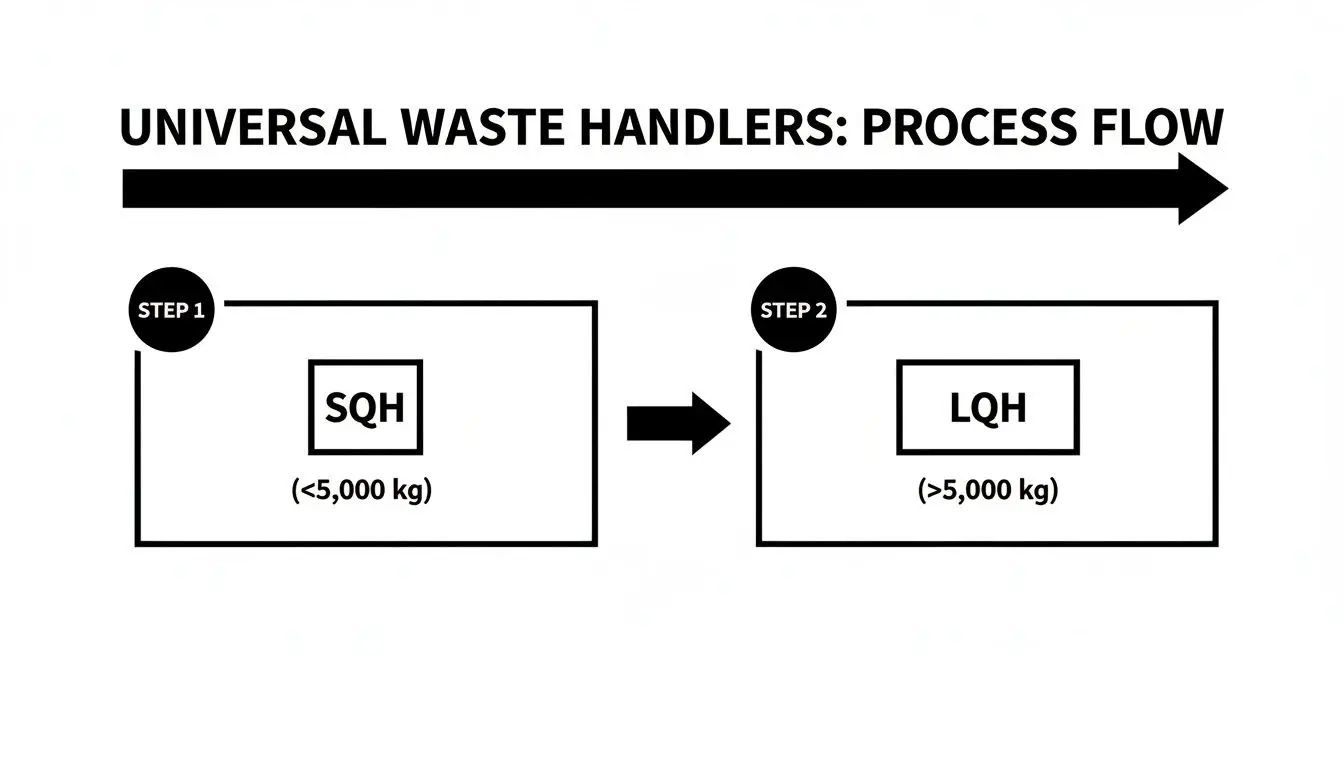
As you can see, the requirements for Small Quantity Handlers (SQH) are much simpler than the compliance steps for Large Quantity Handlers (LQH), and it all hinges on that 5,000 kg threshold.
Mastering the Art of Labeling and Dating
Proper labeling is one of the most visible parts of your program and often the first thing an inspector will look for. Every container of universal waste—or sometimes each individual item—has to be clearly marked to show what's inside.
The label must have one of the following phrases:
- "Universal Waste—[type of waste]" (e.g., "Universal Waste—Lamps")
- "Waste [type of waste]" (e.g., "Waste Batteries")
- "Used [type of waste]" (e.g., "Used Mercury-Containing Equipment")
Just as important is tracking the accumulation start date. You can store universal waste on your site for up to one year. That clock starts ticking the moment the first piece of waste goes into a container or storage area. You must be able to prove how long waste has been on-site, so mark the start date clearly on each container or on a log sheet for that area.
You can check out our guide on universal waste regulations for a deeper look at the rules that govern accumulation times.
Employee Training and Emergency Preparedness
Your employees are your first line of defense in preventing compliance issues. Anyone who might handle universal waste needs to know the right procedures and what to do if something goes wrong. The level of training will depend on your handler status, but everyone involved should know the basics.
For SQHs, training can be pretty informal but should cover:
- Safe Handling: How to move and store containers properly to avoid spills or breakage.
- Emergency Response: What to do if a lamp shatters or a battery leaks. This includes knowing where the spill kits are and who to tell.
LQHs need to provide more formal, documented training. This ensures every employee understands the specific risks involved and the detailed steps to follow in an emergency.
The whole point of the universal waste program is to make recycling easier than dealing with full-blown hazardous waste. Since the EPA’s Part 273 regulations were created in 1995, they’ve successfully steered huge amounts of batteries, lamps, and other items into recycling streams. Without the need for a manifest, you can send waste directly to a certified recycler or a proper disposal facility, which is a huge benefit for IT managers dealing with e-waste.
How an ITAD Partner Ensures Your Compliance
Trying to get a handle on universal waste requirements can feel like a full-time job. The rules are complex, the stakes are high, and a simple mistake can lead to some serious penalties. This is where a professional IT Asset Disposition (ITAD) partner like Beyond Surplus comes in, turning a major headache into a completely managed process.
Think of us as your expert compliance shield. Instead of your own teams trying to become experts in environmental law, you can offload the entire headache to a specialist. We make sure every single piece of old IT gear, from server room UPS batteries to office laptops, is handled correctly the moment it leaves your building.
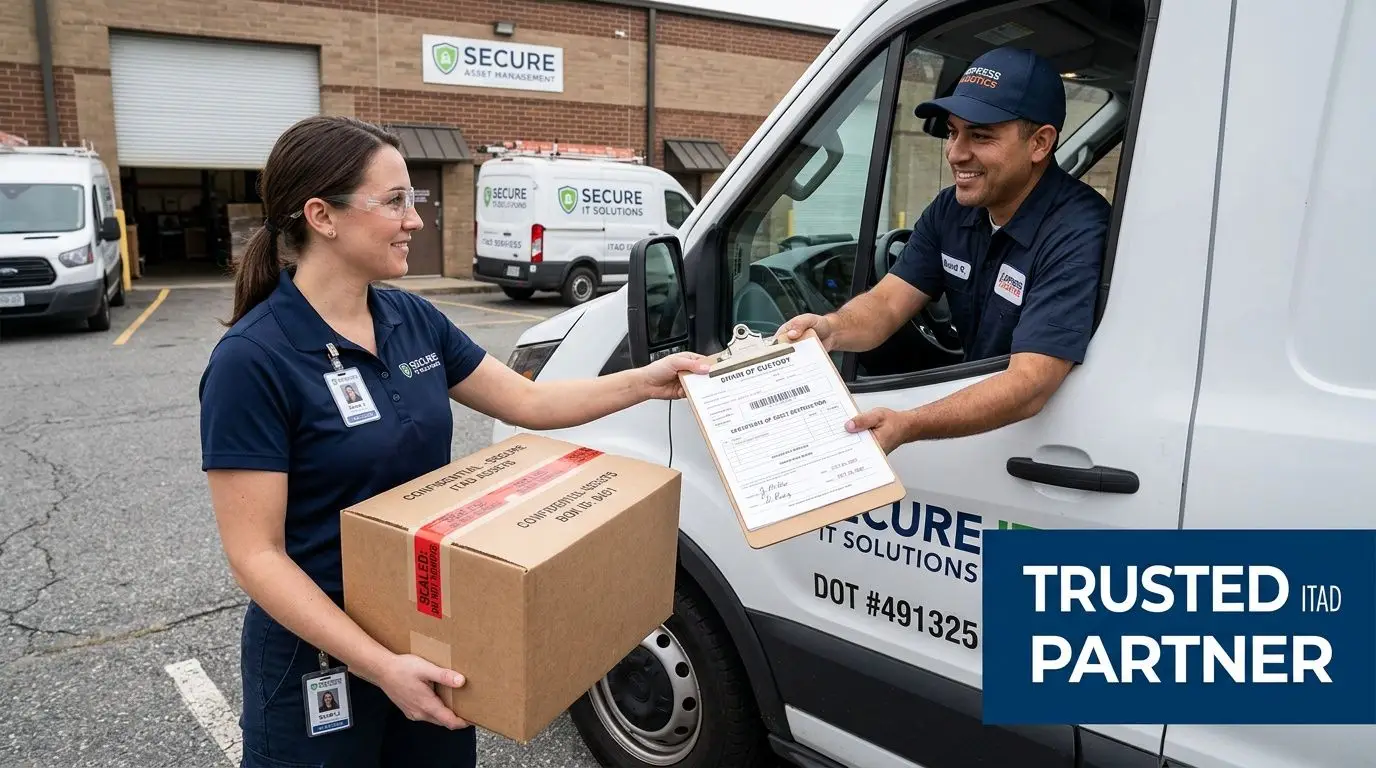
Bringing on an ITAD partner is a smart way to outsource a critical, specialized function and guarantee you stay compliant. If you want to learn more about this kind of business strategy, it's helpful to understand what is business process outsourcing.
Transferring Risk with a Rock-Solid Paper Trail
One of the biggest values an ITAD partner brings is the official transfer of liability. When you hand over retired assets, you need concrete proof they were managed responsibly. That paper trail is your best friend during an audit.
A certified ITAD provider gives you a set of crucial documents:
- Chain-of-Custody Records: This paperwork tracks your assets from the second they leave your hands. It creates an unbroken, auditable trail of who handled them, where they went, and when.
- Certificates of Recycling: This is your proof that all universal waste and other e-waste were processed in an environmentally sound way, following all federal, state, and local rules.
- Certificates of Data Destruction: For any assets that held data, this report proves that all sensitive information was permanently and securely destroyed before the device was recycled or resold.
These documents aren't just receipts; they're your official record of due diligence. They show you took the right steps to meet universal waste requirements and protect your company’s data, effectively shifting the legal responsibility over to your certified partner.
Nationwide Logistics and Certified Processes
A qualified ITAD vendor like Beyond Surplus has the infrastructure to manage compliance across the country. Our logistics network ensures that whether your office is in Atlanta or another state, your assets are collected, transported, and processed according to that specific area's rules. This is a game-changer for businesses with multiple locations, since regulations can differ so much from state to state.
On top of that, certified ITAD providers are regularly audited by third-party groups like R2 or e-Stewards. These certifications aren't just for show—they guarantee that the provider meets the highest standards for environmental protection, worker safety, and data security. Choosing a certified partner means you aren’t just hoping for compliance; you’re verifying it.
By taking on the complexities of logistics, documentation, and certified processing, an ITAD partner becomes a key part of your risk management strategy. For a deep dive on how to pick the right one, you can review our comprehensive vendor due diligence checklist to make sure you choose a partner that truly has your back. This frees you up to focus on your actual business, knowing your end-of-life assets are an asset, not a liability.
Your Top Universal Waste Questions, Answered
Even with a great compliance plan in place, specific questions are bound to pop up. We get them all the time from IT managers, facility directors, and business owners trying to navigate the rules. Think of this as your quick-reference guide for handling those real-world universal waste challenges with confidence.
Can I Mix Different Types of Universal Waste in One Container?
That’s a definite no-go. You should never mix different categories of universal waste, and for good reason. Sticking old batteries and used fluorescent lamps in the same drum, for example, is a compliance violation and a serious safety hazard.
Lamps are fragile and can easily break, releasing mercury vapor. Batteries, on the other hand, can short-circuit, leak corrosive chemicals, or even spark a fire. Always use separate, clearly labeled containers for each type of waste to keep your facility safe and compliant.
What Happens If My Business Crosses the 5,000 kg Threshold?
The moment your site’s accumulated universal waste hits 5,000 kilograms (around 11,000 pounds), your business is instantly reclassified as a Large Quantity Handler (LQH). This isn't a temporary status—you'll be considered an LQH for the rest of that calendar year, even if your waste levels drop back down the next day.
This change immediately brings a few new responsibilities:
- You must get an EPA Identification Number for your site.
- You have to keep detailed records of all universal waste shipments for at least three years.
- You need to provide and document formal training for all employees who handle the waste.
How Do State-Specific Rules Affect My Compliance?
This is where a lot of businesses get tripped up. While federal regulations set the baseline, many states add their own items to the universal waste list. For example, some states add paint and paint-related waste to simplify how it's managed. What counts as "universal waste" can change quite a bit depending on where your facility is.
Relying only on federal rules is a common and costly mistake. Always check with your state's environmental agency for a complete list of regulated items. This is especially critical for companies that operate facilities in multiple states.
What Is the "One-Year Clock" and When Does It Start?
You can store universal waste on-site for up to one year—but not a day longer. That one-year countdown starts ticking the moment the very first piece of waste goes into a designated accumulation container or area.
To prove you're in compliance, you have to clearly mark each container with the start date. For instance, when you set up a new drum for used batteries, you need to label it "Universal Waste—Batteries" and write down the date the first battery was added. Missing or inaccurate dates are one of the first things an inspector will look for.
Do I Need a Hazardous Waste Manifest for Universal Waste Shipments?
No, and that’s one of the biggest perks of the universal waste program. You don't need a full hazardous waste manifest, which cuts down significantly on the administrative work and paperwork.
However, if you're an LQH, you are still required to keep good records of your shipments. This includes noting the type and quantity of waste, the shipment date, and where it's headed. These records create a paper trail, serving a similar purpose to a manifest.
What Are the Most Common Universal Waste Violations?
Inspectors tend to spot the same handful of issues over and over again. Knowing these common pitfalls helps you focus your compliance efforts where they count the most.
The most frequent violations we see are:
- Improper or Missing Labels: Containers aren't clearly marked with the type of waste inside and the accumulation start date.
- Exceeding the One-Year Storage Limit: Businesses lose track of accumulation dates and hold onto waste for too long.
- Improper Containment: Waste is stored in a way that could cause breakage or leaks, like stacking unboxed lamps or tossing batteries loosely in a bin.
- Lack of Employee Training: Staff handling the waste haven't been properly trained on safe procedures and what to do in an emergency.
We often get a lot of follow-up questions, so we've put together a quick summary table to help you find the answers you need at a glance.
FAQ Quick Answers
| Question | Short Answer |
|---|---|
| Can I mix waste types? | No. Each type (batteries, lamps, etc.) needs its own separate, labeled container for safety and compliance. |
| What if I exceed 5,000 kg? | You become a Large Quantity Handler (LQH) for the rest of the year, which means more documentation and training. |
| Do state rules matter? | Yes, absolutely. States often add their own items to the universal waste list, so check your local regulations. |
| When does the 1-year clock start? | The clock starts the moment the first piece of waste is placed in an accumulation container. |
| Do I need a hazardous waste manifest? | No, a manifest isn't required for universal waste, which simplifies the shipping process. |
| What's a common violation? | Improper labeling (missing waste type or start date) is one of the most frequent issues inspectors find. |
Getting these details right is the key to a successful and stress-free compliance program. By understanding these common questions, you can better protect your business from unnecessary risks and fines.
Partner with Beyond Surplus to take the guesswork out of your universal waste management. We provide certified electronics recycling and secure IT asset disposal services that ensure your compliance from start to finish. Contact us today for a consultation.


