

Hard drive shredding mechanically reduces drives to fragments, with industrial processing commonly producing 6 mm to 20 mm pieces and security-focused services advertising 6 mm or smaller, or 2 mm or smaller for higher-sensitivity requirements. The fragments are then reconciled against an intake manifest and closed out with a Certificate of Destruction that documents how the data-bearing media was handled.
It usually starts the week before a data center decommissioning. An IT director is looking at racks of retired servers, failed drives in bins, and a loading dock schedule that leaves little room for uncertainty. The concern isn't just whether a shredder can break a drive apart. The core question is whether the organization can prove which drive entered the process, who controlled it, when destruction occurred, and where the resulting material went.
That distinction matters for enterprise electronics recycling and IT asset disposal. Destruction is the physical event. Documentation is the control system around it. This guide walks through what happens during hard drive shredding, from intake and sealed transport through particle sizing, verification, certification, and responsible recycling.
Table of Contents
- Why Hard Drive Shredding Matters for Your Next Decommissioning Project
- Pre-Shredding Intake and Chain of Custody
- Inside the Industrial Shredder and Particle Size Standards
- Shredding Compared to Degaussing and Verified Wiping
- Verification, Reconciliation, and the Certificate of Destruction
- On-Site Shredding Versus Off-Site Facility Shredding
- Environmental Recycling and Hazardous Waste Handling After Shredding
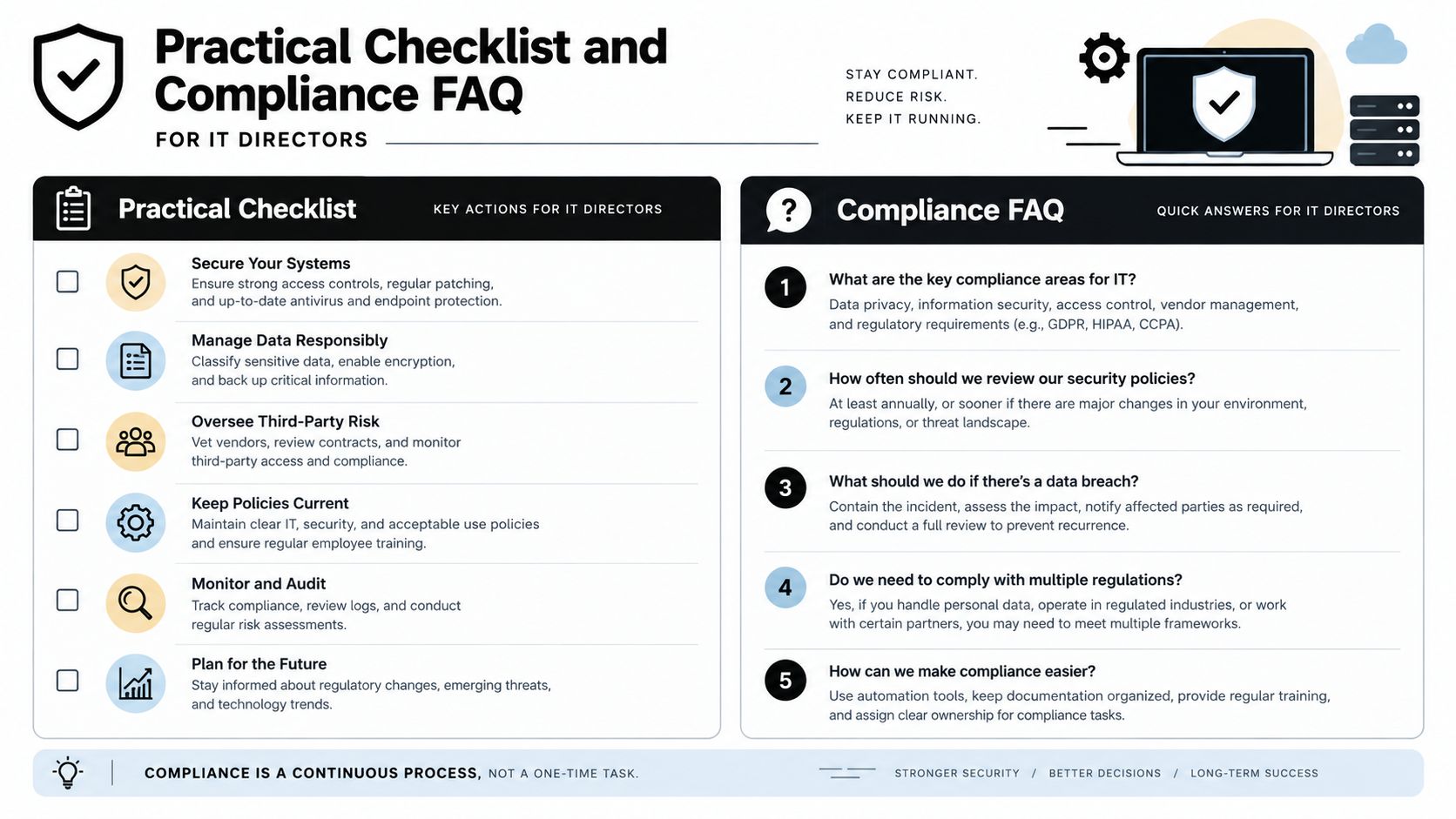
- Practical Checklist and Compliance FAQ for IT Directors
Why Hard Drive Shredding Matters for Your Next Decommissioning Project
A data center shutdown creates a predictable pressure point. IT staff must remove equipment quickly, facilities teams need the space cleared, procurement may be tracking leased assets, and compliance teams still expect an accurate record of every data-bearing device. A pallet of intact drives leaving the loading dock creates an avoidable risk window, even when everyone involved is acting in good faith.
Hard drive shredding provides a structured physical destruction route recognized by NIST SP 800-88. NIST describes destruction as a sanitization method in which media is reduced so data recovery becomes infeasible, and it places shredding alongside disintegration, pulverizing, incineration, and melting as destroy methods. The guidance traces back to NIST's 2006 media sanitization publication, which described clearing, purging, and destroying as the core approaches to removing data from storage media. NIST's original media sanitization guidance shows how long physical destruction has been part of formal data handling practice.
Physical destruction becomes especially practical when drives are failed, legacy, damaged, or unsuitable for verified wiping. It also avoids the uncertainty that can arise when a team can't confirm whether a particular device is magnetic, flash-based, encrypted, or still operational. A secure IT asset disposition program should make that decision before equipment moves into general recycling.
Practical rule: Treat the shredder as one step in a controlled disposition workflow, not as the evidence of control by itself.
An auditor is more likely to examine the asset manifest, serial-number reconciliation, custody records, and Certificate of Destruction than the visual drama of blades tearing through metal. Organizations planning a facility shutdown should also review a complete data center security overview so physical access controls and media disposition don't operate as disconnected programs. The objective is to close the loop between IT operations, compliance, facilities, and environmental teams.
Pre-Shredding Intake and Chain of Custody
The secure process begins before a drive reaches the shredder. A reputable ITAD provider first establishes what it received and who controlled it at each hand-off.
Capture the inventory before movement
The intake team scans serial numbers, matches asset tags to the client's records, and assigns drives to controlled containers or barcoded totes. If a serial number is missing, damaged, or unreadable, the exception should be documented rather than corrected later. The manifest may identify the device by a controlled asset ID, location, and custodian while the vendor investigates the discrepancy.
That record matters because a bulk count can't prove that a specific drive was processed. The manifest needs to support a later comparison between the devices received and the devices destroyed.
Keep media sealed during transfer
Drives should move from the data hall to staging in sealed bags, locked bins, or tamper-evident containers. The hand-off should identify the originator, transporter, receiver, time, and signatures or electronic approvals. Dual-control procedures are useful for higher-sensitivity environments because one person doesn't become the sole source of accountability.
The staging area should separate functional media from failed media and keep awaiting-destruction devices away from equipment approved for reuse or resale. Intake staff should confirm container seals, inspect the shipment, record exceptions, and place the inventory under controlled storage until processing starts.

Most chain-of-custody failures occur before destruction, during rushed removal, incomplete inventory capture, or an undocumented transfer. Organizations developing this workflow can use chain-of-custody guidance for IT asset disposal to define the records that should survive every movement.
Inside the Industrial Shredder and Particle Size Standards
An industrial hard drive shredder normally starts with a feed hopper. Operators place drives into the machine, where rotating cutting heads or interlocking grinders pull the devices through and tear apart the enclosure, platters, motor, and circuit board. Screens or sizing controls help determine the output, while conveyors move the mixed fragments toward sorting and recycling.
The security question is particle size. NIST guidance says residues from shredded material should be reduced to nominal edge dimensions of 5 mm and a surface area of 25 mm² for the applicable destruction outcome, as described in NIST SP 800-88. In practical ITAD work, industrial systems may produce 6 mm to 20 mm fragments for standard processing, while some commercial services advertise 6 mm or smaller for HDDs and 2 mm or smaller for higher-sensitivity requirements.
Smaller particles reduce the opportunity to reconstruct platters or interpret residual magnetic traces. They also affect throughput, blade wear, energy use, screening requirements, and downstream sorting. A contract should therefore identify the required particle specification instead of relying on phrases such as “securely destroyed.”
| Particle Size | Security Level | Typical Use Case | Throughput Impact |
|---|---|---|---|
| 25 mm surface area reference | NIST destruction reference | Media requiring a documented destroy outcome | Requires verification against the applicable specification |
| 15 mm to 20 mm | Standard industrial processing range | General enterprise ITAD and end-of-life HDD loads | Supports practical volume processing |
| 6 mm or smaller | Higher security commercial processing | Sensitive business, healthcare, finance, or government workflows | Smaller output can require more demanding machine settings |
| 2 mm or smaller | High-sensitivity target | Requirements aligned with stringent physical particle limits | More aggressive processing can increase operating complexity |
A platter-based HDD, SSD, and enterprise NVMe device won't behave identically under the same machinery. Magnetic platters fracture differently from flash memory chips and circuit boards, so a media-specific destruction specification is more useful than a single generic machine claim. The hard drive destruction compliance requirements should match the actual device types in the project.
Shredding Compared to Degaussing and Verified Wiping
Shredding, degaussing, and software-based wiping solve different problems. The right choice depends on media type, data sensitivity, and whether the asset must be reused or sent to end-of-life recycling.
Degaussing applies a strong magnetic field and is relevant only to magnetic media. It isn't a solution for SSDs, NVMe devices, USB flash storage, or other flash-based media. Verified wiping can preserve a functional drive for redeployment or remarketing, but it depends on device health, firmware behavior, access to the storage areas, and a reliable verification report.
Physical destruction removes the reuse option, but it also removes ambiguity when software verification can't be trusted. NIST's current framework, SP 800-88 Rev. 2, describes destroy methods as intended to make recovery infeasible using state-of-the-art laboratory techniques and notes that more aggressive destruction may be needed as data density increases. Rev. 1 was withdrawn in September 2025 after being superseded by Rev. 2, reflecting the changing storage environment.
| Method | Media Type | Verification Method | Reusable? | Best For |
|---|---|---|---|---|
| Shredding | HDDs, SSDs, and other media compatible with the equipment | Particle-size and asset reconciliation records | No | Failed, highly sensitive, or end-of-life media |
| Degaussing | Magnetic media | Equipment record and process documentation | No | Magnetic drives where the selected purge method is acceptable |
| Verified wiping | Supported, functioning storage devices | Software verification report | Often, if the device remains functional | Redeployment and remarketing |
ISO 27001 doesn't require physical destruction. The underlying requirement is that information can't be recovered, and verified erasure can be acceptable when it is reliably achieved and evidenced. Shredding becomes the fallback when a drive is unresponsive, erasure can't be verified, or the organization doesn't want to depend on software alone.
For mixed loads, the provider should classify devices before processing rather than sending every item through one method. A useful comparison of hard drive shredding and data wiping can help IT and procurement teams align security with recovery value.
Verification, Reconciliation, and the Certificate of Destruction
The job isn't complete when the output bin is full. Post-shredding verification determines whether the vendor can prove that the right media was destroyed.
Reconcile every item
The operator compares the destruction record with the intake manifest. Every drive should match a serial number or controlled asset ID, destruction method, and processing date. If an item is missing, duplicated, or unreadable, the vendor should document the exception and resolve it before closing the project.
The Certificate of Destruction should identify the vendor's legal name, destruction date, method used, location, asset identifiers, authorized signatory, and disposition status. Where the contract requires it, the record can also state the achieved particle specification and identify the operator or witness.

Supporting records may include time-stamped video, transport logs, container seal records, and weight-based output reconciliation. These items shouldn't replace serialized accounting, but they can strengthen the record when an internal risk team asks how the physical process was controlled.
Audit perspective: A certificate without a reconciled asset list proves that an event occurred. It doesn't necessarily prove that every drive in your inventory was included.
The certificate functions as the formal closeout document for the data owner and vendor relationship. It records the completed disposition and supports the vendor's assumption of responsibility for the destruction service. Certificate of Data Destruction guidance can help buyers evaluate whether a sample certificate contains enough detail for their records-retention and audit requirements.
On-Site Shredding Versus Off-Site Facility Shredding
The choice between on-site and off-site service is a risk and logistics decision, not merely a pricing decision. Both models can work when the provider maintains controlled custody, accurate inventory, and reliable certification.
On-site mobile shredding brings a truck-mounted or containerized unit to the client's premises. Drives remain at the site until destruction, and authorized IT or compliance personnel may witness the process. That arrangement reduces the period during which intact media is in transit and can suit projects involving highly sensitive information or strict observation requirements.
Off-site facility shredding moves drives in sealed containers to a controlled processing location. GPS-tracked transport, documented hand-offs, facility surveillance, and serialized intake become especially important because the media remains intact during transportation. The model can support recurring pickups and larger processing programs without requiring the customer to host equipment.
| Criterion | On-Site Mobile Shredding | Off-Site Facility Shredding |
|---|---|---|
| Risk window | Intact media leaves only after destruction | Intact media travels under controlled custody |
| Witnessing | Direct observation is generally available | Observation depends on facility access or evidence |
| Logistics | Requires site access, staging, and equipment setup | Requires sealed transport and receiving controls |
| Scale | Can be constrained by equipment and site conditions | Suits scheduled and higher-volume processing |
| Chain of custody | Fewer intact-media transfers | More transport and receiving records are needed |
On-site service generally trades scale and convenience for direct oversight and a shorter transport risk window. Off-site service trades witnessing for facility capacity and repeatable logistics. Your decision should reflect the data classification, contract language, audit expectations, site access, and volume.
Environmental Recycling and Hazardous Waste Handling After Shredding
Shredding creates a mixed material stream, not a finished recycling product. The output may include ferrous metal, aluminum, circuit board material, plastics, and other components that require separation before downstream processing. Recyclers sort and prepare those fractions for appropriate recovery channels rather than treating the entire output as ordinary scrap.
Environmental controls matter because secure destruction doesn't automatically make disposal compliant. The EPA says certified electronics recyclers should maximize reuse and recycling, minimize exposure to human health and the environment, ensure safe downstream handling, and require destruction of data on used electronics. Businesses discarding electronics must also make a hazardous-waste determination under RCRA Subtitle C, as described in the EPA guidance for certified electronics recyclers.
Close the downstream record
A responsible vendor should explain how shredded material moves after the destruction event and which downstream partners receive it. Ask for documentation that connects the destruction batch to the material disposition.
| Material Fraction | Downstream Destination | Required Documentation |
|---|---|---|
| Ferrous metal | Metal recovery or smelting stream | Weight record and downstream receipt |
| Aluminum | Metal recovery stream | Shipment or recycler manifest |
| Circuit board material | Specialized electronics recovery | Downstream processor identity and disposition record |
| Plastics and mixed residue | Approved material or waste channel | Waste determination and disposition documentation |
R2 and e-Stewards programs can provide useful vendor-qualification checkpoints when their certified scopes match the services being purchased. ISO 14001 may also help a buyer assess the provider's environmental management system. State requirements differ, so a national pickup program should identify the applicable rules for the origin and processing locations.
The audit trail should end with documented disposition, not stop at the shredder. Weighbridge records, downstream manifests, and any applicable landfill or recycling attestations help the sustainability team verify that secure destruction was followed by responsible electronics recycling.
Practical Checklist and Compliance FAQ for IT Directors
An IT director can make the procurement process clearer by separating vendor qualification, method selection, and documentation review.
Before awarding the work
Request these artifacts from each provider:
- Certification scope: Ask for the provider's R2v3 or e-Stewards certification details and confirm that the scope covers the services and locations involved.
- Security credentials: Request the relevant NAID AAA certification scope when it forms part of your control requirements.
- Sample records: Review a sample Certificate of Destruction and chain-of-custody form before scheduling pickup.
- Insurance evidence: Confirm cyber liability and other coverage required by your procurement policy.
- Process evidence: Ask how the provider records serial numbers, exceptions, custody transfers, particle specifications, and downstream disposition.
Questions that surface late
Does shredding satisfy HIPAA, GLBA, PCI-DSS, SOX, or CMMC?
No framework should be treated as automatically satisfied by the word “shredding” alone. Physical destruction can be a valid sanitization method, but the organization must apply its governing control, contract, media type, and evidence requirements. NIST-recognized destruction is the relevant technical foundation, while the certificate and supporting records demonstrate execution.
What does NIST SP 800-88 Rev. 1 destroy mean in practice?
It means using a destructive technique intended to make recovery infeasible. Rev. 2 now supersedes Rev. 1, so current projects should ask the vendor how its process maps to the applicable revision and device type.
How long should certificates be retained?
Use your organization's legal, contractual, privacy, and records-retention schedules. There isn't one universal retention period that applies to every business.
Do shredded drives still need an inventory?
Yes. The physical destruction decision doesn't eliminate the need to account for data-bearing media before processing.
What if a serial number is unreadable?
Create a controlled exception, record the asset ID and identifying details, and require the vendor to explain how the device was reconciled before certification.
How should cost and timing be evaluated for 100, 500, or 2,000 units?
Those quantities are useful planning scenarios, but no universal per-drive cost or timeline can be stated without the media mix, location, service model, particle requirement, and documentation scope. Request a quote based on the actual inventory rather than assuming a fixed rate.
Red flags include bulk certificates with no asset identifiers, unclear custody during transport, refusal to explain particle size, unexplained serial-number exceptions, and no answer about downstream material handling. Beyond Surplus offers on-site and off-site hard drive shredding, serialized documentation, and electronics recycling for business disposition programs.
Contact Beyond Surplus for a documented hard drive shredding plan that matches your media types, security requirements, and decommissioning schedule. Visit Beyond Surplus to discuss serialized chain-of-custody records, on-site or off-site processing, Certificates of Destruction, and responsible electronics recycling for your business.


