

Atlanta's startup economy has shifted from a regional story to a national one, and the clearest signal is capital. In 2025, Atlanta startups raised $756.5 million in venture capital, a figure reported as 23% higher year over year despite broader market pressure GrowthList's 2025 Atlanta startup funding report. That matters because funding is only useful if the surrounding ecosystem can turn it into durable operations, which is where Atlanta's mix of talent, infrastructure, and compliance-heavy industries becomes strategically important.
For business leaders, the key takeaway isn't just that more startups are getting funded. It's that Atlanta is now building the operational depth needed for companies that handle sensitive data, regulated workflows, and expensive hardware at scale. That changes the demand profile for the city, from office space and cloud capacity to secure IT asset disposition, data destruction, and certified electronics recycling.
Atlanta's Tech Boom by the Numbers
Atlanta's tech momentum is best understood as a gap closing in real time. A 2024 Boston Consulting Group analysis reported that the city had only 158 startups in 2022, down 64% from the peak of 444 startups in 2017, while venture funding fell by more than 40% from 2021 to 2022 BCG analysis via Yahoo Finance. Those figures show a market that has already lived through a sharp cycle, which makes the current rebound more meaningful than a simple headline surge.
That context matters for operators, not just investors. A city can post strong funding numbers and still lack the plumbing that lets startups scale smoothly, especially in sectors like fintech, cybersecurity, and health tech. Atlanta's current momentum suggests that the market is maturing beyond founder enthusiasm into something more structurally durable.
The most important takeaway is that capital formation and infrastructure now need to move together. If a startup ecosystem is growing, the question isn't only who is writing checks. It's also whether the city can support the devices, data, and compliance obligations that come with each new company added to the stack. Atlanta's fastest-growing industries overview
The Evolution of Atlanta's Startup Scene
Atlanta's rise did not follow a single straight path. The city's startup economy formed through repeated rounds of ecosystem building, then absorbed setbacks before picking up speed again. A TechCrunch analysis described the city's formula as a blend of a strong technical college, collaborative startup resources, a network of willing investors, and supportive city-government activity. Those ingredients help explain why Atlanta has kept producing major tech outcomes even through periods when funding conditions tightened.
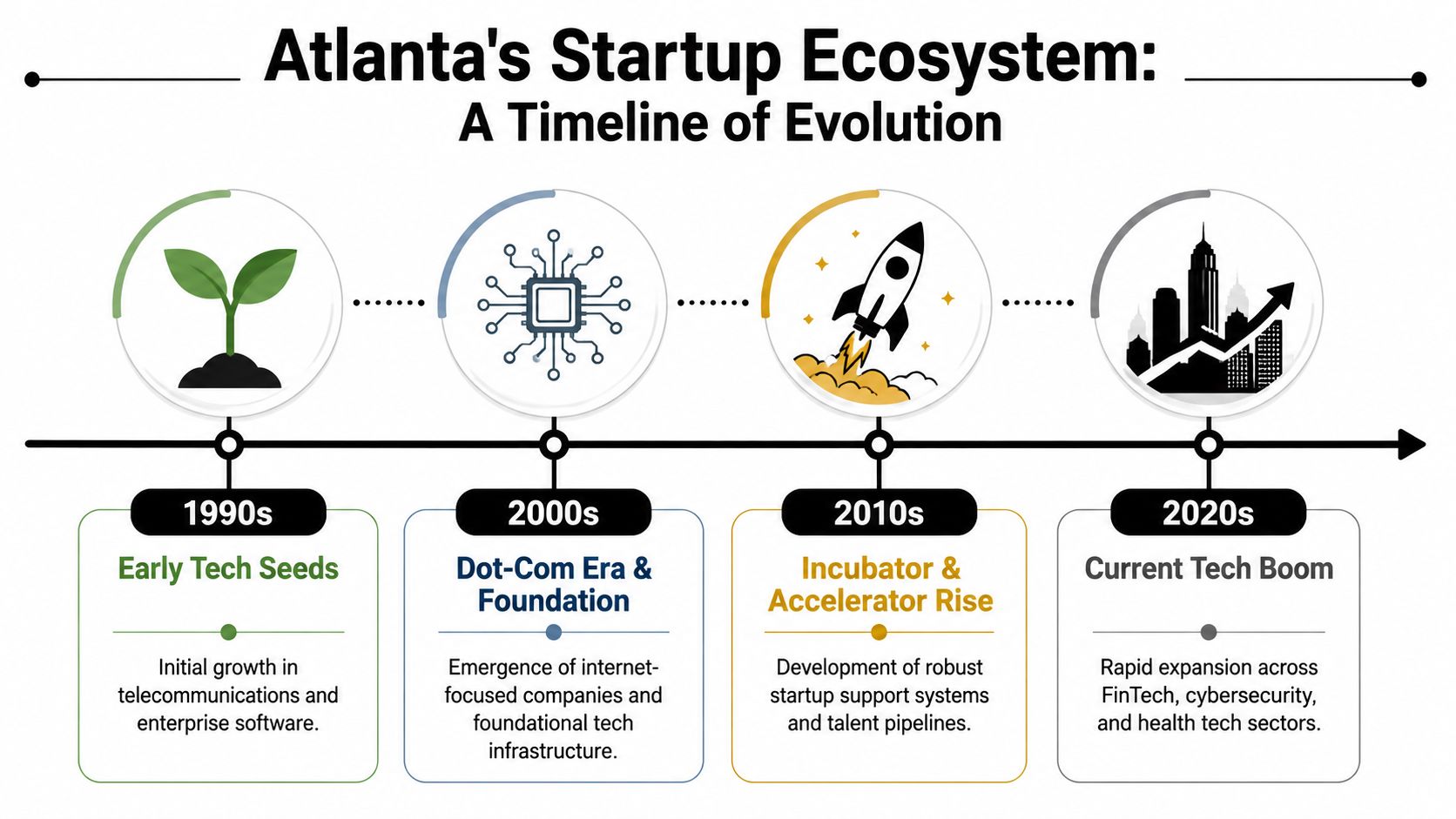
The timeline shows how Atlanta built capability in layers. Early enterprise and telecommunications roots gave the metro a commercial base. The next phase added internet-era infrastructure and startup support. Incubators, accelerators, and talent pipelines then made it more realistic for founders to launch and scale inside the region. By the 2020s, that layered foundation had become a more visible technology cluster, with stronger links between founders, service providers, and the institutions that support growth.
That evolution also explains why the current boom should be read as a systems story, not a branding story. The city has already gone through contraction and recovery, so today's expansion reflects a rebuilt formation pipeline and more durable financing pathways. How Atlanta became a top destination for tech startups
The operational implication is often missed. As more startups scale in fintech, cybersecurity, health tech, and other compliance-heavy sectors, the city's growth creates a larger need for secure IT asset disposition, data destruction, and certified electronics recycling. That demand rises with every office build-out, device refresh, and hardware retirement cycle.
A startup market becomes more resilient when its support systems outlast any single funding cycle.
That is the broader lesson from Atlanta's development. The ecosystem now looks less like one breakout district and more like a network of institutions, investors, operators, and compliance services that can keep companies moving after the first wave succeeds.
Core Pillars Driving Ecosystem Growth
Atlanta's startup economy grows because several strengths reinforce one another instead of competing for attention. The clearest pillars are academic talent, capital access, and a broad professional base that supports B2B growth. As noted earlier, the city's success comes from a linked set of inputs, a strong technical college pipeline, collaborative startup resources, willing investors, and city support, rather than any single advantage.
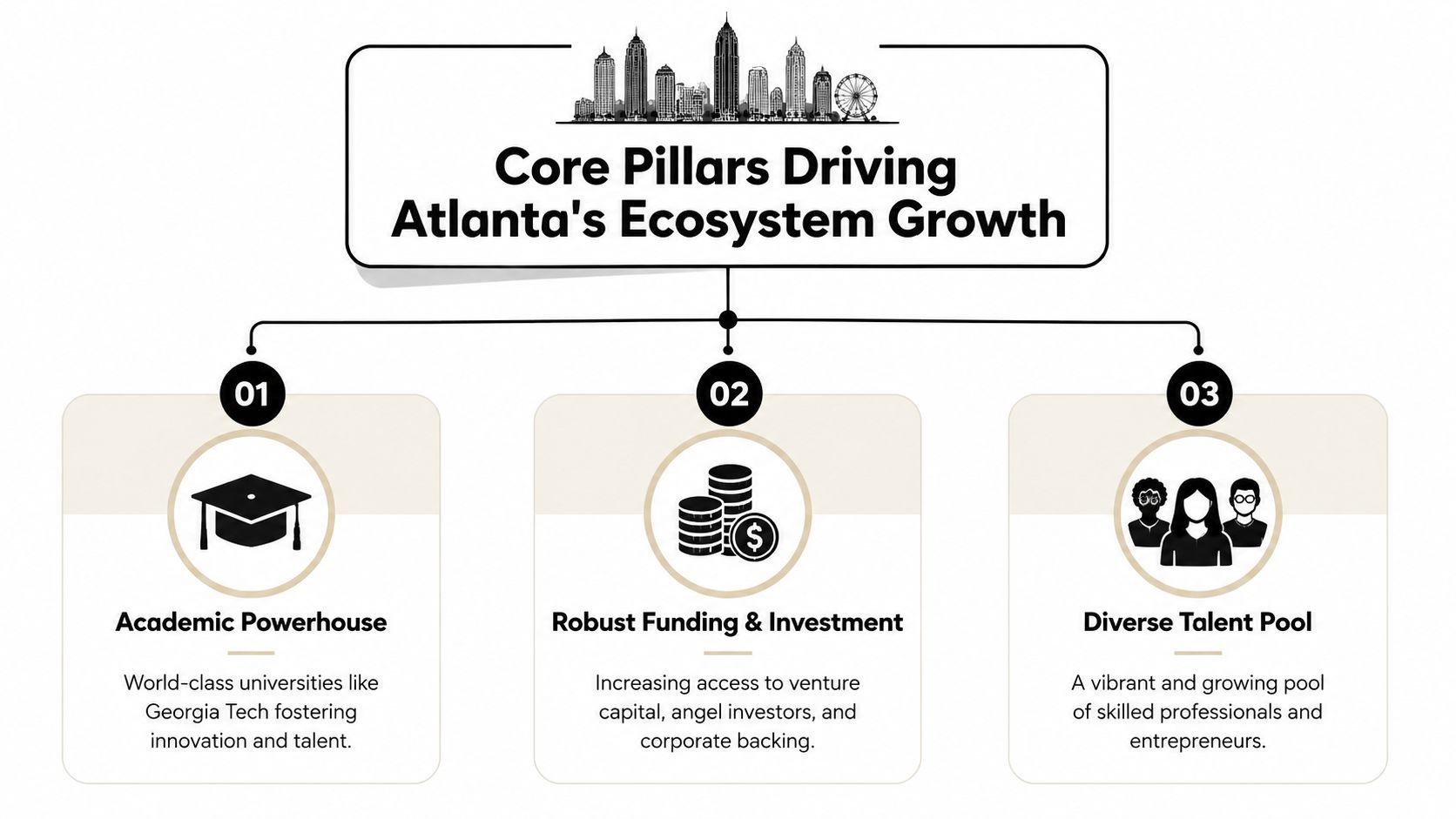
Academic Powerhouse
Higher-education institutions help Atlanta convert research into companies, not just graduates into employees. Capital Analytics Associates reports that the city's research hubs, corporate investment, and higher-education programs are expanding together, with universities continuing to anchor the ecosystem through expanded research space and commercialization programs Capital Analytics Associates. That matters most in categories where product development depends on lab access, technical validation, and domain expertise.
The hiring side matters too. Founders need engineers, compliance staff, and operators who can keep up with product growth, which is why talent conversations increasingly overlap with Atlanta IT hiring trends and skills in demand. In practice, that means the academic pipeline is only one part of the equation. Companies also need a labor market that can absorb specialized roles after the first wave of hiring.
Expanding Funding and Investment
Atlanta's investor base gives founders more than one path to early momentum. The city has repeatedly shown that it can support breakout financing years, and the broader venture pattern reinforces that confidence. A market like this does not just need one or two headline funds. It needs a layered capital stack that can support early experimentation, follow-on rounds, and the longer runway required for B2B companies.
That capital structure has an operational effect that is easy to miss. Each funding round usually triggers more cloud spend, more endpoints, more office expansion, and eventually more hardware turnover. As startups scale, they also create more demand for secure IT asset disposition, data destruction, and certified electronics recycling. Those requirements are not back-office details, they are part of keeping regulated companies audit-ready as they grow.
Diverse Talent Pool
The city's talent advantage is less about a single institution and more about the depth of the metro labor market. One market summary describes Atlanta as a place where fast-growing industries, technical talent, and startup activity continue to overlap Venture Atlanta. For founders, that combination lowers the friction of hiring across engineering, operations, sales, and compliance.
The practical implication is straightforward. Atlanta is powered by a system where universities produce talent, investors fund it, and employers absorb it into real businesses. That structure makes the ecosystem more commercially credible over time, and it also creates a larger downstream burden for secure device retirement, certified recycling, and documented data destruction as companies mature.
Flagship Industries Defining Atlanta Tech
Atlanta's strongest sectors are shaped by the city's mix of enterprise relationships, regulated industries, and technical talent. Venture Atlanta identifies Fintech, HealthTech, Cybersecurity, and AI-driven SaaS among the fastest-growing parts of the ecosystem. That specialization matters because these are not lightweight consumer plays. They require security controls, auditability, and infrastructure that can satisfy enterprise procurement standards.
The funding profile reinforces that sector mix. Atlanta's venture activity has been reported at $756.5 million, with a 23% year-over-year increase, which points to investor confidence across the city's core technology categories. In practical terms, Atlanta is no longer just a place where startups form. It is a place where founders can build in industries that demand operational maturity from the start.
For fintech and cybersecurity companies, trust is the product. For health tech, compliance is part of the sales cycle. For AI-driven SaaS, enterprise adoption depends on security, governance, and integration. Atlanta's advantage is that it has enough density in each category to support specialized vendors, enterprise buyers, and experienced operators who understand the controls these businesses need.
That operational maturity also extends beyond software. High-growth companies in these sectors generate more endpoint inventory, stricter device controls, and more frequent hardware refresh cycles than many consumer startups. As a result, the sector mix creates steady demand for secure IT asset lifecycle planning, including IT asset lifecycle management, data destruction, and certified electronics recycling.
Practical rule: The more regulated the sector, the more value the local ecosystem creates when it can handle end-to-end operational risk, not just fundraising.
Atlanta's sector mix is strategically important because it links growth to compliance and infrastructure discipline. The companies scaling fastest are also the ones most likely to need secure hardware handling, controlled decommissioning, and documented destruction workflows as they grow.
The Infrastructure Powering the Boom
Atlanta's startup ecosystem is backed by infrastructure that looks more like an enterprise platform than a traditional regional tech scene. The most visible signal is digital capacity. Atlanta became the number one U.S. market for data center leasing activity in 2024, overtaking Northern Virginia YouTube interview on Atlanta tech growth. That is a strong indicator that the city is not only attracting software companies, but also the physical systems those companies depend on.

Digital Density Creates Operational Density
Data centers are only one part of the picture. Atlanta's startup economy also relies on office clusters, coworking environments, and transit-connected talent hubs that make it easier to hire, meet, and operate. Those ingredients may sound ordinary, but they become decisive when a startup moves from a dozen employees to a distributed team with laptops, mobile devices, and support equipment spread across multiple sites.
The practical effect is cumulative. More digital infrastructure means more hardware deployment. More hardware deployment means more refresh cycles, more secure storage obligations, and more decommissioning events. That's the hidden operational load behind the city's growth story.
A market with this much infrastructure intensity also tends to produce more compliance-sensitive assets. Servers, laptops, network equipment, and storage devices don't disappear when a company grows or relocates. They need tracking, removal, destruction, resale, or recycling. That's where the startup story intersects with end-of-life management.
Why Atlanta is a prime data center hub
Growth's Hidden Challenge IT Asset Lifecycle Management
Atlanta's growth creates a problem that gets less attention than funding or office leasing. As startups mature, they accumulate IT assets, sensitive data, and regulated records that must be handled correctly when devices are retired. Coverage of the city's tech scene often emphasizes capital and accelerators, but it rarely asks whether the region has enough specialized vendors for secure device lifecycle management and data destruction AltexSoft. That gap matters most in fintech, cybersecurity, and health tech, where a retired laptop can carry the same risk profile as a production system if it isn't processed properly.
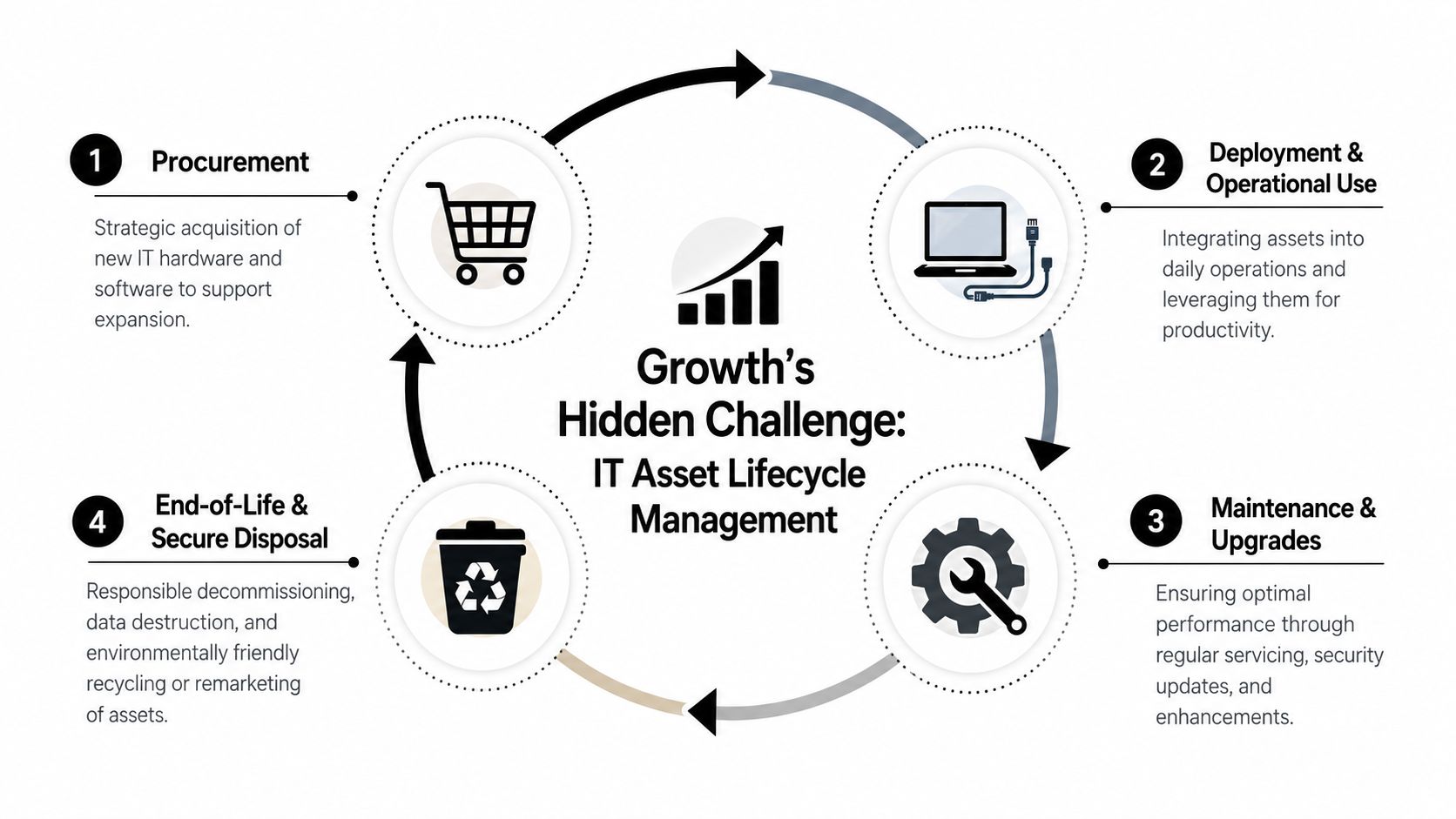
Procurement Through Disposal Is One Loop
The lifecycle starts with procurement, continues through deployment and upgrades, then ends with secure disposition. That final stage is where many fast-growing companies underestimate their exposure. A startup that buys quickly can also retire quickly, especially after equipment refreshes, office moves, acquisitions, or cloud migration.
The Compliance Burden Rises With Scale
The risk isn't only environmental. It's operational and legal. Companies that handle customer data or regulated information need to prove they destroyed, wiped, or transferred assets correctly. Without that chain of custody, a retired hard drive or mismanaged batch of devices can become a liability, not an asset. A good lifecycle process includes secure transport, documented handling, and certified recycling or destruction.
Why Infrastructure Heavy Teams Feel It First
Infrastructure-heavy founders feel this pressure sooner than consumer startups. Hardware-based teams, regulated B2B platforms, and service providers with secure facilities have more equipment movement, more offboarding events, and more decommissioning work. That creates a need for vendors that can handle IT asset recovery, product destruction, and secure e-waste management without breaking the company's compliance posture.
The strategic point is straightforward. Atlanta's startup boom is increasing the volume of hardware and data that eventually has to leave the building. The city's next layer of maturity will depend partly on how well it handles that end-of-life load.
Strategic Recommendations for Atlanta Stakeholders
Founders, IT leaders, and facility teams should treat IT asset disposition as a planning discipline, not a cleanup task. The companies best positioned for Atlanta's next phase will be the ones that build secure disposal into procurement, onboarding, and refresh cycles from the start. That approach reduces risk, supports audit readiness, and keeps hardware decisions aligned with growth.
A practical next step is to map each asset class to a documented exit path. Laptops, monitors, network gear, and storage devices don't all need the same treatment, and regulated sectors should assume they need tighter controls than a standard office environment. That also applies to multi-site operations, where moves and expansions can quickly obscure chain-of-custody if the process isn't standardized.
For leaders building demand generation or partner ecosystems around this market, the lesson extends beyond recycling. The right outreach strategy works best when it reflects the realities of the buyer's environment. A useful reference on effective multichannel outbound campaigns shows how targeted, channel-aware communication supports complex B2B selling, which is relevant in a market where compliance, facilities, and IT teams all influence the buying decision.
Atlanta's growth is durable when the city can support what comes after the launch. That includes secure decommissioning, certified recycling, and IT asset recovery that fit enterprise standards. Companies that treat those functions as part of core operations, not an afterthought, will scale with less friction and less risk.
A CTA for Beyond Surplus.


