

The average global cost of a data breach reached USD 4.88 million in 2024, compared with USD 4.45 million in 2023, according to IBM's 2024 Cost of a Data Breach Report. For organizations using public cloud infrastructure, the average reached USD 5.17 million. Against that exposure, a certificate of data destruction isn't administrative paperwork. For an Atlanta business retiring laptops, servers, storage arrays, or backup media, it can be a critical piece of evidence that the organization controlled data risk through the final stage of the asset lifecycle.
A generic recycling receipt proves that equipment entered an environmental processing stream. It doesn't necessarily prove that the data stored on a device was made unrecoverable. A defensible certificate must connect each data-bearing asset to a documented method, verified result, responsible personnel, and unbroken chain of custody.
Table of Contents
- The True Purpose of a Data Destruction Certificate
- Navigating Compliance and Liability Frameworks
- Evaluating Shredding Versus Certified Data Wiping
- Anatomy of a Defensible Destruction Certificate
- Securing the Chain of Custody and Vendor Due Diligence
- Atlanta ITAD Logistics and Beyond Surplus Services
- Actionable Verification Checklist for IT Managers
The True Purpose of a Data Destruction Certificate
A certificate of data destruction is a legal and operational record showing that company data was permanently destroyed. ITAD providers describe it as a complete, auditable document tied to compliance and internal governance, rather than a simple recycling receipt, as explained in this overview of what a certificate of data destruction should contain.
That distinction matters because recycling and data destruction answer different questions. A recycling certificate may establish that a computer, server, or other electronic device was processed. A destruction certificate should identify what happened to the storage media and provide enough detail for an auditor, procurement team, or legal adviser to reconstruct the event.
Recycling records versus destruction evidence
A recycling document can be useful for environmental reporting and disposition records. It may show the provider, collection date, equipment category, or processing outcome. But terms such as “recycled,” “processed,” or “disposed” don't establish that a hard drive, solid-state drive, tape, or embedded storage component was sanitized securely.
A valid destruction record addresses more specific questions:
- Which asset was processed? The document should connect the result to a serial number or another unique identifier.
- What method was used? It should distinguish wiping, purging, degaussing, shredding, or another approved technique.
- When and where did the work occur? Date, time, and facility information help establish a verifiable timeline.
- Who performed and verified the work? Responsible personnel and technician credentials add accountability.
- How did the asset move before processing? Chain-of-custody references connect the final certificate to collection and transport records.
Practical rule: If a certificate can't identify your specific storage media, it may document a transaction, but it doesn't provide strong evidence about your data.
For Atlanta companies in healthcare, finance, education, government, and other regulated environments, that evidence closes a gap between an internal disposal policy and its execution. The certificate becomes the final gate in the data lifecycle. It shows that the organization did not just remove equipment from its inventory. It established what happened to the information-bearing component after the device left operational use.
Navigating Compliance and Liability Frameworks
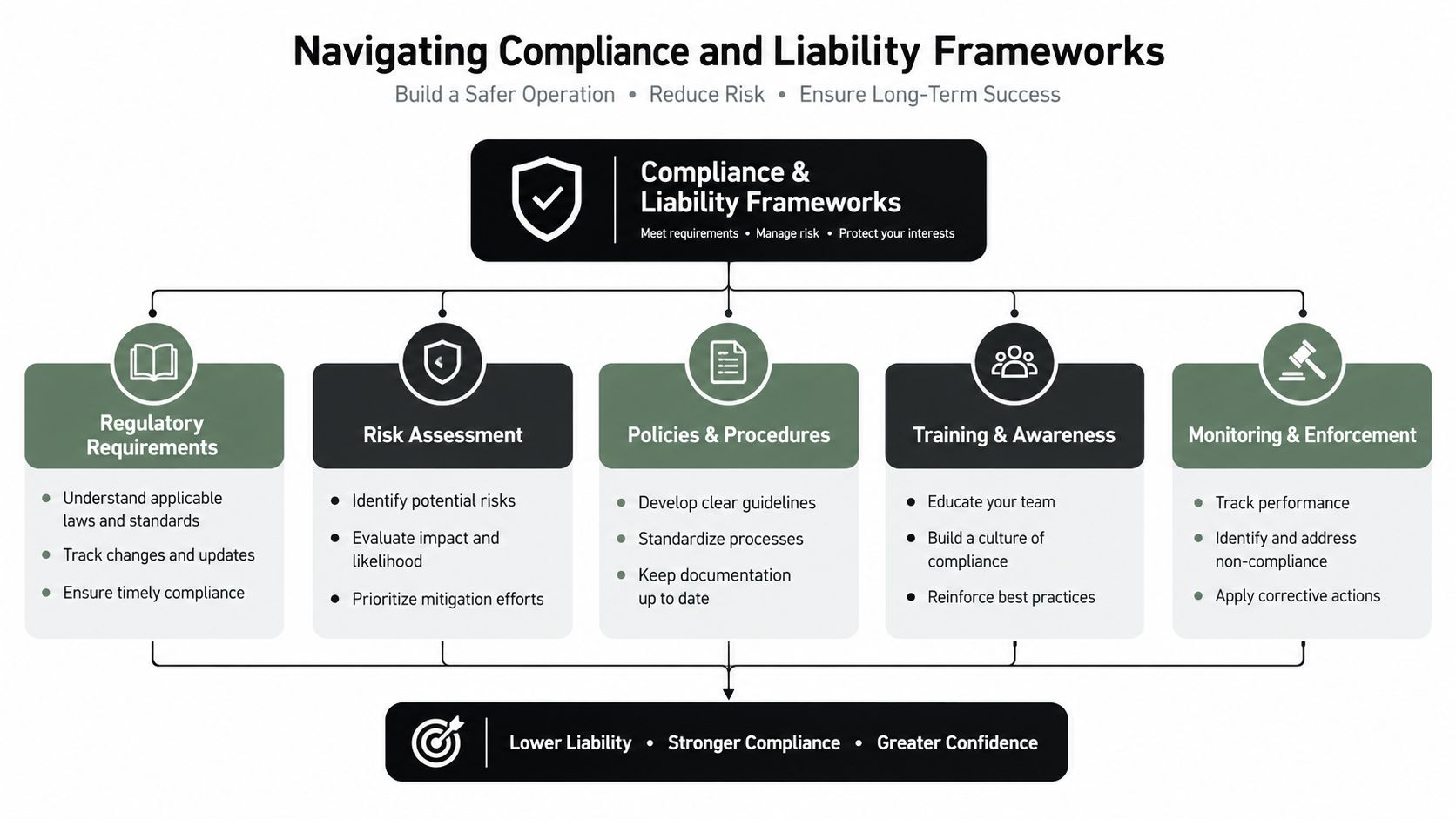
Secure disposal is a formal control under federal guidance. The FTC Disposal Rule, issued in 2005, requires disposal practices that are reasonable and appropriate to prevent unauthorized access to consumer-report information. The rule recognizes methods including burning, pulverizing, shredding, destroying, or erasing media so the information can't be read or reconstructed.
NIST guidance adds a technical framework by separating sanitization into clear, purge, and destroy. The destroy level is intended to make data recovery infeasible using state-of-the-art laboratory techniques. NIST also identifies documentation and evidence requirements that may include certificates of sanitization, which gives the certificate a direct role in demonstrating control maturity.
What the certificate supports
A certificate can support several parts of an enterprise disposal program:
- Policy execution: It shows that the organization followed a defined end-of-life process rather than relying on informal disposal.
- Vendor oversight: It gives procurement and compliance teams evidence that the contracted provider performed the specified service.
- Internal audits: Serialized records help auditors reconcile retired assets with destruction outcomes.
- Incident response: If a retired device becomes relevant to an investigation, the documentation supplies a timeline and processing record.
- Legal defensibility: The record can demonstrate that the organization took reasonable steps to prevent unauthorized access.
The certificate doesn't erase the data owner's responsibility. Receiving a certificate doesn't transfer liability away from the original organization if the vendor mishandled the media or used an inadequate process, as noted in this compliance discussion of hard-drive destruction. The organization remains responsible for selecting a qualified provider, defining acceptable methods, protecting assets before pickup, and reviewing the resulting evidence.
That principle applies beyond federal requirements. Businesses should align disposal procedures with their contracts, internal security policies, and sector-specific obligations. Teams that need broader context on governance can also review this resource on regulatory compliance for agencies, particularly when procurement involves public-sector or highly regulated work.
A certificate isn't a due-diligence substitute
A certificate proves a stated processing outcome. It doesn't independently prove that the vendor was qualified, that the assets remained secure during transport, or that the method matched the media type. Those questions require vendor review and chain-of-custody evidence.
The defensible position is simple. Treat the certificate as the final record in a controlled workflow, not as a document that excuses weaknesses earlier in the process.
Evaluating Shredding Versus Certified Data Wiping
The right destruction method depends on the storage media, the sensitivity of the information, and whether the physical asset will be reused. An industry FAQ describes NIST SP 800-88 Rev. 1 compliant wiping for reusable media, industrial hard-drive shredding that can meet NSA/CSS EPL particle standards, and degaussing for magnetic media. The same source explains that a serialized certificate can record the asset serial number, method, date and time, and technician credentials. Review the described data-destruction methods and documentation practices.
Match the method to the disposition decision
Certified wiping is often appropriate when a functioning drive will be reused, remarketed, or redeployed. It preserves the hardware and can support value recovery, but the process must account for the storage technology and include verification. A failed drive, unsupported device, or media with unusually sensitive information may require physical destruction instead.
Shredding offers a different outcome. It destroys the storage device and removes the possibility of reuse, but it creates a clear endpoint for assets that must never return to service. Degaussing can serve magnetic media, though it isn't a universal solution for every modern storage technology.
| Method | Ideal Use Case | Certificate Documentation Focus |
|---|---|---|
| Certified data wiping | Functioning media intended for reuse or remarketing | Standard, software tool, technique, verification result, technician |
| Physical shredding | Media that must be permanently destroyed | Particle or destruction standard, equipment, date, serial number, technician |
| Degaussing | Applicable magnetic media requiring magnetic sanitization | Media type, degaussing equipment, method, verification, asset identity |
The certificate should describe what happened. “Data removed” is weaker than a method that identifies the applicable standard, tool, technique, and verification result. A batch marked “hard drives processed” also leaves uncertainty about failed units, exceptions, or assets that were diverted for another disposition route.
For a practical comparison of reuse-oriented wiping and physical destruction in Atlanta, see secure data destruction options for wiping versus hard-drive shredding.
The cheapest method is the wrong choice if it can't produce evidence that matches your risk profile and asset disposition plan.
Anatomy of a Defensible Destruction Certificate
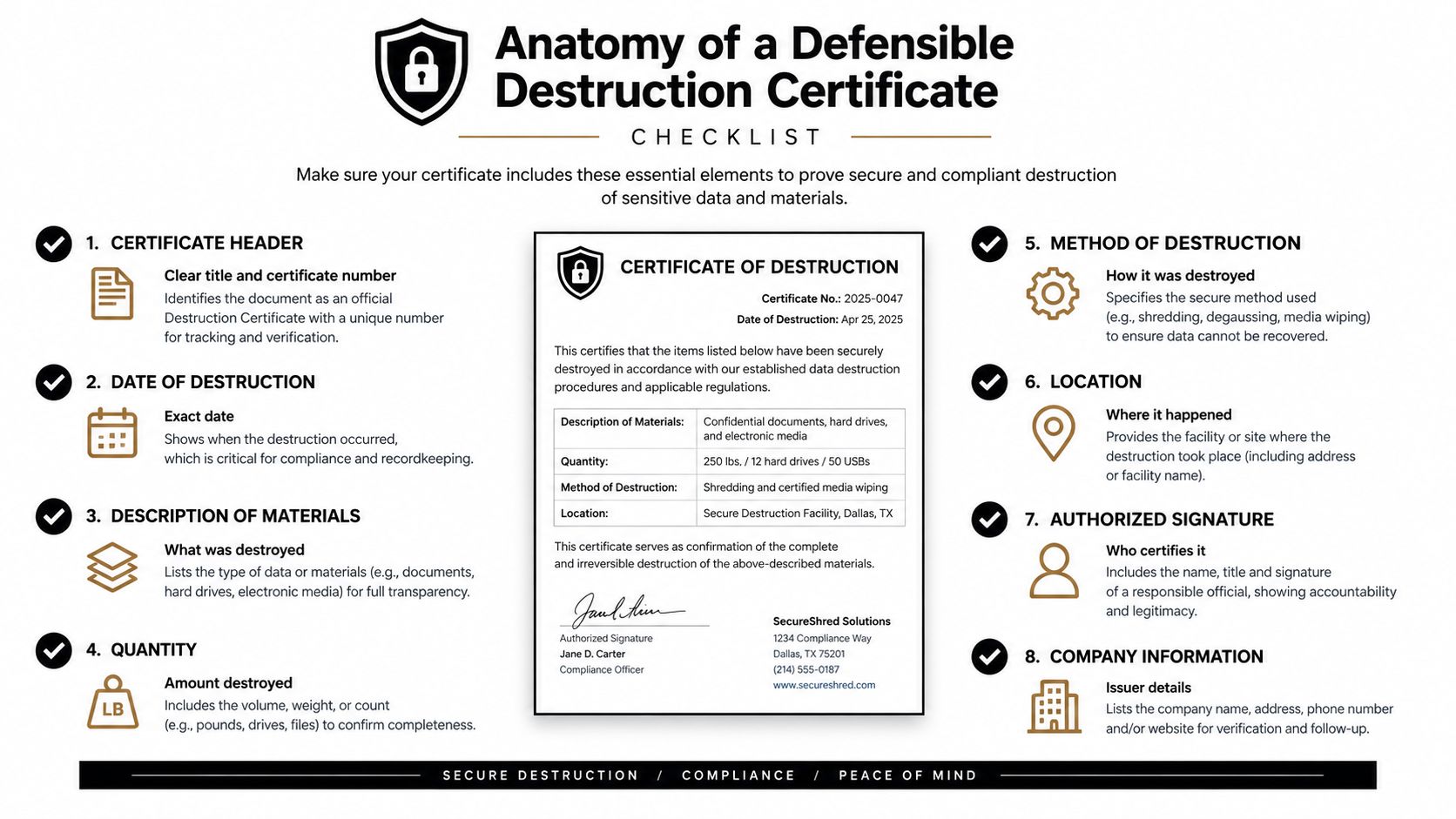
A defensible certificate starts with asset-level identity. NIST Special Publication 800-88 Rev. 2 calls for sanitization records that identify the manufacturer, model, serial number, media type, source, sanitization method, technique, tool, verification method, and responsible personnel for each sanitized storage medium. The record should allow someone who wasn't present at pickup to connect the certificate to the exact asset that left the organization.
The fields that matter most
A strong document normally includes these evidence categories:
- Asset identity: Manufacturer, model, serial number, asset tag where available, and media type.
- Source information: The business location, department, or project from which the asset came.
- Selected method: Clear, purge, destroy, wiping, shredding, or degaussing, with the relevant technique identified.
- Tool and equipment: The software, machine, or physical process used to perform the work.
- Verification: The result of checking that the selected process completed successfully.
- Personnel: Names, roles, credentials, or traceable identifiers for the technician and verifier.
- Event details: Certificate ID, processing date, time, facility, and client information.
- Custody reference: A link to the pickup, transport, intake, and handoff records.
A batch-level summary can still be useful as a cover document, particularly for a large data center decommissioning. It shouldn't replace the underlying serialized asset list. If the certificate states that a quantity of drives was destroyed but doesn't identify the individual devices, an auditor can't reliably reconcile the document against the client's inventory.
Read the certificate like an auditor
Start with the serial numbers, not the provider logo. Compare the list with the organization's retirement inventory and investigate omissions, duplicates, unreadable identifiers, and exception statuses. Then check whether the method is technically plausible for the media type and whether the verification record shows a completed result rather than merely an initiated job.
The destruction certificate format provided for review can help procurement teams define minimum documentation requirements before signing an ITAD agreement. Ask for a sample with sensitive customer information removed, then confirm that the production certificate will contain equivalent detail.
A certificate is strongest when it stands alongside intake records, transport logs, processing results, and final disposition records. Those documents form an evidence set. The certificate is the central summary, not the entire audit trail.
Securing the Chain of Custody and Vendor Due Diligence
A certificate can't account for an asset that disappeared before processing. Chain of custody tracks the chronological transfer of equipment between authorized handlers, from collection through transportation, intake, sanitization, destruction, and final processing. Secure ITAD guidance describes this record as the mechanism that keeps data-bearing assets traceable throughout disposal, as outlined in this explanation of IT asset disposition and chain-of-custody controls.
Control every handoff
The first handoff occurs at the client's facility. Staff should reconcile the pickup list with the equipment being released, record exceptions, and document who transferred and received the assets. The transport record should then connect that event to the provider's intake process.
At intake, the provider should reconcile the received equipment against the original inventory. Internal movement matters too. A device can be secure at pickup and still become unaccounted for in a warehouse, staging area, or processing queue. The provider's controls should show where the assets went and which authorized personnel handled them.
Operational test: Ask the provider to show how one serial number travels from your inventory list to the final certificate. If the answer depends on manual reconstruction, the process deserves closer review.
Examine the vendor before the pickup
Independent guidance connected to the FTC Disposal Rule recommends reviewing a disposal company's independent audits, references, trade-association certifications, and security policies before outsourcing destruction. Procurement teams should also ask practical questions:
- Facility controls: Who can enter the processing area, and how are visitors supervised?
- Transport procedures: Are loads secured, documented, and transferred only to authorized personnel?
- Exception handling: What happens when a serial number is unreadable, a drive fails wiping, or an asset is missing from the manifest?
- Evidence retention: Can the provider retrieve certificates and supporting records when an audit occurs?
- Subcontractors: Does another company handle transport, destruction, or recycling, and if so, how is that handoff documented?
The certificate has value because a controlled process supports it. A polished PDF from an unknown vendor doesn't resolve weaknesses in collection, transportation, access control, or verification. Complete the vendor due diligence checklist before releasing media, not after a problem appears.
Atlanta ITAD Logistics and Beyond Surplus Services
Atlanta businesses face practical routing decisions that affect both security and scheduling. A company may choose mobile shredding at its facility, secure off-site processing, or delivery to a local processing location. The right option depends on the volume, site access, media type, sensitivity of the information, and whether equipment has recovery value.
On-site destruction can reduce the time assets spend in transit and may suit organizations that need direct observation of the process. Off-site processing can provide access to specialized equipment, controlled facilities, and a broader workflow for wiping, refurbishment, recycling, and reporting. A facility drop-off can work for a planned project when the client can maintain control until the documented handoff.

Build the route around evidence
For a data center decommissioning, the logistics plan should separate equipment by disposition path before loading begins. Storage media requiring destruction shouldn't be mixed casually with equipment intended for remarketing. Each container, pallet, or serialized asset group should have a corresponding manifest and custody reference.
A local partner can also provide a more tangible endpoint for Atlanta and Georgia operations. Beyond Surplus operates an Atlanta-area facility in Smyrna, coordinates business pickups, and provides secure wiping or physical destruction with recycling and disposition documentation. For enterprise clients, the important question isn't proximity alone. It's whether the provider can connect the route, handoffs, processing method, and certificate in one traceable record.
Local logistics don't eliminate the need for due diligence. They can, however, simplify site coordination for healthcare networks, schools, manufacturers, government offices, and data center teams that need recurring pickup schedules or a clear processing destination. National brokers may still be appropriate for multi-state programs, but procurement should identify who physically handles the assets and who issues the final certificate.
Actionable Verification Checklist for IT Managers
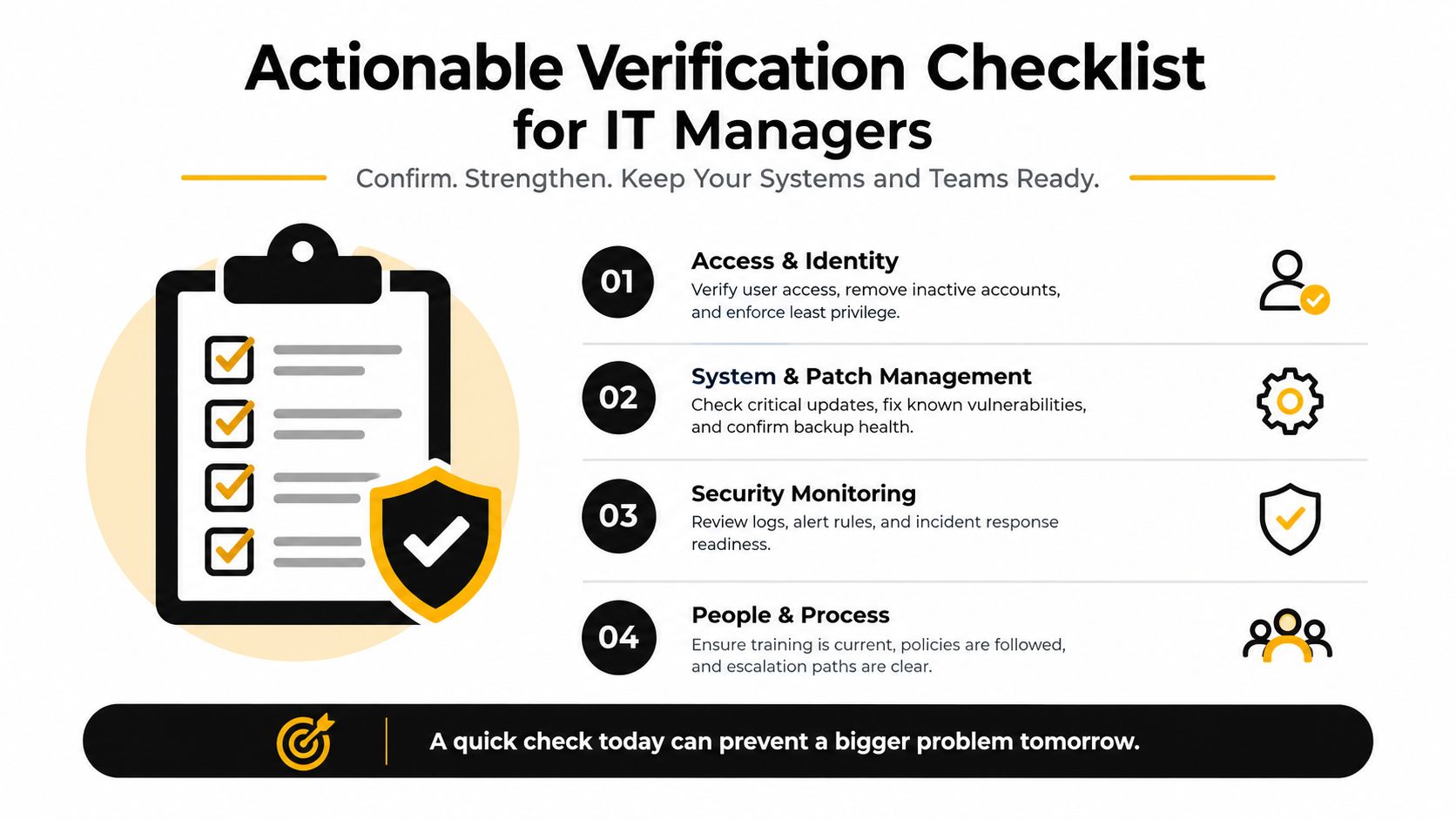
A buyer should verify the destruction program before signing a contract or releasing a device. The certificate is the endpoint, so the review has to begin with inventory control and continue through final documentation.
Before collection
- Map the inventory: Export the asset list, including manufacturer, model, serial number, asset tag, media type, site, and planned disposition.
- Classify the data: Identify whether the device held customer, employee, financial, health, operational, or other sensitive information.
- Set the method: Define which assets require wiping, purging, degaussing, or physical destruction, and document why.
- Review the provider: Examine security policies, audit evidence, references, certifications, facility controls, and subcontractor arrangements.
- Approve exceptions: Establish who can authorize a change when an asset fails wiping, lacks a readable serial number, or requires a different treatment.
At handoff and intake
The pickup manifest should be signed by authorized representatives on both sides. Record container or pallet identifiers where used, note visible exceptions, and retain the transfer record with the project file.
At intake, require reconciliation against the original list. A missing device shouldn't be removed from the certificate without notice. The provider should report it, investigate the custody gap, and document the resolution.
After processing
Review the certificate line by line:
- Reconcile every serial number with the released inventory.
- Confirm the method matches the approved treatment for that media.
- Check the result for completed, failed, destroyed, or exception status.
- Verify the date, time, and facility against processing records.
- Identify the tool and technique for software-based or physical destruction.
- Confirm technician and verifier details are present or traceable.
- Match the custody reference to pickup and transport documentation.
- Store the certificate and supporting records under the organization's retention and audit policy.
The practical buyer question is how to verify legitimacy, not merely whether a document arrived by email. This data destruction audit checklist is useful for testing the certificate against the broader evidence trail. A certificate proves the provider recorded a completed outcome. It doesn't prove that the document is accurate unless the client reconciles it to inventory, custody records, method requirements, and vendor due diligence.
Contact Beyond Surplus for serialized certificates, secure data wiping or physical destruction, electronics recycling, and documented IT asset disposition for Atlanta-area and nationwide business programs. Visit Beyond Surplus to discuss your equipment inventory, destruction requirements, and pickup workflow.


