

If you're staring at a stack of retired laptops, a few dead servers, and a request from finance to “just get rid of it,” you're already facing the Atlanta electronics recycling problem. The hard part isn't moving the gear. It's proving that the equipment left your control cleanly, the data was handled correctly, and the disposal trail will hold up when compliance, audit, or legal asks for records.
Electronics Recycling in Atlanta: Everything Businesses Need to Know starts with a simple truth. For businesses, this isn't a curbside convenience issue. It's an IT asset disposition decision with chain of custody, data security, resale value, and liability transfer all tied together. Atlanta companies that treat e-waste like office trash usually end up paying twice, once in logistics and again in avoidable risk.
Why Atlanta Businesses Need a Different Recycling Playbook
A warehouse full of retired hardware changes the conversation fast. A residential recycling mindset falls apart the moment you have asset tags, lease returns, old drives, and a manager who needs proof that every device was handled correctly. Atlanta businesses need a private, documented service model because the city's recycling system is built for households, while commercial sites must arrange their own waste and recycling services through private providers, not municipal curbside bins. That distinction is spelled out in local business guidance on the city system and commercial requirements here.
Business recycling is about control, not convenience
The organizations that use formal recyclers in metro Atlanta usually have more at stake than clutter. Schools, medical facilities, municipalities, data centers, manufacturers, and finance teams all need a process that shows what left the building, who handled it, and what happened next. Georgia guidance to state agencies also points to formal records for obsolete electronics, which is why business recyclers emphasize inventory control and documented disposal in this compliance guide.
Practical rule: If the device had company data on it, treat the retirement process like a records event, not a junk-removal task.
That mindset changes vendor selection, pickup scheduling, and documentation requirements. It also explains why Atlanta ITAD providers bundle pickup, data destruction, resale recovery, and certified recycling into one workflow instead of offering a simple drop-off option.
Atlanta E-Waste Rules Every Business Should Understand
The rule set is split into two buckets. One governs the asset, the other governs the data. Environmental handling matters, but so does privacy, records retention, and proof that the device was sanitized or destroyed before it left your control. Georgia's formal-records guidance for obsolete electronics is one reason Atlanta business recycling is built around documentation, not informal pickups as noted in the compliance guide above.
Start with the asset, then map the data risk
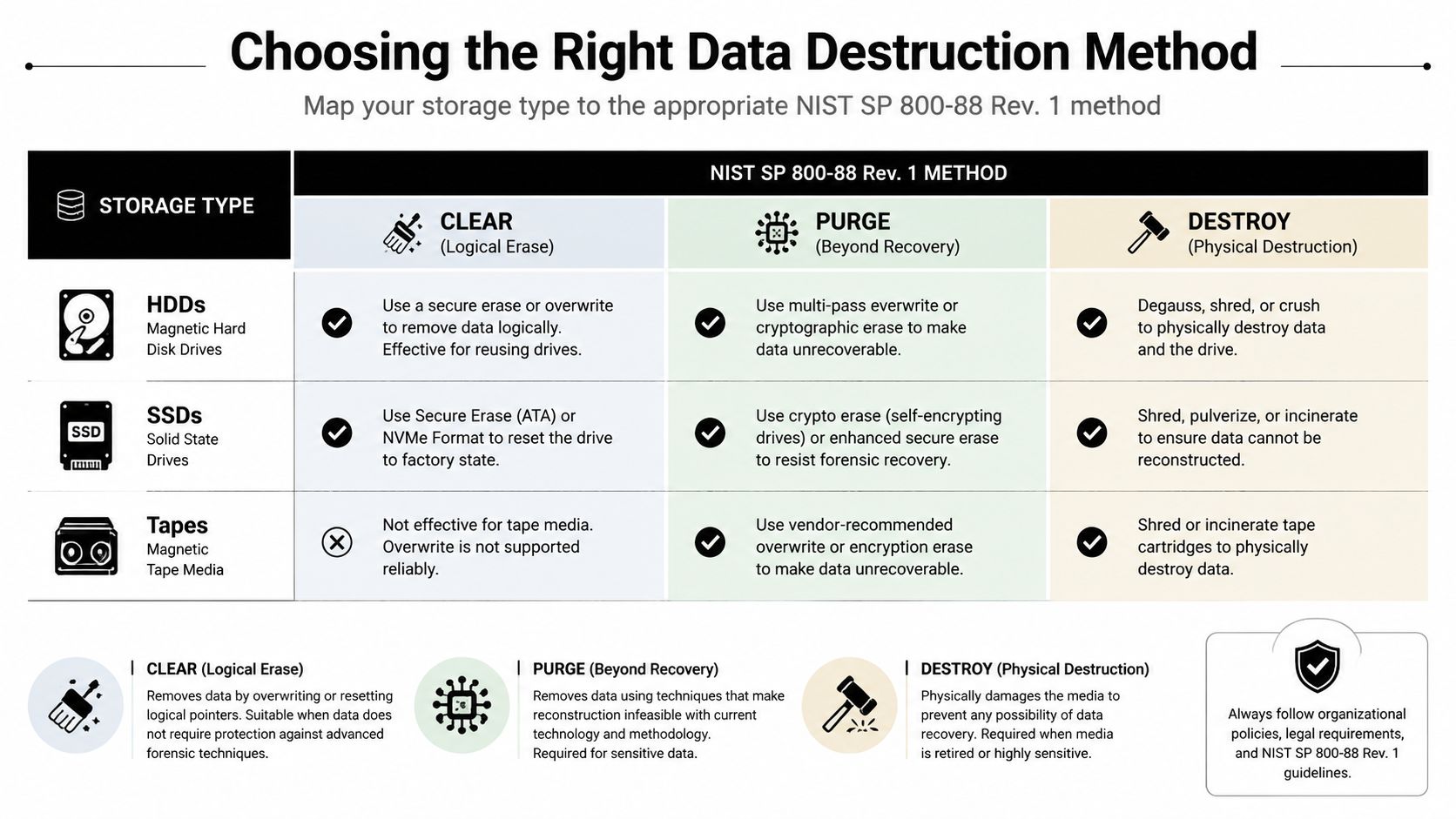
For regulated environments, the question is not “Can this be recycled?” It's “What happened to the data-bearing components, and can we prove it?” NIST SP 800-88 Rev. 1 gives the operating framework by separating clear, purge, and destroy methods, and Atlanta-area ITAD guidance follows that logic for wiping, degaussing, and physical destruction in this NIST-aligned guide. That matters for HIPAA, SOX, and FTC disposal expectations because liability follows the asset if the documentation is weak.
Atlanta businesses need private ITAD, not city bins
Commercial teams can't rely on the city's residential system, and they shouldn't try. If you're managing a corporate refresh, a lab cleanout, or a data center decommissioning, you need a private partner that can pick up from a commercial address and issue records that auditors can read. The best workflows reconcile outgoing equipment against asset records, lease schedules, and retirement approvals before collection, then log the handoff with counts, dates, and final disposition documents as laid out in this office disposal guide.
Choosing the Right Data Destruction Method
The right method depends on the media, the reuse plan, and the risk tolerance. A wiped hard drive meant for resale is not the same as a failed drive that must never return to service. Atlanta businesses that get this wrong usually over-destroy usable assets or under-secure sensitive ones, and both mistakes cost money.
Match the method to the media
NIST SP 800-88 Rev. 1 is the clean standard here. Use clear when the media can be sanitized for reuse, purge when you need a stronger erasure method, and destroy when the device is too risky, too damaged, or too sensitive to re-enter circulation the NIST guidance is summarized in this Atlanta ITAD reference. Atlanta-area providers commonly align that logic with wiping for remarketing, degaussing for certain magnetic media, and shredding for failed or high-risk devices. The point is to decide before pickup, not after.
Pick the sanitization method first, then schedule the pickup. If you reverse that order, you usually lose either recovery value or compliance clarity.
On-site shredding and off-site shredding are not interchangeable
On-site destruction gives you a visible audit moment. A witness can see the drive or device destroyed at your location, which is useful when the compliance team wants immediate confirmation. Off-site destruction can work just as well if the provider maintains strong chain-of-custody records and issues serialized destruction certificates after processing. The difference is the audit trail. On-site destruction proves the event happened in front of you. Off-site destruction proves the transfer, transport, and final processing sequence.
For a mixed fleet, I'd split the decision by asset class. Resalable HDDs get verified wiping. Failed drives get physical destruction. Tape media and other legacy storage should be assigned a method before anyone loads the truck. If your team needs a technical reference point, the NIST-aligned workflow is documented in this Atlanta-focused page.
Chain of Custody and Certificates That Hold Up to Audit
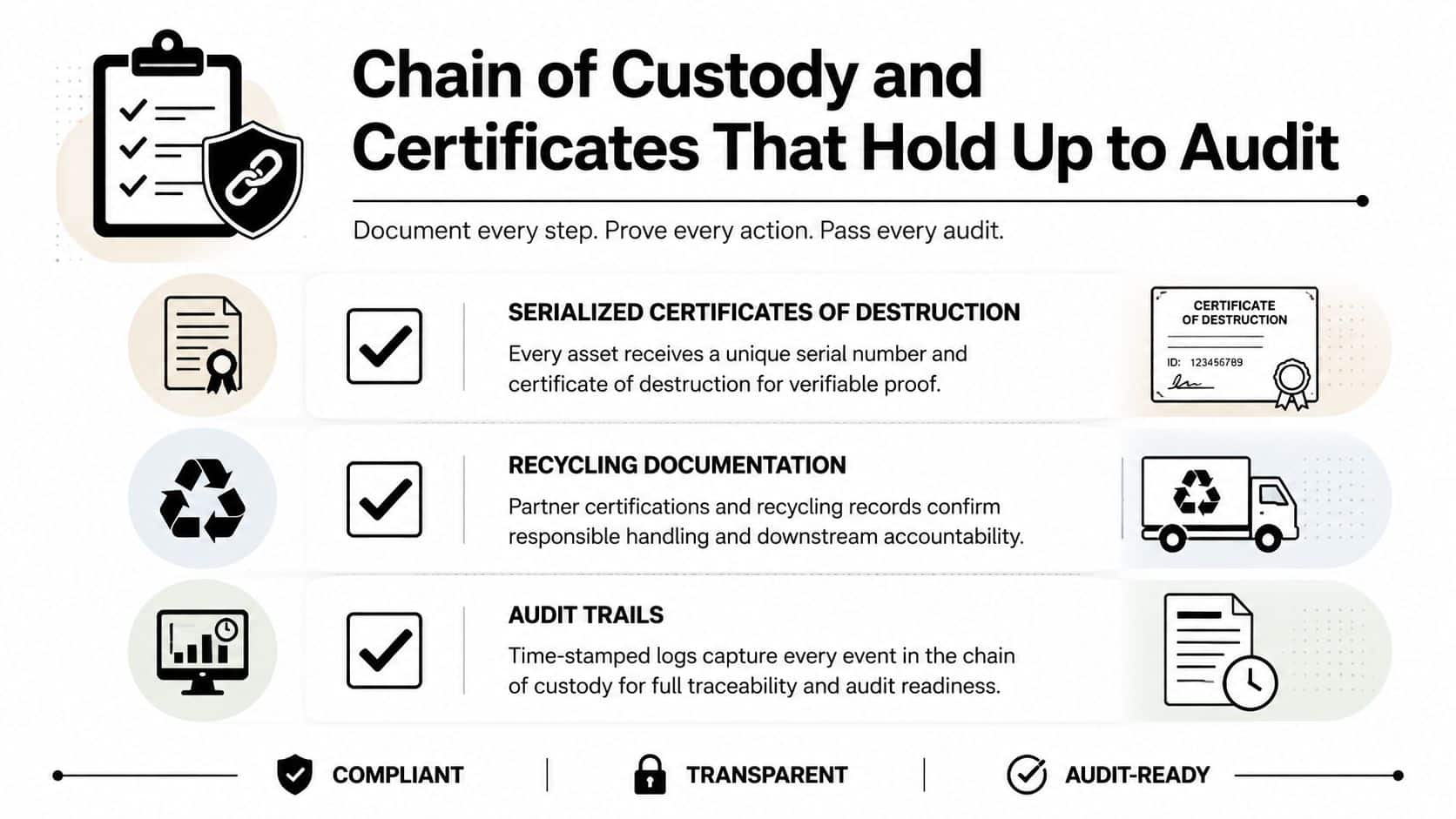
A pickup without paperwork is a liability transfer failure waiting to happen. Atlanta businesses should require serialized certificates of destruction and recycling, transport records, and final settlement reports that reconcile intake against outbound counts where serial data exists. If the vendor can't show that trail, the process isn't defensible.
What your vendor must document
At minimum, the recycler should tell you who took custody, when the pickup happened, what was collected, and how the final disposition was recorded. That means serial-level records where possible, one accountable owner on your side, and a clear statement that liability transfers once assets leave your loading dock. Atlanta business guidance also stresses separating reusable devices from scrap and reconciling counts to prevent asset leakage as covered in this chain-of-custody guide.
Hybrid loads need extra care. Hard drives, copiers, batteries, and networking gear don't all follow the same downstream path, so a single vague receipt isn't enough. If the recycler mixes those categories together without separate handling lines, you lose both traceability and, in many cases, recovery value.
Use the records to protect finance and compliance
Missing documentation does more than weaken compliance posture. It can also reduce remarketing value because buyers want documented provenance and verified erasure. That's why the strongest business workflow is simple: pre-sort assets by reuse versus scrap, sanitize each data-bearing media type correctly, and demand final settlement reports by asset category.
If your team wants a practical benchmark for documentation quality, this chain-of-custody resource is the kind of standard a real vendor should be able to meet.
Pickup Logistics, Volume Thresholds, and Cost Trade-Offs
Atlanta pickup programs are usually built around volume, not one-off convenience. A business load typically qualifies for free or low-cost pickup when it meets a minimum threshold, and one Atlanta recycling guide puts that usual minimum at 10 to 20 major items or a full pallet at a commercial address as described here. The better providers also look at asset value, because resalable equipment can offset logistics and destruction costs.
Know where you sit before you call
If you're above the threshold with a clean asset mix, you may qualify for free pickup or a value-recovery model. If you're below it, expect a fee for logistics, de-installation, or certified destruction. If the load is mixed and low-value, the economics usually shift toward paid service because the recycler can't recover enough from resale to cover handling.
| Atlanta Pickup Models by Asset Volume | Typical Asset Threshold | Preparation | Best Fit |
|---|---|---|---|
| Free or low-cost pickup | 10 to 20 major items or a full pallet source | Consolidate equipment, confirm address, stage on ground floor | Medium refreshes, office cleanouts |
| Volume-based pickup | Qualifying loads, often 50 or more devices for some programs source | Inventory counts, asset list, data handling decision | Larger rollouts, multi-department retirements |
| Paid logistics and destruction | Small or low-value loads | Bundle by category, request quote, confirm paperwork | Small offices, mixed hardware, regulated gear |
Prepare the site before the truck arrives
The easiest jobs are staged at a ground-floor loading dock or storage room with devices consolidated in one place. The recycler should also know whether drives need wiping or shredding and whether the outgoing list matches your asset records and lease schedule. That prep work keeps the pickup efficient, reduces missed items, and prevents disputes about what was collected.
IT Asset Buyback and Value Recovery
Buyback is a separate decision from recycling. Treating them as the same thing leads to bad pricing and worse expectations. Resale-grade equipment can offset disposal costs, but only when the gear still has market value and the documentation is clean enough to support remarketing.
Which assets tend to recover value
Current-generation laptops, servers, and networking gear are the usual candidates for recovery. Older consumer hardware, heavily mixed loads, and one-off small projects often don't produce enough value to cover the admin work, transportation, and testing. That's where a business should stop thinking in terms of “recycling revenue” and start treating disposal as a compliance expense.
Decision rule: If the equipment can't be documented, tested, and erased cleanly, don't assume it has buyback value.
The right refresh plan separates resale from destruction before anything moves. That lets the IT team protect chain of custody, the finance team see realistic recovery numbers, and the compliance team avoid surprises at settlement. If you want a structured value-recovery approach, this ITAD resource shows the kind of process businesses should ask for.
How to Choose an Atlanta Electronics Recycling Vendor
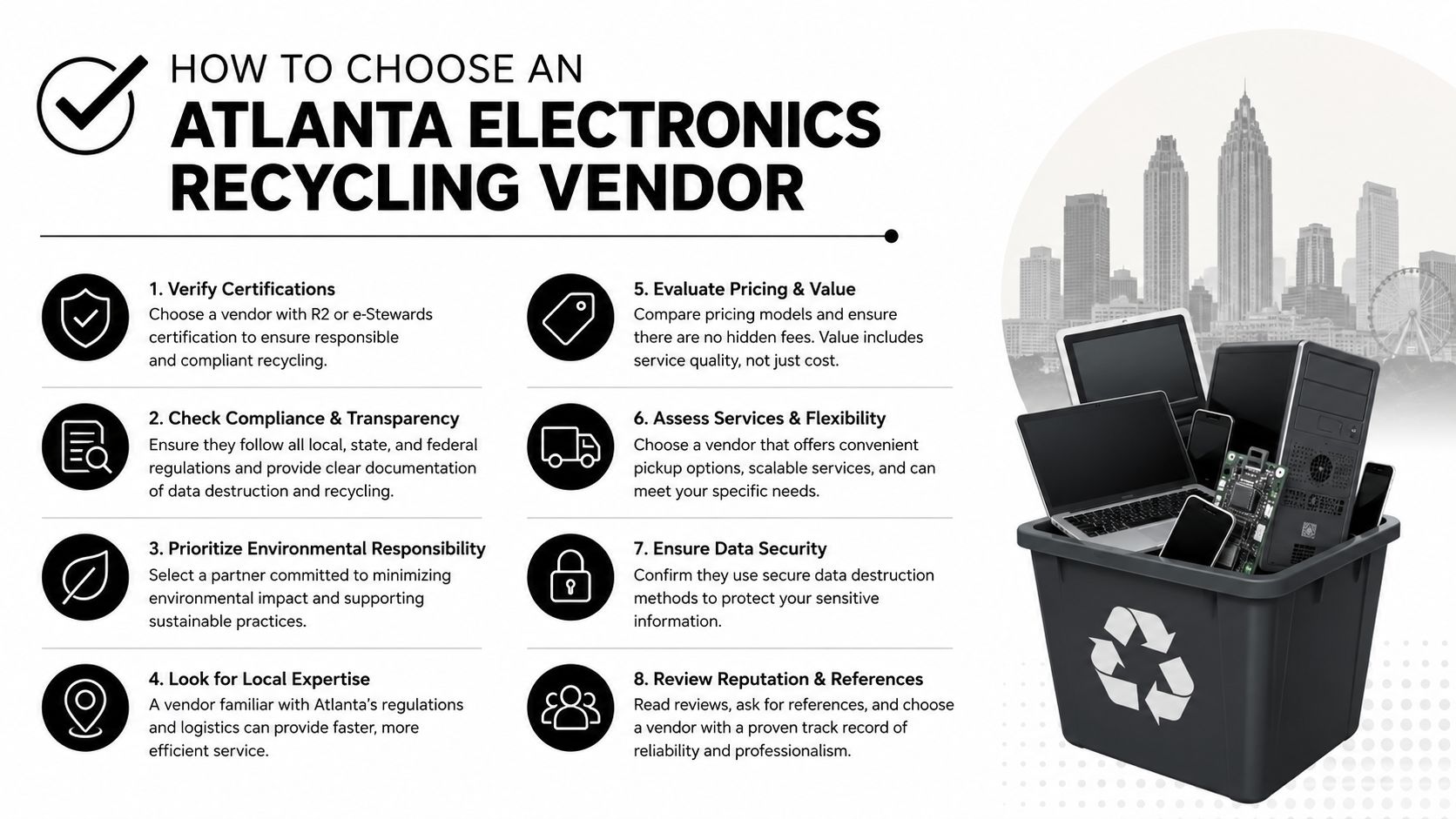
Start with certification, then verify operations. A serious Atlanta ITAD partner should be able to talk about R2 controls, data destruction processes, transport records, and serialized reporting without hand-waving. If the vendor gets vague on those points, move on.
Ask these questions before you award the job
- Do you provide serialized certificates of destruction and recycling? If not, you won't have device-level proof.
- Do you separate reusable devices from scrap? That's how you preserve recovery value and reduce waste.
- Do you handle on-site and off-site destruction? You need both options for different risk profiles.
- Do you use your own fleet or subcontract transport? The answer affects custody control.
- Can you issue per-asset settlement reports? Finance will need that for reconciliation.
- How do you handle hybrid loads? Batteries, networking gear, copiers, and drives need different processing paths.
Look for process, not promises
A proper vendor should assign a named contact, explain the verification step if a device fails sanitization, and show how final settlement matches the intake list. Atlanta guidance on business recycling says certification and verification are part of the process because responsible recyclers are expected to meet standards such as R2 and prove environmental and data-security controls as summarized here. That's the difference between a recycler and a real ITAD provider.
Next Steps for Atlanta Businesses Ready to Recycle
Start this week, not next quarter. Inventory the assets you're retiring, split resale-grade equipment from end-of-life hardware, and decide which drives need wiping, shredding, or another destruction method. Then confirm the certificate format, chain-of-custody requirements, and pickup threshold before you schedule the truck.
Don't route commercial gear through city recycling. Atlanta businesses need a documented ITAD workflow that satisfies IT, finance, and compliance at the same time. If your team wants secure pickups, data destruction, and certificate-backed reporting built for business use, Beyond Surplus handles Atlanta-area electronics recycling and IT asset disposition with the documentation businesses need. Visit Beyond Surplus and schedule a pickup that matches your asset mix, your risk level, and your audit trail.


