
Atlanta, Georgia employers aren't hiring for yesterday's IT stack. In 2024, nearly 628,000 U.S. job postings required at least one AI skill, and the share of all postings with an AI requirement rose from about 0.5% in 2010 to 1.7% in 2024, according to the Federal Reserve Bank of Atlanta. That matters in Atlanta because local companies are competing in the same national labor pool as larger hubs while also staffing cloud, infrastructure, cybersecurity, and compliance-heavy environments.
For IT managers and business owners, IT hiring trends in Atlanta aren't just about filling seats. They affect risk, uptime, audit readiness, and what happens when hardware reaches end of life. Teams need people who can secure data from deployment through decommissioning, not just keep systems running.
That's why hiring plans should connect technical depth with operational discipline. Candidates who understand cloud platforms, cybersecurity tooling, asset lifecycle controls, and secure disposal processes are more valuable than specialists who ignore what happens after equipment leaves production.
If you're updating job descriptions, use this list alongside these in-demand technical skills for your resume to align hiring with what Atlanta employers need.
1. Data Security and Compliance Management
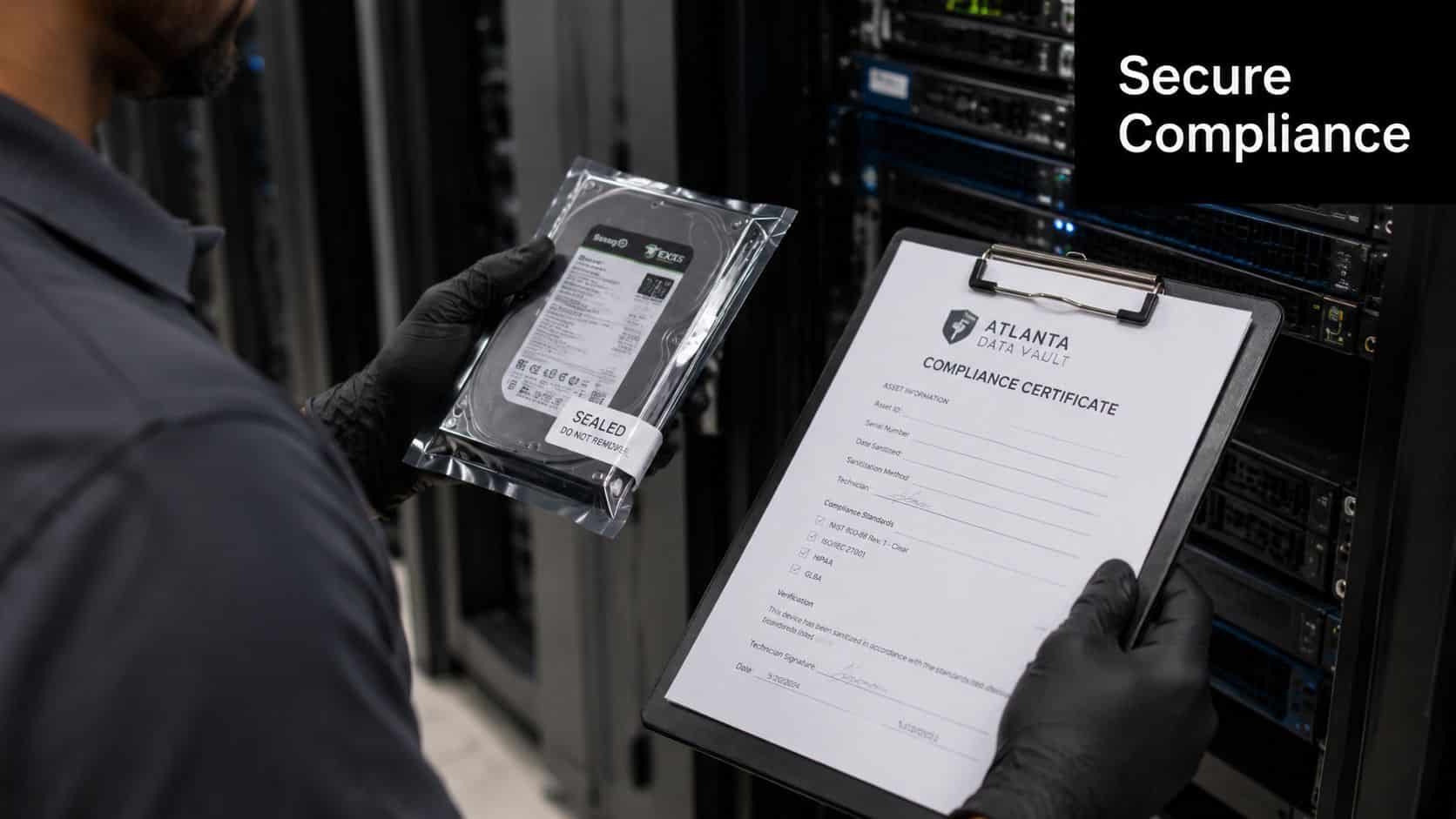
Atlanta companies in healthcare, finance, education, and government need IT staff who can protect data across its full lifecycle. That includes access controls, encryption, records retention, chain of custody, and documented destruction of retired devices. If your team handles regulated data, secure disposal knowledge belongs in the job description.
What to look for
A strong candidate should be able to explain how they classify devices by data sensitivity, when they choose certified wiping versus physical shredding, and how they document every transfer. They should also understand how disposal mistakes create legal and operational exposure long after a laptop or server leaves the rack.
Practical rule: If a candidate treats decommissioning as an afterthought, they're not ready for a regulated IT environment.
Real-world example. A healthcare group replacing clinician laptops needs more than desktop support. It needs staff who can coordinate pickup, preserve documentation, isolate high-risk drives, and work with a provider that issues destruction records. That's where a process such as secure data destruction for Georgia corporate compliance and risk management becomes part of hiring strategy, not just vendor management.
- Require policy fluency: Ask how they've handled HIPAA, PCI-related controls, internal retention rules, or disposal documentation.
- Test chain-of-custody thinking: Give a scenario involving retired storage arrays or executive laptops.
- Prioritize evidence over buzzwords: Candidates should describe procedures, logs, approvals, and exception handling.
2. Cloud Infrastructure and Multi-Cloud Management
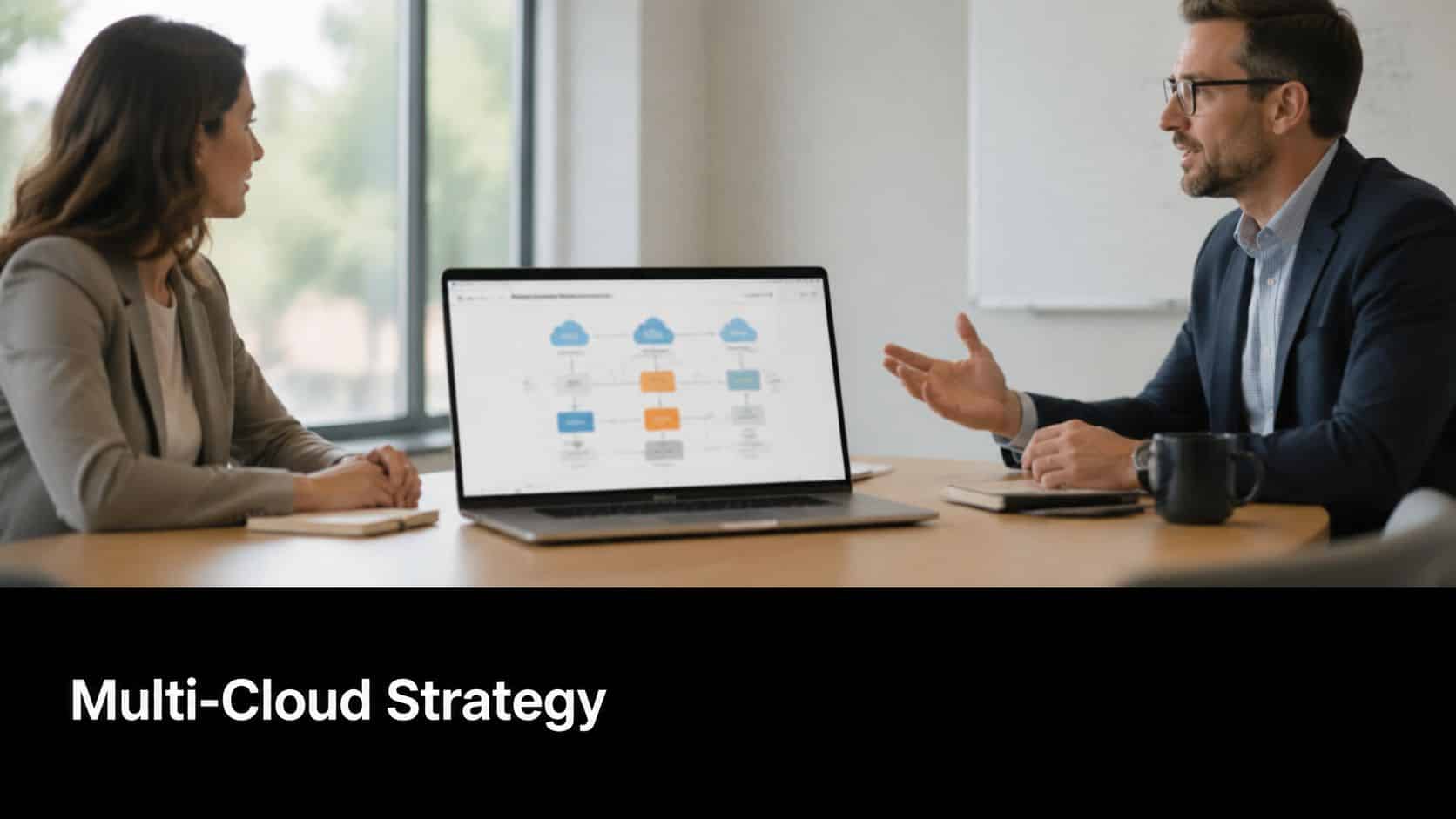
Cloud hiring in Atlanta isn't limited to migration architects. Employers need people who can run production workloads across Azure, AWS, hybrid environments, and the messy middle between old and new infrastructure. Robert Half reported that employers posted nearly 1.1 million technology and IT jobs in 2025, and highlighted platforms including Apache Kafka, Databricks, and Microsoft Azure in its review of technology roles in highest demand.
Where managers should raise the bar
Don't hire only for platform familiarity. Hire for migration judgment, cost control, resilience, and retirement planning for legacy equipment. An engineer who can stand up Azure resources but can't plan the secure removal of old SAN gear leaves risk behind.
A common Atlanta scenario is a company moving workloads from an on-prem server room into a hybrid setup while keeping some regulated applications local. The right hire can map dependencies, coordinate cutovers, and align retirement work with data center migration best practices.
Cloud migration isn't finished when workloads go live. It's finished when the old hardware is documented, sanitized, removed, and closed out.
Look for candidates who can speak clearly about Terraform, backup strategy, identity controls, logging, and decommissioning. Those are the people who reduce disruption.
3. Cybersecurity and Threat Intelligence
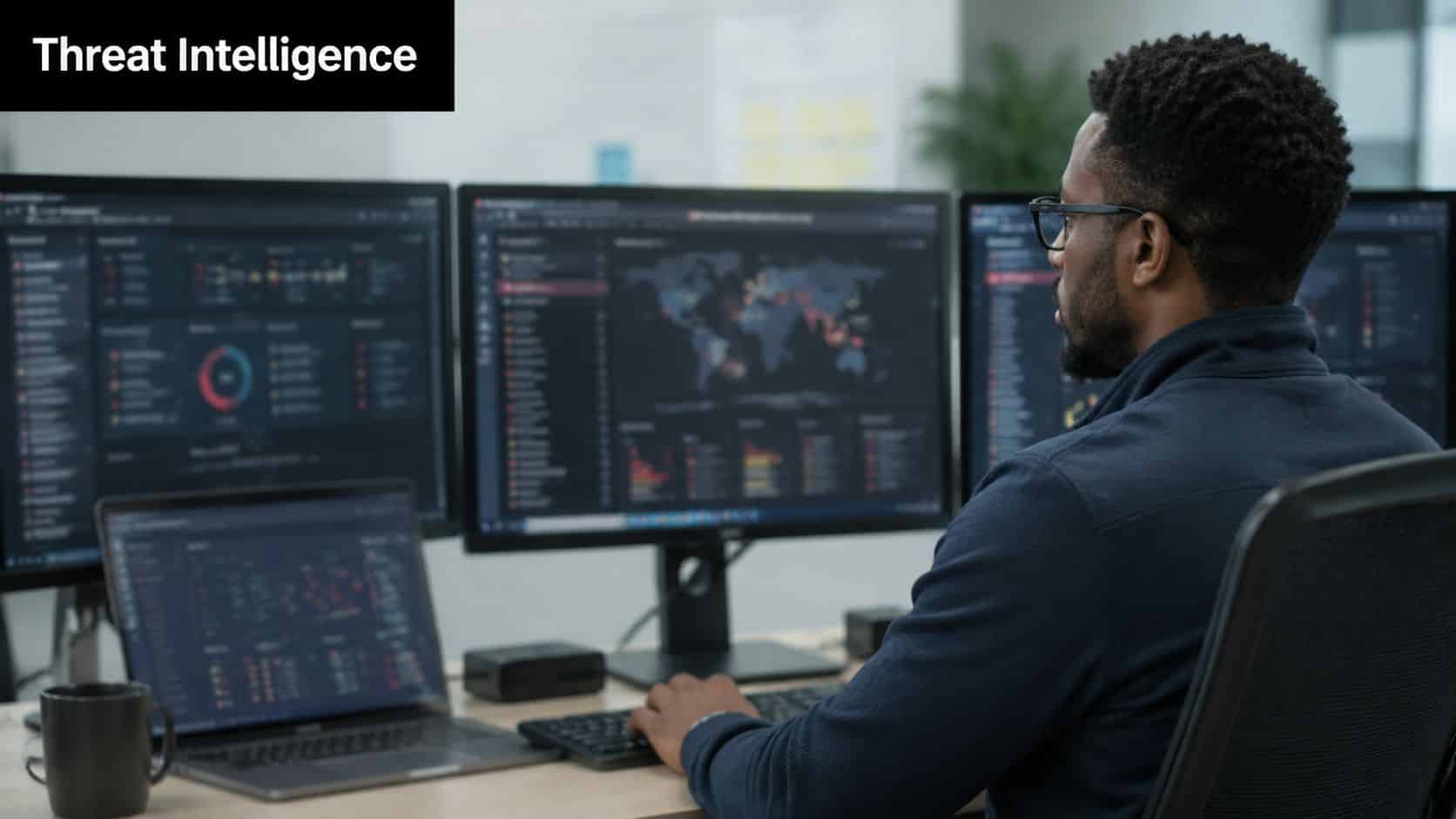
Security talent remains one of the clearest priorities in the market. Robert Half found that security roles reached 66,800 postings in 2025, up 124% year over year. In Atlanta, that demand aligns with the needs of banks, hospitals, schools, logistics operators, and public sector entities that can't afford weak controls.
The hiring mistake to avoid
Many companies still split cybersecurity from physical asset handling. That's a mistake. A retired firewall, storage device, or user laptop can become a breach vector if disposal controls fail. Security hiring should include questions about endpoint retirement, evidence preservation, and disposal escalation after incidents.
A financial services team, for example, may isolate compromised hardware during an investigation. Once legal and security teams release it, operations must still sanitize or destroy it properly. That's why Atlanta firms should connect cyber hiring with practical exposure described in cybersecurity threats targeting Atlanta companies.
- Ask about incident containment: Can the candidate separate infected assets from standard refresh inventory?
- Ask about post-incident asset handling: Do they preserve logs, custody records, and destruction requirements?
- Ask about collaboration: Strong security hires work well with infrastructure, compliance, legal, and ITAD vendors.
4. DevOps and Infrastructure Automation
Atlanta employers want fewer manual processes and faster recovery when something breaks. That makes DevOps and automation skills highly valuable, especially in teams managing cloud infrastructure, releases, and internal platforms. The best hires don't just automate deployments. They automate consistency.
What strong automation talent actually does
They use version control for infrastructure code, standardize environments, and reduce dependency on tribal knowledge. They also plan how automation affects hardware refresh cycles. When teams replace old appliances or consolidate systems, someone still has to manage shutdown, inventory reconciliation, and secure disposition.
A practical scenario. A regional company automates server provisioning and shifts applications into repeatable cloud templates. That project removes manual work, but it also leaves legacy switches, rack servers, and backup devices sitting idle unless someone owns the retirement process.
Good DevOps hires reduce manual risk in production. Great ones reduce manual risk at end of life too.
Ask candidates for examples of CI/CD controls, rollback procedures, secrets management, and change governance. If they've never thought about decommissioning, they may automate growth while ignoring risk.
5. IT Asset Management and Lifecycle Planning
This skill is routinely underestimated and constantly tied to budget, compliance, and security. Atlanta's metro had an estimated 137,000 core tech workers and an average base IT compensation of $131,007, according to reporting cited alongside NACE's findings on skills-based hiring practices. In a competitive market, companies can't afford waste, missing devices, poor records, or unmanaged refresh cycles.
Why this role matters more now
A mature IT asset management function gives finance, security, procurement, and operations a shared system of record. It helps teams know what they own, where it is, what software sits on it, when warranties expire, and how disposal gets approved and documented.
That's especially important for distributed organizations with laptops, networking gear, servers, mobile devices, and specialized equipment spread across offices, clinics, campuses, or warehouses. Candidates should know platforms such as ServiceNow or Atlassian asset tools, but they also need process discipline.
A strong hire can build standards around receiving, tagging, assignment, reassignment, storage, retirement, and remarketing. They should also know when to hand assets off under a formal IT asset lifecycle management process.
- Hire for ownership mindset: Good ITAM staff close gaps instead of just updating records.
- Look for audit readiness: They should be comfortable producing histories, approvals, and exception notes.
- Tie ITAM to security: Asset visibility should trigger sanitization and disposition workflows, not end with inventory.
6. AI, Machine Learning, and Data Analytics
AI skills have moved from niche to mainstream hiring criteria. The Atlanta Fed found that for Computer and Mathematical occupations, the share of postings with an AI requirement climbed from 1.6% in 2010 to 12.3% in 2024. The same analysis noted that among occupations requiring at least an associate degree, AI-skill demand rose from 0.4% in 2010 to 1.4% in 2024. Atlanta managers should treat that as a hiring signal, not a trend story.
How to hire for practical AI capability
Don't chase research credentials unless you need them. Most Atlanta businesses need people who can operationalize data, automate workflows, support model deployment, and work with business teams on real use cases. That means hiring for data engineering, analytics platforms, model governance, and production support.
A useful example is a logistics or healthcare company that needs forecasting, anomaly detection, or document processing. The successful hire usually isn't the most academic candidate. It's the one who can clean data, deploy reliable pipelines, monitor outputs, and explain limits to stakeholders.
The Atlanta Fed also noted in a separate review of recent trends in demand for AI skills that AI-related skills accounted for 45% of all AI-skill demand by 2024 and had spread to nearly a quarter of occupations. That broad spread should change how you write roles.
Hire for applied AI literacy. Then require the same discipline you'd expect in security, operations, and compliance.
7. Network Architecture and 5G Edge Computing
As Atlanta organizations modernize facilities, warehouses, campuses, and distributed operations, network skills still matter. The market may talk about AI, but those systems still depend on resilient connectivity, segmentation, device policy, and smart retirement of outdated telecom hardware.
What to prioritize in candidates
Look for people who understand software-defined networking, branch connectivity, wireless design, and security controls at the edge. They should also be able to plan phased replacement of switches, routers, firewalls, and telecom gear without losing audit control over the equipment leaving service.
A real-world Atlanta scenario is a multi-site business upgrading circuits and edge appliances while rolling out cloud-managed networking. That project needs more than installers. It needs staff who can inventory what's being replaced, coordinate cutover windows, and work with partners familiar with telecom network installation in Atlanta.
The broader hiring pattern also supports this. NACE reported that 70% of employers in its Job Outlook 2026 survey use skills-based hiring, up from 65% the prior year. For network roles, that means practical troubleshooting, documentation, and modernization experience will beat résumé padding.
Atlanta IT Hiring: 7 In-Demand Skills Comparison
| Skill | Implementation Complexity 🔄 | Resource Requirements ⚡ | Expected Outcomes 📊 ⭐ | Ideal Use Cases 💡 | Key Advantages ⭐ |
|---|---|---|---|---|---|
| Data Security and Compliance Management | High, ongoing regulatory updates and cross-team coordination 🔄🔄🔄 | Moderate–High, compliance tooling, audits, certified ITAD partners ⚡⚡⚡ | Strong regulatory compliance, reduced breach risk, documented disposals 📊⭐ | Healthcare, finance, government; regulated IT asset disposal | Avoids fines, builds trust, ensures secure value recovery ⭐ |
| Cloud Infrastructure and Multi-Cloud Management | High, multi-platform orchestration and integration complexity 🔄🔄🔄 | High, cloud spend, IaC, orchestration tools, cross-cloud skills ⚡⚡⚡ | Scalable operations, cost optimization, vendor flexibility 📊⭐ | Cloud migrations, hybrid workloads, DevOps-driven teams | Agility, resilience, improved resource utilization ⭐ |
| Cybersecurity and Threat Intelligence | Very High, 24/7 monitoring, incident response, evolving threats 🔄🔄🔄 | Very High, SIEM/EDR, skilled staff, continuous training ⚡⚡⚡⚡ | Faster detection/response, fewer breaches, stronger incident readiness 📊⭐ | Critical infra, finance, healthcare, high-risk organizations | Reduces risk, supports compliance, protects reputation ⭐ |
| DevOps and Infrastructure Automation | Moderate–High, cultural change and pipeline complexity 🔄🔄 | Moderate, CI/CD tools, automation frameworks, training ⚡⚡ | Faster releases, fewer manual errors, consistent deployments 📊⭐ | SaaS, rapid-release teams, organizations adopting GitOps | Accelerates delivery, lowers operational overhead, improves QA ⚡⭐ |
| IT Asset Management and Lifecycle Planning | Moderate, process design, inventory visibility, cross-unit coordination 🔄🔄 | Moderate, ITAM systems, audits, ITAD partnerships ⚡⚡ | Improved cost control, license compliance, value recovery 📊⭐ | Large enterprises, inventory-heavy organizations, sustainability programs | Visibility into assets, reduced spend, compliant disposals ⭐ |
| AI, Machine Learning, and Data Analytics | High, data quality, model complexity, MLOps requirements 🔄🔄🔄 | Very High, large data sets, compute resources, specialized talent ⚡⚡⚡⚡ | Predictive insights, automation, new revenue streams 📊⭐ | Retail forecasting, healthcare diagnostics, fraud detection | Competitive advantage, enhanced forecasting, personalization ⭐ |
| Network Architecture and 5G/Edge Computing | High, network redesign, edge integration, interoperability 🔄🔄🔄 | High, 5G/edge hardware, skilled engineers, deployment costs ⚡⚡⚡ | Low-latency processing, IoT enablement, distributed resilience 📊⭐ | Manufacturing, telemedicine, in-store analytics, IoT deployments | Improves performance, enables local privacy/processing, supports scale ⭐ |
Building Your A-Team From Hiring to Hardware Retirement
Atlanta's IT market rewards employers who hire for execution, not résumé theater. Skills-based hiring is growing, and that's the right move for teams that need people who can secure systems, run cloud environments, automate operations, support analytics, and manage hardware through retirement. If a candidate can't explain how technology gets deployed, governed, and decommissioned, they aren't ready for a modern enterprise role.
The biggest mistake IT leaders make is separating hiring strategy from lifecycle strategy. They recruit for cloud, security, and AI, then hand off retired devices to ad hoc processes. That gap creates avoidable compliance exposure. It also weakens asset recovery, audit readiness, and internal accountability.
Strong Atlanta hiring plans should include three practical changes. First, update job descriptions so they reflect hybrid skill sets, especially where security, compliance, infrastructure, and asset handling overlap. Second, interview for operational judgment with scenario-based questions. Ask what candidates would do with end-of-life laptops after a merger, how they'd document retired storage media, or how they'd handle legacy gear after a cloud migration. Third, build vendor relationships that support the same standards you expect from internal teams.
ITAD becomes a component of business continuity. A certified provider helps close the loop with secure data destruction, documented chain of custody, recycling, remarketing, and certificates that support compliance and liability transfer. That matters for healthcare systems, financial institutions, schools, manufacturers, and data center operators across Atlanta.
The companies that win in Atlanta won't treat hiring as a standalone HR task. They'll treat it as an operating model. Hire people who understand security, cloud, automation, asset control, and compliance. Then give them a documented path for retiring hardware without exposing the business. That approach protects data, supports audits, and keeps your technology environment clean enough to scale.
Contact Beyond Surplus for Atlanta electronics recycling services, secure IT asset disposal, certified data destruction, and data center decommissioning support that aligns your hiring, compliance, and end-of-life IT processes.


