

The advice you hear first is to book a junk haul and get the grill off the property. I would not start there. For a facilities team, the first decision is per serial number: send the unit back under a manufacturer remedy, route it through a municipal or hazardous-waste program, book a third-party load, or hold it until the record is complete. Residual propane and a thin paper trail cause more trouble than the steel body. A grill that never flared on your site can still carry a bad regulator, a weak frame, or a failed igniter, and a missing serial is how that unit gets donated or resold later.
Recalled grill disposal services only earn their keep when that choice is written down before anyone moves a cylinder. Match the manufacturer, model, and serial to the recall notice, then pick the route. Hauling comes after that, not before.
Table of Contents
- Confirm the Recall and Choose a Disposal Route
- Immediate Safety Steps and Component Routing
- How to Handle a Propane Cylinder Safely
- Documentation That Proves Safe Disposal
- Confirm Your Disposal Route Before Booking
Confirm the Recall and Choose a Disposal Route
Start with the serial, not the truck. For every unit, write one of four outcomes: manufacturer remedy, municipal or hazardous-waste drop-off, third-party disposal, or hold for review. If the plate doesn't match a notice you can file, the unit stays on hold. Earlier returns do not clear the rest of a production run.
The Consumer Product Safety Commission has already shown what "no incident yet" is worth. In 1996, approximately 1.2 million Char-Broil tabletop liquid-propane grills, model 1200, were recalled because of regulator problems, and no injuries were known at the time of the announcement. In 1995, about 15,600 Sixty Second Grill Express electric grills, model G250, were recalled after two reports of the grills melting, although neither incident involved an injury. Treat the unit as hazardous when the defect involves gas regulation, heating, ignition, structural stability, or electrical protection, even if your property has a clean history with it.
The CPSC notice on Red Devil gas grills is the reason model matching isn't optional. In 2002, approximately 10,800 Red Devil gas grills sold through Value City and Schottenstein Stores were recalled after 44 reports of burns to legs, hands, and fingers, including some third-degree burns, and more than 1,000 consumers had already returned grills because they collapsed during use. About 155,000 related grills had been manufactured, and approximately 19,300 units sold directly by the manufacturer had been recalled in 1998 because burners could disconnect from the burner pan. Units already sent back did not account for every grill in the field.
How to assign a route
Use the table as the assignment sheet. A valid remedy beats disposal. A handful of units can go to a municipal program that has already said yes. A multi-building pull needs palletizing, transport, and a certificate per load. Our recalled home product disposal services page shows how batch records and final disposition are handled on commercial jobs. Confirm a grill load is in scope before you book anything.
| Route | Best fit | Propane cylinder | Proof produced |
|---|---|---|---|
| Manufacturer or retailer recall remedy | Units covered by a valid remedy | Separate unless the remedy requires the cylinder returned with the grill | Remedy or refund record |
| Municipal hazardous-waste or bulky-waste program | Small numbers of units | Accepted only if the program confirms it | Drop-off receipt or program acceptance slip |
| Third-party disposal provider | Multi-unit batches for businesses | Confirm before booking | Certificate for each load |
Practical rule: If the serial doesn't match a notice on file, the unit does not leave the cage.
Stop use, isolate fuel or power, and log whether the unit is returned, repaired, or disposed of. That line in the log is what stops a recalled grill from circulating again as a donation or a resale.
Immediate Safety Steps and Component Routing
Fuel isolation is the step that prevents a fire on the loading dock. Everything else in the workflow waits on it. A provider that takes the whole grill as one scrap load is easier to schedule, and that provider often can't show that the cylinder, the grease, and the igniter left on separate paths.

The National Fire Protection Association reports that gas grills account for an average 9,235 U.S. home fires annually, including 4,662 structure fires and 4,573 outdoor fires. Leaks or breaks caused 6% of gas-grill structure fires and 13% of outside gas-grill fires. Prioritize recalled gas grills and any unit with a damaged hose, regulator, valve, or cylinder. The same data shows that roughly 20% of grilling fires involved grills that had not been cleaned, so grease and ash count as ignition-supporting residue, not harmless dirt.
Six steps before anything moves
- Confirm identity. Record manufacturer, model, serial number, fuel type, and the recall notice number on one line of the log. A photo of the rating plate isn't a substitute for the written fields.
- Stop use. Tag the unit recalled in a place a hauler can see, and lock out the fuel or power source so a night porter can't put it back in service.
- Isolate the fuel. Close the cylinder valve, disconnect the cylinder, and move it outdoors. On an electric model, unplug it and bag the cord so nobody "tests" it.
- Quarantine the body. Use a stable, ventilated, weather-protected area away from buildings, drains, ignition sources, and combustible storage. Never stack units where a valve or regulator can be struck.
- Photograph the proof. Shoot the model plate, serial, recall tag, fuel connection, and any damage before the unit is wrapped.
- Escalate exceptions. A leak, an odor, heat damage, or an unknown cylinder status stops the move. Don't load it "and sort it at the yard."
A unit you can't describe in writing stays in quarantine. Model, recall status, and fuel condition all have to be on the sheet.
What stays out of the same load
Don't mix propane cylinders, batteries, oily components, charcoal ash, and ordinary scrap metal in one load. That single rule covers the failure modes that get a shipment rejected: accidental ignition, incompatible waste, and lost recall evidence. Charcoal moves only when it's fully cooled, and only in a dedicated metal container with a tight-fitting lid. Batteries and electronic ignition parts follow a battery or e-waste channel, not the ferrous pile.
Set the service level at zero unverified fuel containers in the scrap stream, and escalate every unknown cylinder, visible leak, odor, heat damage, or missing recall tag. The EPA household hazardous waste guidance warns that this waste can explode, ignite, leak, or create environmental and health risks when it's discarded the wrong way, and it points to designated collection sites or collection days when a permanent facility isn't open. Disposal is also a minority remedy. CPSC five-year remedy data classify disposal as only 1.1% of listed remedies, which is why the instructions on a notice often just say to follow local rules. A screening protocol beats generic junk removal: name the fuel, refuse a leaking or damaged cylinder, separate the cylinder where required, and keep a chain of custody.
Grease on the grates is part of the fire picture, not a cosmetic issue. If the unit is still safe to handle cold, BBQ cleaning tips for better flavour from Smokey Rebel is a practical walk-through for grates and drip trays. On a recalled gas grill, skip any step that needs the burner lit.
The same quarantine logic applies when a property is clearing other fueled outdoor gear in the same week. The intake pattern on our recalled lawn equipment disposal services page is the model for keeping fuel, batteries, and steel on separate tickets.
Routing each grill component before disposal
Steel, aluminum, and burners go to recycling only after the fuel system is confirmed empty and the cylinder has been accepted somewhere else. Use the table as the lookup. Don't renegotiate it at the dock.
| Component | Handling before disposal | Where it goes |
|---|---|---|
| Propane cylinder | Confirm valve closed, cap fitted, no leak or damage | Local HHW program, propane retailer, or fire department |
| Grill body (steel, aluminum) | Only after the fuel system is confirmed empty | Metal recycler or controlled disposal |
| Burners and igniters | Keep dry and separate from fuel and oily parts | Electronic or battery channel for ignition modules |
| Batteries | Tape terminals and store apart from other parts | Battery recycling or HHW program |
| Grease-soaked parts and drip trays | Keep out of ordinary trash and seal in a container | Household hazardous waste program |
| Charcoal ash | Fully cooled, in a dedicated metal container with a tight lid | Ash disposal under local rules |
Release test: if model, recall status, and fuel condition aren't verified in writing, the unit stays in quarantine. A verbal "it's empty" from the last tenant doesn't count.
How to Handle a Propane Cylinder Safely
No cylinder moves until a named destination has confirmed it will accept that cylinder. Book the drop first, then schedule the truck. A yard that "usually takes tanks" is not a destination.
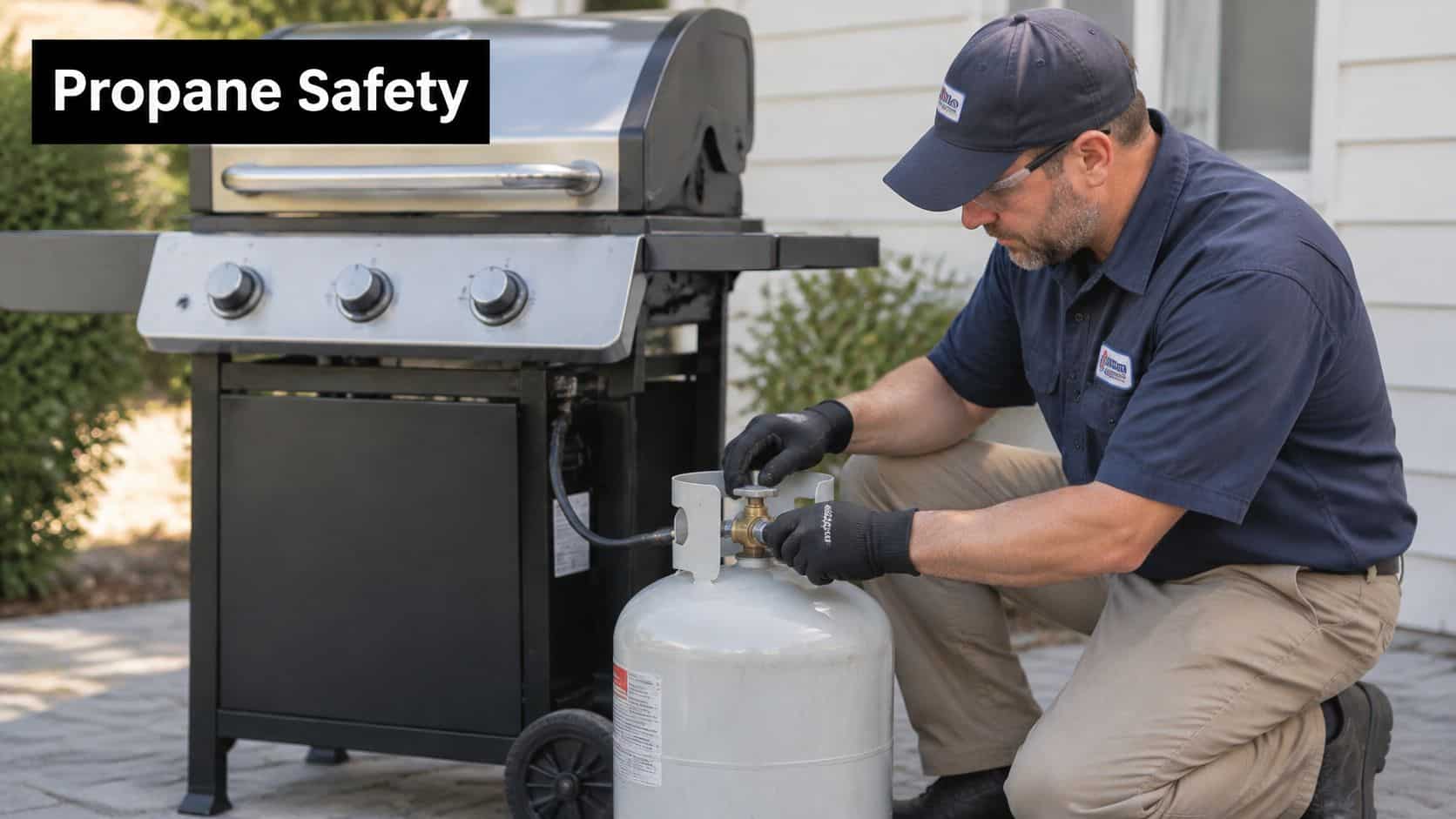
The CPSC recall guidance for outdoor gas grills and stoves is direct about the cylinder: do not puncture, vent, crush, or place a potentially charged cylinder in a waste compactor. Segregate it from the grill body and route it through a local hazardous-waste, propane-retailer, or fire-department program only after that program has accepted it. EPA identifies compressed-gas tanks as household hazardous waste and points to community HHW programs rather than ordinary trash. State and local rules can be stricter than the federal household-waste provisions, so the local program's answer controls.
A useful quality bar from that same workflow is 100% serial-number reconciliation and 100% photographic evidence of recall identification, fuel isolation, and final disposition. Miss any one of those and you have a traceability gap that can undercut the manufacturer remedy, environmental compliance, or a liability-transfer record.
The cylinder procedure
- Screen condition first. Refuse ordinary transport for any cylinder with a leak, dent, rust, valve damage, or unknown fill status. Escalate it to the fire department or the HHW program's exception line. Don't tape over a damaged valve and hope the driver doesn't notice.
- Store it upright, outdoors, and out of direct sun while it waits. A closed loading bay in July is not outdoor storage.
- Never puncture, vent, crush, or compact a cylinder that might still hold gas. Venting is not an approved disposal method, including for a tank that feels light.
- Separate the cylinder from the grill body before either one is loaded. They don't share a pallet.
- Confirm acceptance, then book the drop with the HHW program, a propane retailer, or the fire department. Get the acceptance in writing or in an email you can file.
- Leave a partially full tank to the accepting site. Your crew doesn't bleed it down in the parking lot.
Say a property manager has five grills from one recall across two courtyards. Put the five cylinders in one labeled cage, log each cylinder serial next to the grill serial, and book a single HHW drop-off. Five separate car trips create five chances to lose a tag.
A charged cylinder is closer to a recalled generator's fuel system than to scrap steel. The intake steps on our recalled generator disposal services page use the same gate: identify the fuel, then book only a destination that has already accepted it.
No cylinder moves without a named destination that has confirmed it will take it.
Documentation That Proves Safe Disposal
The file is the job. A hauled grill with no serial log can walk back onto a resident patio through a donation pile or a maintenance "spare." Sign the checklist in this order, and don't release the unit until the last line is signed.

Sign-off sequence
- Manufacturer, model, and serial for every unit. Write all three. A building address without a serial doesn't identify the product.
- A copy of the recall notice in the job folder. The notice is what shows the defect class and the remedy the manufacturer offered.
- Photographs of recall identification, fuel isolation, and final disposition. Shoot them before wrap, not from memory the next morning.
- A dated chain-of-custody log naming each handler. The person who caged the cylinder and the person who signed the truck both appear by name.
- Final disposition marked returned, repaired, or disposed. One status per serial. "Removed" isn't a status.
Skip one photo or one serial and you can't prove the fuel was isolated or that the unit didn't re-enter circulation. That gap is what undermines a remedy claim and a liability handoff.
What to demand from the processor
Ask for a written certificate for each load, not a single letter covering "the spring cleanout." Certificates of recycling and data destruction are available for each load of equipment picked up. Those certificates are contractual written guarantees that equipment will be disposed of responsibly, so the liability transfer is on paper rather than in a phone call. File that certificate against the serial log. For recall work we process, the certificate of destruction for recalls is the document that closes the folder.
Keep one folder per recall. Cross-reference it to the purchase invoice, if you still have one, and to the provider's load certificate. Retain it for as long as your compliance policy requires. The last signature on the checklist happens before the unit leaves the site, not after the truck is gone.
Confirm Your Disposal Route Before Booking
Ask these questions before you put a date on the calendar. A yes on "we haul junk" doesn't answer any of them.
- Gas appliances or drop-off only? Some shops will roll a truck for IT and still refuse fueled appliances.
- Cylinders on the same ticket, or a referral? If they refer the tank, you still need the HHW appointment before the grill body moves.
- How do they palletize a multi-unit pickup? You want cylinders caged apart from steel, not strapped to the same pallet.
- A certificate for each load? One blanket email for a month of pickups won't match your serial log.
- Lead time and cost in writing, per load? Align the pickup day with the local hazardous-waste collection schedule so the cylinder isn't sitting in a cage for an extra week.
A multi-unit recall usually needs one booking that covers cylinders, appliances, and paperwork together. A handful of units often fits a municipal collection day better, and it's cheaper if the program will take them.
Beyond Surplus focuses on electronics recycling and IT asset disposition for businesses across the United States, so grill and cylinder acceptance has to be confirmed before any pickup is scheduled. Don't assume it. Appliances such as fridges, stoves, washers, and dryers are accepted by drop off only, and pickups aren't available for those appliances. Read recalled product pickup and destruction for the electronics and destruction scope, then ask in the same note whether a grill body or a cylinder is accepted at all.
Customers can request a recycling pickup or drop-off by phone, by email, or by filling out the online form. Questions and recycling requests can be directed to Beyond Surplus at 404-905-8235. Have the serial log, the recall notice, and a count of cylinders in front of you when you call. If the answer on grills is no, you still leave with a plan for any electronics on the same property, and you book the cylinders with a program that has already said yes.
Beyond Surplus provides certified electronics recycling, secure IT asset disposal, and documented product destruction for businesses that need a clear chain of custody. When a property recall also includes computers, servers, or other IT equipment next to outdoor appliances, we can scope that technology load while you confirm whether any grill or cylinder is accepted. Visit Beyond Surplus to request a pickup or drop-off and put the serial log and the equipment list in the same conversation.


