

Your facilities team has pulled recalled heaters from offices, procurement wants the assets closed out, and someone has suggested adding them to the next electronics load. Don't authorize destruction yet. Recalled heater disposal services must preserve the manufacturer's remedy before they process the equipment, or your business could lose both reimbursement eligibility and evidence that it followed the recall.
For Atlanta, Georgia, businesses and organizations coordinating facilities nationwide, the practical sequence is straightforward: identify the affected units, establish the remedy, control the equipment, and document the approved destination. A recycling appointment alone doesn't settle any of those decisions.
Table of Contents
- Route Each Recalled Heater by Its Recall Remedy
- How to Quarantine Recalled Heaters Before Pickup
- Vetting a Certified Disposal Partner
- Coordinating Pickup, Transport and Hazardous Handling
- Building the Disposal Record Your Auditor Will Request
- Confirm Your Disposal Plan Before the First Pickup
Route Each Recalled Heater by Its Recall Remedy
Disposal route by recall remedy
| Recall remedy case | Required first action | Disposal route | Proof to keep |
|---|---|---|---|
| Manufacturer refund, repair or replacement | Hold the unit intact; don't cut the cord or dismantle it | Return per the recall instructions; no recycling before the remedy decision | Recall notice, serial or model photos, claim or case number |
| Destroy-to-claim, with cord cutting and photos required | Unplug safely, cut the cord only as directed, and photograph destruction before filing | Destroy per the notice, then submit the claim | Dated photos of the cut cord, claim confirmation |
| Fuel-connected heater with disconnect-and-dispose instruction | Have qualified personnel disconnect the fuel source and document the unit | Hazardous-waste or approved appliance recycler | Disconnection record, recycler receipt |
| Damaged, leaking or swollen unit with no active remedy | Isolate safely; don't energize | Escalate to a hazardous-materials specialist | Intake condition record, certified destination |
| Undamaged end-of-life unit, no remedy needed | Inspect for batteries, fuel and damaged wiring | Certified electronics or appliance recycler | Certificate of recycling for each load |
Read the rows in order. A manufacturer-directed return takes priority over ordinary recycler intake, while an unsafe condition can require specialist intervention before anyone moves the unit. Never cut a connected cord, and don't ask employees to handle an unstable appliance to complete a claim photograph.
The CPSC electric-heater recall listings contain different remedies, including return arrangements and instructions requiring documentation before disposal. There isn't a universal instruction to recycle every recalled heater immediately.
Preserve the claim before authorizing destruction
Shredding first can erase the model label, serial number and physical evidence the manufacturer needs. Even deliberate cord cutting can create a problem when the applicable remedy requires an intact return. The notice, not a generic disposal checklist, determines whether alteration is authorized.
Practical rule: A recycler's willingness to accept a heater isn't permission to destroy it.
Our recalled electrical product destruction service belongs after that authorization decision. Equipment that fails reuse standards, is unrepairable, old, obsolete, or not contractually permitted to be remarketed is recycled and completely destroyed by de-manufacture and/or physical shredding. Resale isn't the disposal route for that equipment.
Keep installed water-heating equipment outside a portable-heater work order. Property managers distinguishing those systems can use Stultz Plumbing's water heating solutions for local homeowners as a separate reference, not as commercial recall-handling guidance.
For the actual lookup, photograph the rating label, locate the official notice, and compare the model and serial or date-code range. Save the remedy wording, match it to the appropriate route, and obtain written clarification if the unit's condition prevents following it safely. Only then arrange the authorized transfer.
How to Quarantine Recalled Heaters Before Pickup
Say a facilities manager finds 60 recalled heaters across twelve classrooms. The intended staging point is a locked room, but staff first screen the units where they stand so they don't carry a hot or leaking appliance through an occupied building.
CPSC's heater safety guidance directs users to stop using recalled products and contact the recalling company for the specified remedy. Build the quarantine process around that instruction.

Control the units without testing them
Stop use and tag the equipment. Record the recall number, quantity and original location. A handwritten “broken” label won't prevent someone from returning an apparently functional heater to service.
Disconnect only when safe. Let hot units cool completely before routine handling; leave damaged equipment alone pending a safety assessment. Smoke, active heating or a fuel release calls for the site's emergency response, not ordinary quarantine.
Separate recalled stock. Move safe-to-handle units into a labeled area away from combustibles and working or saleable inventory. Don't use an active equipment cupboard where staff might retrieve them accidentally.
Match the identifiers. Record brand, model, serial or date code against the notice. Keep labels attached rather than peeling them off for a paperwork folder.
Photograph before routine movement. Capture readable labels and visible condition from a safe position. Don't manipulate damaged equipment merely to improve a photograph.
Prevent unauthorized alteration. Don't energize, test, dismantle or modify units before the remedy decision. Plugging one in to see whether it works establishes neither safety nor recall clearance.
Separate fuel-burning equipment. Use specialist-approved residual-fuel and vapor controls rather than treating it as another electric-heater lot. Ventilation doesn't replace proper fuel isolation.
Reconcile the register daily. Record additions, transfers and exceptions by lot. Mixing models in an unmarked bin makes later claim and transport reconciliation unnecessarily difficult.
Restrict access and exposure
Limit handling to trained staff using suitable gloves and eye protection. Keep the staging area appropriately ventilated when fuel-burning equipment is present, and log each person entering so access forms part of the custody record.
Our recalled product quarantine services can be discussed against that inventory and condition record. Ready means every unit is counted, photographed where safe, separated and logged, not merely gathered behind a locked door.
For property teams maintaining separate occupant-facing resources, Ring Hot Water's hot water safety for Melbourne homes concerns a different equipment context. Don't substitute domestic hot-water guidance for the commercial quarantine procedure.
Vetting a Certified Disposal Partner
Run a document-based buyer's checklist before signing. A general electronics recycling capability doesn't establish acceptance of fuel-containing, damaged or deliberately disabled heaters.
Certification. Request the current certificate and verify its facility and scope. The EPA electronics guidance recommends electronics recyclers certified through an accredited independent auditor under R2 or e-Stewards standards.
Acceptance. Submit the actual inventory and ask whether batteries, fuel, capacitors and damaged wiring are accepted. “We take electronics” isn't a sufficiently specific answer.
Component removal. Require approved procedures for batteries, oil and mercury-containing controls. Don't assign dismantling to your maintenance team just to make the load acceptable.
Documentation. Confirm load-level certificates and retained chain-of-custody records, including rejected material.
Downstream control. Obtain the final processor's name, applicable permit status and recent processing evidence. A collection address alone doesn't identify the final destination.
Comparable references. Request references from facilities with similar access and operational constraints, such as schools, hospitals or managed properties.
Insurance and transport. Verify liability insurance and the licenses or authorizations applicable to the actual shipment.

Score the paperwork, not the sales language
Mark each criterion accepted, unresolved or rejected. An unresolved hazardous-material acceptance question should block booking, not become a note for the driver.
The stakes justify that discipline: NFPA's 2019–2023 averages attribute 29% of U.S. home heating-equipment fires, 77% of deaths and 71% of injuries to space heaters and heating stoves. Those figures describe residential incidents, not commercial disposal outcomes, but establish the severity of heater-related failures.
Beyond Surplus is an Atlanta-based electronics recycler and IT asset disposition provider. We provide every client with NAID certified destruction, whether the pickup is free or carries a flat fee, and certificates of recycling and data destruction are available for each load picked up. Those services don't replace written confirmation of current credentials and heater-specific acceptance.
Use our certified destruction for recalled products service to define the proposed scope. Exclude visibly leaking, smoking, swollen or heat-damaged units from ordinary consolidation and refer them to the appropriate specialist.
Coordinating Pickup, Transport and Hazardous Handling
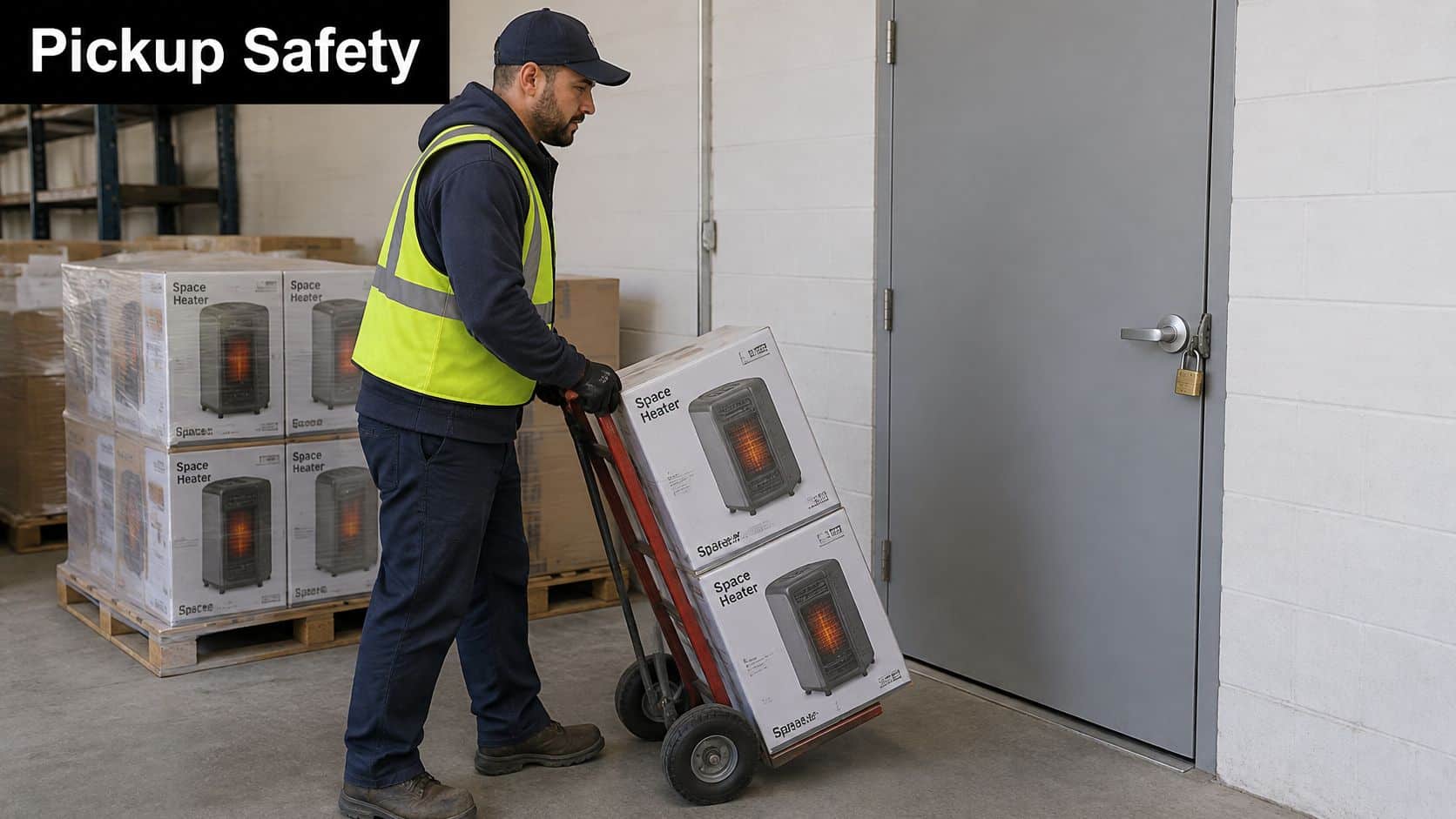
Before booking, establish whether the units qualify for collection or must be delivered, and whether installed equipment needs de-installation. We accept appliances by drop-off only; appliance pickups aren't available. Our technicians can de-install equipment when necessary, but that service doesn't override appliance transport restrictions.
Use the recalled appliance disposal service information to frame the acceptance discussion. Get the equipment classification and delivery arrangements in writing before hiring a carrier or assigning loading staff.
Prepare the shipment against its classification
Have your environmental lead determine the applicable waste category and state requirements. Not every discarded heater is automatically universal waste, and a universal-waste label doesn't establish that classification.
- Packing. Secure accepted units against movement, protect cords from impact, and prevent accidental energization. Use carrier-approved crates or containers; don't improvise airtight containment for fuel-bearing or unstable equipment.
- Labeling. For material managed as universal waste, use the applicable waste-category wording and identify contents and accumulation dates. Keep lot identifiers visible without covering product labels.
- Accumulation. Under the EPA universal-waste rules, a handler generally may accumulate universal waste for no longer than one year from generation or receipt from another handler.
- Destination. Verify the receiving facility's authority to accept the classified material, including hazardous-waste receiving status where applicable.
- Release response. Define containment, notification and stop-work procedures. Ensure the carrier has suitable response equipment and instructions rather than expecting the driver to improvise.
- Handoff. Record the carrier, signer, destination and document identifying each container.
Don't load a shipment whose receiving facility hasn't accepted its condition and waste classification.
Keep unrelated equipment streams separate
If the project includes HVAC equipment, Covenant Aire Solutions' explanation of what R410A changes mean for homeowners provides separate refrigerant context. It isn't a heater recall shipping procedure, and refrigerant equipment needs its own assessment.
For cross-border transfers, the EPA universal-waste questions and answers explain that applicable import and export controls can remain relevant despite recycling intent. Resolve destination approvals and shipment documentation before dispatch.
Building the Disposal Record Your Auditor Will Request
Records to keep for each recall
| Record | What it proves | Example entry |
|---|---|---|
| Recall notice and remedy | Which instructions applied to the units | CPSC notice with recall number and remedy wording |
| Model, serial or date code | Each unit matched to the recall | Label photo plus corresponding lot-register entry |
| Intake condition record | Units were assessed before transport | Intact, damaged or leaking, with date and inspector |
| Photos of destruction or cut cord | The required remedy step was carried out | Dated photo set tied to units or an authorized lot |
| Transport record and manifest | Custody passed between sites without gaps | Carrier name, transfer date and unit count |
| Certificate of recycling or destruction | Final disposition of each load | Certificate from the processing facility |
Make the file retrievable by recall and lot
Create a controlled folder for each recall, with subfolders for notices, inventory, photographs, manufacturer correspondence, transfers and final certificates. Use the recall identifier and lot identifier consistently in filenames. Keep an unchanged copy of the original notice alongside later manufacturer clarifications.
The lot register should connect every asset to its remedy and outcome. If a load splits between manufacturer returns and recycling, record the split explicitly rather than marking the entire lot disposed. Reconcile outgoing quantities against accepted, rejected and returned quantities before closing the work order.
Our certificate of destruction for recalls service should be scoped against that register. Specify the destruction method and identifying information needed in the agreement so the final evidence answers the organization's actual audit questions.
Distinguish a guarantee from processing evidence
Our certificates of recycling and data destruction are contractual written guarantees that equipment will be disposed of responsibly. File them with the contract and transfer order, not in an isolated vendor email chain. A certificate of recycling and data destruction is issued for every load of equipment picked up, allowing the manager to document individual lots rather than rely on an overall project total.
Read what the certificate confirms. Product destruction, material recovery and data destruction are different activities; a conventional heater doesn't automatically require storage-media sanitization. For combined computer recycling or laptop disposal projects, keep data-bearing asset records distinct from heater destruction records.
Audit check: A complete-looking folder can still fail to connect the original unit to its final disposition.
Treat missing cut-cord photographs and absent intake records as priority gaps. A final recycling certificate can't recreate evidence the manufacturer required before processing, and an unsigned transfer receipt won't establish who accepted custody.
Have legal or insurance staff set the retention period before the first shipment leaves. Assign a record owner and backup who can retrieve the complete file after facilities staff or vendors change.
Confirm Your Disposal Plan Before the First Pickup
Approve the plan only when the remaining decisions have named owners and written answers. A clear work order should let procurement, facilities and the receiving team agree on what will move, how it will move and what evidence will close the job.
- Credentials reviewed. Retain the relevant current certification documents and a sample certificate showing the proposed scope.
- Destinations named. Identify the receiving organization for every route, including manufacturer returns and specialist-managed exceptions.
- Responsibilities assigned. Name the person responsible for transport coordination, waste classification and applicable accumulation duties.
- Acceptance settled. Confirm which material is eligible for pickup and which requires drop-off or a separate specialist arrangement.
Send a booking request the team can act on
Prepare the unit count, model list, official recall notice, selected remedy route and dated condition photographs. Add site access details and identify any installed equipment requiring technicians. This gives the receiving team enough information to assess scope and quote the work without guessing what “old heaters” means.
Customers can request recycling pickup or drop-off by phone, email or online form. Use the contact option on the company website and request written acceptance before confirming transport; appliance loads require drop-off rather than pickup. Direct questions and recycling requests to 404-905-8235 before booking.
Contact Beyond Surplus for certified electronics recycling and secure IT asset disposal.
Beyond Surplus offers commercial electronics recycling, secure IT asset disposal and documented product destruction, with recalled heaters subject to remedy review and appliance drop-off rules. Visit Beyond Surplus to submit your inventory and recall notice, confirm acceptance, and arrange the appropriate next step before authorizing destruction.


