

Atlanta runs roughly 4% below the U.S. average overall and about 4% above the Georgia state average. That sounds like a bargain until you look at housing, because housing is the line item that decides whether Atlanta feels affordable or just cheaper on paper.
The Headline Number and Why It Misleads
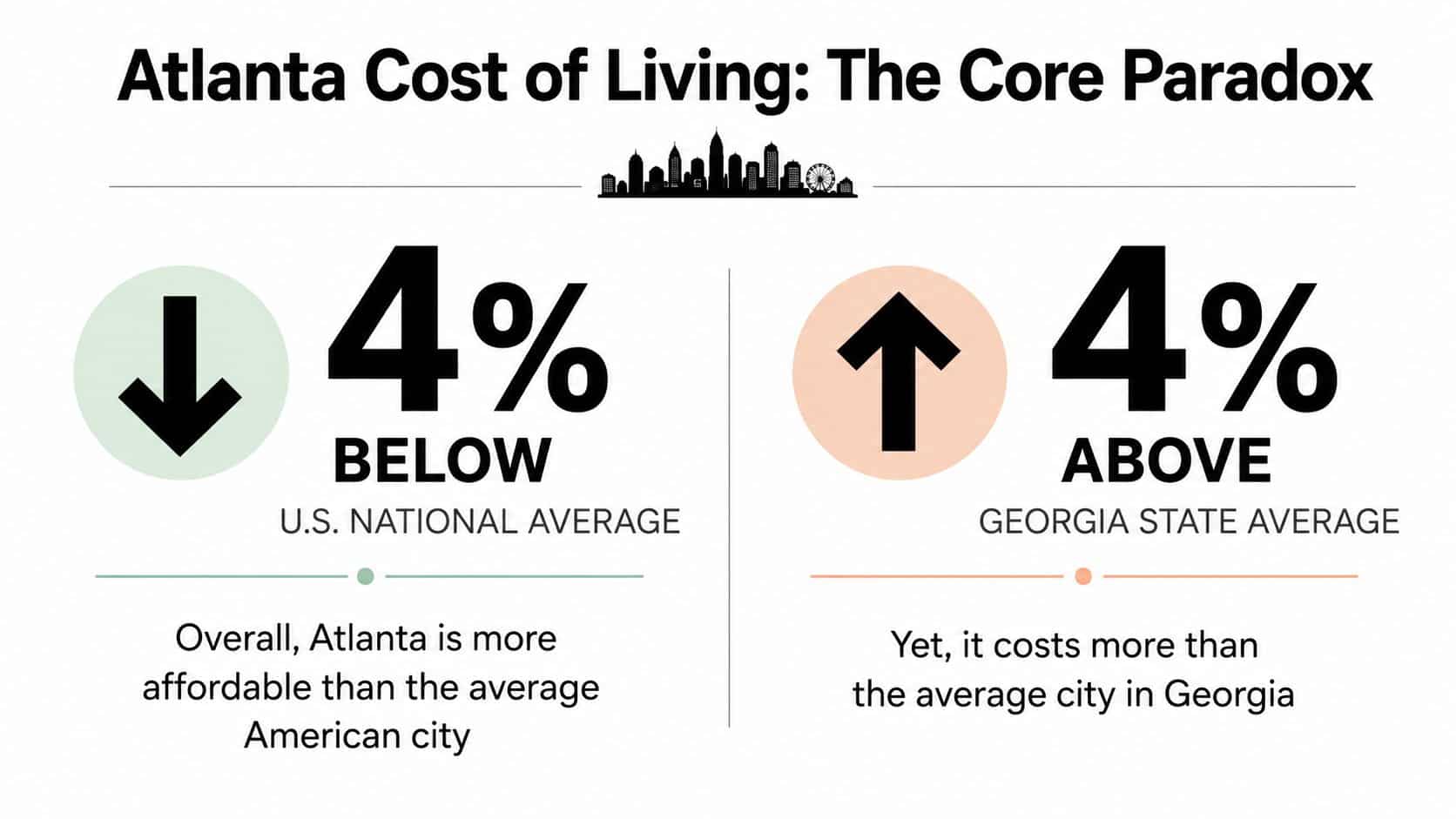
A relocating family can hear that Atlanta sits around average and still make the wrong call. A cost-of-living index is a weighted snapshot, not a household budget, and Atlanta's recent readings sit in the high-90s to low-100s range, with sources placing it around 98 to 100.4 depending on methodology and date Axios.
What the index hides
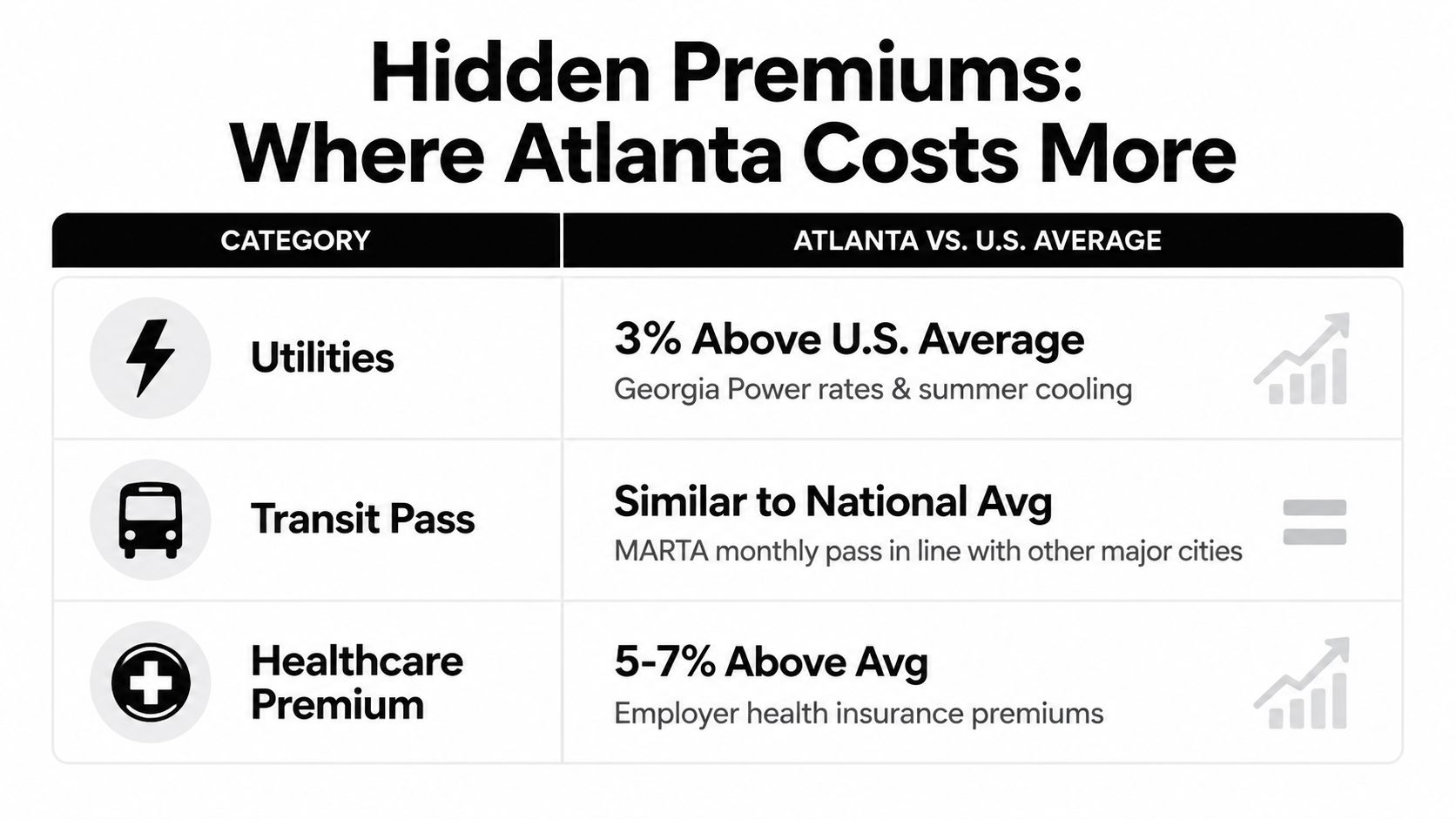
The core issue is category divergence. Atlanta can look manageable overall while still hitting harder in the lines that matter most to renters, drivers, and anyone carrying regular medical costs. One benchmark says housing is 16% cheaper than the U.S. average, but utilities are 3% higher, groceries 1% higher, healthcare 5% higher, and transportation 3% higher RentCafe. That mix is why a citywide score can mislead anyone who commutes, drives, or needs regular care.
Practical rule: Don't budget from the headline index. Budget from the categories that hit your bank account every month.
If housing stays below your income ceiling, Atlanta can work. If it does not, the utility, transport, and healthcare premiums show up fast. That is the point behind the Atlanta Cost of Living: What You Need to Know search query, and the reason a relocation decision should start with the monthly line items, not the summary score.
Atlanta's affordability story also changes once you compare it with the rest of Georgia. The city can cost less than the national average and still cost more than the state average, which is why people moving from smaller Georgia markets often get a budget shock even when the metro looks reasonable on paper. Atlanta's economy keeps pulling people in, and that steady inflow raises pressure on housing, commutes, and business overhead Atlanta's economic growth and why the metro keeps drawing relocations.
Housing Costs That Drive Every Other Line
Housing sets the budget in Atlanta. A 2025 relocation guide placed Atlanta's median list price just over $405,000 in April 2025, still 2% to 7% below the U.S. median but about 10% above Georgia's statewide average Elite Property Management USA. Another calculator put the median home cost at $364,300 and the median rent at $1,494 in January 2025 RentCafe.
Why the average rent doesn't tell you enough
A one-bedroom in the city core can run around $1,600 in one guide, while another source puts a one-bedroom at roughly $1,500 to $2,000+ per month depending on location Elite Property Management USA Wise. That spread is the critical decision point. The citywide average looks manageable, but the lease you sign depends on neighborhood, building age, parking, and how close you want to stay to the core.
The old 30% housing rule still works as a quick screen, but Atlanta punishes anyone who treats it like the whole budget. If housing climbs past that line, the rest of the month gets tighter fast. Wise also notes housing takes about 33% of metro household budgets, or nearly $28,000 per year, which explains why many clients feel squeezed before they even price parking, gas, and insurance Wise.
If you're comparing offers, start with the rent number, not the salary headline. The lease decides the rest.
Midtown and Buckhead stay expensive because convenience costs money. Tight supply and proximity premiums keep those rents high, and that pressure spills into office-space decisions, commute choices, and even IT logistics for businesses that need staff near client sites or data center access. If you want a clean read on Atlanta, compare your target rent with your actual take-home pay, then test it against the neighborhood commute and the operating costs that come with it.
The housing squeeze is not just a renter problem. It also shapes how companies choose office footprints, how far employees are willing to drive, and how much slack a relocation budget really has. A closer look at the Atlanta real estate outlook for 2026 and how housing pressure shapes decisions shows why the cheapest-looking lease can still become the most expensive one once you factor in time, transport, and business overhead.
Neighborhood Tradeoffs Across Metro Atlanta
The same income buys very different lives depending on where you land. A Midtown or Buckhead lease can feel efficient because you're close to work, but you'll pay for that convenience. An outer-suburb lease may look cheaper on paper, but the commute and car costs can erase a chunk of the savings.
| Area Type | 1-Bedroom Rent | Avg Commute | Best Fit |
|---|---|---|---|
| Midtown or Buckhead | About $1,968 | Shorter, easier access to core jobs | Professionals who value time |
| Outside center | About $1,533 | Moderate | Budget-conscious renters who still want city access |
| Cobb, Gwinnett, or DeKalb suburb | Lower than core areas, varies by corridor | Longer | Households willing to trade time for space |
Atlanta affordability also doesn't behave evenly across the map. JPMorgan Chase says housing affordability is worsening in Atlanta, especially in lower-income and suburban areas, and the Atlanta Regional Commission says metro cost of living is rising JPMorgan Chase. That matters because the cheapest-looking lease can come with the longest drive and the highest monthly friction.
Use a rent-versus-commute lens
If your housing cost stays below 30% of gross income, the city's near-average overall index can still work in your favor. If it climbs above that, transportation and utility premiums start eating the gap. That's the decision lens most relocation guides skip, and it's the one that protects your budget.
Affordable Atlanta suburbs with stronger quality-of-life tradeoffs
Real Monthly Budgets for Three Atlanta Households
A single professional earning about $60,000 a year needs a month-by-month plan, not assumptions. A reasonable budget can still include $1,500 in rent, then utilities, groceries, transit or car costs, and healthcare. The problem is the rest of the paycheck disappears fast once rent climbs, and a single adult's non-rent spending can easily sit around $1,330 per month according to RentCafe. Use that figure as the warning sign. Housing choice decides whether the rest of the budget stays usable or gets squeezed.
The three common budget shapes
A family of four needs a different setup entirely. RentCafe puts non-rent monthly spending for that household at about $4,800. Families do not get rescued by Atlanta's average score. They get helped by strict housing discipline, school-zone planning, and avoiding a commute pattern that adds fuel, parking, and time costs every month.
A remote employee usually has the cleanest tradeoff. A lower mortgage or rental payment farther from the core can work, but only if the commute stays limited and the neighborhood does not pile on transportation overhead. Atlanta rewards people who separate where they sleep from where they work. It punishes people who ignore the monthly cash flow and then act surprised when the budget breaks.
For households trying to keep day-to-day spending under control, budget-minded ways people still make Atlanta work day to day is a useful reminder that the savings come from routine choices, not luck. A cheap lease without a plan is not a bargain.
Utilities, Transit, Healthcare, and the Hidden Premiums
Atlanta's quiet costs are the ones that squeeze a budget. Utilities run hotter in the summer because cooling demand rises, commuting gets expensive fast if you rely on a car every day, and healthcare bills can turn a careful monthly plan into a mess. Rocklyn Homes places transportation a little above the national average, which matches what many households feel once fuel, parking, and maintenance show up together. Those gaps are not dramatic on paper. They are annoying in real life because they hit the same paycheck at the same time.
Where the cash-flow trap starts
The trap is simple. A cheap-looking apartment can still cost more once you add electric bills, a longer commute, and a healthcare plan with real out-of-pocket exposure. Summer cooling bills punish units with poor insulation, and a car-dependent setup adds fuel, parking, and maintenance whether you like it or not. A household that ignores those recurring charges ends up trading rent savings for operating costs.
Healthcare deserves its own budget line, not a leftover category. Premiums, copays, prescriptions, and surprise bills are where people lose control, especially after a job change or a plan shift. If you need a practical reference for what medical debt can do to a household, the Georgia medical debt relief guide explains why medical costs deserve the same attention as rent.
For workers who want to keep transportation lean, the better move is to choose a neighborhood that reduces car dependence, then protect that advantage with a short commute and a realistic parking plan. That matters just as much for a person billing clients downtown as it does for a small business that has to manage office access, equipment runs, and staff arrival times. A cheap lease on the wrong side of town can erase savings through daily driving costs before anyone notices. If you are comparing compensation packages, use a local lens and review Atlanta hiring expectations and job-market signals before you assume the paycheck will cover the full cost of living.
Atlanta also has hidden premiums beyond the household line items people usually track. Office space, data center logistics, and IT asset disposal compliance all get more expensive when the commute pattern, neighborhood choice, and building access rules are poorly matched to the workday. A lease that looks fine on rent alone can create recurring costs in parking, courier time, equipment handling, and disposal logistics. The highest monthly bill is often the one nobody put in the original spreadsheet.
Salary Benchmarks That Actually Work in Atlanta
A $60,000 salary can work in Atlanta, but only if housing stays controlled. A $90,000 salary gives you more room, yet the difference between a smart lease and a careless one still decides how much cash is left after healthcare and transportation. At $130,000, Atlanta feels comfortable, but not because the city is cheap. It feels comfortable because the paycheck can absorb the metro's mixed cost structure.
Read the offer, not just the number
A single professional should look at any offer through a housing-first lens. If rent is near 30% of gross income, the rest of the budget still has to cover the above-average utility, healthcare, and transportation premiums already noted in the earlier section. A family of four needs an even tighter standard, with housing kept around 28% of household income so childcare and savings don't get squeezed out.
Atlanta also needs to be compared correctly. The same salary stretches farther here than in Boston or San Francisco, but the gap narrows when you compare Atlanta with other Sun Belt cities. That's why salary negotiation in Atlanta should always use metro-specific housing and commute assumptions, not national averages.
What Atlanta employers expect from candidates in the local job market
Business Costs Atlanta Companies Pay
Atlanta business budgets live or die on operating detail. Office space in Midtown, Buckhead, and the suburbs changes the whole cost stack, and the largest mistake I see is treating IT and logistics as side items. That is where companies get hurt, because data center deinstallation, secure IT asset disposal, certified data destruction, and product destruction are compliance-driven tasks, not junk-haul chores.
What a serious disposal partner should provide
A business should demand chain-of-custody documentation, on- or off-site hard drive shredding, certified data wiping, and reliable pickup logistics. Those are not extras. They are the controls that protect customer contracts and internal risk management, especially when disposal has to line up with the FTC Disposal Rule and other privacy obligations.
Cheap disposal is usually the expensive choice. One missed certificate, one bad handoff, or one weak wipe process can cost far more than the vendor saved you on pickup.
For Atlanta firms with distributed offices or server closets, a specialist matters. Beyond Surplus is an Atlanta-based ITAD and electronics recycling company with a Smyrna facility and nationwide pickup for organizations, so the question is not just where the equipment goes, it is whether the process leaves you with the paperwork you need.
If your team also handles asset resale, the partner decision should cover that workflow too. A vendor that can manage secure disposition and guide you toward the best places to sell loose diamonds keeps the process cleaner when valuable items, records, and compliance duties all sit in the same move cycle.
How to evaluate a disposal partner before the next refresh cycle
Practical Checklist Before You Sign Anything
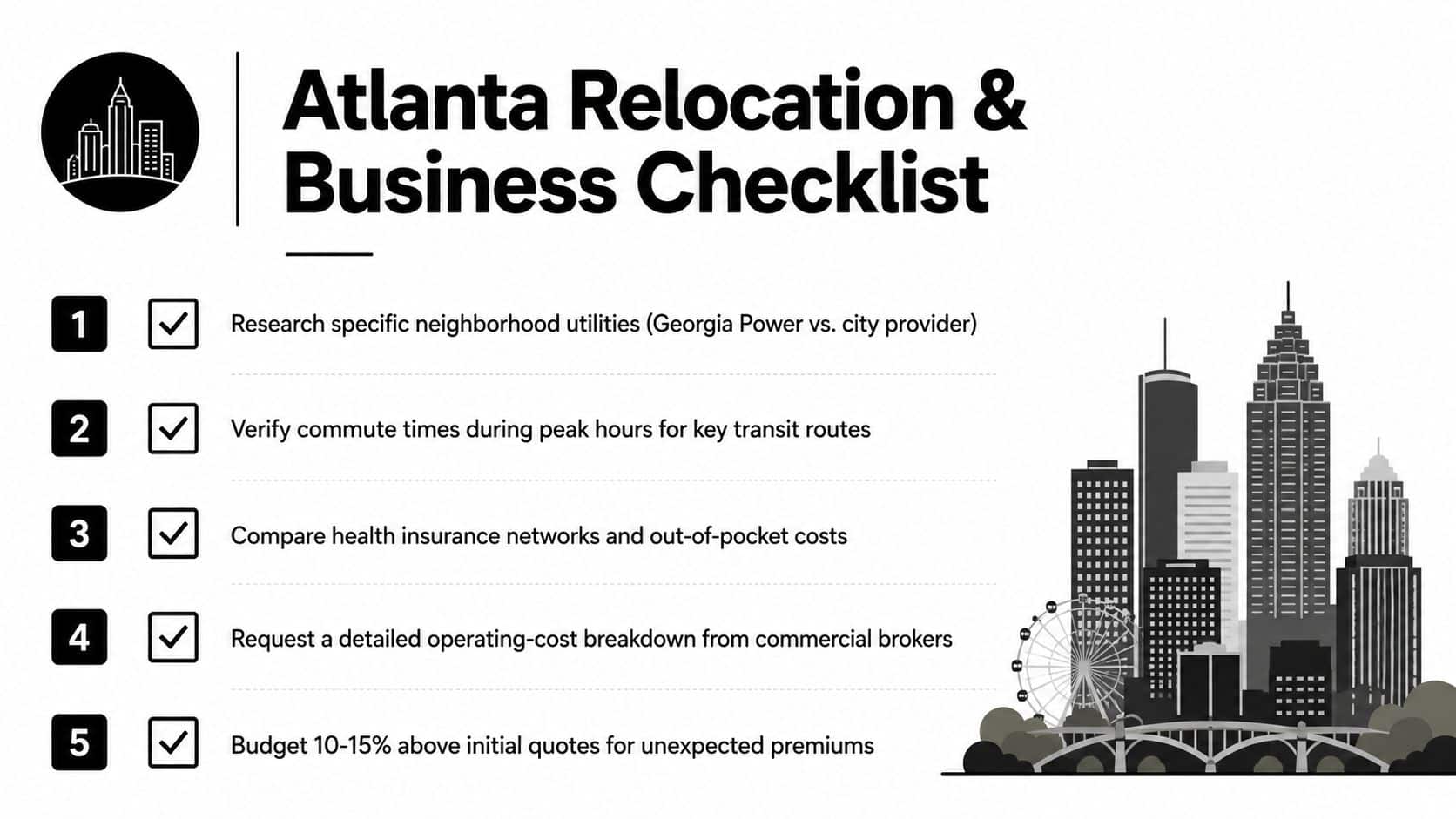
Before you sign a lease, accept an offer, or open an office, run these checks with real numbers, not citywide averages.
- Confirm neighborhood rent first. Use the exact building, block, and commute path you plan to live or work in, because one cheap listing can hide a costly location tradeoff.
- Stress-test housing at 30% of gross income. If your monthly housing cost pushes past that point, the rest of the budget gets tight fast.
- Price utilities, commute, and healthcare together. Atlanta's above-average premiums are manageable on their own, then they start to bite when they hit the same month.
- Compare peak-hour commute times. The cheapest address means nothing if the drive breaks your schedule or forces extra transit costs.
- Line up disposal and recovery planning early. For businesses, secure a certified electronics recycling and IT asset disposal partner before the first workstation reaches end of life, and make sure asset resale routes are mapped too, including the best places to sell loose diamonds if valuable items are part of the move cycle.
If you are making a relocation or office move decision, demand a real plan instead of a glossy promise. Review your lease, your commute, your staffing plan, and your end-of-life technology workflow together, then choose the option that protects cash flow and compliance. For secure electronics recycling, certified IT asset disposal, and enterprise logistics across Georgia and nationwide, visit Beyond Surplus and put the process in place before the move gets expensive.


