

A law firm's technology refresh often starts with a familiar sight: laptops stacked in a conference room, an aging server waiting for removal, and printers or copiers that still contain stored documents. The hardware may be obsolete, but the information on it may still include privileged communications, litigation files, financial records, and regulated personal data. A responsible disposition process must protect that information before equipment leaves the firm's custody.
Secure Electronics Recycling for Legal Firms is therefore more than a recycling project. It combines data sanitization, asset recovery, controlled logistics, environmental compliance, and evidence-quality documentation. The process should give the managing partner, IT team, and compliance staff a clear answer to one question: what happened to every device, and what records prove it?
Table of Contents
- Why Secure ITAD is Non-Negotiable for Law Firms
- Building Your Defensible Disposition Policy
- Executing Data Sanitization and Asset Inventory
- Selecting and Vetting Your ITAD Partner
- Mastering Chain of Custody and Documentation
- Establishing Audits and Continuous Improvement
Why Secure ITAD is Non-Negotiable for Law Firms
An office refresh creates a chain of decisions that can expose the firm if nobody owns the final one. IT may remove a laptop from the network, facilities may move it to storage, and a general recycler may later receive it. Each handoff creates an opportunity for lost inventory, unauthorized access, or incomplete records.
Retired electronics aren't harmless because employees no longer use them. Solid-state drives, hard drives, multifunction printers, servers, and removable media can retain information after ordinary deletion. A laptop might hold local case files, browser credentials, synced cloud folders, or email attachments. A copier may retain scanned documents in internal storage. The firm's duty to protect confidential information continues through disposal.
The environmental context makes the operational problem larger. The world generated a record 62 million metric tons of e-waste in 2022, while only 22.3% was formally collected and recycled in an environmentally sound way, according to the UNEP e-waste statistics guidance. The same source projects 82 million metric tons by 2030, which means organizations will face increasing pressure to manage retired electronics securely and responsibly.
Practical rule: Treat every retired device as both an information asset and an environmental asset until documented processing proves otherwise.
The legal and operational exposure
Improper disposal can create several forms of liability at once:
- Confidentiality risk: Client information may be exposed through recoverable storage or mishandled equipment.
- Compliance risk: The firm may struggle to show that its disposal method was reasonable and controlled.
- Discovery risk: A device holding relevant information may be discarded without a defensible record.
- Reputation risk: Clients expect their counsel to protect sensitive information throughout the information lifecycle.
- Environmental risk: Unverified downstream handling can undermine sustainability commitments.
A review of data security risks from improper computer disposal can help the firm's leadership connect hardware retirement with broader information-security controls. The key management decision is simple: secure disposition belongs in the firm's risk program, not only in the IT department's task queue.
Building Your Defensible Disposition Policy
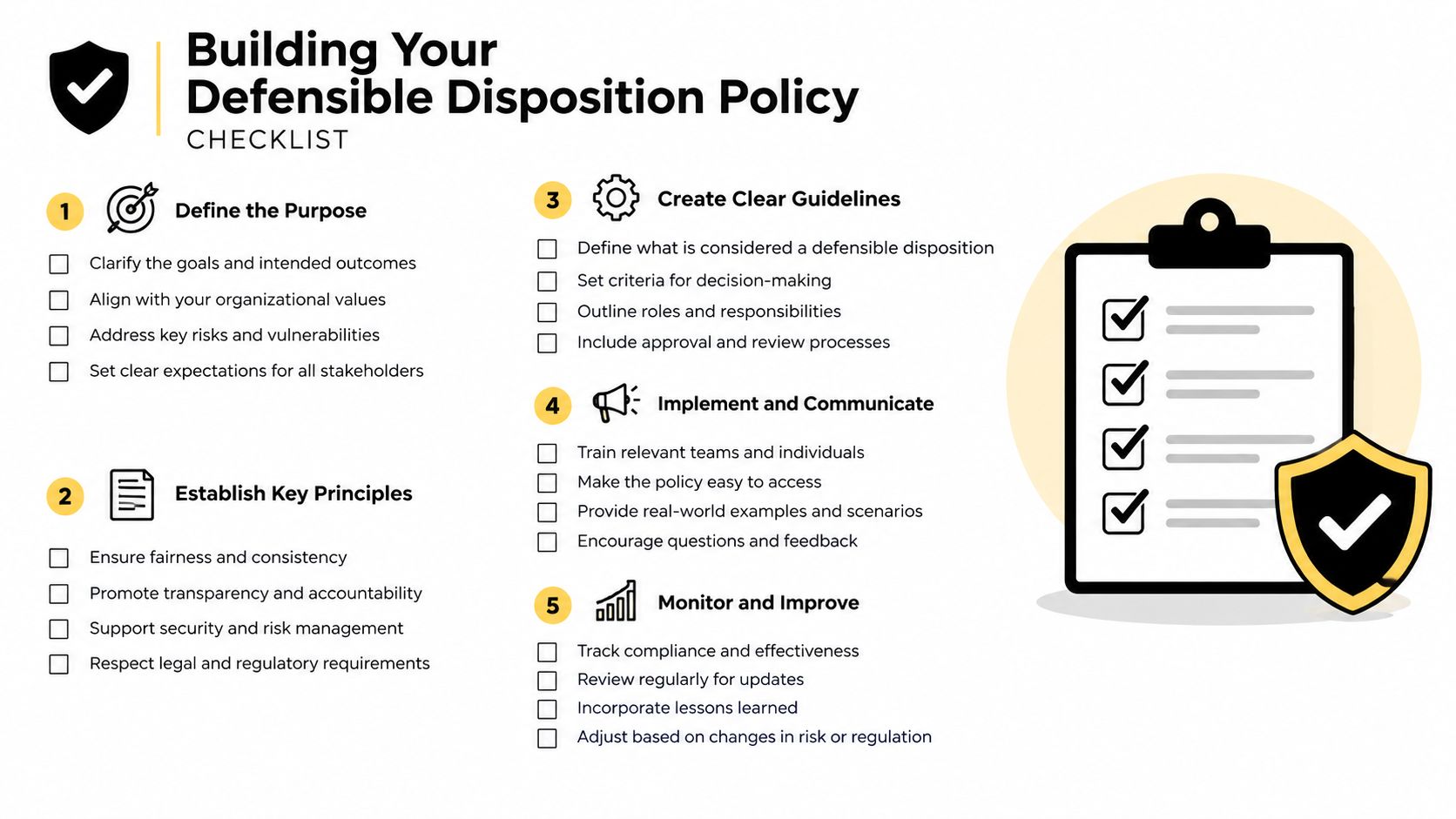
A defensible program begins with a written policy that removes guesswork. The policy should apply to the equipment the firm uses, including laptops, desktops, servers, monitors, mobile devices, printers, copiers, networking equipment, storage media, and technology removed during a data center decommissioning.
Define ownership before equipment moves
Assign responsibility at each stage. IT should identify devices and confirm whether they contain storage. Information governance or records personnel should address retention holds and matter-specific requirements. Facilities should control physical staging areas, while procurement or vendor management should verify outside providers.
The policy should also define an approval point. A device must not move from active use to recycling, resale, donation, or product destruction until the firm confirms that retention requirements, litigation holds, and data-sanitization decisions have been addressed.
The U.S. FTC Disposal Rule became effective on June 1, 2005 and requires entities handling consumer report information to take reasonable measures against unauthorized access during disposal, as described in the Global E-waste Monitor compliance discussion. For a law firm, documented procedures help demonstrate that “reasonable” measures were part of a repeatable governance process.
Specify the required evidence
A policy should state what records the firm expects from internal staff and vendors. At minimum, establish requirements for:
- Asset identity: Manufacturer, model, asset tag, and serial number where available.
- Custody events: The people, locations, and dates associated with collection and transfer.
- Data treatment: The selected sanitization method and its outcome.
- Final disposition: Reuse, resale, recycling, component recovery, or destruction.
- Exceptions: A written explanation whenever the standard process cannot be followed.
The policy should address paper records and electronic media together. The FTC says reasonable disposal methods may include shredding paper records and destroying or erasing electronic files or media so they can't be read or reconstructed, as explained in the FTC Disposal Rule guidance. The rule's scope can also include the sale, donation, or transfer of computer equipment containing consumer-report information, according to the SEC-published rule language.
For firms building a broader governance framework, building a records management program provides useful context for connecting retention, access, and destruction decisions. Your ITAD policy should fit that records program rather than operate as an isolated document.
Executing Data Sanitization and Asset Inventory
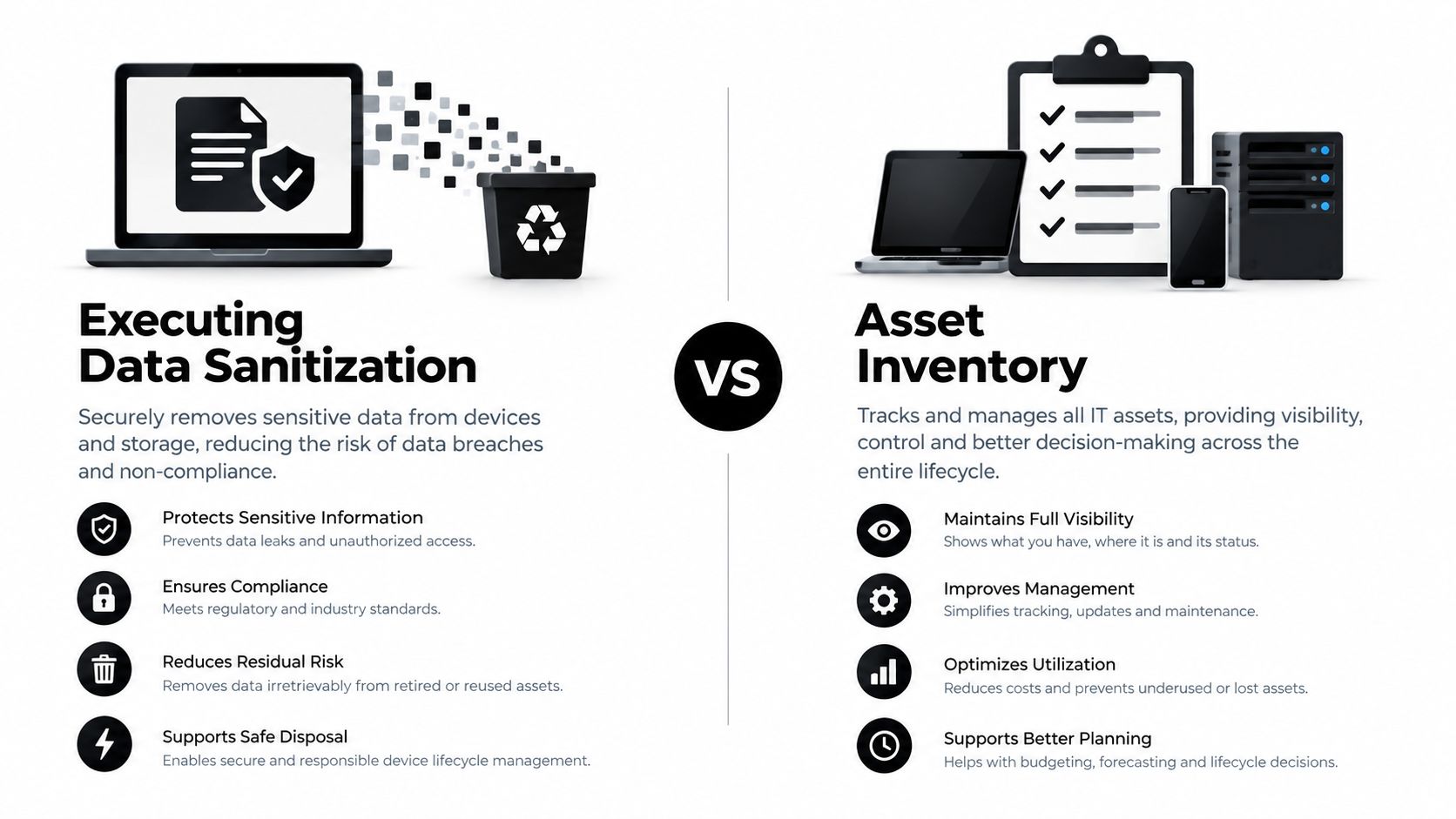
The technical decision isn't “erase or shred.” It's whether the selected outcome is appropriate for the device, the data, and the custody conditions.
NIST SP 800-88 Revision 2 was finalized in September 2025 and is referenced as a recognized method standard for wiping and destruction in current ITAD guidance. The practical distinction is between Clear, Purge, and Destroy outcomes. Clear uses logical techniques to remove ordinary access to data. Purge applies stronger sanitization intended to make recovery infeasible using appropriate techniques. Destroy physically renders the media unusable.
Match the method to the risk
Physical destruction offers a straightforward endpoint for media that presents high sensitivity, uncertain condition, or unacceptable recovery risk. On-site hard-drive shredding can also reduce the time that storage media remains in transit. The trade-off is that destroyed components generally lose resale and reuse potential.
Verified wiping can make sense for functioning laptops, desktops, servers, and mobile devices that may retain value. It supports reuse or resale, but only when the firm receives reliable evidence that the process succeeded. A “destroy everything” policy may be unnecessarily expensive and environmentally wasteful. Guidance referencing NIST SP 800-88 distinguishes Destroy from Purge/Clear, allowing some devices to be securely wiped and reused when the process is verified and documented, as outlined in this ITAD compliance analysis.
The decision should account for:
- Data sensitivity: Consider privileged material, personal data, financial information, and regulated records.
- Media condition: Damaged or inaccessible storage may require destruction.
- Custody risk: Use stronger controls where transportation or downstream handling is difficult to verify.
- Residual value: Preserve reusable equipment only when the security outcome remains defensible.
- Documentation quality: Reject any method that can't produce device-level evidence.
The firm's NIST 800-88 data destruction standards guide can support internal discussions about selecting an appropriate outcome.
Build the inventory before collection
Start with an export from the firm's asset-management system, then reconcile it against the physical fleet. Record asset tags and serial numbers, storage type, assigned user or department, location, and disposition status. Include devices held in closets, remote offices, litigation-support rooms, and employee return shipments.
Don't close the inventory when a truck leaves the loading dock. Keep the record open until the firm receives sanitization evidence and final disposition documentation. Missing serial numbers, unexplained quantity changes, and generic weight receipts are control failures that should be investigated before the project is closed.
Selecting and Vetting Your ITAD Partner
The vendor's capabilities determine whether the firm's policy works outside its own walls. Price matters, but it shouldn't outrank data controls, downstream accountability, and documentation.

Use a vendor scorecard
Ask each provider to demonstrate how it handles the specific equipment in your fleet. A credible review should cover:
- Relevant certifications: Confirm current R2v3 or e-Stewards certification where applicable, and ask what facilities and processes those certifications cover.
- Data destruction: Request the exact wiping, purging, and destruction methods used for different media types.
- Chain of custody: Review how assets are labeled, sealed, transported, received, and reconciled.
- Insurance: Verify coverage for data incidents, transportation, general liability, and errors or omissions.
- Downstream controls: Ask who processes material after the primary vendor and how those parties are vetted.
- Reporting: Require sample asset-level reports before signing a contract.
- Operational capacity: Confirm the vendor can handle office pickups, remote returns, server removals, and specialized equipment without combining uncontrolled workflows.
A vendor should answer these questions with evidence, not broad assurances. For a deeper evaluation framework, the Ares resource on risk scoring for legal vendors can help procurement teams compare providers consistently.
Put obligations into the contract
The agreement should identify the vendor's responsibilities and the evidence it must produce. Include requirements for serial-number reconciliation, approved subcontractors, incident notification, secure transportation, data-sanitization verification, and environmental processing.
Specify that the firm retains audit rights and can request downstream documentation. Require written approval before assets are transferred to another processor, and define what happens when an item arrives without a readable serial number or fails sanitization.
The questions to ask before hiring an ITAD company can help the managing partner and procurement team prepare for vendor interviews. Beyond Surplus is one example of a provider offering business IT equipment disposal, secure data wiping, hard-drive shredding, asset recovery, and certificates of recycling and data destruction. Evaluate it, like any provider, against the firm's documented requirements.
Mastering Chain of Custody and Documentation
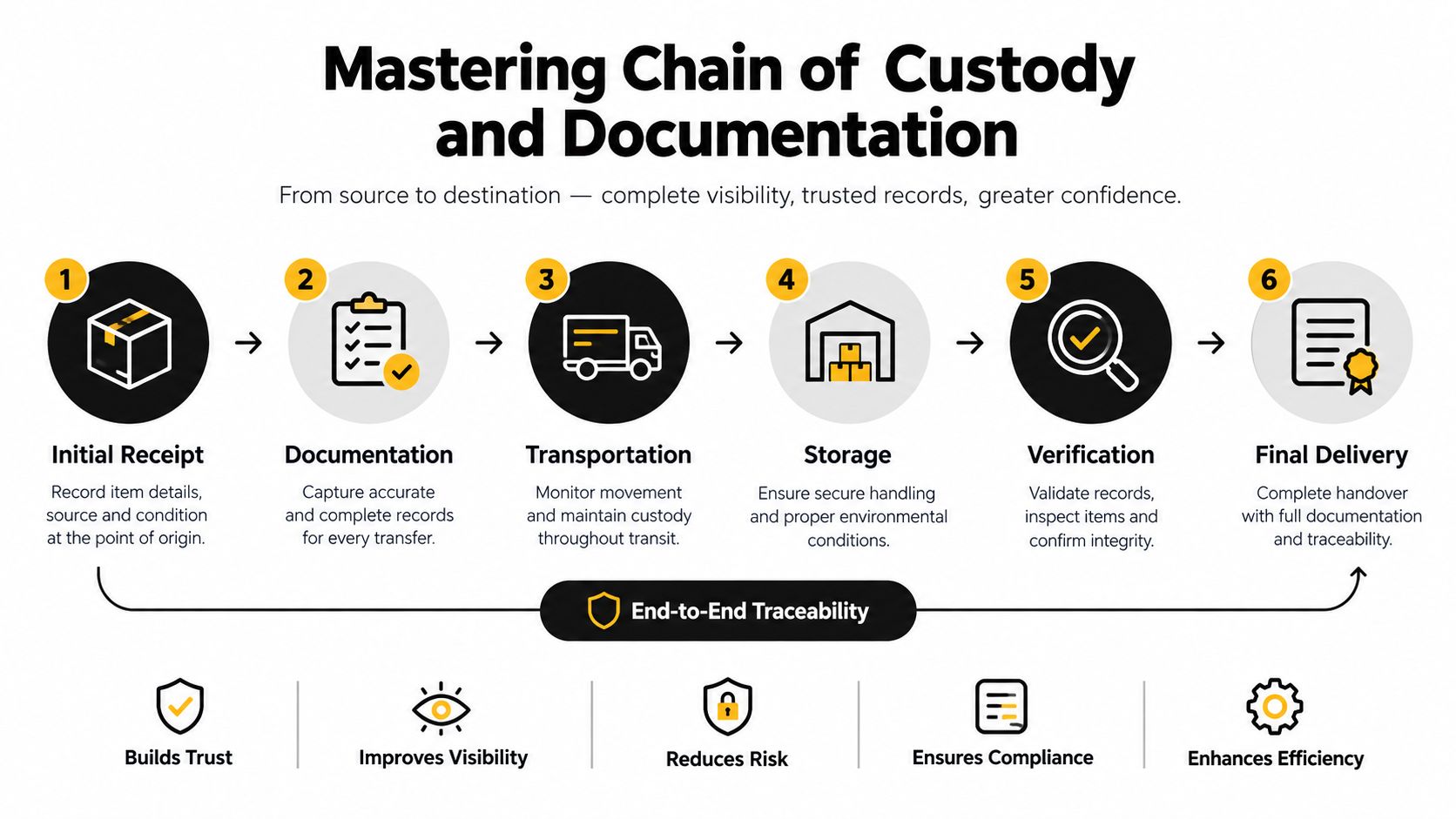
A recycling receipt confirms that material entered a recycling stream. It doesn't necessarily prove that a particular hard drive was sanitized before transfer, or that every device in the firm's inventory reached its stated outcome.
The evidence needs to connect the physical asset to the action performed. That connection begins when the firm marks a device for retirement and continues through pickup, processing, sanitization, resale or destruction, and final reporting.
Separate recycling proof from destruction proof
A certificate of recycling is often insufficient for modern data-destruction obligations. Guidance for DPDPA-style compliance calls for device-level records containing the serial number, method, date, and operator details, with detailed audit trails retained for at least three years, as described in this data-destruction compliance guidance.
A defensible Certificate of Data Destruction should identify each asset or clearly reconcile it to an attached inventory. It should state the sanitization outcome, the method used, the processing date, and the responsible operator or facility. If the firm relies on physical destruction, the record should identify the destruction event rather than merely reporting a combined weight.
Make exceptions visible
A good chain-of-custody file also records problems. If a serial number is unreadable, a drive fails wiping, an asset is missing from the pickup, or equipment changes disposition, the vendor should document the exception and the corrective action.
Use a controlled repository with restricted access. Link the certificate to the internal asset record, purchase or refresh project, and any relevant retention decision. Keep the record understandable to someone who wasn't involved in the original collection.
The certificate is not the process. It is the evidence that allows someone else to test whether the process worked.
The firm's chain of custody for IT asset disposal should reflect that principle. A complete file lets counsel, auditors, clients, and firm leadership trace what happened without relying on memory or informal email.
Establishing Audits and Continuous Improvement
Secure disposition weakens when it becomes a one-time campaign. Staff change, vendors change, storage technology changes, and office refreshes introduce new equipment that the original policy may not cover.
The managing partner or designated risk owner should schedule periodic reviews of the program. The review doesn't need to be complicated, but it should test the controls that matter.
Audit the complete lifecycle
Select completed disposition projects and compare the starting inventory with the final vendor report. Look for unaccounted assets, duplicate entries, missing serial numbers, unexplained exceptions, and certificates that identify only weight rather than individual devices.
Review whether the firm approved the disposition before collection and whether the selected sanitization method matched the device and data classification. Confirm that transportation records, destruction evidence, resale records, and downstream information are stored with the project file.
Update the policy from evidence
Use audit findings to revise procedures. If remote-worker returns create gaps, add a controlled shipping process. If multifunction printers are repeatedly omitted, add them to the inventory checklist. If vendors provide inconsistent reports, revise the contract and require a standard format.
Maintain the firm's compliance documentation resources as part of the wider governance system. The durable program has four connected elements: a written policy, accurate inventory, verified sanitization, and retrievable chain-of-custody evidence.
Train IT, facilities, procurement, records personnel, and office administrators on the handoff rules. A secure program works when every person who touches retired equipment knows what to record, what not to release, and whom to contact when the normal process fails.
Contact Beyond Surplus to coordinate secure electronics recycling, certified data wiping, hard-drive shredding, IT equipment disposal, and audit-ready chain-of-custody documentation for your law firm. Request a disposition plan that matches your device inventory, data sensitivity, and value-recovery objectives before your next technology refresh.


