An IT director is retiring 600 laptops across 14 clinics in eight states while finance closes the books at quarter-end. Facilities teams are waiting for pickup dates, security wants proof that every drive was handled correctly, and procurement needs one invoice instead of a pile of local exceptions. That's the moment Nationwide Electronics Recycling stops being an environmental slogan and becomes a logistics, compliance, and data-security decision.
The right provider gives you one accountable relationship for computers, servers, switches, medical equipment, laboratory equipment, printers, and other business electronics. The wrong one leaves you coordinating multiple vendors, reconciling inconsistent certificates, and explaining gaps when an auditor asks where a serialized device went.
Table of Contents
- What Nationwide Electronics Recycling Means for Your Business
- The Scope and Scale of Enterprise E-Waste
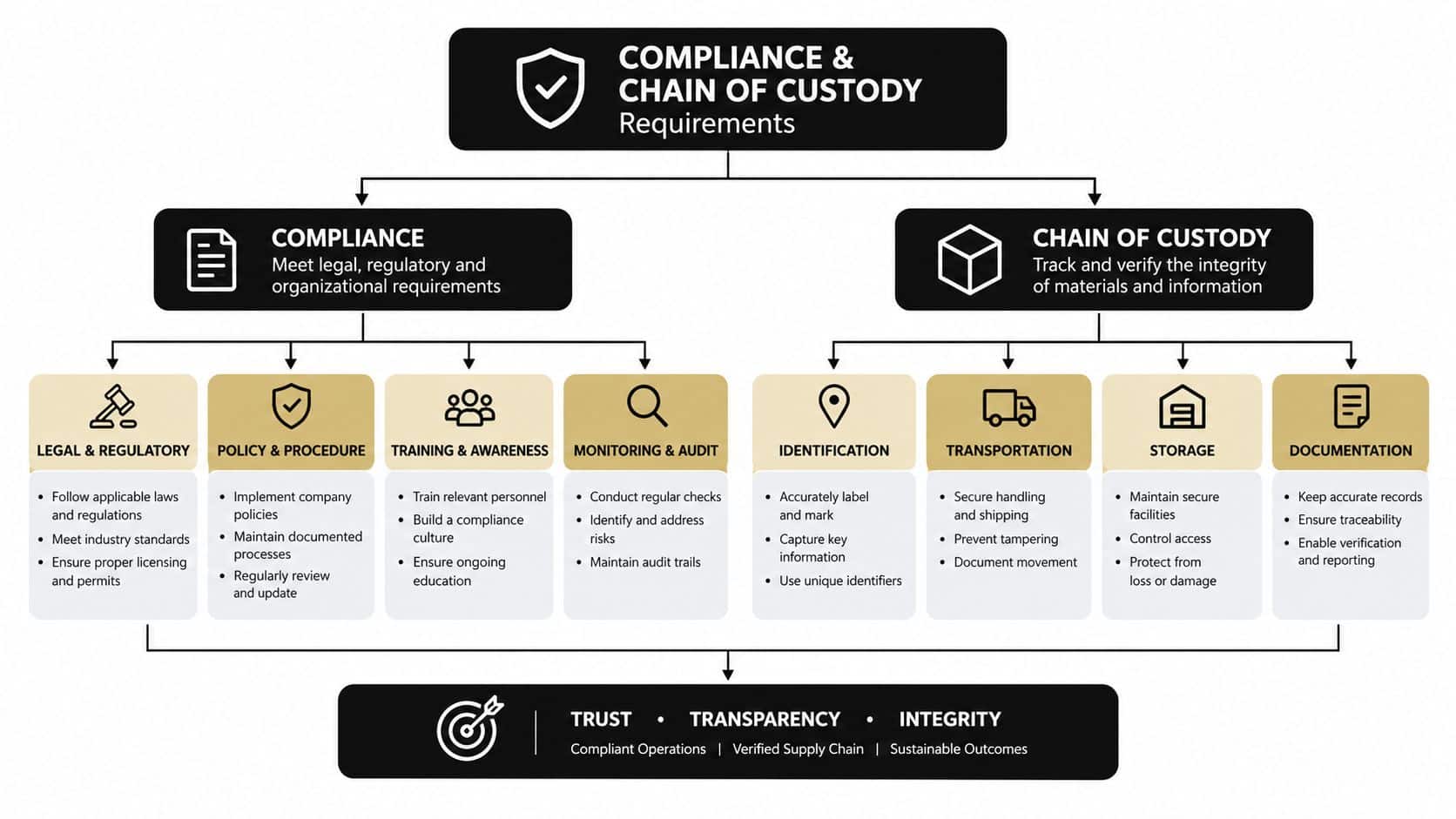
- Compliance and Chain of Custody Requirements
- Secure Data Destruction Options Compared
- Logistics and Pickup Models for Multi-Site Fleets
- Value Recovery and Buyback as a Disposal Strategy
- How to Vet an Electronics Recycling Provider
- How Beyond Surplus Delivers Nationwide Electronics Recycling
What Nationwide Electronics Recycling Means for Your Business
“Nationwide” should describe an operating model, not a marketing label. For an enterprise, it means one master service agreement, one escalation path, and consistent procedures across offices, clinics, warehouses, campuses, and data centers. The provider should be able to coordinate pickups, transport, processing, data destruction, value recovery, and final documentation across your footprint.
That matters because local recycling capacity varies. One office might have enough equipment for a scheduled pickup, while another may need consolidation before transport makes economic sense. A national program should manage that difference for you instead of forcing every site manager to negotiate separately.
The enterprise alternative to local vendor sprawl
Many organizations begin by calling three local recyclers. One offers computer recycling, another handles product destruction, and a third claims it can wipe drives. The result is often a patchwork of service terms, certificates, downstream processors, and data-destruction methods.
A coordinated program should give you:
- A single asset process: Each device enters the same intake, tracking, grading, destruction, and disposition workflow.
- Consistent documentation: Certificates of recycling, certificates of destruction, serialized reports, and shipping records follow an agreed format.
- Central accountability: One vendor owns exceptions, missed pickups, damaged freight, and documentation gaps.
- Site-level flexibility: A data center decommissioning project can use a different service tier from a small office refresh without creating a separate vendor relationship.
The global disposal challenge makes this operational discipline more important. The world generated 62 million tonnes of e-waste in 2022, equal to about 7.8 kilograms per person, while only 22.3% was formally collected and recycled in an environmentally sound way, according to the 2024 Global E-waste Monitor reporting. That volume includes the equipment businesses retire every day.
Advisor's rule: Choose a nationwide recycler for its control system first, then evaluate its recovery economics.
Your vendor relationship will be tested during an audit, a breach investigation, a facility closure, or an ESG reporting cycle. Start with the provider's ability to produce defensible records, then examine convenience and resale value.
For organizations comparing service coverage, nationwide computer recycling services should include more than transportation. The meaningful question is whether the provider can control every handoff from your site to final disposition.
The Scope and Scale of Enterprise E-Waste
A nationwide program has three operating dimensions: coverage, volume economics, and service depth. Procurement teams should test all three before signing an agreement.
Coverage comes first. Ask whether the provider directly serves all required locations, uses qualified transportation partners, or relies on unaffiliated drop-off sites. A provider may advertise national access while operating only along selected regional corridors. That distinction affects scheduling, chain of custody, insurance, and escalation.
Volume economics determine whether a truck should visit a site. A small office with a few laptops may need to accumulate equipment at a regional hub, while a warehouse or data center can justify palletized freight or a dedicated project. Your quote should state the minimum volume, access requirements, packing responsibility, and charges for failed or incomplete pickups.
Compare the provider tier to the asset problem
| Capability | Local Recycler | Regional ITAD | Nationwide Provider |
|---|---|---|---|
| Geographic coverage | One market or nearby area | Several connected markets | Multi-state or national footprint |
| Small office pickups | Often flexible | Usually available in core region | Available through scheduled or consolidated routes |
| Data center projects | Limited | Capable within region | Coordinated across locations and project phases |
| Data destruction | Varies by facility | Defined service menu | Standardized methods with centralized reporting |
| Value recovery | Basic commodity sorting | Resale and parts grading | Resale, parts harvesting, recycling, and reporting |
| Multi-site documentation | Site-specific | Regional reporting | Centralized program reporting |
| Best fit | One-site disposal | Regional refresh | Distributed enterprise fleet |
The provider's service tiers should also match the equipment. IT asset disposition is appropriate for resale-eligible laptops, desktops, servers, and networking hardware. Secure destruction fits obsolete, damaged, recalled, or sensitive equipment. Remarketing handles working assets that can recover value after testing and data sanitization.
The scale of the material stream supports a disciplined recovery strategy. Formal recycling avoided extraction of 900 million tonnes of primary ore and prevented 93 million tonnes of CO2-equivalent emissions in 2022, as reported in this e-waste and cybersecurity overview. Those lifecycle benefits are useful, but the procurement decision still starts with service fit.
Don't select a nationwide provider just because it accepts every category. Select one that can explain how each asset class moves, who handles it, and what record you'll receive.
Compliance and Chain of Custody Requirements
U.S. electronics recycling compliance is fragmented. The EPA says 25 states plus the District of Columbia have electronics recycling laws, while a Congressional Research Service report describes e-waste as unregulated at the federal level and identifies no federal requirement for commercial entities or households to recycle e-waste.
That combination puts more responsibility on the buyer. Your organization must understand the rules affecting each location, identify covered equipment, and retain evidence that the recycler processed assets responsibly. A national vendor can simplify execution, but it can't eliminate your obligation to choose a qualified provider.
What the chain of custody should show
Chain of custody is the serialized trail from pickup through transport, receiving, processing, data destruction, resale, recycling, or final disposition. At minimum, your records should connect:
- Asset identification: Manufacturer, model, serial number, asset tag, and site.
- Pickup evidence: Date, location, authorized handoff, pallet count, and bill of lading.
- Transport control: Carrier, shipment reference, receiving confirmation, and exception notes.
- Processing outcome: Reuse, resale, parts recovery, recycling, or destruction.
- Data evidence: Method, date, device identifier, operator or system record, and certificate.
- Final reporting: Certificate of recycling, certificate of destruction, and disposition summary.
The EPA's electronics recycling guidance identifies R2 and e-Stewards as accredited certification standards for recyclers. Both require strong environmental controls and data destruction. Treat those certifications as a starting point, not a substitute for reviewing the actual workflow.
Certification is only useful when it is verifiable
Request the facility address on the R2v3 or e-Stewards certificate and confirm the scope directly with the certifying organization. Ask whether the certificate covers the activities your project requires, including data destruction, downstream processing, and the relevant equipment categories.
For data security, examine the provider's destruction standard and sample output. NAID AAA, ISO 27001, and ISO 14001 may be relevant depending on the service scope and your internal controls, but don't accept a logo in a sales presentation as evidence.
A certificate of recycling without serialized records is a receipt. It may show that a transaction occurred, but it doesn't prove what happened to each device. Use the chain-of-custody guidance for electronics recycling to frame the questions your legal, security, and procurement teams should ask.
Secure Data Destruction Options Compared
Data destruction should follow the asset's risk and residual value. Shredding, off-site destruction, and software wiping aren't interchangeable services.
On-site hard drive shredding offers the strongest visual assurance for high-risk devices. The drive remains at your facility until physical destruction is complete, which reduces transport exposure. The trade-off is cost, setup, scheduling, and the possibility that the provider requires enough volume to make the visit practical.
Off-site shredding suits larger refreshes and consolidated shipments. It can be efficient when the provider uses locked transport, controlled receiving, serialized intake, and destruction certificates tied to the original asset list. Ask whether witness video is available when your policy or customer contracts require it.
Certified software wiping preserves resale value when the drive remains functional and the organization can accept a logical sanitization method. Require NIST 800-88 Clear or Purge methods, tamper-evident reporting, and per-drive serial records. A generic “data wiped” statement isn't enough for an audit.
Data Destruction Methods Compared
| Method | Best For | Chain-of-Custody Strength | Cost per Drive | Audit Output |
|---|---|---|---|---|
| On-site shredding | High-risk drives and sensitive projects | Very strong before destruction | Higher and project-dependent | Destruction certificate, serialized record, possible witness evidence |
| Off-site shredding | Consolidated enterprise refreshes | Strong when transport and intake are controlled | More efficient at larger volumes | Serialized destruction certificate and processing report |
| Certified software wiping | Resale-eligible computers and drives | Strong when device tracking is continuous | Usually lower than physical destruction | Per-drive wipe report and certificate |
| Physical destruction after failed wipe | Damaged or inaccessible media | Strongest final disposition | Depends on handling and volume | Destruction certificate with exception record |
The right choice depends on risk tolerance, asset condition, contractual requirements, and recovery value. A working laptop with a viable resale market shouldn't automatically be shredded. A failed drive from a regulated environment shouldn't be wiped merely because software is cheaper.
Review secure SSD destruction methods before approving a method for solid-state media. SSDs, encrypted devices, damaged drives, and equipment with embedded storage often require a more specific decision than “wipe or shred.”
Logistics and Pickup Models for Multi-Site Fleets
Pickup execution is where many nationwide programs fail. The recycler may have a capable processing facility, but the project still depends on accurate asset lists, safe packing, freight access, site escorts, dock appointments, and reliable handoffs.
Start by dividing locations into operational groups. A 200-site retailer may need recurring route service, regional aggregation, and standardized pallets. A five-site law firm may need scheduled project pickups with stricter access controls and smaller loads. A data center may require de-installation, rack handling, cable separation, serial capture, and an after-hours security window.
Build the pickup model around site reality
Use a simple planning sequence:
- Map the footprint: List every site, address, access restriction, equipment category, estimated volume, and responsible contact.
- Set consolidation points: Route low-volume sites into regional aggregation hubs when a direct truck would be inefficient.
- Define shipment triggers: State the pallet or load threshold for dedicated pickup, LTL freight, or scheduled consolidation.
- Assign site responsibilities: Clarify who supplies pallets, packing labor, dock access, escorts, labels, and inventory confirmation.
- Lock the appointment process: Require confirmed pickup windows, carrier details, escalation contacts, and missed-appointment procedures.
- Reconcile receiving: Match the bill of lading and serialized manifest to the provider's receiving report before disposition begins.
A quote can look inexpensive until it excludes packing labor, palletization, data center de-installation, lift-gate service, storage, or after-hours access. Procurement should request separate line items for each variable rather than accepting one blended transportation charge.

Match frequency to the replacement cycle
Recurring pickups work best when equipment exits the business continuously. Project-based pickups fit a merger, office closure, hardware refresh, or data center decommissioning. Combining both can prevent storage rooms from becoming informal warehouses while still allowing low-volume offices to consolidate economically.
The multi-location electronics recycling model should specify who owns reverse-logistics coordination. If your IT team must chase every carrier and correct every manifest, the provider hasn't delivered a complete national service.
Value Recovery and Buyback as a Disposal Strategy
Secure destruction and value recovery are two outcomes within the same disposition decision. Treating every retired device as waste destroys potential budget recovery. Treating every device as resale inventory creates security, storage, and handling risk.
Current-generation laptops, desktops, monitors, servers, and networking equipment may qualify for remarketing after inspection and certified data sanitization. Older servers may generate more value through parts harvesting. Circuit boards, cables, and mixed end-of-life equipment generally belong in responsible commodity recovery rather than a resale workflow.
Grade assets before assigning a destination
A credible buyback process should document the factors that determine value:
- Specification: Processor, memory, storage, display, connectivity, and configuration.
- Condition: Cosmetic grade, functional status, battery health, missing components, and repair requirements.
- Market demand: Whether buyers currently want that model or component category.
- Quantity: A consistent fleet can be easier to remarket than isolated devices.
- Disposition cost: Packaging, testing, storage, data destruction, freight, and downstream fees.
Ask for a grading report that connects the offer to the asset list. The report should separate sellable equipment, repair candidates, parts inventory, and end-of-life recycling. Without that separation, a buyback quote can obscure the cost of handling assets that won't generate revenue.
A practical financial test: Compare net recovery, not headline buyback value. Deduct testing, wiping, freight, repairs, storage, and the cost of destroying the remainder.
Revenue-sharing or buyback credits can offset product destruction and recycling charges. That makes value recovery a margin lever for an IT refresh budget, not a side benefit. The strongest programs process both streams under one chain of custody, so equipment doesn't disappear into an untracked resale channel.
Use computer buyback versus recycling guidance to structure the decision. Your objective isn't to maximize resale at any cost. It's to recover defensible value while protecting data and closing the disposition record.
How to Vet an Electronics Recycling Provider
Treat the certificate of recycling as a liability document. It should help your organization prove what happened, who handled it, and whether the provider followed the contracted process.
Start with the facility, not the sales brochure. Request current R2v3 or e-Stewards documentation, including the certified facility address and scope. Verify the certificate with the auditor, then ask for the most recent audit report or a summary of findings and corrective actions.
Procurement questions that expose weak programs
- Can you show a serialized sample? Request a chain-of-custody record that follows an asset from pickup through final disposition.
- Who destroys data? Confirm whether the work is performed in-house or by a downstream provider, and request NAID AAA or ISO 27001 evidence when applicable.
- What will we receive? Review a sample Certificate of Destruction, wipe report, recycling certificate, receiving report, and disposition summary before signing an MSA.
- Who processes the material? Demand a written downstream-vendor list and an explanation of how downstream partners are approved and monitored.
- What insurance responds? Review cyber, pollution, general liability, cargo, and errors-and-omissions coverage against your risk profile.
- Can you support our SLA? Test responsiveness during vetting. A provider that takes days to answer a questionnaire may struggle with an urgent pickup.
- Which similar clients can we call? Ask for enterprise references with comparable geography, asset volume, and regulatory pressure.
Don't accept “we recycle everything responsibly” as an answer. Ask who transports the equipment, where it is received, how exceptions are logged, and when your team gets the final report.
The decisive test: Send the provider a difficult scenario, such as a mixed clinic refresh with low-volume sites, encrypted SSDs, damaged laptops, and an after-hours pickup. The response will reveal more than a polished capability sheet.
Your scorecard should rank chain-of-custody quality, data destruction, geographic execution, service responsiveness, insurance, downstream transparency, and net recovery. Price belongs on the scorecard, but it shouldn't dominate it.
How Beyond Surplus Delivers Nationwide Electronics Recycling
Beyond Surplus provides business pickup and IT asset disposition coordination across the 48 contiguous states, with scheduled and on-demand options for offices, data centers, schools, healthcare organizations, financial institutions, manufacturers, and government agencies. Its service model combines palletized logistics, transportation coordination, data destruction, recycling documentation, and value recovery under one accountable program.
For a distributed refresh, the operating questions remain practical. Which sites need packing support? Which locations can ship palletized freight? Which assets need on-site shredding, off-site shredding, or NIST 800-88 wiping? Which devices can enter buyback or remarketing, and which require product destruction or material recovery?
Beyond Surplus supports those decisions with serial-number-level tracking, certificates of recycling, and certificates of data destruction. Pickup planning can cover one-pallet shipments through full-trailer loads, while project coordination can support larger office, server, and data center equipment removals.
The service choice should follow your risk profile. Working laptops may be candidates for certified wiping and value recovery. Failed drives or sensitive equipment may require physical destruction. Mixed fleets often need both, with one manifest connecting each asset to its final outcome.
Procurement recommendation: Put the service scope, documentation format, destruction method, downstream controls, pickup assumptions, and exception process in the agreement before the first truck arrives.
Nationwide electronics recycling works when logistics and compliance reinforce each other. A provider that only moves boxes leaves your team carrying the risk. A provider that controls intake, security, disposition, and reporting gives IT, facilities, finance, and compliance one record to manage.
Contact Beyond Surplus to coordinate secure nationwide electronics recycling, IT asset disposal, data destruction, logistics, and value recovery for your business. Share your locations, asset categories, pickup constraints, and documentation requirements so the team can build a disposal program that fits your operational and compliance needs.