

An Atlanta technology refresh rarely ends when the new equipment arrives. Retired laptops may still sit in offices, servers may remain connected in a decommissioned room, and hard drives may be stacked beside a loading dock while procurement waits for a pickup window. That gap creates avoidable exposure. Commercial electronics recycling in Atlanta needs to account for data security, asset identity, transportation, environmental processing, and the potential resale value of usable equipment.
For IT directors, facility managers, and procurement teams, the practical question isn't just where to send old electronics. It's how to choose the right disposition path, preserve custody from pickup through processing, and retain documentation that stands up to an internal review. A reliable Atlanta ITAD program treats every device as both an information asset and a material asset.
Table of Contents
- Understanding Commercial Electronics Recycling and ITAD
- Evaluating Secure Data Destruction Methods
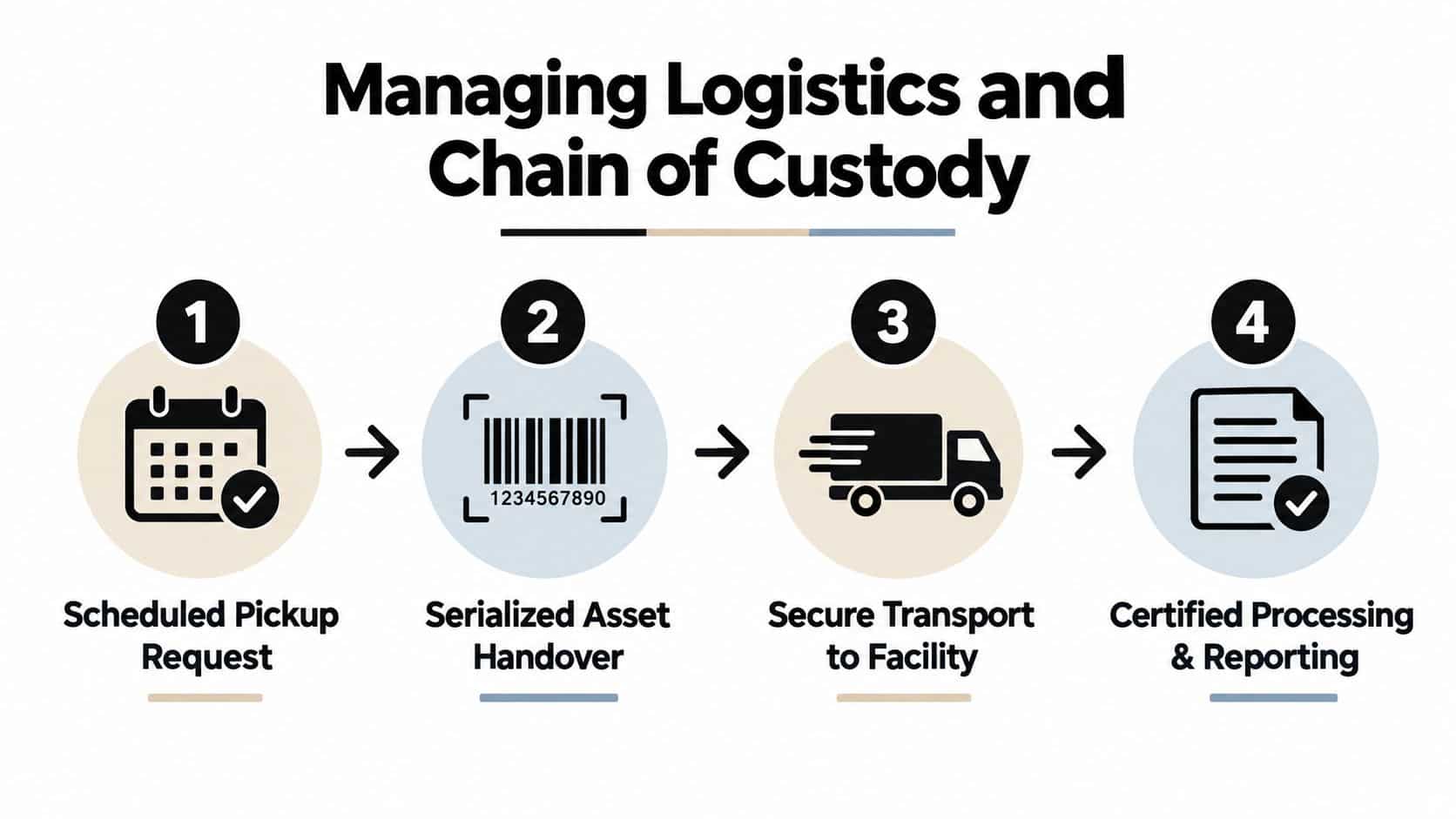
- Managing Logistics and Chain of Custody
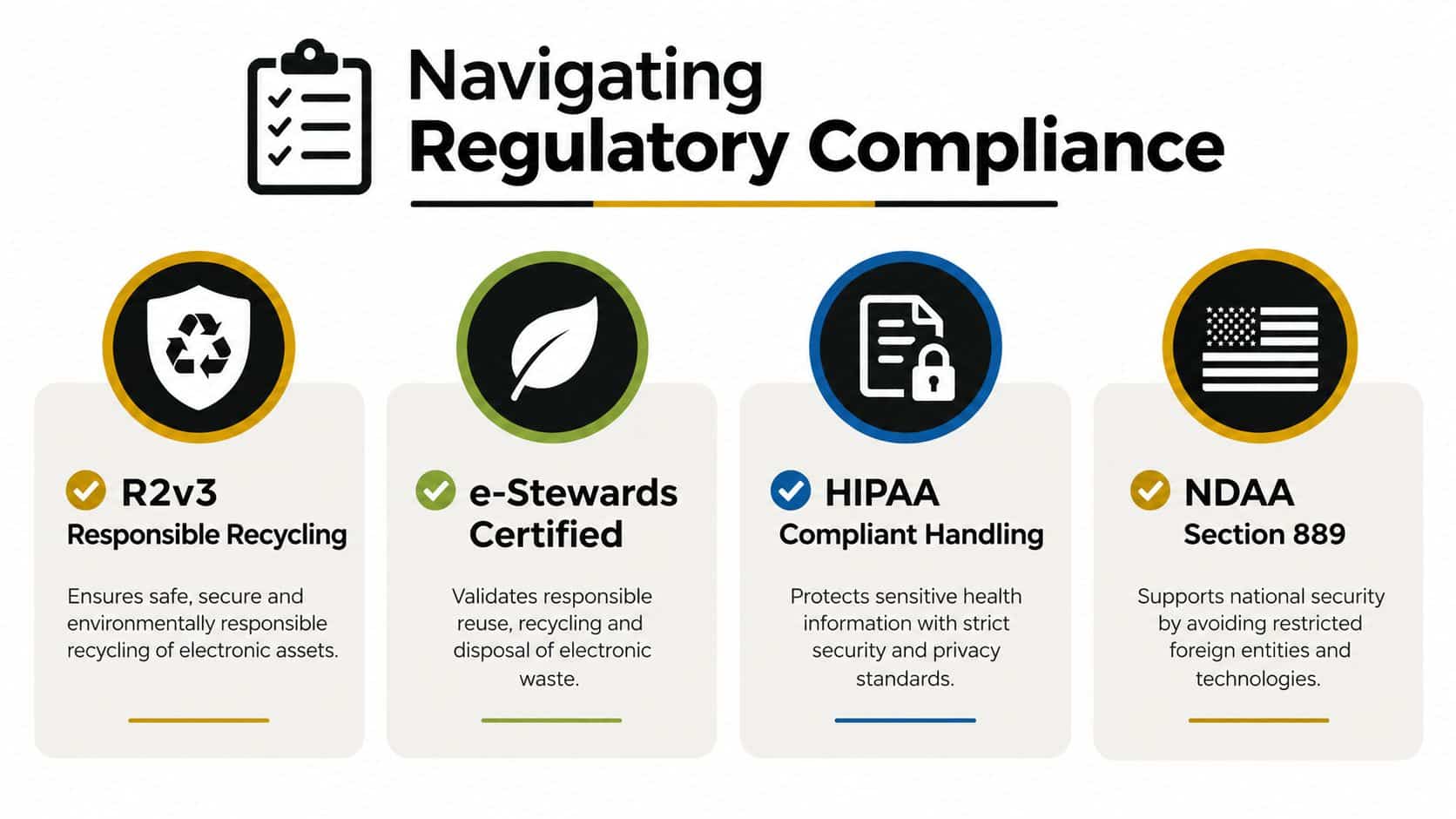
- Navigating Regulatory Compliance and Certification
- Maximizing Value Recovery and Environmental Impact
- Selecting the Right ITAD Partner in Atlanta
- Scheduling Your Commercial Electronics Pickup
Understanding Commercial Electronics Recycling and ITAD
A corporate hardware refresh starts a documented workflow. Each retired laptop, server, and network appliance needs an identified owner, a data-handling decision, and a recorded outcome before it leaves the site. A laptop may contain user credentials and local files. A server may hold business records, while a network appliance can retain configuration data. Equipment that appears unusable may still contain storage media requiring review.
IT Asset Disposition, or ITAD, controls the collection, identification, sanitization, remarketing, recycling, and destruction of retired technology. Commercial electronics recycling is one destination within that process. A complete program also covers inventory reconciliation, secure transportation, downstream oversight, and reporting.
Why enterprise retirement differs from drop-off recycling
A consumer drop-off program generally accepts material and sends it into a recycling stream. An enterprise program must establish what happens to each asset and preserve evidence along the way. Before scheduling pickup, IT managers should define whether equipment will be physically destroyed, logically sanitized for reuse, or evaluated through a resale-first ITAD process. The right choice depends on data risk, media condition, policy, and the value of keeping working equipment in circulation.
- What was collected? Tie each asset to a make, model, serial number, or controlled lot.
- Who handled it? Record transfers from the corporate site through transportation and processing.
- Was data removed? Retain evidence of wiping or destruction. Recycling alone does not establish that information was addressed.
- What happened afterward? Separate reuse, resale, material recovery, and destruction outcomes in the final report.
The global volume of discarded electronics reinforces the need for disciplined handling. The world generated 62 million tonnes of e-waste in 2022, while only 22.3% was formally collected and recycled in an environmentally sound manner, according to the EPA's electronics donation and recycling guidance. The same analysis projected 82 million tonnes by 2030, with the documented recycling rate expected to fall to about 20% if current trends continue. Laptop refreshes, data center changes, phone replacements, server upgrades, and office relocations all add to this stream.
Atlanta organizations also feed into a wider U.S. disposal system. The EPA reports that the United States generated 2.7 million tons of selected consumer electronics in 2018, with 1.04 million tons collected for recycling, a recovery rate of 38.5%, as summarized in the Joint Research Centre e-waste resource. Commercial programs must protect information, preserve accountability, and direct every asset to an appropriate outcome.
Practical rule: Treat the loading dock as the beginning of the disposition record, with IT responsibility continuing through verified processing.
Evaluating Secure Data Destruction Methods
The right sanitization method depends on three conditions: media health, recoverability risk, and verification capability. Choosing physical destruction for every device can eliminate reuse value. Choosing software wiping for every device can create unacceptable risk when a drive is damaged or the result cannot be verified.
A readable storage device that may be resold can often be processed through verified software sanitization. The technician should identify the device, apply the approved method, confirm completion, and retain a certificate tied to the asset or controlled lot. This approach preserves the possibility of reuse while creating evidence that the data was addressed.
Physical destruction serves a different purpose. Hard drive shredding or another approved destruction method is appropriate when the media is damaged, unreadable, contaminated, cannot be reliably sanitized, or falls under an internal policy requiring destruction. It also provides a clear disposition path for drives with a high recoverability concern. The trade-off is permanent loss of the storage device and any resale or reuse value associated with it.
Software sanitization compared with physical destruction
| Decision factor | Software sanitization | Physical destruction |
|---|---|---|
| Media condition | Best suited to readable, functioning media | Suited to damaged or unverifiable media |
| Reuse potential | Preserves the possibility of resale or redeployment | Removes reuse potential |
| Evidence | Requires verification and an asset-linked certificate | Requires a destruction record and asset identification |
| Risk posture | Appropriate when policy permits verified erasure | Appropriate when policy requires irreversible destruction |
| Operational result | Device may continue through recovery or resale | Device proceeds to material recovery after destruction |
The FTC Disposal Rule requires covered organizations to take reasonable measures so consumer information cannot be read or reconstructed. That makes a generic recycling receipt insufficient for many business workflows. A useful certificate should identify the device or controlled lot, method used, technician or facility, and processing date. More detail about applying a risk-based method appears in this guide to NIST 800-88 data destruction for Atlanta IT managers.
Make the decision before pickup
IT managers should classify devices before the carrier arrives. Separate readable drives intended for resale from failed drives requiring destruction. Flag servers, laptops, removable media, solid-state storage, and equipment subject to a stricter internal policy. If a provider cannot explain how its method changes based on media condition, verification, and client policy, the service is probably too generic for a regulated environment.
A sensible program may use both methods in one shipment. Working laptops can receive verified sanitization, while failed drives are physically destroyed. That combination often protects information without sacrificing recoverable value across the entire inventory.
Managing Logistics and Chain of Custody
A secure ITAD process can fail during transportation even when the final processing facility is reputable. If a device disappears from the manifest between the loading dock and intake, the organization may not be able to prove what happened to it. Serialized chain of custody closes that gap by preserving asset identity at every handoff.
The operational sequence
1. Prepare the site. The client creates a preliminary load list and identifies the pickup area, access restrictions, loading requirements, and responsible contacts. Data-bearing equipment should remain in a controlled space until the authorized team arrives.
2. Record the handover. At collection, the team scans or records each device and reconciles make, model, serial number, quantity, and visible condition. The client representative should review the handover record before equipment leaves the premises.
3. Control transportation. The carrier or logistics team accepts responsibility for the documented load. Any transfer between vehicles, warehouses, or processing locations should generate a corresponding custody event.
4. Reconcile at intake. The receiving facility compares the shipment against the original manifest. Missing, substituted, or unidentifiable assets should be escalated rather than absorbed into a bulk category.
5. Record final disposition. The processing result should distinguish reuse, resale, recycling, data wiping, and physical destruction. The final report should connect the outcome to the original asset record.
The chain-of-custody process for business electronics should preserve the link between the physical item and its documentation. That requirement becomes more complicated when an organization has several Atlanta-area offices, a data center, a warehouse, and remote sites. A routeable pickup plan should specify which location is being serviced, which assets belong to that location, and how the combined load will be reconciled.
Questions to settle before the truck arrives
Ask the provider about palletization, dock access, stairs, elevators, security escorts, loading windows, and equipment that requires special handling. Confirm whether the provider can manage a multi-site schedule and whether the same inventory format will be used at each site. For a nationwide organization, establish how custody remains documented when assets cross state lines or move through an intermediate facility.
Minimum volume and lead time can vary by route, equipment type, and service requirements. Don't accept “free pickup” as a complete logistics answer. Ask what qualifies, whether the client must stage or palletize the equipment, how exceptions are priced, and when the final certificates will be available.
A pickup is only successful when the client can reconcile what left the building with what the processor received and what the final report records.
Navigating Regulatory Compliance and Certification
Compliance documentation should demonstrate what happened to an asset, not merely confirm that a truck visited the site. The FTC Disposal Rule requires reasonable measures to prevent covered consumer information from being read or reconstructed. Healthcare, financial, government, education, and commercial organizations may also apply internal controls, contractual requirements, or sector-specific expectations to retired technology.
A certificate of recycling and a certificate of data destruction serve related but different purposes. The recycling record describes environmental processing or downstream disposition. The destruction record documents the method used to neutralize data. Combining both into a single vague receipt can leave an auditor unable to determine whether a specific laptop was wiped, a failed drive was shredded, or an item merely entered a mixed electronics load.
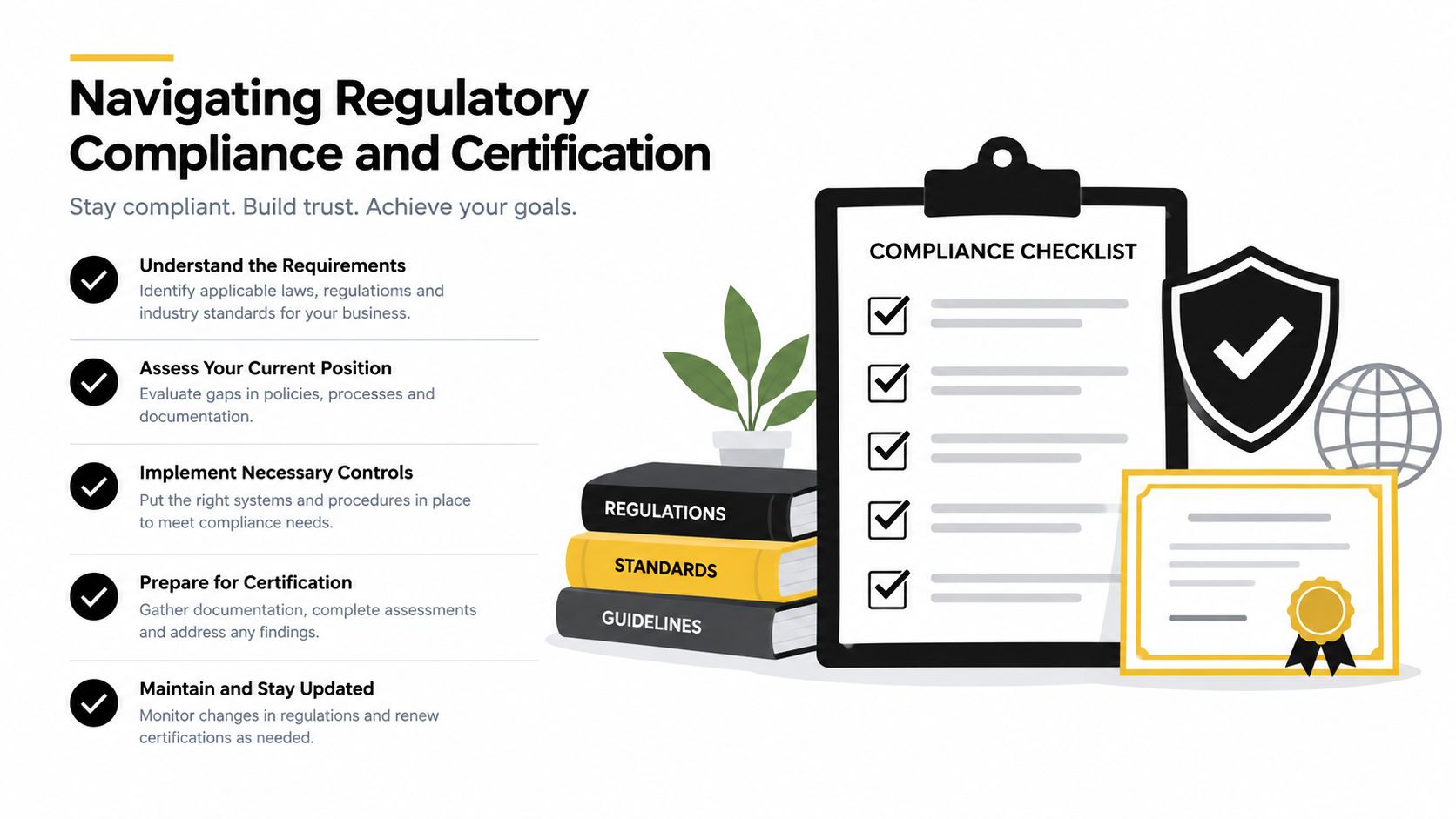
What a defensible certificate contains
A useful certificate should connect the processing event to an identifiable asset or controlled lot. Look for:
- Asset identity: Make, model, serial number, barcode, or another traceable identifier.
- Disposition method: Verified software sanitization, physical destruction, resale, reuse, or recycling.
- Processing details: Technician or facility, completion date, and relevant method information.
- Custody reference: A manifest, work order, shipment number, or intake record that links the certificate to collection.
- Client scope: The organization, site, and equipment covered by the report.
The Georgia electronics recycling and ITAD compliance guide can help organizations frame questions for vendors and internal stakeholders. Certifications may matter during procurement, but a logo alone doesn't prove that a particular shipment was tracked correctly. Procurement teams should examine the operating evidence, including sample manifests, certificate formats, downstream controls, escalation procedures, and audit access.
Regulatory language should become operating behavior
A policy that requires secure disposal has little value if staff leave mixed devices in an unlocked storage room. The policy should define who approves a pickup, who signs the handover, which devices require destruction, and who retains certificates. It should also explain how exceptions are handled when a serial number is missing or a device arrives damaged.
A mature program separates compliance evidence from marketing language. Ask for an example of an asset-level report with sensitive client information removed. Ask how the provider handles an unreconciled item. Ask whether downstream processors are reviewed and whether the client receives documentation for each applicable disposition path.
Maximizing Value Recovery and Environmental Impact
Retired equipment can create value in two ways. A working laptop, server, switch, or monitor may support redeployment or resale. Equipment that has reached end of life still contains recoverable metals and components, provided it enters a controlled processing stream.
Global e-waste assessments show that discarded electronics contain substantial quantities of valuable metals, including copper, gold, and iron. Those figures show that commercial recycling carries both a security obligation and a recovery opportunity. The disposition decision should connect the asset's condition, data risk, business policy, and likely market outcome.
Resale-first still requires condition grading
A resale-first route fits equipment that works, remains supportable, and has a legitimate secondary market. It can return value and keep usable hardware in service. Before release, the provider should complete verified logical sanitization, record the method and result, grade the condition accurately, and document the transfer of ownership.
Physical destruction fits a different risk profile. Failed storage media, obsolete equipment without a practical market, damaged batteries, and devices covered by an internal destruction rule may require destruction or specialized processing. Logical sanitization can suit reusable devices when the media, sanitization method, verification record, and policy permit resale or redeployment.
The trade-off is operational. Sending every asset to resale can delay closure and expose gaps in data handling or condition assessment. Sending every asset to destruction can eliminate recoverable value and increase material waste. Use the disposition route that the evidence supports.
Build a disposition hierarchy
A practical hierarchy starts with the highest-value responsible outcome:
- Redeployment: Keep suitable equipment within the organization when security, support, and compatibility requirements allow.
- Donation or resale: Route functional assets to an approved recipient or secondary market after data sanitization.
- Parts recovery: Separate useful components from equipment that cannot be sold as a complete unit.
- Certified recycling: Process end-of-life electronics through controlled downstream channels.
- Physical destruction: Destroy data-bearing media or products when condition or policy requires it.
The Atlanta IT asset recovery service overview illustrates the recovery questions procurement teams should raise with a provider. Request an outcome report that separates resale proceeds, recycling outcomes, destruction events, and items with no market return. Finance teams can then assess recovery performance without treating environmental diversion as resale revenue. The report should also connect each outcome to the relevant asset record and disposition evidence.
Selecting the Right ITAD Partner in Atlanta
Price is visible at the beginning of an ITAD project. Custody failures, missing records, and unclear downstream processing usually become visible later, when correction is harder. Procurement teams should evaluate a provider as an extension of the organization's security and logistics function, not as a hauling company.
Evaluate the operating model
A credible Atlanta partner should explain how it handles local pickup, multi-site routing, larger data center projects, and nationwide requirements. Local infrastructure can improve response and site familiarity, while broader routing capability matters when an enterprise has offices outside Georgia. The provider should also state how it handles minimum volumes, lead times, palletization, loading conditions, and difficult access.
Request evidence for each part of the workflow:
- Inventory control: Ask how serial numbers are captured and reconciled.
- Data security: Compare wiping verification, hard drive shredding, SSD handling, and exception procedures.
- Reporting: Review sample certificates for asset-level detail and disposition clarity.
- Downstream oversight: Ask who processes material that the primary provider doesn't handle directly.
- Value recovery: Confirm how resale eligibility, pricing, ownership transfer, and revenue reporting work.
- Escalation: Learn what happens when an item is missing, damaged, unidentified, or inconsistent with the manifest.

Compare providers by risk, not just quote
A low initial quote may exclude packing, labor, freight, destruction, difficult materials, or reporting. A higher quote may include site de-installation, serial-level tracking, certified destruction, and a controlled transportation plan. Compare the complete statement of work and ask what would trigger additional charges.
A provider's public claims should also match its paperwork. The ITAD company evaluation page can be one reference point during vendor research, but every organization should conduct its own due diligence. Review the contract, insurance, data-processing terms, downstream controls, and certificate samples before approving a recurring program.
Procurement test: If a vendor can't show how it will reconcile one device from pickup through final disposition, the quoted price isn't the main issue.
Scheduling Your Commercial Electronics Pickup
Preparation determines whether a commercial pickup is a controlled project or an improvised cleanout. Start before equipment reaches the loading area. Assign one project owner from IT, facilities, or procurement, then give that person authority to coordinate the site contact, inventory owner, security team, and logistics provider.
Use this preparation checklist
Create the inventory. List devices by site, department, equipment type, and available serial number. Mark laptops, desktops, servers, phones, drives, networking equipment, printers, and specialized electronics separately.
Classify data-bearing assets. Identify which items require verified software sanitization and which should receive physical destruction. Include failed or missing-drive devices in the review rather than assuming they carry no risk.
Separate disposition paths. Stage potential resale or redeployment equipment apart from damaged electronics, material-recovery items, and products requiring destruction. Don't mix loose drives with general equipment if the provider needs a controlled count.
Prepare the site. Confirm the pickup window, loading dock, elevator access, parking, security procedures, pallet requirements, and escort rules. Remove obstacles from the route and identify a secure staging area.
Confirm documentation. Agree on the manifest format, handover procedure, certificate scope, reporting timeline, and escalation contact before the crew arrives.
Close the project. Reconcile the pickup record with the intake report. Review destruction and recycling certificates, investigate discrepancies, and retain the final records according to your organization's policy.
For multi-site programs, use one standardized inventory structure across Atlanta offices and other locations. That makes it easier to compare loads, identify missing records, and request consolidated reporting without losing the identity of individual assets. If the project includes a data center decommissioning, add rack locations, equipment ownership, cabling, storage arrays, and change-control references to the planning record.
Schedule the pickup only after the provider understands the equipment mix and site conditions. A clear scope helps the logistics team assign the right resources and prevents last-minute decisions about data destruction, loading, or material handling. Commercial electronics recycling should end with a reconciled report, not merely an empty storage room.
Contact Beyond Surplus to arrange commercial electronics pickup, secure data destruction, IT asset recovery, data center decommissioning, and documented recycling for Atlanta organizations. Share your inventory, locations, data-handling requirements, and preferred disposition outcomes so the team can help structure a controlled ITAD project.


