

A lot of telecom recycling projects start the same way. An IT manager inherits a locked room full of retired switches, routers, VoIP handsets, cabling, and racks that were removed during upgrades but never properly dispositioned. Finance sees sunk cost. Facilities sees obstruction. Security sees unmanaged data-bearing devices. All three are right.
That pile isn't just scrap. It's a mix of compliance exposure, residual asset value, and environmental liability that needs a controlled process. That's where e-waste telecom recycling services fit. For business clients, the job is not limited to hauling equipment away. It's identifying what can be reused, what must be sanitized, what has to be dismantled, and what needs documented destruction.
In practice, the strongest programs combine IT asset disposition, logistics, data destruction, downstream recycling control, and reporting. That matters whether you're clearing a telecom closet in Atlanta, closing a branch in Smyrna, or coordinating a multi-site refresh across the country. Procurement teams that also monitor replacement cycles can even explore public sector telecom bids to understand where refurbished and redeployed equipment may still fit operationally.
Introduction What Are E-waste Telecom Recycling Services
What the service actually covers
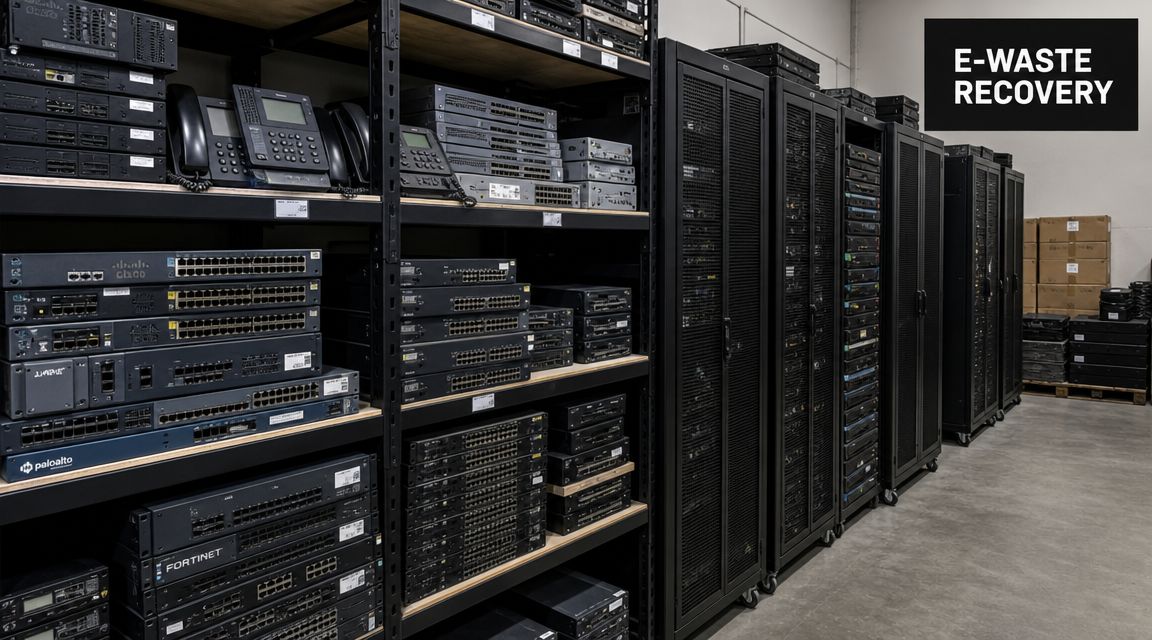
E-waste telecom recycling services are specialized end-of-life programs for network and communications hardware. That includes routers, switches, firewalls, modems, handsets, wireless gear, UPS units, batteries, racks, cabling, and related infrastructure.
A capable provider doesn't treat all of that as one homogenous load. The provider sorts it into separate disposition paths:
- Reusable assets that can be tested, sanitized, and remarketed
- Repairable units that may justify refurbishment
- Parts candidates that still contain usable components
- End-of-life material that belongs in controlled recycling streams
- Sensitive media or proprietary hardware that requires destruction
Why generic hauling fails
The weak approach is simple pickup with vague assurances. That usually breaks down when a client asks basic questions: Which serial numbers were collected? Which devices were wiped? Which items were destroyed? Which downstream vendors handled hazardous fractions?
Practical rule: If a recycler can't explain the chain of custody for mixed telecom gear before pickup, the reporting will be worse after pickup.
Telecom environments create messy retirement streams. Some assets have market value for a short window. Others have none at all, but still require secure handling. Good e-waste telecom recycling services manage both under one operating model.
Why Telecom E-Waste Is a Unique Business Challenge
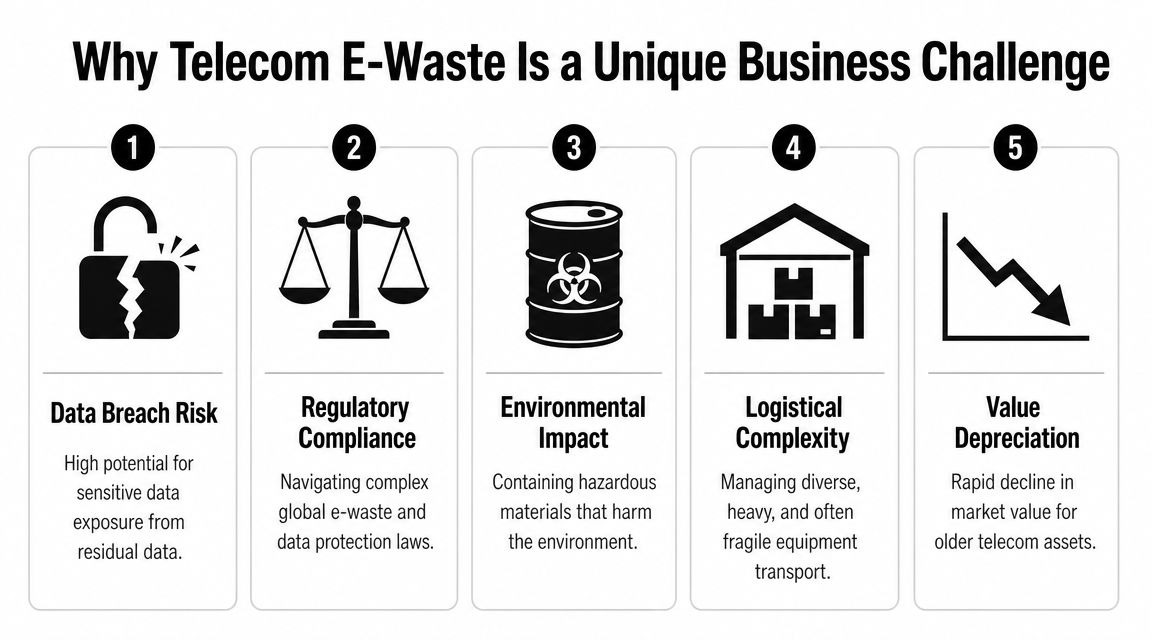
Telecom equipment sits inside the broader electronics waste stream, but the recovery challenge is sharper. The world generated 62 million tonnes of e-waste in 2022, up 82% from 2010, and only 22.3% was documented as properly collected and recycled, according to The Global E-waste Monitor 2024. For telecom managers, the more painful detail is category specific. Small IT and telecommunication equipment had a recovery rate of just 22% in 2022, as shown in this Statista chart based on the Global E-waste Monitor.
The equipment mix is harder than it looks
A telecom retirement batch rarely contains one product class. It usually includes:
- Data-bearing devices such as phones, gateways, and security appliances
- Infrastructure hardware such as racks, switches, patch panels, and radios
- Hazard-bearing items like batteries, lamps, and older components
- Low-value bulk material such as mixed cable and obsolete accessories
That mix creates operational friction. Some items should be remarketed fast. Some should be depopulated for parts. Some belong in immediate destruction. If staff treat everything as scrap, the business loses value and raises risk at the same time.
Telecom gear depreciates while it waits
Storage is expensive, even when nobody books it that way. Older network hardware loses resale relevance as support windows close, firmware ages out, and buyer demand narrows. Meanwhile, every month in unmanaged storage increases the odds of missing inventory, undocumented disposal, or accidental redeployment of noncompliant gear.
Telecom e-waste becomes harder to manage the longer it sits. The operational cost isn't just square footage. It's loss of control.
There's also a materials issue. Telecom assets contain recoverable metals and regulated hazards in the same device families. That combination makes proper handling essential for businesses that care about environmental reporting, worker safety, and legal defensibility.
Navigating Compliance and Regulatory Requirements
Most companies don't get in trouble because they chose recycling. They get in trouble because they chose unverifiable recycling.
For telecom equipment, compliance is less about a single rulebook and more about proving due diligence across privacy, environmental handling, and internal controls. The U.S. EPA states that responsible electronics recycling returns materials to the supply chain and requires auditable compliance tracking. It also notes that certified programs generate formal documentation, including certificates of destruction, needed for regulatory and internal audit requirements in its electronics management guidance.
Documentation is the control point
If you manage end-of-life telecom equipment, keep the focus on evidence. You should expect documentation that ties the physical asset to the disposition outcome.
That usually means:
- Pickup records showing what left the site
- Serialized inventory reports where serial tracking is practical
- Data destruction records for data-bearing devices
- Recycling or destruction certificates for audit files
- Downstream accountability for hazardous or specialized fractions
A provider with a documented R2 certified telecom recycling process can help structure those records in a way that procurement, compliance, and internal audit teams can use.
Liability doesn't disappear on its own
Many clients assume liability transfers once a truck leaves the dock. It doesn't. Liability transfers when the process is documented, controlled, and matched to the asset type. If a battery is mishandled, if a phone with customer data isn't sanitized, or if a pallet disappears without inventory support, your organization still owns the problem.
Compliance view: A certificate matters because it closes the loop between the asset you retired and the disposition method you approved.
That's why mature ITAD programs treat compliance as an operating requirement, not an afterthought. The paperwork isn't bureaucracy. It's your defense file.
The Secure Data Destruction Imperative
Telecom hardware often stores more than people expect. Firewalls hold configurations. Phones can retain call logs and account details. Multifunction network devices may preserve credentials, session data, or customer information. The mistake I see most often is assuming only laptops and servers deserve strict sanitization.
Wiping versus shredding
The right destruction method depends on the disposition path.
If equipment still has secondary market value, certified wiping is usually the first option. The standard many organizations reference is NIST SP 800-88, which provides a framework for media sanitization. In practical terms, that means using controlled software processes, validating the result, and preserving records.
Physical destruction is different. It makes sense when:
- The device is too old to remarket
- The storage media can't be reliably sanitized
- The hardware contains proprietary configurations or sensitive use history
- Policy requires destruction rather than reuse
What good process looks like
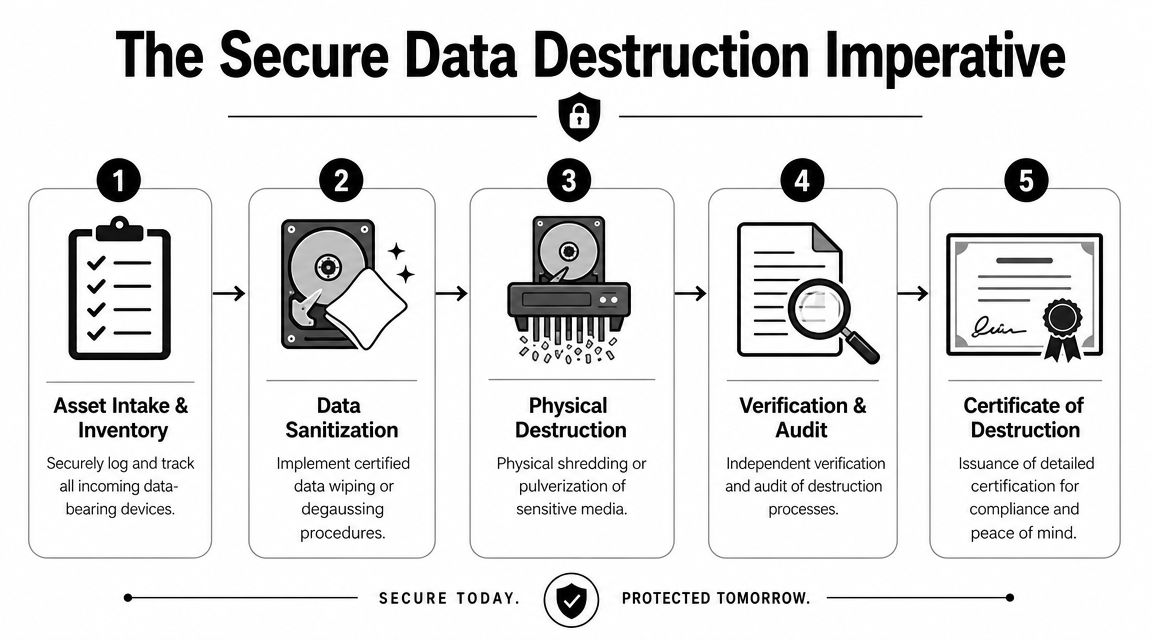
Secure destruction starts before the wipe or shred event. It begins with intake, inventory, and segregation of data-bearing assets from non-data material. Teams that skip this step create confusion immediately, especially when pallets contain mixed telecom hardware from several sites.
A disciplined workflow usually follows this order:
- Inventory and identification of devices and media
- Disposition decision based on security, resale, and policy
- Certified wiping or physical destruction
- Verification that the approved method was completed
- Certificate issuance tied back to the job record
Don't let bulk pickup obscure media control. A gaylord full of handsets is still a data security project if the devices weren't sanitized first.
On-site or off-site
There isn't one correct answer for every client. On-site destruction gives security teams direct visibility and may fit high-sensitivity environments. Off-site processing can be more efficient when the chain of custody is strong, transport is controlled, and the receiving process is documented.
What doesn't work is ambiguity. If the provider can't tell you where sanitization happens, who verifies it, and how the outcome is recorded, the service isn't secure enough for telecom assets.
Logistics and Chain of Custody Demystified
The most overlooked part of telecom disposition is the physical journey from active service to final outcome. Clients usually focus on pickup day. The actual risk sits in all the handoffs around it.
What happens at the site
A proper project starts with de-installation planning. Technicians identify what is live, what is staged for removal, and what requires special handling. That matters in telecom rooms where active and retired gear often share the same footprint.
From there, the process should include:
- Asset segregation by reuse, destruction, battery handling, and scrap class
- Packaging controls so devices don't get damaged or mixed
- Labels and inventory capture that match what was approved for removal
- Release records showing custody transfer at pickup
For large refreshes or closures, this often pairs with large-scale telecom equipment liquidation support so reusable assets and no-value material can move through one coordinated project.
What happens after arrival
A certified ITAD workflow doesn't jump straight to shredding. According to SIMS Lifecycle's explanation of electronics recycling, devices first go through depollution where hazardous materials such as lithium batteries and mercury lamps are removed. After that, automated systems use magnets and eddy currents to separate ferrous metals, aluminum, and copper in the shredding stream, which improves purity and worker safety in the e-waste recycling process.
That sequence matters for telecom hardware because network closets and carrier environments produce a mixed stream. Batteries, boards, metal chassis, plastics, and copper-rich components don't belong in a one-step scrap process.
The chain must stay visible
The chain of custody should remain intact from the first touch through final reporting. That means the client can reconcile what was removed, how it was processed, and what documentation closes the file.
If a provider can move a rack but can't reconcile the parts removed from it, that's a logistics vendor, not a telecom ITAD partner.
The best programs make the process boring in the right way. No surprises. No mystery pallets. No vague statements about downstream handling.
Maximizing Value Recovery From Telecom Assets
A lot of organizations still frame telecom disposition as a cost center. That's too narrow. The better question is how to recover the most value without compromising security or compliance.
As companies move to newer network environments, decommissioned legacy hardware may still hold market value if it's processed early enough. Sadoff notes that upgrades tied to 5G and fiber create a wave of retired equipment, and the key decision is when remarketing or refurbishment outperforms shredding in its discussion of telecommunications infrastructure e-recycling.
The value hierarchy
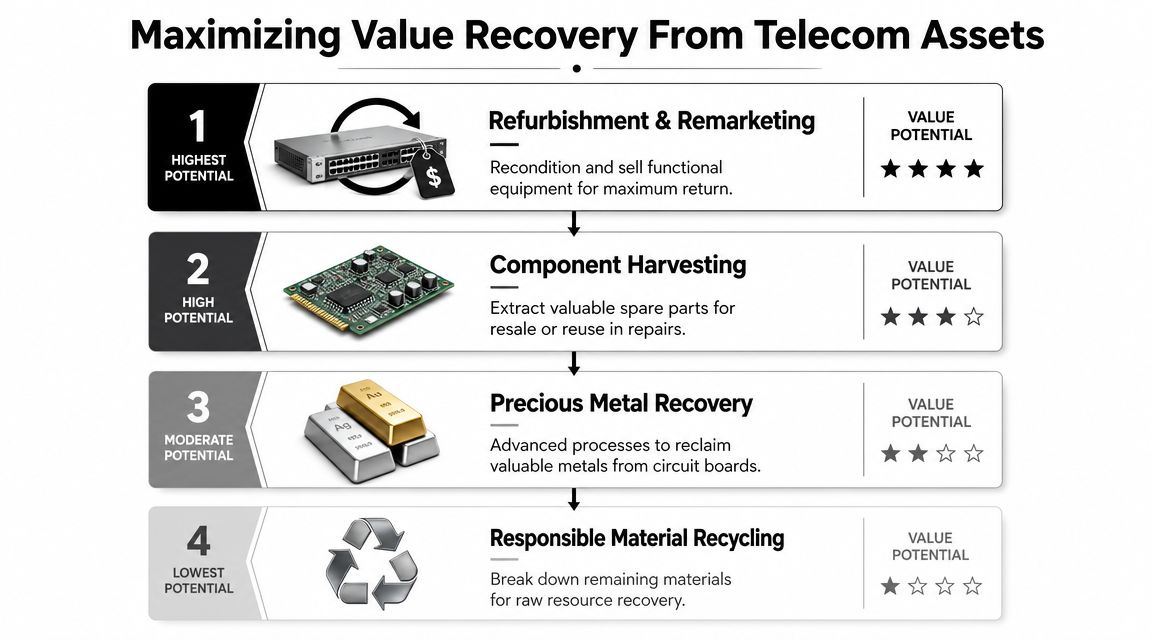
In most enterprise projects, the decision stack looks like this:
- Refurbish and resell first when hardware is functional, supportable, and marketable
- Harvest components next if whole-unit resale is weak but parts demand remains
- Recover commodities last when the asset has reached real end of life
That hierarchy is simple, but timing changes everything. A device that sits in storage too long often drops from resale candidate to scrap category.
What drives the decision
Three factors usually decide the path:
| Asset condition | Typical outcome | Main concern |
|---|---|---|
| Good physical condition and usable firmware | Remarketing or redeployment | Data sanitization |
| Cosmetic wear or limited whole-unit demand | Parts harvesting | Test labor versus recovery |
| Obsolete, damaged, or unsupported | Material recycling or destruction | Compliance and safe handling |
Market references can be useful when evaluating buyer demand for refurbished mobile hardware. For example, teams watching secondary device channels sometimes review listings like UsedMobiles4U iPhones to understand how refurbishment-driven resale markets function in practice, even though enterprise telecom valuation needs a more formal process.
A structured business telecom equipment resale strategy helps align asset age, condition, and sanitization requirements before equipment falls off the value curve.
Value recovery rule: Don't decide the fate of a telecom asset at the pallet level. Decide it at the model, condition, and data-risk level.
How to Select the Right Telecom Recycling Partner
Vendor selection gets easier when you ignore marketing language and audit the operating model. Enterprises need a partner that can manage mixed streams, including assets with no resale value, across multiple sites while preserving an auditable path for each item. ERI captures the core issue well in its discussion of network equipment recycling. The question isn't whether to recycle. It's how to get a compliant path for every router, switch, cable, and rack through one controlled process in its overview of network equipment disposition.
Telecom Recycling Vendor Selection Checklist
| Evaluation Criteria | What to Look For | Why It Matters |
|---|---|---|
| Certifications | Current environmental and ITAD certifications relevant to your program | Shows the provider follows defined process controls |
| Data destruction capability | Certified wiping, shredding, verification, and records | Reduces breach risk and supports audit requirements |
| Multi-site logistics | Coordinated pickup, de-installation, packaging, and transport | Prevents inconsistent handling across locations |
| Reporting depth | Serialized inventory where applicable, certificates, exception reporting | Lets IT, compliance, and finance reconcile outcomes |
| Mixed-asset handling | Ability to process valuable gear, scrap, batteries, and accessories together | Eliminates custody gaps between vendors |
| Insurance and downstream control | Proof of coverage and documented downstream management | Protects against environmental and data-related exposure |
Questions worth asking before pickup
Don't settle for broad promises. Ask direct operating questions:
- How do you track mixed telecom assets from multiple sites?
- When do you recommend wiping versus shredding?
- What documentation will I receive after the project closes?
- How do you handle batteries, low-value cabling, and obsolete racks?
- Can you support de-installation and resale in the same job?
A practical procurement step is to use a formal vendor due diligence checklist so legal, security, facilities, and IT review the same controls instead of evaluating vendors in silos.
Frequently Asked Questions About Telecom Recycling
What's the process for a large batch of company phones?
Start with inventory and segregation. Data-bearing devices should be identified first, then routed to certified wiping or physical destruction based on policy and resale potential. After that, working units can enter remarketing channels and the rest move into controlled recycling.
Can one provider handle a multi-site telecom decommissioning project?
Yes, but only if the provider can coordinate site pickup, custody documentation, and reporting under one operating process. That's the difference between a recycler and a true ITAD partner.
What records should we keep?
Keep pickup records, inventory reports, certificates of destruction where applicable, and recycling documentation for your audit file. If the project includes multiple sites, retain location-level records too.
What happens to equipment with no resale value?
It should still move through a documented process. Some items are dismantled for parts or materials recovery. Others go directly to destruction and recycling after hazard handling. Low value doesn't mean low risk.
Can telecom racks, cables, and accessories stay on the same project?
They can, and they usually should. Mixed loads are easier to control when one chain of custody covers the full retirement event instead of splitting commodities, devices, and accessories across separate vendors.
If your team is managing retired routers, switches, phones, racks, or mixed telecom hardware, contact Beyond Surplus for certified electronics recycling and secure IT asset disposal with documented chain of custody, data destruction, and nationwide business pickup.


