

Your telecom storage room probably contains three things at once. A sunk cost, a security problem, and a recoverable asset base.
Most IT directors know the scene. Pallets of retired switches, routers, PBX gear, handsets, optics, and rack hardware sit in a back room because nobody wants to move first. Facilities wants the space back. Security wants the equipment controlled. Finance wants write-off clarity. Procurement wants to know whether any of it still has market value. Until someone runs a structured program, the equipment just ages in place.
That's where corporate telecom asset recovery changes the conversation. This isn't basic scrap removal. It's a controlled process for identifying what still has resale potential, what needs sanitization, what should be harvested for parts, and what belongs in compliant downstream recycling.
The Hidden Value in Your Telecom Storage Room
A lot of corporate telecom gear gets mislabeled as junk too early. That happens after a network refresh, a data center consolidation, a carrier migration, or a site closure. Once equipment is unplugged, teams often focus on removal speed and ignore recoverable value.
That's a mistake, especially at enterprise scale.

The broader market tells you why this matters. The IT asset disposition market was valued at USD 25.31 billion in 2024 and is projected to reach USD 54.54 billion by 2030, with the IT and telecom segment accounting for over 30% of revenue in 2024, according to Grand View Research's IT asset disposition market analysis. Retired telecom infrastructure isn't a side category. It's one of the largest value pools in ITAD.
What usually sits in that room
Corporate telecom asset recovery typically starts with mixed-condition assets such as:
- Core network gear: Switches, routers, firewalls, load balancers, and transport equipment
- Voice systems: PBX platforms, VoIP phones, conference units, and session border devices
- Carrier and edge hardware: Optical transport, wireless backhaul, access gear, and site electronics
- Supporting infrastructure: Cabinets, rails, power units, and spares inventory
Some of it is ready for remarketing. Some of it is only useful for parts. Some of it should never leave the building without data sanitization controls.
Old telecom hardware loses value while it waits, but its compliance exposure doesn't.
That's why smart teams separate “remove it” from “dispose of it.” They're not the same decision.
If your immediate problem is making room for active operations, even adjacent operational resources can help frame the issue. For example, teams dealing with broader facility cleanouts sometimes consult guides on junk removal in Durham region, Durham region junk removal to think through staging, access, and space recovery. Telecom assets need a far tighter process, but the operational pressure is familiar.
Value starts before pickup
The best results usually come from deciding, before anything moves, whether equipment should be sold whole, refurbished, harvested, or recycled. That's also when many organizations look at enterprise telecom equipment resale options to understand which assets still belong in a value recovery stream rather than a scrap stream.
Defining Corporate Telecom Asset Recovery
Corporate telecom asset recovery is the disciplined recovery of value from retired telecom and network infrastructure while controlling data security, environmental exposure, and audit risk.
That definition matters because many teams still treat end-of-life telecom equipment as a disposal project. It isn't. It's a lifecycle management function.
What separates recovery from recycling
Basic recycling asks one question. How do we get rid of this responsibly?
Corporate telecom asset recovery asks three harder questions:
- What can still be sold
- What creates data or compliance risk
- What documentation will auditors require later
If you skip those questions, you usually get the worst of both outcomes. Low financial return and weak controls.
The asset is retired, not necessarily worthless
Telecom environments generate a wider mix of retired assets than most standard office IT programs. You may be handling:
- Data-bearing network devices with stored configs, credentials, routing data, or logs
- Reusable units that still have resale demand in secondary markets
- Parts-harvest candidates where optics, cards, power supplies, or modules carry more value than the chassis
- Irreparable scrap that belongs in compliant materials recovery
That's why a strategic program uses triage rather than bulk disposal. A pallet with mixed routers, handsets, and network modules doesn't have one disposition path. It has several.
The real objectives
A mature corporate telecom asset recovery program is built around three operating goals.
First, maximize recovery value. That means testing, grading, and channeling equipment into the right downstream market.
Second, reduce risk. Telecom devices often carry more embedded operational data than teams expect. A retired router with saved credentials can create a very different risk profile than a dead monitor.
Third, produce defensible records. Enterprises need proof of what left the site, how it was sanitized, where it went, and how final disposition was handled.
Recovery is what happens when finance, security, and operations all get what they need from the same workflow.
That's why experienced teams don't hand this work to general cleanout vendors or treat it as warehouse housekeeping. They treat it like controlled asset conversion.
The Business Case Maximizing Benefits and Mitigating Risks
A formal telecom recovery program usually gets approved for one of two reasons. Leadership wants more return from retired equipment, or leadership wants fewer surprises during audits, investigations, and site transitions.
The strongest programs deliver both.
Where the money actually comes from
Value recovery isn't limited to whole-unit resale. In telecom environments, returns often come from several channels at once:
- Remarketing of complete units: Equipment with secondary market demand can be resold after sanitization, testing, and grading
- Parts harvesting: Modules, optics, line cards, and power supplies may outperform chassis resale
- Freed facility space: Clearing cages, closets, and warehouse shelves has operational value even when finance doesn't book it as direct recovery
- Cleaner refresh planning: A repeatable program reduces the internal labor wasted on ad hoc disposition decisions
Large operators have already shown what structured recovery can look like at scale. In 2025, AT&T reported reusing or recycling 14.0 million consumer devices, recovering 5,928 metric tons of products, and reusing or selling 94% of materials from take-back programs, according to AT&T's circularity reporting. The enterprise lesson isn't that every company needs that scale. It's that structured circularity can work operationally and financially.
What unmanaged disposal gets wrong
When telecom assets sit too long, multiple problems stack up:
- Marketability declines: Buyers don't pay a premium for gear that has aged in storage
- Condition deteriorates: Missing rails, mixed pallets, and poor storage lower recoverable value
- Asset records weaken: Once labels fade and equipment gets shuffled, reconciliation gets harder
- Security risk stays active: Stored devices can still contain sensitive data or embedded access information
Unmanaged disposal also creates an accountability gap. The organization may know the equipment is gone, but not what happened to it.
Why executives respond to this issue
For IT directors, corporate telecom asset recovery is a technical operations process. For CFOs, legal, and audit teams, it's governance.
That's why it helps to frame the business case in two columns.
| Business outcome | Without a structured program | With a structured program |
|---|---|---|
| Asset value | Often left unrealized | Captured through resale, parts, and controlled recycling |
| Security | Data-bearing gear may move without sanitization discipline | Sanitization and documentation are built into workflow |
| Space use | Storage rooms stay clogged | Equipment is removed on a planned schedule |
| ESG reporting | Hard to substantiate end-of-life claims | Final disposition is documented |
| Audit readiness | Records are incomplete or fragmented | Chain-of-custody evidence is available |
Organizations evaluating downstream buyers often review nationwide telecom equipment buyers as part of that process, especially when multiple sites are involved and local resale options aren't enough.
Finance usually notices the recovery check. Audit notices the paperwork. Security notices whether the process was controlled. A good program satisfies all three.
The End-to-End Telecom Asset Recovery Lifecycle
The recovery lifecycle works best when every phase supports the next one. If you move assets before inventory, you weaken control. If you sanitize without clear serial tracking, you weaken auditability. If you recycle before testing, you destroy value.
That's why sequence matters.

Start with inventory and triage
A robust program starts with serial-level inventory control before any equipment is moved, and assets should be triaged into data-bearing, reusable, parts-harvest, and scrap categories to reduce security exposure and maximize value, as outlined in telecom asset recovery services guidance from Beyond Surplus.
That first pass does more than count boxes. It determines handling rules.
- Identify every asset by make, model, serial, and asset tag where available.
- Separate by risk profile so data-bearing devices don't travel with general scrap.
- Flag reuse candidates early because those units need different handling than dead scrap.
- Isolate loose components and spares before they disappear into mixed gaylords.
Teams building broader governance around retired infrastructure can also borrow useful process discipline from IT management practices for Greenwood companies, especially around asset records, ownership, and refresh timing.
Apply the right data sanitization method
Telecom hardware often carries stored configurations, VPN settings, route data, account information, or embedded credentials. That's why sanitization decisions should be made by device type, not by convenience.
Some assets can be wiped and remarketed. Others require stronger purge controls or physical destruction of the storage component. The key is that the sanitization method matches the asset and the intended disposition path.
Practical rule: If the team can't say what data the device may contain, it should be handled as sensitive until proven otherwise.
Control logistics instead of improvising them
The trip from your site to the processor is where many weak programs lose control. Improvised loading, poor packaging, mixed manifests, and handoffs without documented custody all create preventable problems.
A disciplined logistics phase includes:
- Secure pickup scheduling across sites, cages, closets, or data halls
- Packaging and palletization that protects reusable units from avoidable damage
- Custody records tied to the inventory created at intake
- Transport controls that match the risk profile of the load
For multi-site projects, many organizations use telecom decommissioning services to coordinate removal, staging, and asset handoff without leaving the burden on local IT staff.
Process for value, not just throughput
Once assets arrive for downstream handling, the work shifts from movement to classification.
A strong processor will test units, grade cosmetic and functional condition, decide whether refurbishment is justified, and determine whether a device has more value as a whole unit or as harvested parts. Scrap should be the last channel considered, not the first.
Close the loop with final disposition reporting
The last stage isn't “equipment gone.” It's documented disposition.
That means you should receive records that show what was resold, what was recycled, what was sanitized, and what certificates or settlement reports support those outcomes. Without that reporting, the organization has activity but not governance.
Mastering Compliance and Chain of Custody
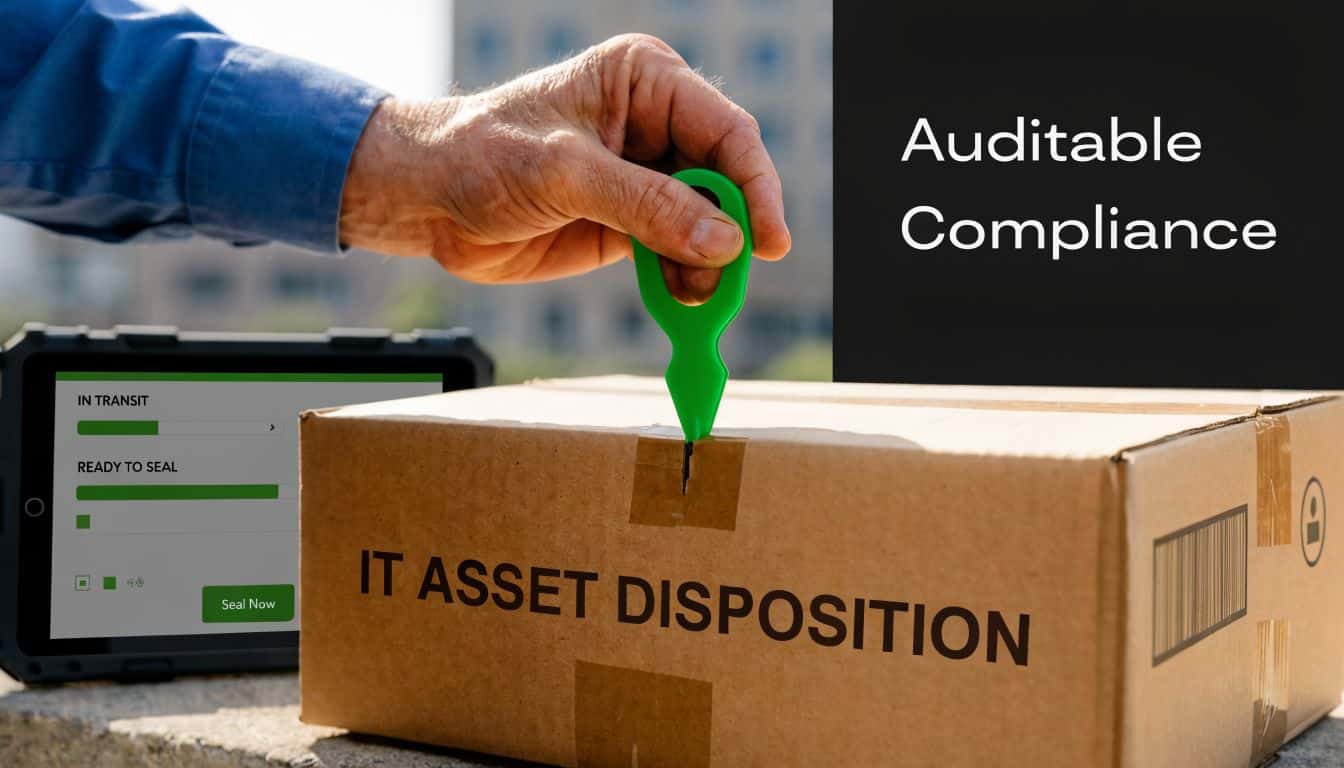
Most failed telecom disposition programs don't fail at pickup. They fail later, when legal, audit, or security asks for proof.
A truck receipt won't satisfy that request. Neither will a generic certificate with no serialized detail.
What chain of custody actually means
In corporate telecom asset recovery, chain of custody is the documented history of an asset from identification through final disposition. It should answer five questions clearly:
- What asset was handled
- Who took possession of it
- When custody changed
- What happened to the data-bearing components
- What final disposition path was used
If any of those answers is vague, the record is weak.
The cross-border issue many teams miss
One of the biggest gaps in enterprise programs is handling cross-border transfers and auditable proof of final disposition for parts and metals. Enterprise-grade ITAD needs documentation that supports global compliance, export-control, and ESG reporting, not just a basic destruction certificate, as explained in telecom asset recovery management guidance from Telecom Recycle.
That becomes critical when equipment is broken down into components, sold through secondary channels, or processed through downstream vendors in multiple jurisdictions. “Recycled responsibly” isn't enough if an auditor asks where the material went.
What good documentation looks like
A defensible file typically includes a mix of records, not a single PDF.
- Serialized inventory report: Ties the disposition event to specific assets
- Data destruction records: Shows which devices were wiped, purged, or physically destroyed
- Logistics and handoff records: Documents possession changes
- Settlement and disposition summary: Confirms resale, parts harvesting, recycling, or destruction outcomes
- Downstream transparency: Shows who handled materials after primary intake when needed
If your team is aligning sanitization practices with accepted erasure guidance, NIST SP 800-88 resources are often part of that review.
If a provider can't explain how it documents downstream movement of parts and metals, the governance model is incomplete.
Why this matters beyond security
Compliance in telecom recovery isn't only about data. It also touches environmental handling, export restrictions, contractual obligations, and ESG claims. If the company reports circularity or responsible disposal publicly, documentation needs to support those statements.
That's why mature programs treat chain of custody as an operating control, not as post-project paperwork.
How to Select the Right Asset Recovery Partner
Vendor selection is where many organizations lock in either a workable program or a recurring headache. A provider may be able to remove equipment quickly and still be the wrong fit for an enterprise telecom environment.
The right question isn't “Can they pick it up?” It's “Can they preserve value, protect us legally, and document the outcome?”
What to check before you sign
Use a due diligence process that tests operational depth, not sales language.
- Security controls: Ask how they handle data-bearing routers, switches, appliances, and removable media
- Reporting depth: Request sample serialized reports, settlement reports, and destruction records
- Logistics coverage: Confirm whether they can support multi-site pickups and coordinated decommissions
- Downstream transparency: Ask who receives reusable gear, harvested parts, and scrap commodities
- Insurance and risk transfer: Review coverage relevant to data incidents, transport, and environmental handling
Many procurement teams formalize this review with a vendor due diligence checklist so selection criteria are consistent across legal, IT, and sourcing.
Comparing recovery approaches
| Metric | Professional ITAD Partner (e.g., Beyond Surplus) | Unmanaged/DIY Disposal |
|---|---|---|
| Inventory control | Serialized intake and tracked disposition | Partial lists or no reliable asset reconciliation |
| Data handling | Defined sanitization workflow | Inconsistent handling decisions |
| Value recovery | Testing, grading, resale, parts evaluation | Scrap-first outcome is common |
| Logistics | Planned pickup and custody records | Ad hoc loading and unclear handoffs |
| Audit support | Documentation designed for review | Paper trail is often incomplete |
| Multi-site execution | Coordinated across locations | Local improvisation varies by site |
Beyond Surplus is one example of a provider that offers business-focused telecom recovery, buyback workflows, secure data destruction, and nationwide pickup coordination for organizations with distributed operations. That matters if your telecom retirement projects involve branch offices, data centers, and warehouse stock in more than one market.
The warning signs
A weak partner usually reveals itself early. Watch for these issues:
- Generic recycling language with no explanation of telecom-specific handling
- No clear answer on serialized tracking
- No distinction between resale, parts harvesting, and scrap
- No discussion of cross-border or downstream documentation
- No sample reporting before contract signature
A capable partner should be able to describe its process in operational terms. If the answer is mostly “we recycle everything securely,” keep looking.
Measuring Success KPIs and Calculating Your ROI
If you can't measure the program, you'll struggle to defend it during budgeting. Telecom recovery should be tracked like any other operational initiative, with financial, compliance, and execution metrics.
The useful KPIs are the ones that help you decide whether the process is getting faster, safer, and more profitable.
KPIs worth tracking
Start with a short scorecard.
- Total value recovered: Revenue returned from resale and parts channels
- Reuse versus recycle mix: Shows whether triage is preserving value before scrap
- Time to final settlement: Measures process speed from pickup to financial closure
- Serialized reconciliation rate: Confirms whether assets in the manifest appear in final reporting
- Data security incidents: The target is zero
- Aging of retired inventory: Tracks how long equipment sits before decommissioning begins
These metrics help different stakeholders for different reasons. Finance wants recovery visibility. Security wants proof of control. Facilities wants space back. Procurement wants consistent vendor performance.
A simple ROI approach
You don't need a complicated model to build an internal case.
Use this structure:
ROI = (Recovered value + avoided internal handling cost + avoided storage burden – program cost) / program cost
If you want a sharper executive discussion, compare likely outcomes under managed versus unmanaged handling. One telecom asset recovery benchmark reports that organizations using professional ITAD services for data-wiped telecom assets can retain 40 to 60% of resale value, while firms without a strategic program often capture only 10 to 20%, and delayed decommissioning can destroy 40 to 60% of potential value over time, according to telecom equipment asset recovery services analysis from Beyond Surplus.
What that means in practice
The practical lesson isn't just that managed recovery pays more. It's that delay is expensive. Every month retired equipment sits unsorted, you risk lower resale outcomes without reducing the compliance burden tied to those assets.
Track inventory age as closely as settlement value. Old gear in storage is a drag on both return and control.
For most enterprises, success looks like a repeatable program with predictable pickups, clean reporting, zero security surprises, and a clear path for turning retired telecom hardware into either recovered value or documented compliant disposition.
Frequently Asked Questions About Telecom Asset Recovery
Is telecom equipment recycling enough for enterprise environments
Usually not. Recycling handles the environmental end of the problem. Corporate telecom asset recovery handles value, data security, and evidence. Enterprises need all three.
Can't my team just wipe devices internally and sell the hardware
Sometimes, but the challenge isn't only erasure. It's serialized tracking, testing, grading, custody records, downstream accountability, and final documentation. Internal teams can do parts of that well, but few want to own the full chain for mixed telecom inventory across multiple sites.
What equipment should be prioritized first
Start with assets that combine three traits. They contain data, they still have secondary market relevance, or they're consuming valuable space in network rooms and storage areas. Equipment with unclear ownership or missing records should also move up the list because those items become harder to reconcile over time.
A structured program works because it forces decisions while the equipment still has value and before record quality degrades. That's the difference between controlled recovery and delayed disposal.
If you're planning a network refresh, site closure, carrier migration, or warehouse cleanout, contact Beyond Surplus to discuss secure corporate telecom asset recovery, serialized tracking, data destruction, and compliant final disposition for business equipment.


