

IT asset disposition is the formal process of securely retiring, sanitizing, and recycling end-of-life IT equipment, while also directing usable assets toward reuse or resale. In 2022, the world generated 62 billion kg of e-waste, but only 22.3% was formally collected and recycled in an environmentally sound way according to the UN's Global E-waste Monitor 2024.
What happens to a retired laptop after it leaves an employee's desk? If the answer is “recycling,” your organization may be overlooking two material risks: sensitive data can remain recoverable, and equipment with resale value can be treated as waste. ITAD connects data security, environmental responsibility, logistics, and value recovery in one controlled process.
For business owners, IT managers, facility managers, and procurement teams, that distinction matters. A device that appears obsolete may still contain confidential files, active credentials, licensed software, or components worth recovering. A server removed during a data center decommissioning may also require detailed inventory records, controlled transportation, and documented final disposition.
Table of Contents
- Defining IT Asset Disposition and Its Core Purpose
- The Step-by-Step IT Asset Disposition Process
- Navigating Regulatory Compliance and Data Security
- Choosing Between Resale, Refurbishment, and Recycling
- The Environmental and Security Benefits of ITAD
- Selecting the Right IT Asset Disposition Provider
Defining IT Asset Disposition and Its Core Purpose
What should happen when an employee's laptop, a storage array, or network equipment reaches the end of its assignment? Sending it from the loading dock to an unknown recycler leaves two questions unanswered: could someone recover the data, and did the equipment still have financial value?
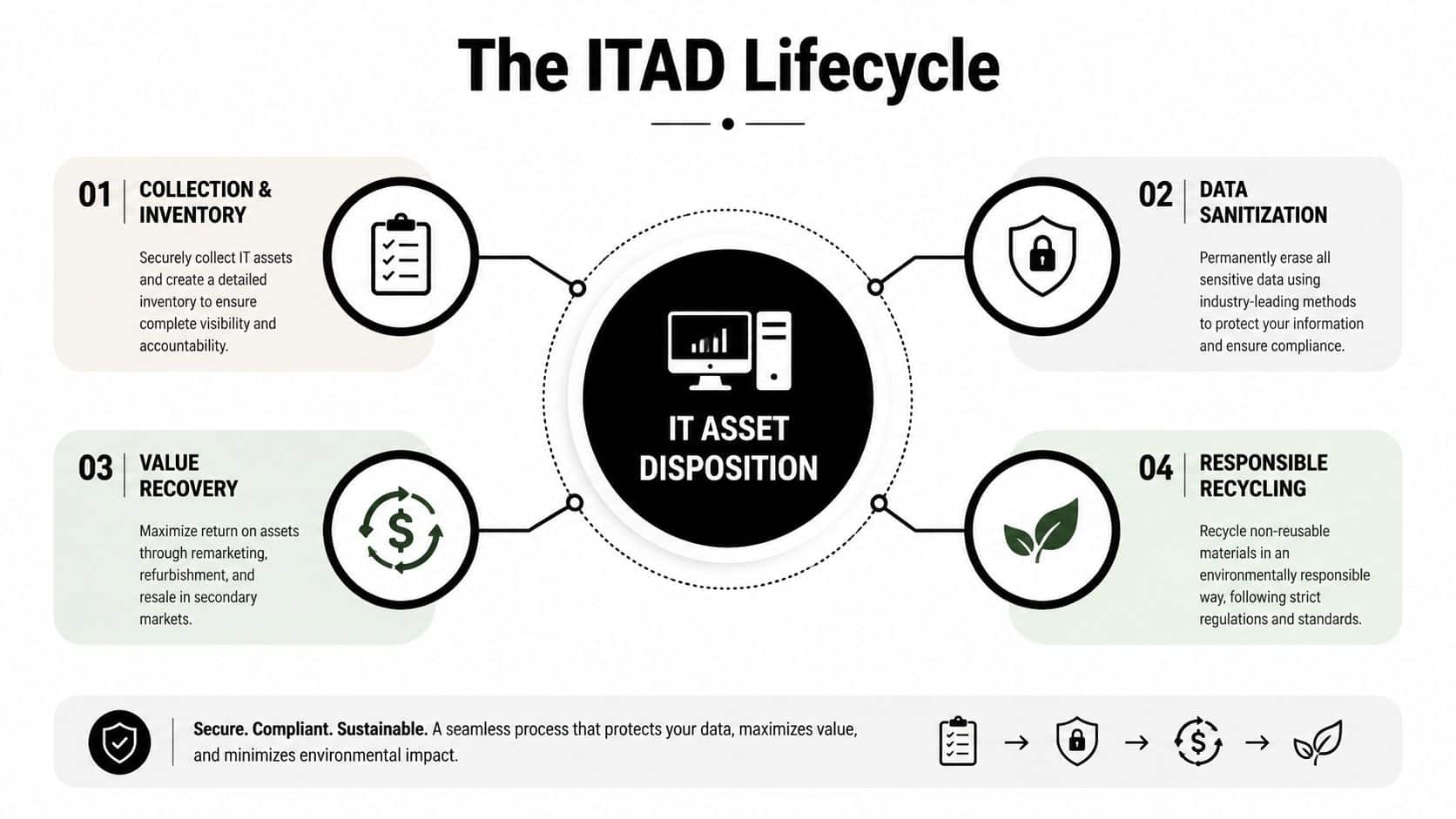
The asset should enter a controlled lifecycle instead. IT asset disposition, or ITAD, tracks equipment from collection through inventory, data sanitization, reuse, resale, destruction, or recycling. It changes the objective from waste management alone to value recovery and liability transfer. The organization can document who handled each device, how its data was treated, and where the asset ultimately went.
More than electronics recycling
Electronics recycling focuses on material recovery and responsible processing. ITAD includes that path, while also addressing stored information, resale potential, chain of custody, and proof of final disposition. In practice, the program should cover:
- Inventory control: Record serial numbers, asset tags, device types, condition, and ownership before transport.
- Data protection: Choose software sanitization or physical destruction based on the media and data sensitivity.
- Disposition decisions: Decide whether each item should be redeployed, refurbished, remarketed, destroyed, or recycled.
- Evidence retention: Keep device-level records, custody details, certificates, and final reports.
That control matters for hard drives, SSDs, servers, laptops, and networking equipment. A missing serial number can prevent an organization from showing whether a specific drive was wiped, shredded, resold, or recycled. Uncertified disposal can therefore create security, compliance, and financial exposure at the same time.
The difference between ITAD and e-waste recycling is a difference in accountability. Recycling records the destination of materials. ITAD records what happened to the asset and its data, who handled it, and what evidence supports the result.
Why the process creates business value
Retired equipment can contain recoverable materials and usable components, yet those opportunities are easily lost when every device is treated as waste. ITAD gives finance and operations teams a structured way to assess reuse, resale, refurbishment, destruction, or recycling before an asset leaves their control.
It also gives the organization a documented liability path. A secure pickup, verified sanitization result, and certificate-based report provide security, compliance, finance, and sustainability teams with a shared record. That record supports accountability while helping the organization recover value that uncertified disposal may discard.
The Step-by-Step IT Asset Disposition Process
A reliable ITAD workflow follows the equipment rather than treating the pickup as the end of the job. Each stage answers a practical question: What was collected, who handled it, what data treatment was appropriate, and where did the asset ultimately go?
1. Collection and intake
The provider and client establish the scope before equipment moves. That may include laptops, desktops, servers, storage systems, switches, mobile devices, printers, medical equipment, laboratory equipment, or products requiring destruction.
At collection, staff should document the asset identifier, physical condition, location, and any relevant ownership or lease information. Secure staging reduces the chance that devices are mixed with untracked material. Transportation records then extend the chain of custody from the client's site to the processing facility.
2. Inventory and audit
At intake, technicians reconcile the physical shipment against the client's asset list. They identify missing tags, duplicate records, damaged units, storage media, and equipment that may need special handling.
An equipment condition assessment supports a sensible disposition decision. A functional laptop and a damaged encrypted drive shouldn't receive the same treatment just because both are old.
Practical rule: No asset should enter resale, recycling, or destruction without an identifiable record and a documented disposition path.
3. Data sanitization
Data treatment depends on the media and the risk. Healthy drives may be processed through verified software wiping, provided the method produces evidence that the intended sanitization occurred. Damaged, encrypted, or high-risk media may require physical destruction, such as shredding or crushing.
The record should connect the treatment to the device identifier. It should also capture the destruction or sanitization method, date, location, and operator or facility identity. A general statement that “all drives were wiped” is weaker than a device-level report tied to specific serial numbers.
4. Reuse, resale, or destruction decision
After data treatment, technicians evaluate whether the equipment can be redeployed, refurbished, donated, or remarketed. A business may recover value from servers, laptops, desktops, and networking equipment that still have functional components or secondary-market demand.
Equipment that can't be safely reused, lacks practical value, or carries a risk profile requiring irreversible treatment moves to destruction or recycling. The decision should reflect condition, data sensitivity, contractual obligations, and the organization's recovery objectives.
5. Final disposition and reporting
The final stage closes the record. Reusable assets receive a resale or redeployment outcome. Destroyed media receives destruction documentation. Recyclable material moves through controlled downstream processing, with certificates and reports retained for audit, financial reconciliation, security review, and sustainability reporting.
That final report is not an administrative extra. It is the evidence that links the original inventory to the completed outcome.
Navigating Regulatory Compliance and Data Security
Compliance teams rarely struggle because they lack a disposal vendor. They struggle because the available evidence doesn't match the question an auditor, regulator, customer, or incident investigator asks.
The U.S. Federal Trade Commission's Disposal Rule took effect in June 2005 and requires businesses and certain other entities to dispose of consumer report information so it becomes unreadable and undecipherable background on the ITAD compliance milestone. The rule applies to information held on electronic media as well as paper records, making device retirement part of information-protection obligations.
Documentation is the control
A defensible ITAD file should let a reviewer trace each asset through the process. Useful records include:
- Asset identity: Serial number, asset tag, device type, and client reference.
- Custody history: Pickup location, transport handoff, receiving facility, and processing status.
- Sanitization result: Wiping method, destruction method, date, location, and responsible operator or facility.
- Disposition outcome: Reuse, resale, destruction, or recycling.
- Certificate package: Data destruction certificates, recycling certificates, and final reports.
Healthcare organizations also need to consider protected health information and their internal HIPAA controls. Finance, government, education, and other regulated environments may have additional contractual, privacy, or state requirements. The exact obligation varies, but the operational principle remains consistent: organizations need a process that protects information and produces evidence.
Aligning technical treatment with risk
Software wiping isn't automatically appropriate for every drive. A damaged drive may not support reliable verification. A high-risk device may require physical destruction even if it appears functional. Encryption can reduce exposure, but it doesn't eliminate the need for a documented disposition decision.
Organizations often use recognized sanitization guidance to make those choices. The NIST 800-88 data destruction standards provide a useful reference point for matching media treatment to risk and retaining evidence of the result.
Proof of sanitization and chain of custody are the central outputs. Physical destruction may be necessary, but destruction without identity records still leaves a documentation gap. A certificate tied to the right device, method, date, and facility is what makes the result defensible.
Choosing Between Resale, Refurbishment, and Recycling
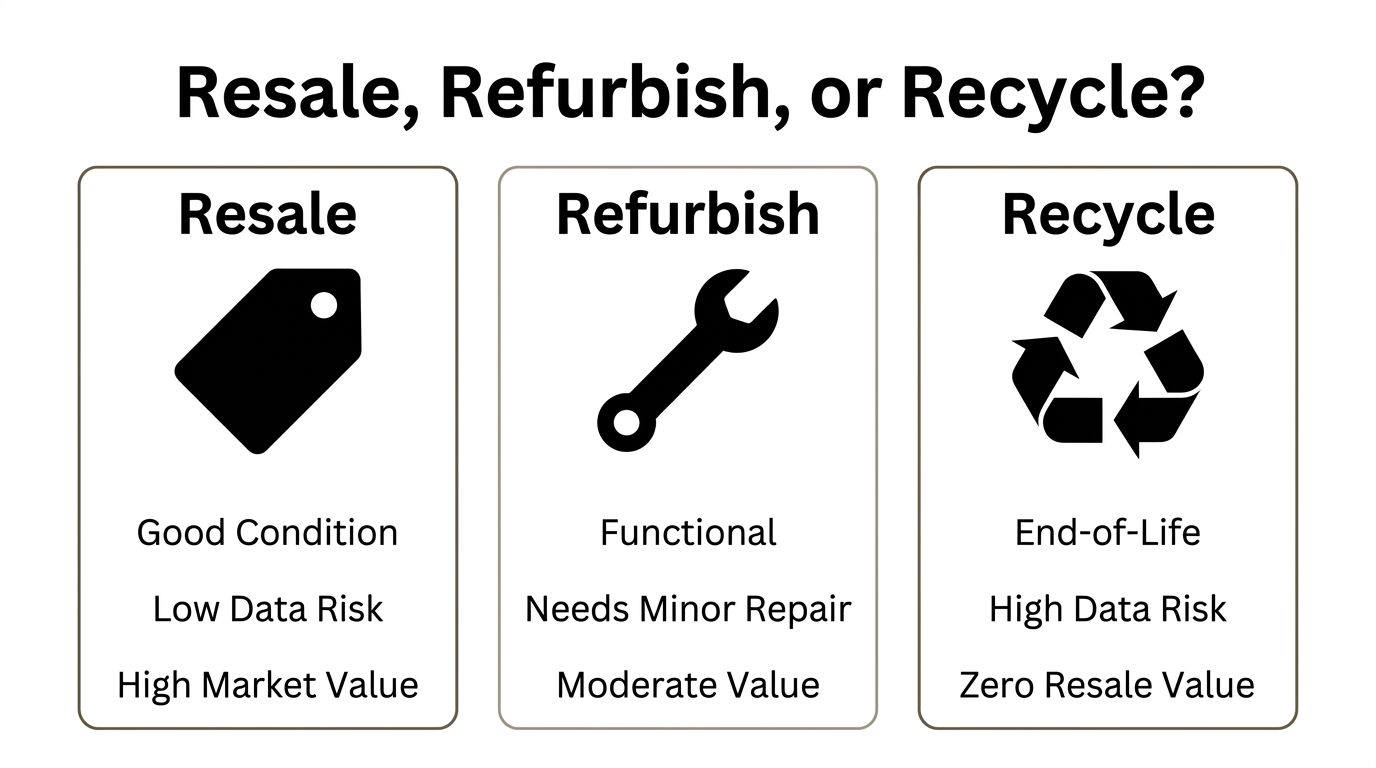
The right outcome isn't determined by age alone. An old laptop may still have a reliable secondary-market path, while a newer device with damaged storage may require destruction. ITAD teams should evaluate condition, data sensitivity, repair needs, ownership restrictions, and market demand together.
Resale for recoverable equipment
Resale generally suits functional equipment with identifiable market demand and a data treatment that can be verified. Servers, laptops, desktops, storage systems, and networking gear may retain value after a refresh, particularly when the configuration remains useful to another organization.
The provider should complete data sanitization before the asset leaves controlled custody. The resale record should also identify the item and show how the organization received its financial or operational outcome.
Refurbishment for repairable hardware
Refurbishment sits between immediate resale and recycling. Technicians may test, clean, repair, replace components, or reconfigure equipment before placing it into a secondary use.
This path can make sense when the device is functional but needs minor work. It also supports redeployment inside the organization, where a repaired laptop or workstation may meet a less demanding requirement. Refurbishment isn't a reason to skip data controls. The drive still needs a verified treatment before reuse.
Recycling for end-of-life assets
Recycling is appropriate when equipment has no practical resale path, can't be repaired economically, or contains components that should enter controlled material processing. High-risk or damaged storage media may be destroyed before the remaining equipment is recycled.
| Outcome | Suitable condition | Primary business objective |
|---|---|---|
| Resale | Functional equipment with market demand | Recover value |
| Refurbishment | Usable equipment needing repair or testing | Extend useful life |
| Recycling | End-of-life or non-recoverable equipment | Manage materials responsibly |
A good decision framework avoids two expensive mistakes. Sending every asset to recycling can discard recoverable value, while pushing every asset toward resale can create unacceptable data or compliance exposure. Security treatment comes first, then recovery optimization.
The Environmental and Security Benefits of ITAD
What happens after an organization retires a server, laptop, or storage device? Without a controlled disposition process, the business may treat a recoverable asset as waste while retaining responsibility for any data or materials that follow an uncertified disposal route.
Professional ITAD connects two outcomes. It protects information after equipment leaves service and directs usable components, recyclable materials, and hazardous parts into managed channels. That shift moves the focus from waste management to value recovery and liability transfer. A documented process gives the organization evidence that custody, data treatment, and final disposition were handled by accountable parties.

Environmental responsibility with operational evidence
Controlled recycling reduces the chance that electronics will be mishandled and helps recover materials from equipment that no longer has a practical use. ITAD records can connect the original asset list to its final outcome, giving sustainability teams support for internal reporting and environmental programs.
Reuse and refurbishment can preserve value before recycling becomes necessary. A functional device may serve another user, while recoverable components can remain in circulation. This approach is part of the relationship between sustainable IT disposal and ESG-oriented ITAD, where environmental performance and financial recovery support the same controlled workflow.
Security as a reputation safeguard
An untracked storage device can expose customer, employee, patient, financial, or operational information. The resulting liability may include legal, contractual, and reputational consequences, even after the original device has been retired.
Certified disposal also addresses an overlooked financial risk. If an organization cannot prove where equipment went or how data was treated, it may bear the consequences of a vendor's mistake while losing any recovery value the assets could have produced.
A documented chain of custody records removal, sanitization, verification, and final disposition. Environmental compliance and information security reinforce each other when one controlled workflow manages both.
Selecting the Right IT Asset Disposition Provider
Choosing an ITAD provider shouldn't start with the lowest pickup price. It should start with the evidence your organization will need after the equipment leaves the building.
Ask prospective providers to describe how they identify assets, secure loads, record handoffs, select sanitization methods, manage downstream partners, and issue final reports. A provider that can't explain those steps clearly may leave your team responsible for reconstructing the chain of custody later.
What to verify before engagement
Use a due diligence process that evaluates operational capability, not just marketing language. The ITAD vendor due diligence checklist can help procurement and security teams organize questions around documentation, facilities, transportation, data destruction, downstream processing, and insurance.
Look for:
- Device-level reporting: The final report should map identifiers to outcomes.
- Clear sanitization choices: The provider should distinguish verified wiping from physical destruction.
- Controlled logistics: Pickup, transport, receiving, and processing should have defined custody points.
- Downstream transparency: Ask where recyclable and remarketed equipment goes.
- Certificates that match the work: Destruction and recycling certificates should identify the relevant assets and processing details.
- Commercial service coverage: Confirm the provider can support office clearouts, data center decommissioning, electronics recycling, product destruction, and specialized equipment disposal where required.
Internal handling can work for a tightly controlled operation, but it often depends on staff availability, secure storage, transportation, technical verification, and administrative follow-through. A specialized provider can consolidate those responsibilities into a documented workflow, provided the client performs appropriate due diligence.
Beyond Surplus offers business ITAD services that include secure data wiping, on-site or off-site hard-drive shredding, electronics recycling, IT equipment disposal, data center de-installation, logistics coordination, IT buyback, product destruction, and certificates supporting auditable disposition.
Contact Beyond Surplus to coordinate commercial IT asset disposition, secure data destruction, electronics recycling, equipment removal, and value recovery. Ask for a documented plan that matches your inventory, data sensitivity, logistics requirements, and compliance objectives.


